The Value Of Gospel Truths

The fundamental truths of the Gospel are landmarks to keep us safely within the boundaries set by God. Suppose your grandfather owned some property which at one time had been carefully surveyed. He was there when they set the stakes and could have paced it off blindfolded. But he never took the time to show anyone else the markings.

“Over the years, the markers rotted, were rooted up, or washed away. Now your grandfather has died and left the land to you. But a dishonest neighbor claims it is his, and as proof of ownership points to the burgeoning crop of corn he has planted. You discover the deed and land description have been lost. Since you do not really know the proper boundary lines yourself, how will you defend your case in court? You will probably end up losing your property because no one ever told you where it ends and your neighbor’s begins.

The spiritual parallel is this: Every fundamental truth has some evil neighbor (i.e., heresy) butting up against it, eager to plant a crop of lies upon the sacred ground of God’s Holy Word and thus fool the saints. And the very reason that a spirit of error has encroached so far upon the truth in the last few years is because ministers have not walked the boundaries of the Gospel with their people and acquainted them with these primary truths.” —William Gurnall, The Christian In Complete Armor (emphasis added)

I have shared other quotes from The Christian In Complete Armor herehere, and here.

Thursdays With Oswald—Winning The Spiritual Fights

This is a weekly series with things I’m reading and pondering from Oswald Chambers. You can read the original seed thought here, or type “Thursdays With Oswald” in the search box to read more entries.

Winning The Spiritual Fights

“The love of God in Christ Jesus is such that He can take the most unfit man—unfit to survive, unfit to fight, unfit to face moral issues—and make him not only fit to survive and to fight, but fit to face the biggest moral issues and the strongest power of satan, and come off more than conqueror.” 

“The devil is a bully, but when we stand in the armor of God, he cannot harm us; if we tackle him in our own strength we are soon done for.” 

“It is never wise to under-estimate an enemy. We look upon the enemy of our souls as a conquered foe; so he is, but only to God, not to us.” 

From Run Today’s Race

Run Today’s Race contains short statements from Oswald Chambers intended to stimulate Christians to ponder things like:

  • Have I disqualified myself from the fight because I view myself as “unfit”?
  • Do I know how deeply God really loves me?
  • Am I daily putting on God’s armor?
  • Am I trying to fight satan in my own strength, or in God’s strength?

6 Quotes From “The Dawn Of Christianity”

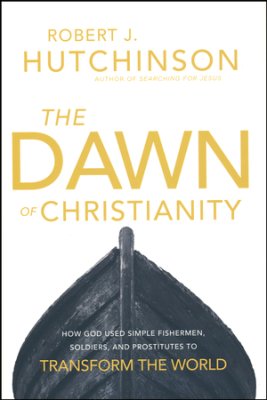
Robert J. Hutchinson makes the history around the birth, life, death, and resurrection of Jesus, as well as the history of Christ’s followers after His resurrection, come to life in The Dawn Of Christianity. Check out my full review by clicking here.

“Skeptics make much of the fact that historians have no independent corroboration from outside sources of most of the events described in the Gospels, but this is common with ancient history and hardly unique to Christianity. For example, virtually everything historians know about the Three Hundred, the Spartan warriors who held off a Persian invasion at the mountain pass of Thermopylae in 480 BC, comes from the writings of a single Greek author, Herodotus. What’s more, the earliest copy historians have of Herodotus’s chronicle of this event, The Histories, dates to the tenth century AD—or more than 1,350 years after it was written! In comparison, historians have a cornucopia of historical sources and archaeological evidence about Jesus of Nazareth and the early Christian community. For example, more than fifty papyrus manuscripts of New Testament texts exist that date before AD 300. The earliest of these manuscripts, a papyrus fragment from the Gospel of John known as P52, dates to around AD 125 or just thirty years after the original was likely written.”

“Around 20 BC, the half-Jewish King Herod the Great set himself the task of renovating and expanding the temple and surrounding area. There had been a small natural plateau there before, fixed atop the ridge in the northeastern corner of Jerusalem; but Herod wanted something far more spectacular. He therefore enclosed this natural plateau on all sides with four immense retaining walls, some more than one hundred feet high, made up of massive rectangular ashlars, or cut stones, that weighed as much as 415 tons each. These stones are so large that even modern cranes and bulldozers would have some difficulty moving them. Herod then filled in this entire quadrangle with stones and dirt, creating an artificial hilltop plaza—roughly 1,500 feet long by 1,000 feet wide—of more than thirty-five acres. In modern terms, Herod’s Temple Mount is so large that about twenty-six American football fields could fit in the space available. This massive engineering marvel has endured for two thousand years and still stands today, almost wholly intact.”

“Simon the Rock continued to loudly protest that he was willing to die, if need be, but would never deny Jesus. The other disciples said the same. This is one of those incidents that even many skeptics believe must be historical under the ‘criterion of embarrassment,’ which means that the Christian community was unlikely to invent a story that cast such a bad light on its leaders; therefore, it must have actually happened.” 

“Recent archaeological discoveries are showing that the New Testament in general, and the Gospels in particular, are far more reliable historical sources than previous generations of New Testament experts realized.”

“All four Gospels report that this board, what the Romans called the titulus, held the inscription ‘The King of the Jews.’ John’s Gospel alone reports that Jesus’ name was also on the titulus, ‘Jesus of Nazareth, the King of the Jews,’ and that it was written in Hebrew, Latin, and Greek (19:19-20). In Latin the charge read Iesus Nazarenus Rex Iudaeorum, which is why, to this day, the letters INRI appear at the top of crucifixes.”

“In 1968, archaeologists uncovered a first-century tomb at Giv’at ha-Mivtar, northeast of Jerusalem. Inside the tomb they found in ossuary containing the skeleton of a crucified man—the first and only relic of a crucified man found in Israel. Inscribed on the ossuary was his name in Hebrew: Yehochanan. On top of the bone of his right heel was a wooden board, and through the board, and his heel, was a 4.5-inch iron nail.”

Godly Leaders Must Do Hard Things

“Arise, for this matter is your responsibility. We also are with you. Be of good courage, and do it” (Ezra 10:4).

Leaders have to do hard things. The responsibility is theirs, and the team is imploring their leader to take the responsibility to lead!

Ezra had to deal with a difficult issue. The issue was intermarriage between the Israelites and pagan nations. To complicate matters, Ezra discovered that “the hand of the leaders and rulers had been foremost in this trespass” (Ezra 9:2). I would guess these leaders had committed the sin of commission (intermarrying themselves or allowing their children to do so), and of omission (not speaking out against trespassers).

But those “who trembled at the words of the God of Israel” were greatly grieved at this national sin (v. 4).

Ezra’s first response was a good one: he fasted and prayed, confessing the sins of the people and identifying himself with them (notice the use of “we” in his prayer). Ezra knew there was a window of opportunity for revival that was about to close, so he must act quickly (vv. 5-15).

Prayer is a great start, but after prayer there must be action: “Arise … and do it”!

I am sure looking transgressors in the eye—especially those who were leading men and women in the community—and calling out their sin wasn’t an easy thing nor a pleasant thing for Ezra to do, but it had to be done.

A mark of a godly leader is one who does the hard good things that must be done.

Ezra doing the hard good thing opened the door for God’s blessing to fall on the people. This is still true for godly leaders today.

My prayer—Lord, strengthen me to “arise and do it” when the hard good things must be done.

This is Part 2 in my series on godly leadership. To read my other posts, please click here.

The Dawn Of Christianity (book review)

Sometimes when people are reading the Gospels and the Book of Acts in the New Testament of the Bible they forget what an accurate history is presented at a pivotal time in world events. In The Dawn Of Christianity, Robert J. Hutchinson makes the history behind, surrounding, and after the biblical accounts come to life in a fresh way.

The Dawn Of Christianity tells the history surrounding Jesus of Nazareth and His followers almost in a novel-like format. Hutchinson masterfully puts together the four Gospel accounts and Luke’s history of the early church in chronological order, and then brings in archaeological, geographic, and anthropological resources like a supporting cast to the biblical account. Along the way, we are introduced to extra-biblical characters, places, and customs that add a new depth of understanding to the history presented in Scripture.

Hutchinson notes, “Recent archaeological discoveries are showing that the New Testament in general, and the Gospels in particular, are far more reliable historical sources than previous generations of New Testament experts realized.” Indeed, he makes good use of as many pertinent finds as possible to enhance his storytelling.

The Dawn Of Christianity spans the time from just before the birth of Jesus Christ of Nazareth and then tracks the spread of Christianity for about 20 years following Christ’s ascension into heaven. It’s a fascinating and enlightening story for both Bible aficionados and skeptics alike.

I am a Thomas Nelson book reviewer.

You Are A Masterpiece!

“‘For we are His workmanship, created in Christ Jesus for good works, which God prepared beforehand so that we would walk in them’ (Ephesians 2:10). The Greek word for workmanship is poiema, from which we get the English word poem. It can also mean masterpiece. …

“The book of Genesis tells us that God created each of us in His image. You and I are created to be so much more than normal. Being normal is safe. And easy. It doesn’t require much work or effort or change on our part. But it always leads to mediocrity. When you strive to be just like everyone else, you never have a chance to be special. When you start to embrace and even celebrate how different God made you, you can begin to do extraordinary things. You can begin to see yourself through His eyes. You can begin to live in the uniqueness with which you were created.” —Tim Tebow, in Know Who You Are, Live Like It Matters (emphasis mine)

That’s What Friends Are For

Take just a minute to get a clear mental picture of your best friend.

Got it?

Now, think of a few adjectives you would use to describe your best friend.

Did you think of words like loyal … trustworthy … honest … loving … faithful … reliable … authentic … funny … patient ….?

What about godly? Would you describe your best friend with that word? After all, if your friend is godly, wouldn’t he or she also be loyal, trustworthy, honest, loving, and so on?

This gives us an idea of how important friendships are to God. If calling someone “godly” sums up the very best attributes of your very best friend, then that means that you can see God in your friend. And hopefully they can see God in you too!

Jesus told His followers that He viewed them as friends. He told them…

  • …how close to God He could bring them (John 14:20)
  • …how much the Heavenly Father loved them because they loved Jesus
  • …how much He was willing to do for them because of His love (John 15:9-13)
  • …how the Holy Spirit would continue to keep them close to God (John 16:12-15)

Eugene Peterson said, “Friendship is not a way of accomplishing something but a way of being with another in which we become more authentically ourselves.”

Your best friend is someone you can be completely real around, right? No games, no masks, just come as you are. And your friend still loves you completely. This is how it is with God as our Best Friend too!

There is nothing you could ever do to make God love you any less, so stop worrying! 

There is nothing you could ever do to make God love you any more, so stop trying!

Friends love us enough to be totally honest with us. That’s why Solomon said, “Wounds from a friend can be trusted, but an enemy only multiplies kisses” (Proverbs 27:6).

Friends want us to have the very best, and to stay on paths that lead to success. So again Solomon wrote, “As iron sharpens iron, so a friend sharpens a friend” (Proverbs 27:17).

Oswald Chambers tells us, “Friendship with God is faith in action in relation to God and to our fellow men.”

So be assured of God’s friendship with you. Then be God’s friend to those in your life, and allow them to be God’s friend right back to you … THAT’S WHAT REAL FRIENDS ARE FOR!

Poetry Saturday—The Blessed Morrow

’Midst the darkness, storm, and sorrow,
One bright gleam I see;
Well I know the blessed morrow 
Christ will come for me.
’Midst the light, and peace, and glory
Of the Father’s home,
Christ for me is watching, waiting,
Waiting till I come. … 

Oh the blessed joy of meeting,
All the desert past!
Oh the wondrous words of greeting
He shall speak at last!
He and I together entering
Those fair courts above
He and I together sharing
All the Father’s love. —Gerhard Tersteegen

God Isn’t Trying To Cast People Into Hell

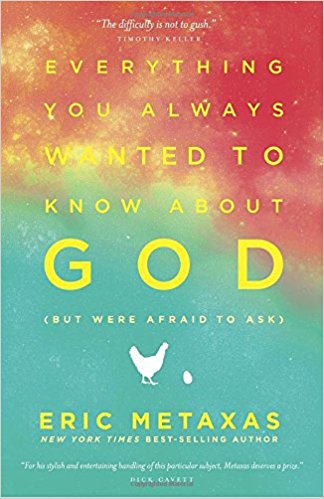
“God isn’t trying to cast people into hell; He’s trying to bring them into heaven. He wants people to be with Him and to have everything His sons and daughters should have. So it’s odd to focus on the question of whether people need to hear the name Jesus to go to heaven, as if knowing Him in this life were an annoyance people would prefer to avoid.

“It’s just the opposite. Knowing Jesus and knowing all about Him are meant to be monumental blessings in this life. So we should be tripping over ourselves to get to know Him rather than trying to figure out ways people might get to heaven without Him. Peoples lives here and now will be infinitely better if they know Jesus and the freedom He wants them to have.” —Eric Metaxas, Everything You Always Wanted To Know About God

Thursdays With Oswald—Take The Initiative

This is a weekly series with things I’m reading and pondering from Oswald Chambers. You can read the original seed thought here, or type “Thursdays With Oswald” in the search box to read more entries.

Take The Initiative 

     In every place you are in, insist on taking the initiative for God.

     Looking for opportunities to serve God is an impertinence; every time and all the time is our opportunity of serving God.

From Run Today’s Race

Run Today’s Race contains short statements from Oswald Chambers intended to stimulate Christians to ponder things like:

  • Do I think I can only do big things for God in special moments?
  • Do I realize that I am always salt and light wherever I go and whatever I am doing?
  • Instead of looking for opportunities, am I seizing the opportunities God is continually giving me?