7 Quotes + 1 Infographic From “Marching Off The Map”

Once again, Tim Elmore has given us invaluable insight into the emerging youth culture. If you have kids or work with kids, you must read Marching Off The Map. You can check out my full book review by clicking here. Below is the first set of quotes I want to share with you, but there will be plenty more coming in the future, so stay tuned!

“Thanks to technology, information streams into their lives 24/7 and often has no filter on it, even for young children. When we determined not to censor content in the media, we had no idea (understandably) how it would affect our kids. We’re removing the opportunity for them to experience innocence and wonder. However, because they’re still maturing emotionally, socially, cognitively and biologically in their first 25 years, we have now begun to witness a strange paradox in our young: the extinction of childlikeness and the extension of childishness. …

“Since they are exposed to so much adult information, so early in their lives, they can prematurely lose (1) their sense of innocence, (2) their sense of wonder and (3) their sense of trust …

“Biologically, the graduate is an adult. Emotionally, the graduate may be unprepared for the adult world.” 

“If you think our kids are pitifully impulsive on social media—just look at the adult population. … If you think teens are addicted to Facebook, just study the hours their mothers spend on it. If you think young athletes on the Little League baseball field act childish, just look at their dads. The behavior of adults and children has become more and more similar. Society has baptized ‘youthfulness.’ We want to look young, feel young, dress young, talk young and act young. We argue with our children’s teachers. We push our kid’s coaches to get them special treatment. We are not good at delaying gratification, and we frequently don’t keep commitments we make … very much like children. The result? Adulthood has lost much of its aura and authority.”

“As you stand in front of your classroom or your own children—you are, in a sense, Galileo. You are Magellan. You are Christopher Columbus. You are Lewis and Clark. You are Neil Armstrong. Ready or not, they need you to play this role.

“Our world is both expanding and shrinking. Our past maps and methods are antiquated. Like it or not, we’re moving into unfamiliar territory and many think it’s too difficult to explore. We have fallen in love with our old maps. … 

“For educators, our role must change as we teach a generation of students who don’t need adults to get information.

“For parents, our role must change as we raise kids in a time of terrorism, economic recession, racial unrest, underemployment and ubiquitous technology.

“For coaches, our role must change as we train young athletes who have eight-second attention spans, and may arrive at practice with little resilience or grit.

“For youth workers, our role must change as we mentor students who have few life skills or values because adults either over-functioned or were absent.

“For employers, our role must change as we onboard young employees who may have never had a real job before, and may ask when ‘spring break’ will be.”

“Adults must enable the students to leverage what is new, yet at the same time, hold on to what is ancient, yet valuable. We must be both timeless and timely. So, our job as we serve the next generation is two-fold:

  • To adopt or adapt. We must seize what is new and help kids leverage it well.
  • To explain and equip. We must relate to them the timeless ideals every generation needs.”

“I believe we must cultivate one significant skill set in ourselves: we must be able to either adapt to the new world that’s emerging, or we must explain why a timeless virtue or value is still relevant in our 21st century world.”

“A third of young Americans say they don’t belong to any religion. I’ve found, however, they’ve traded in one God for many gods. They want to ‘feel’ spiritual, so they’ve created a buffet—seeking something to satisfy their soul. I often hear students say, ‘I don’t believe in religion, but I want to be a spiritual person.’ Today—pluralism is expanding across the landscape. It’s easier to say ‘no’ to one and enjoy a mixture of many.”

“A third of young Americans say they don’t belong to any religion. I’ve found, however, they’ve traded in one God for many gods. They want to ‘feel’ spiritual, so they’ve created a buffet—seeking something to satisfy their soul. I often hear students say, ‘I don’t believe in religion, but I want to be a spiritual person.’ Today—pluralism is expanding across the landscape. It’s easier to say ‘no’ to one and enjoy a mixture of many.”

“The Latin root word for ‘educate’ is ‘ducere’ which means to ‘push out.’ … We should not put students in a passive mode as we teach. We must be inspirers of learning. We must help pull ambition out of them, not push information into them.”
I’ll be posting some more quotes from Marching Off The Map next week.

Thursdays With Oswald—Public And Private

This is a weekly series with things I’m reading and pondering from Oswald Chambers. You can read the original seed thought here, or type “Thursdays With Oswald” in the search box to read more entries.

Public and Private 

   My worth to God in public is what I am in private.

From Run Today’s Race

Run Today’s Race contains short statements from Oswald Chambers intended to stimulate Christians to ponder things like:

  • Do I spend enough time alone with God, or am I too quick to run off to accomplish my tasks?
  • Am I listening to what God really wants to tell me in private?
  • Am I applying those private lessons to my public life?
  • Jesus spent much time in solitude with His Father; am I spending enough time in solitude with God?

Marching Off The Map (book review)

In my mind, Tim Elmore stands head-and-shoulders above the rest in giving the most meaningful insights into the minds of today’s youth. Parents, coaches, teachers, and youth pastors will do themselves and the students with whom they work a huge service by using Dr. Elmore’s newest book—Marching Off The Map—as their guiding light in working with this young generation.

Never before have so many youth been exposed to so much information at such young ages. As a result, today’s students are both more prepared and less prepared to take on the future than any generation before them. Does this sound contradictory to you?

Consider the case of Alexander the Great. He conquered territory so quickly that he literally marched off the map; that is to say, there were no known maps for the new territory in to which he took his armies. Alexander’s mapmakers were pressed into duty to draw the maps as they were discovering new lands. They were both more and less prepared to move forward, just like today’s generation of students.

Those who work with today’s students can probably relate! Parents and teachers are attempting to write new maps as they go. They are being called upon to be both timeless and timely; to bring timeless principles into a territory where they’ve never been before in a timely way.

“This book is about moving into unknown territory as caring adults, and leading the way for the younger generations behind us. It’s all about inspiring students to learn in this brand new world. Whether you are an educator, a parent, a coach, an employer, a youth worker or just someone who cares about kids, this book was created to help you chart the course into the future.” —Tim Elmore 

Along the way Dr. Elmore will introduce you to some of today’s youth, help you see the world through their eyes, and give you invaluable insight into how best to educate, train, and equip them to be the leaders of the next generations. All of Dr. Elmore’s books are well-documented with research, statistics, graphics, and suggestions which are guaranteed to open your eyes and your mind.

If you truly care about seeing the next generation of youth be as prepared to face the future as possible, Marching Off The Map has to be a must-read! 

I am a Poet Gardener Publishing book reviewer.

The Cure For Spiritual Fanaticism

“Some time after Pentecost a group of believers met to pray for strength and power to meet the emergency then facing them, and to enlist the help of God on their behalf. ‘And when they had prayed, the place was shaken where they were assembled together; and they were all filled with the Holy Ghost, and they spake the Word of God with boldness’ (Acts 4:31). Some of these were of the original number filled at Pentecost. It is hardly conceivable that God acted contrary to His own will in filling them again after Pentecost. Still other outpourings are recorded in Acts 8, Acts 10 and Acts 19. All these occurred some years after the original act.

“In brief, the teaching of the New Testament is that the outpouring at Pentecost was the historic beginning of an era which was to be characterized by a continuous outpouring of the Holy Spirit. …

“This anti-emotionalism, though it is sponsored by some good people and travels in pretty orthodox company, is nevertheless an unwarranted inference, not a scriptural doctrine, and is in violent opposition to psychology and common sense. Where in the Bible are feeling and faith said to be at odds? The fact is that faith engenders feeling as certainly as life engenders motion. We can have feeling without faith, it is true, we can never have faith without feeling. Faith as a cold, unemotional light is wholly unknown in the Scriptures. …

“The Holy Spirit is the cure for fanaticism. Not the cause of it.”

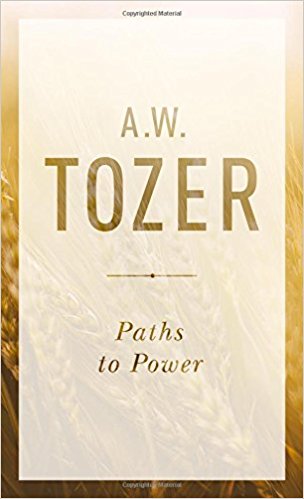
—A.W. Tozer, in Paths To Power

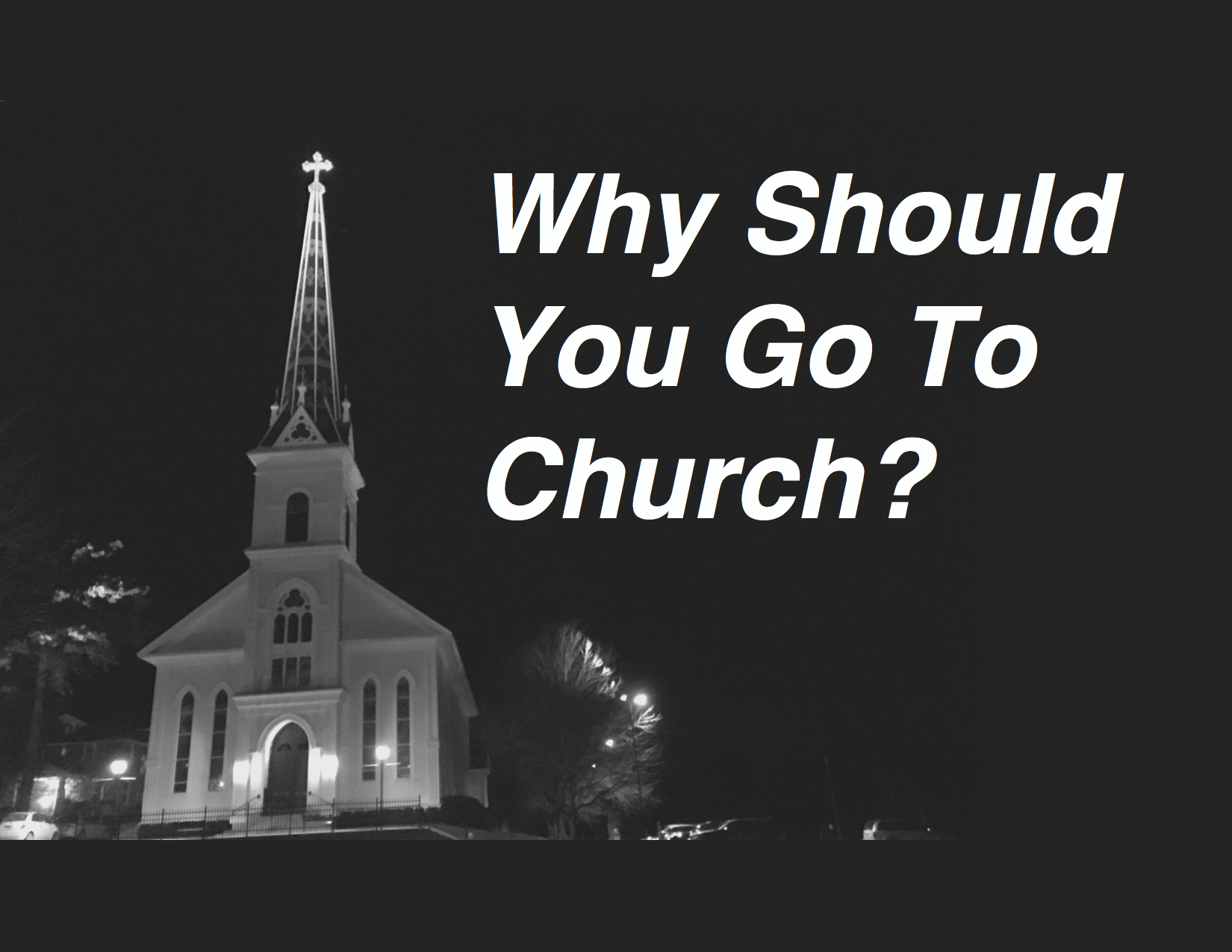
10 Great Reasons To Go To Church Regularly

Without exception, all human beings have exactly 168 hours in a week. No one gets any bonus time and no one has any hours taken away. We’re supposed to get 8 hours of sleep a night, and most of us work about 40 hours each week. So let’s do the math…

168 hours per week
– 56 hours for sleeping
– 40 hours for work
=72 discretionary hours

In those 72 hours there must be time for eating and taking care of chores. But what about going to church? The problem for many people is looking at church attendance as just another “chore” or item on their “To Do” list.

But instead of thinking of going to church as “I have to,” how about if you looked at all of the “I get to” benefits?

Here are 10 great reasons for going to church regularly. I get to…

  1. …draw closer to my Heavenly Father, just like Jesus did (Luke 2:49)
  2. …be an example to others (1 Timothy 4:12)
  3. …hang out with some really great people (Hebrews 10:24)
  4. …get to know Jesus and my brothers and sisters better (1 John 1:3)
  5. …reaffirm the priority that God is first in my life (Matthew 6:33)
  6. …learn to better understand Scripture (2 Timothy 2:15)
  7. …join with a choir of God worshipers (John 4:23-24)
  8. …grow spiritually (1 Peter 2:2-5)
  9. …complete the Body of Chris (1 Corinthians 12:12)
  10. …avoid becoming isolated and possibly lost (Proverbs 18:1)

“Sometimes we make it sound like we’re making a sacrifice to go to church, but think about the very real sacrifice Jesus made so that we could meet together as brothers and sisters!” —Scott Troost

How about it? Do you think you could invest an hour or two of your 72 discretionary hours in a local church this week?

My thanks to my brother, Scott Troost, for sharing such a timely message!

Poetry Saturday—Hymn XXXV

In Thy presence we are happy,
In Thy presence we’re secure;
In Thy presence all afflictions
We can easily endure;
In Thy presence we can conquer,
We can suffer, we can die;
Wandering from Thee, we are feeble;
Let Thy love, Lord, keep us nigh. —Williams Pantycelyn

The Q Series

“Ladies and gentleman, come see the amazing high wire act! Watch closely as he crosses the chasm on a tightrope without a net!” Well, at least that’s what it feels like to me.

On August 13, 20, and 27 we will be doing our Q Series at Calvary Assembly of God. These are Sundays where I don’t prepare a sermon, but I prepare myself to answer questions that are thrown at me on any topic. And I feel a little like the man walking on a tightrope without a net!

Here we go! 

If you’d like to submit a question, you can do so in the comments below. You can always send questions to me via Twitter or email. If you won’t be able to attend the services, we’ll be broadcasting on Facebook Live and will make the video on YouTube following that.

If you can attend in person (each of these Sundays at 10:30am), we will have a text number available so you can anonymously text your question to the computer techs.

It’s always fun and educational, so I hope you will be able to join us.

Thursdays With Oswald—Miracle Of Grace

This is a weekly series with things I’m reading and pondering from Oswald Chambers. You can read the original seed thought here, or type “Thursdays With Oswald” in the search box to read more entries.

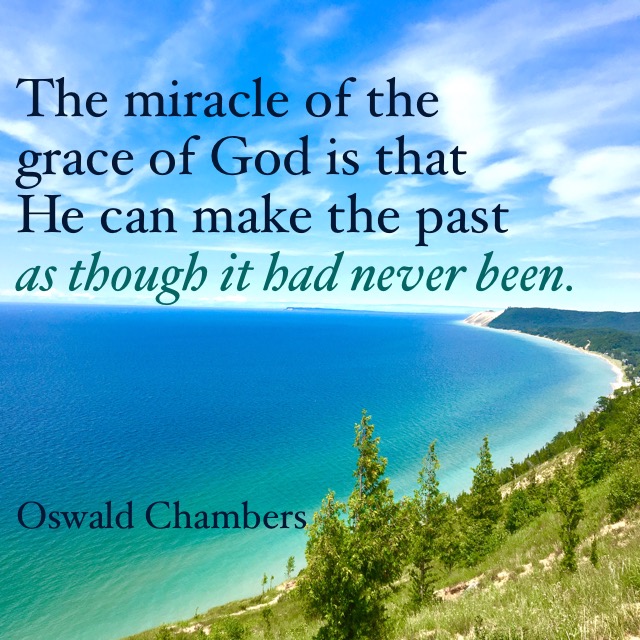
Miracle Of Grace 

   The miracle of the grace of God is that He can make the past as though it had never been.

From Run Today’s Race

Run Today’s Race contains short statements from Oswald Chambers intended to stimulate Christians to ponder things like:

  • Do I realize how much God’s grace is an undeserved miracle given to me?
  • Am I being held hostage by my past mistakes, or am I allowing grace to forgive and forget those mistakes?
  • Do I extend the same grace to others that God extends to me?

8 Quotes From “Paths To Power” by A.W. Tozer

As I said in my book review, A.W. Tozer’s words frequently make me say both “Ouch!” and “Amen!” Maybe you’ll feel the same thing in these few quotes.

“Left to herself the Church must have perished as a thousand abortive sects had done before her, and have left nothing for a future generation to remember. That the Church did not so perish was due entirely to the miraculous element within her. That element was supplied by the Holy Spirit who came at Pentecost to empower her for her task. For the Church was not an organization merely, not a movement, but a walking incarnation of spiritual energy. …

“In short, the Church began in power, moved in power, and moved just as long as she had power. When she no longer had power she dug in for safety and sought to conserve her gains. But her blessings were like manna: when they tried to keep it overnight it bred worms and stank. So we have had monasticism, scholasticism, institutionalism; and they have all been indicative of the same thing: absence of spiritual power.” 

“The weakness in our message today is our overemphasis on faith with a corresponding underemphasis on obedience. This has been carried so far that ‘believe’ has been made to double for ‘obey’ in the minds of millions of religious persons.”

“In every denomination, missionary society, local church, or individual Christian this law operates. God works as long as His people live daringly; He ceases when they no longer need His aid.” 

“To any casual observer of the religious scene today, two things will at once be evident: one, that there is very little sense of sin among the unsaved, and two, that the average professed Christian lives a life so worldly and careless that it is difficult to distinguish him from the unconverted man.”

“It is always dangerous to isolate a truth and then press it to its limit without regard to other truth.”

“It may be stated as an axiom of the Christian system that whatever makes sin permissible is a foe of God and an enemy of the souls of men.”

“Some time after Pentecost a group of believers met to pray for strength and power to meet the emergency then facing them, and to enlist the help of God on their behalf. ‘And when they had prayed, the place was shaken where they were assembled together; and they were all filled with the Holy Ghost, and they spake the Word of God with boldness’ (Acts 4:31). Some of these were of the original number filled at Pentecost. It is hardly conceivable that God acted contrary to His own will in filling them again after Pentecost. Still other outpourings are recorded in Acts 8, 10 and 19. All these occurred some years after the original act.

“In brief, the teaching of the New Testament is that the outpouring at Pentecost was the historic beginning of an era which was to be characterized by a continuous outpouring of the Holy Spirit.”

“This anti-emotionalism, though it is sponsored by some good people and travels in pretty orthodox company, is nevertheless an unwarranted inference, not a scriptural doctrine, and is in violent opposition to psychology and common sense. Where in the Bible are feeling and faith said to be at odds? The fact is that faith engenders feeling as certainly as life engenders motion. We can have feeling without faith, it is true, we can never have faith without feeling. Faith as a cold, unemotional light is wholly unknown in the Scriptures.”

Godly Leaders Prayerfully Plan

“… I pray…grant me mercy in the sight of this man [King Artaxerxes]…” (Nehemiah 1:11).

Nehemiah prayed this in the month of Chislev. Four months later—in the month of Nisan—we read Nehemiah’s words, “So I prayed to the God of heaven” (2:4).

It took four months before God began to answer Nehemiah’s prayer, but he definitely wasn’t idle during this time!

During these four months, Nehemiah did more than pray; he planned. In Nisan, the king asked Nehemiah why he seemed heartsick.

“This is nothing but sorrow of heart,” said the king. “What’s bothering you, Nehemiah?”

“My hometown is in ruins,” replied Nehemiah.

Then the king asked, “What would you like to do?”

“So I prayed to the God of heaven. And then I said to the king…” (vv. 2-5).

Nehemiah’s request to King Artaxerxes was very specific.

  • He told the king how long he would be gone
  • He told him the building supplies he would need
  • He requested a letter from the king granting him safe passage
  • He requested another letter authorizing him to have access to the forest for lumber

“And the king granted them to me according to the good hand of my God upon me” (v. 8). Not only that, but the King gave Nehemiah an armed escort back to Jerusalem!

Nehemiah prayed and planned, allowing God to determine the perfect timing. Nehemiah didn’t just pray and wait; he worked while he waited.

A mark of a godly leader is one who prayerfully plans his strategy.

My prayer—May all my plans be made with prayer to You for guidance. You know the best plans and the perfect timing, so I will pray and plan; plan and pray.

This is Part 4 in my series on godly leadership. To read my other posts, please click here.