Poetry Saturday—Make My House A Home

The house is quiet

And I don’t like it

It just feels like a house

My stuff is all here

It’s all in its place

It just feels like a house

I need some banter

Perhaps some laughter

To make this house my home

Some hugs would be nice

Maybe a cuddle

To make this house my home —Craig T. Owens

Thursdays With Spurgeon—The Unity Of Scripture

This is a weekly series with things I’m reading and pondering from Charles Spurgeon. You can read the original seed thought here, or type “Thursdays With Spurgeon” in the search box to read more entries.

The Unity Of Scripture

He will glorify Me, for He will take of what is Mine and declare it to you. All things that the Father has are Mine. Therefore I said that He will take of Mine and declare it to you. (John 16:14-15) 

     Let us never allow anybody to divide between the word of the apostles and the word of Christ! Our Savior has joined them together. ‘I do not pray for these alone, but also for those who will believe in Me through their word’ (John 17:20). And if any begin rejecting the apostolic word, it will be outside the number for whom Christ prays. …  

     Such a doctrine that we are sometimes taunted about as being not revealed by Christ but by His apostles were all revealed by Christ, every one of them! They can all be found in His teaching, but they are very much in parabolic form. It is after He has gone up into glory and has prepared a people, by His Spirit, to understand the truths of God more fully that He sends His apostles and says, ‘Go forth, and open up to those whom I have chosen out of the world the meaning of all I said.’ The meaning is all there, just as all the New Testament is in the Old! … [Jesus Christ] is the Old Testament to which the Epistles come in as a kind of New Testament, but they are all one and indivisible. They cannot be separated. …  

     Remember that the quickest way into a text is praying in the Holy Spirit. Pray the chapter over! I do not hesitate to say that if a chapter is read upon one’s knees, looking up at every word to Him who gave it, the meaning will come to you with infinitely more weight than by any other method of studying it. ‘He will glorify Me, for He will take of what is Mine and declare it to you.’ He will redeliver the Master’s message to you in the fullness of its meaning!

From Honey In My Mouth

Augustine wrote, “Scripture is the unus sermo Dei—the one sermon of God.” 

There is one consistent message in the Bible from Genesis 1:1 through Revelation 22:21, and the Holy Spirit wants to reveal that message to us. He is our Helper that will illuminate to our lives what has already been inspired in the Scripture. 

Jesus is Jehovah God from beginning to end. He is the “one sermon of God” that we can read and understand. Think about this: the same Spirit who inspired the pens of the biblical writers is the same Spirit in you who can help you understand and apply those words to your life. More than that, the Holy Spirit wants to make the Word of God clear to you. 

God is glorified and you are edified when Scripture comes alive in your heart and mind. 

Peter wrote this about Paul, “His letters contain some things that are hard to understand….” But if we don’t take the time to wrestle with that passage, Peter says this is what happens next: “…which ignorant and unstable people distort, as they do the other Scriptures, to their own destruction” (2 Peter 3:16). So, as Spurgeon suggests, begin your Bible reading time in prayer. Then if you come to a difficult text, don’t rush past it and don’t turn too quickly to what another human has written in a commentary, but ask the Holy Spirit to help. (I shared a 5-step process I use for these challenging passages here.) 

Pray, read, pray, apply, pray. The Holy Spirit WILL help you! “Remember that the quickest way into a text is praying in the Holy Spirit.”
 

True Prosperity

…and so he prospered (2 Chronicles 31:20-21). 

When I look up “prosper” in the dictionary, the first entry says, “to be successful or fortunate, especially in financial respects.” This isn’t even close to the Old Testament Hebrew word for prosper! 

God makes prosper a dependence on Him. Mammon makes prosper a dependence on self. 

The Hebrew word tsalach means: 

  • to overcome obstacles (like crossing a river) 
  • to be empowered by the Spirit of God to overcome an enemy (like Samson did) 
  • to flourish like a plant growing to full harvest 
  • to have favor with man so that good can be done for others (Nehemiah 1:11) 
  • to finish well (2 Chronicles 7:11) 
  • to be poured out; to be a conduit of God’s blessings to others 

Prosperity God’s way is being blessed to be a blessing to others.

Prosperity is never for me, only from God through me. 

Prosperity from God helps me overcome obstacles for others, defeat enemies for others, bring in a good harvest for others, have earthly favor that will benefit others, finish well for the sake of others. 

I’ll say it again: True prosperity ISN’T for me, it’s only from God through me! 

Hezekiah showed how God’s prosperity came through him to benefit others: 

  • he did “what was good and right and faithful before the Lord” 
  • he lived “in obedience to the law and the commands” 
  • “he sought his God and worked wholeheartedly” 

In light of this definition, I have no problem praying, “God, make me prosperous. As I seek You and work wholeheartedly, flow through me to bless others!

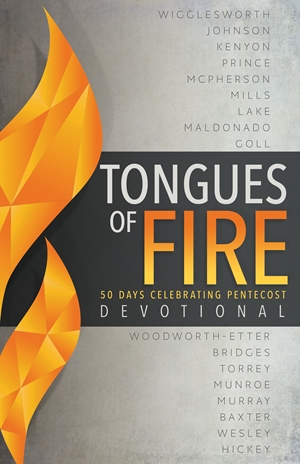
Tongues Of Fire (book review)

I am blessed to be the son of Pentecostal parents; and both of my parents come from Pentecostal parents too, as well as two Pentecostal great-grandmothers. That makes me a fourth-generation “holy roller”! But my Pentecostal heritage actually goes back farther than that, which made reading Tongues Of Fire such an enjoyable read. 

This book is billed as a 50-day devotional, with excerpts from sermons and writings of some of the best-known Pentecostals of the last 150 years. Yes, there are some “newcomers” that have some essays in this book as well, but I found the real substantive, enlivening writings to be from those old-timers. 

One of those old-timers said, “The Spirit is the first power we practically experience, but the last power we come to understand” (Oswald Chambers). How sadly true that so many Christians dig no deeper after their moment of conversion! 

It took me much longer than 50 days to read through these devotionals because I spent time pondering the messages and introspecting on their application to my life. 

Whether you are a seasoned Pentecostal, a newcomer, or someone simply hungry for more of God’s Spirit to be manifested in your life, you will enjoy diving into Tongues Of Fire.

Learning Contentment

A mark of a maturING saint is one who when he realizes he is in a trough begins to praise God in anticipation of the blessings which are coming! Even the most mature Christian you know hasn’t “arrived”; we are all a work-in-progress. Going through the dark nights is one way God helps mature our understanding of contentment. 

You know the differences between a need and a want: a need is something vital, something I require to survive; a want is something that would be nice to have. 

In good times I can convince myself that my wants are really the same as my needs. In the bright, sunny times a lot of wants mistakenly get called needs. But in the dark nights, this confusion is quickly clarified! 

In Philippians 4, Paul explains what he has learned about needs as he went through some very challenging, dark times. When he says he knows what a need is, he isn’t exaggerating a bit (see 2 Corinthians 11:24-28). And yet the Amplified Bible has Paul saying, “Not that I am implying that I was in any personal want.” 

That’s because Paul was learnING contentment. The verb tense here means I have learned, I am learning, and I will keep on learning. It was an ongoing process that helped him clarify needs from wants. The word Paul uses for content is unique in all the New Testament and it means independent of external circumstances, or as the Amplified Bible says, “satisfied to the point where I am not disturbed or disquieted in whatever state I am. 

Paul uses another unique word in verse 12 when he says “I have learned.” This is a different Greek word from the previous verse. This time it means disciplined by experience to know how to respond. In other words, Paul disciplined himself to reflect on the lessons he learned in the night. The cliche “Experience is the best teacher” isn’t necessarily true. Lots of people go through experiences and never learn a single thing. Instead, we should say, “Evaluated experience is the best teacher.” That’s exactly what Paul is saying here: “I have learned lessons in my time of meditation after going through a dark night.” 

The English dictionary defines contentment in two important phrases: 

  1. Satisfied with what I have. In Psalm 16, David learned that he had everything he needed in God, and Jesus reminded us that “your Father knows what you NEED before you ask Him” (Matthew 6:8).
  2. Satisfied with who I am. Paul knew that “God, who set me apart from my mother’s womb and called me by His grace, was pleased” (Galatians 1:15). God made Paul on purpose and for a purpose, and Paul was satisfied with who he was in Christ. God made you on purpose too! 

Our relationship with Jesus is a maturING one. It’s only IN Christ that I can be satisfied with what I have, and satisfied with who I am. It’s only IN the night that my wants get separated from my needs, by learnING contentment.

I can be thankful in the night because I am learning contentment. 

If you’ve missed any of the other messages in this series called Thankful In The Night, you can access the full list by clicking here. 

Poetry Saturday—You-er Than You

Today you are you, that is truer than true.
There is no one alive who is you-er than you.
Shout aloud, I am glad to be what I am.
Thank goodness I’m not a ham, or a clam,
or a dusty old jar of gooseberry jam.
I am what I am, what a great thing to be.
If I say so myself, happy everyday to me! —Dr. Seuss

Thursdays With Spurgeon—Not Carried Away

This is a weekly series with things I’m reading and pondering from Charles Spurgeon. You can read the original seed thought here, or type “Thursdays With Spurgeon” in the search box to read more entries.

Not Carried Away

He will glorify Me, for He will take of what is Mine and declare it to you. All things that the Father has are Mine. Therefore I said that He will take of Mine and declare it to you. (John 16:14-15) 

     [The Holy Spirit] does not aim at any originality. … The Spirit takes of the things of Christ and of nothing else. Do not let us strain at anything new. The Holy Spirit could deal with anything in heaven above or in the earth beneath—the story of the ages past, the story of the ages to come, the inward secrets of the earth, the evolution of all things, if there is an evolution. He could do it all! Like the Master, He could handle any topic He chose, but He confines Himself to the things of Christ and therein finds unutterable liberty and boundless freedom. …  

     When, therefore, anybody whispers in my ear that there has been revealed to him this or that, which I do not find in the teaching of Christ and His apostles, I tell him that we must be taught by the Holy Spirit. … If we do not remember this, we may be carried away by quirks, as many have been.

From Honey In My Mouth

How many arguments have devastated people, how many friendships have been lost, how many churches have split because of a clinging to doctrines which aren’t found in the Bible?! How this must break our Father’s heart! 

Quite simply put: we argue and take sides over things on which the Word of God makes no distinction. Oh, foolish pride! 

The Holy Spirit never reveals a unique or private or exclusive word to anyone. He only makes clear what has already been revealed in the Word of God. Does that mean we cannot have an opinion on something? Of course not!

But love for Christ and for His Bride means that my opinions must never become my doctrines. 

Holy Spirit, help me to listen to Your voice alone as You illuminate what has already been inspired. Jesus, may Your love for the Church be my love for the Church. Root out this accursed pride in my heart that makes me fight for my opinions. Father, may You be glorified in Your Church as we are unified around Your revealed truth.

The Craig And Greg Show: A Salute To Veterans

On this episode of “The Craig And Greg Show” we talk about: 

  • a question from a viewer about job interviewing 
  • how to get in the drawing for a special monthly prize 
  • helping wounded veterans stay on the move through the Oscar Mike organization 
  • some astounding stats about our veterans 
  • how we can best show gratitude to our veterans 
  • Greg and I share some cool stories of our interactions with veterans 
  • some insights into true sacrifice

Check out this episode and subscribe on YouTube so you can watch all of the upcoming episodes. You can also listen to our podcast on Spotify and iTunes.

Humility Is A Daily Choice

Listen to the podcast of this post by clicking on the player below, and you can also subscribe on AppleSpotify, or Audible.

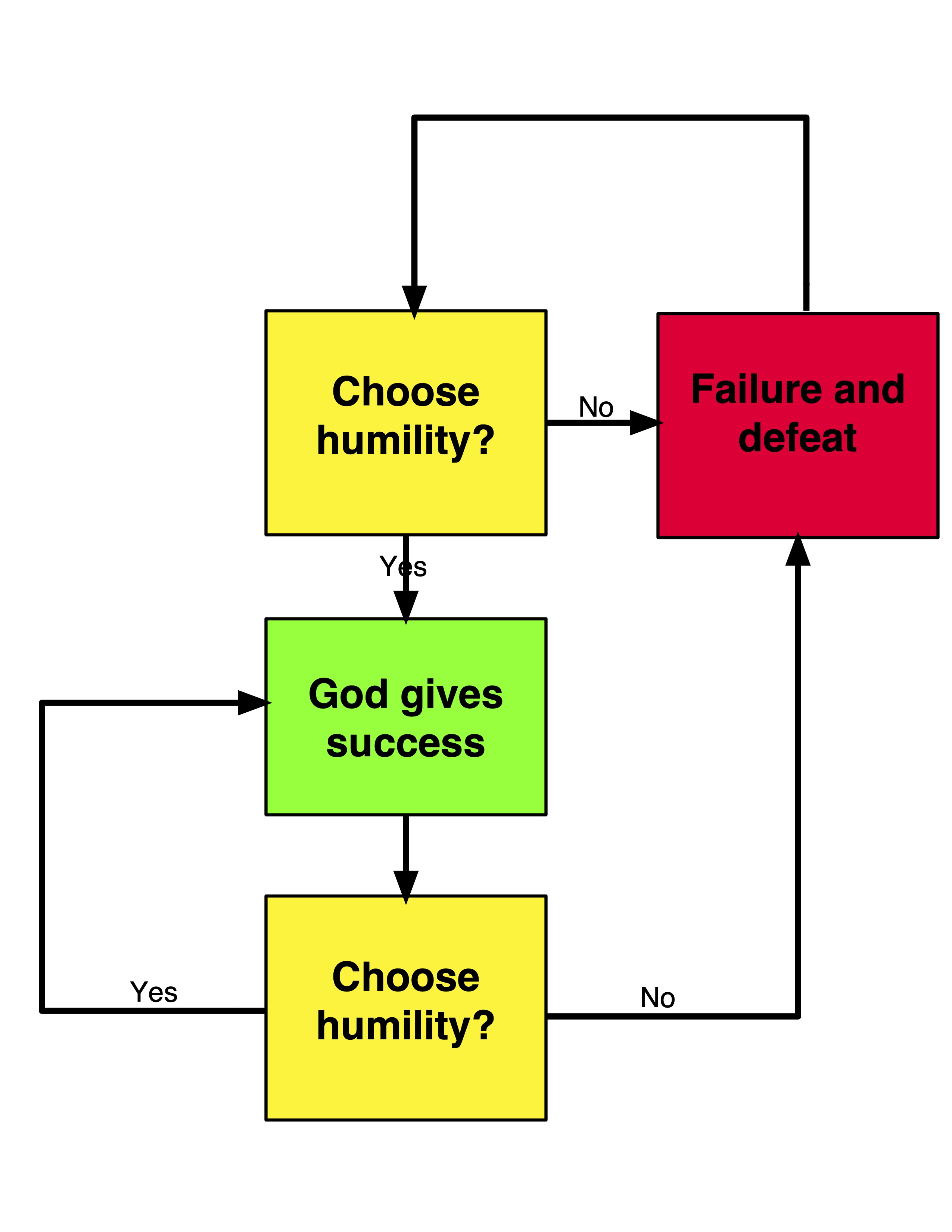
…As long as Uzziah sought the Lord, God gave him success. … But after Uzziah became powerful, his pride led to his downfall… (2 Chronicles 26:5, 16). 

Success makes me more vulnerable to pride. Success can distract from the very One who gave me success. I am in danger of losing God’s blessings in the very moment I am enjoying God’s blessings. 

Humility has to be an ongoing choice. That choice becomes harder as the successes become bigger or more frequent. But choosing pride in “my accomplishments” will undo all the previous successes. 

The only way to keep these blessings is two words: IF ONLY. If only I will continue to remain humble before God and obedient to Him. 

Uzziah, sadly, didn’t make that choice. His pride in God’s success led to his downfall. 

His son Jotham learned this lesson. Jotham grew powerful because he walked steadfastly before the Lord his God (27:6). 

I like the KJV of this verse that says, “Jotham grew powerful because he prepared his ways before the Lord his God.” 

Jotham was keenly aware that everything he did was seen by God. He was determined that everything he did would be pleasing in God’s sight. The word “before” in verse 6 means “in front” of or even “before the face.” Jotham didn’t live as though he might face God at the end of his life, but as though he was facing God at every moment of his life. 

Notice two phrases in this sentence—grew powerful and walked steadfastly. They are directly tied to each other: Jotham became powerful only because he was determined to live righteously and humbly in God’s sight. The more powerful he became, the more he increased his commitment to live humbly before God’s face. 

He did what was right in the eyes of the Lord, just as his father Uzziah had done, BUT unlike him he did not enter the temple of the Lord (v. 2). 

Jotham humbly prepared his ways before the Lord, and when God made him powerful Jotham re-committed to stay humble. Great choice! 

I’ll say it again: The only way to keep God’s blessings on my initial humble choice is to continue to choose humility at every moment of success. 

►► Would you please prayerfully consider supporting this ministry? My Patreon supporters get behind-the-scenes access to exclusive materials. ◀︎◀︎

When To Seek Consensus

David conferred with each of his officers…. He then said to the whole assembly of Israel, “If it seems good to you and if it is the will of the Lord our God…let us bring the ark of our God back to us….” The whole assembly agreed to do this, because it seemed right to all the people. (1 Chronicles 13:1-4) 

David cast a vision, consulted with his inner circle of leaders, shared the vision with the people, and got unanimous agreement from everyone. 

And yet things went horribly wrong: a man was killed and David became terrified of God.

In the above verses, notice all of the plural pronouns: we and us. David worked hard to build a consensus among the people. 

David was quick to notice that the ark of the covenant of the Lord wasn’t used to consult God during the reign of King Saul (v. 3), but that’s exactly what David didn’t do. He built a consensus among the people without getting a “yes” from God. Even a unanimous decision of the people will fail if God isn’t in it! 

Thankfully, in chapter 15, David corrects this omission. We read phrases like: 

  • “we did not inquire of [God] about how to do it in the prescribed way” 
  • we should do this “in accordance with the word of the Lord” 

I also notice that David no longer sought consensus but merely announced to the people what was happening. In this successful attempt to move the ark, David’s only consultation was with God. After that, he made arrangements with the Levites, gathered his inner circle of leaders, and then asked the people to join in the celebration. 

God had already spoken about how the ark of the covenant was to be moved: it was written in His word. Therefore, as noble as it might sound, there was no reason for David to seek a consensus from the people.

Even if it is not an area or activity explicitly addressed in the Bible, God’s will is to be sought before others are consulted. If God says “yes,” the leader must proceed even if the people say “no.” And the leader must not listen to the people’s “yes” if God has said “no.” 

Consensus is fine in its place, but only in its proper place. 

A mark of a godly leader is one who knows when to seek consensus among the people.

This is part 53 in my series on godly leadership. You can check out all of my posts in this series by clicking here.