Release The Hound!

Listen to the podcast of this post by clicking on the player below, and you can also subscribe on AppleSpotify, or Audible. 

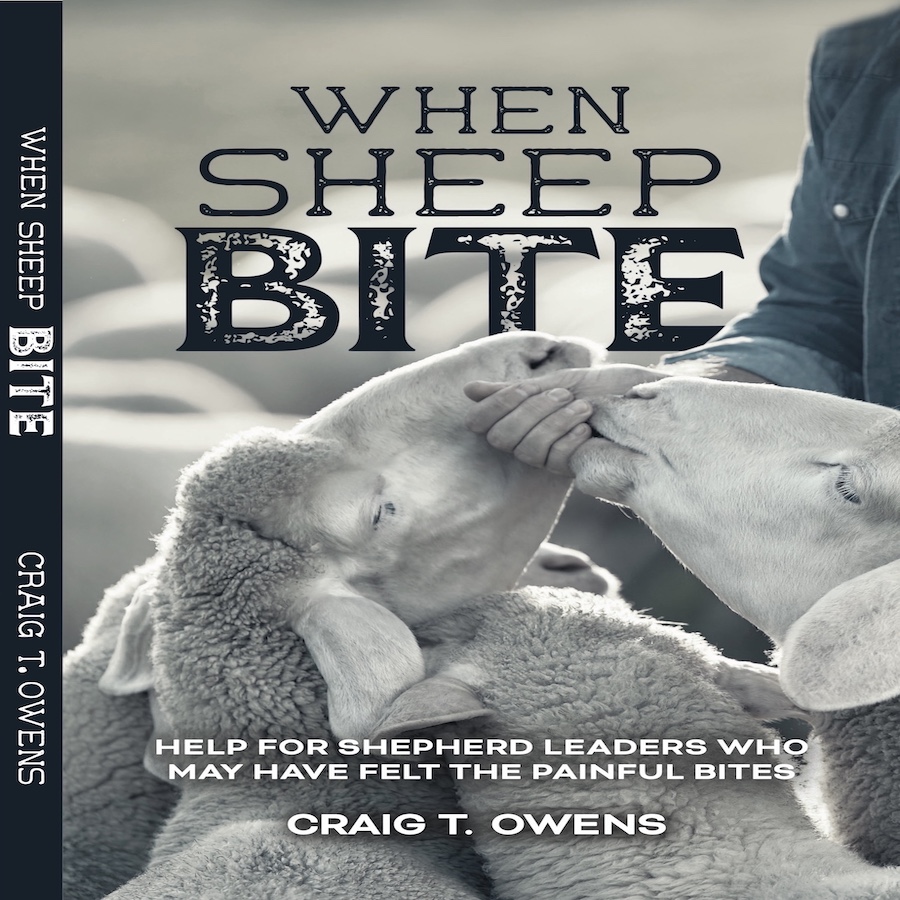
My book When Sheep Bite is a manual of help for church leaders who have been hurt by the very sheep they are attempting to help. This book was birthed from a very painful chapter in my own ministry. 

But as dark as that time was, there was a ray of light that helped me to smile during the dark times and for years and years afterwards. Here is an excerpt from the chapter ‘Cry Before Your Confront’ in When Sheep Bite

     We used to have a funny saying in our family. Our puppy would be straining to get free and one of us would cry out, “Release the hound!” 

     After reading the previous chapter about imprecatory prayers, and hopefully putting that into practice, I hope you felt some relief from your anger. But when you read my reminder that David’s “Get ‘em, God!” cry was for God’s ears only, perhaps you were a little disappointed. Maybe you were hoping for someone to give you a green light to “release the hound” on those biting, kicking, and wayward sheep. 

     Wouldn’t it be so wonderful to unleash something—anything!—on those difficult sheep? As shepherds, we have so many ways we can dress up our unleashed hounds in biblical-sounding language. Maybe a righteous rebuke like the psalmist recorded: “You rebuke the arrogant, who are accursed, those who stray from Your commands” (Psalm 119:21). Or perhaps a well-timed prophetic thunderbolt like when Samuel was praying and “the Lord thundered with loud thunder against the Philistines and threw them into such a panic” (1 Samuel 7:10). Or even a strategic lightning strike from God’s throne as when the soldiers from King Ahaziah came to forcibly take Elijah to the king (2 Kings 1:11-12). 

     One of my favorite prayers is a prayer of David’s that is given added emphasis since it is recorded twice in the Scripture (2 Samuel 22 and Psalm 18)—

     In my distress I called to the Lord; I cried to my God for help. From His temple He heard my voice; my cry came before Him, into His ears. The earth trembled and quaked, and the foundations of the mountains shook; they trembled because He was angry. Smoke rose from His nostrils; consuming fire came from His mouth, burning coals blazed out of it. He parted the heavens and came down; dark clouds were under His feet. … Out of the brightness of His presence clouds advanced, with hailstones and bolts of lightning. The Lord thundered from heaven; the voice of the Most High resounded. He shot His arrows and scattered the enemy, with great bolts of lightning He routed them. (Psalm 18:6-9, 12-14) 

     Wow, how good it must have felt for David to unleash these words! And yet we still see that they were words only for God’s ears, spoken when David was alone with the Almighty God. Isn’t there something we can say or do to our obstinate sheep? Yes, there is, but there is something we need to be reminded of first. 

     After a particularly grueling day of being bitten, kicked, and attacked by the angry sheep in my pasture, I came home and announced, “Tomorrow is ‘Be Kind to Craig Owens Day!” While driving home and licking my wounds, I had determined that I needed a day off—a day to unplug from all of the madness and make sure I was taking care of myself. 

     Let me add a very important truth here. In fact, it’s so important that I’m going to print it in bold letters: Self-care is not selfish! Far too many shepherds think that taking time off to care for themselves, especially in the midst of all of the chaos, is a selfish thing to do. 
     Selfish is different. Selfishness is self-centered. Selfishness is saying, “I’m going to take care of myself and I don’t care what happens to others while I’m doing what I want to do.” Self-care is a strategic withdrawal to take care of myself so that I can return to take care of others. It is like the instructions on an airplane to put your own oxygen mask on first before you try to help a small child with their mask. If I pass out, I’m no good to anyone else. Just as Jesus “often withdrew to lonely places and prayed” (Luke 5:16), we must find times to care for ourselves so that we are strengthened to help others when we return to the fray. This concept of self-care is so vital that I have dedicated all of Chapter 12 to explaining this idea to you in more depth. 

     My family still celebrates the Be Kind to Craig Owens Day “holiday” but we mainly remember it because of something else that happened in our family. 

     On this inaugural event, I planned a day of reading, praying, walking, and recuperating. I silenced my phone and withdrew for that entire Friday. After a nice evening with my family, I decided to extend my self-care time into Saturday. My daughter and I went out to breakfast, and because we both enjoy animals so much, we decided to stop into a new pet store and play with the puppies for a while. 

     Almost instantly, both of us were captivated by a very special dog. There was something about her that drew us to her. In short order, we were on the phone with my wife and my sons asking them to join us at the pet store. We ended up walking out of the store that morning with a new addition to our family. 

     My wife later remarked that this puppy was the best irresponsible decision we ever made. Part of the reason this was true is that this puppy became my constant companion. I took her to my office with me so that I would have a source of unconditional love to offset all of the brutal attacks I was absorbing. 

     When John Bradford saw a cartful of men going off to Tyburn to be hanged for their crimes, he said to a friend, “There goes John Bradford but for the grace of God.” When I stopped to think what was different between my behavior and the behavior of these biting sheep, I realized it was only the grace of God that had kept me from descending into the same ugly behavior. That’s when I decided to name our new puppy Grace. I wanted to say that name over and over and over again. I desperately needed to be reminded of God’s grace for me. I also needed to be reminded that God wanted my biting sheep to know His grace too. 

     When we cried out, “Release the hound,” it was because Grace was straining at her leash to overwhelm someone with her love. She wanted nothing more than to show them how much she welcomed them into her presence. 

     I’ll be honest with you: When some of my biting sheep came storming into my office to berate me for something and Grace wanted to run to them with love and acceptance, I wanted to scold her and keep her back. This, I think, was the attitude of the older brother when his wayward brother returned home and was lovingly welcomed back into the fold by their father (Luke 15:11-32). But when I paused to think of God’s amazing grace that “saved a wretch like me,” I was reminded that God’s grace also wants to restore other wayward, obstinate, unreasonable sheep. 

     Our annual reminder of this event is really remembering our dog Grace’s “Gotcha Day.” It’s our annual reminder that grace is best seen in times and places that it is least expected.

If you are a church leader, please pick up a copy of When Sheep Bite to help you on your healing journey. And if I can be of assistance to you, please get in touch with me. 

►► Would you please prayerfully consider supporting this ministry? My Patreon supporters get behind-the-scenes access to exclusive materials. ◀︎◀︎
Staggering Seduction

Listen to the podcast of this post by clicking on the player below, and you can also subscribe on AppleSpotify, or Audible. 

The northern tribes of Israel had been defeat by the Assyrians and gone into exile because of their persistent and unrelenting sins against God. You would think that this would be a vivid enough warning to get the attention of the people of Judah, but sadly it wasn’t. 

King Manasseh sinned and then doubled-down on his sinning. The prophets thundered their warnings, and Manasseh not only kept his sins going but he kept pulling more and more people down into sin with him. 

Isaiah pointed to the example of Israel’s sin—

     Woe to Samaria the crown of pride of the drunkards of Ephraim [the ten tribes], and to the fading flower of its glorious beauty, which is on the head of the rich valley of those overcome and smitten down with wine! … But even these reel from wine and stagger from strong drink: the priest and the prophet reel from strong drink; they are confused from wine, they stagger and are gone astray through strong drink; they err in vision, they stumble when pronouncing judgment. (Isaiah 28:1, 7 AMPC) 

Notice the words like reel and stagger, as though intoxicated by alcohol. 

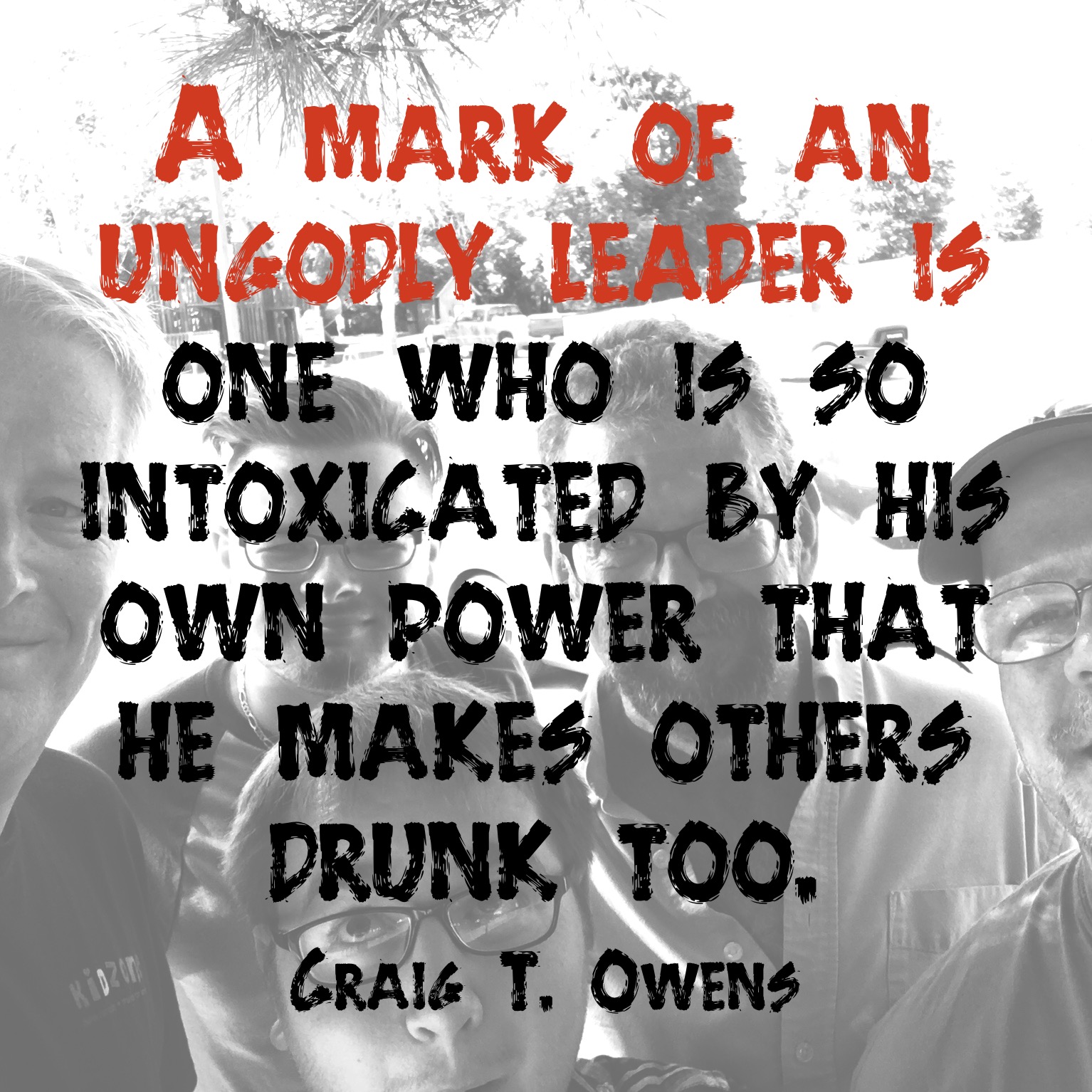
A mark of an ungodly leader is one who is so intoxicated by his own power that he makes others drunk too. 

Look at this description of Manasseh: “But the people [of Judah] would not listen; and Manasseh seduced them to do more evil than the nations did whom the Lord destroyed before the Israelites!” (2 Kings 21:9). 

The Hebrew word translated “seduced” is the same Hebrew word that Isaiah used for the staggering and going astray of a drunkard. 

This is the power that leaders have for both good and evil. A sober-minded, godly leader can encourage people toward righteousness, but an ungodly leader who is intoxicated by his power seduces people to join him in his unrighteousness. Manasseh was described as “making Judah sin, by doing evil in the sight of the Lord” (v. 16).

Certainly there are people who choose a sinful lifestyle during the tenure of a godly leader, and there are people who steadfastly choose righteousness during the tenure of an ungodly leader. But the Bible issues strong warnings to those leaders who misuse their God-appointed positions of leadership to lead people astray (see Ezekiel 3:17-21, 33:1-9). 

Leaders, be on guard that a position of leadership doesn’t seduce you to stray from righteousness. Don’t forget that God chose you for this role, so to Him you will have to stand to give an accounting of your leadership. I pray you can say that you soberly and sincerely pursued righteousness and led your people in that pursuit as well. I want you to hear, “Well done, good and faithful servant” and not, “Depart from Me.” 

This is part 86 in my series on godly leadership. You can check out all of my posts in this series by clicking here.

►► Would you please prayerfully consider supporting this ministry? My Patreon supporters get behind-the-scenes access to exclusive materials. ◀︎◀︎

Refuge From The Shoving

Listen to the podcast of this post by clicking on the player below, and you can also subscribe on AppleSpotify, or Audible. 

I don’t know when the last was that you may have tried to get a dozen little kids lined up, but it’s quite an experience! Everyone is vying for their spot. Someone gets mad and yells out, “He cut!” And then the reply is yelled back, “No, I didn’t. She was saving my spot!” This usually results in lots of pushing and shoving as each person tries to reclaim their rightful place in line. 

This is the backdrop for Psalm 7. The introduction tells us that Cush is causing David grief. Maybe because Cush is from the tribe of Benjamin like King Saul, and he doesn’t want David cutting in line so he is shoving him back to his proper place. 

(Check out all of the Scriptures in this post by clicking here.)

There’s a musical term David uses, which isn’t used in any other psalm: shiggaion. This means a rhythm that isn’t normal—it’s a freewheeling, irregular, impassioned beat. This also helps set the atmosphere for what’s happening in David’s life. The root word for shiggaion implies a shakeup (or a shoving and pushing) that could lead to someone losing their way. 

David tries to do the right thing. He asks for God’s help (v. 1) so that he doesn’t get ripped to shreds (v. 2). He even takes time to ask himself if he has done anything that led to Cush’s shoving (vv. 3-5). But notice these are all David’s attempts to make things right. 

Remember that this is a Royal Psalm, but we haven’t heard anything about God as King yet. But now we come to the end of v. 5, which is also the end of David’s own striving. It’s marked by the word Selah. 

My little friends push and shove to try to get their place. But all of that stops when I say, “Johnny is my line leader, and this is the way the rest of you are going to line up behind him.” David’s Selah pause was a call to switch from doing things on his own to yielding to the King to sort things out. He was saying, “The King of kings is the Leader and He knows my place in line.” 

It’s only after the Selah that we see the royal terms for the Undisputed Leader:

  • He is the One who will decree justice (v. 6) 
  • He will rule…from on high (v. 7) 
  • He is the Supreme Judge (vv. 8, 11) so David yields his introspection to Him (vv. 3-4, 8-9) 
  • He is God Most High (vv. 10, 17) 

Our King has no rival. No one can shove Him. No one can contradict Him. No one can hide anything from Him (vv. 11-16). 

We must bow only to the King of kings (Philippians 2:10-11). 

We mistakenly bow our knee to man when…

  • …we aren’t willing to own our mistakes 
  • …we try to administer our own “shove” of justice 
  • …we make our own refuge 

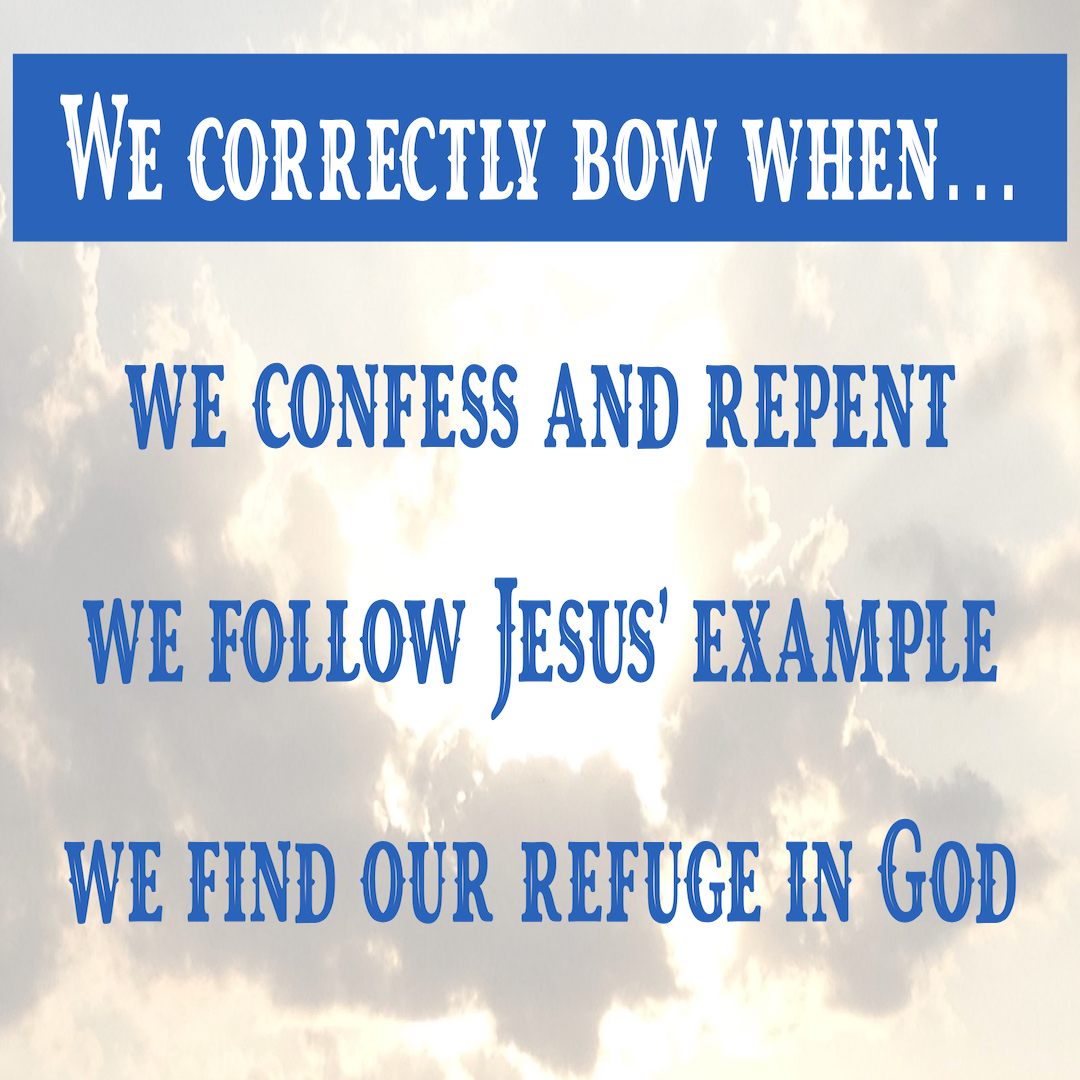
So we bow to the King when…

  • …we acknowledge, confess, and repent of our sins (vv. 3-5; Psalm 19:12, 69:5)
  • …we follow the example of Jesus when we’re shoved around (1 Peter 2:21-23)
  • …find our refuge solely in God (v. 1; c.f. 2:12; Ephesians 6:12; James 4:7)

Our best response in troublesome times—when you feel like you are being shoved around—is to fall to your knees in reverence to the King of kings (v. 17)! The beloved of the Lord shall dwell in safety by Him; He covers him all the day long, and makes His dwelling between his shoulders (Deuteronomy 33:12 AMPC). 

If you’ve missed any of the other messages in our series looking at the royal psalms, you can catch up by clicking here. 

►► Would you please prayerfully consider supporting this ministry? My Patreon supporters get behind-the-scenes access to exclusive materials. ◀︎◀︎
Links & Quotes

Controlling leaders shut down creativity among their teammates, which leads to higher turnover. If your team isn’t sharing their good ideas with you or if they are leaving you, that may be an indicator that you are too controlling. Check out the full conversation on The Craig and Greg Show

I have a lot of new video content on my YouTube channel every week. Please check it out and subscribe so you don’t miss anything.

“As a fact, men only become greedily and gloriously material about something spiritualistic. … Take away the supernatural, and what remains is the unnatural.” —G.K. Chesterton 

Astronomical technology like the James Webb Space Telescope (JWST) are providing breathtaking images. They are also creating problems for the scientific theories of the origins of our universe. University of California Santa Barbara physicist Caitlin Casey, said, “It makes sense—the Big Bang happens and things take time to gravitationally collapse and form, and for stars to turn on. There’s a timescale associated with that…. And the big surprise is that with JWST, we see roughly 10 times more galaxies than expected at these incredible distances.” There is a more straightforward answer found in Genesis 1:1, “In the beginning, God created the heavens and the earth.”

“Knowing where God wants people to be and taking the initiative to use God’s gifts and God’s methods to get them there, in reliance on God’s power through Christ, with God’s appointed people following.” —John Piper, giving his definition of godly leadership 

The Bible records the names of five Persian kings. One of them called “Darius the Persian” in Nehemiah 12:22 requires some historical cross-referencing to identify. The Bible Archeology Report presents another one of their fascinating archeological biographies on this Persian king. 

“The greatness of a leader is in his humility before God, not in his eloquence before men.” —Anonymous

The most viewed and downloaded resource on my blog is my chart of the kings of the united kingdom of Israel and the divided kingdoms of Israel and Judah. I was thrilled to discover this week that Jacob Edson at Biblegateway has taken my chart even deeper!

T.M. Moore has vital counsel for pastors, “Jesus must increase in us, and we must decrease. But that doesn’t just happen by carrying out whatever our ‘spiritual work’ requires of us week-in and week-out. Our ‘natural gifts’ cannot replace spiritual ones, and ‘mental powers’ are no match for the mind of Christ. It is a shepherd’s ‘duty’ to attend to the care and nurture of his soul, for unless we are diligent in this, we will not be able to lead the Lord’s sheep into a greater experience of our great salvation or a fuller realization of His Kingdom.”

The Patriot Financier

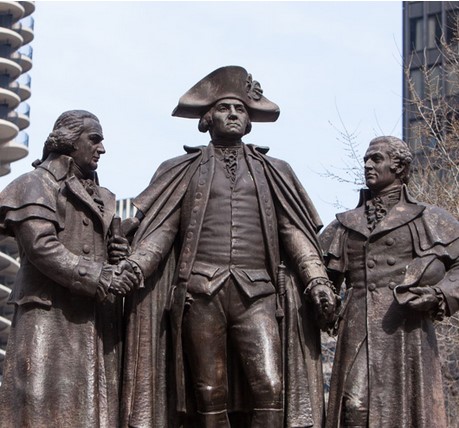
Monument of George Washington with Haym Salomon (L) and Robert Morris (R)

My friend Douglas Carmel shared an amazing story in his monthly newsletter. I am reposting it here with his permission.

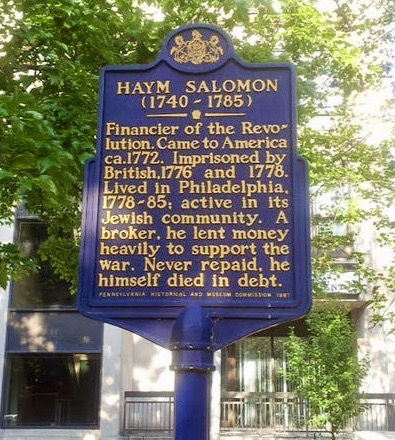
July 4th is the “birthday” of America, but we may have never celebrated that date without the contribution of a long-forgotten Jewish man in American history. His name was Haym Salomon.

Haym Salomon’s life was brief (1740–1785), but his impact on America was substantial. A Polish-born Jewish businessman, Salomon advanced from a penniless refugee to become one of the most important financiers of the American Revolution.

Risking his personal fortune, he helped fund General Washington’s army by securing loans. Records show Haym Salomon’s fundraising and personal lending helped provide over $650,000 (over $17 million in today’s dollars) in financing to help George Washington in his war effort.

In August 1781, the Continental Army had trapped British Lieutenant General Charles Cornwallis in the Virginian coastal town of Yorktown. George Washington decided to march to Yorktown and deliver the final blow. But Washington’s war chest was completely empty, as was that of Congress. Without food, uniforms, and supplies, Washington’s troops were close to mutiny.

When he was told there were no more funds and no more credit available, George Washington gave a simple but eloquent order: “Send for Haym Salomon.” Salomon lent even more personal funds and raised even more money for the cause. Washington conducted the Yorktown campaign, which proved to be the final battle. The British were finally defeated. America was now a free country. The war was won!

Even after the war was won, Salomon used his own money to help finance America’s newly formed but impoverished government. Sadly, his generosity was not repaid. It seemed that Congress did not recognize their debt to Salomon, refusing to repay the money they borrowed. Salomon died in poverty in 1785, at the age of just 44. His family was left penniless, unable to reclaim their debt from the government. In 1975, the U.S. Postal Service issued a stamp hailing Salomon as a Financial Hero of the American Revolution. 

In 1941, the City of Chicago erected the statue of George Washington, flanked by Haym Salomon and Robert Morris. It stands today at the intersection of Wabash and Wacker Drive. Under the image of Salomon it says, “Haym Salomon—Gentlemen, Scholar, Patriot. A banker whose only interest was the interest of his country.”

Disagreement To Unity

Listen to the podcast of this post by clicking on the player below, and you can also subscribe on AppleSpotify, or Audible. 

The higher the stakes, the stronger your teammates’ opinions on how the organization should move forward. Leaders who take the time to walk their teams through this process will develop a stronger, more unified team. 

Check out the full conversation on The Craig and Greg Show in our episode Unity Not Conformity. 

Find out more about how Greg and I can coach you to leadership excellence. And get more information on my leadership-development books here: 

►► Would you please prayerfully consider supporting this ministry? My Patreon supporters get behind-the-scenes access to exclusive materials. ◀︎◀︎

‘The Depth Of My Love For You’

Listen to the podcast of this post by clicking on the player below, and you can also subscribe on AppleSpotify, or Audible. 

The apostle Paul’s letters to the church in Corinth show two things: a lot of correction and a lot of love. In fact, it’s in the middle of some correction and redirection about the misuse of spiritual gifts that Paul gives us the quintessential definition of love in 1 Corinthians 13. 

Paul also wrote, “For I wrote you out of great distress and anguish of heart and with many tears, not to grieve you but to let you know the depth of my love for you” (2 Corinthians 2:4). 

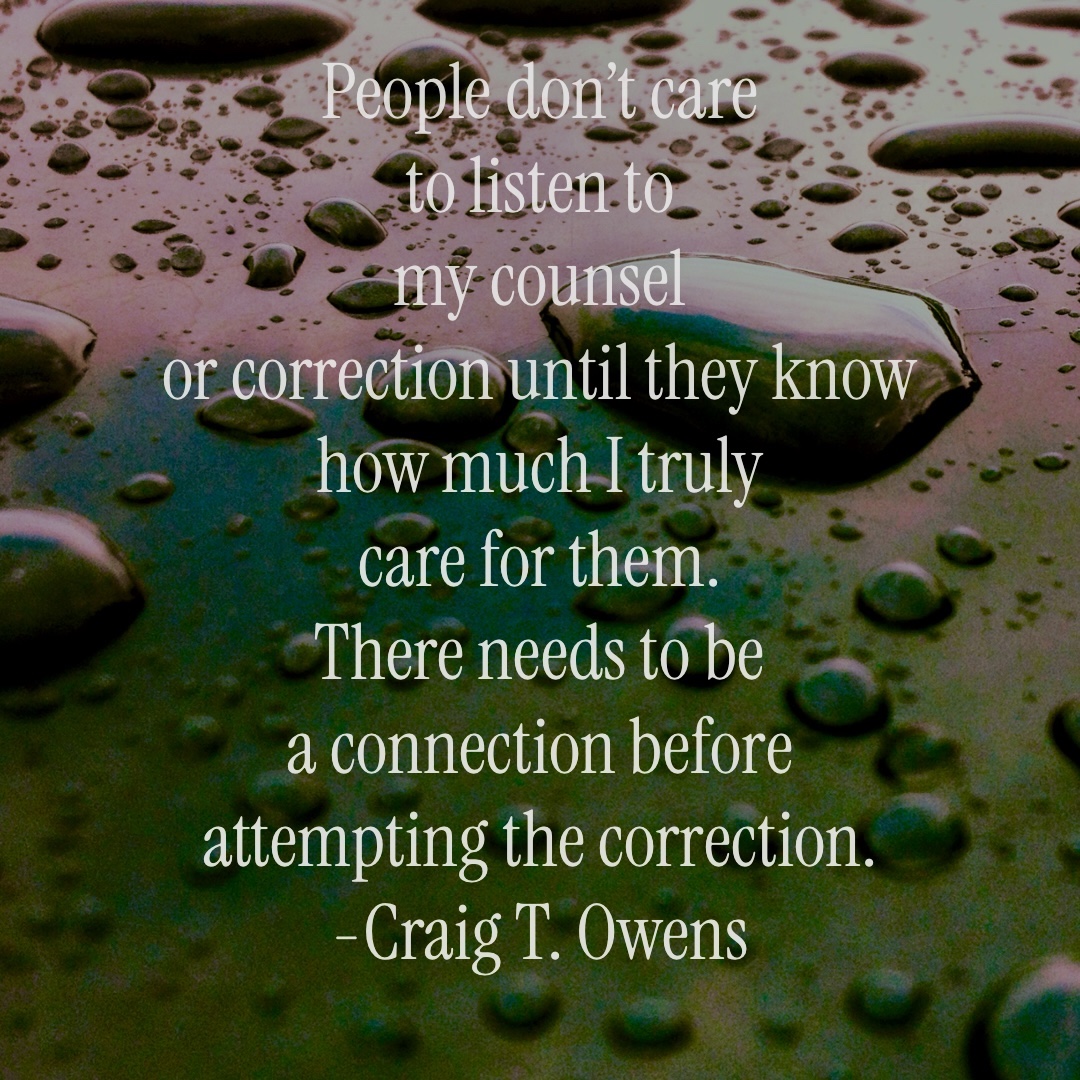
The truth does need to be spoken to wayward sheep, but it has to be birthed in love and spoken in love or else it will alienate more than help. People don’t care to listen to my counsel or correction until they know how much I truly care for them. 

There needs to be a connection before attempting the correction. 

I have an entire chapter in my book When Sheep Bite on this topic. Here’s an excerpt—

     It is possible that our grace-filled response to our biting sheep may make the difference to their eternal home. The apostle Paul told Timothy that those sheep who were out of line were trapped by the devil, and unless Timothy did something those sheep may never break free—

     And the Lord’s servant must not be quarrelsome but must be kind to everyone, able to teach, not resentful. Opponents must be gently instructed, in the hope that God will grant them repentance leading them to a knowledge of the truth, and that they will come to their senses and escape from the trap of the devil, who has taken them captive to do his will. (2 Timothy 2:24-26) 

     For some reason many shepherd leaders have made “confrontation” a dirty word, or have sullied its usefulness by confronting in an ungodly way. One thing that will help us handle confrontation the right way is to remember why we confront: The goal of confrontation is restoration, not destruction! 

     There is a cliché that says, “Once bitten, twice shy.” As I mentioned earlier, after we’ve been bitten we need to allow the Holy Spirit to search our hearts to point out anything in us that may have contributed to such a painful outburst from that sheep. Perhaps after doing all of that you attempted to confront a sheep and it didn’t go so well. As a result, you are now a bit shy to confront another wayward sheep. Dick Brogden wrote:

     “Experience so easily leads us to cynicism. Information too easily leads to pain. Leadership often makes us jaded because we’ve seen so much junk, all the effects of broken people breaking people. … A strong heart determines that it will stay soft, that it will absorb hurt, disappointment, and reality, and yet believe that God can redeem people and circumstances.” 

     Handled correctly, confrontation can lead to restoration, a deeper intimacy, and newfound maturity. Handled incorrectly, and, well, let’s just say it can get very ugly!

     I imagine we have all heard stories of the fallout from confrontation in another pasture, or perhaps we know the painful consequences in our own pastures. But let’s try for a moment to put those past experiences or secondhand stories out of our minds and take a fresh look at how to handle confrontation. 

     Samuel was going to be sent by God to confront King Saul about the sin he had committed. Look at this passage: “Then the word of the Lord came to Samuel: ‘I am grieved that I have made Saul king, because he has turned away from Me and has not carried out My instructions.’ Samuel was troubled, and he cried out to the Lord all that night” (1 Samuel 15:10-11). 

     Did you catch how Samuel responded? He cried out to the Lord all that night. 

     Perhaps if we, as godly under-shepherds, cried before we confronted the results might be more healthy. Billy Graham noted, “Tears shed for self are tears of weakness, but tears shed for others are a sign of strength.” (from Chapter 5 ‘Cry Before You Confront’) 

If you have some difficult but necessary words to speak to someone, take time to cry before you confront. Ask the Holy Spirit to reveal to you the most loving way to handle this situation. Cry before you confront, and may your tears soften your heart to speak truthful words saturated in your love for God and your love for this wayward saint. 

Please pick up a copy of When Sheep Bite to learn more biblical strategies for handling biting sheep and for healing from biting sheep. If I can be of help to you, please get in touch with me.

P.S. You may also be interested in a whole series about growing and showing our love called Loving the Unlovable.

►► Would you please prayerfully consider supporting this ministry? My Patreon supporters get behind-the-scenes access to exclusive materials. ◀︎◀︎
Resourced Like Jesus

Listen to the podcast of this post by clicking on the player below, and you can also subscribe on AppleSpotify, or Audible. 

If Jesus needed to be empowered by the Holy Spirit in order to do His Father’s business, how much more do we need this anointing today? 

You can check out the full sermon from which I took this clip: The Father’s Business.

The Scriptures I reference in this clip—Luke 3:22; Matthew 17:5; Luke 4:1, 18-19; Acts 10:38; John 5:36. 

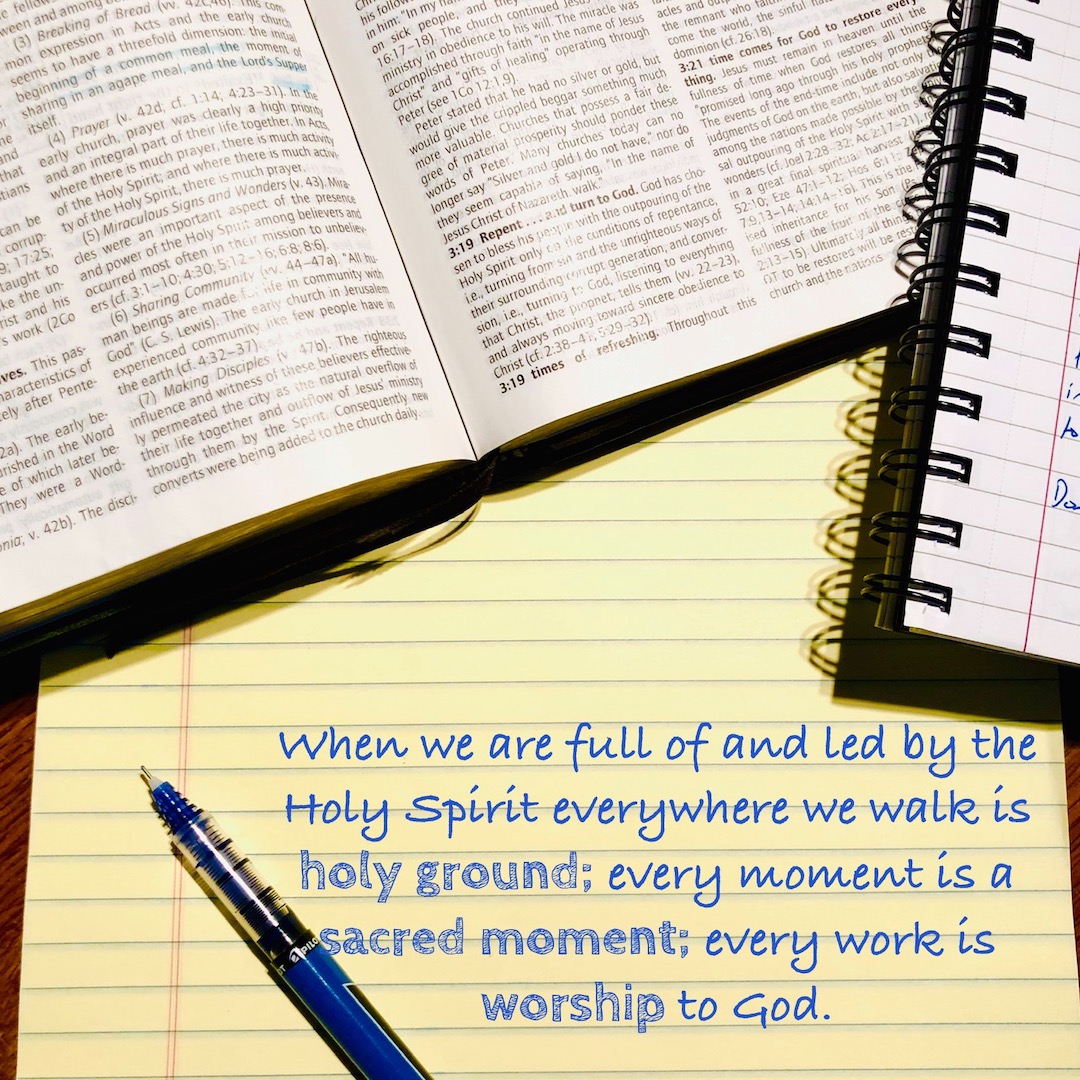
Like Jesus, when we are full of and led by the Holy Spirit everywhere we walk is holy ground; every moment is a sacred moment; every work is worship to God because we are occupied about the Father’s business.

Check out the full series of messages about the empowerment of the Holy Spirit in the series We Are: Pentecostal. 

►► Would you please prayerfully consider supporting this ministry? My Patreon supporters get behind-the-scenes access to exclusive materials. ◀︎◀︎