What Godly Leaders Do

Listen to the podcast of this post by clicking on the player below, and you can also subscribe on AppleSpotify, or Audible. 

As Paul is coming to the close of his letter to the believers in Rome, he writes these beautiful words, “I myself am convinced, my brothers and sisters, that you yourselves are full of goodness, filled with knowledge and competent to instruct one another” (Romans 15:14). 

(Check out all of the Scriptures in this post by clicking here.)

I love the high esteem Paul has for the Christians in Rome. He’s not looking for what’s wrong with them, but for what’s praiseworthy in them. 

A mark of a godly leader is one who is always looking for the best in the people around him. 

Leaders see the best in people—even if the people don’t see it in themselves yet. (Check out this short video.) 

Leaders point out the specific qualities they see in their people—virtues like goodness, knowledge, and competence. 

Leaders continue to sharpen their people, challenging them to excel even more. “Yet I have written you quite boldly on some points to remind you of them again” (v. 15). 

Leaders enjoy spending time with their people and are refreshed by them. 

   But now that there is no more place for me to work in these regions, and since I have been longing for many years to visit you, I plan to do so when I go to Spain. I hope to see you while passing through and to have you assist me on my journey there, after I have enjoyed your company for a while. … So that I may come to you with joy, by God’s will, and in your company be refreshed (vv. 23-24, 32). 

Leaders pray for their people and ask their people to pray for them. “I urge you, brothers and sisters, by our Lord Jesus Christ and by the love of the Spirit, to join me in my struggle by praying to God for me. Pray that I may be kept safe from the unbelievers in Judea and that the contribution I take to Jerusalem may be favorably received by the Lord’s people there” (vv. 30-31; see Paul’s prayer for them in 16:25-27). 

Leaders publicly compliment their people (16:1-15). 

And leaders protect and empower their people. “I urge you, brothers and sisters, to watch out for those who cause divisions and put obstacles in your way that are contrary to the teaching you have learned. Keep away from them. … The God of peace will soon crush satan under your feet. The grace of our Lord Jesus be with you” (16:17, 20). 

I want to be this kind of leader. In order to do that, I need the help of the Holy Spirit. I must listen to His voice in order to make the changes I need to make so that I may lead in the most Christ-glorifying way possible, and help those around me live even more in their God-given gift zone.

This is part 85 in my series on godly leadership. You can check out all of my posts in this series by clicking here.

►► Would you please prayerfully consider supporting this ministry? My Patreon supporters get behind-the-scenes access to exclusive materials. ◀︎◀︎
All Hail King Jesus

The Bible closes with a vivid picture of Jesus as the undisputed King of kings, and we look forward to that time when all creation bows before Him. Even more so, we cannot wait to be with our King for ever and ever! 

The psalmists of Israel also foresaw the coming of this King, especially in the example they had in their King David. Many of the poetic words they penned esteemed Jesus as the King for Whom they longed. David himself not only saw the future coming of the Eternal King, but he also looked back in time to see Jesus reigning as King before time began. 

It is these royal psalms that we will be studying as we celebrate the first arrival on Earth of our King and as we anticipate the second coming of our Royal Majesty. The more clear our vision is of this King, the more we will worship Him, follow Him, and invite others to know Him as their own Lord and Master. 

Please join us at Calvary Assembly of God as we explore the beautiful, reverent, and awe-inspiring description of our King of kings in the Book of Psalms. 

What Would You Ask For?

If God said to you, “Ask for whatever you want,” what would you ask for?

God did ask Solomon that very question in 1 Kings 3:5. Here’s how Solomon replied—

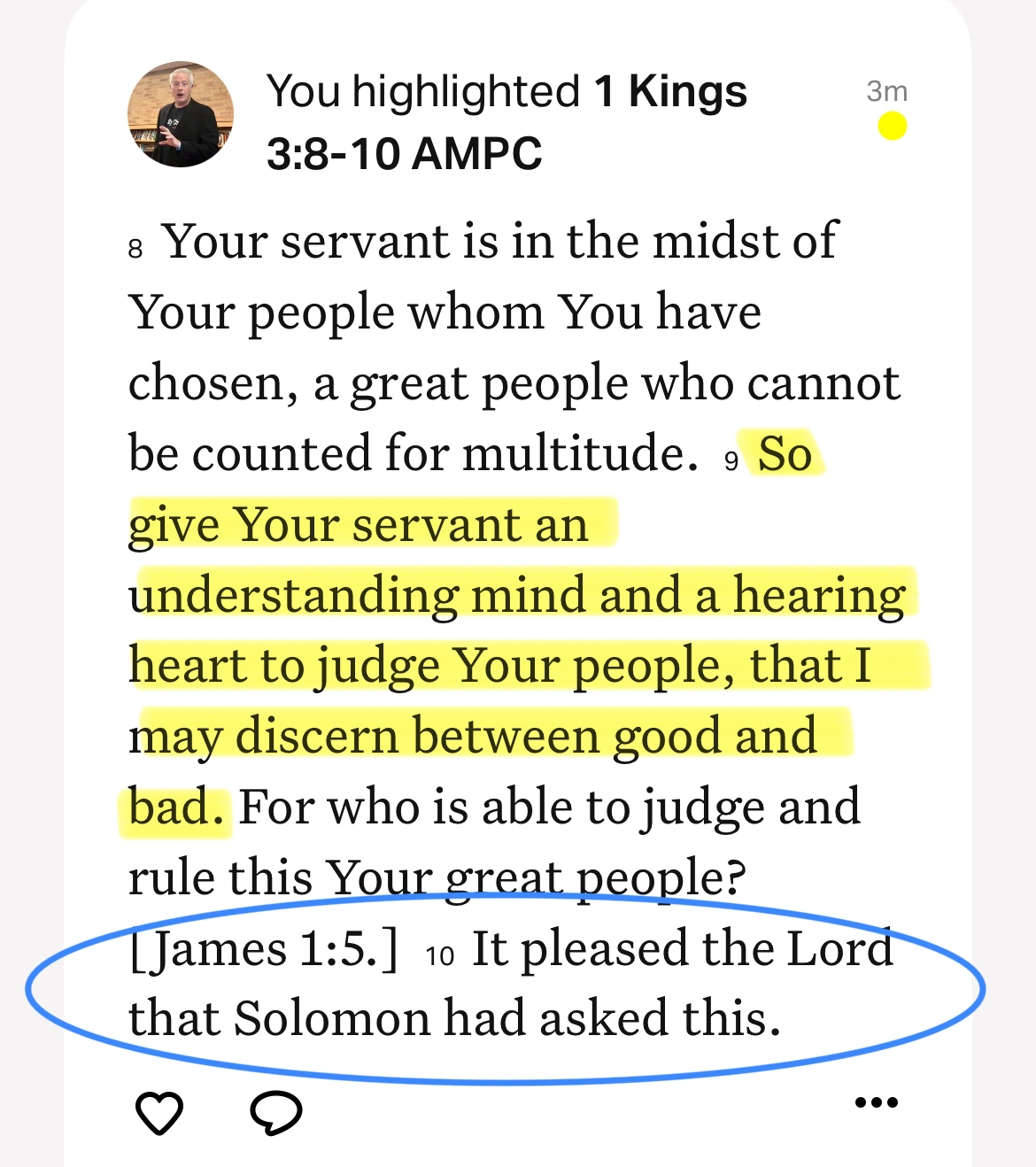
“Your servant is in the midst of Your people whom You have chosen, a great people who cannot be counted for multitude. So give Your servant an understanding mind and a hearing heart to judge Your people, that I may discern between good and bad. For who is able to judge and rule this Your great people?” (1 Kings 3:8-9 AMPC) 

And how did God respond to this request? “It pleased the Lord that Solomon had asked this” (v. 10).

Solomon didn’t ask for things but for a greater intimacy with God—he wanted to know God’s mind. Sadly, we tend to reverse this, saying, “Because I have things, I bless God for them.” 

Instead, our prayer should echo what Solomon prayed here in 1 Kings 3 and what Jesus taught us in His Sermon on the Mount: My desire is solely for Your glory and Your Kingdom (see Matthew 6:9-10, 33). When you pray this way, it will please that Lord that you had asked that! 

Check out these related blog posts and videos:

Some Biblical Thoughts On Hiring Personnel

Listen to the podcast of this post by clicking on the player below, and you can also subscribe on AppleSpotify, or Audible. 

In organizations I have had the privilege of leading, I have had to make numerous hiring, firing, and promotion decisions. As a Christian, I needed to go to the Scripture to help me make biblically-sound, God-honoring decisions. If you are a Christian leader thinking about hiring somebody in your organization, I’ve got some thoughts for you on this episode of The Podcast.

The Scriptures I referenced in this episode are from Acts 1:15-26 and Acts 6:1-6. 

Here is the passage I quoted from the chapter ‘The Wrong Ladder’ in Shepherd Leadership

   God frequently picks people we would consider the least qualified. He sometimes has one in an unglamorous position for years, and sometimes He catapults some- body immediately to the top. Sometimes God will keep His hand-selected individual in a prominent leadership position until death, and sometimes He will remove that person to a place of obscurity after only a short time. 

   God’s ladder of success is nothing like ours!

I’ve shared a couple of other blog posts and videos about this idea of our ladder of success versus what the Bible calls success. You may want to check out:

You can watch more videos based on Shepherd Leadership here. I would also encourage you to check out my new book When Sheep Bite. 

►► Would you please prayerfully consider supporting this ministry? My Patreon supporters get behind-the-scenes access to exclusive materials. ◀︎◀︎
Links & Quotes

For personal growth and team growth, consider how you can set both small, bite-size goals that can be done daily and also bigger, stretching goals that energize the competitive drive. Check out more leadership content from The Craig and Greg Show.

I have a lot of new video content on my YouTube channel every week. Please check it out and subscribe so you don’t miss anything.

“This chapter contains the premier teaching of Christianity. It is an undying expression of Jesus’ doctrine of heavenly love. This chapter is more potent for the building of the church than any, or all, of the various manifestations of God’s power. Love is the church’s most effective weapon. Love is the essence of God’s nature. Love is the perfection of human character. Love is the most powerful, ultimate force in the universe. Without love, al various gifts of the Spirit are of no avail. … What a call to self-examination!” —Dr. Henry Halley, commenting on 1 Corinthians 13

“The transition from the good man to the saint is a sort of revolution; by which one for whom all things illustrate and illuminate God becomes one for whom God illustrates and illuminates all things.” —G.K. Chesterton 

T.M. Moore launched a new series of articles about the coming of God’s Kingdom in these last days. In the first article, T.M. wrote, “In his Pentecost sermon Peter announced that, with the resurrection of Jesus Christ and the pouring out of God’s Spirit, the ‘last days’ had begun (Acts 2:14-17), the new economy has been put into effect. Paul says Jesus came in ‘the fullness of the times’ to inaugurate His great work of redemption in these last days (Galatians 4:4). The ‘fullness of the times’ in which the divine economy is unfolding, is now. We are living in the last days, the fullness of the times, when the Lord of heaven and earth is establishing and expanding His divine economy.”

Once again, a new fossil discovery doesn’t fit into evolutionary models, but instead bolsters the facts recorded in the Bible about Creation and the Flood.

“For years, Michael Pratt operated in the shadows of the internet, profiting from coercion, deception, and exploitation under the guise of adult entertainment.” Pratt has now pled guilty to sexual trafficking charges. Fight The New Drug wrote, “The story is more than a courtroom headline. It’s a stark reminder of how the porn industry can weaponize vulnerability, disguise abuse and trafficking, and sell it as fantasy.”

A really penetrating question from John Piper: Why do so many PhDs in theology commit adultery?

Weighty Words

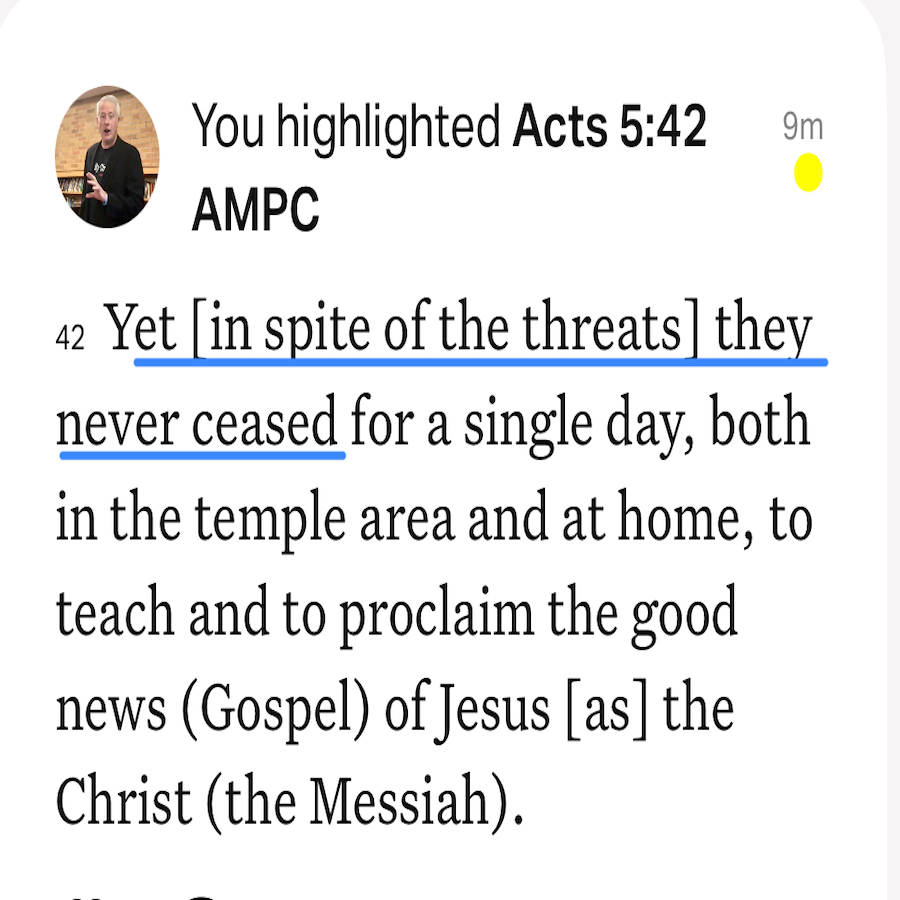
Yet [in spite of the threats] they never ceased for a single day, both in the temple area and at home, to teach and to proclaim the good news (Gospel) of Jesus [as] the Christ (the Messiah). (Acts 5:42 AMPC) 

On the one hand, the apostles were sent by God to proclaim the name of Jesus; on the other hand, the Sanhedrin commanded them not to proclaim the name of Jesus (vv. 20, 28). 

Not only had the Holy Spirit empowered and emboldened these men to testify, but Jesus also said (in John 14:26) that at key moments the Spirit would remind them of His words. One word Jesus had given them, which the Spirit undoubtedly brought to their remembrance, was this: “And do not be afraid of those who kill the body but cannot kill the soul; but rather be afraid of Him who can destroy both soul and body in hell (Gehenna)” (Matthew 10:28). 

God is glorified when we give greater weight and reverence to His words than we do to the words of mere humans.

A Book For Church And Business Leaders

Listen to the podcast of this post by clicking on the player below, and you can also subscribe on AppleSpotify, or Audible. 

On The Craig and Greg Show, Greg noted that my book When Sheep Bite isn’t just for church leaders, but business leaders can benefit from reading this as well. 

You can check out the full conversation Greg and I had on this episode of our leadership podcast. 

I recently shared a series of messages for all Christians about how to handle the painful bites that sometimes come from other Christians. The series was called When Sheep Bite Sheep. 

Please check out both of my books Shepherd Leadership and When Sheep Bite. 

►► Would you please prayerfully consider supporting this ministry? My Patreon supporters get behind-the-scenes access to exclusive materials. ◀︎◀︎

Loving Rebuke

Listen to the podcast of this post by clicking on the player below, and you can also subscribe on AppleSpotify, or Audible. 

When I say a rebuke can be loving, let me start off with this reminder: People need to know you truly love them before they will pay attention to a rebuke. If they don’t know you love them and want the best for them, your rebuke will simply make them angry and may create an uncrossable chasm between you. 

Nathan was the prophet who confronted David with his sin, saying, “You are the man!” (2 Samuel 12:1-7). Nathan not only took his life into his hands by speaking so boldly against King David, but he risked the lives of his family as well. 

Thankfully, David acknowledged his sin, repented, and asked forgiveness (2 Samuel 12:13; Psalm 51:3-12). Instead of being banished, Nathan was honored. In fact, we see Nathan faithfully serving in King David’s inner circle even after the king is dead and King Solomon ascends to the throne. 

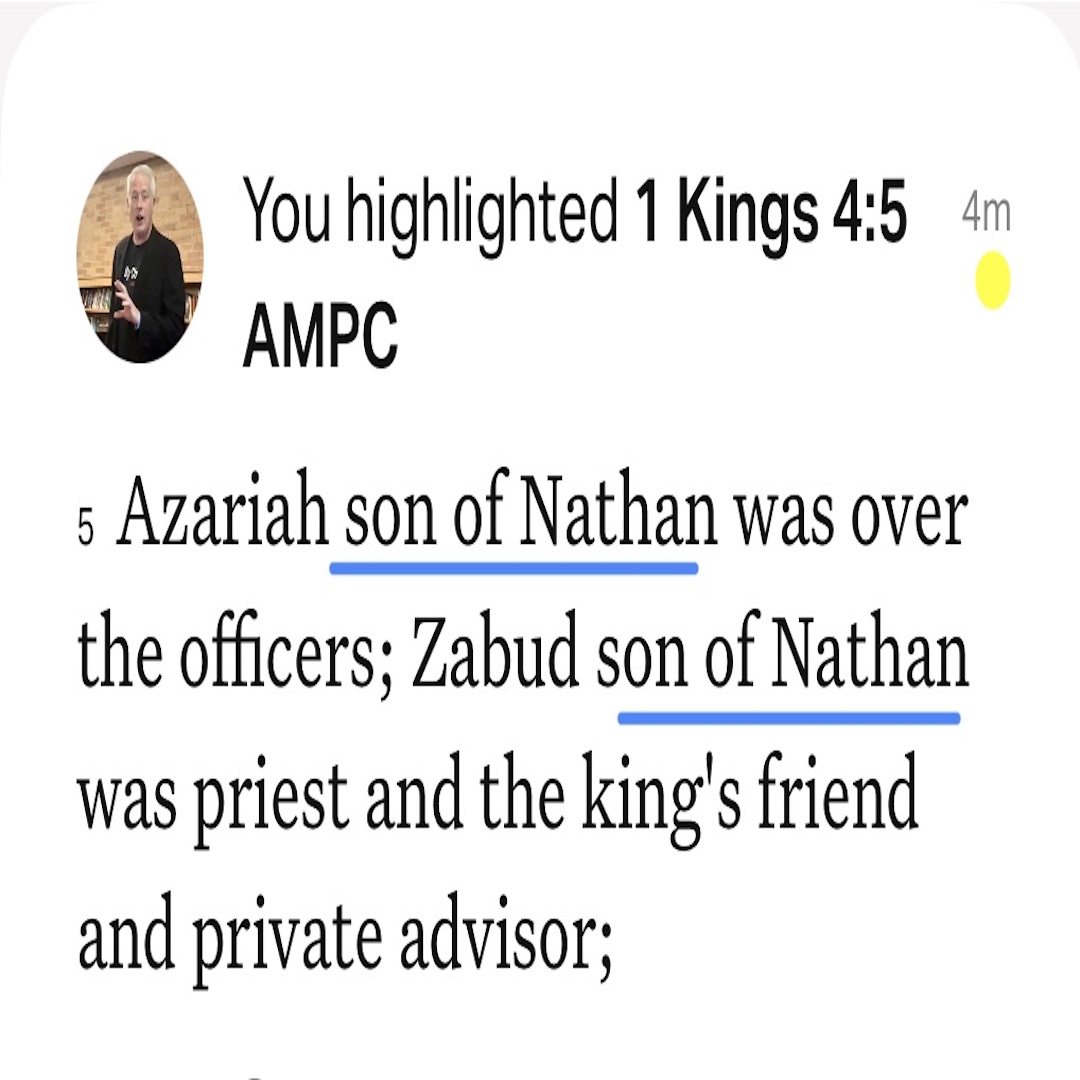
And then during the reign of King Solomon, two of Nathan’s sons are honored with prestigious positions in Solomon’s court. “Azariah son of Nathan was over the officers; Zabud son of Nathan was priest and the king’s friend and private advisor” (1 Kings 4:5). 

Solomon wrote, “He who rebukes a man shall afterward find more favor than he who flatters with the tongue” (Proverbs 28:23). 

We must speak the truth in love. Not so that we are rewarded here (because that may or may not happen), but because God has called us to this. And He keeps perfect records so that we will be rewarded in Heaven. 

You may also be interested in— 

►► Would you please prayerfully consider supporting this ministry? My Patreon supporters get behind-the-scenes access to exclusive materials. ◀︎◀︎

Inspiration, Illumination, And Boldness

Listen to the podcast of this post by clicking on the player below, and you can also subscribe on AppleSpotify, or Audible. 

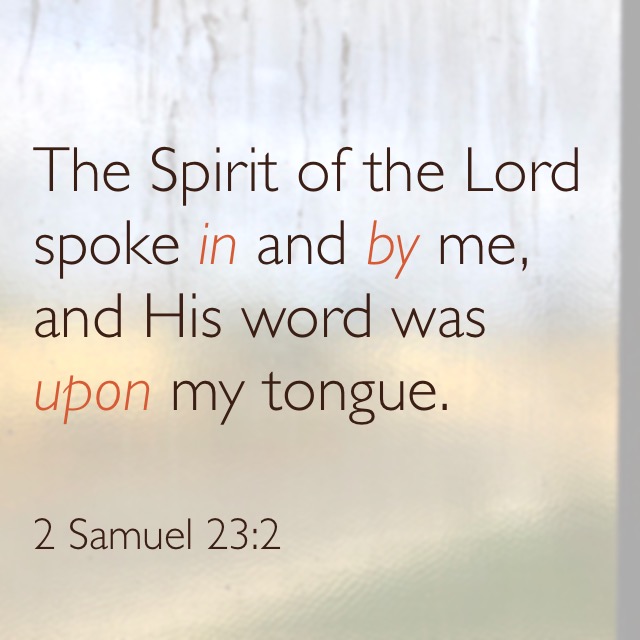
David declared that the Holy Spirit inspired the words he penned. “The Spirit of the Lord spoke in and by me, and His word was upon my tongue” (2 Samuel 23:2). 

Both Jesus and Peter affirm this in the New Testament as well when they make mention that David’s words were given to him by the Holy Spirit (Matthew 22:43; Mark 12:36; Acts 1:16, 4:25). 

It’s not just the words of David, but all Scripture is God-breathed (2 Timothy 3:16; 2 Peter 1:21)! This is why we would be wise to pray before reading our Bibles to ask the One Who inspired the Scripture to illuminate our minds to understand it and guide us into its daily application (John 14:26, 16:13). 

Jesus desired that we go even farther than this. His directive to His followers was for them to be baptized in the Holy Spirit. This initial baptism took place on the first Pentecost celebration after Jesus had ascended to Heaven. Luke records it this way—

And they were all filled (diffused throughout their souls) with the Holy Spirit and began to speak in other (different, foreign) languages (tongues), as the Spirit kept giving them clear and loud expression in each tongue in appropriate words. (Acts 2:4 AMPC) 

And in the subsequent verses Luke makes it clear that these were intelligible languages and intelligent words that served as a testimony to the worldwide visitors that were in Jerusalem—

And when this sound was heard, the multitude came together and they were astonished and bewildered, because each one heard them—the apostles—speaking in his own particular dialect. And they were beside themselves with amazement, saying, “Are not all these who are talking Galileans? Then how is it that we hear, each of us, in our own (particular) dialect to which we were born? Parthians and Medes and Elamites and inhabitants of Mesopotamia, Judea and Cappadocia, Pontus and the province of Asia, Phrygia and Pamphylia, Egypt and the parts of Libya about Cyrene, and the transient residents from Rome, both Jews and the proselytes to Judaism from other religions, Cretans and Arabians too—we all hear them speaking in our own native tongues and telling of the mighty works of God!” (vv. 6-11 AMPC) 

In his sermon that followed this event, Peter states that the baptism in the Holy Spirit—with the physical evidence of speaking in tongues—is an evidence of Christ’s resurrection. “Being therefore lifted high by and to the right hand of God, and having received from the Father the promised blessing which is the Holy Spirit, He has made this outpouring which you yourselves both see and hear” (v. 33). 

Later on, when the Christians were facing the threat of persecution from the Jewish leadership, they prayed. In their prayer, they noted again the Spirit-inspired words that David penned and the desire of Jesus for them to be His missionaries (see Acts 4:24-30). 

God answers their prayer powerfully! “And when they had prayed, the place in which they were assembled was shaken; and they were all filled with the Holy Spirit, and they continued to speak the word of God with freedom and boldness and courage” (v. 31). 

The Holy Spirit gave us the Scripture, and He illuminates the Scripture to us. 

The Holy Spirit assures us of our salvation, and He empowers us to share this Good News with others. 

The Holy Spirit gives us words to speak, and He gives us the boldness and courage to speak them. 

He speaks, He illuminates, He empowers, He emboldens! If your theology limits the work of the Holy Spirit to some obscure corner of your world, you are robbing yourself of the power to live a God-glorifying, Jesus-promoting life. 

You may be interested in some additional posts and sermons where I discuss more about the initial physical evidence of speaking in tongues as the Holy Spirit empowers Christians—

You may also be interested in an extensive series of messages I have shared called We Are: Pentecostal. 

►► Would you please prayerfully consider supporting this ministry? My Patreon supporters get behind-the-scenes access to exclusive materials. ◀︎◀︎
The Father’s Business

Listen to the podcast of this post by clicking on the player below, and you can also subscribe on AppleSpotify, or Audible. 

The Holy Spirit’s involvement in our lives isn’t reserved for just the “big” things, but He wants us to be aware of and tuned in to His voice and His thoughts all the time. There shouldn’t be a secular-sacred divide in our activities, but we should make every place holy ground and every moment a divine opportunity for God to be glorified. Or said another way, we shouldn’t have times of work and times of worship, but our worship should be seen in every single thing we do. 

I think everyone of us has experienced at one time or another a poor employer or manager. Maybe it’s an employer that demands results but doesn’t give you the training or the tools to do the job. Or maybe you have the training and tools but you don’t know exactly how much you are able to use these things without crossing a line. 

Maybe you have known a boss that is barely present, but when they do stop by the worksite, they aren’t happy with the work that has been done. On the opposite side, maybe it’s a boss who does everything and then gets mad that you aren’t keeping up or working as hard as them. It’s drudgery working for someone like this! 

But, somewhat surprisingly, Jesus used more work examples to talk about the Kingdom of God than He did worship examples. He talked about farmers, bakers, builders, employers, managers, and employees way more than about worshiping, singing, or preaching. 

One of the few glimpses we have of the early life of Jesus shows Him talking about His mission while on earth. Consider the story of Jesus in the temple in Jerusalem when He was 12 years old (Luke 2:41-49). The phrase in the NIV where Jesus says that He must be “in My Father’s house” can be translated…

  • about My Father’s business (NKJV) 
  • dealing with the things of My Father (MSG) 
  • occupied about My Father’s business (AMPC) 

(Check out all of the Scriptures in this post by clicking here.)

Jesus was consistent about this idea of working while He was on earth (John 5:17, 36; 9:4; 17:4). For Jesus, His work was a delight because it was directed by the Holy Spirit (Luke 3:21-22; 4:1, 18-19; Acts 10:38). 

Remember that I mentioned the unreasonable employer that gives us no training, no tools, no goals for which to aim, but expects us to work for his benefit alone. This was not the case with Jesus! He trained us, provided us with the Holy Spirit to guide us, told us the goal for which we were to aim, and said that both His Father would be glorified and we would be rewarded by our Kingdom work done on earth. 

Jesus wants us to work as He did, and He promised that the Holy Spirit would help us in this (John 14:10-12, 24:49; Mark 16:19-20). 

We saw that Luke 2:49 in the AMPC has Jesus saying, “occupied about My Father’s business.” In Luke 19:13 Jesus tells us to “occupy till I come” (KJV). This word is also translated into phrases like: 

  • put this money to work (NIV) 
  • do business (NKJV) 
  • invest this (NLT) 

Jesus is talking about the “talents” given to His stewards (Luke 19:11-13, 16-23). Every servant received the same thing: one mina. We all have been given one life to live; we all have been given 24 hours in a day; we all have been given opportunities to be occupied about our Father’s business. 

The Holy Spirit as our Counselor is there at every moment, every conversation, every decision to help us hear His voice, think His thoughts, and sanctify every experience. Jesus says that He will reward our occupying until He returns. Just doing things like feeding the hungry, giving water to the thirsty, taking care of those in need. This sounds a lot like the work of Jesus in Luke 4:18-19 and Acts 10:38. This Spirit-empowered work earns the commendation from our Master, “Well done, good and faithful servant! Enter into your Master’s happiness!” 

Be baptized in the Holy Spirit and let Him help you be about your Father’s business until Jesus returns. 

If you’ve missed any of the messages in our We Are: Pentecostal series, you can check them all out here. 

►► Would you please prayerfully consider supporting this ministry? My Patreon supporters get behind-the-scenes access to exclusive materials. ◀︎◀︎