Thursdays With Spurgeon—My Element

This is a weekly series with things I’m reading and pondering from Charles Spurgeon. You can read the original seed thought here, or type “Thursdays With Spurgeon” in the search box to read more entries.

Listen to the podcast of this post by clicking on the player below, and you can also subscribe on AppleSpotify, or Audible. 

My Element

But our citizenship is in heaven. And we eagerly await a Savior from there, the Lord Jesus Christ, Who, by the power that enables Him to bring everything under His control, will transform our lowly bodies so that they will be like His glorious body. Therefore, my brothers and sisters, you whom I love and long for, my joy and crown, stand firm in the Lord in this way, dear friends! (Philippians 3:20—4:1). 

     Do you know what it is to feel that the life that is in you is first in Christ and still flows from Him, even as the life of the branch is mainly in the stem? ‘I live; yet not I, but Christ lives in me’ (Galatians 2:20). This is to be in Christ! …     

     This expression is very short but very full: ‘In Christ.’ Does it not mean that we are in Christ as the birds are in the air that buoys them up and enables them to fly? Are we not in Christ as the fish are in the sea? Our Lord has become our element—vital and all surrounding! In Him we live, move, and have our being. He is in us, and we are in Him. We are filled with all the fullness of God because all fullness dwells in Christ and we dwell in Him.

From The Watchword For Today: “Stand Fast”

Years ago I was taking a class, and the teacher asked us to write down some of the different roles we had in our life. I wrote down things like son, brother, employee, team captain. After everyone had finished their lists, the teacher asked the students to share some of their roles. As each one listed a role, the rest of the class would raise a hand if that role also applied to them. One person said, “Christian,” and nearly every hand in the classroom went up. Except mine.

Being a Christian is not a role I step into; it’s who I am. It impacts everything I think and everything I do. 

Birds don’t step into the air when they want to fly. Fish don’t run to the water when they want to swim. Birds and fish always live in their element. We are in our element in Christ when we can always say, “In Him I live, and move, and have my being.” 

The devil has always used doubt and uncertainty—“Did God really say…” he asked Eve, and “Are you really the Son of God,” he mocked Jesus. He wants to do the same thing to you today, making you think you have somehow missed out on being in Christ. 

But if Christ is your Savior and your Lord, stand fast in that. Let nothing move you. Counteract the devil’s doubt-inciting accusations with truthful as-it-is-written statements from God’s Word. Immerse yourself in Christ and make Him your constant element—just as a branch connected to a stalk, or a bird in the air, or a fish in the ocean. You are in Christ, Christ is in you, and Christ is in the Father. Which means Jesus has taken you into the Father with Him. Live, and move, and have your very being in His presence every single moment!

►► Would you please prayerfully consider supporting this ministry? My Patreon supporters get behind-the-scenes access to exclusive materials. ◀︎◀︎

Lubricate The Message With Tears

Listen to the podcast of this post by clicking on the player below, and you can also subscribe on AppleSpotify, or Audible. 

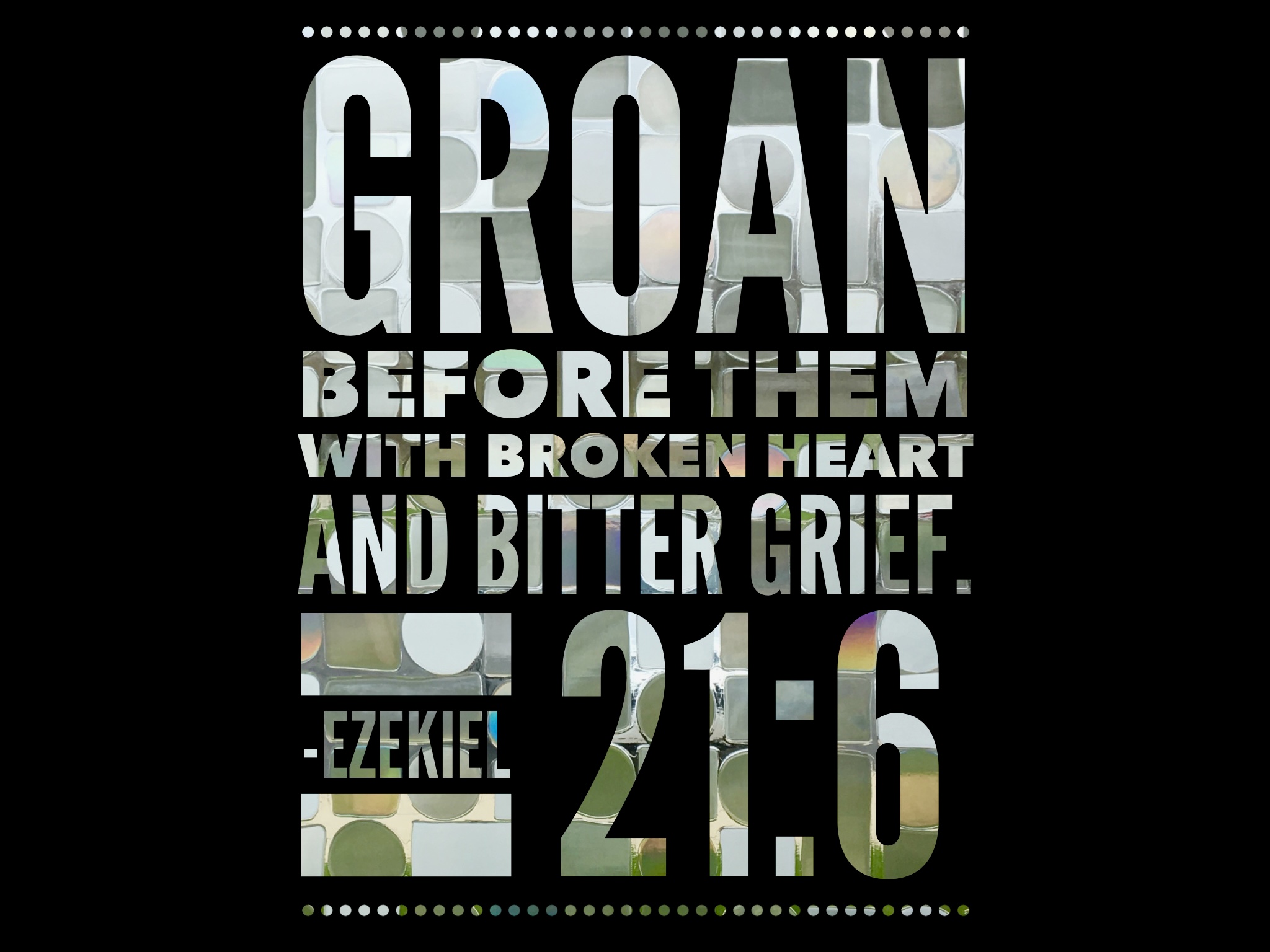
Therefore groan, son of man! Groan before them with broken heart and bitter grief. And when they ask you, “Why are you groaning?” you shall say, “Because of the news that is coming.” (Ezekiel 21:6-7)

Judah’s sin had exhausted God’s patience. Now punishment was coming in the form of the invincible Babylonian army, and Ezekiel was tasked to deliver the news. 

I and my fellow pastors often have to speak a heavy word. How we speak this word may make all the difference in the world in how it is received. We cannot speak brashly nor robotically. The Word of God should break our own hearts first, just as it did to Nehemiah.  

I must tell people about the consequences of their sin, but I must tell them with groaning. 

I must warn people of the horrors of hell, but I must warn them with bitter grief. 

I must confront a wayward brother or sister, but I must do so with a broken heart. 

I hope all my fellow pastors will join me in praying this: Holy Spirit, help me! May Your word break my heart before I open my mouth. May tears always lubricate the painfully loving words I must speak! 

►► Would you please prayerfully consider supporting this ministry? My Patreon supporters get behind-the-scenes access to exclusive materials. ◀︎◀︎
The Proper Value Of Words

Listen to the podcast of this post by clicking on the player below, and you can also subscribe on AppleSpotify, or Audible. 

I once knew a businessman who was one of the most silver-tongued talkers I have ever met! He could persuade just about anyone to join him in one of his “can’t miss” business ventures. 

And even after they did miss (which was all of them that I was aware of) he could still convince many of his backers to continue. I never knew him to fulfill what he had promised. 

Eventually, this caught up with him. And so did the law, and he ended up serving a prison term. 

It has always been intriguing to me how much value we put on the words of leaders. It seems as if they can “talk a good game,” we feel a need to exalt them to a higher level. It’s not the one who gets things done, or the one who has the best ideas, or the one who can bring increased efficiency or effectiveness, but the one who can talk the most convincingly. 

I think about in my own profession as a pastor. Churches will select a pastor based on how he sounds from the platform. And yet the sermon is only a tiny fraction of a pastor’s work each week. 

The danger comes when the leader thinks that his highest value to the organization is the words he speaks. Inevitably, then, he will put more effort into what he says than into what he does. He will spend a lot of time figuring out the right words to say, and how to move people’s hearts. 

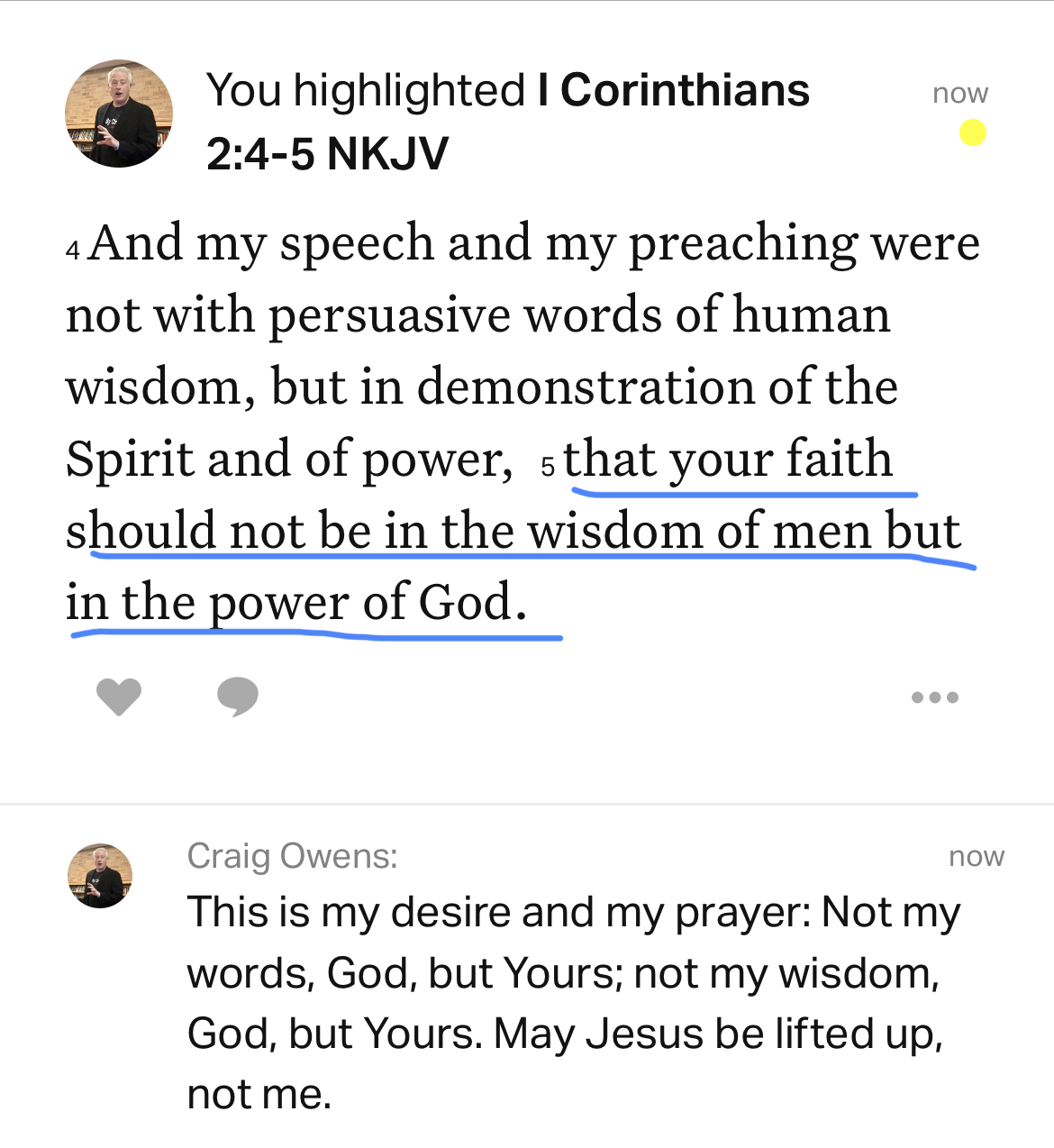
The apostle Paul told the Christians at Corinth, “My speech and my preaching were not with persuasive words of human wisdom” (1 Corinthians 2:4). And he told the Christians at Thessalonica, “For you remember what we taught you by the authority of the Lord Jesus” (1 Thessalonians 4:2), not Paul’s own authority. 

I don’t want people to be impressed with me. I don’t want my authority to come from my vocabulary. I simply want to be known for speaking the Word of God, and then living a life that matches the Word of God. 

As King Solomon said, “A truly wise person uses few words” (Proverbs 17:27). The wisest words are not mine but God’s. Then “your faith [is] not in the wisdom of men but in the power of God” (1 Corinthians 2:5). 

Words do have their place. But let’s always make sure that that place isn’t in place of God’s Word. 

►► Would you please prayerfully consider supporting this ministry? My Patreon supporters get behind-the-scenes access to exclusive materials. ◀︎◀︎
The Gift Paid For

Listen to the podcast of this post by clicking on the player below, and you can also subscribe on AppleSpotify, or Audible. 

On Resurrection Sunday we celebrate the greatest Gift ever—Jesus our Savior conquered sin and death!  

I don’t know about you, but many times when I’m given a gift, I feel like I need to give a gift back to the giver. I want this gift to seem appropriate for the gift I was given so that the other person knows that I really appreciated their thoughtfulness. But there is a danger if we try to do this with God’s Gift to us.  

One of the psalmists wondered how to repay God. After praising God for the salvation He worked, the psalmist asks, “How can I repay the Lord for all His goodness to me?” (Psalm 116:1-6, 12). 

As I said, not only is there a danger in trying to give God a gift that somehow reciprocates what He’s given to us, but how do you give a gift to the One who needs nothing (see Acts 17:25; Psalm 50:9-12)? 

Let me try to explain it this way. What if a rich friend gave me a house, all its furnishings, and all its food? He said, “I want to provide this place for you to live and not concern yourself with your housing or food needs. The house has no mortgage, I will pay for the utilities, and I will keep your kitchen stocked with food.” 

I would, of course, exclaim, “Wow! Thank you!” But what if I then began to make monthly mortgage payments, or started leaving money in the cupboard to pay for the groceries? Wouldn’t I really be saying to my friend, “I’m not sure you can afford this.” Or maybe even, “Let me give you something so you won’t think me ungrateful and then end up taking back your gift.” 

In my attempt to give back to my generous friend, I’m really questioning his resources that will allow this gift to continue or his motivation for blessing me. 

The psalmist in Psalm 116 gives us two ways we can express our gratitude to God for His Gift of Jesus (Psalm 116:13-14).  

  1. I will lift up my cup of salvation. This isn’t lifting up a cup to say, “Cheers,” but lifting it up for a continual refilling because He is the only Source that can refill it. 
  2. I will fulfill my vows to the Lord. One picture of our relationship with Jesus is a marriage, where Jesus is the Bridegroom and we are the bride. At almost any wedding you may attend, the bride and groom make vows to each other that essentially say, “I only have eyes for you. My heart is only longing for you. I’m devoted to you forever, no matter what!” 

In my Good Friday message, I said that Jesus IS the perfect Gift. When He said, “It is finished,” He left nothing undone. 

For me to then say, “Thank you for that Gift. Now I must do _____,” is to really say, “I don’t think the Gift was perfect. There are still some things needed to complete it.” 

Or it might be fear speaking that says, “If I don’t give something back, You may withdraw Your Gift from me!” 

I think these stem from two misconceptions: 

Misconception #1: “God does loving things.” Truth #1: Yes He does, but more than that God IS love.

God is love. He could never love you more than He already does, so stop trying to earn His love. And He could never love you less than He already does, so stop worrying. 

Misconception #2: “God supplies my needs.” Truth #2: Yes He does, but more than that God IS provision. 

God is provision. He never runs low. He is never dependent on someone else. He is never short-changed. He knows exactly what you need, and He can perfectly provide for you each and every moment. 

Don’t try to repay God for sending His Son Jesus, but celebrate God’s Perfect Gift by continuing to let Him fill your cup of salvation, honoring your vows to Him, and living securely and joyfully in His love and provision. 

If you’ve missed any of the other messages in our series Christmas Unwrapped At Easter, you can find a list of all of those messages here. 

►► Would you please prayerfully consider supporting this ministry? My Patreon supporters get behind-the-scenes access to exclusive materials. ◀︎◀︎

New Inside

Listen to the podcast of this post by clicking on the player below, and you can also subscribe on AppleSpotify, or Audible. 

In the movie Groundhog Day, Bill Murray’s character (Phil) is stuck in a small town where February 2 keeps repeating. Phil tries desperately to get out of this town and out of this day, but nothing he seems to do gets him out of the endless loop. He becomes smarter and richer each day, but at the end of the day, everything resets to the beginning. 

It’s frustrating! 

God’s people of the Old Testament had their own “Groundhog Day”—the Day of Atonement that came every single year. This was the day their sins were confessed, forgiven, and atoned for, and had a very specific set of sacrifices and rituals. Much like Phil in the movie, they began to go through these motions almost entirely without thinking. 

Year after year, millennia after millennia “the same sacrifices repeated endlessly year after year, [couldn’t] make perfect those who draw near to worship” (see Hebrews 10:1-4). 

Even those who were God-fearing and tried their best to live perfectly righteous lives could find in the law provision for those who “sin unintentionally” (Leviticus 4:2, 13, 22, 27; 5:15, 18, 22, 24, 27-29). It was just another reminder that the loop of sin-confession-repentance-forgiveness-atonement was never ending. 

And as if all the requirements of the Torah weren’t enough, Jesus came on the scene and seemed to raise the bar, telling us even though our outward actions might look righteous, our inward thoughts and attitudes made us just as sinful (Matthew 5:21-22, 27-28). And then Jesus even dropped this on us, “Be perfect, therefore, as your heavenly Father is perfect” (Matthew 5:48)! 

Perfect?! As perfect as God?! This could easily make people throw their hands up in resignation, “I give up! Why even try?” 

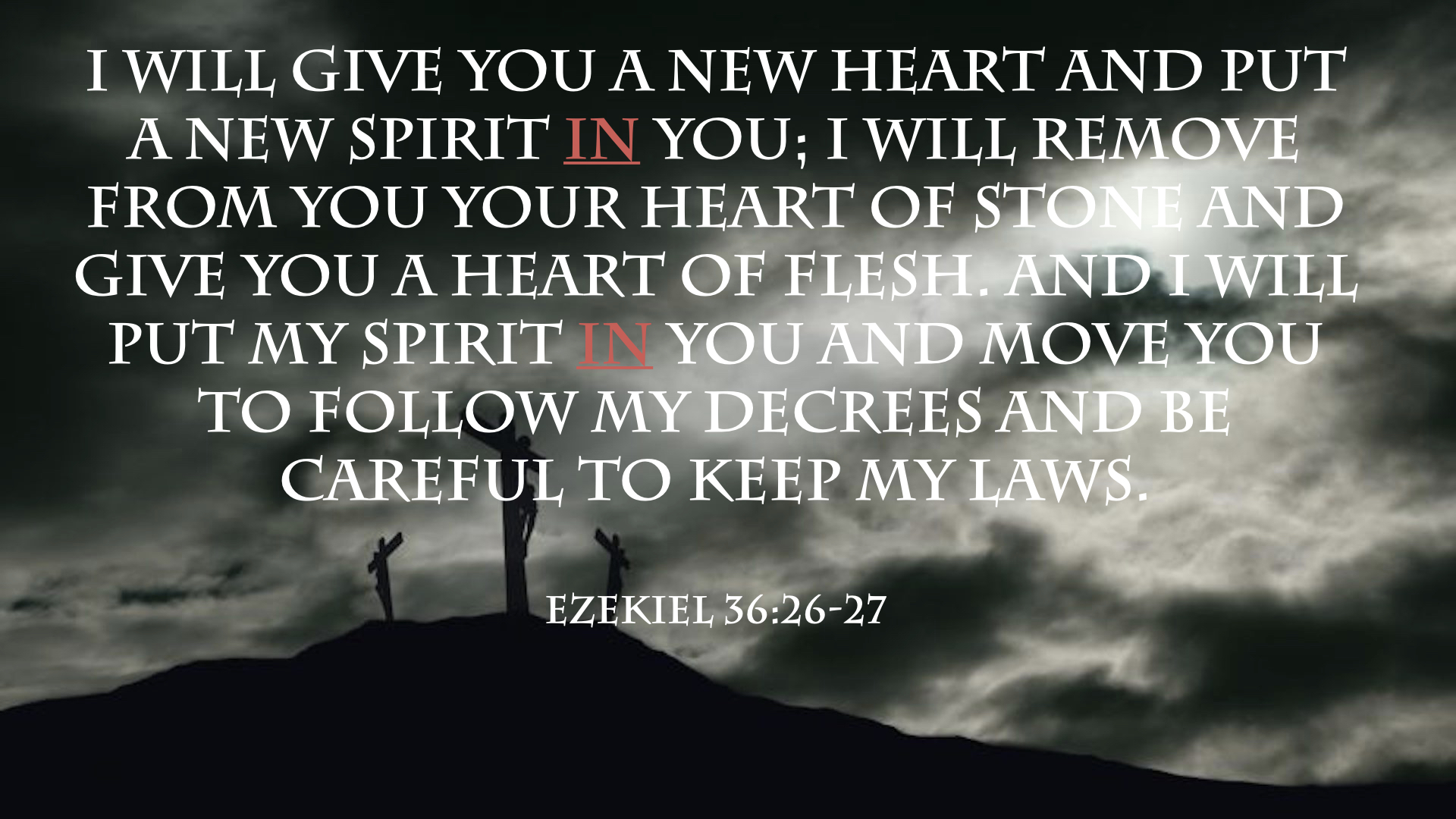
Through Ezekiel, God prophesied an internal change. This wasn’t something I must do, but something GOD will do—

I will give you a new heart and put a new spirit in you; I will remove from you your heart of stone and give you a heart of flesh. And I will put My Spirit in you and move you to follow My decrees and be careful to keep My laws. (Ezekiel 36:26-27) 

The solution to our endless loop of sin-confession-repentance-forgiveness-atonement must become internal. It’s no use trying to correct the fruit if the root is still evil! That requires an inside job. 

On Good Friday, the last words Jesus spoke before His death were, “It is finished” (John 19:30). 

What was finished? Our struggle to get ourselves out of this endless loop. The writer of Hebrews had this to say about Jesus: 

But when this Priest had offered for all time one sacrifice for sins, He sat down at the right hand of God. … For by one sacrifice He has made perfect forever those who are being made holy. (Hebrews 10:12, 14) 

Remember Jesus told us we had to be perfect like God? The root word for “perfect” in that verse is telos. When Jesus cried out, “It is finished,” He said one word in Greek: tetelestai. This also comes from the root word telos. Jesus perfectly finished all that was necessary for us to become perfect in God’s sight. 

Christians often use the the phrase “I invited Jesus into my heart” as an expression of their faith in what Jesus did for them on the Cross. That word “IN” is a good reminder. 

Jesus comes IN and the fear of punishment—the fear of being eternally stuck in the endless loop—has to go out. “There is no fear IN love. But perfect love drives out fear, because fear has to do with punishment. The one who fears is not made perfect IN love” (1 John 4:18). 

The word “perfect” in that verse is also from the same root word telos. 

Not only does Jesus come IN to our hearts to make them new, but He also takes us IN to His perfection. “Looking away from all that will distract to Jesus, Who is the Leader and the Source of our faith—giving the first incentive for our belief—and is also its Finisher—bringing it to maturity and perfection…” (Hebrews 12:2 AMP). 

Jesus shared a last supper with His disciples. His last supper was the first Communion. At this time Jesus told them He was establishing a “new covenant.” How do we square this with His previous statement that He didn’t come to abolish the law but to fulfill it? 

Jesus said this new covenant was IN His blood. His blood doesn’t abolish the law, but it perfects the law. His perfect blood makes out hearts new and takes us out of the external loop and IN to His prefect righteousness. 

Jesus accomplished all that was needed to make us perfect inside, and then to perfectly take us into God’s presence. As the hymn The Old Rugged Cross reminds us, “In that old rugged Cross, stained with blood so divine, a wondrous beauty I see. For ’twas on that old Cross Jesus suffered and died to pardon and sanctify me!” 

May we always cherish the perfection that was purchased for us on that Cross. 

►► Would you please prayerfully consider supporting this ministry? My Patreon supporters get behind-the-scenes access to exclusive materials. ◀︎◀︎
Links & Quotes

How would you respond to someone who asked, “Why would God punish Jesus for what I did?” Here’s a thoughtful reply from cold-case detective J. Warner Wallace.

“It were a good strife amongst Christians, one to labor to give no offense, and the other to labor to take none. The best men are severe to themselves, tender over others.” —Richard Sibbes

What can archeology tell us about the place where Pilate sentenced Jesus to death by crucifixion?

Doug Clay shares some thoughts on what the resurrection of Jesus means for us today.

Wow, check out this photo from the Hubble Space Telescope. It is the most distant star yet photographed.

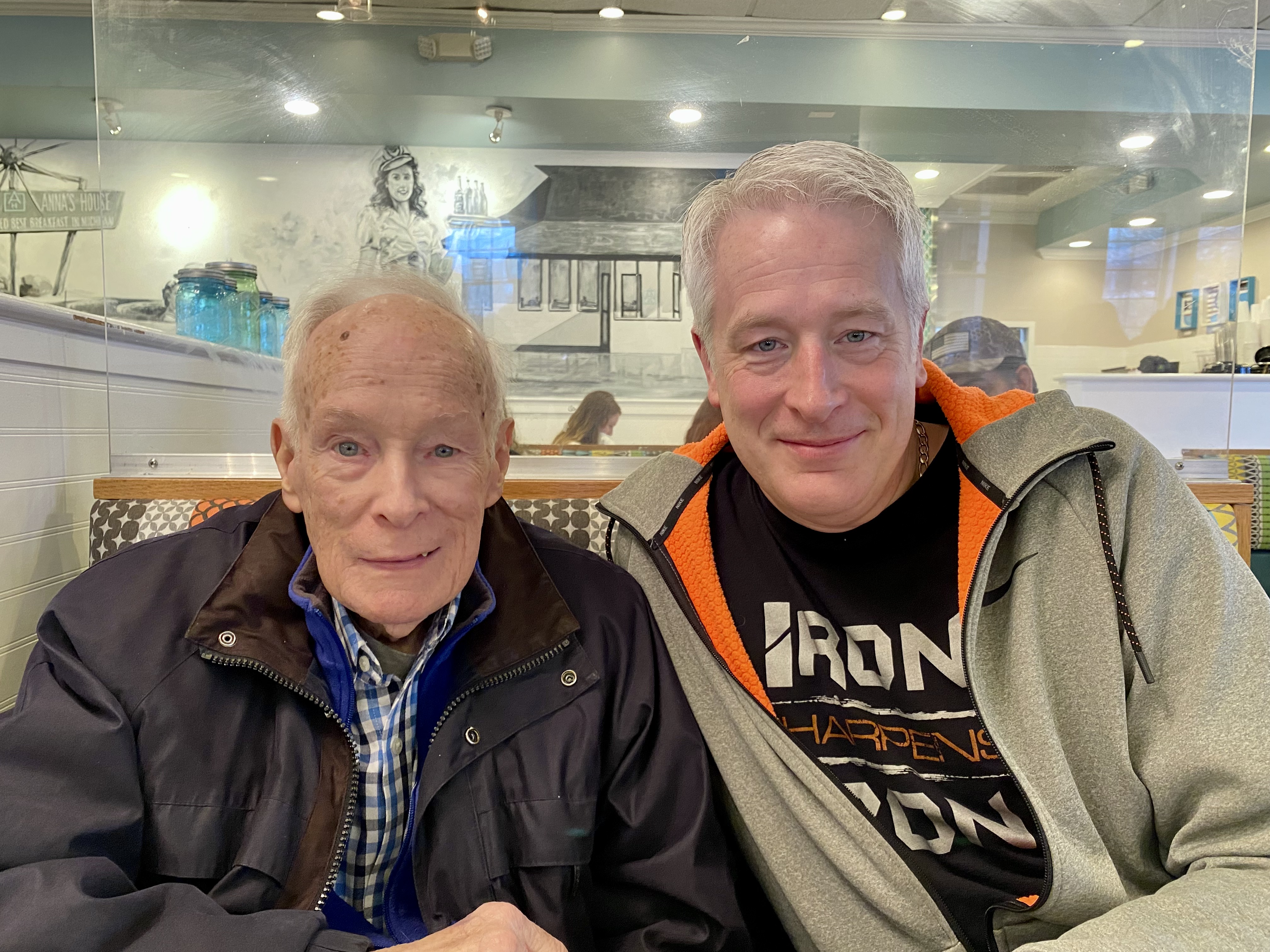
Celebrating my Dad’s 90th birthday!

Fight The New Drug shares the benefits of quitting porn from people who actually quit using pornography.

Thursdays With Spurgeon—No Other Name

This is a weekly series with things I’m reading and pondering from Charles Spurgeon. You can read the original seed thought here, or type “Thursdays With Spurgeon” in the search box to read more entries.

Listen to the podcast of this post by clicking on the player below, and you can also subscribe on AppleSpotify, or Audible. 

No Other Name

But our citizenship is in heaven. And we eagerly await a Savior from there, the Lord Jesus Christ, Who, by the power that enables Him to bring everything under His control, will transform our lowly bodies so that they will be like His glorious body. Therefore, my brothers and sisters, you whom I love and long for, my joy and crown, stand firm in the Lord in this way, dear friends! (Philippians 3:20—4:1). 

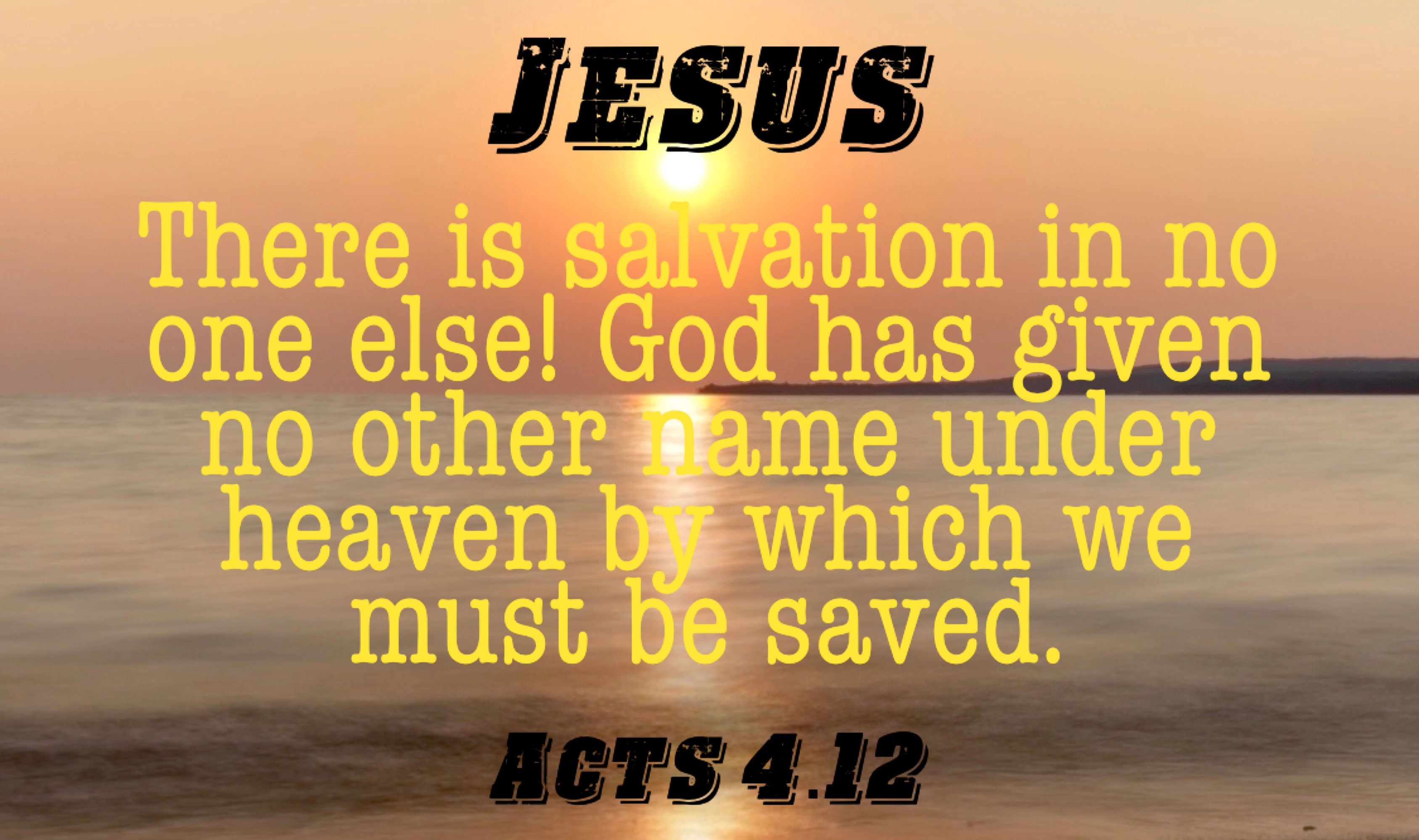
     What is it to be in the Lord? Well, brothers and sisters, we are in the Lord vitally and evidently when we fly to the Lord Jesus by repentance and faith and make Him to be our refuge and hiding place. Is it so with you? Have you fled out of self? Are you trusting in the Lord alone? Have you come to Calvary and beheld your Savior? … There is no shelter for a guilty soul but in His wounded side! Have you come there? Are you in Him? Then stay there. You will never have a better refuge! In fact, there is no other. No other name is given under heaven among men whereby we must be saved [Acts 4:12]. I cannot tell you to stand fast in the Lord unless you are there. Hence my first inquiry is, are you in Christ? Is He your only confidence? In His life, His death, and His resurrection, do you find the grounds of your hope? Is He Himself all your salvation and all your desire? If so, stand fast in Him.

From The Watchword For Today: “Stand Fast”

I am reminded of two of the stanzas from a Charles Wesley hymn:

Jesus! the name that charms our fears,
That bids our sorrows cease—
’Tis music in the sinner’s ears,
’Tis life, and health, and peace.

He breaks the pow’r of canceled sin,
He sets the pris’ner free;
His blood can make the foulest clean,
His blood availed for me.

If you do not know this Savior for yourself, don’t wait another minute to invite Him into your heart! If you do know Jesus as your Savior, stand fast in Him no matter what life may throw at you!

►► Would you please prayerfully consider supporting this ministry? My Patreon supporters get behind-the-scenes access to exclusive materials. ◀︎◀︎
Don’t Putrefy Your Leadership

Listen to the podcast of this post by clicking on the player below, and you can also subscribe on AppleSpotify, or Audible. 

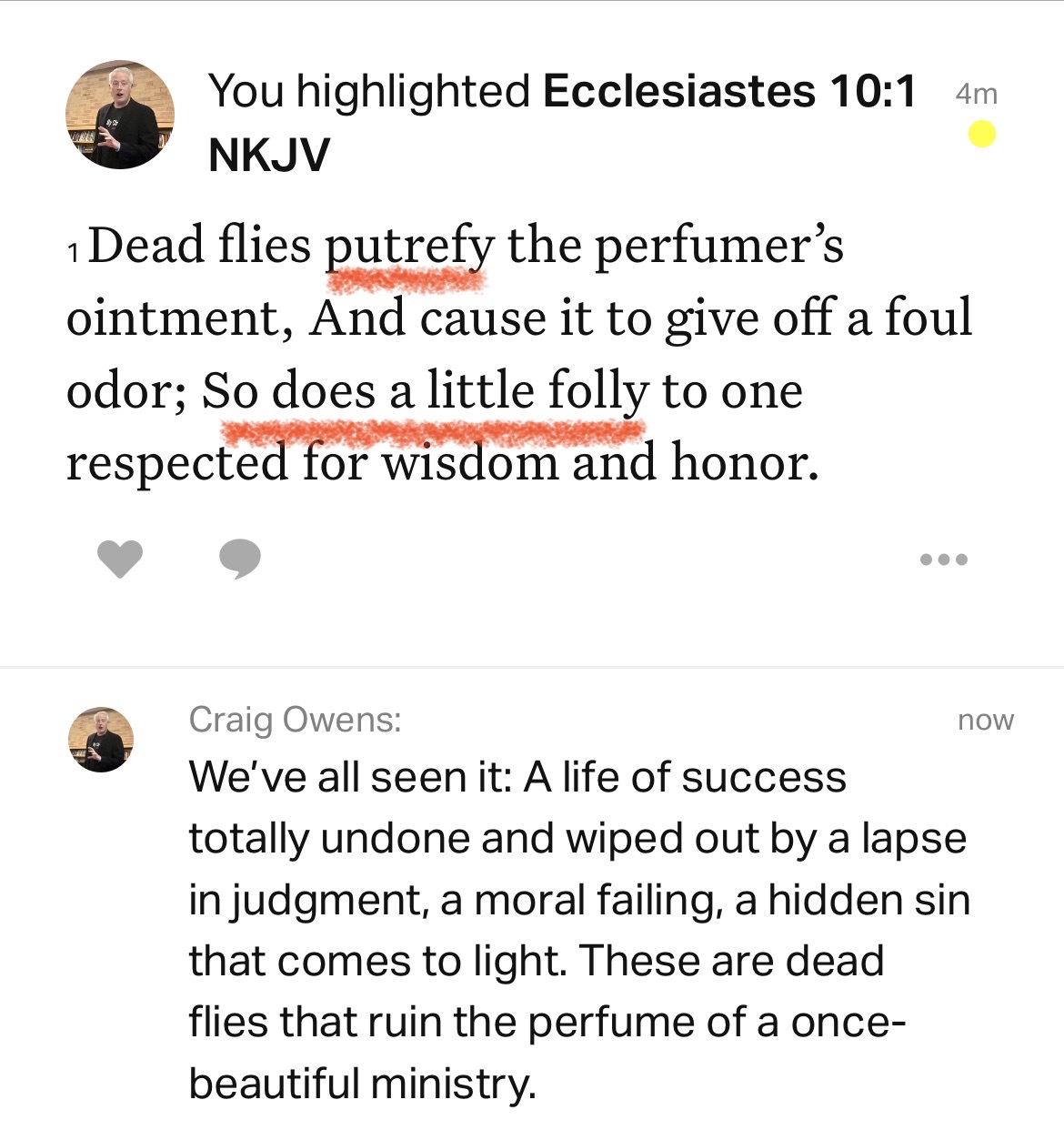
King Solomon nailed it pretty succinctly with this verse: Dead flies putrefy the perfumer’s ointment, and cause it to give off a foul odor; so does a little folly to one respected for wisdom and honor. (Ecclesiastes 10:1) 

As a Christian leader, I always have mixed emotions when I hear of another prominent Christian leader who has stumbled. Part of me is angry because I know that all Christian leaders will get painted with the same brush. Another part of me is incredibly sad to hear of a brother or sister who has squandered the trust that was placed in them. Finally, part of me becomes quite self-reflective, because I don’t want to repeat their mistakes. 

Tom Peters said, “There are no minor lapses of integrity.” King Solomon would agree. And so do I. 

Godly leadership can be such a beautiful thing, but just a couple of dead flies can putrefy the whole thing! 

Here are four things that I have seen in the lives of those leaders who haven’t finished well. These are the things all of us need to watch carefully in our own lives.

(1) They compromised in “the little things.” None of them started off by saying, “I’m going to completely ruin my reputation as a godly leader.” But they allowed themselves to indulge in things that were just “little things” in their minds. Perhaps they thought, “It won’t hurt if I indulge in this one little thing.” The apostle Paul warns us, “So, if you think you are standing firm, be careful that you don’t fall!” (1 Corinthians 10:12). 

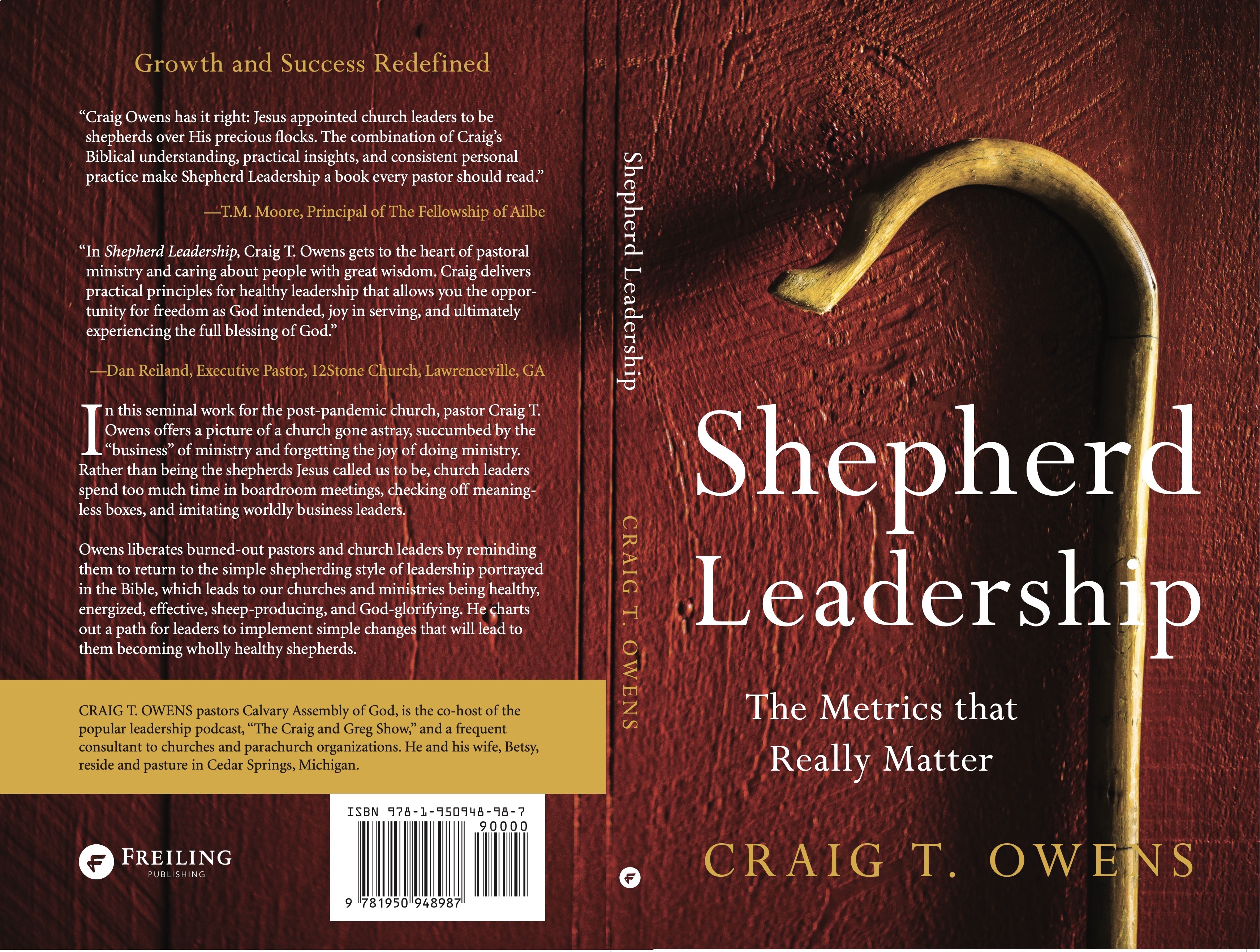
(2) Pride crept in. They thought they were better than others. Peter said it this way: “All of you, clothe yourselves with humility toward one another, because, ‘God opposes the proud but shows favor to the humble’” (1 Peter 5:5). I addressed this topic in my book Shepherd Leadership: The Metrics That Really Matter like this—

     Did you catch that? God stands back from the proud person who will not admit his error nor ask for help, let alone ask for forgiveness. On the other hand, God lavishes His grace on the humble one who admits both his error and his need for help. Admission of an inappropriate action or reaction brings God’s help! 

     Friends, the mark of a maturing shepherd is not one who never misspeaks or never makes a mistake. No, the mark of a maturing shepherd is the one who is closing the gap between his mess up and his confession.

Pride will keep us from confessing the “little sins” and keep us from God’s help. But humility quickly admits the smallest of slip-ups and therefore receives God’s grace and help. 

(3) They lowered their standards. If anything, leaders should raise their standards as they become more successful. Think of it this way: when I was young and immature, I didn’t give much thought to my diet or my exercise routine. As I became older (and hopefully more mature), I became much more tuned-in to these things. Physically, the older I get, the more I need to pay attention to my health. The same thing is true in our leadership: maturity should lead to higher standards and higher levels of scrutiny. 

(4) They stopped listening to others. The combination of little compromises, pride, and lowered standards doesn’t easily invite accountability nor transparency. The track record is pretty consistent among those who have fallen short: they stopped listening to people who tried to correct them.

I want to finish well. I don’t want a leadership stumble in my life to rob God of glory, nor to cause others to stumble in their Christian walk. I am committed to living my life in a way that will allow Jesus to say to me at the end, “Well done, good and faithful servant.” 

I pray that all Christian leaders will join me in this.

►► Would you please prayerfully consider supporting this ministry? My Patreon supporters get behind-the-scenes access to exclusive materials. ◀︎◀︎

Good Friday Services

Issac Watts penned these beautiful words—

Not all the blood of beasts,
  On Jewish altars slain,
Could give the guilty conscience peace,
  Or wash away its stain.

But Christ, the heavenly Lamb,
  Takes all our sins away;
A sacrifice of nobler name,
  And richer blood than they.

Good Friday is the day we remember and celebrate the noblest of sacrifices that purchased our freedom from sin.

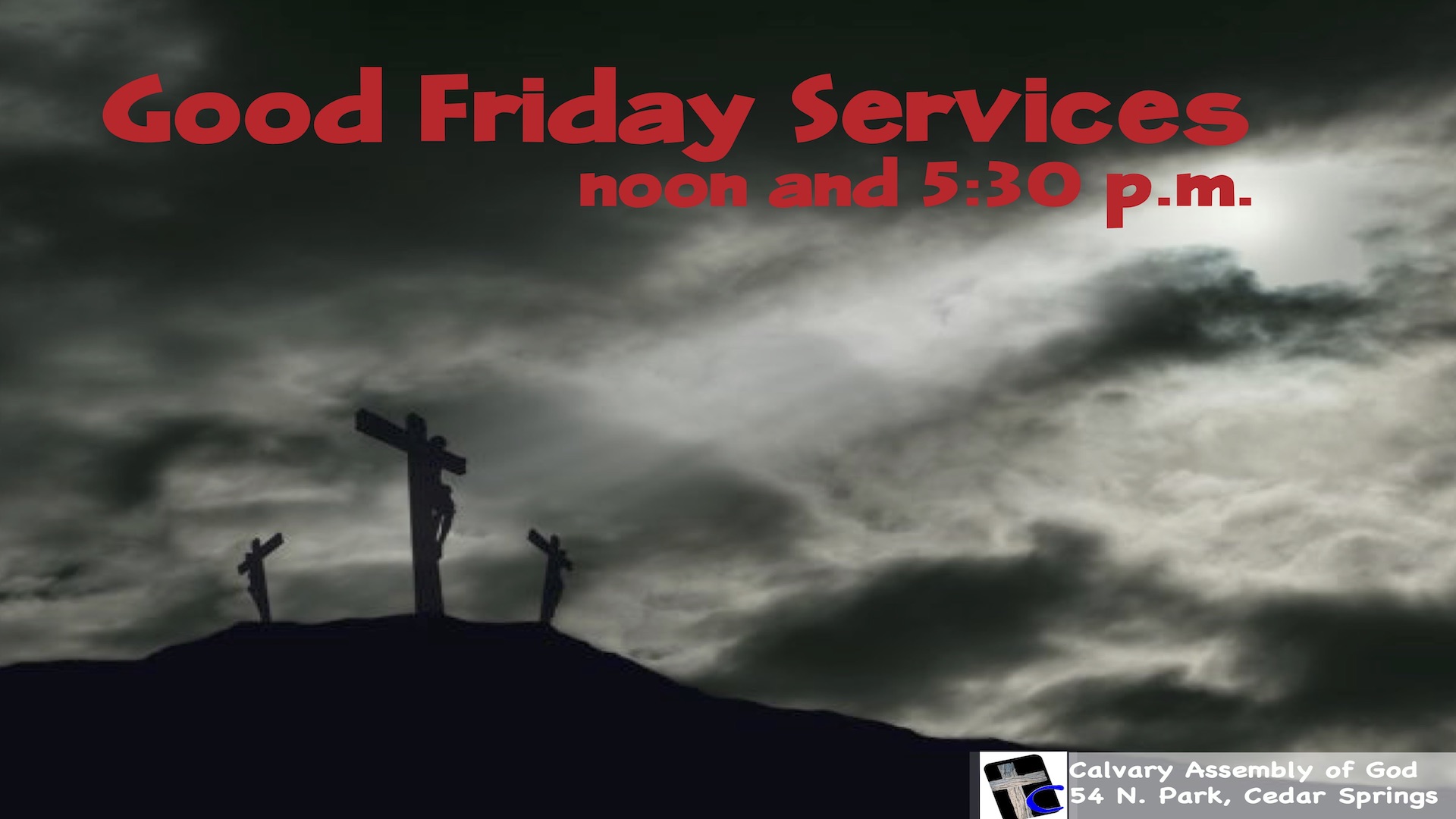
Please join us for our 30-minute Good Friday services. We have two services available for you: noon and 5:30 p.m. 

It’s What Shepherds Do

Listen to the podcast of this post by clicking on the player below, and you can also subscribe on AppleSpotify, or Audible. 

T.M. Moore shares my heartbeat for pastors to align their minds, hearts, and wills to leading as shepherds. T.M. graciously wrote one of the endorsements for my book Shepherd Leadership: The Metrics That Really Matter by saying, 

“The combination of Craig’s Biblical understanding, practical insights, and consistent personal practice make this a book every pastor should read. Unless our goals and practices in ministry line up with those Jesus taught and exemplified, we cannot expect Him to bless us with world-uprighting power.”

In a recent blog post, T.M. shared these poignant words—

     “Many pastors today seek to model themselves and their ministries along the lines of whichever pastor and whatever church seem to be the most ‘popular’ or ‘successful’ in attracting people. The result is, increasingly, worship services are starting to look alike, and pastors are starting to preach alike. And those who aren’t are wondering what they might do to become more like everybody else.

     “We ought not model ourselves on our contemporaries, be they ever so ‘successful.’ Such comparing and adjusting, Paul suggested, is not wise (2 Corinthians 10:12). Jesus is our great model for ministry, and we should look to Him to wash, shape, enliven, empower, and employ every aspect of our lives and ministries for His glory.

     “In his sermon, ‘Christ the Example of Ministers,’ Jonathan Edwards offered a concise summary of the reason people submit themselves for ordination to ministry: ‘The work and business of ministers is as it were that of servants, to wash and cleanse the souls of men: for this is done by the preaching of the Word, which is their main business, Ephesians 5:26. “That He might sanctify and cleanse it with the washing of water by the Word.” … It is the duty of ministers of the gospel, in the work of their ministry, to follow the example of their great Lord and Master.’ 

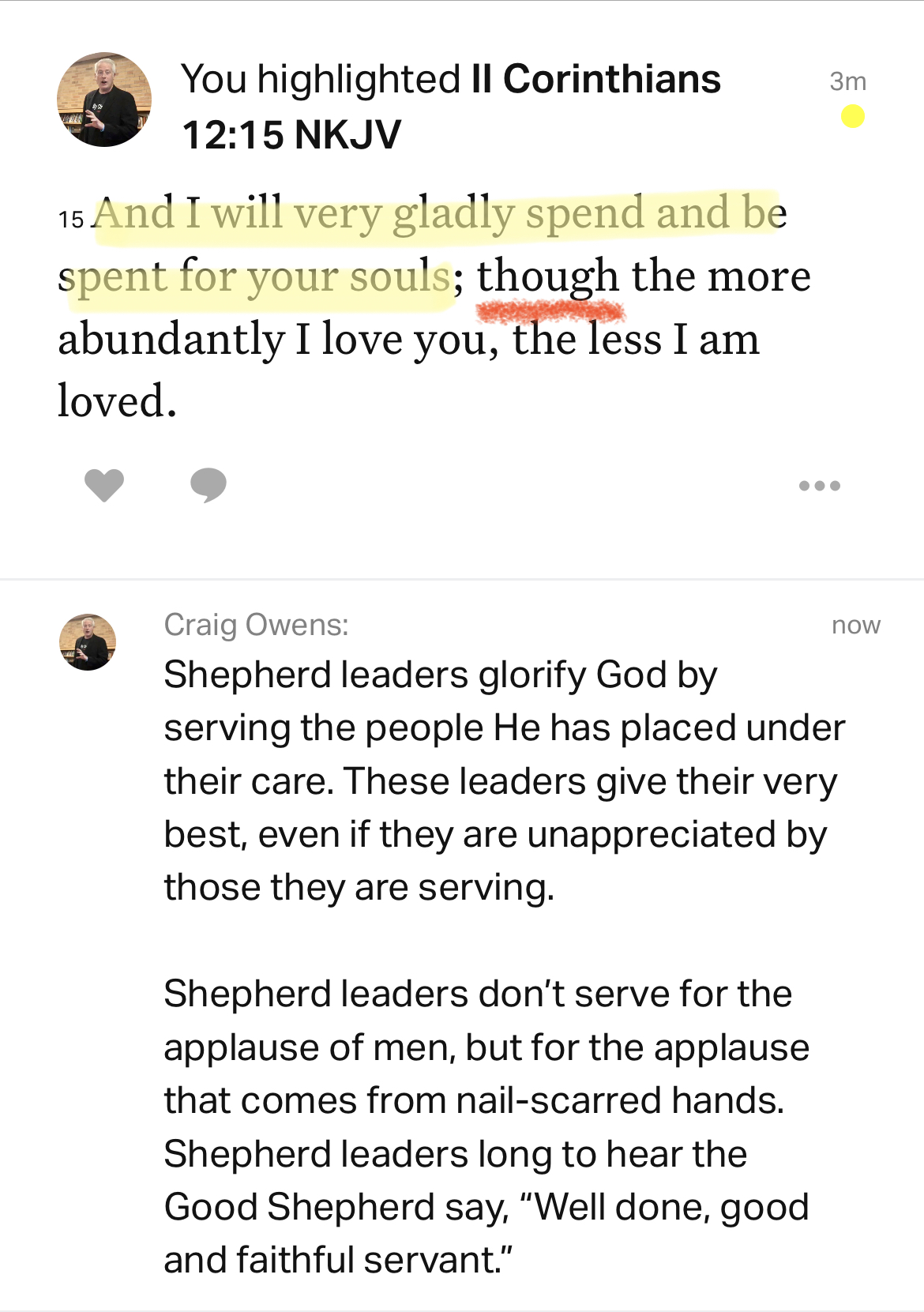
     “Elsewhere Paul talked about spending and being spent for the souls of God’s people (2 Corinthians 12:15). The challenge that faces us who have accepted the call to ministry is to follow the example of Paul (1 Corinthians 11:1) and strive to see Jesus, become like Jesus, work and serve like Jesus, lay down our lives like Jesus, and trust in Jesus to make our labors fruitful for His glory.” 

I wholeheartedly agree! 

Pastors, let’s get back to the shepherding model the Scriptures show us. This is truly the heartbeat of my book. You can get more information on Shepherd Leadership by clicking here. 

If you feel my book would benefit you (or your pastor) I would be happy to send you the ebook version free of charge. Just email me to let me know. 

►► Would you please prayerfully consider supporting this ministry? My Patreon supporters get behind-the-scenes access to exclusive materials. ◀︎◀︎