Poetry Saturday—Of The Father’s Love Begotten

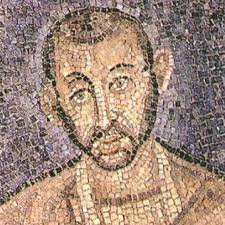
Of the Father’s love begotten
ere the worlds began to be,
He is Alpha and Omega,
He the Source, the Ending He,
of the things that are, that have been,
and that future years shall see,
evermore and evermore!

O that birth forever blessed,
when the Virgin, full of grace,
by the Holy Ghost conceiving,
bore the Savior of our race;
and the Babe, the world’s Redeemer,
first revealed His sacred face,
evermore and evermore!

This is He whom heav’n-taught singers
sang of old with one accord,
whom the Scriptures of the prophets
promised in their faithful word;
now He shines, the long expected;
let creation praise its Lord,
evermore and evermore!

O ye heights of heav’n, adore Him;
angel hosts, His praises sing:
all dominions, bow before Him
and extol our God and King;
let no tongue on earth be silent,
ev’ry voice in concert ring,
evermore and evermore!

Christ, to Thee, with God the Father,
and, O Holy Ghost, to Thee,
hymn and chant and high thanksgiving
and unwearied praises be,
honor, glory, and dominion
and eternal victory,
evermore and evermore! —Aurelius Clemens Prudentius

Thursdays With Spurgeon—The Purpose Of The Baptism In The Holy Spirit

This is a weekly series with things I’m reading and pondering from Charles Spurgeon. You can read the original seed thought here, or type “Thursdays With Spurgeon” in the search box to read more entries.

The Purpose Of The Baptism In The Holy Spirit

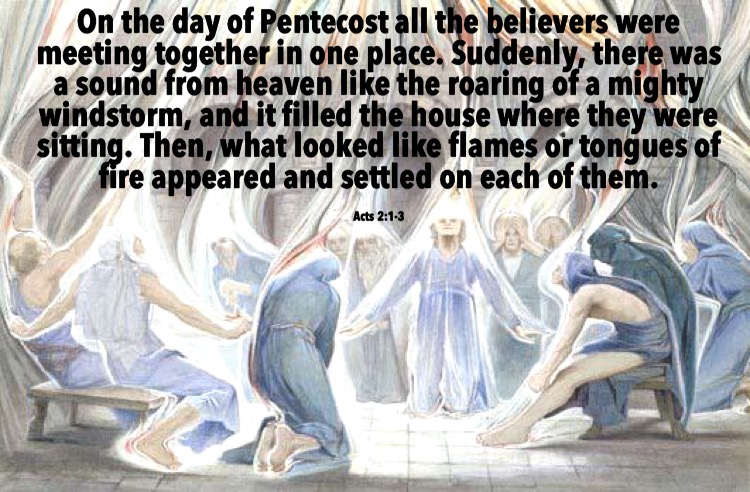
On the day of Pentecost all the believers were meeting together in one place. Suddenly, there was a sound from heaven like the roaring of a mighty windstorm, and it filled the house where they were sitting. Then, what looked like flames or tongues of fire appeared and settled on each of them. (Acts 2:1-3) 

     Ordinary winds blow from this or that quarter of the skies, but this descended from heaven itself. It was distinctly like a downdraft from above. This sets forth the fact that the true Spirit, the Spirit of God, comes from neither this place nor that, neither can His power be controlled or directed by human authority. His working is always from above, from God Himself! The work of the Holy Spirit is, so to speak, the breath of God, and His power is always, in a special sense, the immediate power of God. …  

     Tongues of flame sitting on each man’s head symbolized a personal visitation to the mind and heart of each one of the chosen company. The fires came not to consume them, for the flaming tongue injured no one. To men whom the Lord has prepared for His approach, there is no danger in His visitations. They see God and their lives are preserved. They feel His fires and are not consumed. This is the privilege of only those who have been prepared and purified for such fellowship with God. The intention of the symbol was to show them that the Holy Spirit would illuminate them as fire gives light. ‘He will guide you into all truth’ (John 16:13). … 

     But the fire does more than give light; it inflames, and the flames that sat upon each show them that they were to be ablaze with love, intense with zeal, burning with self-sacrifice, and that they were to go forth among men to speak not with the chill tone of deliberate logic, but with burning tongues of passionate pleading, persuading, and entreating men to come to Christ that they might live! The fire signified inspiration. God was about to make them speak under a divine influence, to speak as the Spirit of God should give them utterance. …  

     O You who are our God, answer us by fire, we pray! Answer us both by wind and fire and then we will see You to be God indeed. The kingdom comes not and the work is flagging. Oh, that You would send the wind and fire! You will do this when we are all of one accord: all believing, are expecting, and all prepared by prayer. Lord, bring us to this waiting state!

From Pentecostal Wind And Fire

As I said earlier, Pentecost is not the culmination of God’s power, it is the initiation of His power that is necessary to empower us to be witnesses for Jesus. 

If Jesus said that we needed this power to live and testify for Him, why would we ever want anything but the full outpouring of this Holy Spirit power?! Jesus Himself relied on the power of the Holy Spirit during His earthly ministry, so how much more so do we need this baptism into the fire and wind of the Spirit!

10 Quotes From “The Screwtape Letters”

C.S. Lewis gives us fantastic insight into the temptations the devil tries to use against Christians. You can read my full book review here. Just as a reminder: When Screwtape talks about “the Enemy” he is referring to God and when he says “our Father” he is talking about satan. 

“Prosperity knits a man to the World. He feels that he is ‘finding his place in it,’ while really it is finding its place in him.” 

“Music and silence—how I detest them both! How thankful we should be that ever since our Father entered Hell—though longer ago than humans, reckoning in light years, could express—no square inch of infernal space and no moment of infernal time has been surrendered to either of those abominable forces, but all has been occupied by Noise—Noise, the grand dynamism, the audible expression of all that is exultant, ruthless, and virile—Noise which alone defends us from silly qualms, despairing scruples, and impossible desires. We will make the whole universe a noise in the end.” 

“Let his inner resolve be to bear whatever comes to him, but to bear it ‘for a reasonable period’—and let the reasonable period be shorter than the trial is likely to last. It need not be much shorter…. The fun is to make the man yield just when (had he but known it) relief was almost in sight.”

“Surely you know that if a man can’t be cured of churchgoing, the next best thing is to send him all over the neighborhood looking for the church that ‘suits’ him until he becomes a taster or connoisseur of churches.” 

“Our Enemy is a hedonist at heart. All those fasts and vigils and stakes and crosses are only a facade. Or only like foam on the seashore. Out at sea, out in His sea, there is pleasure, and more pleasure. He makes no secret of it; at His right hand are ‘pleasures forevermore.’ Ugh! … He has filled His world full of pleasures. There are things for humans to do all day long without His minding in the least—sleeping, washing, eating, drinking, making love, playing, praying, working. Everything has to be twisted before it’s any use to us.” 

“You will say that these are very small sins; and doubtless, like all young tempters, you are anxious to be able to report spectacular wickedness. But do remember, the only thing that matters is the extent to which you separate the man from the Enemy. It does not matter how small the sins are provided that their cumulative effect is to edge the man away from the Light and out into the Nothing. Murder is no better than cards if cards can do the trick. Indeed the safest road to Hell is the gradual one—the gentle slope, soft underfoot, without sudden turnings, without milestones, without signposts.” 

“Your patient has become humble; have you drawn his attention to the fact? All virtues are less formidable to us once the man is aware that he has them, but this is specially true of humility. Catch him at the moment when he is really poor in spirit and smuggle into his mind the gratifying reflection, ‘By Jove! I’m being humble,’ and almost immediately pride—pride at his own humility—will appear. If he awakes to the danger and tries to smother this new form of pride, make him proud of his attempt. … You must therefore conceal from the patient the true end of Humility. Let him think of it not as self-forgetfulness but as a certain kind of opinion (namely, a low opinion) of his own talents and character.” 

“There are two equal and opposite errors into which our race can fall about the devils. One it to disbelieve in their existence. The other is to believe, and to feel an excessive and unhealthy interest in them.” 

“Even of his sins the Enemy does not want him to think too much: once they are repented, the sooner the man turns his attention outward, the better the Enemy is pleased.” 

“Whenever they are attending to the Enemy Himself we are defeated, but there are ways of preventing them from doing so. The simplest is to turn their gaze away from Him towards themselves. Keep them watching their own minds and trying to produce feelings there by the action of their own wills. When they meant to ask Him for charity, let them, instead, start trying to manufacture charitable feelings for themselves and not notice that this is what they are doing. When they meant to pray for courage, let them really be trying to feel brave. When they say they are praying for forgiveness, let them be trying to feel forgiven. Teach them to estimate the value of each prayer by their success in producing the desired feeling; and never let them suspect how much success or failure of that kind depends on whether they are well or ill, fresh or tired, at the moment.” 

Candlelight Christmas Eve

It’s one of my favorite services of the year: Our annual Candlelight Christmas Eve service.

Please join me at 6pm on Thursday, December 24, for some hot chocolate and Christmas cookies, Christmas carols and special music, a special story just for the kids, and an encouraging thought from the Scripture about the wonderful gift of the birth of Jesus Christ.

Our service lasts less than an hour so it will fit into your family’s Christmas plans.

Get a map to City Impact by clicking here.

The Screwtape Letters (book review)

Sun Tzu taught, “If you know the enemy and know yourself, you need not fear the result of a hundred battles.” With that maxim in mind, if you read The Screwtape Letters by C.S. Lewis, you will gain insight into the enemy’s tactics, unlike perhaps any other source. 

Lewis said this book was an easy book for him to write, but it gave him no joy to write it. Exposing the dark strategies of satan and his ugly cohort is indeed a joyless business. But even the apostle Paul tells us that we shouldn’t be unaware of the devil’s schemes. 

If you are a Christian and you read this book, you need to reverse your thinking. This book is a series of letters from Screwtape, a more experienced demon, to his nephew Wormwood who has just been given his first “patient” to seduce into hell. Whereas Christians call God their Father, in this book Screwtape refers to satan as “our Father” and God as “the Enemy.” 

Perhaps the most insightful part to me of this amazing book is the subtlety of the temptations which are employed to trip up Christians and keep seekers away from the truth. In fact, at several points Screwtape warns Wormwood that he is trying too hard to use something huge to bring down his patient when only the smallest of things will do the trick. 

I would encourage newer Christians to wait a while to read this book. In the meantime, read the Bible as much as you can—get to know the Real before you read about the counterfeit. For more mature Christians, however, this is an important book to read. 

(As a brief aside, in reading The Screwtape Letters this time through, I listened to the audiobook narrated by Joss Ackland and he delivered a phenomenal performance!) 

Clinging To God’s Words

When it comes right down to it, faith and fear both hinge on our beliefs: Fear believes something bad; faith believes something good. Fear is an invitation for us to evaluate in who or in what we have placed our trust.  

According to the dictionary, fear is a distressing emotion we feel whether the threat is real or imagined. Five hundred years ago, Michel de Montaigne said, “My life has been filled with terrible misfortune; most of which never happened.” Even more recently, an extensive study found that 85 percent of things people feared never happened!

According to the dictionary, faith is trust in something even without proof or evidence. That sounds tremendously close to the biblical definition of faith: Now faith is the assurance—the confirmation, the title deed—of the things we hope for, being the proof of things we do not see and the conviction of their reality—faith perceiving as real fact what is not revealed to the senses. (Hebrews 11:1 AMP) 

Mary is the second person to whom an angel says “Do not be afraid” in the First Advent story. Consider her story alongside Zechariah’s story and especially notice when these words were spoken. The angel Gabriel first tells Mary, “Greetings, you who are highly favored! The Lord is with you.” 

Mary’s initial response is being “greatly troubled.” This Greek word means an internal agitation that today psychologists would call “cognitive dissonance.” In other words, what Mary believed about herself didn’t line up with what God believed about her. Her next response is wondering how she could ever measure up to God’s high standard of her. 

It’s at this point that Gabriel says those key words, “Do not be afraid, Mary, you have already found favor with God.” She didn’t have to make herself worthy of God’s favor because she already had it! Now Mary just had to believe it. 

Fear is overcome by clinging to God’s words instead of the world’s words. 

Mary did indeed choose this. Her song (in vv. 46-55) is loaded with Old Testament references, and she concludes by singing to God, “You have helped Your servant Israel, remembering to be merciful to Abraham and his descendants forever, even as You said to our fathers.” 

Here’s the truth—

  • Your Word, Lord, is eternal; it stands firm in the heavens. (Psalm 119:89) 
  • God is not human, that He should lie, not a human being, that He should change His mind. Does He speak and then not act? Does He promise and not fulfill? (Numbers 23:19) 
  • And Jesus would tell us that clinging to God’s words puts us on the surest of foundations that no storm of life could ever shake (Luke 6:46-49)! 

Clinging to God’s words lets us realize God’s grace toward us. 

If you know Jesus as your Savior, you can insert your name in the same place where Gabriel said to Mary: “Do not be afraid, ____________, you have found favor with God!” 

If you have missed any of the messages in our Advent series Do Not Be Afraid, you can access the full list by clicking here. 

Poetry Saturday—Merry…

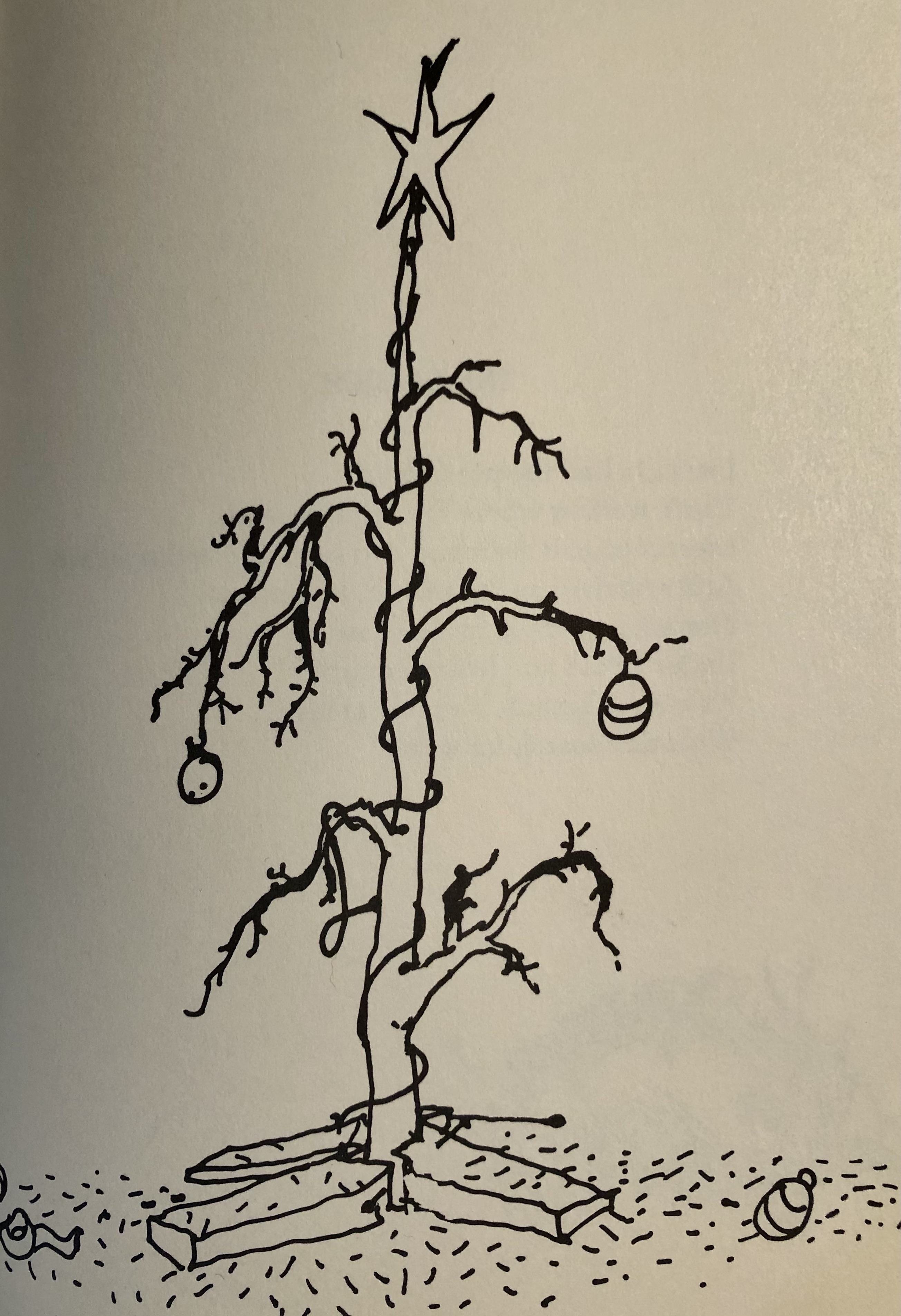
No one’s hangin’ stockin’s up,
No one’s bakin’ pie,
No one’s lookin’ up to see
A new star in the sky.
No one’s talkin’ brotherhood,
No one’s givin’ gifts,
And no one loves a Christmas tree
On March the twenty-fifth. —Shel Silverstein

Thursdays With Spurgeon—The Initiation Of Power

This is a weekly series with things I’m reading and pondering from Charles Spurgeon. You can read the original seed thought here, or type “Thursdays With Spurgeon” in the search box to read more entries.

The Initiation Of Power 

     Whatever the Holy Spirit was at the first, He is that now, for as God, He remains forever the same. … We would greatly grieve the Holy Spirit if we supposed that His might was less today than in the beginning. …  

     If at the commencement of the gospel we behold the Holy Spirit working great signs and wonders, may we not expect a continuance of and, if anything, increased displays of His power as the ages roll on? … 

     It ought not to be forgotten that Pentecost was the feast of firstfruits. It was the time when the first ears of ripe corn were offered to God. If, then, at the commencement of the gospel harvest we see so plainly the power of the Holy Spirit, may we not most properly expect infinitely more as the harvest advances and, most of all, when the most numerous sheaves will be gathered? May we not conclude that if the Pentecost was thus marvelous, the actual harvest will be still more wonderful?

From Pentecostal Wind And Fire

When Jesus was approaching the Cross, He gathered His disciples together to tell them what was coming. One of the assurances He gave His followers was this: “I assure you, most solemnly I tell you, if anyone steadfastly believes in Me, he will himself be able to do the things that I do; and he will do even greater things than these, because I go to the Father” (John 14:12). 

The empowering force for these “greater things” would be the Holy Spirit indwelling the Christian (Matthew 3:11; Luke 24:49; Acts 1:8, 2:1-4). 

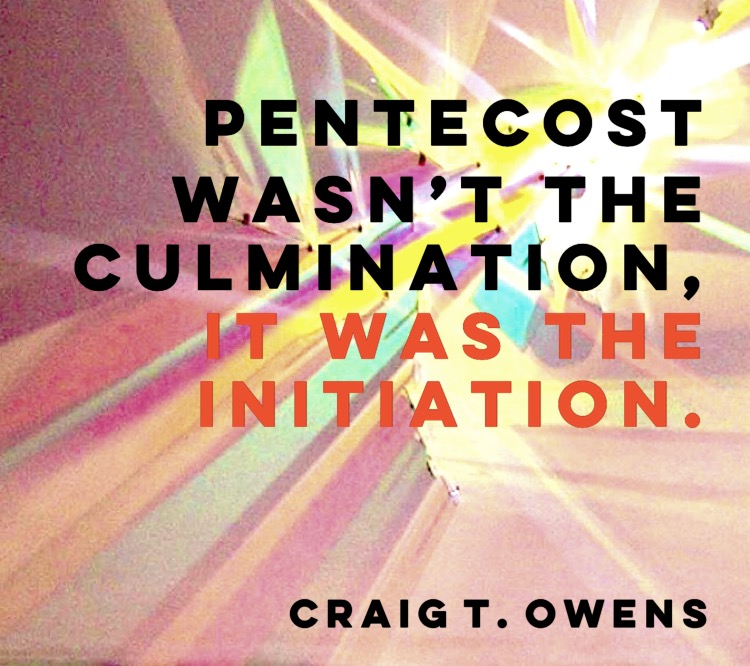
Pentecost wasn’t the culmination, it was the initiation. 

Pentecost was the launching point for followers of Jesus to be filled with dunamis power that would enable them to go into all the world and preach the gospel, and to have signs and wonders follow to confirm the preaching of the Word. 

As Spurgeon said, we greatly grieve the Holy Spirit when we attempt to put Him in a box as to what He can or can’t do today, or if we try to limit Him to one era of long-past history. The Holy Spirit is as vital for a Christian today as He was on that Pentecost Sunday described in Acts 2! 

Authority To Serve

And David knew the Lord has established him as king over Israel and that his kingdom had been highly exalted for the sake of His people Israel. (1 Chronicles 14:2) 

“David knew” reminds me of “Jesus knew” in John 13:3.

Both knew God had placed them exactly where they were supposed to be. 

Both knew the authority God had given them. 

Both knew the power that was theirs to use.

Both knew they could do self-glorifying, self-promoting things with their power. Yet both used their authority and power to serve others: “for the sake of His people.”

Jesus gave His authority to us (Matthew 28:18). 

Do I know that? 

I mean, really know that? 

If so, am I using His authority to serve others?

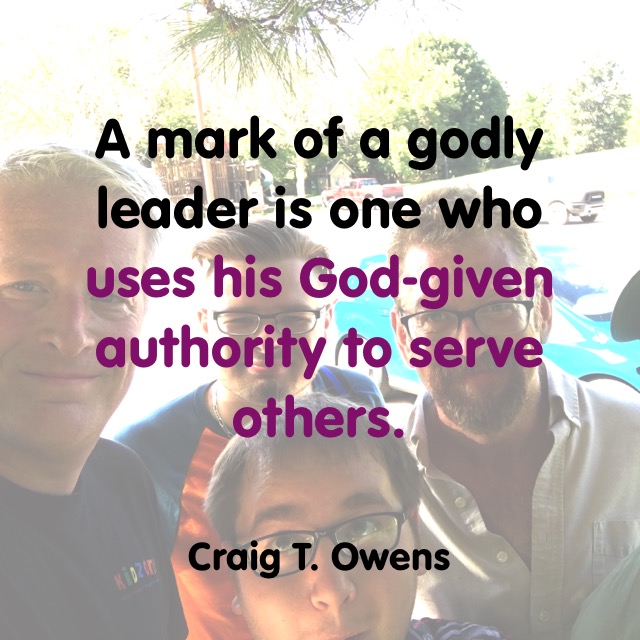
A mark of a godly leader is one who uses his God-given authority to serve others. 

This is part 53 in my series on godly leadership. You can check out all of my posts in this series by clicking here.

King And Commoner

In the first year of Cyrus king of Persia, in order to fulfill the word of the Lord spoken by Jeremiah, the Lord moved the heart of Cyrus… (Ezra 1:1). 

Ezra begins as 2 Chronicles ends: with the proclamation of Cyrus allowing the Israelites to return to Jerusalem. 

The Babylonians defeated the Assyrians, who were then defeated by the Medes, who were themselves defeated by the Persians under Cyrus II. This was a powerful man who claimed “all the kingdoms of the earth” as his possession. (v. 2). 

Yet this conquering king who was called Cyrus the Great had his heart directed by God. 

Among the Israelite exiles that returned to Jerusalem were princes, priests, Levites, servants, and common people of every stripe. These exiles were rulers of nothing. 

Yet these people also had their hearts moved by God (v. 5)—42,360 of them, to be precise. 

The same God who moved the heart of the most powerful king on earth also moved the hearts of common people. God had a plan to fulfill and He knew exactly which hearts to move at the precise time to bring about His purpose. God is sovereignly in control. All of history—including all the people in history—is His story. 

The king is not too powerful and the common citizen is not too small to be used by God. 

Let me make that statement more personal: All of the “great” people on earth today are not too powerful to be used by God, nor are you too small to be used by Him. 

Will you say “yes” when He moves your heart to action?