Links & Quotes

You are a one-of-a-kind creation on purpose! God’s plan for your life is as unique as you are. I had the privilege of speaking at Country Chapel’s week-long revival services, and this is a clip from my sermon.

I have lots of new content every week, which you can check out on my YouTube channel.

What “began 90 years ago in Seattle as ‘an agency to supply candidates for the ministry to our churches and on the mission field,’” is now celebrating its 90th anniversary as Northwest University. It is really cool to see the hand of God supplying in miraculous ways for those who were so passionate about this endeavor.

“How thankful we are, Father God, for a crucified Redeemer. Nothing in heaven or earth is such an amazing wonder as this; nothing can compete with it for excellence. May all the many charms of sin be overcome by this ravishing love, which bubbles up in every drop of our Redeemer’s blood. How can we, with thoughts of the Cross alive in our hearts, sin against so much tenderness, compassion, and grace, and all the other perfections of You, our God, which sound so loud in our ears from the Cross of Jesus?” —Stephen Charnock

On the anniversary of Blaise Psacal’s death in 1662, John Stonestreet shared a mini-biography and several good reasons why Christians should still heed this mathematician and apologist’s insights.

“Where shall language be found which shall describe Your matchless love, Your unparalleled love, toward the children of men? Your love is so vast and boundless that, as the swallow skims the water without diving into its depths, so all descriptive words merely touch the surface of Your love, while depths immeasurable lie beneath. … The most inspired mind must utterly fail to fathom this love. Here is love! And truly it is love that surpasses knowledge. Oh, let this love fill our hearts with adoring gratitude and lead us to practical manifestations of its power.” —Charles Spurgeon

When a leader admits a need for help to his or her team, it actually increases the level of respect the team has for that leader. 

What does pornography have to do with loneliness? “Dr. Gary Brooks, a psychologist who has worked with people struggling with unwanted porn habits for the last 30 years, explains that ‘Anytime [a person] spends much time with the usual pornography usage cycle, it can’t help but be a depressing, demeaning, self-loathing kind of experience.’”

Time To Check The Mirror

Listen to the podcast of this post by clicking on the player below, and you can also subscribe on AppleSpotify, or Audible. 

All leaders—but especially pastoral leaders—need to work on a better response when we are bitten by a sheep in our pasture. Our natural first response is usually not going to be very helpful for us or for the biting sheep. 

In chapter 2 of my book When Sheep Bite, I wrote this—

  When a painful attack suddenly confronts me, I go to the mirror. Instead of asking, “What’s wrong with them that they would bite me like this?” I go to prayer to ask, ‘“Did I do something that provoked this?’’ Sometimes I have literally gone into my bathroom, closed the door, and gotten nose-to-nose with myself to ask this question, and then listened for the Holy Spirit to speak to my heart. 

   My cousin Dick Brogden wrote, “Critics and skeptics are gifts to us, for in their aspersions they often bring to light a brokenness or a liability early on in its development in us. If we are secure enough to ferret out the truth through the condemnation of others, we remain healthy in the long term as our malady is exposed and dealt with before it becomes to serious.” 

   Remember that we are naturally self-protective, so this time of introspection will need to be supernaturally empowered by the Holy Spirit if we are going to see the true prompter of the attack. A prayer I have prayed more times than I can count is, “Search me thoroughly, O God, and know my heart! Try me and know my thoughts! And see if there is any wicked or hurtful way in me, and lead me in the way everlasting” (Psalm 139:23-24 AMPC). 

Get a copy of my book here to help you heal from the painful sheep bites, and to learn how to respond better with each new biting experience. 

►► Would you please prayerfully consider supporting this ministry? My Patreon supporters get behind-the-scenes access to exclusive materials. ◀︎◀︎

Is That In The Bible?

Listen to the podcast of this post by clicking on the player below, and you can also subscribe on AppleSpotify, or Audible.

A meme that makes me chuckle every time I see it is a “quote” attributed to Abraham Lincoln in which he says, “The problem with quotes found on the internet is that they are often not true.” 

(Not to spoil the joke for you, but unless Lincoln knew how to time travel to the future, I don’t think he knew about the modern internet! 😂) 

I love this meme because it captures something that so many people fall into: a quick acceptance of a statement without verifying its source or thinking through the implications of the statement’s truthfulness. 

Some insightful comments sound Shakespearean, but William never wrote them. 

Some pieces of wisdom sound Socratic, but Socrates never taught them. 

Some religious maxims sound godly, but the Bible never recorded them. 

I would like to invite you to join me as we relaunch this series called Is That In The Bible? I think you may be surprised to discover just how many phrases we call biblical aren’t, and how many phrases there are that we never realized are actually in the Bible. 

By the way, if you have a phrase that you would like to have us explore in this series, please leave it in a comment below. You may want to check out the questions we have already addressed:

In this installment of this series, we asked: Is this in the Bible…

Unity Is Not Conformity

Listen to the podcast of this post by clicking on the player below, and you can also subscribe on AppleSpotify, or Audible.

Unity is not conformity nor is it mimicry. The Holy Spirit unites Christians in their message of hope to the world, but He does this by empowering each of our unique testimonies to our culture. 

This is a message I shared with the congregation at Country Chapel during their week-long revival meetings.

The Scriptures I reference in this message are—2 Chronicles 18:1-13; Romans 12:2; Mark 12:28-31; John 12:49-50; John 8:34-36; 2 Corinthians 3:16-18; Acts 15:1-35; Acts 1:8; Acts 2:1-11.

I have previously shared a whole series of messages about how the Holy Spirit empowers Christians for ministry:

►► Would you please prayerfully consider supporting this ministry? My Patreon supporters get behind-the-scenes access to exclusive materials. ◀︎◀︎

Blessing The Blesser

Listen to the podcast of this post by clicking on the player below, and you can also subscribe on AppleSpotify, or Audible. 

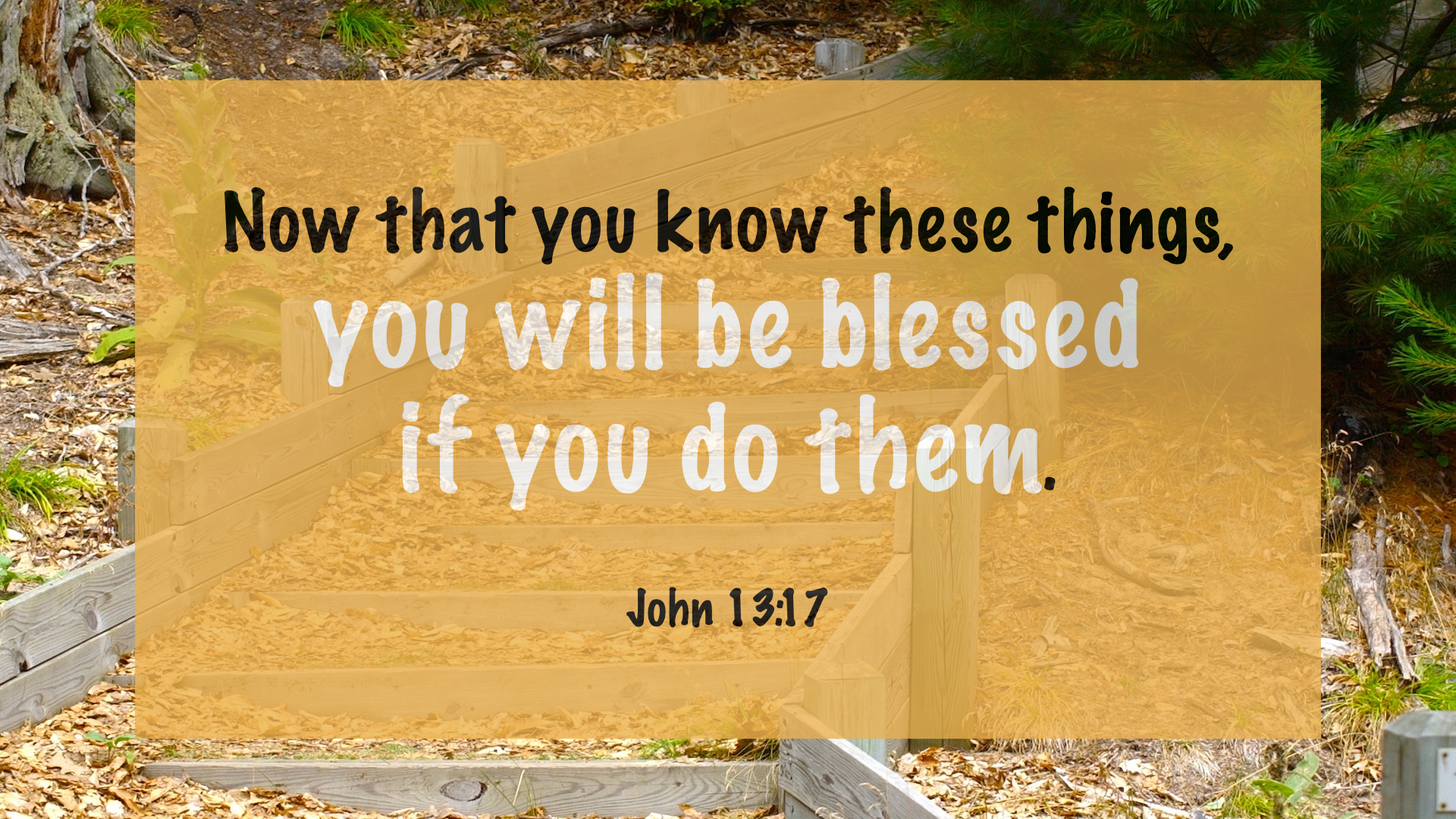
We’ve made it to the top step after a long climb. We’ve arrived! But arrived for what? Not for taking it easy, but for serving.  

Jesus was at the top, and consider what He did with that position:

  • He laid aside His prerogatives as God to serve us—Philippians 2:6-8 
  • He demonstrated this by becoming a servant of the servants—John 13:3-5 
  • He said, “For who is greater, the one who is at the table or the one who serves? Is it not the one who is at the table? But I am among you as One who serves.” (Luke 22:27) 

(Check out all of the Scriptures in this post by clicking here.) 

We strive for the top not to be served, but to serve. This is why the final Song of Ascent addresses those at the top as “servants of the Lord” (Psalm 134:1). 

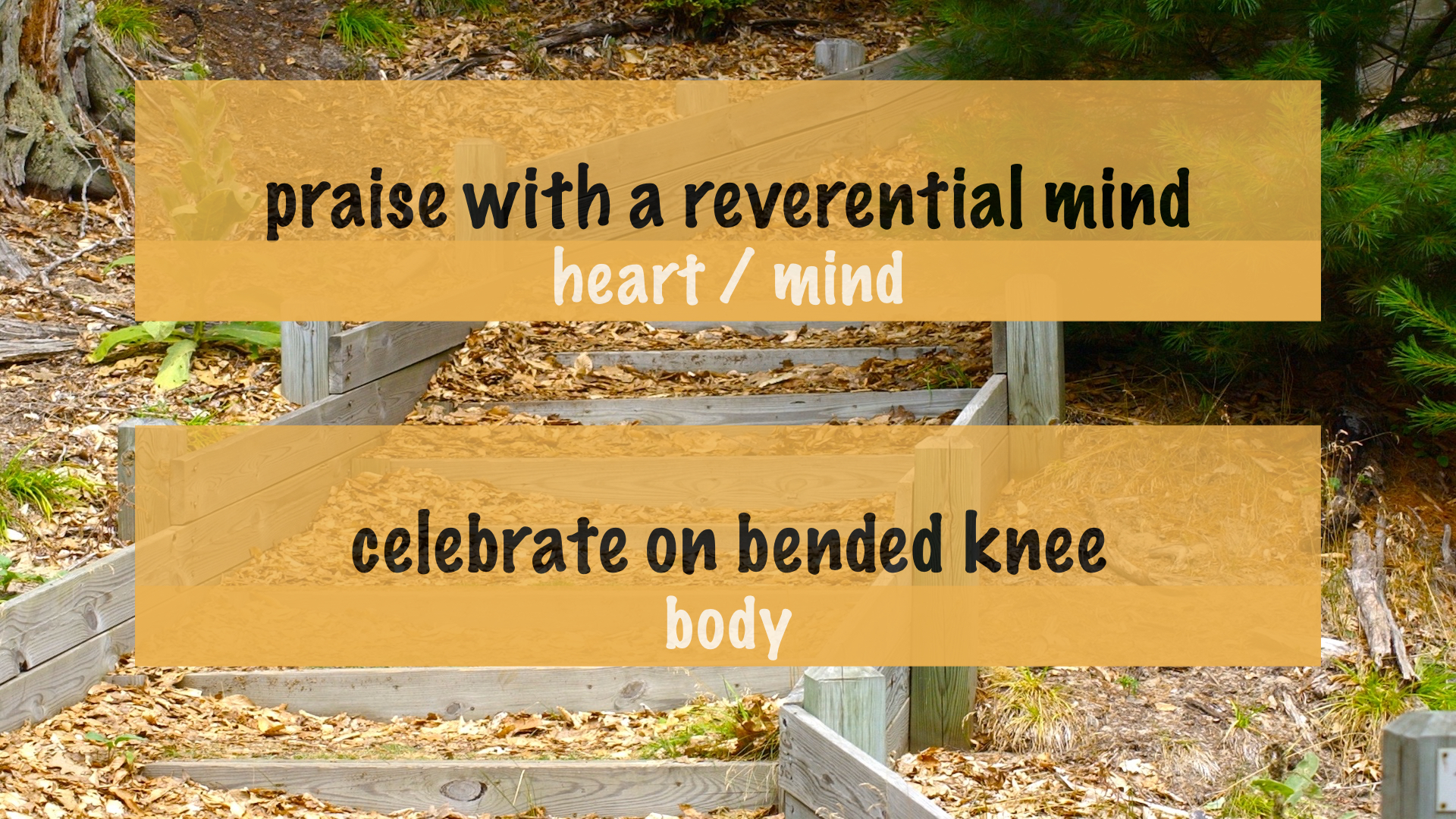
The first duty of the servants is to praise (2x in vv. 1, 2). The KJV actually renders this word “bless,” which I believe is a good way for us to think about this. The word means: 

  1. praise God with a reverential mind and 
  2. celebrate God on bended knee 

In other words, both our heart and our body need to be in a posture of a praising servant. In the Septuagint, the word used for praise / bless is eulogeo, which means to say good words. In putting the two parts of the definition together, it mean we aren’t grumbling about our service (like “I have to do this”), but we are thankfully and worshipfully serving (as in “I get to do this!”). 

These servants are called to “minister…in the house of the Lord [and] in the sanctuary” (134:1-2), just as the priests in the tabernacle (1 Chronicles 9:33; Leviticus 6:13; 24:2, 4). 

This blessing and serving is itself a blessing which unlocks even more blessing. The final words of the final Song of Ascent is a prayer request (notice the word “may” in v. 3). 

The word bless in this final is the same word translated praise in vv. 1-2, except here the form of the verb means “to be shown divine favor”! 

We don’t get blessed by God because we have blessed God, but we bless God because He has already blessed us. I don’t command His blessing, but I bless Him in recognition of the blessing that continually flows from Him to me. 

To word minister as in v. 1 means to: 

  • endure all hardships 
  • continue until the task is done 
  • cause or help others to stand too 

God loves to bless people who love to bless people! 

As long as we’re here, keep blessing and serving others as your act of worship to God. Say good words to people about God and say good words to God about people. Lift up your hands, fall on your knees, sing out loud, or worship quietly in your heart. But keep on serving like Jesus. All of this blesses God. 

Your final and eternal reward in the Heavenly Zion is coming and it is beyond compare—

It will be good for those servants whose Master finds them watching when He comes. Truly I tell you, He will dress Himself to serve, will have them recline at the table and will come and wait on them. It will be good for those servants whose Master finds them ready, even if He comes in the middle of the night or toward daybreak. (Luke 12:37-38) 

In blessing others, we are blessing the God who has already blessed us and who longs to bless us for all of eternity! 

If you’ve missed any of the messages looking at the fifteen Songs of Ascent, you can find them all here. 

►► Would you please prayerfully consider supporting this ministry? My Patreon supporters get behind-the-scenes access to exclusive materials. ◀︎◀︎

Links & Quotes

It’s easy to get along with those we like. But God calls on Christians to do the hard—but rewarding—work of getting along with everyone! Check out this full sermon about the strength in Christian unity.

I have lots of new content every week, which you can check out on my YouTube channel.

“Dad always said you could fall off the same ladder you climbed up.” —Hank Aaron

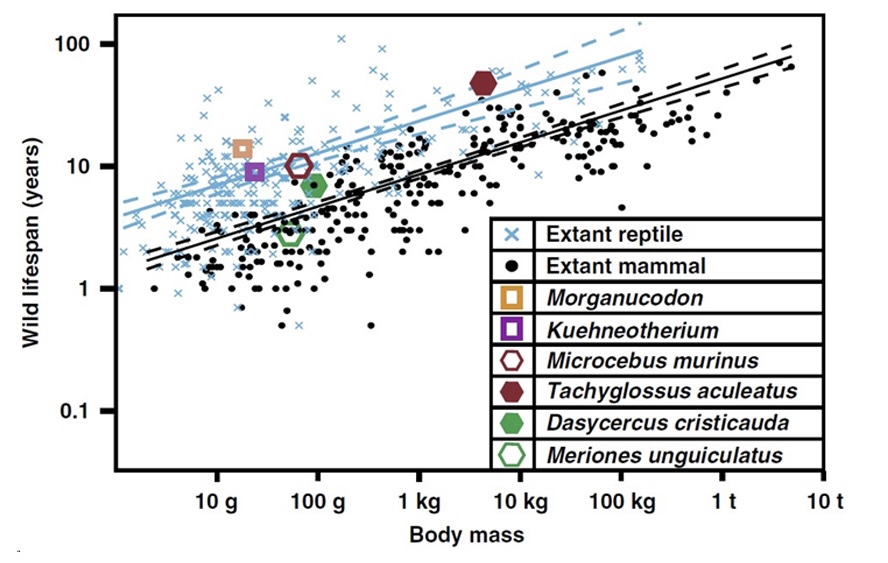
Paleontologists have noted that what Creationists would call pre-Flood mammals lived longer than similar mammals today. “This research should be of interest to Bible-believing Christians because, as chronicled in Genesis 5, humans in the pre-Flood world were experiencing much greater lifespans. Moreover, the advanced ages of the Genesis 5 patriarchs at the births of their sons strongly suggest delayed sexual maturation and possible delayed skeletal maturation, too. The Bible gives no hint that this amazing longevity was in any way supernatural.”

“If we leave our failure, we don’t learn from our failure. If we learn from our failure, we seldom have to leave because of our failure.” —John Maxwell 

Dr. Steve Nichols hosts a great podcast called 5 Minutes In Church History. In the episode this week, he talked about the church politics Jonathan Edwards had to confront when he first arrived in Stockbridge. It came to a head in a letter Edwards received: “All it did was go into, again, politics, accusing Edwards of mis-running the school, which wasn’t true, and deflecting the blame and the focus away from the Williams family. And now Edwards needs to vindicate himself. Well, all that to say, we think of these church history figures, and we see their portraits, we sometimes forget that they’re actually people, and they had to deal with challenges too.” These types of faultfinding accusations are what I address in my book When Sheep Bite.

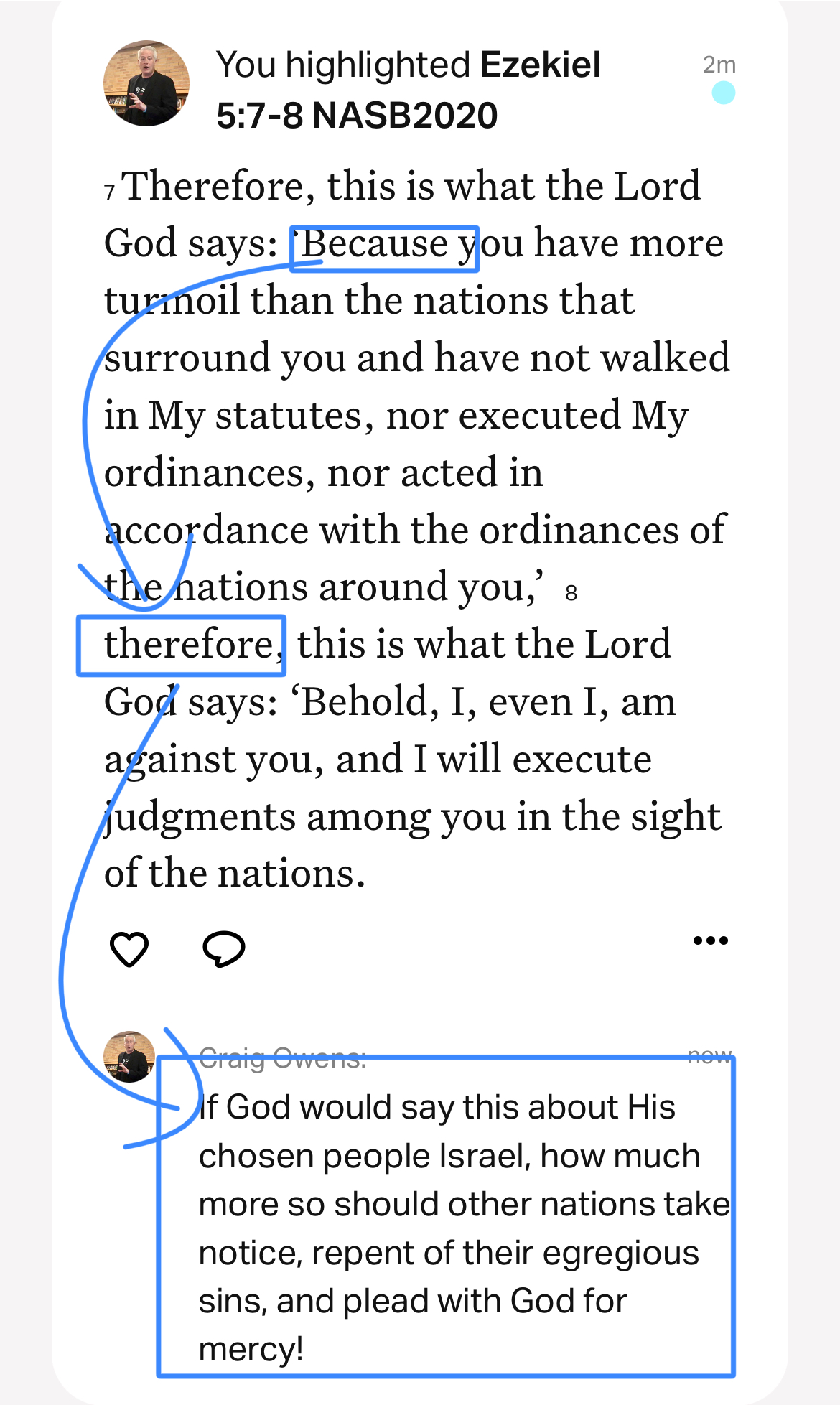
If God would say this (Ezekiel 5:7-9) about His chosen people Israel, how much more so should other nations take notice, repent of their egregious sins, and plead with God for mercy!

Testing In Love

Listen to the podcast of this post by clicking on the player below, and you can also subscribe on AppleSpotify, or Audible. 

God wants us to progress to the next level in our Christian walk, but we need to know what we’re ready for that. Just as a teacher in school prepares us for a test, administers the test, and then gives us the result of the test in order to promote us to the next level, so does our loving Heavenly Father. 

This clip is from a message called Prepared to Pass the Test. All of the messages in this series were an in-depth look at the model prayer Jesus taught us to pray in Matthew 6:9-13. 

►► Would you please prayerfully consider supporting this ministry? My Patreon supporters get behind-the-scenes access to exclusive materials. ◀︎◀︎

Strength In Unity

Listen to the podcast of this post by clicking on the player below, and you can also subscribe on AppleSpotify, or Audible. 

The 12th Song of Ascent (Psalm 131) was written by David to remind us to rely on God’s help even more as we progress on the journey (or mature in our faith). In the 13th Song (Psalm 132), the psalmist says, “Remember David” and his passion for God’s people to experience God’s righteousness and joy. In order for us to know that, we have to remember Jesus. 

Those who put this collection of Songs of Ascent together now include David’s fourth song (Psalm 133) in this collection which expresses his desire for unity among God’s people. 

(Check out all of the Scriptures in this post by clicking here.)

Can you imagine the pilgrims starting out from their individual villages? Maybe there’s not very many of them to begin with and traveling is pretty easy, but they do have to be vigilant against dangers on the road. 

As they progress, they begin to join with pilgrims from other villages. Maybe these are from the same tribe, perhaps even distant relatives. The journey may go a bit slower now that there are more people to keep track of, and some complications of personality may start to arise. But the level of safety and assistance also increases. 

Soon the group is getting larger as they now join with pilgrims from other tribes. These aren’t near relatives at this point, so there may be more complications, but there is even greater encouragement, safety, and potential. 

Aha! Potential. 

We’ve gone singing with a small ensemble to singing in a choir. And David is anticipating us singing in an even larger, majestic choir! There will undoubtedly be more problems, but there is also assuredly so much more potential, beauty, and strength in their combined worship. 

My friend Dan Chastain has over 20 years of experience in the United States Army. He points out that the Army did the same things in his day as we read in the Old Testament. 

The unity of a fighting force, Dan said, is a blessing. David was a professional soldier. Many people today join the military because of this professional, unity, and camaraderie. Maintaining this unity is the responsibility of everyone, because disunity leads to mistrust, chaos, and defeat. 

David says this choir paints a picture—“it is like” (v. 2) and “it is as if” (v. 3). He is saying that God desires overflowing blessings on His people (v. 2), and that God desires saturating blessings on His people (v. 3). Why? Because God wants to give us more than enough for our needs so that there is plenty left for those who aren’t brothers and sisters yet. He longs for our choir to include people from every tribe, race, and nation. 

Just as we said last week that a Christian’s joy is a testimony, a choir of Christians is an even more compelling testimony! 

David calls this unity “good” which really means so much better than the alternative. And he calls this unity “pleasant.” The Hebrew word literally means singing a sweet sound! 

The Hebrew word for “unity” here is also instructive. It means to be together in the same place—not just in spirit and desire—but in physical proximity. This is exactly the picture we see in the first Church (Acts 2:44, 46-47), as well as the picture of the choir from every nation, tribe, people, and language singing around God’s throne in Heaven (Revelation 7:9-10). 

In order to navigate all of the differences of personality that could keep us from this unity, we have to work at. We need the attitude of Jesus (Philippians 2:1-5). This requires a daily transformation of our minds (Romans 12:1-3), and this transformed mind is what helps us move from a small ensemble to a majestic choir (Romans 12:4-5, 16-18). 

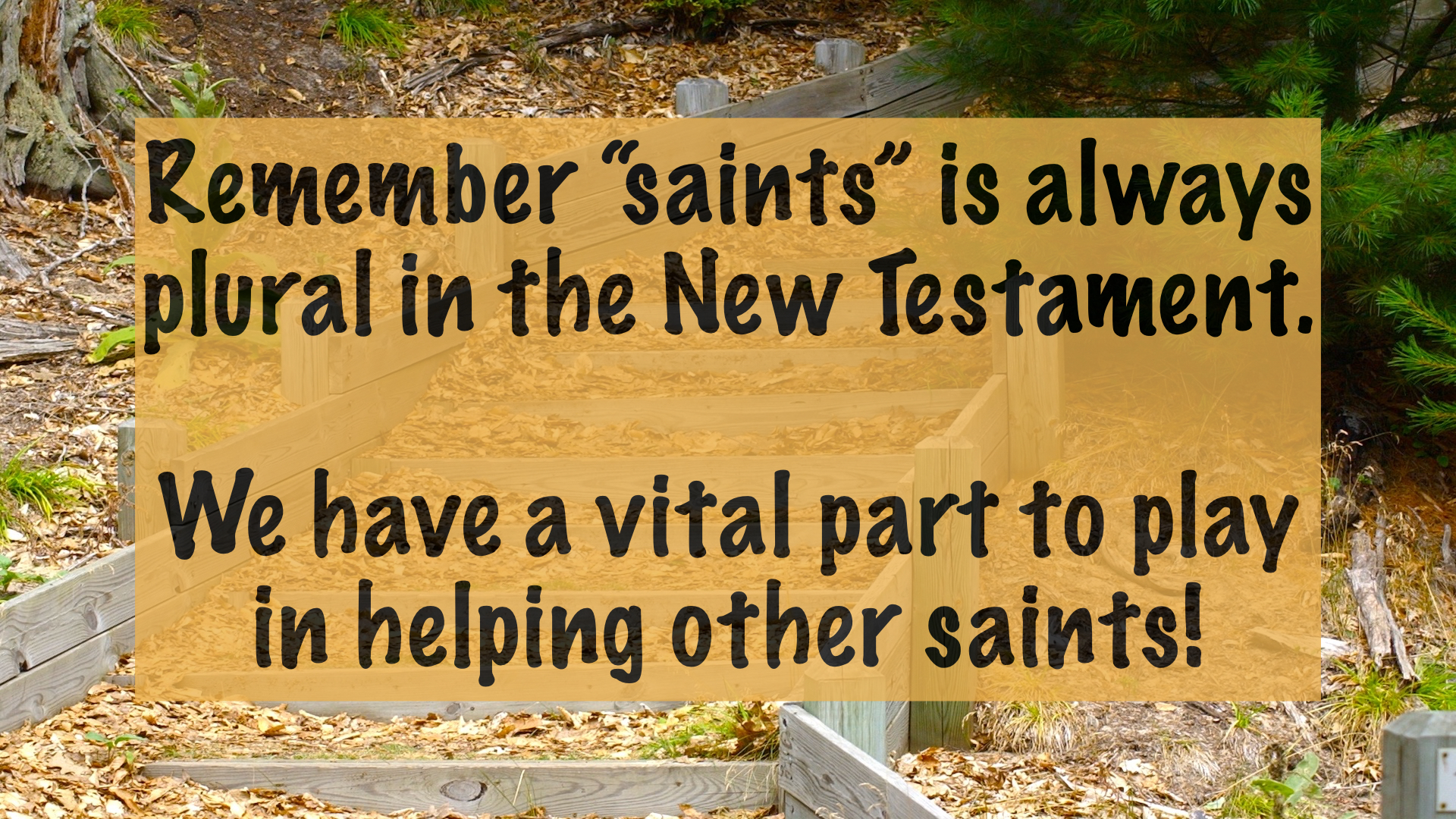
Remember the word “saints” is always plural in the New Testament. You and I each have a vital part to play in helping other saints! 

If you’ve missed our look at any of the other Songs of Ascent, you can find them all listed here. 

►► Would you please prayerfully consider supporting this ministry? My Patreon supporters get behind-the-scenes access to exclusive materials. ◀︎◀︎

Links & Quotes

No one wants what the gloomy person has. Joy is a Christian’s testimony—it’s what attracts others to Jesus! Check out this full message from my series on the Songs of Ascent.

I have lots of new content every week, which you can check out on my YouTube channel.

“At first glance, people may not see how these different forms of sexual violence connect to each other. But, in fact, experts are increasingly recognizing that they may all stem from one common source—sexual objectification. Sexual objectification occurs when people perceive others as sex objects rather than complex human beings deserving of dignity and respect.” Pornography is a major contributor to the sexual objectification which leads to sexual violence.

Dr. Brian Thomas describes why fossils are found where they are and why land animals may even be found near marine animals: “This fossil discovery [a bone from a South American megaraptor found near Cape Otway, Australia] fits well with a biblical history, which goes something like this: Around 2348 BC, a worldwide flood crushed and reshaped the earth’s surface, breaking up a single landmass (Pangaea) into continents and fossilizing countless living things. Prior to the Flood megaraptors roamed Pangaea, during the Flood they were fossilized, and in the late Flood stages the boundaries of new continents (along with their fossils) were roughly shaped. Unlike the standard story, the outlines of this history have been testified to by reliable eyewitnesses, and this testimony has been faithfully preserved in Genesis.”

“The more we let God take over us, the more truly ourselves we become—because He made us.” —C.S. Lewis

J. Warner Wallace shares two trends in American society that are contributing to the decline of religious adherence in America.

“There is no way around hard work. Embrace it.” —Roger Federer

Shame on my thoughts, how they stray from me!
During the Psalms, they wander on a path that is not right; they run, they distract…
One moment they follow the ways of loveliness, and the next the ways of riotous shame…
Swiftly they leap in one bound from earth to heaven…
O beloved Christ… may the grace of the sevenfold Spirit come to keep them in check!
Rule this heart of mine, O swift God of the elements, that You may be my love, and I may do Your will! —Anonymous, On the Flightiness of Thought, Irish, 8th-9th century

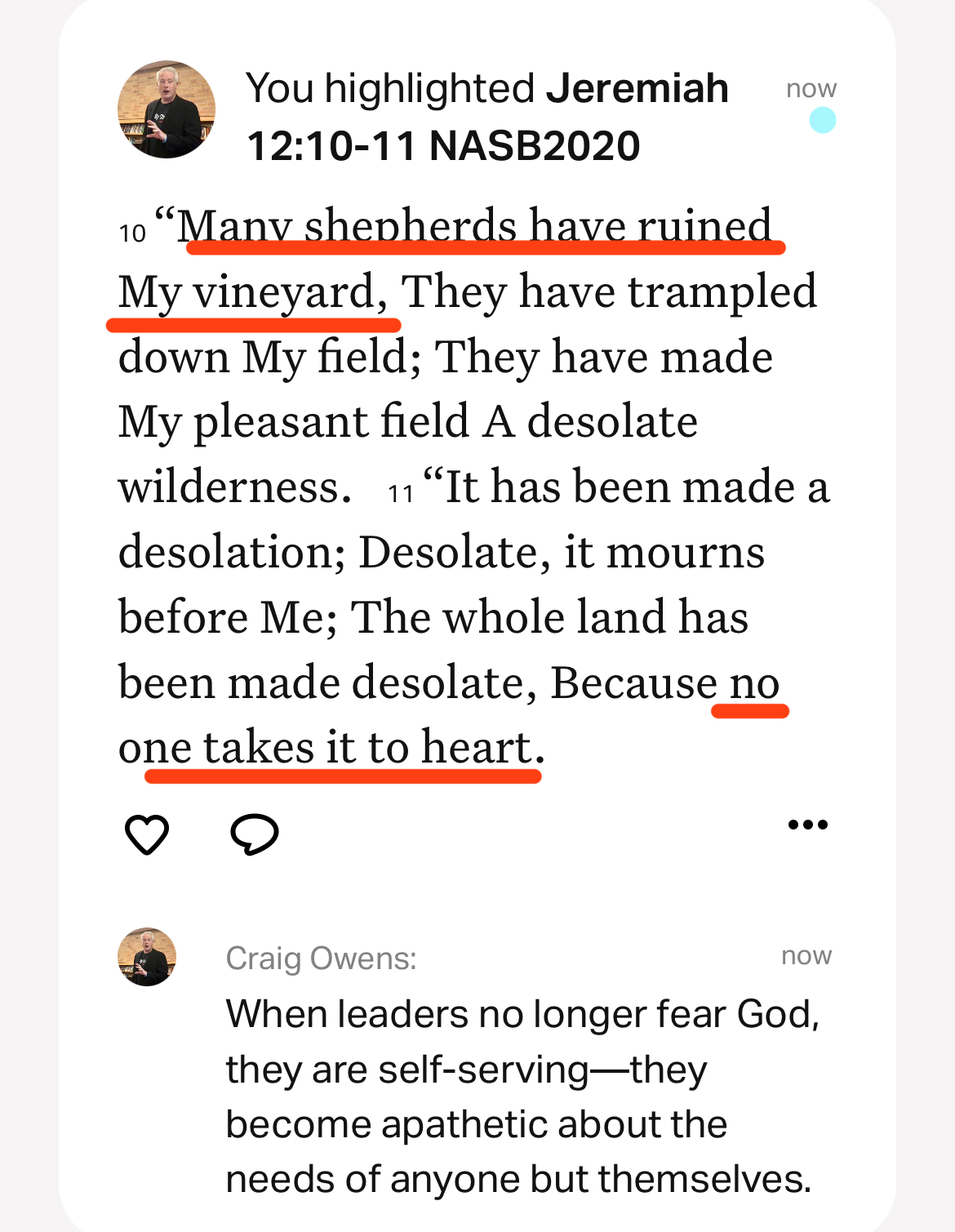
Ungodly leaders become more and more selfish, while shepherd leaders become more and more God-fearing and more and more attentive to the needs of others (Jeremiah 12:10-11). Check out my series of posts for godly leaders and my book Shepherd Leadership.

Assured Expectation

Listen to the podcast of this post by clicking on the player below, and you can also subscribe on AppleSpotify, or Audible. 

A recent movie set box office records. Many Hollywood commentators are surmising that it is because the unlikely duo in the movie does something so noble at the end of the movie. Throughout the movie one of the main characters takes to calling himself “Jesus.” At the end of this movie, this character and his friend take the full brunt of the evil on them in the hopes of saving the universe. 

Of course, this storyline isn’t new to Hollywood or even in ancient literature. This epic quest is longed for in the human heart, looking for a hero to selflessly sacrifice himself to save everyone else around them. 

The only problem is that these heroes aren’t sure if their sacrifice is actually going to work. 

This, of course, isn’t the case with Jesus. Angels announce before His incarnation that He will save His people. Jesus Himself says, “I will lay down My life for My friends and I will take it up again.” And in the very last book of the Bible we read that before Time even began, Jesus was already seen as the sacrificial Lamb slain for the deliverance of His people. 

This story doesn’t start in Bethlehem, but when John 1:1 says, “In the beginning,” the language there is really saying, “From before there was a beginning, Jesus our Hero already knew the outcome of His selfless sacrifice.”  

We see hints and foreshadowing of this Most Epic Story all throughout history and throughout Scripture. Like in Psalm 132—the longest of the Songs of Ascent (at 18 verses, the next longest song is only half its length). 

(Check out all of the Scriptures in this post by clicking here.) 

The key verse (v. 10) is in the middle: it connects David and Jesus. The words “Anointed One” is one word in Hebrew: Masiah which is Messiah. In the New Testament,  the word Christ also means Anointed One. 

What do we learn in the first half of this song. It opens with the words, “O LORD, remember David…” (v. 1). 

Because this psalmist mentions the same incident that we discussed in Psalm 131, this is another reason why I think David had the incident of moving the ark of the covenant to Jerusalem in mind when he wrote the previous song (see Psalm 132:2-5; 2 Samuel 6:17). The people continued to rejoices as David made arrangements and provided building materials for his son Solomon to build the temple (vv. 6-9). 

Look at how verse 10 connects David to Jesus the Messiah. In verse 2, David swore an oath to the Lord, but he was physically unable to fulfill his promise. In verse 11 (also see 2 Samuel 7:11-16), “The Lord swore an oath to David.” 

God was able to fulfill His promise, which we see in the life, death, resurrection, and  ascension of Jesus, and then in the promised outpouring of the Holy Spirit. On the Day of Pentecost, Peter declares this in his sermon—connecting the work of Jesus to the prophesy of King David (Acts 2:22-36). 

We can sum up the first half of Psalm 132 with the words “Remember David.” And we can sum up the second half of this song of ascent with the words “Remember Jesus.”  

Remember Jesus [the] Christ, raised from the dead, descended from David (2 Timothy 2:8). 

I like this verse from the Amplified Bible: Constantly keep in mind Jesus Christ (the Messiah) as risen from the dead, as the prophesied King descended from David, according to the good news (the Gospel) that I preach.  

David swears an oath (v. 2) but has no power to fulfill it. God swears an oath (v. 11-12) and fulfills it (Luke 1:33; Revelation 11:15). 

David longs for blessings for the priests and saints (v. 10) but has no power to make it happen. God says, “I will” bless the priests and saints (vv. 13-18; 1 Peter 2:5-9; Revelation 1:6). 

All of our longings for a Hero—for salvation, for purpose, for meaning—are fulfilled in Jesus. All of God’s promises for these things are fulfilled in Jesus. All of our life should be lived in this joyful assurance (Hebrews 10:35-39; Revelation 3:11)! 

Not only should we not stumble in the homestretch, but we should live in such joyful assurance of God’s promises that we soar across the finish line! 

If you cannot remember anything else, remember David and remember Jesus. 

Check out all of the other Songs of Ascent by clicking here. 

►► Would you please prayerfully consider supporting this ministry? My Patreon supporters get behind-the-scenes access to exclusive materials. ◀︎◀︎