That first Christmas was supposedly a silent night and a holy night. Maybe there was some singing angels involved, but at least their message was about “peace on earth.”
Sometimes that idea of “peace” at Christmas time can make us feel like hypocrites. Sometimes it seems as if there is more turmoil than peace, and more ill-will than goodwill.
Even Henry Wadsworth Longfellow’s poem called I Heard The Bells On Christmas Day starts out in celebration, but then shifts to the dark words, “And in despair I bowed my head: ‘There is no peace on earth,’ I said, ‘for hate is strong and mocks the song of peace on earth, goodwill to men.’”
If you have had a hard time finding peace this Christmas, this short message will bring you hope and encouragement, so that you can truly say, “Merry Christmas!”
A couple of years ago as we were setting up for our Living Nativity, I was wrapping a towel around the doll we were going to use for the infant Jesus. A young boy from the community was carefully watching me and he asked, “Is that baby Santa?”
“No, it’s not Santa,” I said. “See this manger? We’re getting things setup to tell the story about the very first Christmas, long before St. Nick came on the scene. Maybe you’ve heard about Mary and Joseph?”
The young lad’s eyes lit up as he seem to get the answer. “Oh! Is that baby Moses?!”
Clearly, people don’t know all the facts surrounding the first Advent of Jesus. Sometimes things in culture and church get jumbled—what belongs to which? Is Christmas a pagan holiday? Where do Christmas trees come in? Was the birth of Jesus actually on December 25? What does it all matter anyway?
Instead of running from these questions, Christians should use them to point people in the right direction.
Have you heard the tune called Greensleeves? It’s been around longer than anyone knows. William Shakespeare referenced it in two of his plays and didn’t feel the need to explain it to his audience. The tune has been set to some pretty bawdy words about New Year’s Eve parties, and even as a mocking song to some folks about to go to the gallows. And then in the mid-1800s William Chatterton Dix used this tune to write words about Christ’s birth in What Child Is This?
What an excellent question! Who exactly is this Child? Is Jesus merely a line on the pages of history? Or is His birth something more? Oswald Chambers noted, “The tremendous revelation of Christianity is not the Fatherhood of God, but the Babyhood of God—God became the weakest thing in His own creation, and in flesh and blood He levered it back to where it was intended to be. No one helped Him; it was done absolutely by God manifest in human flesh.”
The first-century historian Luke simply records that Mary is pregnant with “a child.” That is, until Jesus is taken to the temple in Jerusalem eight days later, and we see that a man named Simeon didn’t just see this Child as any baby, but as a fulfillment of prophecy (see Luke 2:25-32; Isaiah 7:14 and 9:6).
This Child is much more than just a historic person. He not only split history into BC and AD, but He has changed my life, and countless others’ lives as well! That’s why the chorus of this Christmas carol joyfully announces, “This, THIS is Christ the King!”
People may be confused about what tradition belongs to culture or Christendom. You may even be confused about what belongs to which. But none of that should stop us from knowing the Child we celebrate this Christmas. None of that should stop us from helping seekers to find Jesus as their own Savior. None of that should stop us from enthroning Jesus Christ as King and giving Him the highest praise He deserves!
Jesus used common, everyday things—farmers, fish, trees, weather, children’s songs—to tell people about a Heaven that was prepared for them. Paul used the cultural idols and poets to point his community to Jesus. Philip used the Scripture a governmental official was reading to point him to Jesus.
So we, too, can use whatever is around us to point people to Jesus this Christmas! What Child is this? This, THIS is Christ MY King! Merry Christmas!!
When I worked in the business field, I was invited to be a teacher for a program called GROW (Grand Rapids Opportunities for Women), where I taught a class on marketing. Then later on, I served as a reviewer as the students turned in their marketing plans.
One of the main points I tried to drive home to my students is a basic Marketing 101 principle which says—you can’t be all things to all people. You have to pick a niche market and then try to dominate that market. There are two general ideas here: (1) Make your product or service pricey and therefore exclusive to a select group, or (2) Make your product or service affordable and accessible for the mass market.
The Incarnation of Jesus totally violates this Marketing 101 principle. (Which goes to show you that God knows more than all the world’s so-called “experts”!)
First, there was a marketing message to shepherds (see Luke 2:8-11). This would have been the “mass market” as shepherds represented the every-day, working-class man. The first two verses of The First Noël carol addresses these “certain poor shepherds in fields where they lay.”
But then there is this appearance of a very exclusive group of Magi (see Matthew 2:1-2, 11). These men were highly educated and had gained great influence and affluence. Verse 3 of The First Noël references these “wise men…from country far” who could present such lavish gifts to Jesus.
God did exactly what I told my GROW students they shouldn’t do if they wanted to be successful!
The Incarnation of Jesus is one of those rarest of rare things that actually can be all things to all people! Why? Because ALL people need what the Incarnation of Jesus brings. That’s why the final verse of The First Noël calls for ALL of us to join in singing our praise to God because of the salvation Jesus had purchased for ALL mankind.
…and the penalty for that straying from God is death for ALL sinners (Romans 6:23).
But Jesus came to ransom ALL from that penalty (Mark 10:45)…
…so that ALL who believe in Him will be saved (Romans 3:22)!
“The coming of Jesus was a search-and-save mission. ‘The Son of Man came to seek and save the lost.’ So Advent is a season for thinking about the mission of God to seek and to save lost people from the wrath to come. … ‘As the Father has sent Me, even so I am sending you’ (John 20:21). It’s the story of how the vertical Advent of God in the mission of Jesus bends out and becomes the horizontal Advent of Jesus in the mission of the church. In us.” —John Piper
You have been rescued, now go be a rescuer. Take this Noël message to ALL … young/old, rich/poor, Black/white, educated/illiterate, healthy/sick, friend/enemy…. the message in the First Noël and every Noël is for everyone!
Pastor Phillips Brooks visited Israel in the mid-1800s. While there he visited a small church just outside of Bethlehem. Listening to the worshipful songs being sung in that quiet countryside, he was inspired to pen the words to O Little Town Of Bethlehem.
Because of that quiet setting, notice how Rev. Brooks notices things we often miss—
little town on Bethlehem
in thy dark streets
while mortals sleep
no ear may hear His coming
But little does not mean insignificant. And just because we can’t see or hear something doesn’t mean it doesn’t exist or it isn’t important.
Sometimes we’ve looked and listened and waited and searched for so long that we have given up and we begin to drift off to sleep. We continue to live in our own “little town” surrounded by silence. And we are in danger of missing a miracle right in our midst!
We know today that Jesus was born in Bethlehem. But did you know that this little town was still so obscure in Christ’s day that many people in Israel were unaware of what went on there? (See John 7:41-43). Even after King Herod had gruesomely killed all the baby boys in Bethlehem, scarcely anyone outside of that town knew about it or cared about it.
But God cared. And He knew exactly what He was doing.
But when the proper time had fully come, God sent His Son (Galatians 4:4)—the exact right moment—to be born in Bethlehem—the exact right place (Micah 5:2). Notice even Micah says of Bethlehem though you are small among the clans of Judah, giving birth to the title of Rev. Brooks’ poem.
How small was it? Look at the description of the territory for the tribe of Judah (in Joshua 15), and you can easily glossed over the names of all of the towns. But look more closely and you will see something you didn’t read in that list of towns. Take a close look at all 38 cities: it’s still missing.
There are a couple of very notable figures that dominate the Old and New Testaments, and they have something in common—King David and Jesus both come from the tribe of Judah. And both of them were born in Bethlehem. But in the list of towns in Judah’s territory, there isabsolutely no mention of Bethlehem.
This town either didn’t exist, or it was so “insignificant” that Joshua didn’t even think to mention it. It would be almost another 500 years before David would be born in Bethlehem, and then another 900 years after that before Jesus would be born in this little town of Bethlehem.
God had in mind for the greatest earthly king in Israel’s history and the King of all kings to come from such humble origins… from a village that didn’t even make the list. Bethlehem was ready for these kings at just the right moment!
Jesus said heaven and earth will pass away, but His words will never pass away. What promise in His Word do you need to cling to?
Just as those awaiting the Messiah clung to Micah’s promise until it came to pass, you must find God’s promise for you in His Word, cling to it, and don’t let go until it comes to pass in your little town.
One of my greatest joys is investing in people, and then watching them develop their God-given gifts. One such man is my friend Scott Troost.
I began a series at the beginning of the month talking about things I have come to appreciate, and I asked a couple of my friends to join with me. Last week Josh Schram shared his appreciation with wise counsel, and this week Scott shared what he’s come to appreciate about love.
Is “puppy love” real love? Is love even supposed to have a feeling? If there are no feelings associated with love, how can you know that you are indeed loving? Scott shares his personal journey on what he’s come to appreciate about love, and I sincerely hope you will watch this video of his message…
Pastor Josh Schram shared with us the lessons he’s appreciated about receiving wise counsel from those around him. One of Josh’s opening remarks really hit home with me, because it’s something I still struggle with at times: I have to get beyond thinking that those who are trying to speak into my life are somehow trying to meddle in my life!
A couple of other thoughts that really made me pause and reflect were—
“Ignorance may be bliss, but it won’t last.” How true! I may cover my eyes and ears to the truth, but my ignorance will ultimately lead to my downfall.
“People who will speak truth into my life care more about me than about my feelings.” As Proverbs says, “Wounds from a friend can be trusted, but an enemy multiplies kisses” (27:6).
Josh closed with these challenging questions:
Am I open to correction from wise counsel?
When I am corrected, do I feel like I must defend myself?
There is perhaps nothing more heart-wrenching for a Christian parent than to see their son or daughter living a life differently than how they were raised.
One biblical promise these parents can claim in prayer is—Train up a child in the way he should go: and when he is old, he will not depart from it (Proverbs 22:6).
He was born in 354 in a North African town set among the woods near the Mediterranean. His father was a pagan, but his mother, Monica, was of devout Christian stock.
Augustine was an undisciplined child, idle and truant despite frequent beatings. He loved sports and pranks and soon discovered a host of adolescent pleasures. … Augustine was also brilliant, and he soon moved to Carthage to further both his studies and his fun. Monica warned him against fornication, but ‘I ran headlong with blindness.’
At about 18 he found himself the father of a son. At the same time he joined a cult. Years passed, and Monica, praying ceaselessly, heard that Augustine was planning to leave Africa for Rome. She begged him not to go. When he refused, she determined to go with him. Using deception, he left her praying in a chapel and sailed without her; but she took a later boat and intercepted him. They traveled to Milan where she persuaded him to listen to the great Bishop Ambrose. The bishop’s razor-sharp sermons penetrated Augustine’s head, if not yet his heart. Monica continued praying, confiding her struggles to Ambrose. He told her not to worry: ‘It isn’t possible for the son of such prayers to be lost.’
One day as Augustine sat in a friend’s garden he heard a child singing, ‘Take up and read!’ He opened the Bible near him and read from Romans 13: ‘Don’t go to wild parties or get drunk or be vulgar or indecent.… Let the Lord Jesus Christ be as near to you as the clothes you wear.’ By the time he finished the sentence, he later said, he was converted. On the eve of Easter, April 24, 387, Augustine and his son Adeodatus were baptized by Ambrose as Monica watched. Her lifetime of prayer was answered, and a church father was born.
Years later as Augustine shared about his conversion in his book Confessions, he wrote out this prayer to God: “My mother, Your faithful servant, wept to You for me, shedding more tears for my spiritual death than others shed for the bodily death of a son. You heard her.”
King David of Israel was a stud! Outstanding song writer, professional shepherd, bear killer, lion killer, giant killer, decorated army general, and ultimately king of Israel.
Near the end of his life we read an extensive list of Mighty Men that supported David. Some of these guys were also giant killers. One guy singlehandedly defeated 300 enemies, another guy defeated 800 bad guys, one guy killed a lion, and on and on the list goes.
I believe it is clear that David wouldn’t have become king without the support of his Mighty Men, and these guys probably wouldn’t have been recognized as “Mighty Men” without David’s support.
This is a classic definition of synergy. Synergy is when the outcome is so much greater than just the addition of the parts. Sort of like 1 + 1 = 5.
All of us can be a part of synergistic relationships, if we will include these five key parts.
[1] Humility
Without humility, you will never let anyone else into your life, and it’s doubtful they will let you in. Humility says, “I don’t have all the answers. I need some help in fulfilling my God-given dream. I have some areas of weakness where you are strong.”
[2] Confidence
Just like humility, without confidence it’s doubtful others would allow you access to their lives. Confidence says, “I have some something I am willing to offer you. I have a God-given strength in an area where you may be struggling.” The Apostle Paul said, all of us have strengths that God has given us that are to be used to help others (1 Corinthians 12:7; Ephesians 4:7).
[3] Collaboration
Quite simply, in order for synergy to work, the people in the relationship have to be willing to labor together. Paul used the example of one person planting the seed and another person watering the seed. Both laborers are necessary if there is going to be a harvest.
[4] Patience
The journey with others may be slower and messier than traveling solo, but it’s so much more rewarding (see Ecclesiastes 4:9-12).
[5] Investment
Synergy is really about there being a return on investment. But if you’re not willing to invest your time, your learning, your love, can you really expect there to be a synergistic return?
I just wrapped up a year-long investment with a group of guys from my church. What an amazing time! I am definitely better for having been involved with this synergy group, and I believe all of the other guys would tell you the same thing. You, too, can experience this same joy by investing in a synergy group of your own!
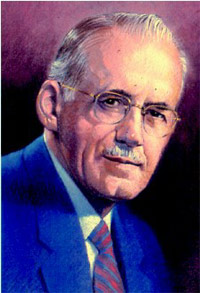
“Today’s world was entirely unimaginable to the people of those times [those living in Christ’s day]. Have these changes forced God to modify His plans for His church and for mankind? Here is where we have fallen by the wayside. Here is where we need a reformation, a purgation, a removal of the faults, and the restoration again of the faith of Christians to believe in the truth. … ‘Do you think God has been forced to change His mind?’ I do not think anybody would quite have the courage to say yes. Nevertheless, they do say it little by little until they have brainwashed their people. In effect, they say that the Bible must be interpreted in the light of new developments. A Book that was written in the day when people rode donkeys must be reinterpreted to mesh with contemporary society. They say that the prophets and apostles mistook what God intended to do. The Bible is outdated and largely irrelevant. … I challenge the idea that we are any further advanced than they were in the days of Jesus. If we are so advanced, then I want to ask some questions. Why do we kill thousands of human beings each year with automobiles? Because we ride automobiles instead of donkeys, we are advanced? If we are so advanced in our day, why are the penitentiaries packed full and the mental hospitals crowded? If we are so advanced, why is the whole world a powder keg? If we are so advanced, how is it that we have weapons that can annihilate the world? If we are so advanced, why is it that people cannot walk alone in the parks anymore? Why is it that workers who get out at midnight never walk home alone anymore? Why is it in this advanced age that drugs, violence, abortion, and divorce are soaring?
“We have been brainwashed to believe that we cannot read the Bible as we used to. We must now read it through glasses colored by change. We have been hypnotized by the serpent, the devil, into believing that we no longer have a trustworthy Bible.
“Has God changed? Are we going to accept it? Is there a change in the purpose of God? Have the changes in human society startled or shocked God? … We believe that God Almighty has not changed and that Jesus Christ is the same. He is victorious, and we do not have to apologize for Him. We do not have to modify, adjust, edit, or ame
nd. He stands as the glorious Lord, and nobody needs to apologize for Him.” —A.W. Tozer
If we are truly grace-full people, then we should be thank-full people as well. As we approach Thanksgiving Day, people are naturally thinking about things for which they can give thanks during this past year. But Christians should be the most full-of-thanks people on the planet, because we have been showered with so much grace!
I’d like us to think about a word that I believe will increase our level of thankfulness: Appreciation. Appreciation goes beyond merely being thankful for blessings, as it sees the high value in those blessings, and then continually looks for ways to express even more gratitude for them. In other words, appreciation can begin a cycle of gratitude that grows and grows and GROWS!
Check out three parts to the definition of appreciation—
[1] Gratitude; thankful recognition. Did you know that being grateful is actually good for you? Research has shown that increasing your gratitude levels increases your:
Physical health. “A state of gratitude, according to research by the Institute of HeartMath, also improves the heart’s rhythmic functioning, which helps us to reduce stress, think more clearly under pressure and heal physically. It’s actually physiologically impossible to be stressed and thankful at the same time” —Jon Gordon
Emotional health. Dr. Robert Emmons says gratitude decreases envy, resentment, and feelings of retaliation; and increases empathy, emotional resilience, and self-esteem.
Spiritual health. Notice how ingratitude is included in the list of a whole lot of ugliness (2 Timothy 3:1-4), but spiritual health is restored simply by being thankful (Ephesians 5:3-4).
[2] Estimating qualities and giving them their proper value. In order to determine value, we must have a standard of comparison. What’s your standard? Is it what your neighbor has? Is it what you don’t have? Or is it thankfulness for what God has given you?
Max Lucado said, “To reflect on your blessings is to rehearse God’s accomplishments. To rehearse His accomplishments is to discover His heart. Gratitude always leaves us looking at God and away from dread.”
[3] Assessing the true worth of our blessings. Assessing leads to appreciation, and appreciation begins to give us a return on investment. I like how Jeff Anderson says it: “If you want to grow your faith, grow your gratitude. To grow your gratitude, take time to count your blessings.”
Remember: gratitude isn’t gratitude if it isn’t expressed. David made his gratitude known, and other afflicted people around him began to join with him in thanking God for His blessings (see Psalm 34:1-3). In other words, David’s thanksgiving went viral!
Here’s how we can make our gratitude go viral: #MOWT. Let’s count our blessings every day, and let’s appreciate what God has done for us. Then let’s share our gratitude not only with God, but with others as well. Post it on Facebook or Twitter or Instagram with #MOWT: my one word thanks. Maybe include a photo and “family” #MOWT, or “protection” #MOWT, or even “paycheck” #MOWT.
Let’s give God so much glory for His grace gifts, that we tell the world about our appreciation!



 That first Christmas was supposedly a silent night and a holy night. Maybe there was some singing angels involved, but at least their message was about “peace on earth.”






 Craig T. Owens