10 Quotes From “You!”

Max Lucado has given us a collection of short passages that will reaffirm to you how much God values YOU! This book could be a great pick-me-up for you, or a life-saving helper to your friend who is in crisis. Check out my full book review by clicking here. 

“Since you are God’s idea, you are a good idea. What God said about Jeremiah, He said about you: ‘Before I made you in your mother’s womb, I chose you. Before you were born, I set you apart for a special work’ (Jeremiah 1:5).” 

“God ‘personally formed and made each one’ (Isaiah 43:7 MSG). … And if you aren’t you, we don’t get you. The world misses out.” 

“You are a custom design; you are tailor-made. God prescribed your birth. Regardless of the circumstances that surrounded your arrival, you are not an accident. God planned you before you were born. The longings of your heart, then, are not incidental; they are critical messages. The desires of your heart are not to be ignored; they are to be consulted. As the wind turns the weather vane, so God uses your passions to turn your life. God is too gracious to ask you to do something you hate.” 

“God never called you to be anyone other than you. But He does call on you to be the best you you can be.” 

“God promises no applause for self-promoters. But great reward awaits God promoters: ‘Good work! You did your job well’ (Matthew 25:23 MSG).” 

“Don’t confuse God’s love with the love of people. The love of people often increases with performance and decreases with mistakes. Not so with God’s love. He loves you right where you are. He loves you just the way you are, but He refuses to leave you that way.” 

“Enough of this self-deprecating ‘I can’t do anything.’ And enough of its arrogant opposite: ‘I have to do everything.’ No, you don’t! You’re not God’s solution to society, but a solution in society.” 

“When asked to describe the width of His love, Jesus stretched one hand to the right and the other to the left and had them nailed in that position so you would know He died loving you. But isn’t there a limit? Surely there has to be an end to this love. You think so, wouldn’t you? But David the adulterer never found it. Paul the murderer never found it. Peter the liar never found it. When it came to life, they hit rock bottom. But when it came to God’s love, they never did.” 

“There are two extremes of poor I-sight. Self-loving and self-loathing. … Self-elevation and self-deprecation are equally inaccurate. Where is the truth? Smack-dab in the middle. Dead center between ‘I can do anything’ and ‘I can’t do anything’ lies ‘I can do all things through Christ who strengthens me’ (Philippians 4:13). … Not self-secure or insecure, but God-secure—a self-worth based in our identity as children of God. The proper view of self is in the middle.” 

“Each time we do our best to thank God for giving His, we worship.” 

Saturday In The Psalms—A Sabbath Psalm

A psalm. A song for the Sabbath day (preface to Psalm 92).

The Sabbath is—

  • a day of reflection
  • a day of rejoicing
  • a day of reconnecting
  • a day of meditating on past blessings
  • a day of strengthening for the upcoming week
  • a day of acknowledging the Creator
  • a day of appreciating creation
  • a day of assessing the investment of my God-given talents
  • a holy day—different from all other days

So … “It is good to give thanks to the Lord, and to sing praises to Your name, O Most High; to declare Your lovingkindness in the morning, and Your faithfulness every night” (vv. 1, 2).

Sabbath is not just a noun, but a verb—sabbathing—something that can be done every day, but something which also takes on special significance for the one day each week that we set aside as our holy day or worship and reflection. 

The Creator’s works and wisdom should be pondered and praised as we sabbath (vv. 4-6), something “a fool” doesn’t take time to do.

As we sabbath, we should confess to God—and then turn over to Him—those things which have overly preoccupied our minds (vv. 7-9).

We should recommit that the place of growth and blessing is in God’s presence (v. 13) as we endeavor to keep our hearts there. And then we can be energized and joy-filled as we contemplate His blessing which never diminishes nor grows old (vv. 14, 15).

Truly sabbathing is a good thing!

Do you have a Sabbath day? Do you find time to regularly sabbath in God’s presence? 

UPDATE: I dive deep into this idea of sabbathing in my book Shepherd Leadership: The Metrics That Really Matter

9 Quotes From “Chase The Lion”

chase-the-lionI loved Chase The Lion by Mark Batterson! Before even reading the first chapter, I was already captured by the Lion Chaser’s Manifesto, and the book only got better from there. Please check out my review of this amazing book, and then check out the first batch of quotes below.

“At the end of our lives, our greatest regrets will be the God-ordained opportunities we left on the table, the God-given passions we didn’t pursue, and the God-sized dreams we didn’t go after because we let fear dictate our decisions.”

“It’s not just our sin that we need to repent of. It’s our small dreams. The size of your dream may be the most accurate measure of the size of your God. Is He bigger than your biggest problem, your worst failure, your greatest mistake? Is He able to do immeasurably more than all you can ask or imagine? A God-sized dream will always be beyond your ability, beyond your resources. Unless God does it, it cannot be done! But that’s how God gets the glory. If your dream doesn’t scare you, it’s too small. It also falls short of God’s glory by not giving Him an opportunity to show up and show off His power.”

“We don’t die when our hearts stop beating. We die when our hearts stop skipping a beat in pursuit of our dreams. We die when our hearts stop breaking for the things that break the heart of God.”

“Impossible odds set the stage for God’s greatest miracles! And apparently God loves long shots. Isn’t that why He removed 9,700 soldiers from Gideon’s army? Isn’t that why He let the fiery furnace be heated seven times hotter? Isn’t that why He didn’t show up until Lazarus was four days dead? … We tend to avoid situation where the odds are against us, but when we do, we rob God of the opportunity to do something supernatural.”

“Get into God’s Word, and God’s dream will get into you.”

“When we fail to take action, we forfeit the future. Make no mistake: just as inaction is an action, indecision is a decision.”

“One misstep can end a dream journey. That doesn’t mean you operate in a spirit of fear. It does mean you operate in a spirit of focus!”

“In my humble opinion, no one is a natural. Sure, some people are more naturally gifted than others. But unless that giftedness is coupled with a complementary work ethic, it’ll only result in wasted potential.”

“I don’t believe our greatest shortcoming is not feeling bad enough about what we’ve done wrong. I think our greatest shortcoming is not feeling good enough about what God has done right. When we undercelebrate, we fall short of the glory of God!”

In the very near future I will be sharing more quotes from this book. To make sure you see them, put your email address in the box to the right and click “Sign me up.” I’ll make sure you’re the first to know when new content is posted.

Also be sure to follow me on Twitter and Tumblr, where daily I share quotes from Mark Batterson and other inspirational authors.

Notes From The Global Leadership Summit

I had an amazing time last week at the Willow Creek Global Leadership Summit. Every year I came away with some many thoughts, and a brand new passion for the various leadership roles in which I get to serve.

Below are just a few of my notes that I jotted down during an intense two days.
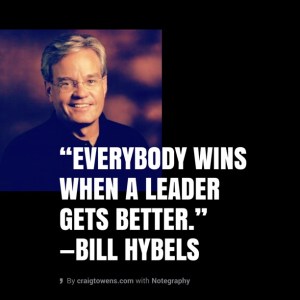
Hybels - everybody winsBill Hybels—The Lens Of Leadership

“Everybody wins when a leader gets better.”

“Armed with enough humility, leaders can learn from anyone.”

Hybels discussed four leadership lenses:

1.   Passionate leader (depicted by vibrant bright red frames)

  • They understand unbridled passion in leadership.
  • “Passion is like protein for the team.”
  • A motivated worked will outperform an unmotivated worker by 40%.
  • People are more motivated by working for a passion-filled leader than they are by compensation or perks.
  • Passion comes from a mountain-top dream, or a valley-deep frustration of current settings.

2.   People leader (cool frames, but cracked lenses)

  • An organization will only be as healthy as the top leader wants it to be.
  • This world needs more pastors of businesses, factories, medical offices, military units, etc.

3.   Performance leader (self-adjusting glasses)

  • Leaders ask: what progress should be made? how do we measure this? what doesn’t need to be measured?
  • Every worker wants to know how they are doing. For the leader, it’s cruel to hire someone and never let them know how they’re doing. Every staff member should get an update at least every six months.

4.   Legacy leader (sunglasses with a rearview mirror [cyclist])

  • Every once in awhile we need to look behind to see what legacy we’re leaving behind.
  • Leaders should reflect on this annually.
  • If my leadership assignment were to end today, what legacy would I leave?
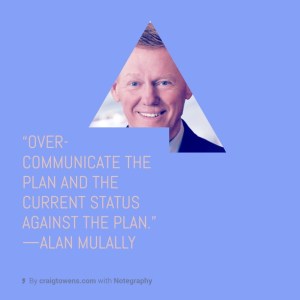
Mulally - overcommunicateAlan Mulally—CEO Boeing and Ford Motor Company

An average commercial airline has 4 million parts!

  • People first
  • Include everyone
  • Create a compelling vision
  • Present a workable strategy
  • Set clear performance goals
  • Relentless implementation
  • Share lots of data
  • “Over-communicate the plan and the current status against the plan.”
  • Instill a positive can-do attitude
  • Keep your emotional resilience
  • Have fun


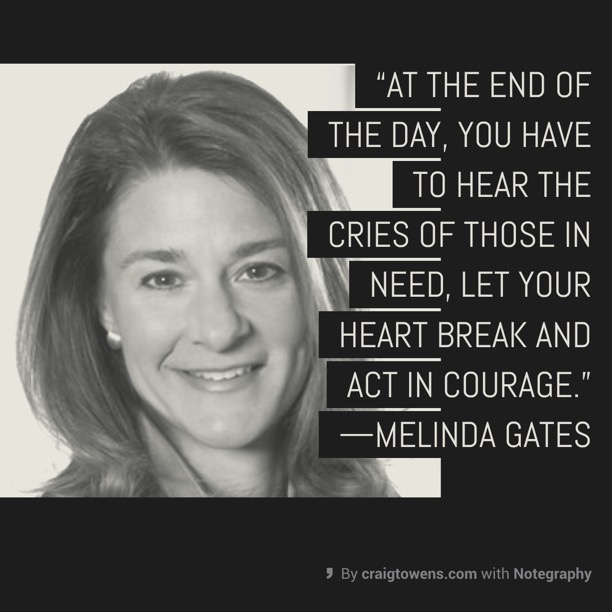
Melinda Gates - hear the criesMelinda Gates—Gates Foundation

Melinda says of herself, “I am an impatient optimist. We are changing the world, but we need to change it faster.”


“At the end of the day, you have to hear the cries of those in need, let your heart break and act in courage.”

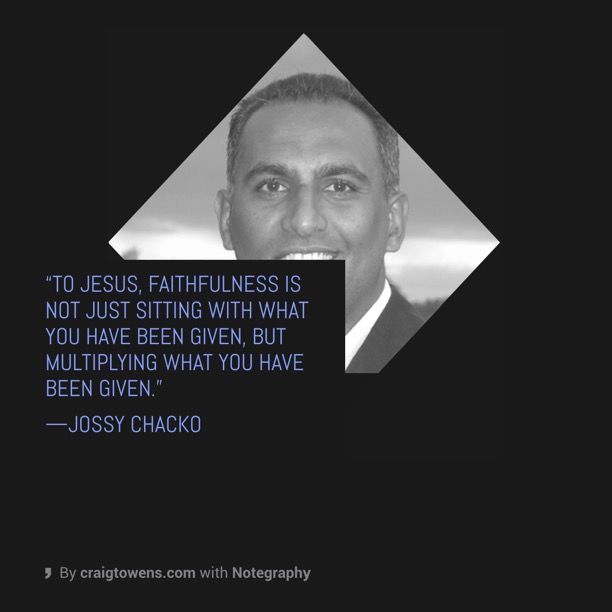
Jossy Chacko—Empart

“All of us have been entrusted with something. What are we doing to leverage it?”

In thinking about the parable of the talents … “To Jesus, faithfulness is not just sitting with what you have been given, but multiplying what you have been given. God’s mission is not maintaining.”

“Playing it safe is not enough for a follower of Jesus Christ.”

Three principles for expanding our leadership reach:
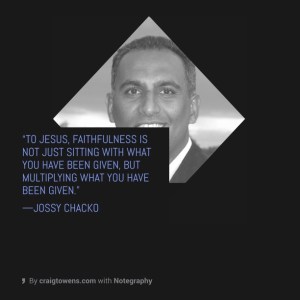
Jossy Chacko - faithfulness1. Enlarge your vision

  • “When people hear my vision, they should know the size of my God.”
  • “An enlarged vision should keep us driven.”
  • “Do not be confused about what people say about your vision; trust what God has said to you.”

2. Empower your people

  • “Leadership is about taking wise chances and giving people opportunities.”
  • “Your leadership reach will be determined by your empowerment choices.”
  • Three things to keep in mind: (1) Focus on building their character before empowering them; (2) Empowerment has to be through relationship; and (3) Make sure we have agreed on the right outcomes, and have the right way to measure them.

3. Embrace risk

  • Faith = risk. Without faith it is impossible to please God = without taking risks it is impossible to please God.
  • Paradigms to be changed: (1) See risk as your friend to love, not as your enemy to be feared; (2) See comfort and safety as your enemies; and (3) Increase your pain threshold.
  • “Your leadership capacity is in direct relationship to your pain threshold.”
  • “Don’t allow the fear of losing what we have to lose what God has in store for you.”
  • “By me not taking risks, who is missing out?”
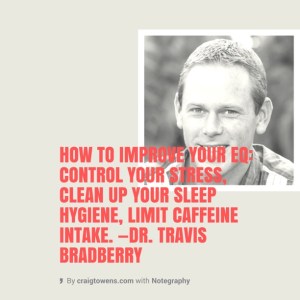
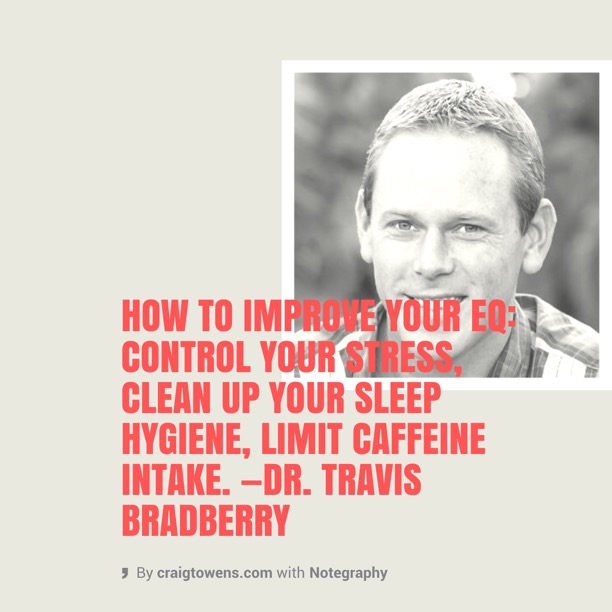
Bradberry - EQDr. Travis Bradberry—TalentSmart

All inputs into the brain travel through the limbic system first (emotional center) before the inputs travel to the frontal cortex. The EI (emotional intelligence) center is in the front of the brain, just above the left eye.

Only 36% of people are able to accurately identify their emotions as they happen.

EQ (the Emotional Quotient that measures emotional intelligence) is not IQ.

EQ can be improved all throughout life.

Four components of emotional intelligence:

 1. Self-awareness: knowing my emotions, and knowing my tendencies. I need to lean into my discomfort if I want to improve.

   2. Self-management: what I do with this increased self-awareness. This is not “stuffing” my feelings. The biggest mistake is only trying to manage negative emotions; positive emotions need to be managed too.

   3. Social awareness: focusing more on others than on myself.

   4. Relationship management: using the first three skills in concert. Seeing how my behavior is affecting the other person, and then adjusting accordingly.


How to increase my EQ:

  1. Control stress—stress under control is healthy; chronic stress is unhealthy. Gratitude reduces the stress hormone cortisol.
  2. Clean up my sleep hygiene—sleep cleans up toxic hormones in the brain. To get better sleep: (1) Don’t take any kind of sleeping pill; and (2) Reduce “blue lights” in the evening.
  3. Reduce my caffeine input—especially after noon.
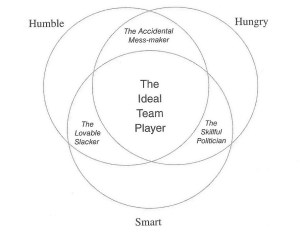
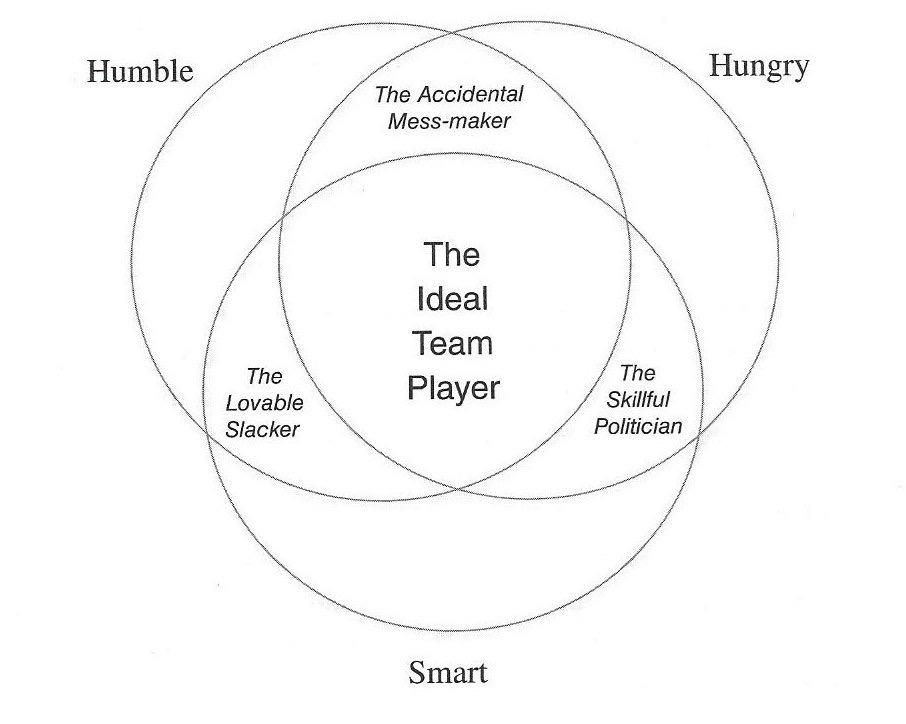
Ideal team playerPatrick Lencioni—Author

Three qualities of an ideal team player:

1.   Humble

  • Lacking self-confidence is not humility.
  • “Denying skills and downplaying abilities is not humility.”

2.   Hungry

  • Strong work ethic
  • Driving hard

3.   Smart

  • Not intellectual smarts, but people smarts = EQ

“To develop people, we have to have the courage to humbly and constantly talk to people about their ‘stuff.’”
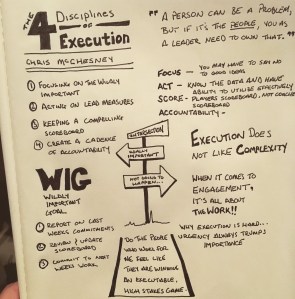
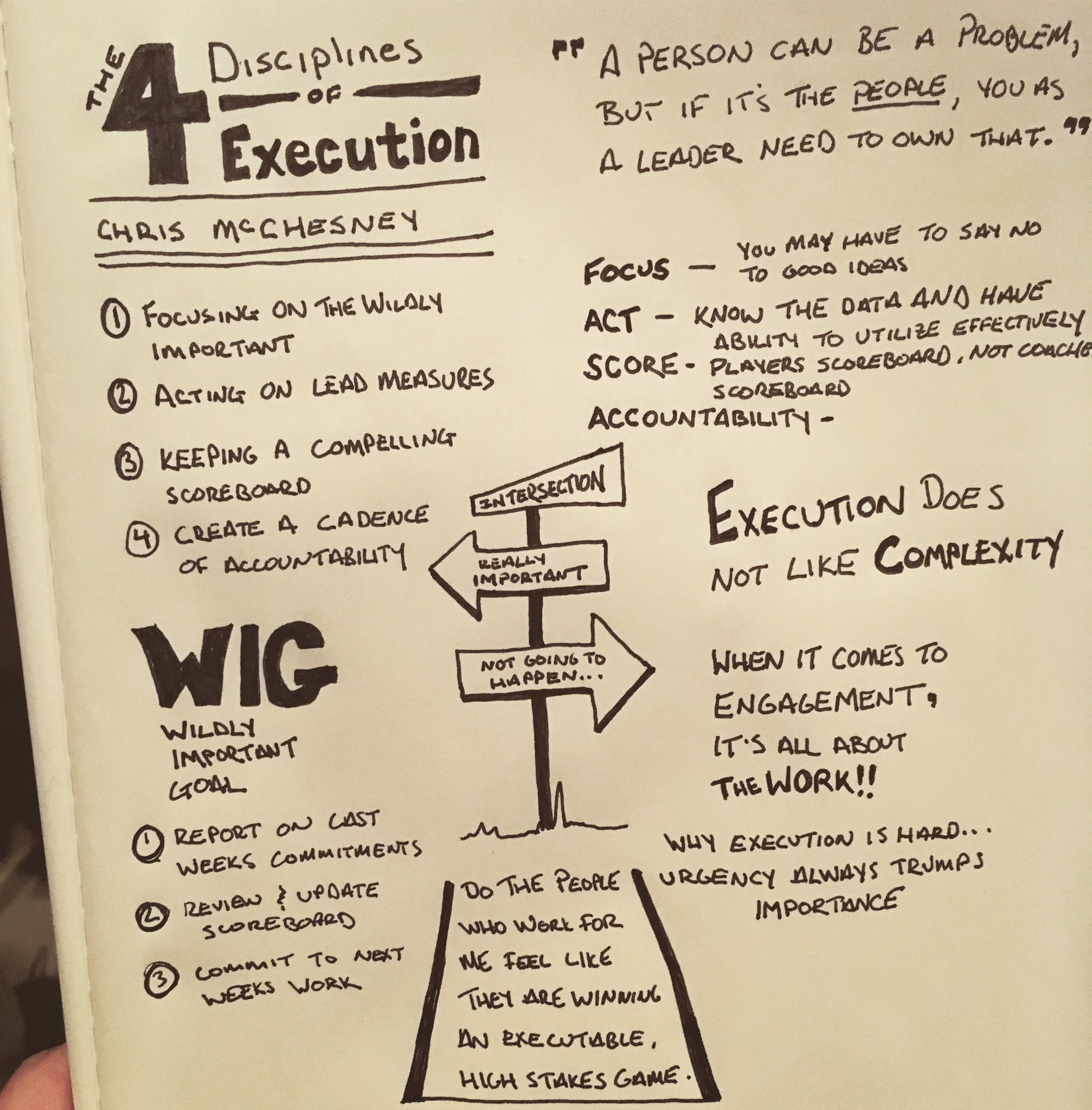
McChesney - execution disciplinesChris McChesney—Franklin Covey

Rahm Charan asked:

  • Q: Do leaders struggle more with strategy or execution? A: Execution.
  • Q: Are leaders more educated in strategy or execution? A. Strategy.

“The hardest thing a leader will ever do is drive a strategy that changes someone’s behavior.”

There are four disciplines for making changes in human behavior:

1.  Focus

  • “Focus on the wildly important.”
  • If a team focuses on 2-3 goals, they are likely to get them done. But if there are 4-10 goals, momentum is killed. At 11+ goals, the team is going backward.
  • We narrow the focus by coming up with a WIG: wildly important goal (this lives at the intersection of ‘really important’ and ‘not going to happen’).

2.  Leverage

  • “What are the fewest number of battles necessary to win the war?”
  • “When you want to go big, don’t think big, think narrow.”
  • One WIG per team at the same time. Everything else is in sustainment mode.
  • Make goals like this—“From x to y by when.”

3.  Engagement

  • “The biggest driver of engagement is when people feel like they’re winning.”
  • “Do the people who work for me feel like they’re playing a winnable game?”

4.  Accountability

  • Everyone needs to answer: “What are the things I do that have the biggest impact on the WIG?”
  • After sharing the scoreboard, allow people to determine what they need to do next. The people need to determine their own next moves, not the leader. The leader pulls this out of people.
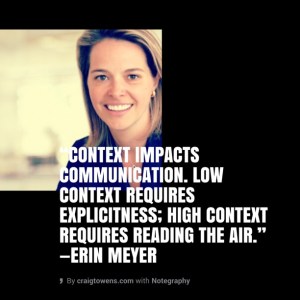
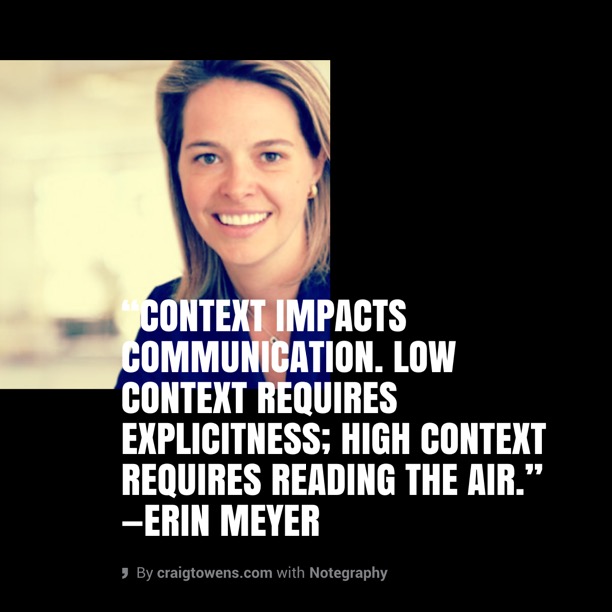
Erin Meyer - contextErin Meyer—INSEAD

On The Culture Map communication is divided into Low vs. High Context:

  • Low = feel we don’t have the same context or relationship. We feel we need to explain things very simply and explicitly.
  • High = we assume we have a larger body of shared reference points. We feel communication is more implicit or nuanced.

Anglo-Saxon countries are typically low context.

Latin American are mid-low.

Asian countries are usually high context.

In low context we tend to nail things down in writing, where in high context we leave things more open to later interpretation.

“Context impacts communication. … We need to read both the messages ‘in the air’ as well as the explicitly stately messages.”

“In a high context culture, repeat things less, ask more questions, learn to ‘read the air.’”
 

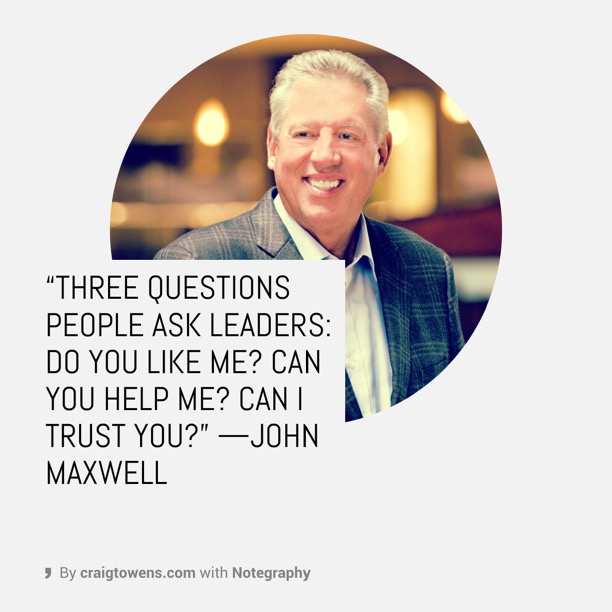
Maxwell - 3 questionsJohn Maxwell—Author 

“Good leaders lift.”

“You have to find the people before you lead the people.”

“The one thing leaders have to get right—they must intentionally add value to people every day.”


Five things that intentionally adds value to people:

  1. Value people—“God values people I don’t know; He even value people I don’t like.” “Are we going to spend our lives connecting with people, or correcting them?”
  2. Think of ways to add value to people—“Intentional living is thinking upfront on how to help people.”
  3. Look for ways to add value to people.
  4. Do things that add value to people.
  5. Encourage others to add value to people.

If you attended the GLS, please share in the comments below something amazing / challenging / paradigm-busting that you learned. Let’s all keep on learning!

Links & Quotes

link quote

“Those of us who are married need to ponder again and again how mysterious and wonderful it is that God grants us in marriage the privilege to image forth stupendous divine realities infinitely bigger and greater than ourselves.” —John Piper

“Have we any work to do now that we can set about at once? If we have, whatsoever our hand finds to do, let us do it. Let us not be asking for greater abilities than we have. If we can get them, let us do so; but meanwhile let us use what we have. … The best preparation for it will be, renew your dedication to Christ, be much in earnest prayer, seek the sanctifying influences of the Holy Spirit, and then go forth in your Master’s strength with this as your resolve—that as portraits of Jesus Christ it shall be said of you, ‘He went about doing good’ [Acts 10:38].” —Charles Spurgeon

“The only difference between the Christian life and any other life is the matter of where we stand as we encounter the everyday trials and difficulties of life. … Even though the circumstances of a Christian’s life change, and even become adverse and cumbersome at times, this does not alter the fact that the Christian stands in—has access to, come what may—the glory of God. Believers may, under all circumstances and in every situation, slump down into the loving arms of the Lord and find glory and strength to help them bear up with joy and peace through even the worst life can throw at them.” —T.M. Moore

“Better to ask twice than to lose your way once.” —Danish Proverb

Sad to see how abortion providers target minority communities. Two-thirds of abortions in Michigan are done in the Detroit area, where only 40 percent of the state’s population is.

Eric Metaxas has some great advice for talking to your atheist friends about the problems with Darwin’s theories.


Links & Quotes

link quote

Some great reading & watching from this weekend…

TOMORROW is our annual United Service in Cedar Springs. I have the privilege of sharing the Word this year. Stoked!

“You that have ability, and have talents, devote yourselves to God’s cause. Give yourselves up to his ministry. I would to God there were more of those who are successful in professions, men who either in medicine or law would attain eminence, who would consecrate their talents to the ministry….” —Charles Spurgeon

“There is a reason why Jesus not only calls us to simplicity and brevity, but also to persistence and tenacity [in prayer]. The demand for prevailing prayer exposes those who pray in a passing away, as if they are just trying to cover all their bases. They are not looking to God as their only hope. They are trying God out alongside other resources. Such praying does not prevail.” —John Piper

“Above all, grieve not the Spirit. Quench not the Spirit. Vex not the Spirit. Drive Him not to a distance, by tampering with small bad habits and little sins. Little jarrings between husbands and wives make unhappy homes; and petty inconsistencies, known and allowed, will bring in a strangeness between you and the Spirit. … The man who walks with God in Christ most closely, will generally be kept in the greatest peace. The believer who follows the Lord most fully and aims at the highest degree of holiness will ordinarily enjoy the most assured hope, and have the clearest persuasion of his own salvation.” —J.C. Ryle

Amazing discoveries! Life under Antarctic’s ice.

A great reminder from Steve Lindeman, the newest pastor in Cedar Springs: Rules.

[VIDEO] John Maxwell talks about the advantages of endurance.

I love Sarah Palin’s classy response to Richard Dawkins’ crude and insensitive tweet.

Links & Quotes

link quote

Some reading I checked out today:

“Do not despair, dear heart, but come to the Lord with all your jagged wounds, black bruises, and running sores. He alone can heal, and He delights to do it. It is our Lord’s office to bind up the brokenhearted, and He is gloriously at home at it.” —Charles Spurgeon

David Wilkerson on hearing God’s voice: To Know His Voice.

[VIDEO] Nearly 60 years after rescuing a baby abandoned in the woods, the rescuer and the rescued are reunited.

“We let our fear of what others think of us keep us from doing God-honoring creative projects. We let our pride and our so called self-image keep us from using our God-given talents and abilities. We care more about bringing honor to ourselves than bringing honor to God.” —Stephen Altrogge, in Create

Former abortion worker admits “it’s all about money.” Read more of Carol Everett’s story.

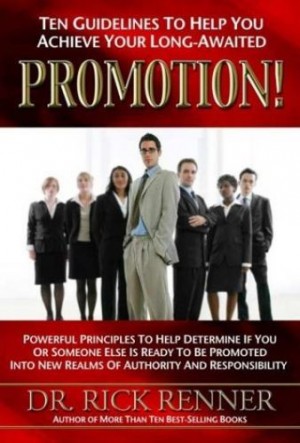
8 Quotes From “Promotion”

PromotionPromotion by Rick Renner is a book to help both ministry and for-profit business organizations make better personnel decisions. You can read my full book review by clicking here. The following are a few quotes I highlighted.

“When choosing people for promotion, it’s important to understand that nothing is more important to God in the life of a leader then his heart. The heart takes first place over gifts, talents, education, and everything else.” 

“A person who is satisfied with little will never achieve much. On the other hand, a person who has a desire for excellence will never be satisfied with a low level performance in his or her life.”

“Any person who does just the required minimum should never be considered for leadership. … So be very careful not to over-spiritualize the selection process when choosing leaders. Don’t ignore telltale signs in a candidates natural life that alert you to a lack of desire.” 

“It’s normal for people to occasionally misunderstand. But when staff members misunderstand their leader’s instructions 99% of the time, something is wrong with the way that leader is communicating with those under his authority. His followers cannot be wrong all the time.”

“You should not look for a candidate free of problems, but for one who knows how to turn to God and manage life’s challenges according to Scripture.”

“Never forget that when you’re a leader, the most important pulpit you’ll ever possess is the testimony of your own personal life.”

“You’re never going to find a perfect person. … So never forget to let mercy triumphs over judgment. But if your peace is disturbed because of things you see occurring in a potential leader’s life, don’t ignore what is bothering you. Pay attention to what your spirit is telling you. Perhaps he or she is the right leader, but it isn’t the right time yet. It’s better to be slow and sure then to move forward without the inner conviction that you’re on the right track.”

“You may have a more visible position than others do during this earthly life, but your value to God for eternity is no different than anyone else in His Body.”

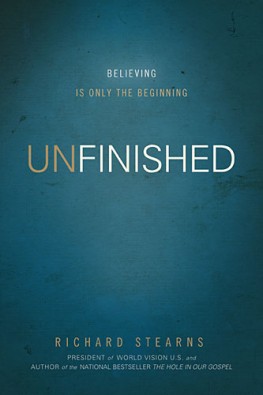
14 Quotes From “Unfinished”

UnfinishedI found Unfinished by Richard Stearns to be both confrontational and motivating. You can read my full book review by clicking here. These are some of the quotes I especially appreciated from this book. Unless otherwise marked, they are quotes from Stearns—
“God created you intentionally to play a very specific role in His unfolding story. God didn’t create any extras meant to stand on the sidelines and watch the story unfold; He created players meant to be on center stage. And you will feel fully complete only when you discover the role you were born to play.”

“You don’t have to go to the Congo or to Uzbekistan to change the world. You don’t have to be brilliant to change the world—or wealthy or a spiritual giant. But you do have to say yes to the invitation. You do have to be available and willing to be used, and you may have to pay the price that comes with following Jesus because changing the world and following Jesus isn’t easy, and it doesn’t come cheap.”

“Prosperity knits a man to the World. He feel that he is ‘finding his place in it,’ while really it is finding its place in him.” —C.S. Lewis

“Yet that is exactly how many Christians view the gospel of Christ. I do a deal with God, buy the fire insurance policy, put it in my drawer, and then I can go back to the party. Sure, it wouldn’t be a bad idea to go to church now and then to dip my feet into spiritual waters, and it wouldn’t hurt to pray from time to time, but, basically, with my salvation secured I can now get on with my life. This is what Dallas Willard refers to as the ‘gospel of sin-management.’”

“So we need to dispense with any notion that we can take this Jesus on our own terms, that we can simply add Him to the structure of our lives, fit Him into our plans, worship Him once a week for an hour or so, and offer Him a prayer when we find ourselves needing something. No, Jesus demands the total commitment of our lives in His service. We are called to enlist in His army and lay down every other priority in our lives at His feet. Our ambitions, our careers, our relationships, our possessions, even our families must be laid at His feet to do with as He wishes.”

“Authentic churches truly living together… offer a radically different and beguiling attractive alternative to every other model of human community.”

“God’s deepest desire is not that we would help the poor. God’s deepest desire is that we would love the poor; for if we love them, we will surely help them.”

“Love always requires tangible expression. It needs hands and feet. As followers of Christ we can too easily become overwhelmed by the complexity and depth of our Christian faith, and we can become confused by doctrine and theology. But the beautiful simplicity of our faith is that it distills down to the exact same bottom line for both the brilliant theologian and the five-year-old child: love God and love each other—period. Everything else derives from that.”

“Now, here is a really important thing to understand. If you lay down all of these things in the service of Christ and His kingdom, He won’t necessarily take them away from you. He doesn’t ask us all to quit our jobs, leave our homes, and have an estate sale to liquidate all our earthly possessions. No, He only asks that we turn all of those decisions over to Him. If you have built a business that can generate great wealth, He may leave you right there so that the business can be used to His glory and to accomplish His purposes. If you are an investment banker at Goldman Sachs, He may want you to stay put and become a kingdom builder right where you are stationed by letting your light shine in a place where a shining light may be desperately needed. If you love your community, He may use you to help transform it and reclaim it for His kingdom. He might even use your addiction as a powerful tool of His restorative power to transform human lives. But he does require that the certificates of title be signed over to Him. He becomes the owner, and we become the stewards, not of our possessions but of the Master’s possessions.”

“I am only one, but I am one;
I cannot do everything,
But I can do something.
What I can do I ought to do,
And what I ought to do
By God’s grace I will do.” —Edward Everett Hale

“Think of it this way: If we all worked for Boeing, our general calling would be to engage in the building of airplanes. But our specific calling might be to assemble the landing gear, wire and install the instruments, assemble the wings, or design the roomy and comfortable coach seats. And which of those specific tasks we were called to would be determined by the boss’s best judgment, taking into consideration our unique skills and abilities. … The same is true in building the kingdom of God. We all have the same general assignment but our specific roles within it will be unique to us as individuals and will take into account our gifts and talents but also our experience, our assets, our physical location, and our connections and associations.”

“The chief purpose of the church is to bring glory to God by accomplishing the Great Commission pronounced by Jesus. Everything else—worship, preaching, teaching, discipling, congregational care, the sacraments, feeding the hungry, caring for the poor, and so on—while valuable for us and pleasing to God in and of themselves, are ultimately means to the end of faithfully completing the assignment given to the church by Jesus just before He left.”

“Jesus envisioned these communities of believers would transform the world in which we live, much as springtime melts the cold and snow of winter and releases the exuberance of new life bursting forth. We would be drawn to the cold places, the broken places, the ragged edges of our world. We would be drawn to the open sores upon our societies: poverty, disease, hunger, injustice, and exploitation, becoming a healing balm to those who feel marginalized, excluded, and discarded. … Our generosity would astound, our determination amaze, and our love be irresistible.”

“The most important thing to remember is this: to be ready at any moment to give up what you are for what you might become.” —W.E.B. DuBois

23 Quotes From “The 5 Levels Of Leadership”

5 Levels of LeadershipThere is always so much rich content in a John Maxwell book, and The 5 Levels Of Leadership is no exception. You can read my full book review by clicking here. These are a few of the quotes that especially caught my attention. Unless otherwise noted, these quotes are from John Maxwell.
“At any level, a leader doesn’t automatically stay at that level. You must earn your level of leadership with each person, and that level can go up or down at any time.” 

“You have no control over how much talent you possess. You control only what you do with it.”

“Leadership is accepting people where they are, then taking them somewhere.” —C.W. Perry 

“Often to make themselves look better or to keep people from rising up and threatening them, positional leaders make other people feel small. How?

  • By not having a genuine belief in them.
  • By assuming people can’t instead of assuming they can.
  • By assuming people won’t rather than believing they will.
  • By seeing their problems more readily than their potential.
  • By viewing them as liabilities instead of assets.”

“Anytime you think you’ve arrived—whether your position is the lowest or the highest in the organization—you’ve lowered your expectations for yourself, sold your leadership short, and fallen into a no-growth mind-set.”  

“Above all else, good leaders are open. They go up, down, and around their organizations to reach people. They don’t stick to established channels. They’re informal. They’re straight with people. They make a religion out of being accessible.” —JackWelch

“You see, when there is danger, a good leader takes the front line. But when there is celebration, a good leader stays in the back room. If you want the cooperation of human beings around you, make them feel that they are important. And you do that by being humble.” —Nelson Mandela 

“People will not get ahead with others unless they are willing to work behind others.”

“[Good leaders] have more than an open-door policy—they know the door swings both ways. They go through it and get out among their people to connect.” 

“If you want to be successful on Level 2, you must think less in terms of systems and more in terms of people’s emotions. You must think more in terms of human capacity and less in terms of regulations. You must think more in terms of buy-in and less in terms of procedures. In other words, you must think of people before you try to achieve progress.”

“Care without candor creates dysfunctional relationships. Candor without care creates distant relationships. But care balanced with candor creates developing relationships. …Caring values the person while candor values the person’s potential. …Caring establishes the relationship while candor expands the relationship. … Caring defines the relationship while candor directs the relationship.” 

“Before having a candid conversation, make sure you can answer yes to the following questions:

  • Have I invested enough in the relationship to be candid with them?
  • Do I truly value them as people?
  • Am I sure this is their issue and not mine?
  • Am I sure I’m not speaking up because I feel threatened?
  • Is the issue more important than the relationships?
  • Does this conversation clearly serve their interests and not just mine?
  • Am I willing to invest time and energy to help them change?
  • Am I willing to show them how to do something, not just say what’s wrong?
  • Am I willing and able to set clear, specific expectations?”

“If achieving the vision is worth building the team, it is also worth risking the relationship. Building relationships and then risking them to advance the team creates tension for the leader. That tension will force you to make a choice: to shrink the vision or to stretch the people to reach it. If you want to do big things, you need to take people out of their comfort zones. They might fail. They might implode. They might relieve their own tension by fighting you or quitting. Risk always changes relationships. If you risk and win, then your people gain confidence. You have shared history that makes the relationship stronger. Trust increases. And the team is ready to take on even more difficult challenges. However, if you risk and fail, you lose relational credibility with your people and you will have to rebuild the relationships. Risk is always present in leadership. Anytime you try to move forward, there is risk. Even if you’re doing the right things, your risk isn’t reduced. But there is no progress without risk, so you need to get used to it.” 

“You can issue all the memos and give all the motivational speeches you want, but if the rest of the people in your organization don’t see you putting forth your very best effort every single day, they won’t either.” —Colin Powell

“The job of a leader is to build a complementary team, where every strength is made effective and each weakness is made irrelevant.” —Stephen Covey

“If you want to be an effective leader, you must move from perfectionist to pragmatist.”

“Since you can’t prevent mistakes, why not adopt and attitude in which you and your team learn from them?” 

“The individual leads in order that those who are led can develop their potential as human beings and thereby prosper.” —Socrates

“The highest goal of leadership is to develop leaders, not gain followers or do work.”

“Leadership is an opportunity to serve.” —J. Donald Walters

“No matter where you are in your leadership journey, never forget that what got you to where you are won’t get you to the next level.” 

“The reality is that no one is indispensable. Worse, allowing others to become dependent does little more that satisfy a leader’s ego. It is a very limiting leadership style that has a very short life span. The first step in developing leaders is to have a desire to develop people so that they can succeed without you. …If you want to develop people, you must help them discover and build upon their strengths. That’s where people have the most potential to grow. Helping to develop their strengths is the only way to help leaders become world-class.”

“What you do daily, over time, becomes your legacy.”