Filled Or Baptized?

Filled or Baptized.028Imagine I took a trip to the eastern seaboard of the United States, and I spent much of my time there walking along the shore in awe of the majesty of the Atlantic Ocean. When it came time for me to head home, I wanted to find something that would be a lasting memento of my time at the beach, so I took a glass bottle out into the surf and filled it with salty Atlantic Ocean water.

I now have the ocean in a bottle.

But showing my small bottle to a friend who had never seen the Atlantic Ocean for himself and trying to convey to him the majesty and splendor of this powerful ocean would be a pitiful experience.

Yes, my bottle contains some of the Atlantic Ocean. But it is limited, while the ocean is nearly limitless. The water in my bottle is tame, compared to the wild strength of the pounding Atlantic surf. The water in my bottle is stagnant, while the Atlantic is constantly moving and churning.

My bottle contains the ocean. But what if the ocean contained my bottle? 

This is an good example of someone who is merely filled with the Holy Spirit (the Spirit in their bottle) versus someone who is baptized with the Holy Spirit (their life immersed in the ocean of the Spirit). 

At the moment of salvation, the Holy Spirit enters the bottle of our lives as a deposit of our assurance of salvation and eternal life. But it is limited and tame, and can become stagnant if we’re not careful. But when someone is baptized in the Holy Spirit—when the bottle of their life is plunged into the limitless resources of the Spirit—a new power and effectiveness is released.

After His resurrection Jesus breathed on His disciples and said, “Receive the Holy Spirit.” But before His ascension, Jesus instructed them to wait in Jerusalem for the baptism of the Holy Spirit. Jesus wanted more for them … and He wants more for you too!

The baptism in the Holy Spirit is not a luxury; it is a necessity. Christ intended for it to be the normal state of a healthy Christian! Are you baptized in the Spirit, or are you content with merely being filled with the Spirit? I pray that you will allow your bottle to be plunged deep!

I am continuing my series called Come Holy Spirit next Sunday. Please join me!

Ministers Are Standard-Bearers

Pastor, this is a challenging word to us all…

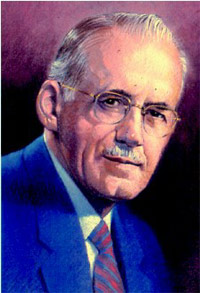
McCheyne“Your sermon on Sabbath lasts but an hour or two; your life preaches all the week. Remember, ministers are standard-bearers. satan aims his fiery darts at them. If he can only make you a covetous minister, or a lover of pleasure, or a lover of praise, or a lover of good eating, then he has ruined your ministry forever. Ah! Let him preach on fifty years, he will never do me any harm. Dear brother, cast yourself at the feet of Christ, implore His Spirit to make you a holy man. Take heed to yourself and to your doctrine.”

—Robert Murray McCheyne

Come Holy Spirit

Come Holy Spirit [web]The Bible is so full of the amazing promises that come when we allow the Holy Spirit to move in our lives. Things like…

  • Anointing for service
  • Empowerment for telling other about Jesus
  • Answering those who criticize the gospel
  • Praying more intimately
  • Wisdom
  • Growing in Christlike character
  • Insight into difficult situations
  • Discernment
  • Creativity where there was stagnation
  • And on and on and on

With all of the blessings that come with the Holy Spirit’s move in our lives, why wouldn’t we pray more frequently, “Come Holy Spirit”?

Beginning this Sunday I will be talking about some of the roles the Holy Spirit plays in the lives of Christians. I hope you can join me each week at Calvary Assembly of God.

Smith Wigglesworth On Healing (book review)

Wigglesworth HealingWhenever I read Smith Wigglesworth’s sermons, my faith is challenged to reach farther than it’s ever reached before! In this collection of messages entitled Smith Wigglesworth On Healing, once again I found myself wanting so much more of God!

Wigglesworth didn’t write his books, he preached them. This plumber-turned-preacher was one of the most faith-filled dynamos I’ve ever heard from. On page after page he confronted me with how much more there is to experience in my relationship with God, and then backed it up with his own personal experiences. In this particular book, the focus is on people who were physically healed (including Wigglesworth himself) from diseases which perplexed doctors. Time and again I found myself saying, “Yes! I want to see this today!”

If you want to give your faith a boost to believe God for miracles, I can think of no better preacher to read than Smith Wigglesworth.

Act Or Attitude?

Listen to the podcast of this post by clicking on the player below, and you can also subscribe on AppleSpotify, or Audible.

Yesterday morning I showed my congregation this verse: As every man hath received the gift, even so minister the same one to another… (1 Peter 4:10 KJV). I then asked them, “What do you think of when you see the word minister in this verse?” The first answer given was “pastor.” Others said things like “encourager” and “helper.”

Then I shared that the Greek word for minister is the word from which we get deacon. I then asked them what deacon made them think of. They answered “administrator” and “leader.”

But the closest definition to what we have today for that Greek word is waiter or waitress. The NIV tries to capture this thought when it translates the same verse: Each of you should use whatever gift you have received to serve others….

Serving is not something that comes naturally to most people, as typically we prefer to be served.    

In biblical times, a disciple was always very devoted to his rabbi. The disciple would serve almost in the role of a servant to his rabbi.

Almost.

Even the rabbis didn’t requite their disciples to remove their sandals, because it was considered so menial and demeaning to the disciple. So foot washing was reserved for the lowliest of servants.

Then along comes Jesus who knows that God has placed all authority under Him (John 13:3), who uses His authority to take on the lowest of lowliest positions: a foot-washer. As He finishes washing, He says, “Now that you’ve seen Me do this, you need to do the same thing: Be the humblest of servants.”

In our culture, most people don’t need to have their feet washed when they come into your home or a restaurant, like they did in first century Israel. It is not the act that is important, but the attitude. Jesus stooped to wash His disciples’ feet. He made Himself lower than anyone else in the room. Jesus showed us that there was nothing beneath Him.

I’ve heard this before: “How do you know you have a servant’s attitude? When you don’t mind that someone treats you like a servant.”

But I think a better question might be: “Do I think anything (or anyone) is beneath me?” If I do, my attitude is not Christ-like (Philippians 2:5-7), nor is it Christ-blessable (John 13:17).

Jesus calls us to be servants—to be waiters and waitresses to others. This will show the love of Jesus like nothing else can.

Check out all of the other messages in our series Live Together by clicking here.

►► Would you please prayerfully consider supporting this ministry? My Patreon supporters get behind-the-scenes access to exclusive materials. ◀︎◀︎

Servanthood

ServanthoodThis morning we wrapped up our series called Life Togetherwhere we looked at the one another phrases in the New Testament that related to the Church—with the thought of serving one another.

I think this 1-minute video from John Maxwell captures this thought about servanthood well…

From The Personalized Promise Bible we looked at this prayer that comes from the servanthood example of Jesus in John 13:13-17

Jesus is my Mentor and the Lord of my life. He has left me an example of the greatest servitude the world has ever known. I will do as he did and wash the feet of my brothers and sisters in Christ. I will see the real good and benefit of others through humble service. With a tender heart of compassion, I will take the time to do good to those around me. Through this generosity of service and willingness to give of myself to others, no matter how humbling the service may be, I store up for myself favor upon favor, and blessing upon blessing.

Run To The Pain

Listen to the podcast of this post by clicking on the player below, and you can also subscribe on AppleSpotify, or Audible.

We have become a numbed culture: we try to soften every blow, water down each negative report, ask only surface questions in the hopes that no one will really tell us how much they’re hurting, and then medicate away every symptom. But these symptoms are screaming to be noticed!

Dr. Paul Brand the renown hand surgeon and missionary to leprosy patients in India, wrote:

     “Pain contributes daily to a normal person’s quality of life…. Every normal person limps occasionally. Sadly, leprosy patients do not limp. Their injured legs never get the rest needed for healing…. This inability to ‘hear’ pain can cause permanent damage because the body’s careful responses to danger will break down. … A body only possesses unity to the degree that it possesses pain…. We must develop a lower threshold of pain by listening, truly listening, to those who suffer. … The body protects poorly what it does not feel.” —Dr. Paul Brand & Philip Yancey, In His Image

The Gospels often talk of the compassion of Jesus. His compassion led Him to teach the confused, feed the hungry, and heal the sick. The phrase usually used in the NKJV is descriptive: Jesus was moved with compassion. In other words His feelings moved Him to action.

The Old English way of describing compassion was to say someone was “moved in his bowels.” This is because when someone else is suffering it should be like a kick in my gut too.

Jesus gravitated toward the hurting, but in one story He told, Jesus related something different about His Father’s compassion. It’s the story we now call the story of the prodigal son. In this story Jesus said His Father watched the horizons every day to see if His wayward child would return. When He saw this child coming into view, God saw his slumped shoulders, He could detect his heavy heart and worn-out body. Then Jesus says something amazing, “The Father was moved with compassion and He RAN TO HIS SON!

If our Heavenly Father runs TO another’s pain, what right do we have to ever run AWAY from it? 

If we are to be God-honoring in our interaction with others, we need to—as Dr. Brand says—lower our threshold of pain. We need to feel what others feel, to feel it like a kick in our own gut, and then move toward the pain with help and healing and restoration.

Christians—if we are truly Christ-like—should be known as the most compassionate people of anyone.

So we need to always be asking: What am I doing to let this compassion be seen in my life?

Check out all of the other messages in our series Live Together by clicking here.

►► Would you please prayerfully consider supporting this ministry? My Patreon supporters get behind-the-scenes access to exclusive materials. ◀︎◀︎

Embracing Conflict

Listen to the podcast of this post by clicking on the player below, and you can also subscribe on AppleSpotify, or Audible.

A quick survey: Please raise your hand if any of these pertain to you:

  • Have you ever had a disagreement with someone?
  • Have you had a disagreement with someone you love?
  • Have you had a disagreement with someone you love, who also called themself a Christian?

If you raised your hand, you joined 100% of my congregation who answered “yes” to all three.

When we are in close proximity to anyone, there will be conflict. In fact, close proximity usually leads to more conflict because closeness increases friction. For a Christian the issue is not if we will have conflict with others in the Church, but how will we navigate and resolve these conflicts.

The apostle Paul wrote a thank you letter to the church at Philippi, in which he speaks in some of the most glowingly loving terms of any of his letters. Clearly, this was a group of people close to his heart. So when he heard about a conflict between two ladies in this congregation, he took time to address it publicly in his letter—

I plead with Euodia and I plead with Syntyche to be of the same mind in the Lord. (Philippians 4:2)

We don’t know why these ladies were arguing but notice that Paul doesn’t take sides. He simply says, “I please with Euodia AND I plead with Syntyche.” The word for plead means someone who comes alongside to help. In using this terminology, Paul gives us an important principle:

We can come alongside those in conflict without taking sides with either one of those in conflict.

In the next verse, Paul implores the rest of the church to join him in this alongsided-ness

And I exhort you too, my genuine yokefellow, help these two women to keep on cooperating…. (v. 3 in the Amplified Bible)

In other words, Paul wants the rest of the church to embrace these at-odds sisters, also without taking sides. He addresses the members of the church as yokefellow. It’s not a word we use too often today (although it is still in the dictionary), but it paints a crystal clear picture of our role. Here’s what we CAN’T do as yokefellow:

  • Look away
  • Mind our own business
  • Hope the situation will work itself out
  • Try to navigate around the problem

Instead, we embrace the conflict by embracing those in the conflict. We help them to cooperate and to work in harmony in the Lord (v. 2 in the Amplified Bible). It’s our responsibility to help maintain the bonds of peace so that the Body of Christ can grow in a way that is healthy and God-honoring.

Do you know someone in conflict right now? Are you in the conflict yourself? Ask God to show you how you can come alongside—not take sides—with those in this conflict so that you can help bring about peace.

If you have missed any messages in this series called Life Together, you can find them all by clicking here.

►► Would you please prayerfully consider supporting this ministry? My Patreon supporters get behind-the-scenes access to exclusive materials, like a map and an app I just shared to help with your personal Bible study time. ◀︎◀︎

Growing Pains

Listen to the podcast of this post by clicking on the player below, and you can also subscribe on AppleSpotify, or Audible. 

I remember when I was a teenager having such an ache in my legs at night. I’d be laying on my bed trying to sleep, but I couldn’t get comfortable because of that dull, unrelenting ache in my legs. I’d go ask my Mom what was going on, and her reply was simple: “Those are growing pains.”

In order to grow in any area of our lives—physically, emotionally, mentally, relationally—we have to go through a certain amount of pain.

No pain, no gain.

The process is not always a lot of fun, but that’s why we have to keep our eyes on the goal. The process may not be something we like, but the end results will make the pain worth it.

For instance, you may not like dieting but you like the weight loss or lower cholesterol numbers, so you stick with it. You may not like saying, “I’m sorry, I was wrong, please forgive me” but you like the healed relationship, so you say it.

Throughout the New Testament the phrase one another is frequently used to address how members of the Body of Christ should relate to each other. God desires that all of us operate interdependently with one another. In order to get there, we must get ready for some growing pains!

In Ephesians 4:2, Paul tells us what is required to get to a place of unity and maturity in the Church:

  • Be completely humble (the King James Version says lowliness). This Greek word means not letting our thoughts rise far from the ground. In other words, we are thinking of ourselves as God thinks of us, not independently as a self-made man or woman, but viewing all of my success as God-appointed. This process toward interdependence starts in our thoughts—in our attitudes about ourselves and about others.
  • Gentle means strength under control. Gentleness says, “I could do this, but for your sake I won’t.”
  • Patient interaction (KJV: longsuffering) with others is allowing them the freedom to grow just as others allowed me the freedom to grow.
  • Bearing with one another in love. Think of a load-bearing wall in a building that is holding up the weight of the roof and walls. When we bear with one another we are helping to share the burdens.

Being humble with ourselves and gentle and patient with others is the way we go through the growing pains of bearing with one another in love. The process may not be a lot of fun, but the end result is something that glorifies God, that’s why we must stick with one another through all our growing pains.

Check out all of the other messages in our series Live Together by clicking here.

►► Would you please prayerfully consider supporting this ministry? My Patreon supporters get behind-the-scenes access to exclusive materials. ◀︎◀︎

Responding To The Voice

FlatlandIn 1880, Edwin A. Abbott wrote Flatland, a book that would later become a favorite of Albert Einstein. Abbott was a college-trained mathematician and a theologian; in fact he was actually better known for his theological writings than for Flatland. Later on Einstein would say that “things should be made as simple as possible, not simpler.” In other words, don’t dumb-down the concept, but state it on a level where more people can grasp it. That’s why, I believe, Einstein loved Flatland.

Flatland is told through the eyes of Square, a two-dimensional shape that lives in Flatland. Square has length and width, but no height. So the inhabitants of Flatland can move back-and-forth, and side-to-side, but not up-and-down. To get an idea of this, put your eye right on the level of a tabletop, and look at an item on the table. Imagine you can only see what is touching the tabletop (but nothing that rises any higher or lower than that), and you will get an idea of Square’s two-dimensional world.

One day Sphere visits Flatland. Sphere is three-dimensional, so he can move up-and-down. This means that Square can only see the part of Sphere that happens to be in his line of sight at that immediate moment. So he sees just a “slice” or “layer” of Sphere as Sphere moves through Flatland. Sometimes Sphere is nothing more than a disembodied voice when he is hovering above Flatland.

This gives us a little bit of an idea of how we perceive God. He exists in dimensions that we cannot fully comprehend, so we only see “slices” of Him as He passes though our line of sight. Sometimes He is just a disembodied Voice—or as the Bible calls Him, the Word of God.

But the Word of God compressed Himself into our dimension (John 1:14). All of the fullness—all of the other-dimension-ness—of His omnipotence, omnipresence, omniscience came to our “level” in the Person of Jesus Christ (Philippians 2:6-7). The Word was the complete and total fullness of God (John 1:1-3; Colossians 2:9). But unlike Square who couldn’t fully know Sphere, God is fully knowable in The Word—in Jesus Christ!

The question is: What are you going to do with The Word? The Word of God (the Bible) allows us to fully know The Word of God (Jesus). But we need to be willing to let the Holy Spirit strip away our puny, smaller-dimensioned, finite thinking of God.

Alvin TofflerAlvin Toffler wrote, “The illiterate of the future are not those who cannot read or write, but those who cannot learn, unlearn, and relearn.”

I would modify this to say, “Those illiterate of The Word (Jesus) are not those who cannot read The Word (the Bible), but those who won’t let the Holy Spirit help them learn, unlearn, and relearn who God is.” 

There is so much more to learn about The Word (Jesus), so let the Holy Spirit guide you in your reading of The Word (the Bible). I pray as Paul did that you will begin to experience more of the multi-dimensional-ness of God as revealed in The Word—

I pray that out of God’s glorious riches He may strengthen you with power through His Spirit in your inner being, so that Christ may dwell in your hearts through faith. And I pray that you, being rooted and established in love, may have power, together with all the Lord’s holy people, to grasp how wide and long and high and deep is the love of Christ, and to know this love that surpasses knowledge—that you may be filled to the measure of all the fullness of God. (Ephesians 3:16-19)

If you have missed any of the messages in this series called Who Is Jesus?, you can find them all here.