The Dangers In Grumbling

God wants to give us His peace. The Hebrew word is shalom and it means a deep tranquility found in a personal relationship with Jesus that is greater than all external circumstances. Sadly, many people block the shalom God wants them to have. 

The “shalom cycle” looks like this…

Our gratitude for the things God has done fuels our faith in God’s future grace. That faith-filled expectation serves as fuel for our prayers, and answered prayer gives us even more for which we can give thanks. 

But the shalom cycle can break down when we forget to be thankful. My friend Scott Troost says that ungrateful people are usually characterized by—

  • Being bitter and unforgiving
  • Constantly attending their own pity parties 
  • Struggling with low self-esteem
  • Being greedy and covetous for the things they don’t have

Scott goes on to explain how we can stop the grumbling ingratitude from derailing the shalom cycle. 

  1. Be thankful for what you have, instead of wishing for things you don’t have (Philippians 2:14).
  2. Keep a gratitude journal of all that God has done for you (Habakkuk 3:2). 
  3. Notice how God has given you strength to make it through challenging times in the past (2 Corinthians 12:7-10). 

“There’s a huge difference between being thankful for something and being thankful in something. We are to be thankful always.” —Scott Troost 

As I talked about last week—we need to think about what we’re thinking about. This is the key to spotting those grumbling, ungrateful thoughts before they derail the cycle and rob us of God’s shalom. 

Join us next week for the third part of our 4-part series in which we will be uncovering another way that the shalom cycle can become derailed. Please join us either in person or on Facebook Live. 
What Is Shalom?

Shalom is the Hebrew word for peace. Some of the best definitions of shalom include ideas of completeness, soundness, and wholeness. One Jewish rabbi commented that when you say “Shalom” to someone, you’re really saying, “may you be full of well-being.” Or another way of thinking of shalom is—nothing missing, nothing broken. 

Some have tried to describe shalom as the absence of conflict, but that’s not quite accurate. On the verge of going into the Promised Land to fight their enemies, God commanded Aaron to speak a blessing of peace of the people (Numbers 6:24-26). And just before Jesus said, “Blessed are those who are persecuted because of righteousness,” He said, “Blessed are the peacemakers” (Matthew 5:9-10). 

Shalom is not controlled by outward circumstances. Shalom is a deep-seated, rock-solid, unshakable assurance that I am in God’s hand. 

Isaiah describes how we live in shalom like this—

You will guard him and keep him in perfect and constant peace whose mind—both its inclination and its character—is stayed on You, because he commits himself to You, leans on You, and hopes confidently in You. (Isaiah 26:3)

How do we do keep our mind stayed on God? The Apostle Paul says, “We take captive every thought to make it obedient to Christ” (2 Corinthians 10:5). Psychologists call this process metacognition: when we think about what we’re thinking about. It’s being aware of our anxious thoughts that are robbing us of shalom and then talking back to them. 

What often robs us of peace is listening to ourselves instead of talking to ourselves! 

Someone once asked evangelist Smith Wigglesworth, “Smith, how do you feel?” He replied, “I never ask Smith how I feel. I tell him how he feels!” Exactly right! 

Why do we make our thoughts obedient to Jesus? Because one of the titles given to Jesus before He was born was Prince of Peace (Isaiah 9:6), and Jesus assures us that His peace is unlike anything we can ever find in earthly things (John 14:27, 16:33). 

God’s peace is always there, but our divided minds keep us from experiencing His peace. So Isaiah tells us to keep our mind steadfast on God’s goodness, and Paul says the same thing—Don’t fret or worry. Instead of worrying, pray. Let petitions and praises shape your worries into prayers, letting God know your concerns. Before you know it, a sense of God’s wholeness, everything coming together for good, will come and settle you down. It’s wonderful what happens when Christ displaces worry at the center of your life. (Philippians 4:6-7)

I want to encourage you to practice what the Bible calls capturing your thoughts—or what psychologists call metacognition. Ask yourself, “Why am I thinking that?” Capture those thoughts and make them obedient to Christ. Don’t let your worrisome thoughts rob you of God’s shalom.

Join me this Sunday as we take a closer look at the “shalom cycle,” including the things that can derail it. 

Shalom

God makes a promise in Isaiah about His perfect peace being made available to His people. 

Ahhh, who wouldn’t want God’s perfect peace?! Sadly, many people actually block God’s peace from coming into their hearts. You see, God’s peace is always there, but there are things we humans frequently do that keeps us from experiencing His perfect peace. 

The Hebrew word for peace is shalom, which is a word packed with rich meaning! There are things God-loving people can do to keep shalom at the center of their lives, and I want to share these things with you. 

Please join me this Sunday as we begin a 4-part series looking at what shalom is, how we can keep it humming in our lives, as well as the warning signs that would indicate to us a breakdown of shalom is on the horizon. 

Please join me either in person or on Facebook Live for this life-changing series.

What’s Behind A Church’s ♥able Reputation?

Last week I said if people are going to say “I ♥ That Church!” it has to be a ♥able church. A ♥able church has a ♥able reputation that compromises what Luke captured about the very first Church—internal unity, sincere piety, supernatural results, and practical help.

Once a church has this kind of reputation, how is it sustained? 

First, let me tell you how it’s NOT sustained: A church’s ♥able reputation isn’t sustained by that church focusing on it’s ♥able reputation. 

A ♥able reputation must flow from the constant development of godly character. Otherwise, we substitute what sounds good with what is actually sound, and we substitute what looks good with what is actually good. 

That’s what the Pharisees did—they were more concerned about how their religion looked to others, and not how it aligned with God’s heart. In fact, Jesus told two stories about people that thought they were “in” with God because of their reputation, but God actually says to them, “I don’t know who you are” (see Matthew 7:21-23; 25:1-12). 

Matthew Henry reminded us, “Men may go to hell with a good reputation!” 

But D.L. Moody got the order right when he said, “If I take care of my character, my reputation will take care of itself.”

I believe the first Church shows us three components of a maturing godly character. 

  1. Our source must be pure. The Christians devoted themselves to the apostles’ teaching. In other words, they grew with sound doctrine, not with things that sounded like doctrine (2 Timothy 4:3; Acts 17:11). 
  1. Our daily disciplines must be productive. The Christians saw “church” as an every day thing. They didn’t view studying the Scriptures, prayer, fellowship, and other maturing activities a merely something to be checked off their To Do list. 
  1. Our accountability must be in our fellowship. The Greek word for fellowship (koinonia) means an active involvement with the “one anothers” in the Church. What’s especially important is maintaining the highest levels of accountability with each other so that the growth of godly character can continue (see especially Hebrews 10:24-25; James 5:16). 

“When wealth is lost, nothing is lost. When health is lost, something is lost. When character is lost, everything is lost.” —Billy Graham 

My church’s ♥able reputation will be sustained as I am committed to growing in godly character. 

So… are you committed to that continual growth? 

A Church With A ♥able Reputation

Demographers report that there are upwards of 70 million people in America that are unchurched. In my own experience, I have found that the unchurched people I have met are really dechurched people. At one time they were a part of a church community, but finding nothing of value there, they left. 

The way the first-century community responded to the Church—the historian Luke says “everyone was filled with awe and enjoying the favor of all the people”—is how people will still respond today to the extent that we resemble that first Church. 

If people are going to say “I That Church!” we have to be a able church!

Here are four qualities that I see in the first Church that gave it such a able reputation— 

  1. Internal unity

Luke uses the word fellowship (Greek: koinonia) which means an intimate, personal involvement in each other’s lives. The historical account lists phrases like devoted, breaking of bread and prayer, together, together with glad and sincere hearts, and one in heart and mind. 

  1. Sincere piety

Church for these first Christians wasn’t a place they went to on a certain day of the week; it wasn’t a set of religious rules they rigorously followed. They didn’t do church because they had to, but because they loved to! Luke says all the believers were together, and every day they continued to meet…with glad and sincere hearts.

  1. Supernatural results

Luke says wonders and miracles, signs, and great power accompanied the Church’s activity. Interestingly, the order is fellowship → awe → miracles, NOT what I would have expected, which is fellowship → miracles → awe. The awe came from the Church’s unified, sincere fellowship, and then the miracles simply confirmed God was there (cf. Mark 16:20). 

  1. Practical helps

Henry Ford said, “You can’t build a reputation on what you’re going to do.” The first Christians saw people in need and they helped: they gave to anyone as he had need and they shared everything they had so that there were no needy persons among them. This is exactly what Jesus told us to do (see Matthew 25:34-40). 

People will the Church when they see real among church people! 

If we want to see dechurched people become rechurched people, we need to return to our Christian roots—we need to make sure we are lovingly unified in heart and mind, allowing God to perform the miraculous among us, and then practically meeting the needs of everyone around us. 

Join me this Sunday as we learn more lessons from this first-century Church. You can join me in person or on Facebook Live.
Battle Ready

The Bible says that satan prowls around like a lion, looking for an opening to devour Christians. Are you battle ready? The Apostle Peter gives us all of the battle preparation that we will need to be victorious!

One of the most important things we need to do is prepare ourselves before the battle even begins. Peter lists two key components: (1) self-control and (2) alertness (1 Peter 5:8-11). 

This Greek word for self-control is only used six times in all of the New Testament. Peter uses it three times in his first epistle, and the Apostle Paul also uses the word three times. It’s amazing to see the similarity in uses between the two of them. 

Both apostles use self-control in the context of the value of prayer (1 Thessalonians 5:6, 8; 1 Peter 4:7). In other words, Christians don’t wear armor to fight; they wear armor to pray. We have to be self-controlled enough to stick to the business of prayer. 

Restraining prayer, we cease to fight 
Prayer makes the Christian’s armor bright 
And satan trembles when he sees 
The weakest saint upon his knees. —William Cowper

Then both apostles use the Greek word for self-control in the context of using God’s Word as a spiritual weapon (2 Timothy 4:1-5; 1 Peter 1:10-13). Jesus used this same strategy in his battle in the desert against satan (Matthew 4:1-10)—Jesus was praying before the devil came to tempt Him, and then He defeated the devil’s temptations by quoting Scripture. 

Peter says the devil “prowls around like a roaring lion.” Notice that important word: like. The devil has always been an imitator—trying to be like God, he was expelled from Heaven, and then he deceived Adam and Eve by telling them they could be like God too. He’s using the same strategy now. 

Augustine pointed out, “Christ is called a Lion because of His courage; the devil because of his ferocity. The Lion comes to conquer, the other to hurt.” 

So Peter encourages us to “resist him, standing firm in the faith.” You resist the devil when you… 

  • …stay submitted to God 
  • …remember the blood of the Jesus—THE Lion of Judah—that won your victory 
  • …stay self-controlled in prayer
  • …remain alert in the Scriptures

Ask the Holy Spirit to keep you battle ready by helping you to develop the self-control and alertness you need. 

If you’ve missed any messages in this series, you may find the complete list by clicking here.

Alien Anxiety

“A recent survey of primary care physicians in the United States revealed that at least one-third of office visits were prompted by some form of anxiety.” —Lanny Hunter & Victor Hunter 

The Greek word for anxiety means to be pulled in different directions. In the context of “Aliens and Strangers,” it means being pulled between Earth’s way and Heaven’s way. Other biblical definitions for anxiety that the Amplified Bible brings out include—

  • being perpetually uneasy…about your life (Matthew 6:25) 
  • a troubled mind unsettled, excited, worried, and in suspense (Luke 12:29) 
  • drawn in diverging directions, his interests are divided and he is distracted from his devotion to God (1 Corinthians 7:34) 

Unchecked anxiety can negatively impact our physical, emotional, mental, and even spiritual health, so it’s imperative—if we are going to live differently than Earthlings—that Christians handle their anxiety in an alien way. 

Peter gives us an alien response to our feelings of worry and anxiety—

Cast all your anxiety on [Jesus] because He cares for you. (1 Peter 5:7)

Notice that Peter doesn’t say, “Don’t be anxious,” but he does say, “Here’s what to do with your anxiety.” Being anxious is not a sin, but hanging on to your anxiety may cause you to behave in a sinful way. 

So what do we do with our anxiety? In a word cast it off—throw it somewhere else! The verse tense here means it’s something we must keep on doing, so Peter is really saying keep on casting your anxiety on Jesus. 

Why can we keep on casting our anxieties on Jesus? Because He cares for you. Jesus has taken charge of your care; He’s made it His goal that you aren’t missing out on the abundant life He paid for! This verb is in what’s called the indicative mood. That means it is something that has happened in the past, and it is happening now, and it will continue to happen forever and ever! 

Even if you cast an anxiety on Jesus 30 seconds earlier, you can do it again right now because that’s how much He cares for you! 

At the risk of oversimplifying it, here is the prescription for anxiety in four steps: 

  1. Recognize that you are anxious—admit it to yourself and to God. 
  2. Remind yourself that Jesus cares for you. 
  3. Reject your anxieties by counteracting your worry with God’s truth—I like to read something like Psalm 23.
  4. Repeat steps 1-3. 

“Your natural tendency when you’re feeling anxious is to focus on yourself and your problems. The more you do this, the more you forget about Me and all the help I can supply. This worldly focus only increases your anxiety! Let the discomfort you feel at such times alert you to your neglect of Me. Whisper My Name, and invite Me into your difficulties. … A problem-preoccupation makes you anxious. So I urge you to cast all your anxiety on Me—trusting that I care for you. You may have to do this thousands of times daily, but don’t give up! Each time you cast your worries and concerns on Me, you are redirecting your attention from problems to My loving presence.” —Sarah Young, in Jesus Always 

Join me next week as we continue our series called Aliens and Strangers. If you’ve missed any messages in this series, you may find the complete list by clicking here.

Life Is Hard! Now What?

Jesus told Peter, and now Peter tells us—Christians are going to be insulted and persecuted for believing in Jesus. So the fact that life is hard shouldn’t come as a surprise. Peter then goes on to elaborate on how Christians should live in spite of the mistreatment. 

“The more Christians are unlike the world, the more it hates us; the more we are like our Lord, the more the world will persecute us.” —Horatius Bonar

How should Christians respond to insults and persecution? Peter outlines the Christian’s response in 1 Peter 4:12-19

dear friends, do not be surprised (v. 12). I like this verse in the Amplified Bible: Do not be amazed and bewildered at the fiery ordeal which is taking place to test your quality, as though something strange (unusual and alien to you and your position) were befalling you. After all, Jesus told us this was coming (see John 15:18-20). 

but rejoice that you participate in the sufferings of Christ (v. 13a). Notice that this should be the sufferings OF Christ, not of our own making. 

—let suffering lead to Spirit-led reflection (notice the if’s in vv. 14-18, and the if’s in what Jesus said in John 15:18-20). We need to make sure our suffering is because we’re standing for Jesus, not because we’re being jerks! David asked God to check if his actions were the cause of his persecution (Psalm 7:3-4) and we should too. If we discover that we’re the one to blame, quickly apologize, ask for forgiveness, and make things right.  

keep your focus on when His glory is revealed (v. 13b). Time is short, and the rewards are sure so don’t remain focused on the immediate pain, but look up to the longterm gain.  

do not be ashamed to suffer for Jesus (v. 16). Jesus told us not to be ashamed of Him because He is not ashamed of us (Luke 9:26; Hebrews 2:11). 

stay committed to your faithful Creator (v. 19a). Staying committed means getting even closer to God in the hard times.

continue to do good (v. 19b). What does continue to do good look like? Peter lists things like being self-controlled, helping others that are being persecuted, showing proper respect, having a good work ethic, not trading insult for insult, and many other commands. Bottom line: doing good means living like Jesus lived while He was on Earth (see Acts 10:38). 

So, Christian, I’ve got two questions for you—

How are you handling insults and persecution? Are you continuing to do good despite the mistreatment? 

Remember Jesus is coming soon, and His rewards are with Him for how we have lived. “Behold, I am coming soon, and I shall bring My wages and rewards with Me, to repay and render to each one just what his own actions and his own work merit.” —Jesus (Revelation 22:12) 

Join me this Sunday as we continue to learn how Christians are to live as aliens and strangers while we visit Earth. If you’ve missed any messages in this series, you may find the complete list by clicking here. 

Unlearning Limiting Fears

Did you know that you were only born with two fears: the fear of falling and the fear of loud noises? Yet the DSM-5 has a whole section to help mental health professionals diagnosis the specific phobia that may be limiting someone’s life. That might be because some places list upwards of 500 recognized phobias that constrict people’s lives! 

Since only two of our fears are innate fears, that means the rest of the fears that trouble us are learned fears. Since God repeatedly says “Fear not!” throughout Scripture, that must mean He also tells us how to overcome our fears. 

Christians—as aliens and strangers on this Earth—should have an alien response to earthly fears. So if we are going to unlearn some of the fears that have cramped our lives we will need to learn and relearn what God says to us.

Peter asks what might seem like a rhetorical question, “Who is going to harm you if are eager to do good?” Think about it: who wants to punish someone for doing the right thing? Apparently some people do because Peter goes on to add, “But even if you should suffer for what is right, you are blessed. Do not fear what they fear; do not be frightened” (1 Peter 3:13-14). 

So even if people insult Christians for doing things God’s right way, God’s blessing is on them. Sadly, people without God’s blessing on their lives often give in to the FOMO (fear of missing out) and they end up lashing out at those being blessed. That lashing out is directly rooted in their fears. 

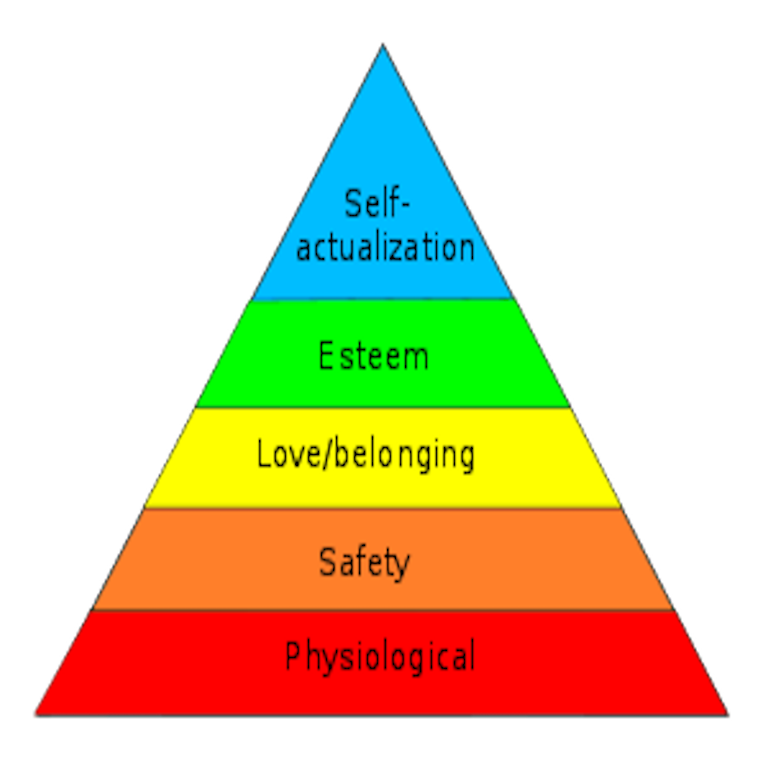
Abraham Maslow proposed a hierarchy of needs that humans have, and obviously, there would be fears associated with any of those needs not being met. At least, that would be the Earthling response. Christians need to unlearn those fears by learning and relearning why God tells them to “Fear not!” 

  1. Fear of not having physiological needs met—Jesus tells us why we shouldn’t worry (Matthew 6:25-34). 
  2. Fear of not being kept safe—the psalmist tells us that God is our shield (Psalm 84:11).
  3. Fear of not fitting in with a certain social group—Jesus proudly call His followers His brothers and sisters (Hebrews 2:11-12).
  4. Fear of not being rewarded or recognized—Jesus says there are blessings for those that hang in with Him through persecution, including being called a co-heir alongside Him (Matthew 5:10-12; Romans 8:17).
  5. Fear of our life not having purpose—the apostle Paul reminds us that God chose us on purpose to be His example to the world (1 Corinthians 1:25-27). 

Since Jesus overcame all the things that could cause us fear, Peter counsels us to arm yourselves with this same attitude (1 Peter 4:1). The Greek word for arm yourselves only appears here, and it means for us to repeatedly remind ourselves of God’s truth. The Greek word for attitude is only here and in Hebrews 4:12, where we are reminded that the Word of God helps our minds unlearn, learn, and relearn God’s truth. 

Have the borders of your life been squeezed by your fears? Do you feel like you’re missing out on the “abundant life” that Jesus said you could have? The Word of God can help you unlearn those fears, and fellow Christians would love to come alongside you to help you continue to relearn that truth over and over again until your fears are banished from your life! 

Don’t let fear keep you from being all that God has planned for you to be! 

Please join me on Sunday as we continue our study of how Christians are to live as aliens and strangers while on Earth. If you’ve missed any messages in this series, you may find the complete list by clicking here. 

Living Lives That Make Sense

This sounds totally contrary to common sense, but I’ll bet you’ve seen this before—Someone does something unexpectedly nice, and gets criticized for it. 

Why would that be? 

Christians can expect to experience this more frequently. Jesus told His followers to be prepared for persecution from those who didn’t believe in Him. One of Christ’s disciples named Peter added a few other warnings for Christians: 

  • Non-Christians will accuse you of doing wrong even when you’re doing right
  • Non-Christians will think it’s weird that you don’t do the same evil deeds they do
  • Non-Christians will heap abuse on you for not doing the evil deeds they do (1 Peter 2:12; 4:4)

This is because living good, Christ-honoring lives causes a burning in those hearts that don’t know Jesus yet. 

Solomon said there’s an aching void in the heart of every human being. It’s a longing to know what makes sense in life (see Ecclesiastes 3:11). When Christians live their lives focused on God, and they live—as Peter said—“such good lives,” it reminds non-Christians of what they’re missing. 

Christian, you need to remember why we live this way. The belief that Jesus is the Christ, the Son of the living God (Matthew 16:18) is the foundation for our lives. In fact, Peter called Jesus the Living Stone. As His followers, we are also called “living stones” that the Holy Spirit is building together to make a spiritual signpost to point others to Jesus (see 1 Peter 2:4-5, 9, 12). 

We cannot do this under our own power. Jesus Himself reminded us that we need the Scriptures which all point to Him (Luke 24:27, 44-45), and the Holy Spirit which will help us apply the revealed Scriptures (John 14:26) and live “such good lives.” 

So here’s how I’m challenging myself this week, and I’d like to extend this challenge to you too. For the next seven days, just before going to bed I’ll be asking myself these three questions:

  1. Did I read the Word of God today? 
  2. Did I see the God of the Word in the Word of God a little more clearly today?
  3. Did I live a good, Christ-honoring life today that pointed others to Jesus?

Join me this Sunday as we continue our look at how Christians should live as aliens and strangers. If you’ve missed any messages in this series, you may find the complete list by clicking here.