Listen to the podcast of this post by clicking on the player below, and you can also subscribe on Apple, Spotify, or Audible.
Jesus began to speak to them in parables… (Mark 12:1).
This is only the fourth parable that Mark records, and as the final parable that Jesus uses in this Gospel, it brings His public ministry to a close.
Jesus concludes this parable by quoting from Psalm 118. This psalm is the last of the “Hallel Psalms” to be sung at the conclusion of the Passover celebration—it is the psalm that looks eagerly to the Messiah‘s arrival. It contains the words that the crowds just used on Palm Sunday: “Lord, save us! Lord, grant us success! Blessed is He who comes in the name of the Lord” (Psalm 118:25-26; Mark 11:9-10).
At the conclusion of this parable, the religious leaders “knew He had spoken this parable against them” (Mark 12:12).
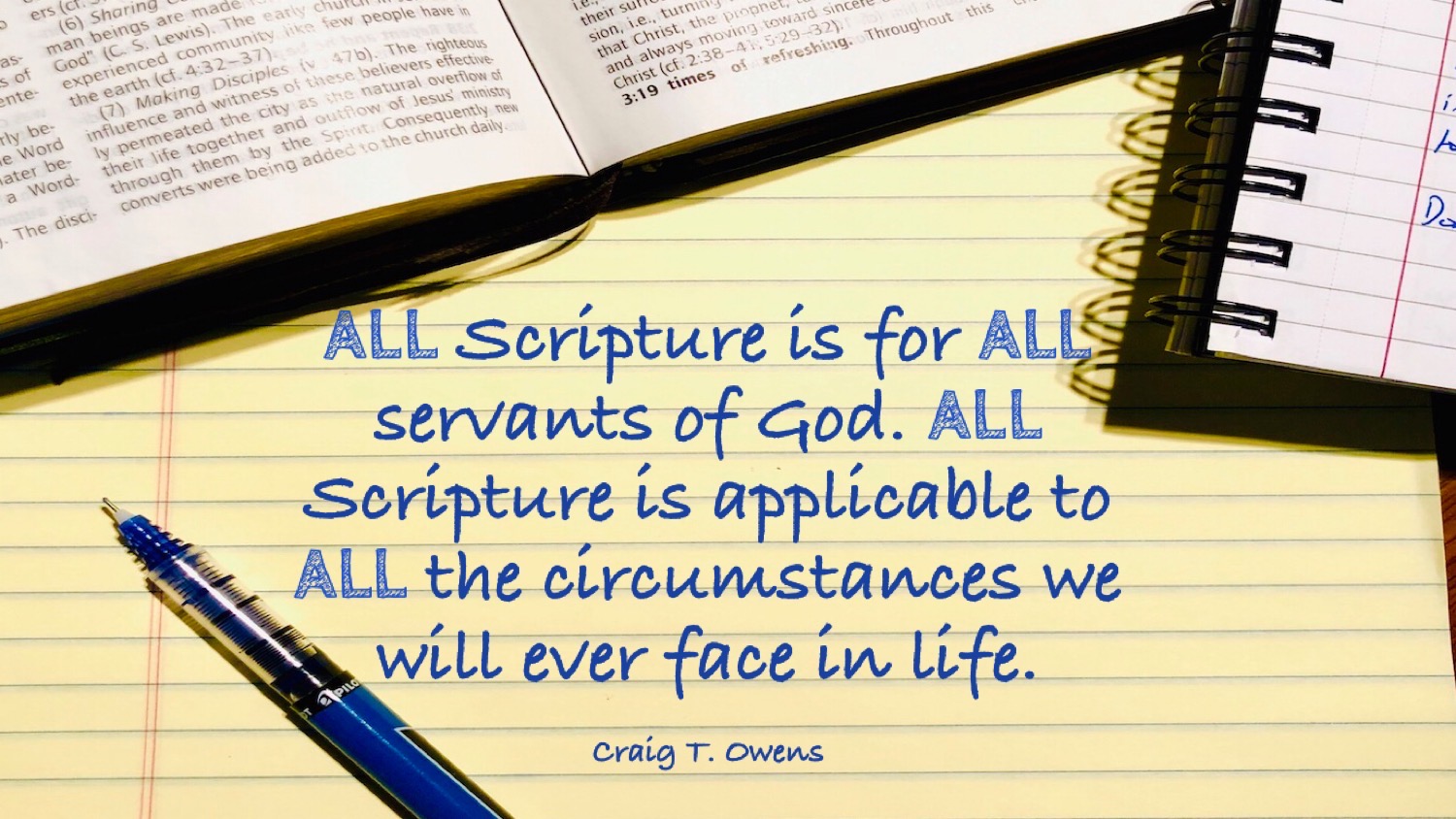
This is important for pastors as they prepare their sermons, but it’s also important for every Christian. We face challenges every day. The Holy Spirit can give us the timeliest of words. The Word of God is the inspired message for us. It is just as relevant and applicable today as it was the day the words were penned. The same Holy Spirit who inspired the authors of Scripture is the same Holy Spirit in us today who will illuminate and apply the Word for us (John 14:26).
Let’s not find our “timely word” from the ever-changing attitudes and opinions of culture, but let us continually go back to the unchanging, always-timely, always-relevant Word of God. That is the only place to find the timeliest of words every single time!
Listen to the podcast of this post by clicking on the player below, and you can also subscribe on Apple, Spotify, or Audible.
Last week we learned that we have a job to do. If we want to see Jesus come back to take us Home, we need to share the Good News with everyone. Jesus said that we didn’t have to obey Him in this Great Commission by ourselves, but we can go in His authority and with the empowerment of the Holy Spirit (Matthew 24:14; 28:18-20; Acts 1:8).
In Acts 1:8 notice that Jesus said we are “be My witnesses.” This isn’t an action first, but they are actions that spring out of who we are. So we need to ask: How are we to be His witnesses? Answer: By being blessed by God!
God has desired that we know the blessing of His presence since the very beginning. He instructed the priests to bless the people with these words:
The Lord bless you and keep you; the Lord make His face shine on you and be gracious to you; the Lord turn His face toward you and give you peace. (Numbers 6:24-26)
The Hebrew word for “peace” in this passage is shalom. One of the most basic definitions for shalom is “nothing missing.” In other words, we are blessed people when we realize there is nothing keeping us back from God’s presence.
If you asked someone in the Old Testament where they thought God’s presence was, they would probably point you to the Tent of Meeting or the Tabernacle in Jerusalem. But that was merely a foreshadowing of what God truly desired for His relationship with us. Jesus promised His followers, “On that day you will realize that I am in My Father, and you are in Me, and I am in you” (John 14:20). So if Jesus is in the Father, and we are in Him, that means we are also in the Father. In this position, we can experience the nearness to the Father that Jesus knows (see Ephesians 1:3-8).
This nearness is our source of peace: Now may the Lord of peace Himself give you peace at all times and in every way. The Lord be with all of you (2 Thessalonians 3:16). In this verse, the Greek word for “peace” is eirene, which means a soul at utter peace with God because it is assured of its eternal Home in God’s presence.
Blessed people are abundance people. Blessed people have all their needs supplied so that they can be a conduit of blessing to others. Our increasing awareness of God’s blessing empowers us to be witnesses for Him.
Let me take you back to the Book of Psalms. In Psalm 67, the psalmist asks for God’s blessing on his life four times in just seven short verses. Why does he desire this blessing? It’s not for himself but for others. Look at just the first two verses of this psalm:
May God be gracious to us and bless us and make His face shine on usTHAT Your ways may be known on earth, Your salvation among all nations.
Recall that Jesus commissioned us to go to all nations and that the Holy Spirit empowers our witness to all peoples. This psalmist is asking for God’s blessing so that he can be a witness to everyone. Nine times he says that he desires that all nations or all peoples will know and worship the Most High God.
God’s blessing on His people is really SO THAT all peoples and nations can see His blessing and turn to Him. One of the roles of the Holy Spirit in a believer’s life is to remind us that we are indeed blessed in Jesus, and that we have a mission to fulfill in taking that blessing to others.
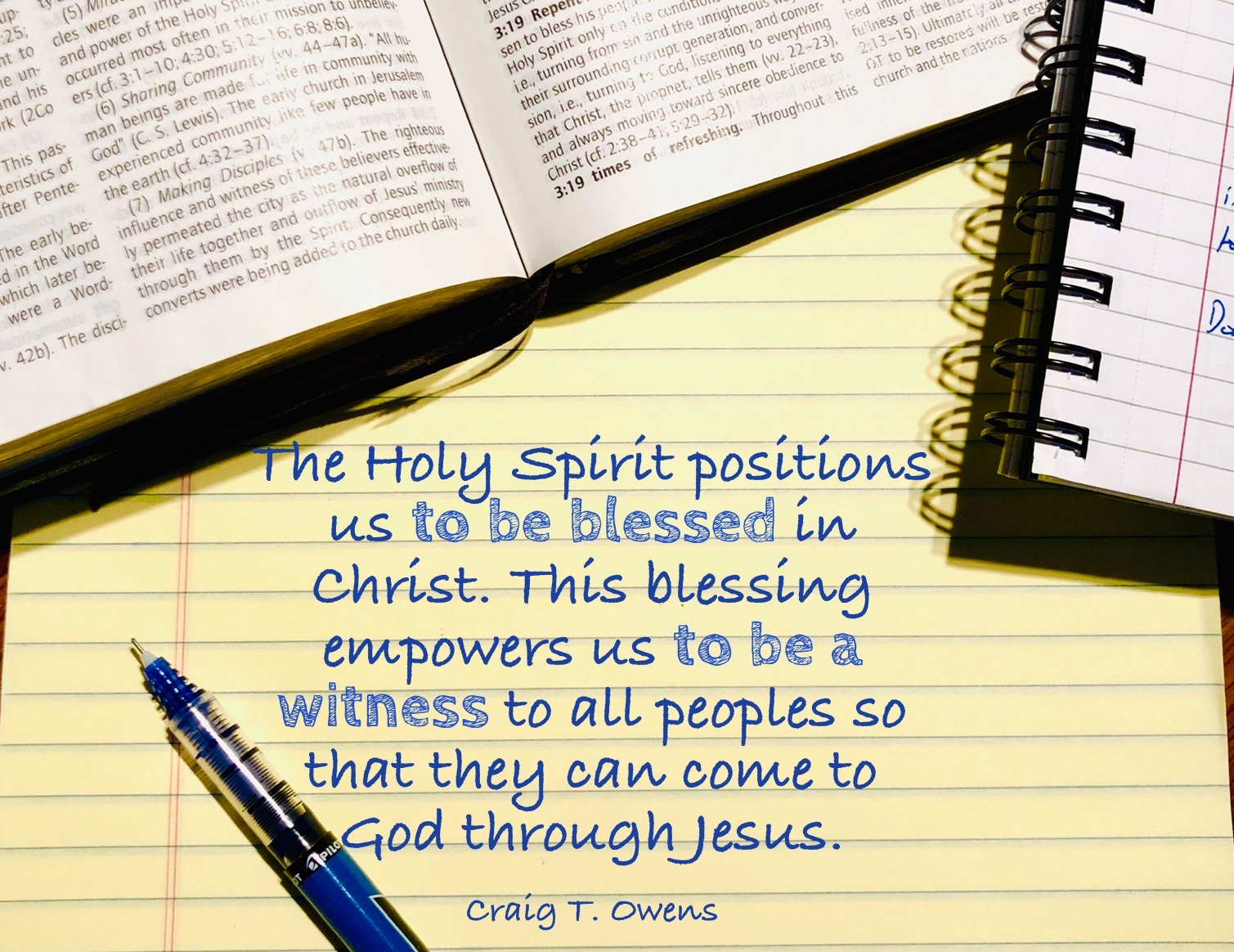
The Holy Spirit positions us to be blessed in Christ. This blessing empowers us to be a witness to all peoples so that they can come to God through Jesus.
It is good for us to pray for the Spirit’s blessing on our lives so that we can BE a blessing to all nations and peoples.
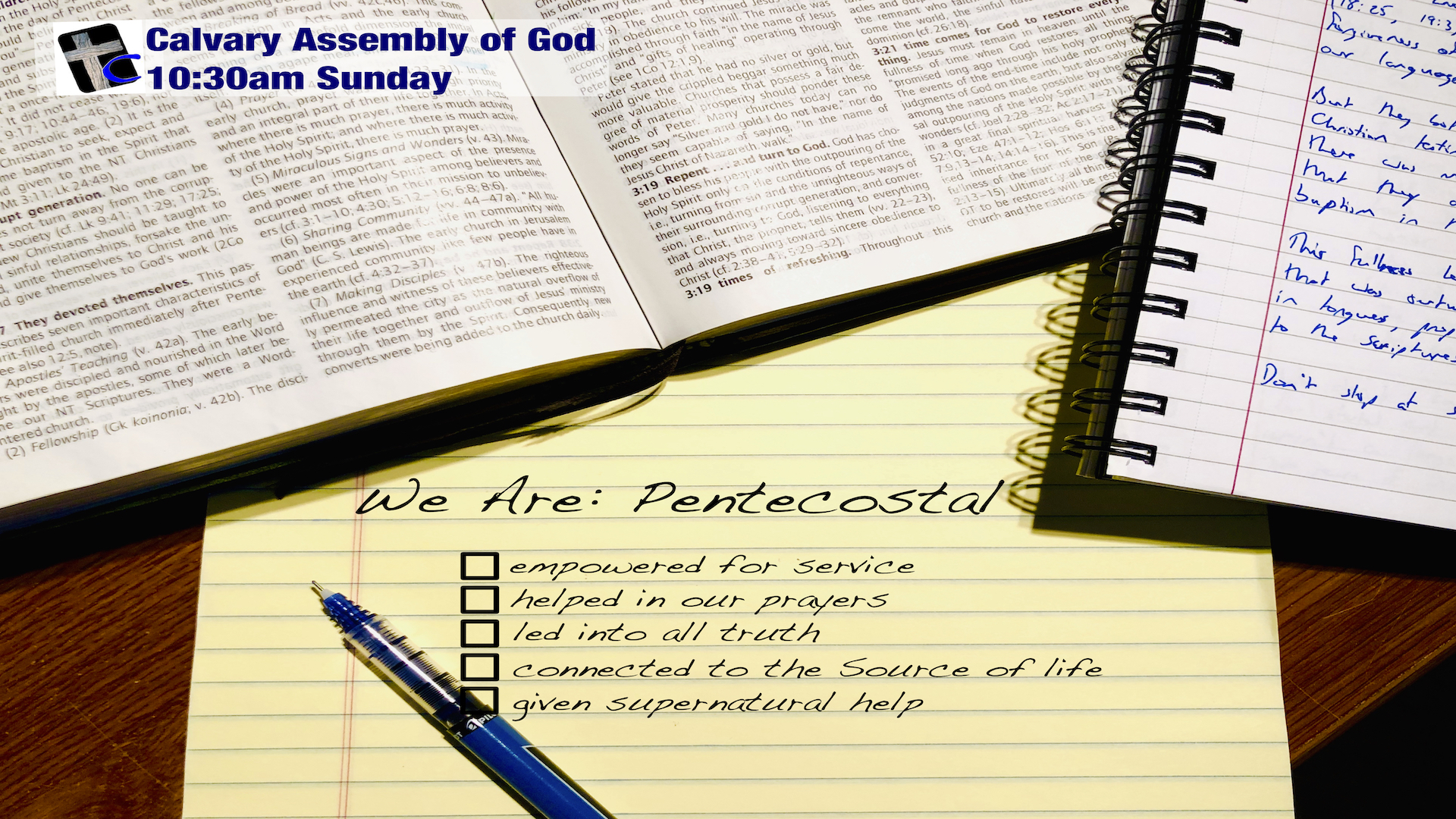
If you would like to check out all of the other messages in our series called We Are: Pentecostal, please click here.
Pentecost for over 1500 years was a celebration in Jerusalem that brought in Jews from all over the world. But on the Day of Pentecost which came just ten days after Jesus ascended back into heaven, the meaning of Pentecost was forever changed!
Followers of Jesus—now empowered by an infilling of the Holy Spirit—began to take the good news of Jesus all over the world. These Spirit-filled Christians preached the Gospel and won converts to Christ even among hostile crowds, performed miracles and wonders, stood up to pagan priests and persecuting governmental leaders, and established a whole new way of living as Christ-followers.
We, too, can be Pentecostal followers of Jesus Christ today. We can experience an anointing and an empowering in our lives that turns ordinary Christianity into extraordinary Christianity!
Please join me this Sunday at Calvary Assembly of God as we rejoin this series. You can check out what I taught in this series in 2019 by clicking here, the messages from 2020 are here, the messages from 2021 are here, and the messages from 2022 are here.
If you were one of Christ’s disciples, wouldn’t you think it would be time for Jesus to take a victory lap? Maybe He could show up at the next meeting of the Sanhedrin, or in Pontius Pilate’s courtroom, or King Herod Antipas’ throne room. You can almost hear their longing for this when they asked Jesus, “Lord, are You at this time going to restore the kingdom to Israel?” (Acts 1:6).
Jesus answered that question by saying, “Your race is just now beginning!” You see, Christ’s resurrection wasn’t the end of the race, but an important—absolutely indispensable—part of our ongoing race. “I will be raised back to life again” was a bold claim, but it wasn’t the final bold claim. There is one more for us to consider.
The resurrection of Jesus is our assurance that what Jesus says He will do, He will do. One of the things He promised is, “I am going to prepare a place for you and I will come back to get you” (John 14:1-3). The place Jesus has prepared for us is the end of our race—the finish line for which every Christian should be longing.
The disciples asked Jesus how they could know when His return was getting closer. He gave them a lot of things to watch for, but He concluded by saying, “And this gospel of the kingdom will be preached in the whole world as a testimony to all nations, and THEN the end will come” (Matthew 24:14).
In order for us to go Home, the whole world—people in all nations—have to hear the Good News of the Kingdom of God.
In one of the boldest claims of all, Jesus says He has ultimate authority, and that He is commissioning us to use His authority for the express purpose of our missionary work to all nations. Notice the “therefore” which indicates what we are to do with His authority—
All authority in heaven and on earth has been given to Me. Therefore go andmake disciples of all nations, baptizing them in the name of the Father and of the Son and of the Holy Spirit, and teaching them to obey everything I have commanded you. And surely I am with you always, to the very end of the age. … But you will receive power when the Holy Spirit comes on you; and you will beMy witnesses in Jerusalem, and in all Judea and Samaria, and to the ends of the earth. (Matthew 28:18-20; Acts 1:8)
The apostle Paul appreciated this analogy of running a race. Just before it was time for Paul to go Home, he told his friend Timothy, “I have fought the good fight, I have finished the race, I have kept the faith” (2 Timothy 4:7).
Earlier in his life, Paul used a running example when he wrote to the Christians at Corinth—
Do you not know that in a race all the runners run, but only one gets the prize? Run in such a way as to get the prize. Everyone who competes in the games goes into strict training. They do it to get a crown that will not last, but we do it to get a crown that will last forever. Therefore I do not run like someone running aimlessly; I do not fight like a boxer beating the air. No, I strike a blow to my body and make it my slave so that after I have preached to others, I myself will not be disqualified for the prize. (1 Corinthians 9:24-27)
Paul gives us three don’ts and three dos in this passage:
Don’t fail to train, don’t run aimlessly, don’t get disqualified by focusing on the temporal
Do go into strict training, do stay focused on the eternal, do run for the prize of hearing Jesus say, “Well done!”
Do you want to go Home? Do you want Jesus to come again to take all of His children Home? Then finish the race of telling everyone in the whole world the Good News about Jesus.
Listen to the podcast of this post by clicking on the player below, and you can also subscribe on Apple, Spotify, or Audible.
On Resurrection Sunday, Christians celebrate an event that is the foundational truth for all of the Bible and for the Christian faith which springs from the Scriptures: The resurrection of Jesus.
If Jesus wasn’t resurrected, this is a terrible, cruel lie we are perpetuating. If Jesus was resurrected, we have been given the key to eternal life. No one has ever made the bold claims that Jesus made about His own death and resurrection and then backed them up!
On the Sunday morning after Jesus was crucified, some women arrived at His tomb to finish preparing His body for burial, but Luke records something fascinating: “They did not find the body of the Lord Jesus” (Luke 24:1-8).
Think about this in a modern-day setting. If you were at the bedside of your loved one when they took their last breath, if you heard the doctor pronounce them dead, if you were at the funeral and saw their body in a casket, and if you saw that casket closed, sealed, and lowered into the ground, you would have every reason to find a body if that casket were re-opened.
These women were on Golgotha when Jesus died, they saw the Roman soldiers verify His death, they witnessed Joseph and Nicodemus wrap His body in linen strips, and they saw His body placed in a sealed tomb.
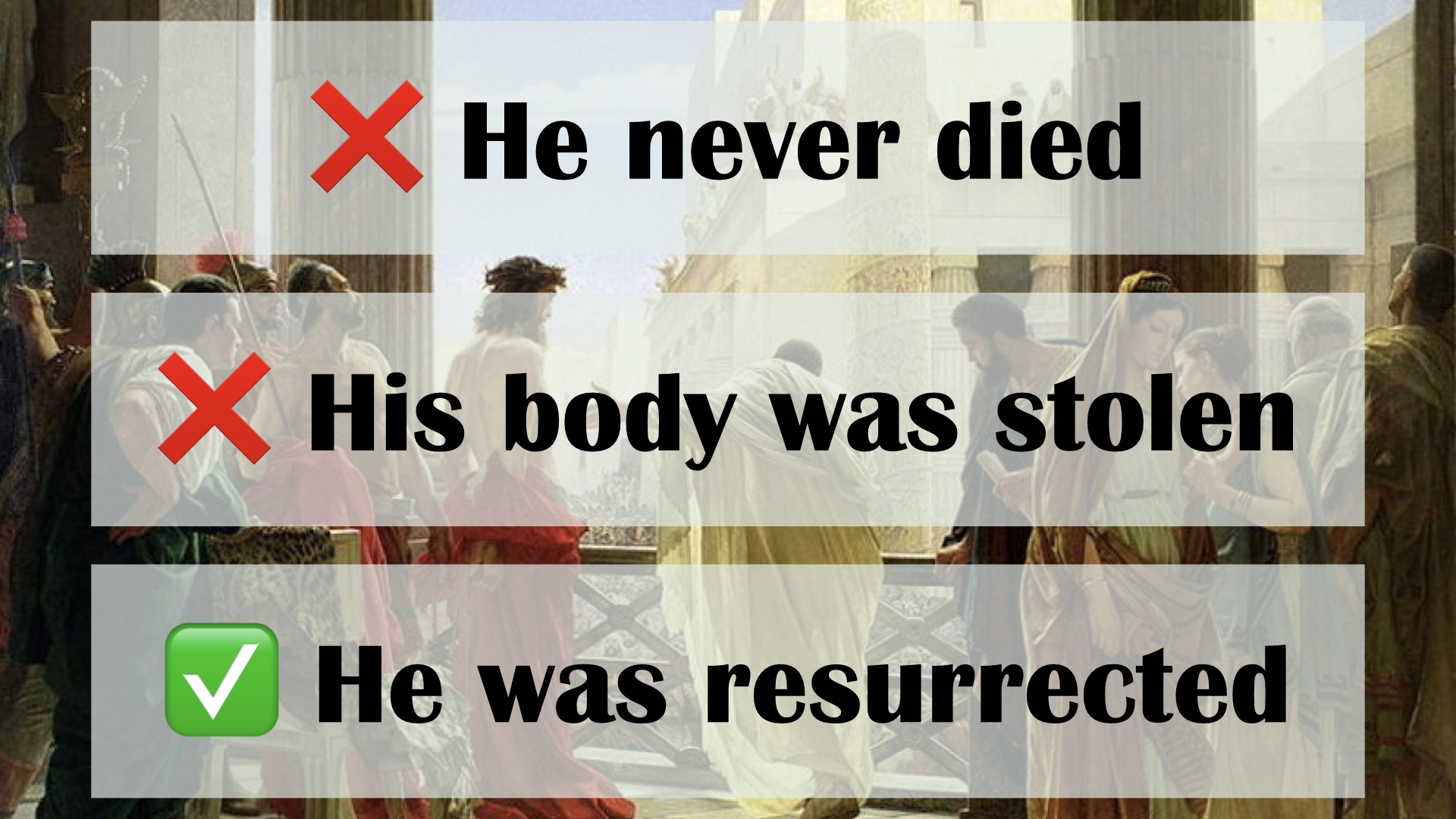
Then when there is no body where the dead body of Jesus is expected, there are only three possibilities:
(1) He never died
Medical experts have concluded that the horrific torture that Jesus endured prior to even being crucified resulted in significant blood loss, and would have put His body in shock. Then the strain on His weakened body during crucifixion would have resulted in His body experiencing either pleural effusion or cardiac effusion, which is attested to by the flow of “blood and water” from Jesus’ dead body when His side was pierced by a Roman spear (John 19:34).
The dead body of Jesus was thoroughly examined by both the Romans who conducted the crucifixion and His friends who prepared His body for burial (Mark 15:43-45; John 19:38-40). And two contemporary historians—Tacitus and Josephus—who were unfriendly to the cause of Christianity both attested to Christ’s death by crucifixion.
(2) His body was stolen
The Sanhedrin was so insistent on Jesus being crucified, they wouldn’t have left the “conspiracy” option open. So they convinced Governor Pontius Pilate to allow them to both seal the tomb and place a group of soldiers outside the tomb to guard it (Matthew 27:62-66). It is highly unlikely that the disciples who fled before the temple guard and who were now locked in a room because they were quaking with fear would somehow gain the courage to undertake a mission to steal Jesus’ body. Nor is it likely that they could have escaped the notice of the highly-trained Roman soldiers guarding the tomb.
(3) He was resurrected
The angels at the empty tomb reminded the women that Jesus had foretold both the manner of His death and the assurance of His resurrection. Jesus described His death in detail multiple times, including such key details as His death would be in Jerusalem, the religious leaders would pronounce a death sentence but the Romans would crucify Him, and that He would be resurrected three days later (Matthew 20:18-19; Luke 18:31-33). In addition, Paul tells us that there were hundreds of eyewitnesses to the resurrected Jesus (1 Corinthians 15:3-8).
Jesus said, “The reason my Father loves Me is that I lay down My life—only to take it up again. No one takes it from Me, but I lay it down of My own accord. I have authority to lay it down and authority to take it up again. This command I received from My Father” (John 10:17-18).
If Jesus foretold this and fulfilled this, we can also trust His other promises. Assurances such as:
He is preparing an eternal home for us and He will come back to take His followers there
That He alone holds the keys to Death and Hades
And that only those who have been cleansed from their sins will be able to enter Heaven
The bold claim that Jesus would be resurrected back to life is adequately backed up by the events on Resurrection Sunday! So now we can say that believing the bold claim of Christ’s resurrection gives us hope for the future and reason to tell others about Him!
There is a man that we meet in just a couple of verses of Scripture. We know that he is a Roman centurion. I gave him an appropriate Roman name of Vitellius. I created a fictional backstory for this centurion, but all of the events are well documented in both biblical history and contemporary history books of the time. I have listed below all of the scripture references that you may want to consult, along with some quotes from notable historians.
What isn’t fictional is the fact that the Cross didn’t happen to Jesus, but He came to make Calvary happen.
Jesus said this about His crucifixion, “And I, when I am lifted up from the earth, will draw all people to Myself” (John 12:32). That’s what happened to the thief, and to the centurion Vitellius, and to me, and to all who have acknowledged that Jesus is the Savior.
Vitellius’ bold claim on the day Jesus was crucified still rings true 2000 years later: “Certainly this was a righteous Man!”
Looking at Jesus who was lifted up on that Cross, we can appreciate the beauty of the 700-year-old prophecy about Him:
He had no beauty or majesty to attract us to Him, nothing in His appearance that we should desire Him. He was despised and rejected by mankind, a man of suffering, and familiar with pain. Like one from whom people hide their faces He was despised, and we held Him in low esteem. Surely He took up our pain and bore our suffering, yet we considered Him punished by God, stricken by Him, and afflicted. But He was pierced for our transgressions, He was crushed for our iniquities; the punishment that brought us peace was on Him, and by His wounds we are healed. (Isaiah 53:2-5)
Which is what we celebrate in Communion still to this day. “And [Jesus] took bread, gave thanks and broke it, and gave it to them, saying, ‘This is My body given for you; do this in remembrance of Me.’ In the same way, after the supper He took the cup, saying, ‘This cup is the new covenant in My blood, which is poured out for you’” (Luke 22:19-20).
The way Christians live today can still lift Jesus up for all to see. Jesus told His followers, “Whoever wants to be My disciple must deny themselves and take up their cross and follow Me. For whoever wants to save their life will lose it, but whoever loses their life for Me will find it” (Matthew 16:24-25).
When we live this way, our lives become the aroma of life to even sin-hardened thieves and war-hardened soldiers.
Check out this video of Vitellius’ personal experience—
Here are some further resources for you to check out:
Historian William Barclay wrote this about the centurions, “The centurions were the backbone of the Roman army. In a Roman legion there were 6,000 men; the legion was divided into sixty centuries, each containing 100 men, and in command of each century there was a centurion. These centurions were the long-service, regular soldiers of the Roman army. They were responsible for the discipline of the regiment, and they were the cement which held the army together. … A centurion was the equivalent of a regimental sergeant-major; and the centurions were the backbone of the Roman army.”
Listen to the podcast of this post by clicking on the player below, and you can also subscribe on Apple, Spotify, or Audible.
When Luke says first that “Jesus grew in wisdom” before he mentions any of the other ways Jesus grew, that is our indication that a healthy mind is at the foundation for every other aspect of health (Luke 2:52). If you’ve missed the mental health keys we’ve already learned, you can review them by clicking here.
It’s been said that lions are tamed with a chair. Specifically, with the legs of the chair. These powerful animals are trying to focus on too many points at one time which keeps them from initiating an attack. So they are not so much “tamed” as they are paralyzed and overwhelmed by trying to concentrate on too many things.
It’s the same with us: If we try to concentrate on every voice speaking to us, we’ll become overwhelmed and paralyzed. “The Bible says this … my Mom says that … my best friend told me to try … my agnostic coworker said I should….” It’s overwhelming and mentally draining! Just like our bodies can become exhausted, so can our minds. Exhausted bodies are susceptible to germs, and so are exhausted minds susceptible to unhealthy ideas.
Consider all of the voices Jesus had to deal with in His last days heading toward Calvary. From about 4 months out, things really began to intensify. He still had the voices of His critics constantly harping on Him, and I’m sure the devil was still looking for his “opportune time” (Luke 4:13), not to mention all of the other voices around Jesus. There are two important principles to keep in mind here:
God can speak truth to us through harsh, unfriendly voices
The devil can lie to us through kind, friendly voices
So we cannot automatically listen to or ignore messages because of who the messenger is.
The friendly voice of Peter told Jesus, “You are the Messiah!” To which Jesus replied, “The Holy Spirit revealed that to you. Now let me remind you that we are heading to Jerusalem where I am going to be crucified.”
The now not-so-friendly voice of Peter then rebuked Jesus, “Never, Lord! This shall never happen to You!” Jesus turned to Peter to say, “Get behind Me, satan! You are a stumbling block to Me; you do not have in mind the concerns of God, but merely human concerns.”
The Father gave Peter, James, and John a glimpse of the glory Jesus would have when He was resurrected from the dead when they saw Him transfigured. During this time Moses and Elijah affirmed that Jesus was headed to Jerusalem to fulfill all that was prophesied about Him. In the aftermath of His transfiguration, Jesus again repeated, “I am going to be crucified and resurrected.”
As Jesus entered Jerusalem on the day we now celebrate as Palm Sunday, people cheered and the religious leaders jeered. To both groups, Jesus once again affirmed His mission, “I am going to be crucified and resurrected.”
No matter what others said or did, Jesus never changed His tune. How did He keep clear about the mission He was on? He simply compared every voice with God’s voice. Jesus never changed His tune because He was in tune with the Father’s voice.
Years ago, I played the tympani in our church orchestra. I learned very quickly that the best way to tune these big kettle drums was to put my face close to the drumhead while I hummed the proper note. Then as I adjusted the tuning pedal, I knew I had the tympani tuned to the right note when what I was humming resonated back to me from the drumhead.
At the Transfiguration, the Father told the disciples to listen to the voice of Jesus. Jesus claimed that He only said and did what the voice of His Father resonated to Him. And Jesus told us that His sheep know and follow His voice in the same way (Luke 9:35; John 12:49-50; John 10:3-5).
The Book of Psalms opens with these words:
Blessed is the one who does not walk in step with the wicked or stand in the way that sinners take or sit in the company of mockers, but whose delight is in the law of the Lord, and who meditates on His law day and night. (Psalm 1:1-2)
The word meditate can be translated as “hum.” When we read and study God’s Word, the Holy Spirit will help us know which voices are in-tune with the Father’s heart and which ones are out-of-tune. You can check out a great example of this from the life of the apostle Paul in Acts 20:22-24; 21:10-15.
So our important mental health reminder is this: To make sure we are listening to the right voices, tune your ear to the voice of the Holy Spirit. Then receive any voice that resonates with that tune, and reject any voice that is out of key.
If you would like to download the graphic of this reminder for your phone, simply leave me a comment with the model of the phone, and I’ll get the right-sized graphic right out to you. If you’ve missed any of the messages in our mental health series, you can find all of them by clicking here.
Listen to the podcast of this post by clicking on the player below, and you can also subscribe on Apple, Spotify, or Audible.
Caiaphas’ bold claim couldn’t be backed up, but every bold claim Jesus made was backed up. In the process of looking at those claims, we’ve actually already read another bold claim—one that was repeated three times. It is a bold claim made by the Roman governor Pontius Pilate.
When Jesus was first brought to Pilate, he attempted to “pass the buck” by sending Jesus to King Herod Antipas. Since Herod sent Jesus right back to Pilate, the governor took that as support for his bold claim. Check out what Pilate said:
I have found no basis for your charges against Jesus
neither has Herod
Jesus has done nothing to deserve death
I have found in Him no grounds for the death penalty (Luke 23:13-22)
Even Pilate’s wife supported him by saying, “Don’t have anything to do with that innocent Man” (Matthew 27:19).
Pilate’s role in this case was as a modern-day judge. A judge weighs the evidence from the prosecution, compares that with the laws on the books, weighs the evidence from the defendant, and then makes his ruling. Pilate rules multiple times: Not guilty. But the accusers keep coming back with their loud voices but no more evidence. Even though “[Pilate] knew it was out of self-interest that they had handed Jesus over to him” (Matthew 27:18), the shouts of the religious leaders finally prevailed (Luke 23:23-25).
Why was Pilate’s claim of the innocence of Jesus so bold? Because the Bible tells us, “ALLhave sinned and fall short of the glory of God” (Romans 3:23).
These religious elites had been trying to find an accusation against Jesus almost since the beginning of His public ministry. Many of these same accusers were present on the day they hauled a woman caught in the act of adultery before Jesus (John 8:2-11). They claimed she deserved to be stoned to death, but Jesus simply said, “Let those without any sin throw the first stone at her.” Jesus once again allowed His eloquent silence to work on their hearts, as they knew that not one of them was without sin, so they all dropped their stones and left.
Jesus freed this woman from her sin when He refused to condemn her. After all, He was the only sinless One who could have been justified in throwing the first stone, but He knew that “God did not send His Son into the world to condemn the world, but to save the world through Him” (John 3:17).
Jesus doesn’t condemn us, but He doesn’t want us to stay in our sin either, which is why He then told this woman, “Go now and leave your life of sin.”
Jesus called all of us to live a perfect life: “Be perfect, therefore, as your heavenly Father is perfect” (Matthew 5:48). Yet like those men in John 8, we all would have to drop our stones and leave.
And satan loves to remind God’s saints of this. John shares with us that “the accuser of our brothers and sisters…accuses them before our God day and night” (Revelation 12:10). The accuser wants to keep us trapped in the guilt of our sin—wants to see us condemned to an eternity separated from God’s presence.
But when someone has placed their faith in the sacrifice Jesus made for us with His death on the Cross, Jesus takes us into Himself and there is now no condemnation for those IN Jesus because there is nothing in Jesus to be condemned! Because of what Jesus did, it’s not us who is condemned, but sin is condemned! As a result, we no longer have to live according to the sinful nature and suffer the condemnation of sin, but instead when we are in Jesus, “the righteous requirements of the law” are fully met in us (see Romans 8:1-4).
We cannot do this on our own, but only through the power of the blood of Jesus. Look at the rest of this passage from Revelation: “For the accuser of our brothers and sisters, who accuses them before our God day and night, has been hurled down.They triumphed over him by the blood of the Lamb” (Revelation 12:10-11).
What amazing news! The writer of Hebrews gives us more details in this passage:
For by one sacrifice [Jesus] has made perfect forever those who are being made holy. The Holy Spirit also testifies to us about this. First He says: “This is the covenant I will make with them after that time, says the Lord. I will put My laws in their hearts, and I will write them on their minds.” Then He adds: “Their sins and lawless acts I will remember no more.” (Hebrews 10:14-17)
When we are in Jesus—when we have accepted by faith His work on the Cross—God can make the same bold claim to the devil that Pilate made to the religious leaders: “I find no basis for a charge!” This is how we can then fulfill the righteous requirement Jesus gives us to “Be perfect, therefore, as your heavenly Father is perfect.”
Listen to the podcast of this post by clicking on the player below, and you can also subscribe on Apple, Spotify, or Audible.
As we near the crucifixion of Jesus, we begin to see how politics plays a role in so many decisions. The Sanhedrin is trying to balance their popularity with the Jewish people and their standing with powerful leaders in the Roman government. Pontius Pilate is trying to balance how the Sanhedrin portrays him to the Jewish people and what those in Rome are telling Caesar Tiberius about him. King Herod Antipas also has issues with balancing the pressure from the Sanhedrin with the popularity of Jesus.
Luke gives us a very telling statement about the politics of the day when he writes, “That day Herod and Pilate became friends—before this they had been enemies” (Luke 23:12). How did they become friends over this issue of what to do with Jesus? Remember that the Sanhedrin is a common thorn-in-the-side for both of them, and the political axiom that still holds to this day says, “The enemy of my enemy is my friend.”
I point out all of the political maneuverings during this pivotal time because these political balancing acts are still being played out today and Christians will end up in the crosshairs.
Pilate was trying to appease the Sanhedrin but there was no Roman law that Jesus had broken that was deserving of the death penalty they were demanding. So twice Pilate tells these religious leaders, “I will punish Him and then release Him.” In fact, without waiting for their approval, Pilate subjects Jesus to the tortuous punishment known as flagellation (Luke 23:13-22; John 19:1-11).
I think Pilate believed that if they saw Jesus so humiliated and beaten down they would back off from their desire for His death. But Pilate miscalculated their commitment to seeing Jesus eliminated from the scene.
Pilate finally gives in and says, “You take Him and crucify Him. As for me, I find no basis for a charge against Him.” But the Jewish religious leaders insisted, “We have a law, and according to that law He must die, because He claimed to be the Son of God.”
If you have ever watched a movie about the gladiatorial games in the Roman Colosseum, you’ve probably viewed the scene where one combatant is disarmed and helpless. Before the victor strikes his deathblow he will look to Caesar in the stands. The Roman Caesar will either give a thumbs-up signal to pardon the victim or he will give a thumbs-down signal to send the defeated one to their death.
Pilate asks Jesus, “Don’t You realize I have power either to free You or to crucify You?”
There was another king who called himself “king of kings” but God called him “My servant.” He was King Nebuchadnezzar of Babylon. Daniel, an exile from Israel who was Nebuchadnezzar’s prime minister, reminded him where his authority originated, “The Most High is sovereign over all kingdoms on earth and gives them to anyone He wishes” (Daniel 4:17).
In the same way, Jesus addressed Pilate, “You would have no power over Me if it were not given to you from above.”
John Piper wrote: “This does not intimidate Jesus because Pilate’s authority over Jesus is subordinate to God’s authority over Pilate. Jesus gets His comfort at this moment not because Pilate’s will is powerless, but because Pilate’s will is guided. Not because Jesus isn’t in the hands of Pilate’s fear, but because Pilate is in the hands of Jesus’s Father.”
Jesus shows us an important principle: Should we respect our leaders (even the ungodly ones)? Yes! Should we fear them? No!
We don’t fear them because their power is limited to just this life and is under the control of the Most High God (Luke 12:4). Peter and John learned this lesson well, as we see in their interaction with the same Sanhedrin that turned Jesus over to Pilate (see Acts 4:1-10). What Jesus and these apostles demonstrate for us is respectful boldness.
In light of this, here are five things Christians should keep in mind. When persecution comes against us, we should respond like this:
Jesus taught us there is a time for eloquent silence, but when the Holy Spirit needs us to speak, He will give us the respectfully bold words to share. Jesus said,
On My account you will be brought before governors and kings as witnesses to them and to the Gentiles. But when they arrest you, do not worry about what to say or how to say it. At that time you will be given what to say, for it will not be you speaking, but the Spirit of your Father speaking through you. (Matthew 10:18-20)
Respectful? Yes. Fearful? No. Respectful, loving, prayerful boldness is how we will glorify the Most High God in the face of persecution.
Listen to the podcast of this post by clicking on the player below, and you can also subscribe on Apple, Spotify, or Audible.
We’ve just looked at two back-to-back bold statements of Jesus. To the Sanhedrin, He said, “I am the I AM,”and to Pontius Pilate, He said, “I am a king.” Christ’s third bold claim essentially amounts to, “And I don’t have to prove either of these to you; I don’t have to argue with you about it.”
After He was arrested, there was a back-and-forth shuttling of Jesus from the Sanhedrin to Pilate, then from Pilate to King Herod, and then back to Pilate again. Pilate told the Sanhedrin, “I find no basis for a charge against Him.” But the Sanhedrin countered, “But He is stirring up trouble all the way from Galilee to here in Jerusalem!” (see Luke 22:67-23:11).
Pilate was looking for “an out”—a way he could safely discharge or punish Jesus that would keep both the Sanhedrin and his Roman superiors happy. So when Pilate heard that Jesus was from Galilee, he was more than happy to pass this “hot potato” to King Herod. When Jesus was hauled before Herod, we read that he was greatly pleased to see Jesus.
Why was that? To answer that question, we need to understand who Herod was. His name is Herod Antipas, and he was the son of Herod the Great. Herod the Great was king when Jesus was born, and he was the one who attempted to kill Jesus.
Herod Antipas was infamous for having seduced his sister-in-law Herodias, whom he married after divorcing his wife. Shortly after this, Herod arrested John the Baptist for calling out this marriage as sinful. Herodias especially was embarrassed by this and wanted John killed, but Herod feared the backlash from the people if he did this. Eventually Herodias got her way and Herod was forced to have John beheaded (Matthew 14:5; Mark 6:17-28).
When news about Jesus began to reach his ears, Herod thought that Jesus was John reincarnated and he wanted to see him (Luke 9:9). So now when Jesus is brought before him, Herod is looking for a magic trick—Jesus remains silent. Then the religious leaders resume their accusations against Jesus, and still He remains silent. Then Herod and his soldiers began mocking and ridiculing Jesus, and amazingly, He still doesn’t say a word.
Jesus knew the Scriptures that make it clear that there is nothing to be gained by bantering with fools. For instance, Solomon wrote,
Do not answer a fool according to his folly, or you yourself will be just like him. … Don’t waste your breath on fools, for they will despise the wisest advice. (Proverbs 26:4, 23:9).
So here is the next bold claim from Jesus: {Eloquent silence.}
Even in the face of accusation, ridicule, and mocking, Jesus refused to engage in meaningless arguing with Herod or the Sanhedrin’s false witnesses. His silence was so eloquent that it got the attention of Governor Pilate:
“Then Pilate asked [Jesus], ‘Don’t You hear the testimony they are bringing against You?’ But Jesus made no reply, not even to a single charge—to the great amazement of the governor.” (Matthew 27:13-14)
Let’s learn from Jesus: Sometimes the best thing to say is NO thing!
Peter pointed Christians to this example of Jesus when he wrote—
To this you were called, because Christ suffered for you, leaving you an example, that you should follow in His steps. “He committed no sin, and no deceit was found in His mouth.” When they hurled their insults at Him, He did not retaliate; when He suffered, He made no threats. Instead, He entrusted Himself to Him who judges justly. (1 Peter 2:21-23)
Jesus called us to let our good deeds shine brightly to bring glory to God. Fools will ridicule and mock and accuse us, just as the religious crowd did to Jesus. Let’s not let our bantering with fools put out the light of our testimony.
When I was a little kid in Sunday School, we used to sing a song called This Little Light Of Mine. We would hold up our pointer finger like a candle as we sang.But holding up our pointer finger across our lips is also a way to let our light shine too. Your silence in the face of foolish ridicule will speak so eloquently!
Let’s learn this lesson from Jesus. Instead of bantering with fools, entrust yourself to the perfect Judge who is perfectly keeping track of every word. He is the One who can add eloquence to your silence as you shine brightly for Him.



 Jesus began to speak to them in parables… (Mark 12:1).