Good Grief From A Friend

Listen to the podcast of this post by clicking on the player below, and you can also subscribe on AppleSpotify, or Audible. 

After God created Adam, He said, “It’s not good for you to be alone.” That’s just as true today: God didn’t intend for us to journey on our own, but He gives us companions along the way. 

Last week we saw that God has to sometimes cause us grief to get our attention when we are straying from His path. He sometimes puts people in our lives to do the same thing. 

There’s a reason God puts the people in our lives that He does. We are called to speak the truth in love (Ephesians 4:15). But that sometimes means people will get upset with us (Galatians 4:16). “Real friends hurt each other. … Truth is the primary way faithful friends should wound each other—it is the help that hurts.” —Dick Brogden 

(Check out all of the verses in this post by clicking here.) 

The Corinthians thought they were super-spiritual, but Paul had to call them out on their foolishness (1 Corinthians 3:3; 5:1-2). Before Pauls’ letter, the Corinthians seemed happy. His letter caused them grief, but it was good grief that led to repentance and true joy (2 Corinthians 7:8-10). 

To keep silent when a brother or sister is straying is not God-honoring. We are not to be the sin police, but we are to address sinful issues (James 5:19-20). 

As King David flirted with the idea of how he could get something that he thought would make him happy, an anonymous attendant tried to get his attention. David ignored this and then tried to sweep it under the rug. In fact, he thought he got away with his sin (2 Samuel 11:1–12:7). 

But God sent Nathan to speak a hard word to David. We don’t know when Psalm 141 was written, but we know that David did write it. Perhaps it was penned at the time of Nathan’s loving confrontation. He said, “Let a righteous man strike me—that is a kindness; let him rebuke me—that is oil on my head” (Psalm 141:5). 

We do know that David wrote Psalm 51 after Nathan’s loving hard word, and in this prayer we see David’s confession, repentance, and a request for God’s joy to replace David’s grief. 

So how do New Testament-era Christians use good grief to help fellow saints? 

  1. Examine yourself first (Matthew 7:1-5). Make sure you aren’t plagued by the same sin you have noticed in a brother or sister. 
  2. Cry before you confront, just as the prophet Samuel did before he had to deliver a hard word to King Saul (1 Samuel 15:10-11). 
  3. Confront in love with the goal of restoration, but make sure you are confronting someone who know you love them and who will receive your loving word  (Proverbs 27:5; 9:8). 
  4. Pray that their grief will be turned to joy (Luke 22:31-32; Galatians 6:1; Psalm 51:12). 

Friendships with fellow saints are precious and they are vital. We need iron to sharpen iron (Proverbs 27:17) so that we will all stand before the throne together for eternity. 

This is the final message in our series Grief Into Joy. If you missed any of the messages, you can check them all out by clicking here. 

►► Would you please prayerfully consider supporting this ministry? My Patreon supporters get behind-the-scenes access to exclusive materials. ◀︎◀︎
Confronting To Restore

Listen to the podcast of this post by clicking on the player below, and you can also subscribe on AppleSpotify, or Audible. 

If an organization is going to grow in a healthy way, leaders must learn how to correctly address wrong attitudes and behaviors. They do this best when they use confrontation only as a means to restoration. 

You can watch or listen to the full conversation Greg and I had on this topic on this episode of The Craig and Greg Show. 

You may also be interested in a couple of previous posts I have shared: 

And to really go deep on this topic, please check out my book When Sheep Bite. 

►► Would you please prayerfully consider supporting this ministry? My Patreon supporters get behind-the-scenes access to exclusive materials. ◀︎◀︎

Exposing The Bitterness Of Gossip

Listen to the podcast of this post by clicking on the player below, and you can also subscribe on AppleSpotify, or Audible. 

A bite we have all experienced is gossip. We called flattery the sneaky bite, but I think gossips believe they are actually being sneaky—that somehow they are getting away with their gossip.  I think gossip is also sneaky because we can be pulled into a gossipy conversation almost without realizing what is happening. 

That’s because gossip usually has a veneer of truth on it. That thin coating of truth may be sugary sweet, but the words hide a bitter poison that is intended to undermine the one that is being talked about. Twice Solomon says, “The words of a gossip are like choice morsels” (Proverbs 18:8, 26:22). The Contemporary English Version translates this verse even more graphically: “There’s nothing so delicious as the taste of gossip! It melts in your mouth.” But Solomon also warns, “A perverse person stirs up conflict, and a gossip separates close friends” (Proverbs 16:28). 

Consider the story in Numbers 12:1-9. 

(Check out all of the Scriptures in this post by clicking here.)

Moses had married a Cushite woman, a marriage that was neither morally nor legally wrong. If someone simply said, “Moses married a woman from Cush” they would have been speaking the truth. The gossips (Miriam and Aaron) want to use a truthful statement for the purpose of making a case to prove their point. These siblings crossed the line when they stopped talking about the idea and start talking about Moses. This is especially true when their conversation about Moses was to make him look inferior or to make themselves look superior. 

I think a label that is very apropos for this is “character assassination.” An assassin gets close enough to strike, but also has an alibi to cover themselves. So, too, the gossip can inject their poison to denigrate someone’s character, but then use the alibi of saying, “What? Did I say something untruthful?” 

There is truth in their questions that God has used all three of them to delver messages and to sing worship songs, but in light of their statement in verse 1 they are clearly asking these questions with poisonous intent. You can especially spot gossip by this characteristic sign: They talk about a person, but they won’t talk to that person. We are not told to whom Miriam and Aaron may have been speaking to in verse 2, but it certainly wasn’t Moses. That means they were trying to get other people to rally to their side. 

When we have been the target of a gossip’s words, we should follow the example that Moses gave us.  

  1. Remember that God has heard the gossip (Numbers 12:2b, 4-8). 
  2. Check your pride (v. 3). If you feel you must address the gossip, you must address the topic without attacking the gossiper (see Romans 12:17-18). 
  3. Be careful of who you are correcting. It’s best to let God do the correcting (Numbers 12:8-9), but if do need to speak to the person, be cautious of adding fuel to the fire (Proverbs 9:7-9). 
  4. Desire restoration. Moses interceded for Miriam’s healing (Numbers 12:13), and Jesus has the idea of restoration and unity in the Church in mind in Matthew 18:15-16. 
  5. Stay away from the unrepentant gossiper. If the gossiper doesn’t acknowledge their sin, we have to limit our interaction with that sheep (Matthew 18:17) . After Miriam was healed of her leprosy, there is no other mention of her until she died which is probably an indication that Moses didn’t have any additional conversations with her. Paul gave Timothy similar counsel about Alexander (1 Timothy 1:19-20; 2 Timothy 4:14-15).

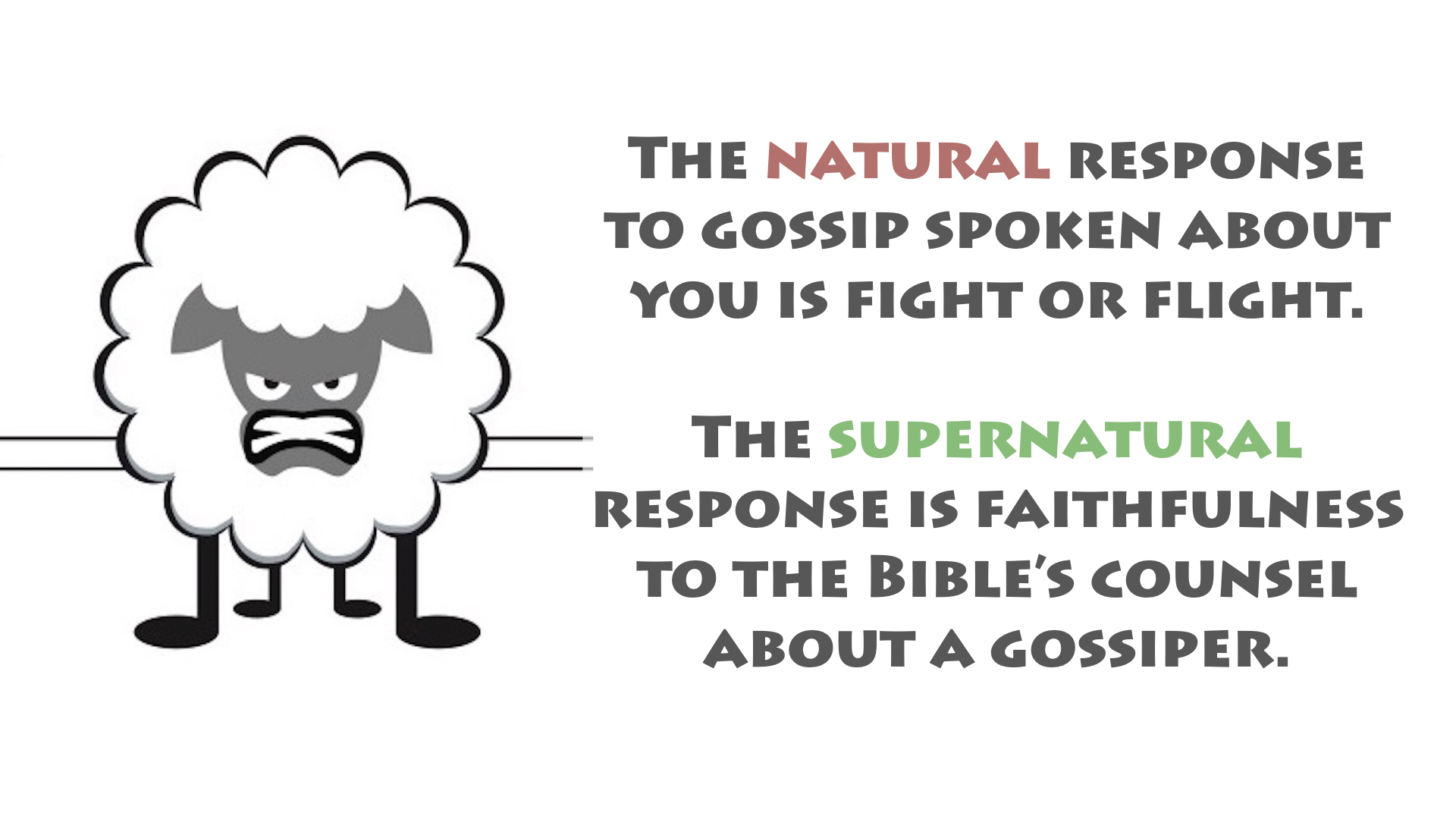
The natural response to gossip spoken about you is fight or flight. The supernatural response is faithfulness to the Bible’s counsel about a gossiper. 

And one final word to all of us: Don’t become a gossip yourself! 

Just as God hears those gossiping about you, He hears you gossiping about others! 

Don’t…

  • …talk about people who aren’t in the room. Remember the Golden Rule of treating others the way you want to be treated (Luke 6:31). 
  • …share information that isn’t yours to share (Proverbs 25:9). 
  • …listen to a gossip. If they gossip to you about others, they will gossip about you to others! 

Gossip, as Solomon warned us, separates even the closest of friends. We must identify it and deal with both the gossip and the gossiper in a God-honoring, biblically-sound way. And we must avoid becoming a gossip ourselves. 

If you’ve missed any of the other sheep bites we’ve talked about in this series, you can find them all by clicking here. And if you are a pastor, check out my book When Sheep Bite, where I address the bites of sheep from a leadership paradigm. 

►► Would you please prayerfully consider supporting this ministry? My Patreon supporters get behind-the-scenes access to exclusive materials. ◀︎◀︎
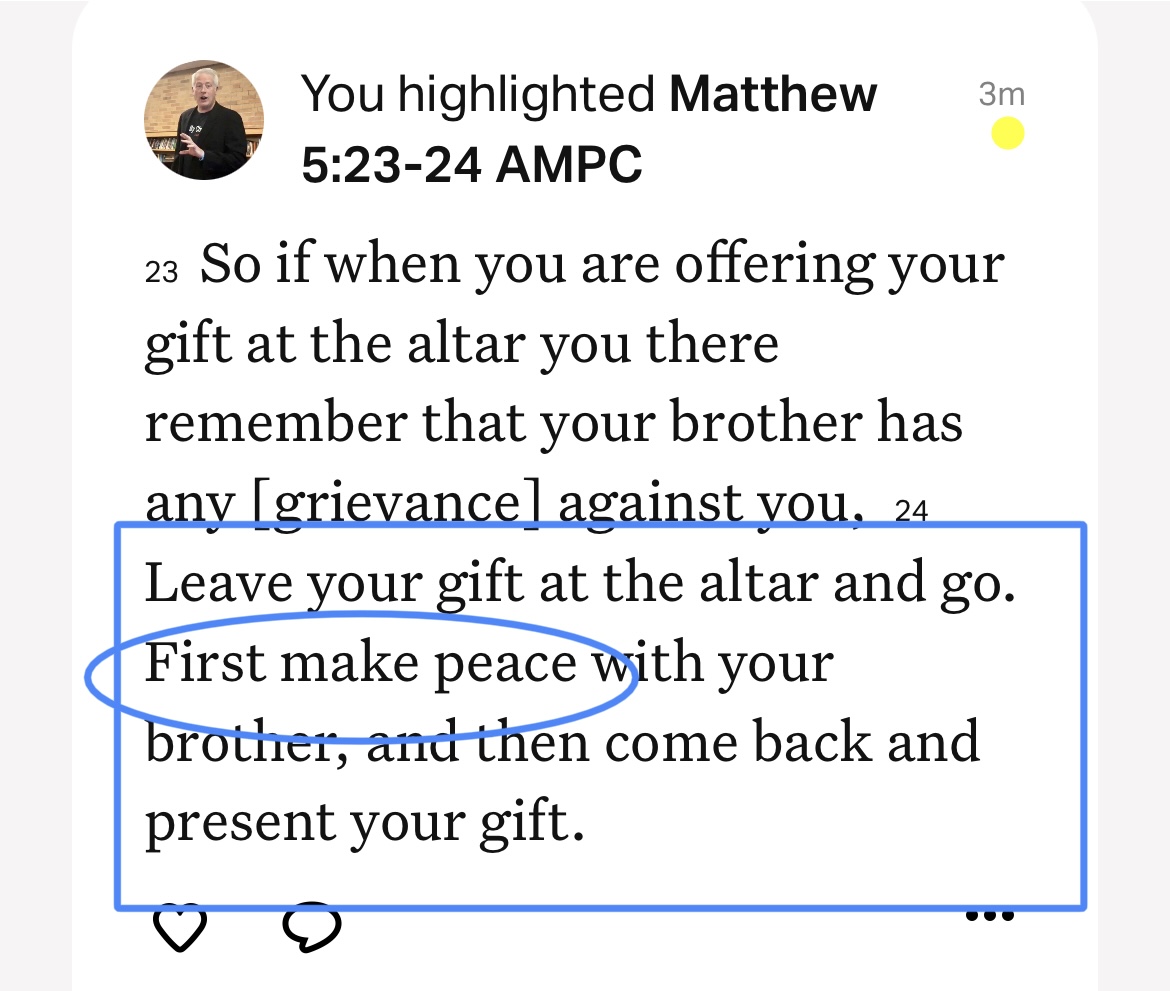
First, Make It Right

So if when you are offering your gift at the altar you there remember that your brother has any [grievance] against you, leave your gift at the altar and go. First make peace with your brother, and then come back and present your gift. (Matthew 5:23-24 AMPC) 

If someone has something against you, you must take the initiative to make it right. We cannot brush it off with, “I didn’t do anything wrong” or “That’s their problem,” but we must be proactive peacemakers. 

It could be that our restorative action will allow the other person to enter into worship in a way they were unable to before you reached out to them. 

I talk about this more in:

Do Not Judge?

Listen to the podcast of this post by clicking on the player below, and you can also subscribe on AppleSpotify, or Audible. 

As we learned last week, we are not the judge, nor the jury, nor the prosecution, nor even the sin police in deciding appropriate retribution. With that in mind, let’s consider Statement #15 in our series—Do not judge. Is that in the Bible? 

Yes, those three words are there, spoken by Jesus, in Matthew 7:1. But then again, we need to say, no, because these words don’t mean we are not to make determination about the rightness or wrongness of something. 

(Check out all of the Scriptures in this post by clicking here.)

Let’s zoom-out a bit get the context of the words Jesus spoke. Who was His audience for these words? This is a part of the Sermon on the Mount (Matthew 5–7). Notice in the opening words, “His disciples came to Him, and He began to teach them” (5:1-2). So Jesus isn’t speaking to the world at-large, but He is talking with His disciples. 

Jesus was very specific in His wording. In talking about the world, He uses words like people (5:11) or men (5:16; 6:1, 5). When talking about His disciples, He uses one word quite frequently: brother (3x in 5:22-24). 

Matthew 7:1 is still in this sermon, and the word brother appears 3x in vv. 3-5. So these are instructions primarily for Christians to use with other Christian brothers and sisters. 

The words judge here in the Greek means, “Those who judge severely (unfairly), finding fault with this or that in others.” To me, “this or that” sounds like a deliberate searching for something wrong, but Jesus assures us that this will boomerang on the judgmental person (v. 2; Luke 6:37). 

In modern psychology, we find terms like:  

  • mirroring = a psychological term the means quickly seeing what’s in others because it’s in me 
  • projection = taking the negative things in me and projecting them onto others

Paul addresses both of these thoughts in Romans 2:1-3, where the word for judging here is the same Greek word Jesus uses in Matthew 7.

Paul concludes his remarks by reminding us that God treats us kindly (Romans 2:4). David echos this same thought in Psalm 103:8-10, 13-14. 

When you read the whole passage in Matthew 7:1-5, please notice the words “brother,”  “first,” and “then.”  

Jesus does not mean that I am not to point out to my brothers and sisters any areas of concern. Jesus did this, as well as nearly every epistle writer. What it does mean is that correction needs to be gentle and never condemning. In other words, I want to lovingly help someone before they have to stand before The Judge. 

That’s why I need to first humbly recognize that what I see in others may be apparent to me because I am afflicted with the same thing. That’s why Jesus says first deal with my own plank. Examine myself  before I try to correct a brother or sister (1 Corinthians 11:28; 2 Corinthians 13:5). 

After I have allowed the Holy Spirit to deal with my plank, I will then have the empathy to help my brother or sister (2 Corinthians 1:3-4). Trying to get someone else to repent of something that still exists in my life is hypocritical. 

If I see something wrong in someone else:

  1. First ask the Holy Spirit to search me. 
  2. If necessary, confess it, repent from it, ask forgiveness, make things right. 
  3. Then lovingly and humbly share with your brother or sister (Ephesians 4:15). 

If someone else sees something wrong in me, I should follow the exact same steps! 

This is not easy, but it is vital for the Body of Christ to grow in a healthy way. 

If you’ve missed any of the other messages in this installment of our series Is That In The Bible?, you can find them all here. 

►► Would you please prayerfully consider supporting this ministry? My Patreon supporters get behind-the-scenes access to exclusive materials. ◀︎◀︎

The Goals Of Confrontation

Listen to the podcast of this post by clicking on the player below, and you can also subscribe on AppleSpotify, or Audible. 

Say the word “confrontation” and many people cringe. “I try to avoid confrontations with others,” people will quickly say. 

The origin of the word comes from a derivative of the word for “forehead.” The original intent of confrontation was simply putting the facts in front of someone’s face so that they could acknowledge them. 

The problem for most of us (myself included) is two-fold: 

  1. I don’t like to be confronted with things I may be doing incorrectly or incompletely. 
  2. I don’t like making others defensive when I confront them with the things they may be doing incorrectly or incompletely.

As a result, we usually don’t confront others and they usually don’t confront us. Sadly, this can keep us from maturing in areas where we may be able to soar if we could only make some minor changes. 

Christians should be especially open to confrontation from a brother or sister. After all, Solomon told us, “Wounds from a friend can be trusted, but an enemy only multiplies kisses” (Proverbs 27:6). And Jesus warned us, “Woe to you when all men speak well of you, for so did their fathers to the false prophets” (Luke 6:26 NKJV). 

The best confrontation is self-confrontation in the presence of the Holy Spirit. After we have submitted to that loving spotlight, then we can proceed with our loving confrontation with our brothers and sisters. 

Remember this: 

The goals of Christian confrontation are restoration and maturity. 

We want to see wandering saints return to God’s path, and we want those saints who are immature to blossom into Christ-like maturity that brings glory to God. 

I have prepared a flowchart that can help you with a biblical framework for the work of confrontation. Please work through this flowchart slowly and prayerfully. Don’t rush any step, but make sure you can answer an honest “yes” to each question. When you get to the last step, keep in mind these three Ms:

  1. Maturity—self-confrontation and confrontation of others should always be moving us toward maturity. 
  2. Mutual accountability—agree to stay involved in this process, with each of you remaining accountable to each other. 
  3. Mercymercifully restore the one who has strayed so that the entire Christian body of believers can be strengthened.

Here are some resources to help you:

►► Would you please prayerfully consider supporting this ministry? My Patreon supporters get behind-the-scenes access to exclusive materials. ◀︎◀︎

Rejuvenated Faith

Listen to the podcast of this post by clicking on the player below, and you can also subscribe on AppleSpotify, or Audible. 

I have always appreciated the story of the desperate father who brought his son to Jesus. We get the idea from this story that this Dad had tried everything he could think of to help his boy, but nothing had worked. 

This father heard about Jesus and he believed that Jesus could help them. We read that he brought his son to Jesus, but when he arrived, he found Jesus still on the mountain where He was transfigured, along with Peter, James, and John. The nine remaining disciples apparently tried to address this problem, but they were unsuccessful. 

As Jesus and the three disciples came down the mountain, they found an argument in full boil. The teachers of the law were arguing with the disciples of Jesus. Apparently, each group had its own idea of how to help this demon-possessed boy. 

Now, because of the failure of the disciples to bring relief, this father is experiencing creeping doubts about the original faith he had in Jesus. He says, “If You can do anything, take pity on us and help us.” 

Jesus replied, “‘If you can’? Everything is possible for him who believes.” 

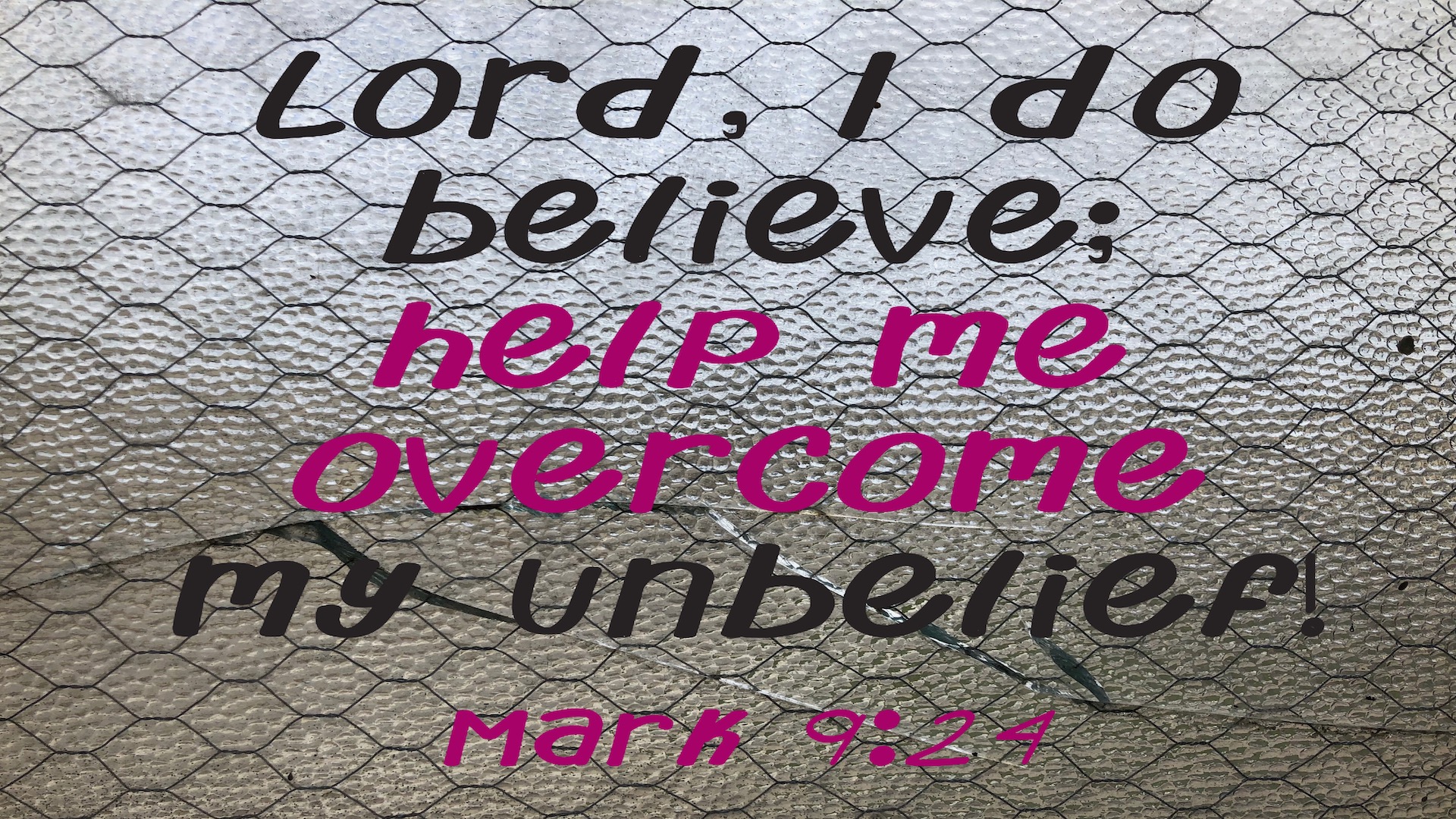
Then this man speaks the honest, but faith-filled words that I believe resonate with so many of us: “I do believe; help me overcome my unbelief!” (Read the full story in Mark 9:14-27.)

He was so wise to continue to come to Jesus even when he was plagued with doubt. His prayer was an honest, bold prayer. In essence, he was saying, “Jesus, I had initial faith in You. But the setback I experienced has caused me to doubt. I want to believe again that You can help me, but only You can rejuvenate my faith.” 

Jesus loves to pray for our faith to be rejuvenated! 

Knowing what Peter was about to encounter, Jesus told him, “I have prayed for you, Simon, that your faith may not fail” (Luke 22:32). Peter did indeed deny Jesus. But even after that denial, Jesus fully restored him. It would have required incredible faith on Peter’s part to allow Jesus to do that (John 21:15-17). Peter’s humble acceptance of Christ’s restoration demonstrated Peter’s rejuvenated faith to trust in his Savior again. 

A good prayer for us may be: 

Jesus, even when I doubt, You are faithful. You pray for my faith to be strengthened so that I can come to You again and again. Jesus, I do believe You! Please rejuvenate my faith to drive out these nagging doubts.

Only Jesus is called “the Author and Perfecter of our faith” (Hebrews 12:2), so only He can rejuvenate our faith. Let’s learn a lesson from this father and continue to come to Jesus—even with our nagging doubts—to have our faith rejuvenated. It’s this faith that moves the hand of God to do miracles on our behalf. 

►► Would you please prayerfully consider supporting this ministry? My Patreon supporters get behind-the-scenes access to exclusive materials. ◀︎◀︎

Judging The Right Way

Listen to the podcast of this post by clicking on the player below, and you can also subscribe on AppleSpotify, or Audible. 

I have probably heard this verse quoted more by non-Christians than any other verse: “Do not judge, or you too will be judged” (Matthew 7:1). 

Does Jesus mean that we can never point out to anyone else an area of concern? No, because Jesus Himself did this as well as nearly every epistle writer of the New Testament. What it does mean is that confrontation needs to be truly corrective and never condemning. 

Correcting means that I am never serving as the judge and jury. But it does mean that I can lovingly help someone before they have to stand before God on Judgment Day. Jesus said that if I am a mean, self-serving judge of others, I can expect to receive that same treatment (v. 2). 

Instead, I need to first recognize that what I may see in another person may only be apparent to me because I am afflicted with the same thing. So my first response when I see “a speck” in someone else’s eye is to ask the Holy Spirit to show me a possible “plank” in my own eye. Only after I have dealt with this through repentance and making appropriate changes, will I have the necessary empathy and gentleness to help my brother or sister deal with their own eye speck (vv. 3-4). 

Jesus said that trying to get someone else to repent of something that still exists in my own life is being a hypocrite. It’s playing a role that isn’t me. So Jesus says “first” deal with my own sin, “then” I may help a brother or sister (v. 5). 

Notice that I have been very careful to use the phrase “brother and sister.” I believe that Christians should deal with fellow Christians, but we shouldn’t try to bring correction to those who don’t come from the same biblical paradigm that we have. In legal terms, I may say that we have no standing, or that non-Christians are out of my jurisdiction. 

One final thought. I think I need to treat a concern that another person brings to me in a very similar fashion as I would treat an eye speck in someone else. Perhaps God sent them to me, so I need to ask the Holy Spirit to show me any “plank” that may be in my eye, even if it has been brought to my attention through a judgmental person. It is very God-honoring for me to give that person the benefit of the doubt by saying that they cared enough for my well-being that they would be willing to point something out to me. 

Correction is an important aspect of Christian maturity. But we need to make sure we do it in a Christlike way.

►► Would you please prayerfully consider supporting this ministry? My Patreon supporters get behind-the-scenes access to exclusive materials. ◀︎◀︎

The Path To Revival

Listen to the podcast of this post by clicking on the player below, and you can also subscribe on AppleSpotify, or Audible. 

As we rejoin our series looking at the Selahs in the Psalms, let me remind you of the definition of Selah: (a) a pause to reflect—or “pause, and calmly think of that,” as the Amplified Bible says; (b) notice the contrasts; or (c) get ready for a crescendo. 

Psalm 85 is a longing for revival. Not only longing for it but giving us the path to revival. 

Many Christians say they want revival, but I’m not so certain they have the biblical definition in mind. When most people define revival, they use descriptions about exuberant worship, manifestations of the gifts of the Holy Spirit, the church reenergized for ministry, and non-believers flocking to see what’s happening and then accepting Jesus into their hearts as a result. 

But those are actually the results of revival, not the revival itself. 

Take a look at this overview of Psalm 85: 

  • a look back (vv. 1-3) 
  • a look around (vv. 4-6) 
  • a look ahead (vv. 8-13) 

I am aware that I skipped verse 7 in that overview. That is the middle verse of this psalm, so it is presenting us with the main idea. It’s a longing to see the path forward, the path to revival. It’s not about “getting saved” again because verses 1-3 already thank God for His salvation. 

But let’s notice the Selah. It seems to come mid-thought in the backward look. I think this is both a pause to consider deeply, and also a pause to look at the contrasts. It’s almost as if the sons of Korah, who wrote this psalm, have their breath taken away as they consider the immensity of God’s love that covers our sins! 

That word “cover” means to cover our nakedness, conceal our shame, and hide us from our forgiven sins. The alternative is to live in fear of God’s righteous judgment on our unforgiven sin. 

The sons of Korah long for this again. They long for a crescendo of righteousness, which is why in the “look around” section we see the phrases “restore us again” (v. 4) and “revive us again” (v. 6). 

This Hebrew word for “restore” always means a turning:

  • men turning back from God (apostasy) 
  • men turning away from God (backsliding) 
  • men turning away from evil (repentance) 
  • men turning back to God (revival) 

The ball is in our court. God has remained faithful; we are the ones who have sinned and turned away from Him. God hasn’t gone anywhere; we have! 

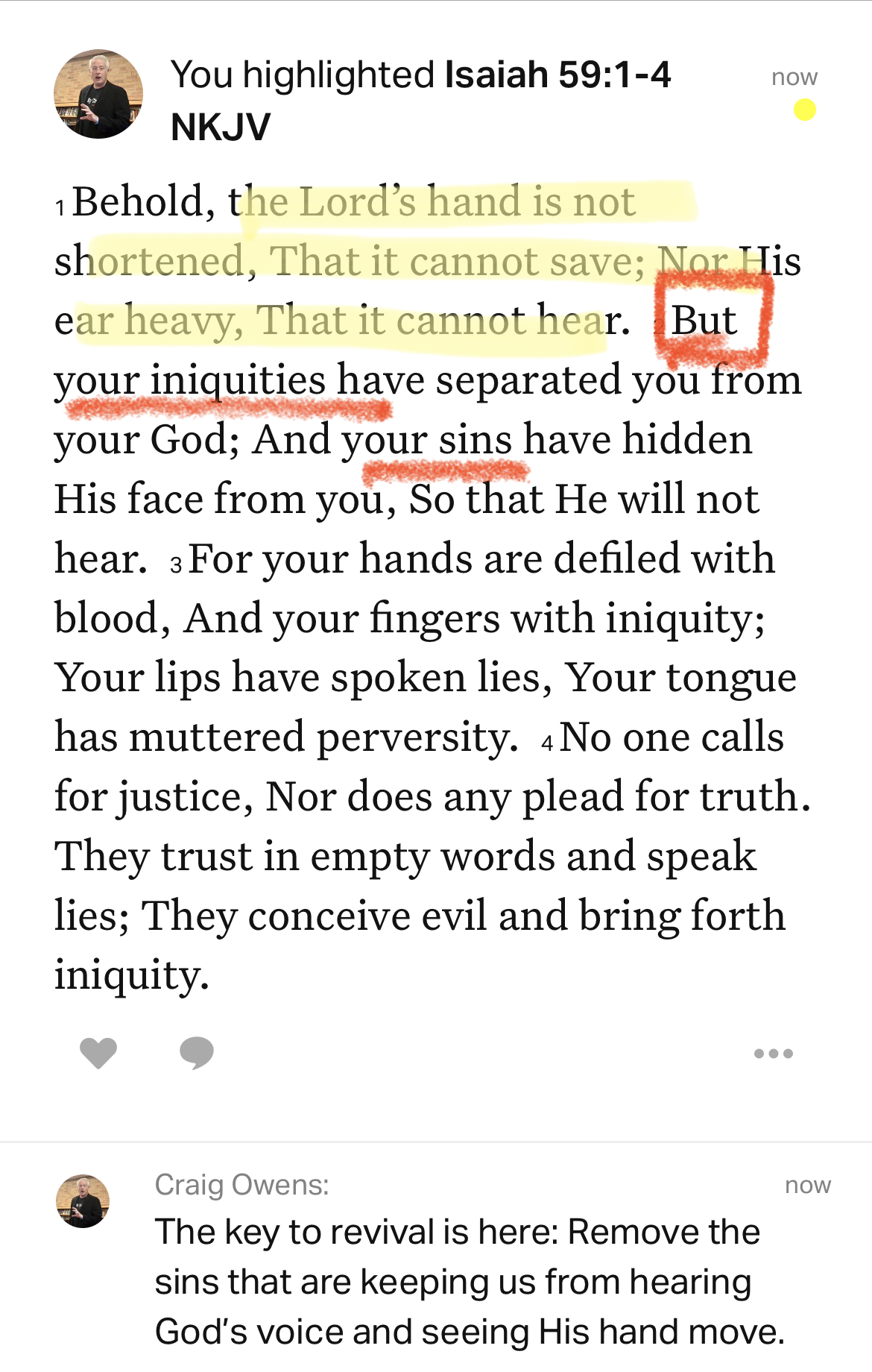
So revival begins with the recognition of our sin and profound repentance from that sin. Revival is a recognition that I have turned back from God, and now I need to turn away from evil and turn wholeheartedly back to God. 

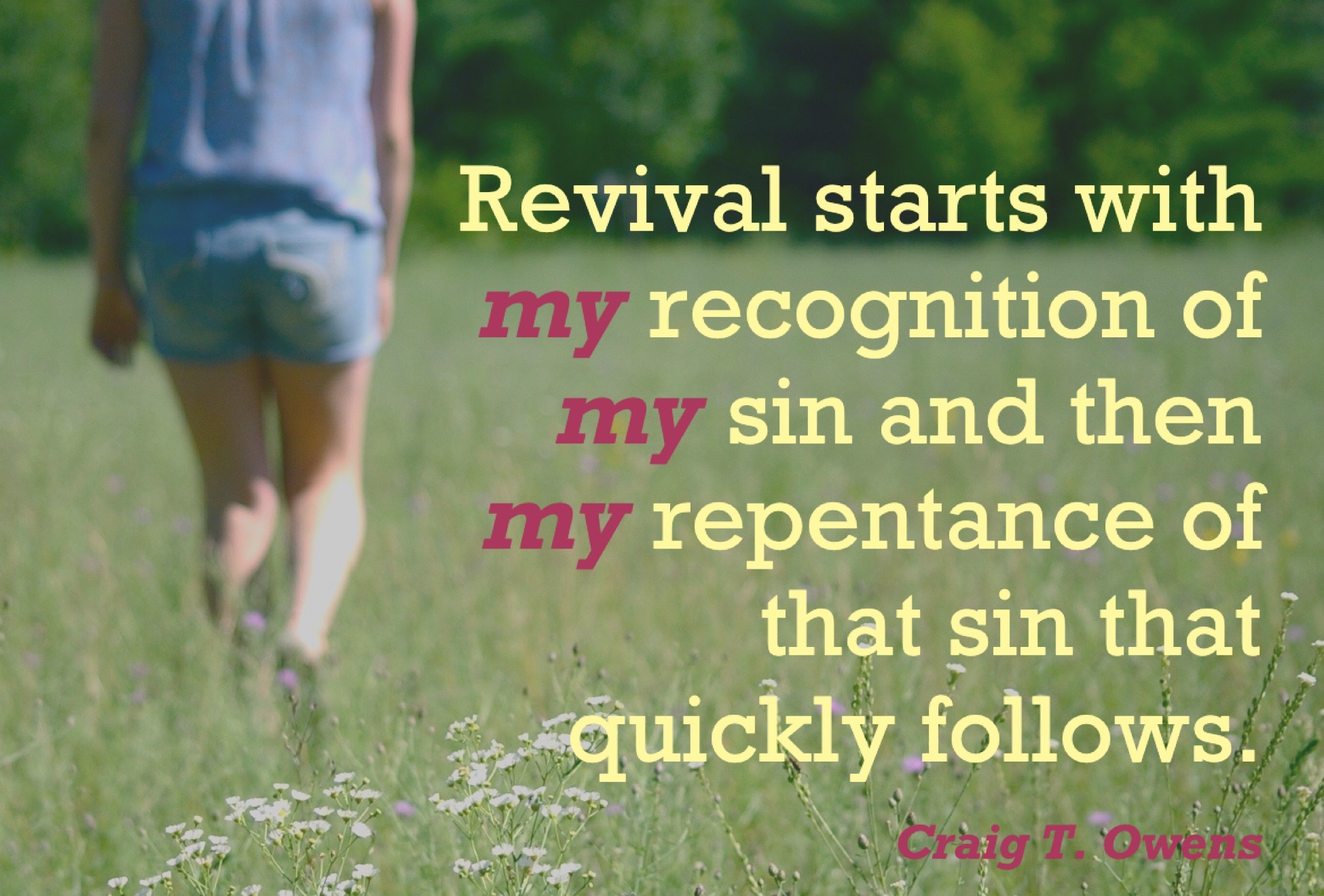
Immediately following that middle verse notice the personal, singular pronoun “I” in verse 8. Revival starts with my recognition of my sin and then my repentance of that sin quickly follows. 

The “show us the way” prayer of verse 7 is answered in verse 13: “Righteousness will go before Him, and shall make His footsteps our pathway” (NKJV). God Himself shows us the way! His footsteps mark the path for us to walk! 

Just as Jesus told us He was the way (John 14:6). 

When we repent from following any other path, revival and restoration happen. The fruit of revival is then a life sustained, quickened, and equipped by God’s presence that will draw others to Him too! 

Let us SELAH—pause and consider the forgiving love of God, the need for my repentance, and then let us enjoy the crescendo of living in daily revival! 

If you have missed any of the other messages in our Selah series, you can find all of those messages by clicking here. 

►► Would you please prayerfully consider supporting this ministry? My Patreon supporters get behind-the-scenes access to exclusive materials. ◀︎◀︎

Recovering Mentally

Listen to the podcast of this post by clicking on the player below, and you can also subscribe on AppleSpotify, or Audible. 

I had a great time on the Thriving In Ministry podcast with Kyle Willis and Dace Clifton. 

Kyle asked me a question about how I recharge myself mentally. A key verse in the Bible for me is 2 Corinthians 10:5 where the the apostle Paul counsels us to capture our thoughts. This is extremely hard to do when we are physically or mentally drained. 

In my younger years, I used to try to “do nothing” as my recovery time. As I matured, I realized that top athletes had a different way to help their body recover, and I began to adapt those practices to my time of mental recovery. Dace also shares a very helpful tip for his mental recovery time. 

In my book Shepherd Leadership: The Metrics That Really Matter I make the case that in order for the sheep to be healthy, the shepherd has to get healthy first. The principle is simple: You cannot give to others what you do not possess yourself. I hope you will pick up a copy of my book to learn how Jesus taught us to be wholly healthy leaders.

I’ll be sharing more clips from this Thriving In Ministry interview soon, so please stay tuned. Shepherd Leadership: The Metrics That Really Matter is available in print or ebook, and in audiobook through either Audible or Apple.

►► Would you please prayerfully consider supporting this ministry? ◀︎◀︎