Checkmate

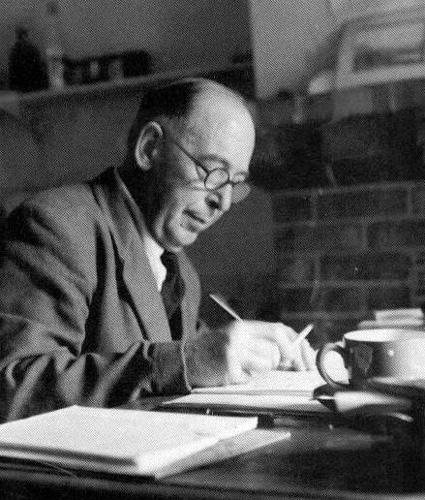
C.S. LewisI recently re-read C.S. Lewis’ book Miracles (you can read my full book review by clicking here). As you may have noticed, after reading and reviewing books on this blog, I also like to share some quotes that caught my attention. Doing this with Lewis is difficult, because in order to get the context of a particular quote, I think I would have to cite almost a full page or more. So over the next few weeks I plan to share some quotes from Miracles that require not as much context, or I will provide a bit of background to set the stage.

Lewis called the Incarnation of Jesus the grandest miracle of all. Here he discusses how God didn’t have to scramble to create an alternative plan because satan tempted Adam and Eve to sin, and thus need a Savior, but that God used satan’s own strong point to defeat him.

“So much for the sense in which human Death the result of sin and the triumph of satan. But it is also the means of redemption from sin, God’s medicine for Man and His weapon against satan. In a general way it is not difficult to understand how the same thing can be a masterstroke on the part of one combatant and also the very means whereby the superior combatant defeats him. Every good general, every good chess player, takes what is precisely the strong point of his opponent’s plan and makes it the pivot of his own plan. Take that castle of mine if you insist. It was not my original intention that you should—indeed, I thought you would have had more sense. But take it by all means. For now I move thus … and thus… and it is mate in three moves. Something like this must be supposed to have happened about Death. … Jesus tasted death on behalf of all others. He is the representative ‘Die-er’ of the universe: and for that very reason the Resurrection and the Life. Or conversely, because He truly lives, He truly dies, for that is the very pattern of reality. Because the higher can descend into the lower He who from all eternity has been incessantly plunging Himself in the blessed death of self-surrender to the Father can also most fully descend into the horrible and (for us) involuntary death of the body.”

 For other quotes from this book see Miracle Or “Cheating”?Miracles And NatureChristianity And PantheismCorrecting The PantheistAbsolute FactThe Central Miracle, and The Miracle of Freewill.

Links & Quotes

link quote

Here are the links to some interesting reading I found this weekend.

“The dominant model of how speech works is that it is planned in advance—speakers begin with a conscious idea of exactly what they are going to say. But some researchers think that speech is not entirely planned, and that people know what they are saying in part through hearing themselves speak.” Check out more of this fascinating report You Don’t Always Know What Youre Saying.

A balanced approach is vital. “Beware any teacher or preacher who has little use for doctrine or church history.” —T.M. Moore

“Lastly, as the best advice I can give, seek more of the Spirit of God, for this is the way to become Christ-like. Vain are all your attempts to be like Him till you have sought His Spirit. Take the cold iron, and attempt to weld it if you can into a certain shape. How fruitless the effort! Lay it on the anvil, seize the blacksmith’s hammer with all your might; let blow after blow fall upon it, and you shall have done nothing. Twist it, turn it, use all your implements, but you shall not be able to fashion it as you would. But put it in the fire, let it be softened and made malleable, then lay it on the anvil, and each stroke shall have a mighty effect, so that you may fashion it into any form you may desire. So take your heart, not cold as it is, not stony, as it is by nature, but put it into the furnace; there let it be molten, and after that it can be turned like wax to the seal, and fashioned into the image of Jesus Christ.” —Charles Spurgeon

John Stonestreet has a timely reminder in his commentary Race And Redemption.

A great piece on euthanasia: What Happened To Switzerland?

Thursdays With Oswald—The Historicity Of The Cross

This is a weekly series with things I’m reading and pondering from Oswald Chambers. You can read the original seed thought here, or type “Thursdays With Oswald” in the search box to read more entries.

The Historicity Of The Cross 

     It is essential to have an historic basis for our Christian faith: our faith must be centered in the Life and Death of the historic Jesus. Why is it that that Life and Death have an importance out of all proportion to every other historic fact? Because there the Redemption is brought to a focus. 

     Jesus Christ was not a Man who twenty centuries ago lived on this earth for thirty-three years and was crucified; He was God Incarnate, manifested at one point of history. All before look forward to that point; all since look back to it. The presentation of this fact produces what no other fact in the whole of history ever could produce, viz.: the miracle of God at work in human souls. The death of Jesus was not the death of a martyr, it was the revelation of the Eternal heart of God. That is why the Cross is God’s last word.

From Conformed To His Image

This is THE Fact of history—

For God loved the world so much that He gave His One and Only Son, so that everyone who believes in Him will not perish but have eternal life. God sent His Son into the world not to judge the world, but to save the world through Him. (John 3:16-17)

Thursdays With Oswald—Right Thinking

This is a weekly series with things I’m reading and pondering from Oswald Chambers. You can read the original seed thought here, or type “Thursdays With Oswald” in the search box to read more entries.

Oswald Chambers

Right Thinking

     We have to be so faithful to God that through us may come the awakening of those who have not yet realized that they are redeemed. 

     We must distinguish between the revelation of Redemption and the experience of regeneration. We don’t experience life; we are alive. We don’t experience Redemption; we experience regeneration, that is, we experience the life of God coming into our human nature, and immediately the life of God comes in it produces a surface of consciousness, but Redemption means a great deal more than a man is conscious of. 

From Conformed To His Image

These comments come from a class Oswald Chambers taught called “Christian Thinking.” His contention was that (1) Christians are the living, breathing testimony of what God does for man; (2) Christians need to think right in order to live right; (3) the way Christians live will either attract or repel others to Jesus Christ.

This right thinking is formed in Christians as the Holy Spirit reveals Christ to us through the Word. Often times we will find that we have been thinking all wrong about something, and we need to “be so faithful to God” that we are willing to give up these wrong lines of thinking.

Are you? Am I? Are we willing to admit, “I was wrong on this point” in order that others may see Christ in us and accept Him as their Savior? I sure hope so!

Thursdays With Oswald—Confident Access

This is a weekly series with things I’m reading and pondering from Oswald Chambers. You can read the original seed thought here, or type “Thursdays With Oswald” in the search box to read more entries.

Oswald Chambers

Confident Access

     It is not our earnestness that brings us into touch with God, nor our devotedness, nor our times of prayer, but our Lord Jesus Christ’s vitalizing death; and our times of prayer are evidences of reaction on the reality of Redemption, so we have confidence and boldness of access into the holiest. 

     What an unspeakable joy it is to know that we each have the right of approach to God in confidence, that the place of the Ark is our place, “Having therefore, brethren, boldness.” What an awe and what a wonder of privilege, “to enter into the holiest,” in the perfectness of the Atonement, “by the blood of Jesus.” 

From Christian Disciplines

It’s not what I do that gives me access to God, but what Jesus already did! He paid the price that was beyond my reach so that I can now come directly into God’s presence in full confidence that He will receive me.

Amazing love!

20 Quotes From “The Highest Good”

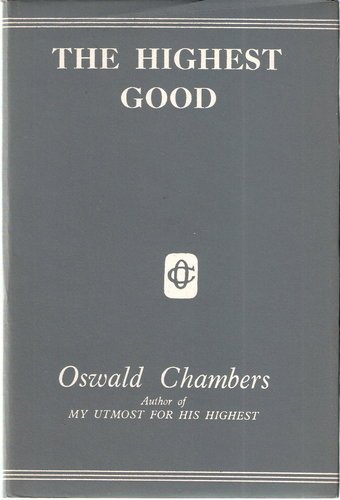
The Highest GoodSome of my most highlighted books are Oswald Chambers’ books, so The Highest Good was no exception. It was difficult to narrow down, but here are 20 of my favorite quotes from this book. (If you would like to read my book review of The Highest Good, click here).

“If I am a child of God, distress will lead me to Him for direction. The distress comes not because I have done wrong, it is part of the inevitable results of not being at home in the world, of being in contact with those who reason and live from a different standpoint.” 

“Spiritual insight is not for the purpose of making us realize we are better than other people, but in order that our responsibility might be added to.”

“God expects us to be intercessors, not dogmatic fault-finders, but vicarious intercessors, until other lives come up to the same standard.” 

“In times of prosperity we are apt to forget God, we imagine it does not matter whether we recognize Him or not. As long as we are comfortably clothed and fed and looked after, our civilization becomes an elaborate means of ignoring God. … But remember God’s blessing may mean God’s blasting. If God is going to bless me, He must condemn and blast out of my being what He cannot bless. ‘Our God is a consuming fire.’ When we ask God to bless, we sometimes pray terrible havoc upon the things that are not of God. God will shake all that can be shaken, and He is doing it just now.”

“God intends our attention to be arrested, He does not arrest it for us. … We are apt to pay more attention to our newspaper than to God’s Book, and spiritual leakage begins because we do not make the effort to lift up our eyes to God.” 

“The majority of us do not enthrone God, we enthrone common-sense. We make our decisions and then ask the real God to bless our god’s decision.”

“When I wish I was somewhere else I am not doing my duty to God where I am.” 

“Let us not be so careful as to how we offend or please human ears, but let us never offend God’s ears.”

“We have not only lost Jesus Christ’s idea of righteousness, but we laugh at the Bible idea of righteousness; our god is the conventional righteousness of the society to which we belong.” 

“It is so absurd to put our Lord as Teacher first, He is not first a Teacher, He is a Savior first. He did not come to give us a new code of morals: He came to enable us to keep a moral code we had not been able to fulfill. … If He is a Teacher only, then He is a most cruel Teacher, for He puts ideals before us that blanch us white to the lips and lead us to a hell of despair. But if He came to do something else as well as teach—if He came to re-make us on the inside and put within us His own disposition of unsullied holiness, then we can understand why He taught like He did.”

“The only way to get out of our smiling complacency about salvation and sanctification is to look at Jesus Christ for two minutes and then read Matthew 5:43-48 and see Who He tells us we are to be like, God Almighty, and every piece of smiling spiritual conceit will be knocked out of us for ever, and the one dominant note of the life will be Jesus Christ first, Jesus Christ second, and Jesus Christ third, and our own whiteness nowhere. Never look to your own whiteness; look to Jesus and get power to live as He wants; look away for one second and all goes wrong.”

“For the past three hundred years men have been pointing out how similar Jesus Christ’s teachings are to other good teachings. We have to remember that Christianity, if it is not a  supernatural miracle, is a sham.”

“The point is that Jesus saw life from God’s standpoint, and we don’t. We won’t accept the responsibility of life as God gives it to us, we only accept responsibility as we wish to take it, and the responsibility we wish to take is to save our own skins, make comfortable positions for ourselves and those we are related to, exert ourselves a little to keep ourselves clean and vigorous and upright; but when it comes to following out what Jesus says, His sayings are nothing but jargon. We name the Name of Christ but we are not based on His one issue of life, and Jesus says, ‘What shall it profit a man, if he shall gain the whole world’—and he can easily do it—‘and lose his own soul.’” 

“It is remarkable how little Jesus directed His speech against carnal and public sins, though He showed plenty of prophetic indignation against the sins of a wholly different class, He preached His grandest sermon to a bad, ignorant woman (John 4:10-14), and one of His most prominent disciples was a publican named Matthew. The one man He ever said He wanted to stay with was another publican called Zaccheus, and some of the most fathomless things He said were in connection with a notoriously bad woman (Luke 7:36-50). … Jesus aroused the conscience of the very worst of them by presenting the highest good.”

“Ask yourself, then, what is it that awakens indignation in your heart? Is it the same kind of thing that awakened indignation in Jesus Christ? The thing that awakens indignation in us is the thing that upsets our present state of comfort and society. The thing that made Jesus Christ blaze was pride that defied God and prevented Him from having His right with human hearts.” 

“If we know that we have received the unmerited favor of God and we do not give unmerited favor to other people, we are damned in that degree.”

“‘If ye then, being evil…’ (Luke 11:13). Jesus Christ is made to teach the opposite of this by modern teachers; they make out that He taught the goodness of human nature. Jesus Christ revealed that men were evil, and that He came that He might plant in them the very nature that was in Himself. He cannot, however, begin to do this until a man recognizes himself as Jesus sees him.” 

“The holiest person is not the one who is not conscious of sin, but the one is more conscious of what sin is. … The purer we are through God’s sovereign grace, the more terribly poignant is our sense of sin. … Sin destroys the capacity of knowing what sin is. … We shall find over and over again that God will send us shuddering to our knees every time we realize what sin is, and instead of increasing hardness in us towards the men and women who are living in sin, the Spirit of God will use it as a means of bringing us to the dust before Him in vicarious intercession that God will save them as He has saved us.”

“‘God is able to make all grace abound toward you.’ Have you been saying, ‘I cannot expect God to do that for me’? Why cannot you? Is God Almighty impoverished by your circumstances? Is His hand shortened that it cannot save? Are your particular circumstances so peculiar, so remote from the circumstances of every son and daughter of Adam, that the Atonement and the grace of God are not sufficient for you? Immediately we ask ourselves these things, we get shaken out of our sulks into a simple trust in God. When we have the simple, childlike trust in God that Jesus exhibited, the overflowing grace of God will have no limits, and we must set no limits to is.” 

“The love of God rakes the very bottom of hell, and from the depths of sin and suffering brings sons and daughters to God.”

The Highest Good (book review)

The Highest GoodThe Highest Good is a collection of three books by Oswald Chambers: The Highest Good, The Pilgrim’s Song Book, and Thy Great Redemption

The Pilgrim’s Song Book is made up of Chambers’ commentary and insight on the ascension psalms (Psalms 120-128). This is an encouraging study that leads the reader higher and higher into God’s presence, just as the pilgrims climbed the roads to the heights of Jerusalem for the annual worship feasts. 

In The Highest Good portion of this collection, I felt like having arrived in “Jerusalem,” I was now receiving a series of thoughtful teachings on Christian ethics which were preparing me for my descent back into my every-day life. 

Finally in Thy Great Redemption I am getting ongoing refresher courses on the reality that the redemption of Jesus Christ should make in my life. As Chambers said, “Everything that has been touched by sin and the devil has been redeemed; we are to live in the world immovably banked on that faith.” 

As always, the insight of Oswald Chambers is like a graduate level class in theology, philosophy, and ethics. Very few authors expand my biblical paradigm and challenge me to go deeper into God’s Word, so I always highly recommend any Chambers book on which you can get your hands. 

It Is Finished (book review)

It Is FinishedDavid Wilkerson was a gentle man (yes, I did intend for that to be two words). The best definition I’ve heard of gentleness is “strength under control,” and that certainly describes Rev. Wilkerson’s words in It Is Finished: Finding Lasting Victory Over Sin.

Pastor Wilkerson’s words carry all of the weight and authority of an Old Testament prophet crying out, “This is what God says!” But his message is delivered with the lovingkindness of a gentle shepherd. Rev. Wilkerson is hard on those things that keep Christians at a distance from God, but loving on those at-a-distance Christians.

It Is Finished is a series of eleven sermons delivered by Pastor Wilkerson just prior to his death. They deliver a powerful message of God’s redemptive love from a man who was constantly learning what that love really meant. He shares his own personal struggles with feeling accepted by God’s love, and then presents a hope-filled message for all of us to accept the Holy Spirit’s invitation to enter into greater intimacy with our loving Heavenly Father.

These sermons are easy to read and will lift your spirits to new heights in God. I recommend this book to all Christians, but especially to those who struggle with feeling accepted by God.

I am a Chosen Books book reviewer.

Thursdays With Oswald—Redemption

This is a weekly series with things I’m reading and pondering from Oswald Chambers. You can read the original seed thought here, or type “Thursdays With Oswald” in the search box to read more entries.

Redemption

   Redemption is easy to experience because it cost God everything, and if I am going to be regenerated it is going to cost me something. I have to give up my right to myself. I have deliberately to accept into myself something that will fight for all it is worth, something that will war against the desires of the flesh, and that will ask me to go into identification with the death of Jesus Christ, and these things produce a struggle in me. …

   The result of the Redemption in my life must be that I justify God in forgiving me. …In what way are you different in your life? does the reality of the Redemption at work in you justify God in having forgiven you?

From Baffled To Fight Better and Biblical Ethics

I like to think of the death and resurrection of Jesus this way: It cost Him so much, and He wants everything He paid for.

Jesus didn’t coast through, He wasn’t wishy-washy about His decision to go to the Cross, neither was He forced into such a horrific death by crucifixion.

Jesus willingly and lovingly went “all in” to pay the redemption price for our sins. So I’m challenged by Oswald Chambers’ question: Does the reality of the Redemption at work in you justify God in having forgiven you? Does my life show how grateful I am for the price Jesus paid?

At Last!

Jesus is our atonementThe Day of Atonement was a very special day for the Jewish people. It was called by some the Sabbath’s Sabbath, as it was the most holy day of the year. It was the day everyone looked forward to, because finally they could have forgiveness for their sins.

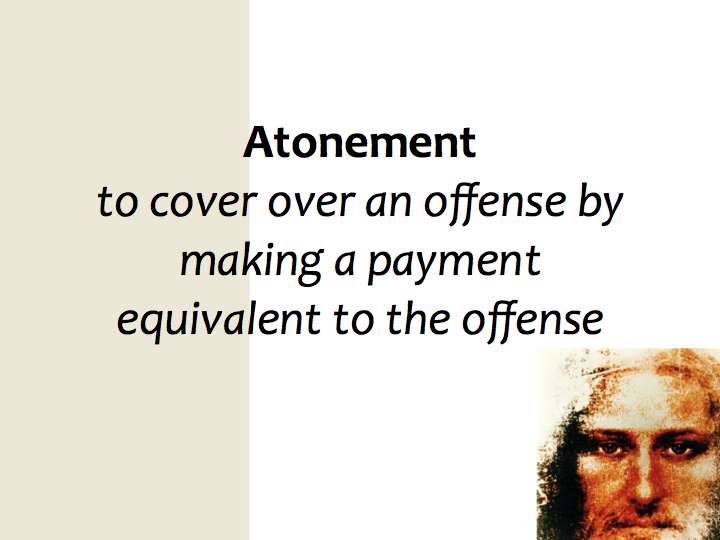
The word atonement in the Hebrew meant that a payment was made that was equivalent to the offense that was committed. The offense was huge: Sin was open rebellion against Almighty God, it was to spit in the face of our Heavenly Father, it was to slap away His hands that were reaching out to embrace us. Nothing short of a death could atone for that sort of offense!

So the high priest would go through an elaborate ceremony of washing himself and putting on special garments that were only to be worn on this Day of Atonement. Because the high priest was also a sinner himself, his first sacrifice was a bull. The blood from this sacrifice was taken by the high priest into the Most Holy Place of the temple to cover his own sins, before he could even approach God to ask for the forgiveness of the sins of anyone else.

After having completed this step, the high priest could then proceed. He would sacrifice a goat as a sin offering for the people. As he did with the bull’s blood, he would take the goat’s blood back into the Most Holy Place to ask God to show mercy toward people who had sinned, to turn away His holy wrath against their rebellion. Then the priest would lay his hands on a second goat, one that was still alive, and confess all of the sins of the people. This goat (called the scapegoat) was then taken out into the desert. This symbolized the removal of the people’s guilt, making it possible for them to be in relationship with God once again.

This was repeated year after year after year. It was repeated because the people continued to sin. It was repeated because these rituals were only a shadow of what God really wanted to accomplish. David wrote about the futility of these sacrifices—

Sacrifice and offering You did not desire—but a body You have given me—burnt offerings and sin offerings You did not require. Then I said, “Here I am, I have come—it is written about me in the scroll. I desire to do Your will, my God; Your law is within my heart.” (Psalm 40:6-8)

A beautiful thing happened through the ministry of Jesus on earth. Jesus came to be both the perfect high priest (one without sin, who did not need to purify Himself), and the perfect sacrifice. Jesus is called the once for all sacrifice of atonement for us, as He embodied the cry David made nearly 1000 years earlier. Hebrews 10:5-7 says that the words uttered by David prophetically were repeated by Jesus: “Here I am, I have come—it is written about me in the scroll. I desire to do Your will, my God; Your law is within my heart. I will be the once for all sacrifice.”

When Jesus told us the the new covenant was in His shed blood on Calvary’s Cross, He was saying that no longer would we have to wait until the Day of Atonement to find forgiveness; no longer would we have to wait upon an imperfect earthly priest to offer a sacrifice for us; no longer would we have to carry around the guilt of our sin and feel separated from God’s presence while waiting for a special ceremony. AT LAST! We can have immediate forgiveness, eternal redemption, and an everlasting relationship with God because of what Jesus did for us once for all!

As you celebrate Holy Week, be thrilled with the truth that Jesus’ death on the Cross makes it possible for you to have complete atonement. Our Savior has redeemed us AT LAST!

If you have missed any of the messages in this series called Who Is Jesus?, you can find them all here.