


 “It is natural for a man to desire what he reckons better than that which he has already, and be satisfied with nothing which lacks that special quality which he misses. Thus, if it is for her beauty that he loves his wife, he will cast longing eyes after a fairer woman. If he is clad in a rich garment, he will covet a costlier one; and no matter how rich he may be he will envy a man richer than himself. … No matter how many such things one has, he is always lusting after what he has not; never at peace, he sighs for new possessions. Discontented, he spends himself in fruitless toil, and finds only weariness in the evanescent and unreal pleasures of the world. In his greediness, he counts all that he has clutched as nothing in comparison with what is beyond his grasp, and loses all pleasure in his actual possessions by longing after what he has not, yet covets. … They wear themselves out in vain travail, without reaching their blessed consummation, because they delight in creatures, not in the Creator.” —Bernard of Clairvaux
Bernard Of Clairvaux On Discontentment
June 29, 2016 — Craig T. Owens20 Useful Maxims
June 29, 2016 — Craig T. Owens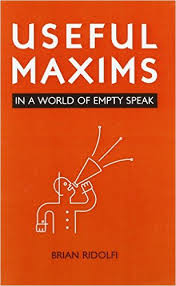 I thoroughly enjoyed reading Useful Maxims by Brian Ridolfi (check out my review of his book by clicking here). Here are 20 of Brian’s useful maxims that caught my highlighter.
- Going to church is good; going to God is better.
- Progress is not good if you are progressing in the wrong direction.
- Good demeanor does not validate bad behavior.
- Broken commandments break down integrity.
- The Bible’s meaning is not hidden from men; men hide from its meaning.
- Actions are better indicators of character than rhetoric.
- The indifferent make no difference.
- Remaining weak takes strength. It takes power not to use power.
- Great men step in when everyone else steps out.
- Moral arguments which are entirely material are entirely immaterial.
- Peacemakers and saltshakers dispense enrichment.
- A grudge will keep you deep in sludge. Points of contention are points of retention.
- Revenge is hard to reverse.
- Never put faith in people who have no faith.
- Everything goes when anything goes.
- Your sin is not just your problem.
- Parental neglect prompts government parenting.
- Where no one fears God, everyone fears man.
- The right battle is lost with the wrong weapon.
- Insecurity secures instability.
Watch for more maxims soon. Or follow me on Twitter and Tumblr to read some of Brian Ridolfi’s maxims.
T.M. Moore On Using Time
June 28, 2016 — Craig T. Owens “We measure time, from the human perspective, in various ways—seconds, minutes, days, weeks, months, years, and so forth. But these are not true quantitative measurements of some material quantity—like a half gallon jug measures a certain amount of milk. Our measures of time are more on the order of estimates (as we think of the future), experiences (with respect to the present), and records (as we think about the time that is gone by).
“All time comes from the Word of God (John 1:1-3), is sustained by the Word of God (Hebrews 1:3), and returns—like the talents in Jesus’ parable—to its Creator and true Owner (Romans 11:34-36). There is as yet no future time, and the time we’ve used up is gone forever; we cannot return to it. Every moment of your time comes fresh from the Word of God, and returns immediately to Him for His review.
“The only time we ever have is the present moment, and each of those is supplied for us, as an act of free grace, by the eternal God and His Word.” —T.M. Moore
The Power To Overcome Sexual Temptation
June 27, 2016 — Craig T. Owens “It’s not easy to overcome recurring sexual temptation. That’s because sexual sin is, at the most basic level, an illegitimate way of fulfilling a deep and legitimate human need: the need for love and intimacy.” —Focus On The Family
 “Here is the secret of the power of faith to break the enslaving force of sinful attractions. If the heart is satisfied with all that God is for us in Jesus, the power of sin to lure us away from the wisdom of Christ is broken.” —John Piper
7 Quotes From “Hope … The Best Of All Things”
June 22, 2016 — Craig T. Owens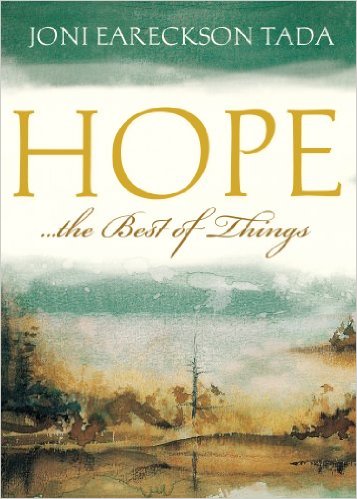 Joni Eareckson Tada knows what it is to battle darkness and depression. And she also know the power of hope in those dark places. Hope … The Best Of All Things is an encouraging book for anyone going through a difficult place (please check out my book review here).
Here are some of the quotes from Hope which especially stood out to me.
“People are angry; cynicism and despair are on the rise, and the nightly news reminds us we are only one terrorist plot away from another national nightmare. Oh, how we need to grasp the soul-settling hope found in the pages of God’s Word—not only grasp it, but allow the hope of God to fill and overflow our hearts, transforming us into people who are confident and at peace with themselves, their God, and their circumstances.”
“For me, suffering is still that jackhammer breaking apart my rocks of resistance every day. It’s still the chisel that God is using to chip away at my self-sufficiency and my self-motivation and my self-consumption. Suffering is still that sheepdog snapping and barking at my heels, driving me down the road to Calvary where otherwise I do not want to go. My human nature, my flesh, does not want to endure hardship like a good soldier (2 Timothy 2:3) or follow Christ’s example (1 Peter 2:21) or welcome a trial as friend. No, my flesh does not want to rejoice in suffering (Romans 5:3) or be holy as He is holy (1 Peter 1:15). But it is at Calvary, at the Cross, where I meet suffering on God’s terms.”
“Do you know who the truly handicapped people are? They are the ones—and many of them are Christians—who hear the alarm clock go off at seven-thirty in the morning, throw back the covers, jump out of bed, take a quick shower, choke down breakfast, and zoom out the front door. They do all this on automatic pilot without stopping once to acknowledge their Creator, their great God Who gives them life and strength each day. Christian, if you live that way, do you know that James 4:6 says God opposes you? ‘God opposes the proud, but gives grace to the humble.’”
“Take up your cross daily and follow the Lord Jesus (Luke 9:23). I must qualify that statement. Please know that when I take up my cross every day I am not talking about my wheelchair. My wheelchair is not my cross to bear. Neither is your cane or walker your cross. Neither is your dead-end job or your irksome in-laws. Your cross to bear is not your migraine headaches, not your sinus infection, not your stiff joints. That is not your cross to bear. My cross is not my wheelchair; it is my attitude. Your cross is your attitude about your dead-end job and your in-laws. It is your attitude about your aches and pains. Any complaints, any grumblings, any disputings or murmurings, any anxieties, any worries, any resentments or anything that hints of a raging torrent of bitterness—these are the things God calls me to die to daily.”
“You see, we are to God the fragrance of Christ. The world can’t see Jesus endure suffering with grace because He’s not here on earth, but you and I are. And we can fill up in our flesh what is lacking in His afflictions (Colossians 1:24), and in so doing become that sweet fragrance, that perfume, that aroma of Christ to God.”
“God mandates that we go out into the streets and the alleys and the highways and the byways. He mandates that we find the poor, the blind, the disabled, and the lame, and help them get busy living, because misery might love company, but joy craves a crowd. And the Father and the Son and the Holy Spirit crave a crowd of joy, joy spilling over and splashing and filling the hearts of thirsty people in this world who are absolutely dehydrated from a lack of hope.”
“The hope we wait for is our only hope, the blessed hope, the glorious appearing of our great God and Savior, Jesus Christ (Titus 2:13). It is Jesus for Whom we have prevailed through all of this suffering, and, oh, for the sweetness of melding one heart into His in that intimacy that is so precious. … Our hope is for the Desire of the nations. Our hope is the Healer of broken hearts, the Friend of sinners, the God of all encouragement, the Father of all comfort, the Lord of all hope. And it is my prayer that the eyes of your heart might be enlightened so that you might know this hope to which He has called you.”
5 Quotes To Protect Your Marriage From Pornography
June 21, 2016 — Craig T. OwensI recently finished reading a Focus On The Family reading plan on YouVersion called Infidelity: Protecting Your Marriage From Pornography. This is one part of a multi-part reading plan on healthy sexuality. I encourage you to check out all of these plans.
Here are some of the quotes I appreciated from this reading plan.
“Porn is powerful primarily because it offers a counterfeit form of intimacy and attachment—a replacement for the one-flesh bond between man and woman that God designed to function as the glue that holds the marriage relationship together (Genesis 2:24).”
“Mental health professionals report that the road to recovery is likely to be much longer and far more complicated for an individual engaged in an ongoing interpersonal cyber-affair than it is for a porn addict. That’s because ‘relationship’ at any level implies a degree of emotional entanglement. When the heart gets drawn into that web, the potential for pathology is inevitably raised.”
“Many porn addicts are sexually anorexic when it comes to normal marital relations. That’s because, through habit and practice, their sexual impulses have been alienated from their natural context—i.e., a healthy, committed personal relationship—and re-oriented around impersonal objects or illicit lusts or fetishes.”
“[Pornography] addiction is based on neurochemical changes that occur in the brain as a result of prolonged exposure to stimulating sexual imagery. Because of its neuro-chemical basis, it’s tenacious, progressive and destructive in nature.”
“Don’t assume that normal marital sexual relations will take the place of porn in [an addict’s] life. No living, breathing, thinking woman can possibly fill that role without doing untold damage to herself as a person. That’s because pornography addiction, in the final analysis, is not about sex. It’s a symptom of an intimacy disorder—a comprehensive psychological illness that compels an individual to avoid deep, meaningful interaction with another flesh-and-blood human being and to replace it with impersonal sensual imagery. Unless this disorder is addressed and rectified, your relationship cannot move forward on a healthy footing. Marriage will not fix the problem. It will only complicate matters and increase your pain.”
For more help, visit pureintimacy.org or Focus on the Family’s Help Center.You can also call the ministry’s Counseling Department for a free consultation at 855-771-HELP (4357).
10 Quotes On The Difference Between Christianity And Islam
June 13, 2016 — Craig T. OwensNabeel Qureshi wrote a couple of outstanding books to help those in the West better understand Islam (Seeking Allah, Finding Jesus and Answering Jihad).
 In Answering Jihad, Nabeel invests several chapters in looking at the differences between Christianity as displayed in the Bible and Islam as displayed in the Quran. Here are some of the more noteworthy quotes I pulled from this book. The references in parenthesis in these quotes are references to a chapter and verse in the Quran.
“Christians believe Jesus is God, but the Quran is so opposed to this belief that it condemns Jesus worshipers to hell (5:72).”
“According to Jesus, God is our Father, yet the Quran very specifically denies that God is a father (112:1-4).”
“Islam roundly condemns worship of the Trinity (5:73), establishing in contrast its own core principle of Tawhid, the absolute oneness of God. Tawhid emphatically denies the Trinity, so much so that it is safe to say the doctrine of God in Islam is antithetical to the doctrine of God and Christianity. … The Trinity teaches that God is not a person, but three Persons: Father, Son, and Spirit. To assert that the God of Islam is the same person as the God of Christianity becomes almost nonsensical at this point, as the Christian God is tripersonal, two persons of Islam specifically denies in the Quran.”
“The Trinity is an elaboration of Jewish theology, not a rejection. By contrast, Tawhid is a categorical rejection of the Trinity, Jesus’ deity, and the Fatherhood of God, doctrines that are grounded in the pages of the New Testament and firmly established centuries before the advent of Islam. The earliest Christians were all Jews, incorporating their encounter with Jesus into their Jewish theology. Nothing of the sort is true of Muhammad, who was neither a Jew nor a Christian. Islam did not elaborate on the Trinity but rejected and replaced it.”
“Christians worship the triune God: a Father Who loves unconditionally, a Son Who incarnates and Who is willing to die for us so that we may be forgiven, and an immanent Holy Spirit Who lives in us. This is not who the Muslim God is, and it is not what the Muslim God does. Truly, Tawhid is antithetical to the Trinity, fundamentally incompatible and only similar superficially and semantically. Muslims and Christians do not worship the same God.”
“The warfare the Quran commands is not due to any evil action, but rather due to the beliefs of non-Muslims, such as the Christian belief that Jesus is the Son of God (9:29, 30).”
“Warfare in the Old Testament is not about subjugating inferior peoples. Yahweh does not promise the Jews that they are the best of people and that their enemies are less than they are. He makes this quite clear in Deuteronomy 9:4-6. … The Quran, by contrast, envisions Muslims as the best people: ‘You are the best of all people, evolved for mankind’ (3:110). It teaches that Jews and Christians who do not convert to Islam are the worst of all creation: ‘Those who do not believe [in Islam] from among the Jews and Christians and the idolaters will go to hell. They are the worst of creatures’ (98:6; see 98:1-5 for context). This is why the Quran in 9:33 commands Muslims to fight Jews and Christians, so that Allah may cause Islam ‘to prevail over all religions.’”
“Muhammad’s life moved from peaceful to violent in a crescendo, reflecting the trajectory of the Quran, and he died just after conquering the Arabian Peninsula. His words in the canonical collections were, ‘I have been ordered by Allah to fight against the people until they testify that none has the right to be worshiped but Allah and that Muhammad is Allah’s messenger. … [O]nly then will they save their lives and property from me’ (Sahih Bukhara 1.2.25). Muslims are commanded to follow Muhammad’s example, and his example was jihad.
“By contrast, the stories in the Old Testament do not enjoin Jews or Christians to fight today. Though commands to fight are recorded in the text, no Jew or Christian is commanded to memorialize these battles as ongoing conduct. They were a part of the history of Israel, certainly, not a mandate or continuing command going forward.”
“Violence has a very different place in Islam and Christianity’s theological frameworks. The final marching order of Islam is jihad. The final marching orders of Christians are grace and love.”
But I especially love this thought from Nabeel: “One can both love Muslims and insist that the God they worship is not the same as the Christian God.” Amen!
Other quotes from Answering Jihad are here and here.
Additional quotes from Seeking Allah, Finding Jesus are here.
5 Quotes On Love’s Endurance From “The Seven Laws Of Love”
June 11, 2016 — Craig T. Owens
In The Seven Laws Of Love, Dave Willis gives us some highly practical, biblically-based counsel for investing in all of our relationships. Normally when I share quotes from books, I share all of them at once, but for this book I felt like it would be good to share these quotes a bit more slowly, to give you time to read them and apply them.
The seven laws Dave identifies are:
- Love requires commitment (read the quotes here)
- Love selflessly sacrifices (read the quotes here)
- Love speaks truth (read the quotes here)
- Love conquers fear (read the quotes here)
- Love offers grace (read the quotes here)
- Love brings healing (read the quotes here)
- Love lives forever
From law #7, here are some quotes on how love lives forever—
“Make a deliberate decision right now to stop wasting time and start putting first things first. Give the very best of yourself to your loved ones, not the leftovers after you’ve given your best to everyone and everything else.”
“Don’t take yourselves too seriously, but don’t take your commitments too lightly. Live life with conviction and purpose, but make plenty of room for fun. Laughter should be the soundtrack of your relationships.”
“Fight for each other, but never fight against each other. In every disagreement, remember that your relationship is much more important than whatever you’re arguing about.”
“Love isn’t a story with a happy ending. Love is a story with no ending!”
“Don’t treat others the way they treat you; treat others the way God treats you.”
Check out my review of The Seven Laws Of Love by clicking here.
7 Quotes On Healing From “The Seven Laws Of Love”
June 9, 2016 — Craig T. Owens
In The Seven Laws Of Love, Dave Willis gives us some highly practical, biblically-based counsel for investing in all of our relationships. Normally when I share quotes from books, I share all of them at once, but for this book I felt like it would be good to share these quotes a bit more slowly, to give you time to read them and apply them.
The seven laws Dave identifies are:
- Love requires commitment (read the quotes here)
- Love selflessly sacrifices (read the quotes here)
- Love speaks truth (read the quotes here)
- Love conquers fear (read the quotes here)
- Love offers grace (read the quotes here)
- Love brings healing
- Love lives forever
From law #6, here are some quotes on healing—
“Love requires vulnerability, and when we feel like we’ve been in an exposed position and then experienced rejection, our defense mechanisms can actually work against us and sabotage our current relationships. We tend to militantly safeguard certain parts of ourselves in order to prevent the same kind of humiliation or rejection we have felt in the past.”
“The more you love someone, the more ability that person will have to hurt you; but until you give a person the ability to hurt you (vulnerability), you’ll never be able to truly experience love. This reality keeps some people from wholeheartedly committing to a relationship, because they’re trying to protect their hearts from being wounded again. But if were not careful, our wounds from the past can create new wounds in the present. It is a catch-22 that can keep us in perpetual dysfunction in our relationships until we become intentional about healing from the past and moving forward in a healthy way.”
“Sometimes we can subconsciously do things to make ourselves seem ugly or intimidating to drive people away, because were afraid if we let others close to us, we’ll only be hurt again. This kind of behavior might give us the illusion of power and safety that comes from isolation, but it will also hold us captive in a prison of solitude where we never experience true love. Whatever you may have done or whatever may have been done to wound you in the past, healing is possible. God wants you to live a life of love. He wants you to experience rich, meaningful relationships. He wants to bring you to a place of healing so you can experience life and love in all of its fullness.”
“Healing from a broken heart isn’t the result of mere time and effort. It comes when we put our trust in the Healer of our hearts.”
“Don’t let your love be an unspoken assumption. Make sure your loved ones know exactly how much you love them because your words and actions make it clear.”
“An encounter with Jesus always has the power to bring healing. When love is present, healing is present. It won’t always look miraculous, but it will always make a difference.”
“Sometimes God uses prayer to change the situation, and sometimes He uses prayer to change our own perspective about the situation, but either way, He’s always doing something positive through prayer.”
Check out my review of The Seven Laws Of Love by clicking here.
Watch for the last set quotes from the other laws of love explained in this book later this week.
8 Quotes From “The Mathematical Proof For Christianity”
June 8, 2016 — Craig T. Owens Dan Delzell uses not only math, but many other sciences as well to give some great conversation-starters. Check out my full review of his book by clicking here.
“I live in Nebraska where I serve as a pastor. Imagine someone covering this entire state in silver dollars 6 feet deep. Then mark one coin and bury it anywhere across the state. Next, blindfold a man and have him choose one coin. The odds that he would choose the marked coin are the same odds as getting 8 prophecies all fulfilled in one man. God fulfilled about 300 prophecies in the Person of Jesus Christ. … There is no way one man could have fulfilled all 8 of these prophecies unless God was making it happen. Who else controls history? Who else could give us such irrefutable proof for Christianity? The odds are one in one hundred quadrillion. Here is what that number looks like: 1 in 100,000,000,000,000,000. (This mathematical proof was calculated by Professor Peter Stoner.)”
“What if jurors were presented with 300 pieces of evidence that all pointed to the same person, just like the 300 biblical prophecies all point to Christ. And so you see, you really can come face to face with reality, logic, reason, facts, evidence, and mathematical certainty before you decide whether to accept or reject the Bible.”
“The excessive skepticism shown toward the Bible by important historical schools of the eighteenth and nineteenth centuries, certain phases of which still appear periodically, has been progressively discredited. Discovery after discovery has established the accuracy of innumerable details, and has brought increased recognition to the value of the Bible as a source of history.” —William Albright, biblical and archeological scholar who mastered more than 26 ancient and modern languages
“The order is for Christianity is: (1) Evidence; (2) Faith; and then (3) Assurance. Christianity stands upon evidence. It is personally received through faith that Jesus died for your sins on the Cross. It brings comforting assurance to those who have stepped out in faith to trust Christ. You will never have the assurance of salvation until you take a step of faith based on the evidence.”
“Jesus didn’t come here to merely provide man with one more option.”
“It may be stated categorically that no archeological discovery has ever controverted a single biblical reference. Scores of archeological findings have been made which confirm in clear outline or in exact detail historical statements in the Bible.” —Nelson Glueck, Jewish archeologist
“Archeological work has unquestionably strengthened confidence in the reliability of the scriptural record.” —Millar Burrows, University of Yale archeologist
“In addressing the manuscript evidence for the New Testament, John Warwick Montgomery correctly states that ‘to be skeptical of the resultant text of the New Testament books is to allow all of classical antiquity to slip into obscurity, for no documents of the ancient period are as well attested bibliographically as the New Testament.’”
My most-viewed posts


 Craig T. Owens