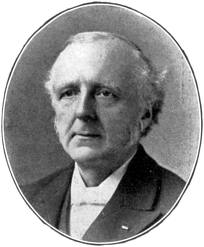
Refrain From Rhetoric

My dear fellow pastor, we should all heed these words—

C.H. Spurgeon“…If some preachers would refrain from rhetoric and tell their plain unvarnished tale, they would succeed better than they do now. Do you think that God meant his ministers to kill themselves in order come out on Sundays with one or two splendid displays of ‘intellect’ and eloquence? Surely this is not God’s way of doing things. I do not believe that Paul ever preached a fine sermon, or that Peter ever dreamed of any display of intellect. I asked the other day of one who had heard a sermon if it was likely that sinners would be converted by it. He said, ‘Oh no; by no means; but it was an intellectual treat.’ Is there anywhere in the Bible a word about intellectual treats, or anything approximating to such an idea?” —Charles Spurgeon

I’m not sure I can add much to this advice from the “prince of preachers” except to say, preach to glorify God, not to impress your earthly audience. Jesus said if we would lift Him up, He will draw everyone to Himself.

Thursdays With Oswald—Venting In Prayer

This is a weekly series with things I’m reading and pondering from Oswald Chambers. You can read the original seed thought here, or type “Thursdays With Oswald” in the search box to read more entries.

Venting In Prayer 

     When you are worked up to a pitch emotionally, read some of the Psalms, and the Spirit of God will gradually teach you how to form a spiritual nous*, a mind whereby you will not only understand but will slowly and surely get to the place where you can express your spirit, you will have a totally new language. 

* To read what Chambers means by the Greek word nous, click here. 

From Biblical Psychology 

Sometimes we’re too timid in our prayers. We think we need to hold back, or not really say what’s on our mind. We probably think that some of the language we use might be too offensive for God’s ears.

Have you ever read some of the Psalms? As Oswald Chambers suggests, this is a great place to form your prayer vocabulary. David really “lets loose” in some of his prayers, calling his enemies all sorts of names, and basically saying, “Get ‘em, God!”

So you don’t want to say those kinds of things to God? Don’t you think He already knows what you’re thinking? Wouldn’t it be much more effective to “vent” in prayer—in the safe presence of your loving Heavenly Father? It’s really only after you “get it out” that the Holy Spirit can help you work it out.

Express yourself—vent in God’s presence instead of the presence of those who are troubling you—and then listen to how God’s Spirit will help you slowly and surely get a brand new perspective on your situation.

UPDATE: I have a whole chapter called ‘Your Emergency Release Valve’ about these types of prayers in my book When Sheep Bite.

Did God Send Me Into This?!

Listen to the podcast of this post by clicking on the player below, and you can also subscribe on AppleSpotify, or Audible. 

Have you ever experienced this? You are certain that God has spoken to you. You’ve launched out in obedience, things are sailing along smoothly, and then <wham!> a storm threatens to swamp you. And you begin to second-guess what you thought God said to you. You begin to wonder if perhaps you misunderstood the directions God spoke: “Did God send me into this?!”

Ever been there?

The disciples of Jesus must have felt that way. Jesus says, “Let’s get into the boat and head over to the other side of the lake.” The disciples obeyed Jesus only to have a huge storm come crashing down on them, to the point that their boat was about to be swamped (see Luke 8:22-25).

What were they thinking then? What would you have been thinking? Perhaps you might have thought, “Did I miss something God said?”

I love this thought from Oswald Chambers—

You say, “If I had not obeyed Jesus I should not have got into this complication.” Exactly. The problems in our walk with God are to be accounted for along this line, and the temptation is to say, “God could have never told me to go there, if He had done so this would not have happened.” We discover then whether we are going to trust God’s integrity or listen to our own expressed skepticism. 

God knows what He’s doing. He knows what He needs to accomplish.

Too many times I get focused on the destination, while God is focusing on the process. I often will learn more about my faith, and about the power and faithfulness and love of my God, during these storms than I will in an incident-free journey.

If you are on a journey on which God sent you and your boat’s rocking, don’t second-guess what God said. Keep your eyes on Jesus, and watch to see what He’s developing in you during your stormy trip.

You may also like to check out:

►► Would you please prayerfully consider supporting this ministry? My Patreon supporters get behind-the-scenes access to exclusive materials. ◀︎◀︎

Conspiracy!

Conspiracy“The one Jesus that skeptics refuse to tolerate is a uniquely divine, miraculous, prophesy-fulfilling, and resurrected Jesus—even if the evidence points persuasively in that direction. After all, that would put them in the place of being beholden to Him. Their personal sovereignty and moral independence would be at risk. The problem is: that’s the real Jesus.” —Lee Strobel 

Jesus was crucified. He was in the grave for three days. Then God raised Him from the dead, fulfilling everything that had been prophesied about Him! That’s the real Jesus!

But those who don’t want to acknowledge those facts have concocted all sorts of conspiracy theories as to His death and resurrection.

On Easter morning, Calvary Assembly of God will be presenting an original drama called Conspiracy! to tackle these conspiracies head-on. The cast of characters is interesting, the dialogue is witty and fast-moving, so this will be a very memorable morning!

Here’s the info:

When: Sunday, March 31, at 9am and 11am.

Where: Calvary Assembly of God.

Cost: FREE but we suggest you get a ticket to make sure you have a seat. You can reserve your spot by clicking here and emailing your ticket request to me.

A delicious breakfast + some uplifting music + a memorable drama = a great morning learning about the risen Jesus. Please don’t miss it!

Love Is… (part 2)

Love is… worksheet 2We are taking a practical look at the incredible definition of love in 1 Corinthians 13. We’re doing this in the context of learning how to love the “unloveable”—or maybe I should say, loving those who are the most resistant to real love. If we can show them love, how much more will the love of Jesus be seen!

All of these verbs are present tense verbs. That means they aren’t exhausted in the past, and they aren’t waiting for future conditions to improve—they are in operation NOW.

Far too many people know Christians more by what we’re against than by what we’re for. So where the biblical text say “love does not” or “love isn’t,” I’ve changed it into the positive “love is.”

You can read about the first five attributes love love by clicking here.

The next five attributes are:

Love is graceful

  • The root word means something that should be covered up, or something we’re ashamed of. Because our words and actions are graceful, they are things we wouldn’t have to defend, or explain, or apologize for later. They are words and actions that wouldn’t embarrass us.
  • Agape will do nothing that misbecomes it.” —Matthew Henry

Love knows our relationship > my rights

  • True love “does not demand its own way” (New Living Translation) nor does it “insist on its own rights” (Amplified Bible). Instead it always seeks ways that the relationship can be repaired or enhanced, even if that means giving up something I consider to be “my right.”
  • NOTE: I’m not saying that you become a doormat. This is not a license for someone to abuse you, but it is a call for us to balance our responses. Romans 12:18 says as far as it depends on you, live at peace with everyone.
  • Here are some great balancing verses. Balance Proverbs 26:4-5 (here is a video where I expand on this idea), and then balance Philippians 2:3-4.

Love is even-tempered

  • The Amplified Bible says it well: love is not touchy or fretful or resentful.
  • This Greek word means not getting stirred up or exasperated. So we need to lighten up!
  • There are some places where we’ve become too sensitive, too touchy, too short-fused. The fire of hurt has replaced the fire of love. So Matthew Henry advises us: “Where the fire of love is kept in, the flames of wrath will not easily kindle, nor long keep burning.”

Love is forgiving

  • The New International Version says love keeps no record of wrongs.
  • This Greek phrase speaks of an accountant tallying up the hurts (where there is an overdrawn account), seeing there is a debt to be paid back, and then appointing himself as the bill collector. True love cancels those IOUs.
  • We don’t forgive others because they deserve forgiveness, but we forgive others because we received forgiveness from God that we did not deserve!
  • For if you forgive people their trespasses [their reckless and willful sins, leaving them, letting them go, and giving up resentment], your heavenly Father will also forgive you. (Matthew 6:14 AMP)

Love is God-honoring

  • Agape loves what God loves and hates what God hates.
  • Agape loves when people find God’s truth, and hates anything that blocks that pursuit.
  • Agape loves the sinner and hates the sin.
  • “The sins of others are the grief of an agape spirit [not] its sport or delight; they will touch it to the quick….” —Matthew Henry

Here’s where the real test comes in: How will you apply these attributes of love to someone in your life? More specifically: to someone you think is “unloveable”?

I know you have someone in your life that you think is unloveable. With that person’s face clearly in mind, how will you fill in the blanks:

  1. I can be graceful in…
  2. I can give up my right to…
  3. I need to lighten up in this area…
  4. I must forgive them for…
  5. I need to pray for a breakthrough in…

If you would like a downloadable PDF of this worksheet, click here –> Love is… worksheet 2

If you missed any of the messages in our Loving the Unlovable series, you can check them all our here.

Don’t Unchristianize Your World

This morning I shared this quote from Henry Drummond. He absolutely nails it when he says our temper can unchristianize the societies in which we live and work.

“The peculiarity of ill temper is that it is the vice of the virtuous. … No form of vice, not worldliness, not greed of gold, not drunkenness itself, does more to unchristianize society than evil temper. For embittering life, for breaking up communities, for destroying the most sacred relationships, for devastating homes, for withering up men and women, for taking the bloom of childhood, in short, for sheer gratuitous misery-producing power this influence stands alone.” —Henry Drummond

May God help us eliminate our unchristianized tempers!

God Is Here

Listen to the podcast of this post by clicking on the player below, and you can also subscribe on AppleSpotify, or Audible. 

“Jewish scholars used to debate why God appeared to Moses in a burning bush. A thunderclap or lightning bolt would have been more impressive. And why the far side of the desert? Why not the palace or a pyramid in Egypt? They concluded that God appeared to Moses in a burning bush for one simple reason: to show that no place is devoid of God’s presence, not even a bush on the backside of the desert.” —Mark Batterson, in Draw The Circle

God is Jehovah Shammah

The One Who is with us everywhere for He is Omnipresent

God is here

Wherever you are today—stuck in the snow, hard at work, playing with your kids, eating lunch with your friends, at church, reading a book, singing a song—God is there. That makes wherever you are holy ground.

We should live today and everyday like we are in the very presence of God. Because we are. 

(If you are walking through a dark time right now, perhaps wondering just exactly where God is, I have a whole series of posts and videos you should check out called Where’s God?)

►► Would you please prayerfully consider supporting this ministry? My Patreon supporters get behind-the-scenes access to exclusive materials. ◀︎◀︎

Fuller Love

Listen to the podcast of this post by clicking on the player below, and you can also subscribe on AppleSpotify, or Audible.

Love is not always flowery and sweet, where everyone gets along, and no one is ever mean or even unkind. Actually that’s not love; that’s selfishness. You’re saying, “I will love you because it makes me feel good. I get something special out of this when I am kind and loving to you.”

The ancient Greeks had different words for love. Whereas we use love for food (“I love my pasta”), and the same word for special people (“I love my wife”). But we all know that I’m not really saying my wife and a plate of spaghetti are on the same level.

So the Greeks had a word for love for the inanimate (like food and music), and a word for this-makes-me-feel-so-good (like sex and alcohol), and a word for treating someone humanely or kindly (sometimes called brotherly love). These are well-known loves, but they are very fragile. The law of diminishing returns says that each time I experience one of these loves, its ability to please me the next time is slightly reduced, until at one point this thing/person no longer satisfy me at all. In fact, they may even cause my stomach to churn in nausea.

But there was one more word the Greeks used for love, that the biblical writers used almost exclusively. This word (agape) is not tuxedos and dancing gowns and chandeliers. This love shows up in work clothes, with callouses on its hands and knees, because it’s determined to serve someone else no matter what!

This is the kind of love God exhibited toward us—God shows and clearly proves His own love for us by the fact that while we were still sinners, Christ died for us (Romans 5:8).

And this is the kind of love Jesus commanded us to exhibit toward others… even toward those we think are unloveableBy this all men will know that you are My disciples, if you love one another. … If you love those who love you, what credit is that to you? Even “sinners” love those who love them. And if you do good to those who are good to you, what credit is that to you? Even “sinners” do that (John 13:35; Luke 6:32-33).

This is the kind of full love that those apart from Jesus Christ do not know, but they can see it and be drawn to it if Christians will demonstrate it. Henry Drummond said this—

“Never offer men a thimbleful of gospel. Do not offer them merely joy, or merely peace, or merely rest, or merely safety; tell them how Christ came to give men a more abundant life than they have, a life abundant in love. … Then only can the gospel take hold of the whole of a man, body, soul and spirit. … Only a fuller love can compete with the love of the world.

Let’s show the world a fuller love, and in so doing we will show them Jesus!

If you missed any of the messages in our Loving the Unlovable series, you can check them all our here.

►► Would you please prayerfully consider supporting this ministry? My Patreon supporters get behind-the-scenes access to exclusive materials. ◀︎◀︎

March!

Listen to the podcast of this post by clicking on the player below, and you can also subscribe on AppleSpotify, or Audible.

I’m convinced that many of us have missed answers to prayer because the answers seemed “too practical” or required “too much work” from us. Consider the well-known example of the defeat of the city of Jericho as recorded in the Bible.

Jericho was a massive fortress. Archeologists tell us that the city encompassed over eight acres, and was surrounded by walls which were 30-feet tall and 20-feet wide. Joshua was a brilliant military strategist who up to this point had never suffered a defeat. He asks God for help in defeating this fortress, and God tells him, “March!”

That’s it. Not pray, pray, and pray some more. Not go on a 40-day fast. Make no mistake, the Israelites had been in a period of renewed passion and prayer. As they entered Canaan, they sought God, renewed their vow to serve Him alone, and celebrated the Passover just days before encountering Jericho.

Sometimes our prayers have to have feet. 

Sort of like abolitionist Frederick Douglass who said, “Praying for freedom never did me any good til I started praying with my feet.”

  • We need to pray for the salvation of our loved ones, and talk to them about Christ.
  • We need to pray for God to open the door for employment, and mail the resume.
  • We need to pray for God’s help on a test, and study hard.
  • We need to pray, and we need to march.

Jericho delieveredI love the verb tense in this story! God told Joshua, “I have delivered Jericho into your hands” (Joshua 6:2). Later on, after the Israelites completed their 13th hike around Jericho, Joshua said, “Shout! For the Lord has given you the city” (v. 16).

If you are praying for something that is in alignment with God’s Word, then God has given you your Jericho. But you may not see the walls come tumbling down until you march. Keep praying, keep marching, keep circling it in prayer, and watch those walls crumble!

To check out the others messages in this series on prayer called Praying Circles, please click here.

►► Would you please prayerfully consider supporting this ministry? My Patreon supporters get behind-the-scenes access to exclusive materials. Like this exceptional Bible study tool to help with Creation apologetics. ◀︎◀︎

Strength From The Strong One

Charles Spurgeon said this in Lectures To My Students, and it is still wise counsel for every pastor today.C.H. Spurgeon

“To face the enemies of truth, to defend the bulwarks of the faith, to rule well in the house of God, to comfort all that mourn, to edify the saints, to guide the perplexed, to bear with the forward, to win and nurse souls—all these and a thousand other works beside are not for a Feeble-mind or a Ready-to-halt, but are reserved for the Great-heart whom the Lord has made strong for Himself. Seek then strength from the Strong One, wisdom from the Wise One, in fact, all from the God of all.” —Charles Spurgeon