Life Is Hard! Now What?

Jesus told Peter, and now Peter tells us—Christians are going to be insulted and persecuted for believing in Jesus. So the fact that life is hard shouldn’t come as a surprise. Peter then goes on to elaborate on how Christians should live in spite of the mistreatment. 

“The more Christians are unlike the world, the more it hates us; the more we are like our Lord, the more the world will persecute us.” —Horatius Bonar

How should Christians respond to insults and persecution? Peter outlines the Christian’s response in 1 Peter 4:12-19

dear friends, do not be surprised (v. 12). I like this verse in the Amplified Bible: Do not be amazed and bewildered at the fiery ordeal which is taking place to test your quality, as though something strange (unusual and alien to you and your position) were befalling you. After all, Jesus told us this was coming (see John 15:18-20). 

but rejoice that you participate in the sufferings of Christ (v. 13a). Notice that this should be the sufferings OF Christ, not of our own making. 

—let suffering lead to Spirit-led reflection (notice the if’s in vv. 14-18, and the if’s in what Jesus said in John 15:18-20). We need to make sure our suffering is because we’re standing for Jesus, not because we’re being jerks! David asked God to check if his actions were the cause of his persecution (Psalm 7:3-4) and we should too. If we discover that we’re the one to blame, quickly apologize, ask for forgiveness, and make things right.  

keep your focus on when His glory is revealed (v. 13b). Time is short, and the rewards are sure so don’t remain focused on the immediate pain, but look up to the longterm gain.  

do not be ashamed to suffer for Jesus (v. 16). Jesus told us not to be ashamed of Him because He is not ashamed of us (Luke 9:26; Hebrews 2:11). 

stay committed to your faithful Creator (v. 19a). Staying committed means getting even closer to God in the hard times.

continue to do good (v. 19b). What does continue to do good look like? Peter lists things like being self-controlled, helping others that are being persecuted, showing proper respect, having a good work ethic, not trading insult for insult, and many other commands. Bottom line: doing good means living like Jesus lived while He was on Earth (see Acts 10:38). 

So, Christian, I’ve got two questions for you—

How are you handling insults and persecution? Are you continuing to do good despite the mistreatment? 

Remember Jesus is coming soon, and His rewards are with Him for how we have lived. “Behold, I am coming soon, and I shall bring My wages and rewards with Me, to repay and render to each one just what his own actions and his own work merit.” —Jesus (Revelation 22:12) 

Join me this Sunday as we continue to learn how Christians are to live as aliens and strangers while we visit Earth. If you’ve missed any messages in this series, you may find the complete list by clicking here. 
Unlearning Limiting Fears

Did you know that you were only born with two fears: the fear of falling and the fear of loud noises? Yet the DSM-5 has a whole section to help mental health professionals diagnosis the specific phobia that may be limiting someone’s life. That might be because some places list upwards of 500 recognized phobias that constrict people’s lives! 

Since only two of our fears are innate fears, that means the rest of the fears that trouble us are learned fears. Since God repeatedly says “Fear not!” throughout Scripture, that must mean He also tells us how to overcome our fears. 

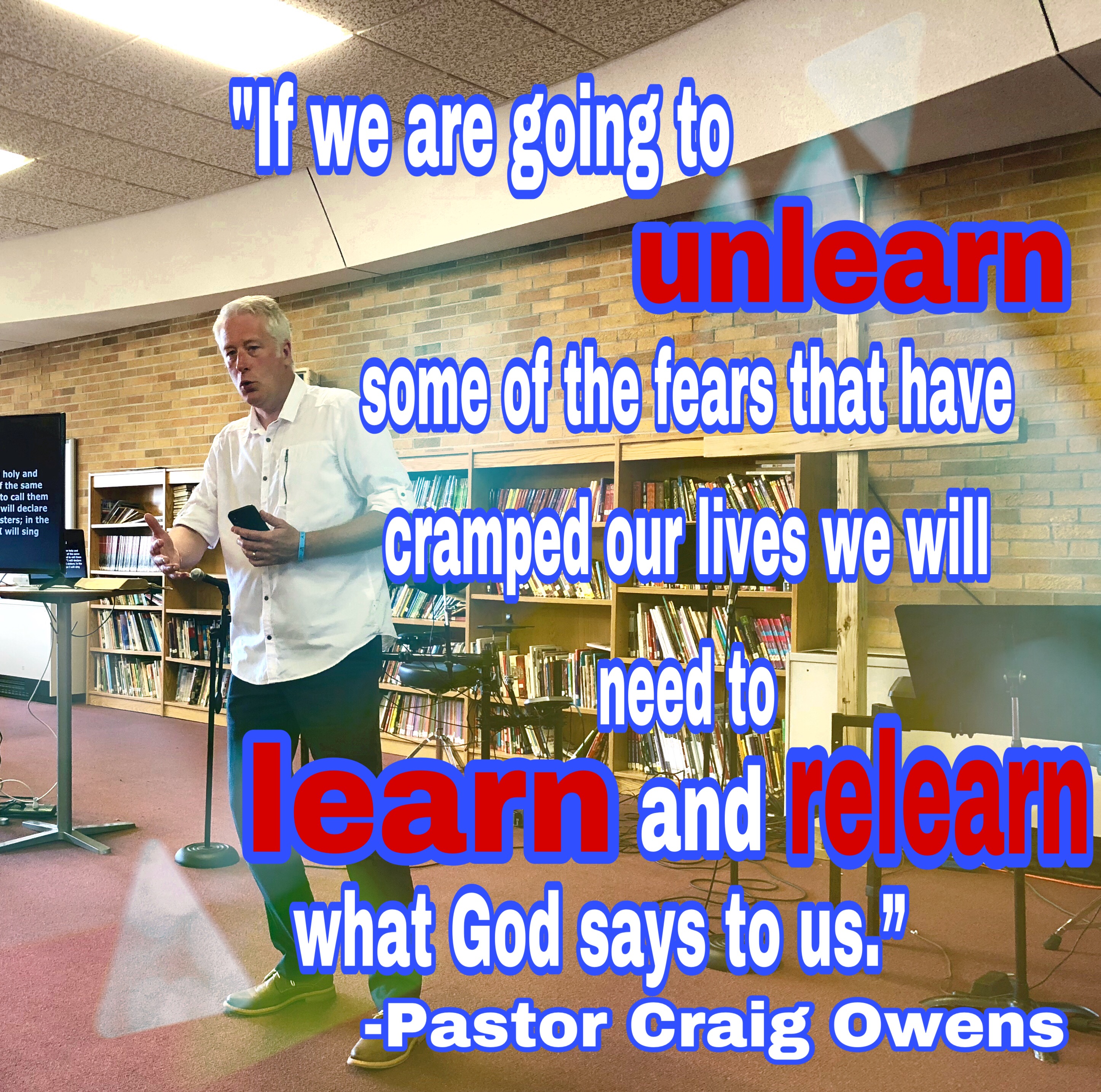
Christians—as aliens and strangers on this Earth—should have an alien response to earthly fears. So if we are going to unlearn some of the fears that have cramped our lives we will need to learn and relearn what God says to us.

Peter asks what might seem like a rhetorical question, “Who is going to harm you if are eager to do good?” Think about it: who wants to punish someone for doing the right thing? Apparently some people do because Peter goes on to add, “But even if you should suffer for what is right, you are blessed. Do not fear what they fear; do not be frightened” (1 Peter 3:13-14). 

So even if people insult Christians for doing things God’s right way, God’s blessing is on them. Sadly, people without God’s blessing on their lives often give in to the FOMO (fear of missing out) and they end up lashing out at those being blessed. That lashing out is directly rooted in their fears. 

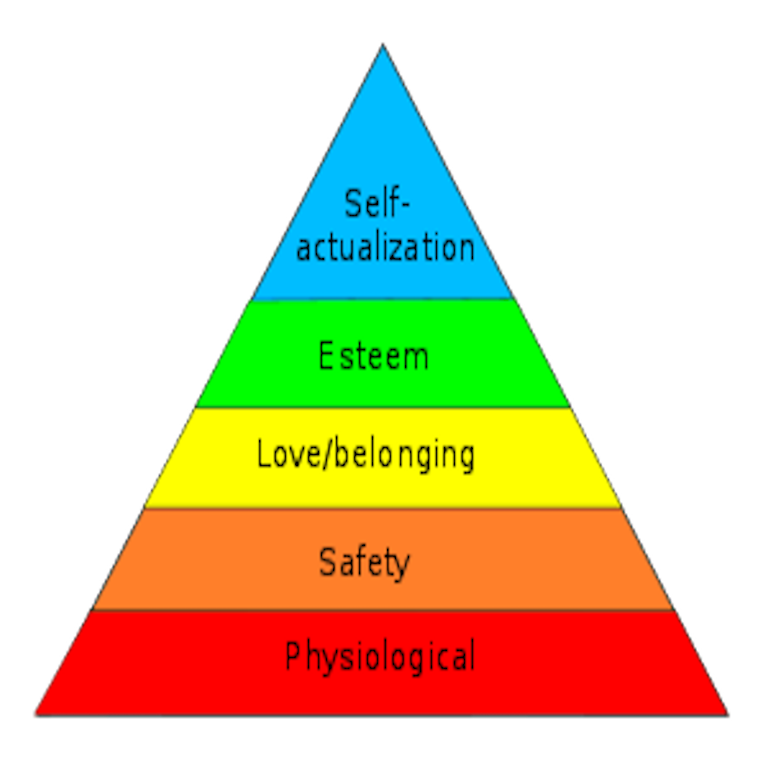
Abraham Maslow proposed a hierarchy of needs that humans have, and obviously, there would be fears associated with any of those needs not being met. At least, that would be the Earthling response. Christians need to unlearn those fears by learning and relearning why God tells them to “Fear not!” 

  1. Fear of not having physiological needs met—Jesus tells us why we shouldn’t worry (Matthew 6:25-34). 
  2. Fear of not being kept safe—the psalmist tells us that God is our shield (Psalm 84:11).
  3. Fear of not fitting in with a certain social group—Jesus proudly call His followers His brothers and sisters (Hebrews 2:11-12).
  4. Fear of not being rewarded or recognized—Jesus says there are blessings for those that hang in with Him through persecution, including being called a co-heir alongside Him (Matthew 5:10-12; Romans 8:17).
  5. Fear of our life not having purpose—the apostle Paul reminds us that God chose us on purpose to be His example to the world (1 Corinthians 1:25-27). 

Since Jesus overcame all the things that could cause us fear, Peter counsels us to arm yourselves with this same attitude (1 Peter 4:1). The Greek word for arm yourselves only appears here, and it means for us to repeatedly remind ourselves of God’s truth. The Greek word for attitude is only here and in Hebrews 4:12, where we are reminded that the Word of God helps our minds unlearn, learn, and relearn God’s truth. 

Have the borders of your life been squeezed by your fears? Do you feel like you’re missing out on the “abundant life” that Jesus said you could have? The Word of God can help you unlearn those fears, and fellow Christians would love to come alongside you to help you continue to relearn that truth over and over again until your fears are banished from your life! 

Don’t let fear keep you from being all that God has planned for you to be! 

Please join me on Sunday as we continue our study of how Christians are to live as aliens and strangers while on Earth. If you’ve missed any messages in this series, you may find the complete list by clicking here. 
A “Slip Of The Tongue”?

Have you ever said something and then immediately thought, “Where in the world did that come from?!?” 

You might have thought it was just a slip of the tongue, but it’s not. That slip of the tongue is actually a gift to us to help us know what’s really going on in our heart. 

Check out this 2-minute clip—

The Scriptures I reference in this passage are Psalm 39:1; Jeremiah 17:9; and Matthew 15:19. 

This is a snippet from a longer message on putting other things in our life in perspective. You can check out the full video by clicking here, or you can read the list of the 5 things we need to keep in proper perspective by clicking here.

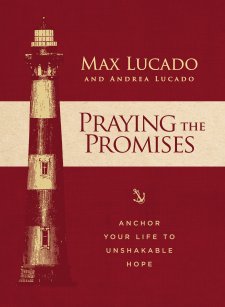
9 Prayers From “Praying The Promises”

In Praying The Promises, Max Lucado gives us valuable instruction on how to turn Scriptural promises into powerful prayers. Here are a few of those prayers (the biblical reference in brackets is the passage that helped form the prayer). 

Thank you for being a God who wants me to know You.… Your wisdom surpasses all wisdom on this earth. Your ways are so much higher than mine. I could study You and Your Word for the rest of my life and still only scratched the surface of the depths of who You are. You are at once knowable and unknowable.… Deepen my knowledge of You, God. [Psalm 19:1-2; Isaiah 55:8-9; Romans 1:19-20]

Help me rely on Your promise of grace because I have been found righteous through Jesus. When trouble comes, use those troubles to increase my faith and draw me nearer to You. [Hebrews 7:25]

Father, sometimes I convince myself that I need to earn Your salvation. I feel like I should do more, be more, and achieve more. But You simply want my faith. Help me let go of my striving and this need to perform for You and for others. [Romans 4:5; Philippians 3:4-7] 

Guide me during the difficult times. Give me hope as I pray and wait. Remind me of Your power and authority so that I will trust Your ways, even when I can’t see where the path before me is going. [Genesis 50:20-21; Ephesians 1:11-12; Romans 5:3] 

Forgive me when I look for guidance outside of Your Word. When I ask friends what to do before I open my Bible. When I am resistant to reading Your Word because I want to guide myself rather than be guided by You. Renew my desire and passion for reading the Bible. … May I learn something new about You and Your character each time I read it. [Psalm 32:8; 2 Timothy 3:16-17] 

When a worry arises, remind me of Your presence so I will turn to You and not fear. [Psalm 23:1, 4]

Gracious Father, nobody is beyond Your redemption. Because of Your love and mercy, You provided a Redeemer for us in Christ, who graciously stopped us while we were on the path of sin, gave us refuge, and pointed us toward the road of redemption. [Galatians 4:4-5]

Forgive me when I try to fight my own battles. … If I try to fight for myself, I end up feeling exhausted and defeated by my own efforts. You have said You are fighting for me. Help me believe that truth even when I am so tempted to fight for myself. Go before me this week as I face temptation. Go before me as I face anxiety, fear, and uncertainty. Protect me in every spiritual battle. Fight for me and help me surrender each battle to You. [Exodus 14:14; Deuteronomy 1:30; Psalm 20:7-8]

As concerns and questions come up, remind me to turn each of them over to You in prayer. I lift up my family to You. I lift up my work to You. I lift up my to-do list to You. Cover each worry with Your peace. Prioritize my day so that it aligns with Your will and not mine. [1 John 5:14]

You can check out my review of Praying The Promises by clicking here, and you can read some other quotes from this book by clicking here.

Let’s Put That In Perspective!

How long is your life? If you’re a man living in the United States on average your life is 689,412 hours. But how long is that really? 

Here’s some perspective—if you drew a timeline 50 feet long that represented all of Earth’s recorded history, your life would cover about the breadth of your hand. But that’s only recorded history—what about the eternity that existed before history started and the eternity that will continue after history ends? 

Twice in Psalm 39, David described our brief life like this: each man’s life is but a breath. 

So what do we do with our breath-long life? Fortunately for us, David gives us godly perspective in five areas. 

  1. Perspective on the weight of my words and my silence (vv. 1-3) 

David had a good start: I will keep my tongue from sin, but what happens when sinful words slip out? I would suggest we count those as a gift. Really?! Yes, because those “slips” make us aware of what’s really in our heart (see Matthew 15:19) so that we can confess them. 

David also suggests putting a muzzle on our mouths when we’re around certain people. In other words, don’t get into petty fights with people who aren’t going to receive the wisdom we may have to share with them. 

  1. Perspective on the use of my time (vv. 4-5)

Why do we procrastinate doing good things? Some of our simple cliches reflect this, like TGIF. Why wait until Friday to get happy? Why not say TGIT—thank God it’s today! Do something memorable today… do something life-altering today… do something for God today.

  1. Perspective on my possessions (v. 6) 

David reminds us that we work so hard to accumulate stuff “not knowing who will get it.” Jesus had another word for someone who only wanted to get stuff to make his life easier: fool (see Luke 12:16-21). Use stuff to serve others. 

  1. Perspective on forgiveness (vv. 7-11)

Why oh why, would we spend one minute longer than we have to with unconfessed, unforgiven sin? I blogged last week about the freedom that immediately comes when we receive forgiveness from our confessed sin. Let’s do this quickly! 

  1. Perspective on the purpose of my life (vv. 12-13)

If I only have a breath-long life, I want to make every moment count. I love what C.T. Studd wrote: “Only one life will soon be past. Only what’s done for Christ will last. … Let us not glide through this world and then slip quietly into heaven without having blown the trumpet loud and long for our Redeemer, Jesus Christ. Let us see to it that the devil will hold a thanksgiving service in Hell when he gets the news of our departure from the field of battle.”

Here’s my prayer for all of us—Lord, help me to know how few days I have so I can live every one for Your glory. 

Confession Is Good For You

One of the best definition of Selah is the bracketed comment used next to that word in the Amplified Bible: pause, and calmly think of that. 

Psalm 32 is only eleven verses long, yet Selah—a call to pause and ponder—is used three times. In other words, David is very interested in getting us to weigh something important. This whole psalm is a call to ponder the heavy, unbearable burden of unconfessed sins vs. the freedom and fresh start that comes immediately with confession.

And in case you think that confession is just something that someone does one time when they become a Christian, keep in mind that David is writing this song to be sung by the choir in church. That means confession is good for everyone!

The weighty CURSES of unconfessed sin

  • I feel worn out, wasting away like old, flimsy clothes (v. 3a)
  • I am groaning (v. 3b)—I am worn out from my groaning. All night long I flood my bed with weeping and drench my couch with tears (Psalm 6:6)
  • I feel God’s hand of displeasure heavy upon me (v. 4a AMP) 
  • My strength evaporates like water in the summer heat (v. 4b NLT) 
  • I’m led around like a dumb mule (v. 9)
  • I experience many woes (v. 10a) 

Then comes confession—I acknowledged my sin to You, and my iniquity I did not hide. I said, “I will confess my transgressions to the Lord continually unfolding the past till all is told”—then You instantly forgave me the guilt and iniquity of my sin (v. 5 AMP).  

If we claim to be without sin, we deceive ourselves and the truth is not in us. If we confess our sins, He is faithful and just and will forgive us our sins and purify us from all unrighteousness (1 John 1:8-9).

The weighty BLESSINGS after confessed sin

  • My transgressions are forgiven, which means they are lifted up and carried away (v. 1a)
  • My sins are covered; they are literally overwhelmed by God’s forgiveness (v. 1b)
  • My sin is no longer counted against me (v. 2a) because my record of forgiven sins has been cleared (v. 2b NLT; see also Psalm 103:2-3, 12) 
  • I get a fresh start, my slate’s wiped clean … Suddenly the pressure was gone—my guilt dissolved, my sin disappeared (vv. 1, 5 MSG) 
  • I’m protected in God’s hiding place and surrounded by God’s songs (vv. 7, 10b)
  • God instructs me and protects me to keep me from sinning again (v. 8)

What relief for those who have confessed their sins and God has cleared their record (v. 2 TLB) 

The mark of a maturing Christian is the one who is constantly closing the gap between sin and confession. 

Don’t let unconfessed sin weigh you down. As soon as you feel the Holy Spirit pointing something out in your heart, confess it and experience God’s immediate release! 

I am going to share one more message in this series on the Selahs in the Psalms this Sunday (but, God willing, we will return to this next summer). Please join me either in person or on Facebook Live. 

Thursdays With Oswald—Jeremiah 16

Oswald ChambersThis is a weekly series with things I’m reading and pondering from Oswald Chambers. You can read the original seed thought here, or type “Thursdays With Oswald” in the search box to read more entries.

Jeremiah 16

[These are notes from Oswald Chambers’ lecture on Jeremiah 16.]     

     “All things are lawful… but all things are not expedient,” says Paul, i.e., all things are lawful to me as a natural man, but not expedient to me as a spiritual man because I am under a superior command. … 

     How many of us have begun to realize our privilege of not doing things? The liberty to waive our rights is the great privilege of Christian sanctity. One of the meanest things is to say, “I don’t do certain things because it will damage me.” Paul’s argument is—“I don’t do certain things because it will damage someone else” (see 1 Corinthians 8:9-13). … 

     In the days before you knew God you did any number of things which God overlooked, but try and do them now, and if you persist you will realize what is written in Psalm 106:15—“And He gave them their request; but sent leanness into their soul.” 

From Notes On Jeremiah

A Christian should be able to say a guilt-free, excuse-free “No” to anything that would be inexpedient for themselves OR for others around them. 

Going Into The Heavy Presence Of God

“The King of glory” is a phrase that’s only used five times in the Bible, and all five times are packed into just four verses of Psalm 24. In this psalm, David lets us know who can enter into this awesome, heavy presence of the King of Glory. 

Why do I say “heavy”? The definition of the Hebrew word for glory always refers to a heaviness. There is something majestically, awesomely heavy about going before the All-Righteous, All-Powerful, All-Holy, All-Knowing, Absolutely Perfect God. Can any mere mortal enter into this presence? 

In an earlier psalm, David said, “For the Lord is righteous, He loves justice; the upright will see His face” (Psalm 11:7). But in this psalm, David asks, “Who can ascend Your holy hill? Who can come into Your presence?” (Psalm 24:3). 

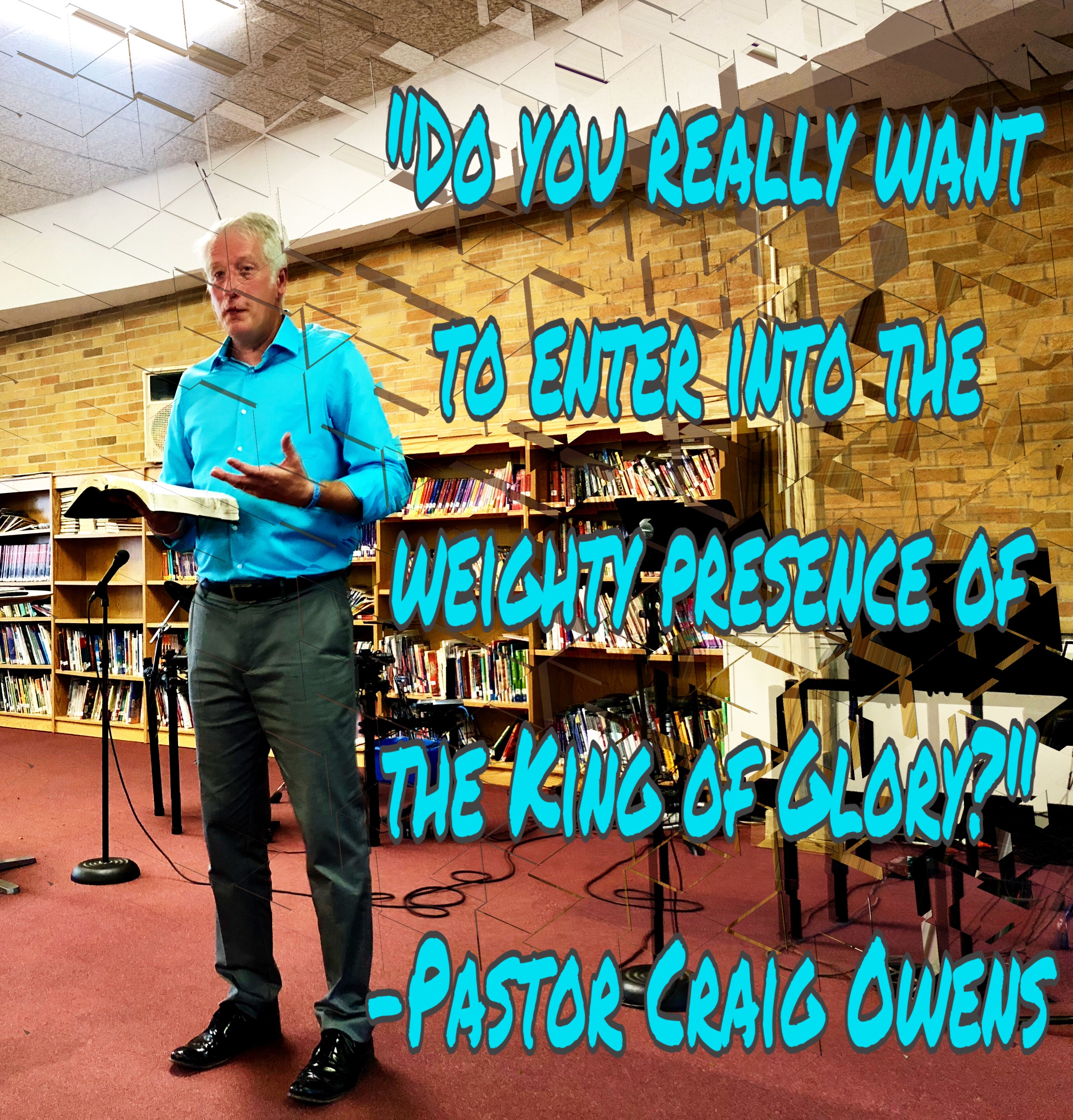
He answers the question with these words: the upright, the one with clean hands and a pure heart (he expands this list even more in Psalm 15), then he calls on us to Selah—pause and weigh this as if on a scale. David is asking, “Do you really want to enter into the weighty presence of the King of Glory?” 

If you do, something needs to happen first. David calls his generation (and our generation) the generation of Jacob. You can read the story of Jacob’s life beginning in Genesis 27. Jacob was a pragmatic man. If he could get away with something, he did. He only looked out for his own interests. He deceived, he connived, he bribed, he calculated his odds—he did what he had to so that he could advance himself. He didn’t realize God’s weight. He saw God only through a scarcity-mindset that gave God limits. He thought there was only a limited supply, and if somebody else was getting a blessing, then that meant there was less for him to get.

Then Jacob encountered God and discovered that he couldn’t do a thing against this weighty King of Glory. When he finally submitted to God, his name was changed to Israel. Jacob—the self-sufficient man—would never be allowed to enter the doors into God’s heavy glory. But Israel—the submitted man—may ascend the hill of the Lord and stand in His holy presence. Jacob means deceitful; Israel means the man without any deceit. 

For the rest of his life, Israel walked with a limp. It was a constant reminder that he simply wasn’t the man he was before he wrestled with God.

  • Jacob could only obtain what he could finagle; Israel is the recipient of all God’s blessings. 
  • Jacob could only keep his gains for this life; Israel got God’s blessings for eternity. 
  • Jacob might be vindicated by men; Israel is definitely and completely vindicated by God. 
  • Jacob couldn’t enter the presence of the King of Glory; Israel was welcomed as a prince into God’s presence.

Here’s the challenge I would give you… Use either Psalm 15 or Psalm 24:3-4 and let the Holy Spirit wrestle with you. Is there anything that’s holding you back from going through those doors into the weighty presence of the King of glory? If there is, confess it, repent from it, and even limp away from it (if you have to) so that you don’t miss out on God’s eternal blessings. 

Join me this coming Sunday as we continue our look at the Selahs in the Book of Psalms. 

Thursdays With Oswald—Jeremiah 14

Oswald ChambersThis is a weekly series with things I’m reading and pondering from Oswald Chambers. You can read the original seed thought here, or type “Thursdays With Oswald” in the search box to read more entries.

Jeremiah 14

[These are notes from Oswald Chambers’ lecture on Jeremiah 14.] 

     While one desire remains unsatisfied, God is not Lord over all. That means we must quit some desires or else quit God. Most of us bring our desires to God and He has to wither them. When we delight in God He gives us our desires because they are in accordance with His will (see Psalm 37:4). 

From Notes On Jeremiah 

Wow, there’s a lot to contemplate in that short statement. 

Oswald Chambers references this verse: Take delight in the Lord, and He will give you the desires of your heart (Psalm 37:4). 

And then there’s this—You will show me the path of life; in Your presence is fullness of joy, at Your right hand there are pleasures forevermore (Psalm 16:11). 

Some things I’m contemplating:

  • Do I have unsatisfied desires? 
  • Have I taken that desire into God’s presence? 
  • If so, why does it still feel “unsatisfied”?

Renewed Passion For Prayer

If I were to ask you if we should we pray for our friends in need, I think I’d probably get a universal “yes.” Even non-Christians might say we should “send good thoughts” or “best wishes” to our friends.

But if I were to ask, “How long should we pray for them?” we might get a lot of different answers. 

What about if we’re praying for a friend to get a job (and he gets it), or a friend to be healed (and she is), or a marriage to be restored (and it is)—do we stop praying then? 

Psalm 20 and 21 appear to be companion psalms: with Psalm 20 being David’s prayer of petition, and Psalm 21 being his prayer of praise. But there is also something quite interesting in each of these psalms about the placement of the word Selah. 

Remembering that Selah means some sort of pause, I find it very interesting where David tells us to pause in both of these psalms. In Psalm 20 we see the prayer request “may” either 6 or 7 times in the first five verse, but the Selah pause is right in the middle of them. Why would David start making his requests to God, tell us to pause in the middle, and then continue making his requests? 

I believe this Selah means to “pause and consider” that… 

  1. God invites us to participate with Him in fulfilling His plans. 
  2. God loves us so much that He wants to hear from us. 
  3. God is powerful enough to grant what we ask of Him. 

It’s as if in the middle of all of his petitions, David says, “Hold on a second. Do you realize what we are in the midst of doing? We are actually communing with the All-Knowing, All-Loving, All-Power Creator and Sustainer of the Universe!!”

In Psalm 21 David is offering up a prayer of praise for God’s answers to his prayers (note the similar language in Psalm 20:4 and 21:2), and once again he tells us to Selah pause right in the middle of those prayers of gratitude. 

I asked earlier, “When do we stop praying for a friend or for ourselves?” Is it when we get the job, or experience the healing, or have the breakthrough or restoration? What if the job, the healing, the restoration was just the beginning of what God wanted to do? The Selah in Psalm 21 is an accentuation: an explosion into so much more!! 

David prayed for victory in battle, but God gave him an everlasting victory; David prayed for long life, but God gave him eternal life (21:4); David prayed for blessings on his battle, but God gave him His eternal blessings (21:6).

Jesus said our Heavenly Father has gifts for us beyond our asking (Matthew 7:11), and the Apostle Paul said the same thing in Ephesians—

Now glory be to God, who by His mighty power at work within us is able to do far more than we would ever dare to ask or even dream of—infinitely beyond our highest prayers, desires, thoughts, or hopes. (Ephesians 3:20 TLB)

These two Selahs tell me: 

Don’t quit praying when times are tough. 
Don’t quit praying when you’ve prayed a long time. 
Don’t quit praying when it seems like God has answered. 
Keep on praying. Always. About everything!


Please join me this coming Sunday as we continue to look at the Selahs in the Psalms. You can join me in person or via Facebook Live.