Keep On Learning

Safe pathDon’t ever think you know it all.

Because you can’t!

There’s no way you can know it all.

So keep on learning.

Keep on digging into God’s Word.

Keep on letting the Holy Spirit teach you.

God is the only Know-It-All.

And He wants to teach you too.

What should a man learn?
Not hard to answer:
steadfastness in holiness,
shortness of words,
gentle brotherliness…
walking in obedience to God…
zeal in prayer…
bringing pride low,
simplicity of heart…
patience in the face of hardship. —Colmán mac Beógnai


Love Is… (part 2)

Love is… worksheet 2We are taking a practical look at the incredible definition of love in 1 Corinthians 13. We’re doing this in the context of learning how to love the “unloveable”—or maybe I should say, loving those who are the most resistant to real love. If we can show them love, how much more will the love of Jesus be seen!

All of these verbs are present tense verbs. That means they aren’t exhausted in the past, and they aren’t waiting for future conditions to improve—they are in operation NOW.

Far too many people know Christians more by what we’re against than by what we’re for. So where the biblical text say “love does not” or “love isn’t,” I’ve changed it into the positive “love is.”

You can read about the first five attributes love love by clicking here.

The next five attributes are:

Love is graceful

  • The root word means something that should be covered up, or something we’re ashamed of. Because our words and actions are graceful, they are things we wouldn’t have to defend, or explain, or apologize for later. They are words and actions that wouldn’t embarrass us.
  • Agape will do nothing that misbecomes it.” —Matthew Henry

Love knows our relationship > my rights

  • True love “does not demand its own way” (New Living Translation) nor does it “insist on its own rights” (Amplified Bible). Instead it always seeks ways that the relationship can be repaired or enhanced, even if that means giving up something I consider to be “my right.”
  • NOTE: I’m not saying that you become a doormat. This is not a license for someone to abuse you, but it is a call for us to balance our responses. Romans 12:18 says as far as it depends on you, live at peace with everyone.
  • Here are some great balancing verses. Balance Proverbs 26:4-5 (here is a video where I expand on this idea), and then balance Philippians 2:3-4.

Love is even-tempered

  • The Amplified Bible says it well: love is not touchy or fretful or resentful.
  • This Greek word means not getting stirred up or exasperated. So we need to lighten up!
  • There are some places where we’ve become too sensitive, too touchy, too short-fused. The fire of hurt has replaced the fire of love. So Matthew Henry advises us: “Where the fire of love is kept in, the flames of wrath will not easily kindle, nor long keep burning.”

Love is forgiving

  • The New International Version says love keeps no record of wrongs.
  • This Greek phrase speaks of an accountant tallying up the hurts (where there is an overdrawn account), seeing there is a debt to be paid back, and then appointing himself as the bill collector. True love cancels those IOUs.
  • We don’t forgive others because they deserve forgiveness, but we forgive others because we received forgiveness from God that we did not deserve!
  • For if you forgive people their trespasses [their reckless and willful sins, leaving them, letting them go, and giving up resentment], your heavenly Father will also forgive you. (Matthew 6:14 AMP)

Love is God-honoring

  • Agape loves what God loves and hates what God hates.
  • Agape loves when people find God’s truth, and hates anything that blocks that pursuit.
  • Agape loves the sinner and hates the sin.
  • “The sins of others are the grief of an agape spirit [not] its sport or delight; they will touch it to the quick….” —Matthew Henry

Here’s where the real test comes in: How will you apply these attributes of love to someone in your life? More specifically: to someone you think is “unloveable”?

I know you have someone in your life that you think is unloveable. With that person’s face clearly in mind, how will you fill in the blanks:

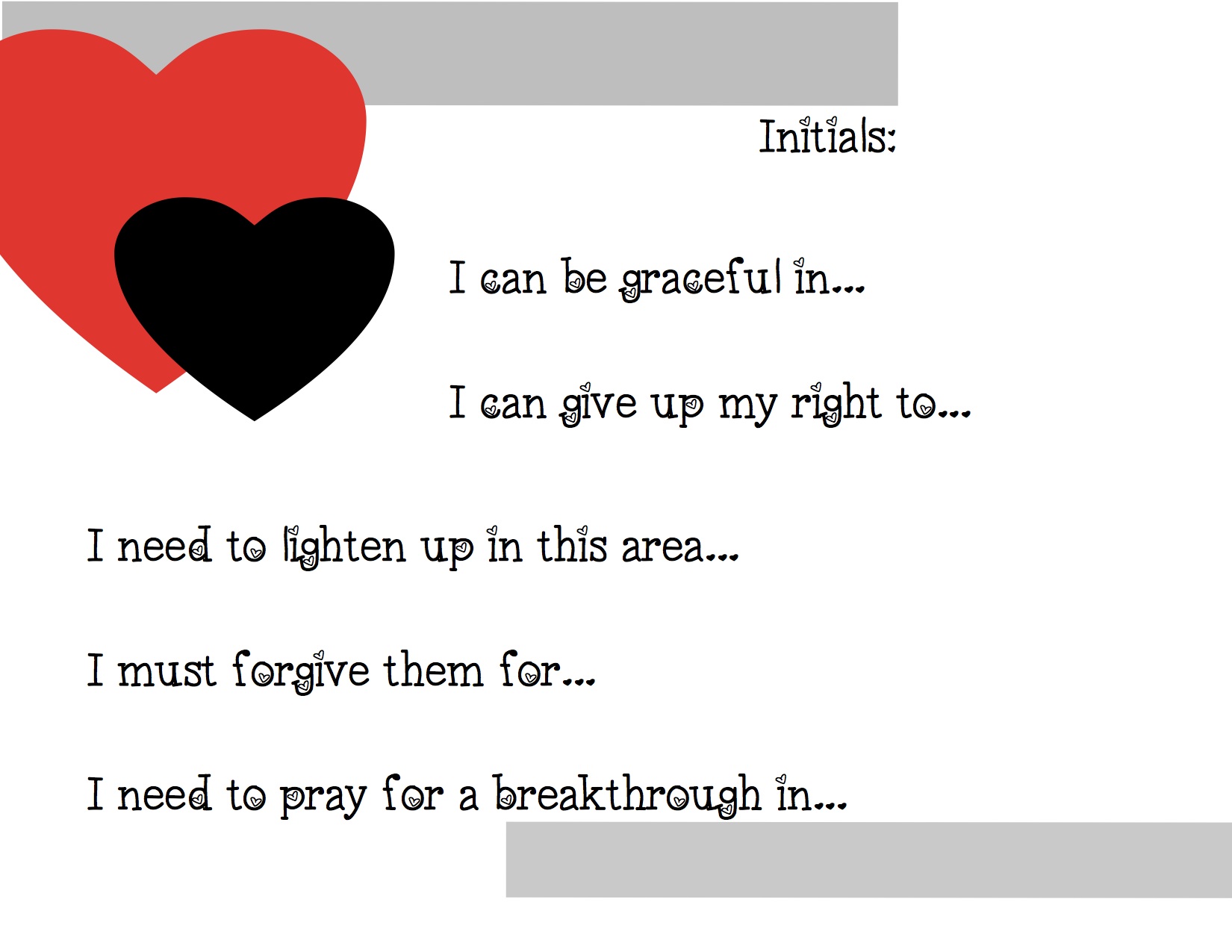
  1. I can be graceful in…
  2. I can give up my right to…
  3. I need to lighten up in this area…
  4. I must forgive them for…
  5. I need to pray for a breakthrough in…

If you would like a downloadable PDF of this worksheet, click here –> Love is… worksheet 2

If you missed any of the messages in our Loving the Unlovable series, you can check them all our here.

Next Level: James

It was a time of explosive growth. And with that growth came challenges, questions, problems, and opportunities! I’m talking about the Church in its earliest days in Jerusalem.

The Bible tells us that God prepares people in advance (Colossians 2:10) to do the works that He has equipped them to do. Into this environment of rapid growth and previously unheard-of opportunities stepped a man named James. His leadership and wisdom were just what the church needed then.

And his leadership and wisdom are just what the church needs now.

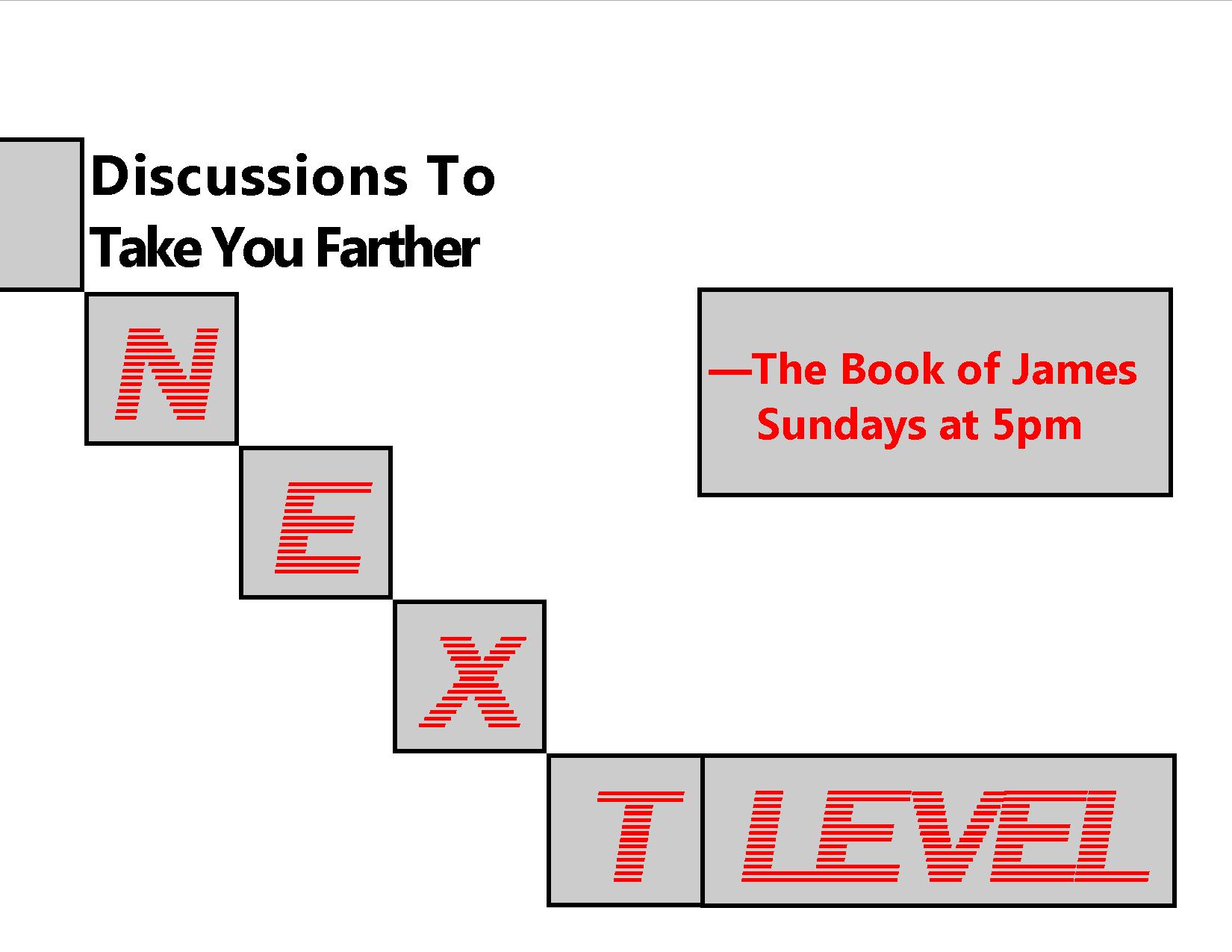
That’s why I’m leading our Next Level study group into an in-depth look at the book James wrote. The wisdom that is found in the Book of James has been called “the proverbs of the New Testament,” and we’ll be learning how to apply those proverbs to our lives and our church.

Please join me for this fascinating and informative study at 5pm each Sunday afternoon.

Don’t Play The Fool

Listen to the podcast of this post by clicking on the player below, and you can also subscribe on AppleSpotify, or Audible.

You probably know this already: Once you get boiling mad, it’s hard to see things objectively anymore. You get steamed up—ticked off!—and you are on a no-detours course to “make things right.”

You might say things like…

  • “They need to know what they did wrong!”
  • “He’s got this coming to him!”
  • “She needs to get a taste of her own medicine!”

The unspoken completion of all of those phrases is the dangerous part. What we’re really saying is, “He needs to know what he did wrong, and I’m just the one to tell him!” Or, “She needs to get a taste of her own medicine, and I’m just the one to dispense that prescription to her!

It’s been said that action has killed its thousands; reaction its tens of thousands.

Did he hurt you? Yes!

Is he a jerk for doing so? Absolutely!

Should he get punished for it? Probably!

Are you the one to do it? No. No! NO!

He played the fool… Don’t sink to his level and play the fool yourself! 

Wise King Solomon said:

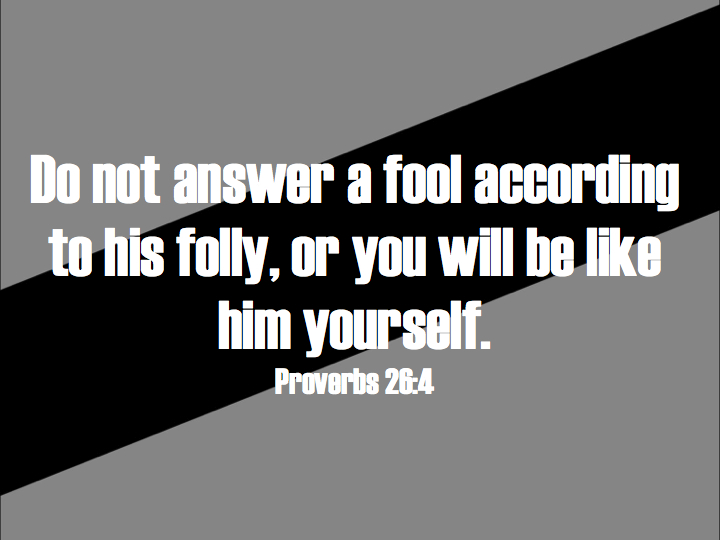
Do not answer a fool according to his folly, or you will be like him yourself. (Proverbs 26:4)

A fool gives full vent to his anger, but a wise man keeps himself under control. (Proverbs 29:11)

So what can you do to the one who injured you?

The best thing you can do is to FORGIVE HIM!

That’s right: leave him in God’s hands. Let the All-Righteous Judge deal with him. Don’t stay wounded, because you are continuing to allow your injurer to keep you trapped, to keep you wounded. Leave him in God’s hands by taking your hands off of him!

Never pay back evil with more evil. Do things in such a way that everyone can see you are honorable. Do all that you can to live in peace with everyone. Dear friends, never take revenge. Leave that to the righteous anger of God. (Romans 12:17-19)

Don’t play the fool! Forgive him and let God take it from there.

If you want to check out the other messages in our series called Ticked Off! you may click here.

►► Would you please prayerfully consider supporting this ministry? My Patreon supporters get behind-the-scenes access to exclusive materials. ◀︎◀︎

Respecting Elected Officials

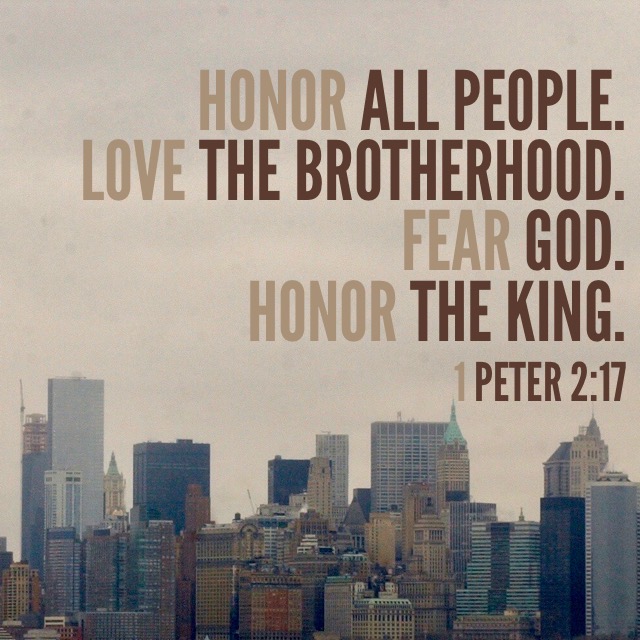
During our prayer time yesterday, I was contemplating the Apostle Peter’s instruction to, “Fear God, and respect the king” (1 Peter 2:17).

  • How do I respect the king (or the other elected officials in my city, state, and country)?
  • Does respect mean saying “yes” to every law that’s passed?
  • Can I be respectful and still disagree with those in elected office? How?

During our hour of prayer at the church last night, I was really wrestling with how I as a Christian should show respect to those in authority in our governments. Here are the nine things the Holy Spirit showed me.

I can show respect to those in authority by:

  1. Not forgetting that God placed them in their office (Daniel 4:25).
  2. Praying for them regularly (1 Timothy 2:1-2).
  3. Obeying all laws that aren’t immoral (Luke 20:25; Acts 5:29).
  4. Disobeying laws that are immoral (Esther 4:16; Acts 4:19).
  5. Holding them to biblical standards (Proverbs 8:15).
  6. Insisting they uphold the United States Constitution (Ecclesiastes 8:2).
  7. Reminding them that God’s wisdom is the ultimate standard (Proverbs 8:22-23).
  8. Requiring them to honor their promises, unless those promises conflict with God’s Word or the Constitution (Esther 1:13; 8:8).
  9. Speak to and about them without complaining or arguing (Philippians 2:14-15).

(Check out all of the above passages by clicking here.)

I’m working on living these out. What do you think?

Got Wisdom?

Solomon advised us to pursue wisdom:

  • Get wisdom, get understanding; do not forget my words or swerve from them. (Proverbs 4:5)
  • Wisdom is supreme; therefore get wisdom. Though it cost all you have, get understanding. (Proverbs 4:7)
  • How much better to get wisdom than gold, to choose understanding rather than silver! (Proverbs 16:16)
  • Buy the truth and do not sell it; get wisdom, discipline and understanding. (Proverbs 23:23)

I like T.M. Moore’s insight on this…

“Wisdom is that skill in living which comes as Christ is formed in us and lives His Word, in the power of His Spirit, through our lives. The beginning of wisdom is the fear of God (Psalm 111:10). But we’ll have to work hard and in many different ways to bring wisdom to a higher state in our lives. Solomon prayed for wisdom, but he also applied himself diligently to studying and contemplating a good many subjects in order to acquire that which he was trusting the Lord to give him. So we too, if we would increase in wisdom, must devote ourselves to ‘getting’ it by all the ways God makes available to us.”

In other words, we can (and should) pray for wisdom, but then we need to get busy to actually get the wisdom. God won’t simply pour wisdom into our hearts and minds.

Wisdom is earned through experience

Godly wisdom is earned through experiences that the Holy Spirit helps us evaluate and assimilate. The experience might be pleasant, or it might be painful. It might come through reading your Bible, or it might come through prayer. It might come in a pastor’s message, or it might come in a friend’s words. You might get it by going to your job, you might get it while taking a stroll along the beach on your vacation.

God’s wisdom is constantly being revealed to us. Are you getting it?

If not, what are you going to do to get it?

Whatever you do, GET WISDOM!

Thursdays With Oswald—Guard Your Heart With Your Head

This is a weekly series with things I’m reading and pondering from Oswald Chambers. You can read the original seed thought here, or type “Thursdays With Oswald” in the search box to read more entries.

Guard Your Heart With Your Head

     The Bible puts the head in the prominent position, not the central position; the head is the “finish off,” the manifestation of what the heart is like; the outward expression of the heart, as a tree is the outward expression of the root. This is the relationship between the head and the heart which the Bible reveals. …

     In dealing with the Bible the danger is to come to it with a preconceived idea, to exploit it, and take out of it only what agrees with that idea. If we try, as has been tried by psychologists, to take out of the Bible something that agrees with modern science, we shall have to omit many things the Bible says about the heart. According to the Bible the heart is the center: the center of physical life, the center of memory, the center of damnation and of salvation, the center of God’s working and the center of the devil’s working, the center from which everything works which molds the human mechanism. 

From Biblical Psychology

Oswald Chambers was a holistic thinker: he knew the role of the Holy Spirit and the role of psychologists; he saw how the mind, spirit, and soul worked interdependently with each other. He never suggested that psychological issues be repaired with spiritual methods, nor that spiritual concerns be addressed by psychology.

But he also saw how easy it was to make heart matters (spiritual) concerns which should be addressed as head matters (psychological). The Bible says, “Above all else guard your heart, for from it flow all of the issues of life” (Proverbs 4:23).

So how do I guard my heart? Part of guarding my heart does start with my head: I need to think about what’s going into my heart. But, as Oswald Chambers says, the head is just the “finish off” of what is happening in the heart. So ultimately, to keep my head in the right place, I need to guard my heart. I need to make my heart exclusively the home of the Holy Spirit, and allow Him free access to all of the concerns in my heart.

This is the only way I can “finish off” the right way.

From Santa To Sexting (book review)

Parenting is not for the faint of heart! If you’re a parent and you feel like you need some help in parenting your tween or teen, From Santa To Sexting by Brenda Hunter and Kristen Blair is a wonderful resource.

From Santa To Sexting makes ample use of comments and emails from other parents. As I read these comments, I found myself feeling like I wasn’t alone in my parenting work. Sometimes parents wonder if they are the only one dealing with a particular issue with their son or daughter, so these notes from other parents help us realize that we all face the same parenting challenges.

Beyond that encouragement, From Santa To Sexting presents some rock-solid research on the current state of the youth culture. These stats help parents see what items are “non-negotiable,” and what items are not ones to get worked up about.

This book is written for parents of middle schoolers, or for those about to enter middle school. Without the details becoming gruesome, topics are dealt with in a very matter-of-fact manner. Topics such as friends, internet/media usage, bullying, and family values. I came away with great assurance that although the battle is tough, it’s not only worth fighting, it’s one we can win!

The writer of Proverbs in the Bible said it well: Train a child in the way he should go, and when he is old he will not depart from it (Proverbs 22:6). This book is a great resource in helping parents “train” their children in healthy ways.

I am a Leafwood Publishers book reviewer.

Courageous Enough To Interfere

King David was brilliant as a king, and a disaster as a father. One of the things that is very telling is what is not written when his kids mess up. The Bible tells us that David felt strong emotions, but he simply didn’t act on them. In fact, one of the most telling verses of inaction comes when his son Adonijah is trying to put himself on David’s throne—

His father had never interfered with him by asking, “Why do you behave as you do?” (1 Kings 1:6)

It takes courage to interfere with our kids when they are misbehaving.

So why don’t some dads interfere? I can think of a few reasons…

  • They didn’t have a good relationship with their own father. In David’s case, his father Jesse didn’t think too highly of David. In fact, David was the overlooked, almost-forgotten son (1 Samuel 16:8-11).
  • They’re too tired. David was so focused on building up Israel’s defenses, and defeating the bad guys, that he had nothing left emotionally and physically to interact with his kids. We need to make it our priority! John wrote: I have no greater joy than knowing my children all walk in the truth (3 John 4). Now that’s a great priority!
  • Their past sins haunt them. David sinned against Bathsheba (like Amnon did against Tamar); David murdered Uriah (like Adonijah did Amnon). So perhaps he felt like he didn’t have the moral authority to interfere with his sons. But if you read some of the wise sayings in Proverbs 6:20-29 and 7:1-5, they sound like a man who has had experience. Let your hindsight (good or bad) be your kids’ foresight.
  • They think it’s too late. It’s never too late! Never! Apparently, David learned this lesson in time and taught his son Solomon (read Proverbs 1:1 and 4:3-4). As long as there is breath in your lungs, you should be your kids’ dad!

Dads, will you be courageous enough to lovingly interfere with your kids if they are getting off track?

Will you be courageous enough to make some changes in your schedule so that you can invest the time and energy and creativity necessary to raise them up?

Will you be courageous enough to confess your past sins, and not let them hold you back from speaking into your kids’ lives?

Will you be courageous enough to start today?

Dad, you kids need you to be involved! Be courageous enough to step into their lives.

Thursdays With Oswald—Seeing And Hearing “Holy”

This is a weekly series with things I’m reading and pondering from Oswald Chambers. You can read the original seed thought here, or type “Thursdays With Oswald” in the search box to read more entries.

Seeing And Hearing “Holy” 

     The Bible places in the heart everything that the modern psychologist places in the head. … 

     God does alter the desire to look at the things we used to look at; and we find our eyes are guarded because He has altered the disposition of our soul life. …I will always hear what I listen for, and the ruling disposition of the soul determines what I listen for, just as the ruling disposition either keeps the eyes from beholding vanity or makes them behold nothing else. 

From Biblical Psychology

Solomon wrote, “Above all else, guard your heart, for it is the wellspring of life” (Proverbs 4:23). This is where Chambers gets the thought about our hearts doing what psychologists want our heads to do.

The more I fill my heart with God’s Word (Psalm 119:11), the more the Holy Spirit can remind me of that Word (John 14:26). The more I am tuned in to that sanctifying instruction of the Holy Spirit (Ephesians 5:26), the more holy I will live (Romans 8:4; Galatians 5:16; 1 Thessalonians 4:7).

This “tuning in” in the spiritual realm (the heart) absolutely affects the physical realm (the head). I have written before about the reticular activating system (RAS) in our brains (you can read about this here and here). The combination of the Word and the Spirit reprograms our RAS so that our eyes and ears are looking and listening for what pleases and glorifies God.

Do you want to live a holy life? Start by guarding your heart. You do this by filling your heart with the Word of God.