G.K. Chesterton penned these words over a century ago. If they were true then, imagine how much more so they are now: “These are the days when the Christian is expected to praise every creed except his own.”
“The only way to do great work is to love what you do. If you haven’t found it yet, keep looking. Don’t settle.” —Steve Jobs
Epaphras literally put his life on the line to tell others about Jesus (Colossians 1:7; Philemon 23) and then tenaciously wrestled in prayer for the saints he led to the Lord (Colossians 4:12). That is a life worth emulating!
Sarah Young uses passages of Scripture and writes in the first-person voice as though Jesus Himself was speaking to us. “When you bring Me prayer requests, lay out your concerns before Me. Speak to Me candidly; pour out your heart. Then thank Me for the answers that I have set into motion long before you can discern results. When your requests come to mind again, continue to thank Me for the answers that are on the way. If you keep on stating your concerns to Me, you will live in a state of tension. When you thank Me for how I am answering your prayers, your mind-set becomes much more positive. Thankful prayers keep your focus on My Presence and My promises.”
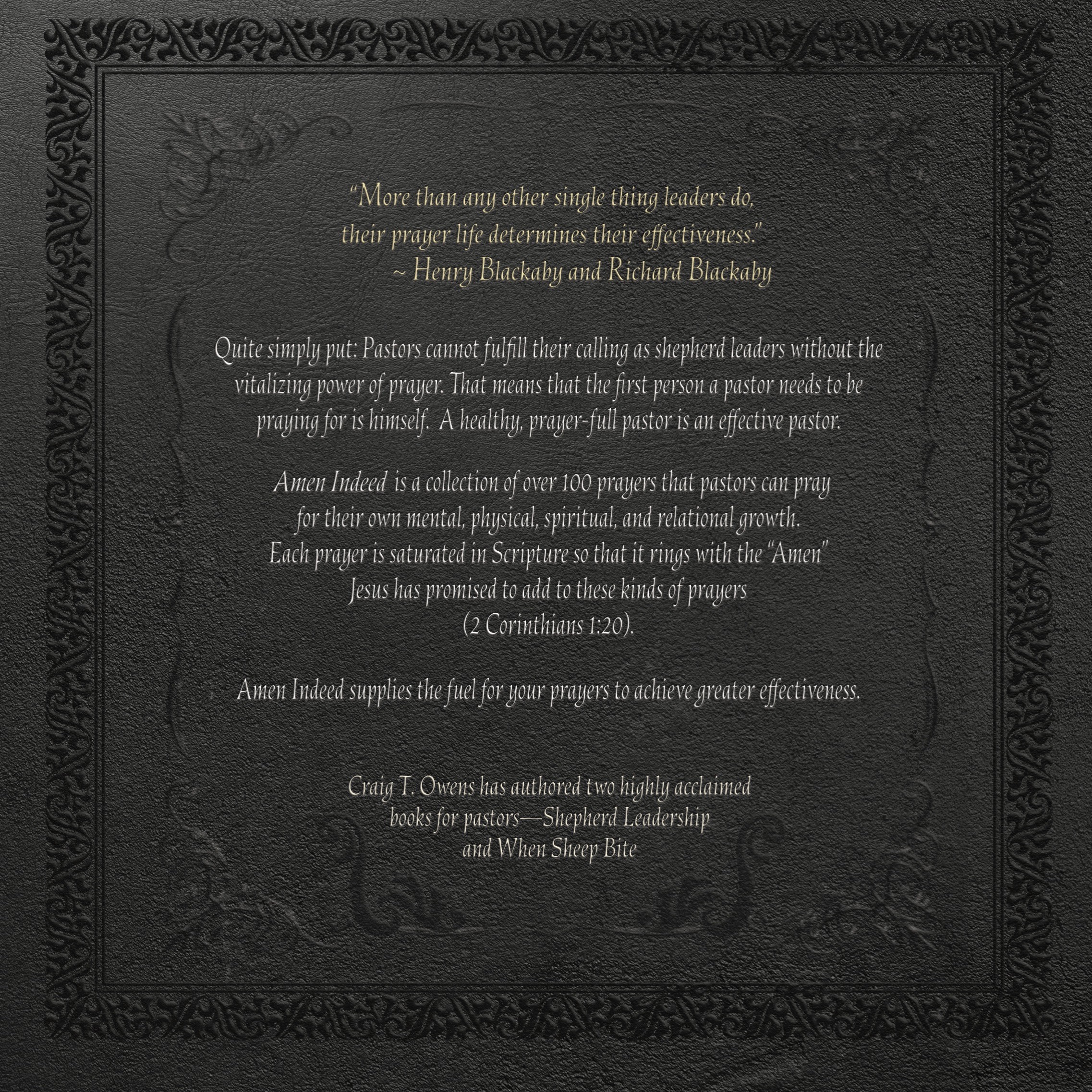
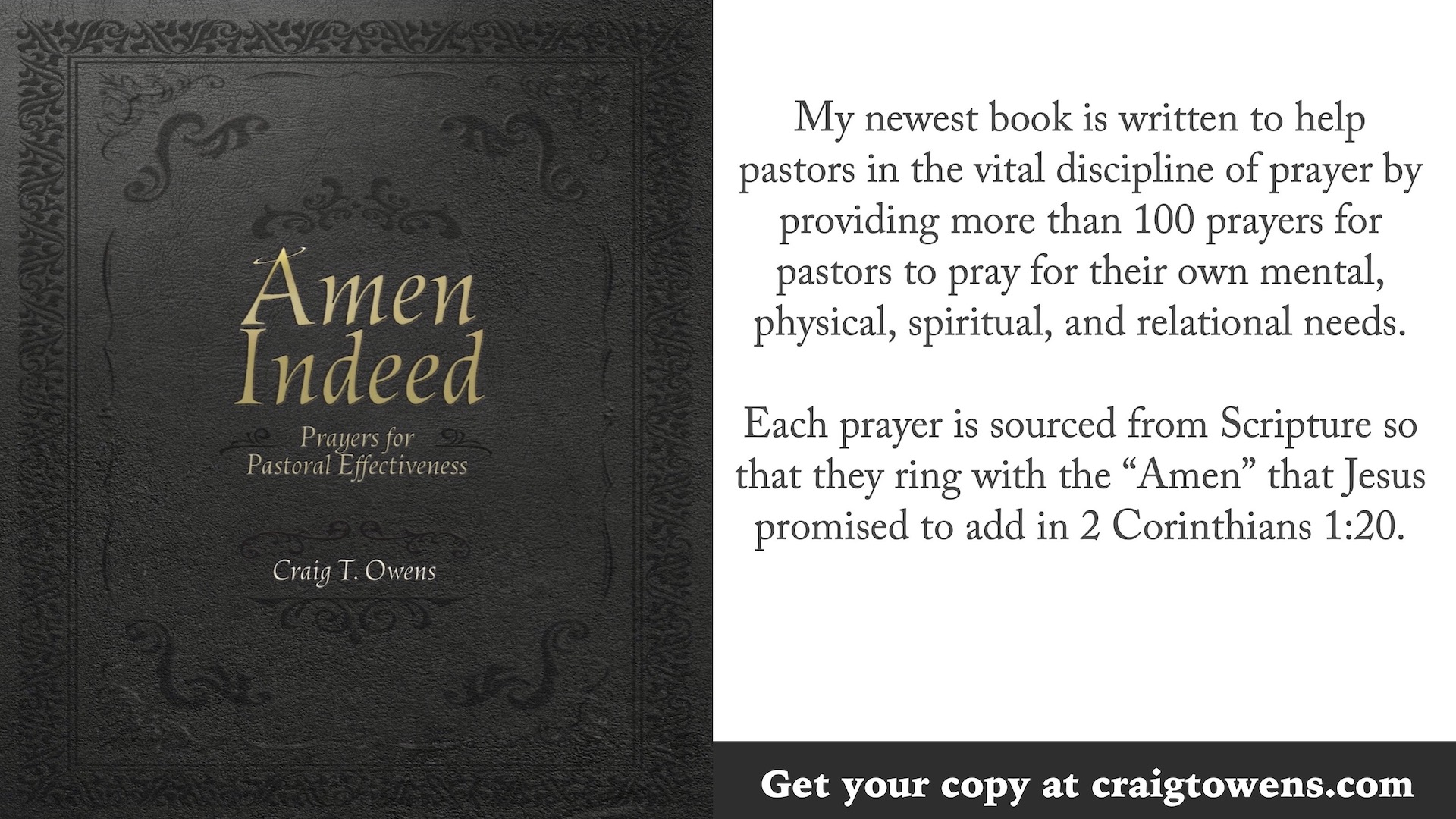
Pastors can only fulfill their calling as shepherd leaders with the vitalizing power of prayer, and must pray for themselves first. A healthy, prayer-full pastor is an effective pastor. My newest book is to help pastors in this vital discipline of prayer.
Amen Indeed fuels growth by providing more than 100 prayers for pastors to pray for their own mental, physical, spiritual, and relational growth. Each is sourced from Scripture and rings with the “Amen” that Jesus promised to add (2 Corinthians 1:20).
“There is one assured way for our prayers to be answered: It is to pray the will of God.
“There is one assured way to pray the will of God: It is to pray Scripture.
“As ministers of the Gospel we would be wise then to primarily pray Scripture, for ‘the word of our God stands forever’ (Isaiah 40:8).” —Dick Brogden, Founder of the Live Dead Movement
“When it comes to prayer, we need some help. And in Amen Indeed, help is at hand. Whatever is keeping us from prayer, Craig Owens can help us push through to a more consistent and more consistently joyful and fruitful life of prayer.” —T.M. Moore, Principal of The Fellowship of Ailbe
Listen to the podcast of this post by clicking on the player below, and you can also subscribe on Apple, Spotify, or Audible.
Confuse them, Lord, and frustrate their plans, for I see violence and conflict in the city. Its walls are patrolled day and night against invaders, but the real danger is wickedness within the city… (Psalm 55:9-14 NLT)
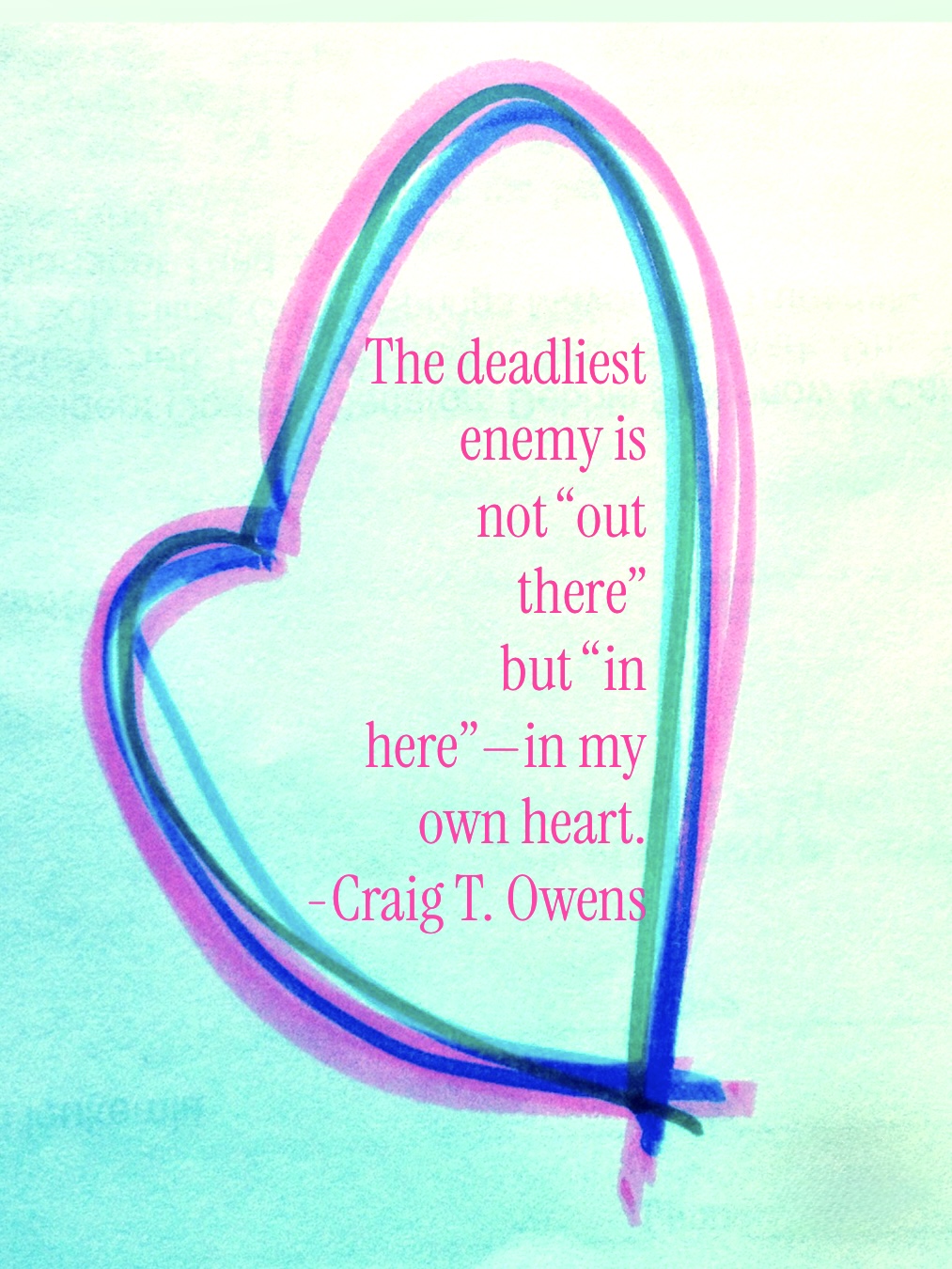
David sees violence and conflict, but he is quick to conclude that the enemy is not “out there” but “in here.” Notice the phrases “in the city” and “within the city.”
This is why Jesus tells us to deal with the plank in our own eye first (the things in here), and then I can see clearly to address what may be out there (see Matthew 7:1-5). He also tells us to pay attention to the clear indicators that something is wrong “in here” in Matthew 15:18-20.
Yes, we should address false gods and evil practices. But G.K. Chesterton warns us to make sure we are addressing the right things—
“Idolatry is committed, not merely by setting up false gods, but also by setting up false devils; by making men afraid of war or alcohol, or economic law, when they should be afraid of spiritual corruption and cowardice.”
God-fearing leaders must always address their own areas of corruption as the first and highest priority. It’s only after this heart-check that we can truly lead people away from things which are holding them back from fully following God.
Holy Spirit, if I feel the need to point my finger at what’s wrong “out there,” may I first yield to Your finger pointing out what’s wrong “in here” in my own heart. Once I have recognized, confessed, and corrected what’s wrong in me, equip me to be a lovingly-strong and empathetic guide to help others around me.
In biblical times, the Jews looked down on the Samaritans. But not Jesus. One of His longest conversations is with a Samaritan woman. If He had a poor attitude about her, she would have felt that. Instead, she felt His love. Jesus died so that “whoever believes in Him would not die but would have eternal life.” We need to treat everyone like one of the whoever’s that Jesus died to save.
One hundred years ago, William M. Faux called the churches in the Assemblies of God to pray more for our missionaries. “Pray, beloved, pray for missions. Are more workers needed? Yes. Praying is the secret of securing them. Are more funds needed? Yes. Prayer is the force that opens men’s hearts to give to God their resources. Is greater spirituality needed? Yes, surely. Prayer is the agency that brings greater spirituality to the entire church (Matthew 9:38). Louder than the Macedonian cry ‘Come over and help us,’ which rang out to Paul, sounds the cry today, ‘Brethren, pray for us.’ Let the Scripture warning ring in our souls—‘God forbid that I should sin against the Lord in ceasing to pray for you.’ Prayer is the greatest force that we can wield. It is the greatest talent which God has granted us. And this talent He has given to every Christian.”
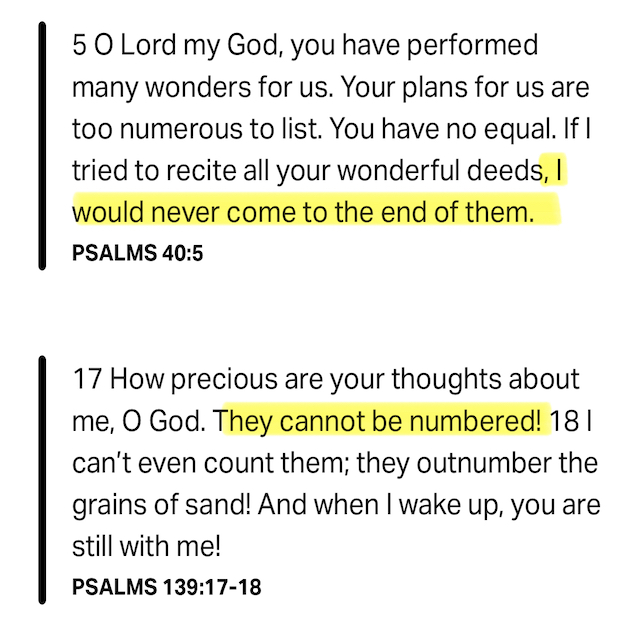
“Faith knows that every seashore on earth has less sand than God has wondrous deeds and thoughts toward us.” —Tanner Swanson
“I had always vaguely felt facts to be miracles in the sense that they are wonderful: now I began to think them miracles in the stricter sense that they were willful. I mean that they were, or might be, repeated exercises of some will. In short, I had always believed that the world involved magic: now I thought that perhaps it involved a magician. And this pointed a profound emotion always present and sub-conscious; that this world of ours has some purpose; and if there is a purpose, there is a person. I had always felt life first as a story: and if there is a story there is a story-teller.” —G.K. Chesterton
John Piper discusses how Christian apologists can contend for the faith properly without sliding into “word fights.”
“Psychologists, since the beginning of the discipline, have argued about the essence of what it means to be human. Some, like [Sigmund] Freud, insist that we are motivated by physical pleasure, while others, like Victor Frankl or Abraham Maslow, believe that some higher purpose…. Human beings, made in the image and likeness of God, only realize their full potential and pleasure as they participate in the very being of God and know and experience the pleasure He takes in Himself and His glory.” —T.M. Moore
“If you are persevering in faith today, you owe it to the blood of Jesus. The Holy Spirit, who is working in you to preserve your faith, is honoring the purchase of Jesus. God the Spirit works in us what God the Son obtained for us. The Father planned it. Jesus bought it. The Spirit applies it—all of them infallibly.” —John Piper
“The Hebrew word Davar (דבר, pronounced ‘daw-var’) reveals something profound about God’s Word—it’s not merely information, but transformation. … Throughout Scripture, God’s Word consistently proves both living and active. It has the power to create worlds (Genesis 1), transform lives (Psalm 119:105), and accomplish God’s purposes (Isaiah 55:11).” —Dave Adamson
More fascinating archeology that supports the Bible’s historicity. This is a look at the library of letters found at Tell el-Amarna in Egypt. “The most obvious connection between the Amarna Letters and biblical history is that some of the letters appear to be describing, in real-time, the attacks of the Israelites during the period of the conquest. Remember, the initial conquest battles took a period of some 5–6 years, but the attempts by various tribes to conquer their allotted territories lasted into the period of the Judges. The letters from the rulers of some of the very cities named in the biblical conquest calling for help from the attacking ʿapîru/ḫa-bi-ru, provide a poignant backdrop to this period of biblical history.”
“Because I am your constant Companion, there should be a lightness to your step that is observable to others. Do not be weighed down with problems and unresolved issues, for I am your burden-bearer.” —Jesus in Sarah Young’s Jesus Calling, based on Psalm 31:19–20; John 16:33
Psychologists call it “projection” when I see so quickly in others what’s really in myself.
If I see sin in others, my first response would be to hit my knees and ask the Holy Spirit to search me to point out the same sin in myself.
It’s only after confessing my sin and receiving God’s complete forgiveness that I am equipped with the empathy and mercy to help someone else find the same freedom I have found.
Lord, may I be more sensitive to the sin in my life than I am aware of the sin in the world.
Listen to the podcast of this post by clicking on the player below, and you can also subscribe on Apple, Spotify, or Audible.
What does it mean when we really believe the words, “The Lord is my Shepherd, I lack nothing” (Psalm 23:1)?
When the sheep is utterly dependent on the shepherd, it lacks nothing. A sheep without any lack glorifies the Good Shepherd.
God is glorified when I remain in utter dependence on Him, and I continue to have to lack because of His perfect provision. I am quiet, restored, on the right path, fearless, secure, provisioned, blessed, and forever hopeful.
To try to provide for my own needs dishonors the Good Shepherd, but to come to Him for absolutely everything glorifies Him as eternally satisfying and reliable.
The more my needs are satisfied by God alone, the more He is glorified.
Leaders would do well to remember that they lead a group of unique individuals. Let the unique gifts of those unique people be used in unique ways, and watch both the individuals and the organization grow!
“As Tyler Cowen wrote in The Free Press, ‘Whether or not you work in the AI sector, if you put any kind of content on the internet, or perhaps in a book, you are likely helping to train, educate, and yes, morally instruct the next generation of what will be this planet’s smartest entities. You are making them more like you—for better or worse.’ Now, maybe someone thinks, ‘I’ve hardly got any followers, who cares what I post? It probably won’t matter.’ But the principle means we should care. The philosopher Immanuel Kant famously offered his ‘categorical imperative’ as a test for ethical decisions: ‘Act only according to that maxim whereby you can at the same time will that it should become a universal law.’ In other words, we should only do what we think would be good for everyone to do.” —Axis.org
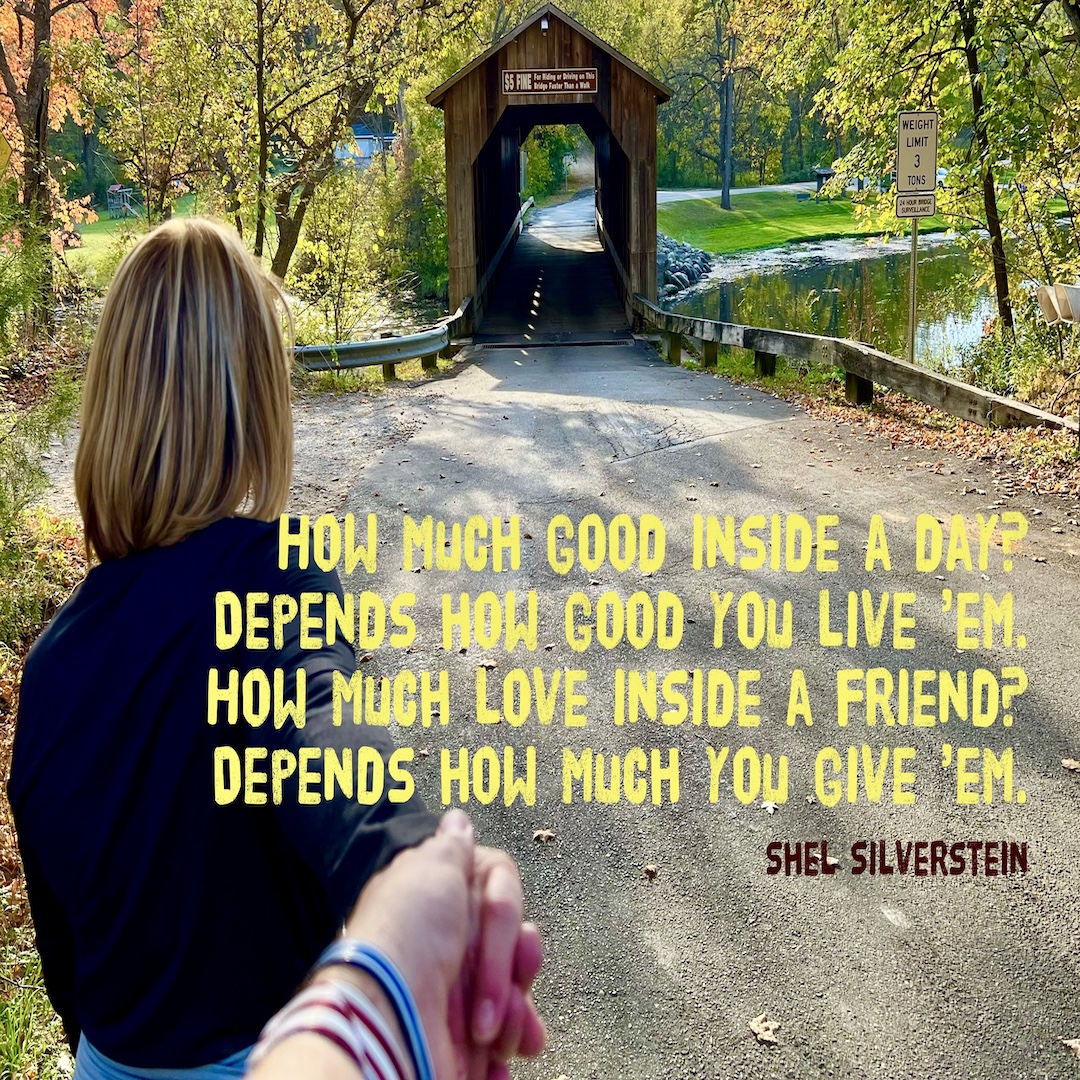
How much good inside a day?
Depends how good you live ’em.
How much love inside a friend?
Depends how much you give ’em. —Shel Silverstein
A fantastic mini-biography of Otto J. Klink who went from being a Christian, to an atheist socialist, to failed presidential assassin, to a Pentecostal author and evangelist. Wow!
“My acceptance of the universe is not optimism, it is more like patriotism. It is a matter of primary loyalty. The world is not a lodging-house at Brighton, which we are to leave because it is miserable. It is the fortress of our family, with the flag flying on the turret, and the more miserable it is the less we should leave it. The point is not that this world is too sad to love or too glad not to love; the point is that when you do love a thing, its gladness is a reason for loving it, and its sadness a reason for loving it more.” —G.K. Chesterton
Marshall Segal said this about our daily Bible reading time, “I want to walk through a five-step prayer you could pray when you sit down with your Bible to meet with God. The five steps are built on an acronym for FEAST. Focus my mind; Enlighten my eyes; Address my sin; Satisfy my soul; Train my hands.”
“A man of character will make himself worthy of any position he is given.” —Mahatma Gandhi
“A retentive memory may be a good thing, but the ability to forget is the true token of greatness. Successful people forget. They know the past is irrevocable. They’re running a race. They can’t afford to look behind. Their eye is on the finish line. Magnanimous people forget. They’re too big to let little things disturb them. They forget easily. If anyone does them wrong, they consider the source and keep cool. It’s only the small people who cherish revenge. Be a good forgetter. Business dictates it, and success demands it.” —Elbert Hubbard
“Leadership is not about being in charge, but about taking care of the people in your charge.” —Simon Sinek
Flowing Data has a fascinating look at how people spend their time during the day. Their adjustable chart shows activities by age, sex, and time of day. It reminds me of a blog post I shared about time management, where I noted, “You cannot add more Tick, Tocking! time to your day, but you can keep more of your day from Drip, Dropping! away.”
“We might think, ‘Well, hey, if I’m devoting myself all the time to looking out for others’ needs, who’s going to be looking out for mine?’ The Lord, of course, because He knows what you need even before you ask Him, and He has ways of meeting your needs that are more wonderful than you in your cleverness or strength could ever conjure or provide (cf. Matthew 6:25-34).” —T.M. Moore
“We all know that exercise makes us feel better, but most of us have no idea why. We assume it’s because we’re burning off stress or reducing muscle tension or boosting endorphins, and we leave it at that. But the real reason we feel so good when we get our blood pumping is that it makes the brain function at its best, and in my view, this benefit of physical activity is far more important—and fascinating—than what it does for the body. Building muscles and conditioning the heart and lungs are essentially side effects. I often tell my patients that the point of exercise is to build and condition the brain.” —Dr. John Ratey
T.M. Moore has a hard but good word for Christians: “If this day, and this expectation and hope [when we heard King Jesus say, ‘Well done, good and faithful servant’], are not the driving force for every aspect of our lives and work, then it is doubtful we have really understood the Good News of the Kingdom or received the salvation freely offered to us by the King. I say this again: If we are not motivated and driven, day by day, by the prospect of hearing ‘Well done, good and faithful servant,’ then we need to examine ourselves, whether we truly know the Lord of glory. That’s pretty hard language, I know, but let’s face the reality: If we have not submitted to Jesus as Lord of every area of our life, all the work we’ve been given to do, then we are still living for ourselves, not Him.” —T.M. Moore
Listen to the podcast of this post by clicking on the player below, and you can also subscribe on Apple, Spotify, or Audible.
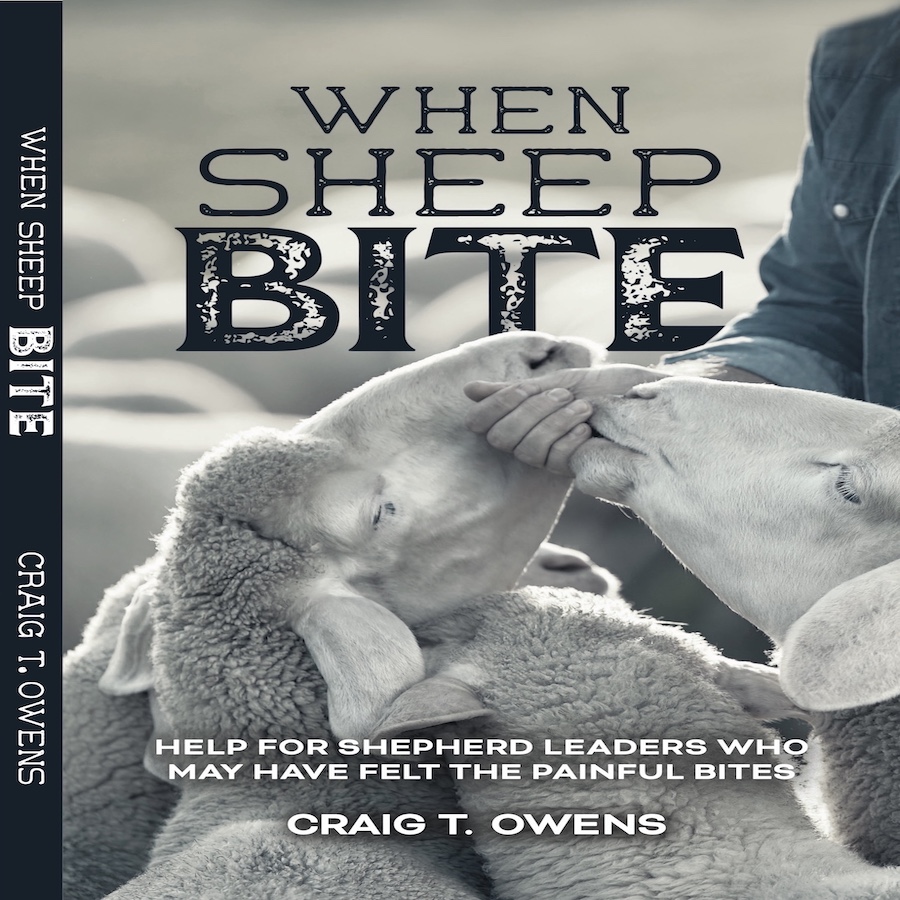
My book When Sheep Bite is a manual of help for church leaders who have been hurt by the very sheep they are attempting to help. This book was birthed from a very painful chapter in my own ministry.
But as dark as that time was, there was a ray of light that helped me to smile during the dark times and for years and years afterwards. Here is an excerpt from the chapter ‘Cry Before Your Confront’ in When Sheep Bite—
We used to have a funny saying in our family. Our puppy would be straining to get free and one of us would cry out, “Release the hound!”
After reading the previous chapter about imprecatory prayers, and hopefully putting that into practice, I hope you felt some relief from your anger. But when you read my reminder that David’s “Get ‘em, God!” cry was for God’s ears only, perhaps you were a little disappointed. Maybe you were hoping for someone to give you a green light to “release the hound” on those biting, kicking, and wayward sheep.
Wouldn’t it be so wonderful to unleash something—anything!—on those difficult sheep? As shepherds, we have so many ways we can dress up our unleashed hounds in biblical-sounding language. Maybe a righteous rebuke like the psalmist recorded: “You rebuke the arrogant, who are accursed, those who stray from Your commands” (Psalm 119:21). Or perhaps a well-timed prophetic thunderbolt like when Samuel was praying and “the Lord thundered with loud thunder against the Philistines and threw them into such a panic” (1 Samuel 7:10). Or even a strategic lightning strike from God’s throne as when the soldiers from King Ahaziah came to forcibly take Elijah to the king (2 Kings 1:11-12).
One of my favorite prayers is a prayer of David’s that is given added emphasis since it is recorded twice in the Scripture (2 Samuel 22 and Psalm 18)—
In my distress I called to the Lord; I cried to my God for help. From His temple He heard my voice; my cry came before Him, into His ears. The earth trembled and quaked, and the foundations of the mountains shook; they trembled because He was angry. Smoke rose from His nostrils; consuming fire came from His mouth, burning coals blazed out of it. He parted the heavens and came down; dark clouds were under His feet. … Out of the brightness of His presence clouds advanced, with hailstones and bolts of lightning. The Lord thundered from heaven; the voice of the Most High resounded. He shot His arrows and scattered the enemy, with great bolts of lightning He routed them. (Psalm 18:6-9, 12-14)
Wow, how good it must have felt for David to unleash these words! And yet we still see that they were words only for God’s ears, spoken when David was alone with the Almighty God. Isn’t there something we can say or do to our obstinate sheep? Yes, there is, but there is something we need to be reminded of first.
After a particularly grueling day of being bitten, kicked, and attacked by the angry sheep in my pasture, I came home and announced, “Tomorrow is ‘Be Kind to Craig Owens Day!” While driving home and licking my wounds, I had determined that I needed a day off—a day to unplug from all of the madness and make sure I was taking care of myself.
Let me add a very important truth here. In fact, it’s so important that I’m going to print it in bold letters: Self-care is not selfish! Far too many shepherds think that taking time off to care for themselves, especially in the midst of all of the chaos, is a selfish thing to do.
Selfish is different. Selfishness is self-centered. Selfishness is saying, “I’m going to take care of myself and I don’t care what happens to others while I’m doing what I want to do.” Self-care is a strategic withdrawal to take care of myself so that I can return to take care of others. It is like the instructions on an airplane to put your own oxygen mask on first before you try to help a small child with their mask. If I pass out, I’m no good to anyone else. Just as Jesus “often withdrew to lonely places and prayed” (Luke 5:16), we must find times to care for ourselves so that we are strengthened to help others when we return to the fray. This concept of self-care is so vital that I have dedicated all of Chapter 12 to explaining this idea to you in more depth.
My family still celebrates the Be Kind to Craig Owens Day “holiday” but we mainly remember it because of something else that happened in our family.
On this inaugural event, I planned a day of reading, praying, walking, and recuperating. I silenced my phone and withdrew for that entire Friday. After a nice evening with my family, I decided to extend my self-care time into Saturday. My daughter and I went out to breakfast, and because we both enjoy animals so much, we decided to stop into a new pet store and play with the puppies for a while.
Almost instantly, both of us were captivated by a very special dog. There was something about her that drew us to her. In short order, we were on the phone with my wife and my sons asking them to join us at the pet store. We ended up walking out of the store that morning with a new addition to our family.
My wife later remarked that this puppy was the best irresponsible decision we ever made. Part of the reason this was true is that this puppy became my constant companion. I took her to my office with me so that I would have a source of unconditional love to offset all of the brutal attacks I was absorbing.
When John Bradford saw a cartful of men going off to Tyburn to be hanged for their crimes, he said to a friend, “There goes John Bradford but for the grace of God.” When I stopped to think what was different between my behavior and the behavior of these biting sheep, I realized it was only the grace of God that had kept me from descending into the same ugly behavior. That’s when I decided to name our new puppy Grace. I wanted to say that name over and over and over again. I desperately needed to be reminded of God’s grace for me. I also needed to be reminded that God wanted my biting sheep to know His grace too.
When we cried out, “Release the hound,” it was because Grace was straining at her leash to overwhelm someone with her love. She wanted nothing more than to show them how much she welcomed them into her presence.
I’ll be honest with you: When some of my biting sheep came storming into my office to berate me for something and Grace wanted to run to them with love and acceptance, I wanted to scold her and keep her back. This, I think, was the attitude of the older brother when his wayward brother returned home and was lovingly welcomed back into the fold by their father (Luke 15:11-32). But when I paused to think of God’s amazing grace that “saved a wretch like me,” I was reminded that God’s grace also wants to restore other wayward, obstinate, unreasonable sheep.
Our annual reminder of this event is really remembering our dog Grace’s “Gotcha Day.” It’s our annual reminder that grace is best seen in times and places that it is least expected.
If you are a church leader, please pick up a copy of When Sheep Bite to help you on your healing journey. And if I can be of assistance to you, please get in touch with me.
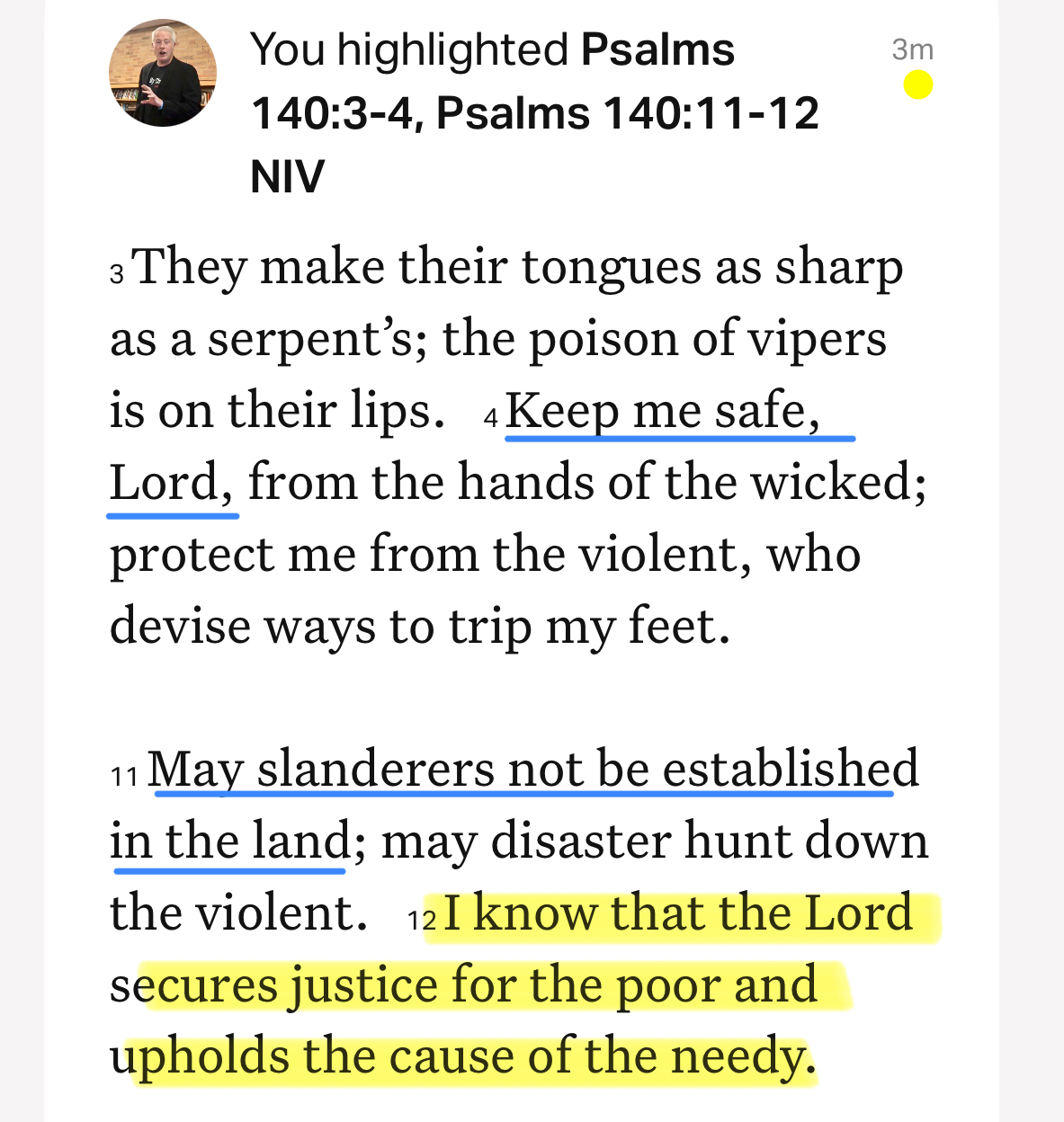
David describes slanderers like this: “They make their tongues as sharp as a serpent’s; the poison of vipers is on their lips” (Psalm 140:3).
I’m sure you have experienced the poisonous, stinging bites of a slanderer’s fangs, just as David did.
Instead of lashing out, David prays:
Keep me safe, Lord, from the hands of the wicked; protect me from the violent, who devise ways to trip my feet. … May slanderers not be established in the land; may disaster hunt down the violent. I know that the Lord secures justice for the poor and upholds the cause of the needy. (Psalm 140:4, 11-12)
Notice what David doesn’t do and does do:
🚫 He doesn’t respond to the evil people that have spewed slander at him.
✅ He does ask God to deal with those gossips and slanderers.
Let’s follow his example. When the attacks come your way, let God respond to those people, and let us follow the example of another prayer of David: “Be merciful and gracious to me, O God, be merciful and gracious to me, for my soul takes refuge and finds shelter and confidence in You; yes, in the shadow of Your wings will I take refuge and be confident until calamities and destructive storms are passed” (Psalm 57:1).
Gossip and slander are two of the painful bites I discuss in my book When Sheep Bite. And you may also be interested in a series of sermons I shared called When Sheep Bite Sheep.



 Greg and I shared some insights for leaders interacting with people from different generations. Check out this clip about Gen Y.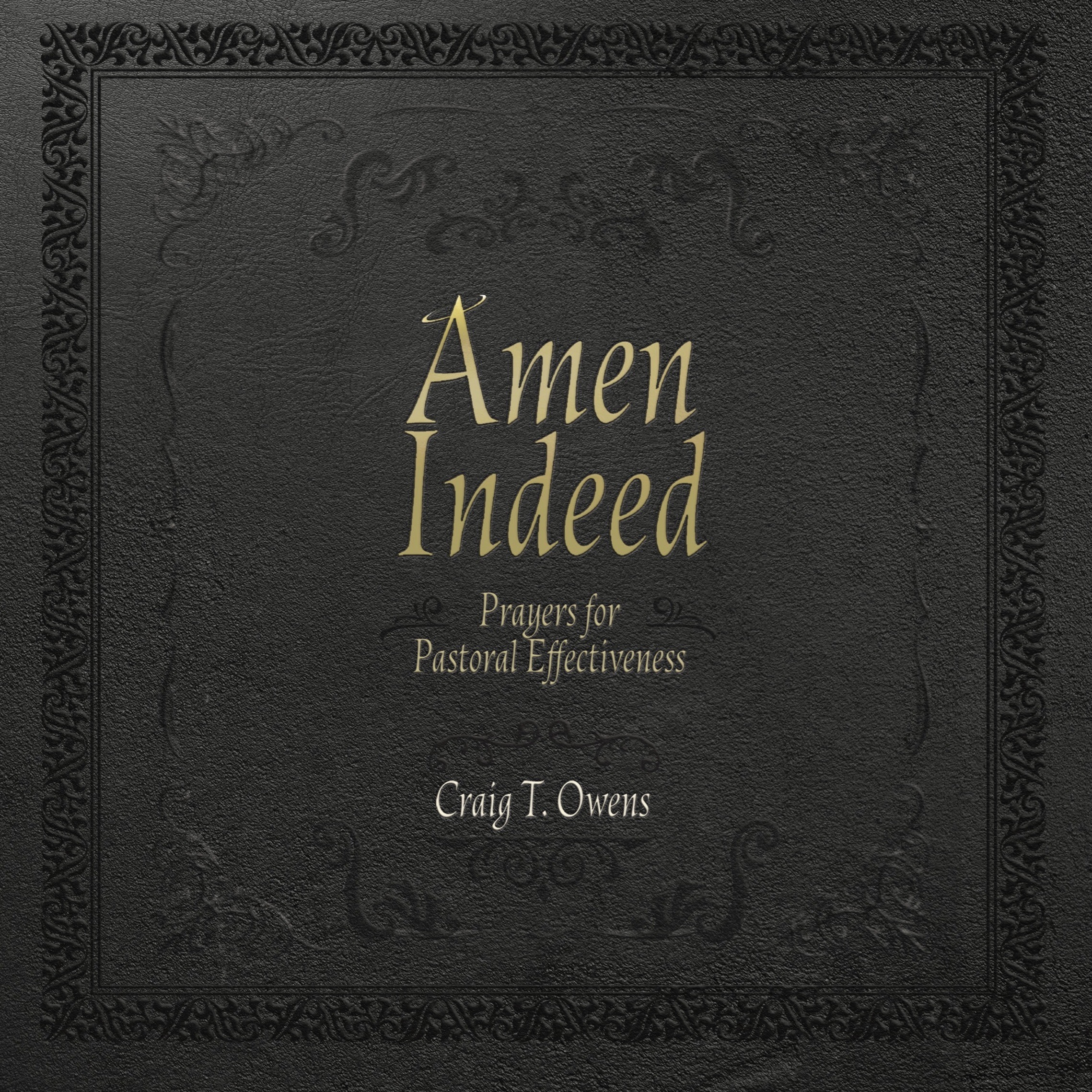


![Joshua 3.5 and Psalm 19.12 [commentary]](https://i0.wp.com/craigtowens.com/wp-content/uploads/2025/08/joshua-3.5-and-psalm-19.12-commentary.jpg?w=386&h=386&crop=1&ssl=1 "Joshua 3.5 and Psalm 19.12 [commentary]")