Prayer Expectations

Many of our prayers could be much bolder and much more specific than they are. Why is that? Because how we view God is going to determine what we pray and what we expect after we pray.

When we pray, we approach an All-Loving Father, and we approach an All-Powerful God. I have found that typically people get warmed by the idea of Father and get scared by the idea of God. They say things like: “What if my prayers don’t hallow God’s name? What if He’s mad at me? What if I pray an improper prayer?” 

God wants us to come to Him in prayer, so He makes Himself very accessible! The Father is both Father and God; the Son is both Friend and King; the Spirit is both Comforter and Convictor. We get ALL of this in One God. 

Charles Spurgeon had this word of encouragement: “If You are my Father, then You love me. If I am Your child, then You will regard me, and poor though my language is, You will not despise it.” Jesus came to earth fully God and fully man, making Him our perfect intermediary (see Job 9:32-35; 1 Timothy 2:5; Hebrews 7:25). And the Holy Spirit helps interpret our groaning prayers (Romans 8:26-27). 

Have you ever noticed that neither the prophets of the Old Testament, nor Jesus in the Gospels, nor the apostles in the New Testament ever prayed, “God, if this is Your will please do such-and-such”? They simply prayed. Or more accurately, they prayed so boldly and specifically it almost sounded like a command: “Stand up” or “Be clean” or “Go, your prayer has been answered.” 

When you and I are praying to an All-Loving and All-Powerful Father, with Jesus interceding for us, and the Spirit helping us, we too can pray these bold and highly specific prayers. 

After all, if you don’t pray specifically and expectantly, how will you know when your prayer is answered? 

I find John Piper’s acrostic very helpful in praying these bold and expectant prayers. He calls it APTAT: 

  • A—Admit I can’t do anything without Christ. This hallows His Name. 
  • P—Pray for help to do it. 
  • T—Trust a specific promise of God to help me (two general promises are found in Isaiah 41:10 and Romans 8:32). 
  • A—Act. Do the things I need to do: apply for the job, ask forgiveness, schedule a meeting. 
  • T—Thank Him when I’m done. 

Two final thoughts—

  1. Make prayer more of a listening relationship than a talking relationship. 
  2. Give yourself some grace as you are maturing; don’t expect immediate perfection. Start praying and then let the Father, the Son, and the Spirit help you mature in your prayer life. 

I hope you can join me this Sunday as we continue to work on our plans to pray.

Poetry Saturday—Give To The Winds Thy Fears

Give to the winds thy fears,
hope and be undismayed;
God hears thy sighs and counts thy tears;
God shall lift up thy head.

Through waves and clouds and storms,
He gently clears the way;
wait thou His time, so shall this night
soon end in joyous day.

Still heavy is thy heart,
still sink thy spirits down?
Cast off the weight, let fear depart,
and ev’ry care be gone.

What though thou rulest not,
yet heav’n, and earth, and hell
proclaim, God sitteth on the throne,
and ruleth all things well.

Leave to His sov’reign sway
to choose and to command.
so shalt thou wond’ring own His way,
how wise, how strong His hand!

Far, far above thy thought
His counsel shall appear,
when fully He the work hath wrought,
that caused thy needless fear.

Thou seest our weakness, Lord,
our hearts are known to Thee;
O lift Thou up the sinking heart,
confirm the feeble knee.

Let us in life, in death, 
Thy steadfast truth declare,
and publish with our latest breath
Thy love and guardian care. —Paul Gerhardt (translated by John Wesley)

Thursdays With Spurgeon—The Oftener The Better

This is a weekly series with things I’m reading and pondering from Charles Spurgeon. You can read the original seed thought here, or type “Thursdays With Spurgeon” in the search box to read more entries.

The Oftener The Better 

     It is strange that spiritual blessings are our only possessions that we do not employ. We get a great spiritual blessing and we let the rest get on it for many a day. There is the mercy seat, for instance. Ah, my friends, if you had the cash box as full of riches as that mercy seat is, you would go often to it, as often as your necessities require. But you do not go to the mercy seat half so often as you need to go. Most precious things God has given to us, but we never overuse them. The truth is, they cannot be overused. We cannot wear a promise threadbare. We can never burn out the incense of grace. We can never use up the infinite treasures of God’s lovingkindness. … 

     How seldom do we ask counsel at the hands of the Lord! How often do we go about our business without asking His guidance? In our troubles how constantly do we strive to bear our burdens, instead of casting them upon the Lord, that He may sustain us! And this is not because we may not, for the Lord seems to say, “I am yours, soul; come and make use of Me as you will. You may freely come to My store, and the oftener the better. Welcome.” … 

     Have not God in name only. Since He allows you to have such a Friend, use Him daily. My God will supply all your wants. Never want while you have a God. Never fear or faint while you have a God. Go to your treasure and take whatever you need. There is bread and clothes, and health and life, and all that you need. O Christian, learn the divine skill to make God all things; to make bread of your God, and water, and health, and friends, and ease. He can supply you with all these. … 

     Oh! Child of God, let me urge you to make use of your God. Make use of Him in prayer. I beseech you, go to Him often, because He is your God. … Fly to Him; tell Him all your wants; use Him constantly by faith, at all times. …  

     Go to God continually, importunately, confidently. Delight yourself in the Lord, and He will bring it to pass. Commit your way to the Lord, and He will guide you by His counsel and afterward receive you to glory (Psalm 73:24).

From God In The Covenant 

Oh what peace we often forfeit
Oh what needless pain we bear
All because we do not carry
Everything to God in prayer

Hallowed Be Your Name

Jesus was once asked, “What is the greatest commandment?” He responded by saying, “The Lord our God, the Lord is One,” and then saying we should love God with all our heart, soul, mind, and strength (which fulfills the first four of the Ten Commandments), and then love our neighbor as ourselves (which fulfills the next six of the Commandments).

To live this way, we need to pray this way too! That’s why Jesus taught us a model prayer—which we typically call “The Lord’s Prayer”—in which the first three petitions are for God’s glory (hallowed be Your name; Your kingdom come; Your will be done), and the next three petitions are for man’s help (daily bread, forgiveness, victory over temptation). 

Jesus says we can pray to our Heavenly Father, but we still need to remember that He is also the God of the Hallowed Name. The Greek word for hallowed is made up of two other Greek words: 

  • hagnos is something totally immaculate, blindingly pure, and unapproachable. The apostle Paul said this about God: Our Master, Jesus Christ, is on His way. He’ll show up right on time, His arrival guaranteed by the Blessed and Undisputed Ruler, High King, High God. He’s the only one death can’t touch, His light so bright no one can get close. He’s never been seen by human eyes—human eyes can’t take Him in! Honor to Him, and eternal rule! (1 Timothy 6:15-16) 
  • thalpo means cherished. The same apostle Paul also said that God has given us the right to approach Him as “Abba, Father” or “Daddy, God” (Romans 8:15). 

He is both unapproachable and approachable. He is both awful and lovable. He is both Supreme power and Supreme love. He is both Hallowed and Father. He is unique. Since He is unique, we must approach Him uniquely in holy prayer. But we must always approach first and foremost to reverence His holy Name. As Matthew Henry said, “Let Him have the praise of His perfections, and then let us have the benefit of them.” 

Think of His glory in every request you make of Him. Father, may Your holy, righteous name be hallowed and exalted and made famous as You…

  • … provide my daily bread
  • … forgive me and help me forgive others
  • … give me victory over temptations

Let’s not pray prayers that rob God of His glory. Prayers like:

  • Selfish prayers that are all about me, me, me
  • Doubtful prayers that aren’t really sure God can help
  • Little prayers that insult God’s power and His love
  • Unexpectant prayers that ask God to do something, but we don’t really expect that He will

Let’s be known as people who pray confidently humble prayers. Let’s come to a Father Who is All-Love and to a God Who is All-Powerful—a God Whose power is perfectly balanced by His love, and Whose love is perfectly balanced by His power. May our prayers HALLOW His name! 

Join me this Sunday as we continue to learn more about prayer. 

Praying The Word

The more consistently we pray on the ordinary days, the more prepared we will be to pray on the extraordinary days. But some people say, “I don’t know how to pray” or “I don’t know what to ask for.” That ignorance hinders a lot of people—even someone like Peter who not only spent huge amounts of time with Jesus but was with Him when He was in one of His most glorious states (Luke 9:28-33). As Jesus is transfigured before his very eyes, both Mark and Luke say this about the statement Peter blurted out: He did not know what he was saying. 

While Peter was still speaking from his ignorance, God the Father gave him (and us) some invaluable advice: This is My Son, whom I have chosen; listen to Him. 

So when the disciples ask Jesus to teach them to pray, Jesus didn’t reprimand them for asking. In fact, He told us how much He wants us to pray and how much His Father wants to answer our prayers (Luke 11:1-13; 12:32).  

There is a consistent theme about the “name” of God that permeates all that Jesus teaches about prayer. We see Him instructing us to address our prayer to our “Heavenly Father” and to pray “in My name” (Luke 11:2; John 14:13-14; 15:7; 16:23-24). This doesn’t mean that simply saying, “Dear Heavenly Father” at the beginning of a prayer or “in the name of Jesus, amen” at the end of a prayer makes our prayer magical. 

It’s about praying in the character of Jesus, directing our prayer to the only One who can help us, all with the guidance of the Holy Spirit. 

To help us do this, we have an invaluable prayer resource preserved for us in the pages of the Bible. The Scriptures are inspired by the Holy Spirit—the same Holy Spirit that lives in a Christian and helps the Christian pray according to God’s will. The same Spirit who inspired the Word can illuminate the Word to us, so we need to get into the Word and let the Holy Spirit get the Word into us! 

No matter what you’re going through, you can apply God’s Word to your situation. Look through the prayers of the Psalms, read the prayers of other great saints throughout the Scriptures, check out the prayers the apostles prayed in the New Testament, and even read the prayers of Jesus Himself. Then make those prayers your prayers!

If you let the Holy Spirit show you how the Bible applies to your situation, you will NEVER again be at a loss of how to pray to your Heavenly Father in the name of Jesus!

Join me this Sunday as we continue to learn how to to be ready to pray by making our plan to pray. 

How Foreigners Pray

I am a foreigner and stranger among you… (Genesis 23:4). 

Abraham and Peter remind us that God-fearing people are foreigners; they are not citizens of Earth. Christians are respectful of the people, laws, and customs of the land in which they sojourn, but they know that this land is not their home. 

Abraham wanted his son to have a wife who was of the same mindset—not attached to the place of sojourning but looking forward to Heaven. Abraham knew how an earthly–focused wife (like Lot’s wife) could distract her husband, so he sent his servant on a mission to find a heavenly-minded, godly woman for his son Isaac.

This servant was a godly leader in his own right. He was loyal and loving to Abraham’s family. Abraham gave him two simple boundaries: don’t take a wife from Canaan, and don’t take Isaac back to Mesopotamia (the land from which God had called Abraham). 

Notice how this godly leader undertook his mission:

  • He prayed a very specific prayer for success (24:12–14)
  • After praying, he “watched closely” (v. 21) to see how God would answer his prayer
  • He praised God when it appeared that his prayer has been answered (vv. 26, 27, 46)
  • He shared his answer to prayer with others to get confirmation (v. 50)
  • He quickly followed through with what God had provided (v. 56)

A mark of a godly leader is one who bathes his activities in prayer.

When God calls us to live in a certain way, it is fitting that He will answer our prayers that align with that way of living. This is exactly what Jesus meant when He told us to “ask for anything in My name.” 

This is part 42 in my series on godly leadership. You can check out all of my posts in this series by clicking here.

Run To Wait

My wife is a fan of the TV show (and movie) Downton Abbey, which means I have come to appreciate it as well. I think Mr. Carson, the head butler, gives us some great insight into a Christian’s prayer relationship with God. 

Mr. Carson has a lot to oversee with the house, the staff, and the needs of the family members and their guests. Everything needs to be tidy and ready at all times for both important guests and the Grantham family. That means Mr. Carson has to have a schedule and routine for everything. 

He doesn’t get up in the morning and sit around waiting for someone to tell him what to do—he gets up and gets to work. He’s a busy man with a lot of responsibilities. But can you imagine if Lord or Lady Grantham came to him with a request and he responded, “Not now, I’m too busy with my To Do list”? No way! He’s their servant, so he quickly responds, “Yes, my lord.” 

Christians can so busy and hurried with our own “To Do list” that we miss out on what’s really important. As Rick Warren then noted, “Hurry is the death of prayer!” 

The dictionary defines hurry as acting in haste, usually in a state of urgency, or feeling rushed. Notice the word “urgency” in the definition. Far too often we confuse urgent things and important things. It’s not that what we’re busy with are bad things, but perhaps we are busy with things that are keeping us blind to the important things. 

Long before Mr. Carson, there was another notable servant named Abraham (Genesis 18:1-8). God showed up and Abraham wanted to be in His presence. So notice that Abraham had to run to wait to God’s presence—the narrative uses words like hurried, “quick” and ran.  

Abraham was quick to get into God’s presence SO THAT he could linger in God’s presencehe stood near Them under a tree: that’s the posture of a servant-in-waiting. 

In the NIV translation, the text says Abraham hurried, but almost every other translation says he ran to meet Them—this is an important distinction. Hurry speaks to things that are urgent, but run speaks to things that are important. 

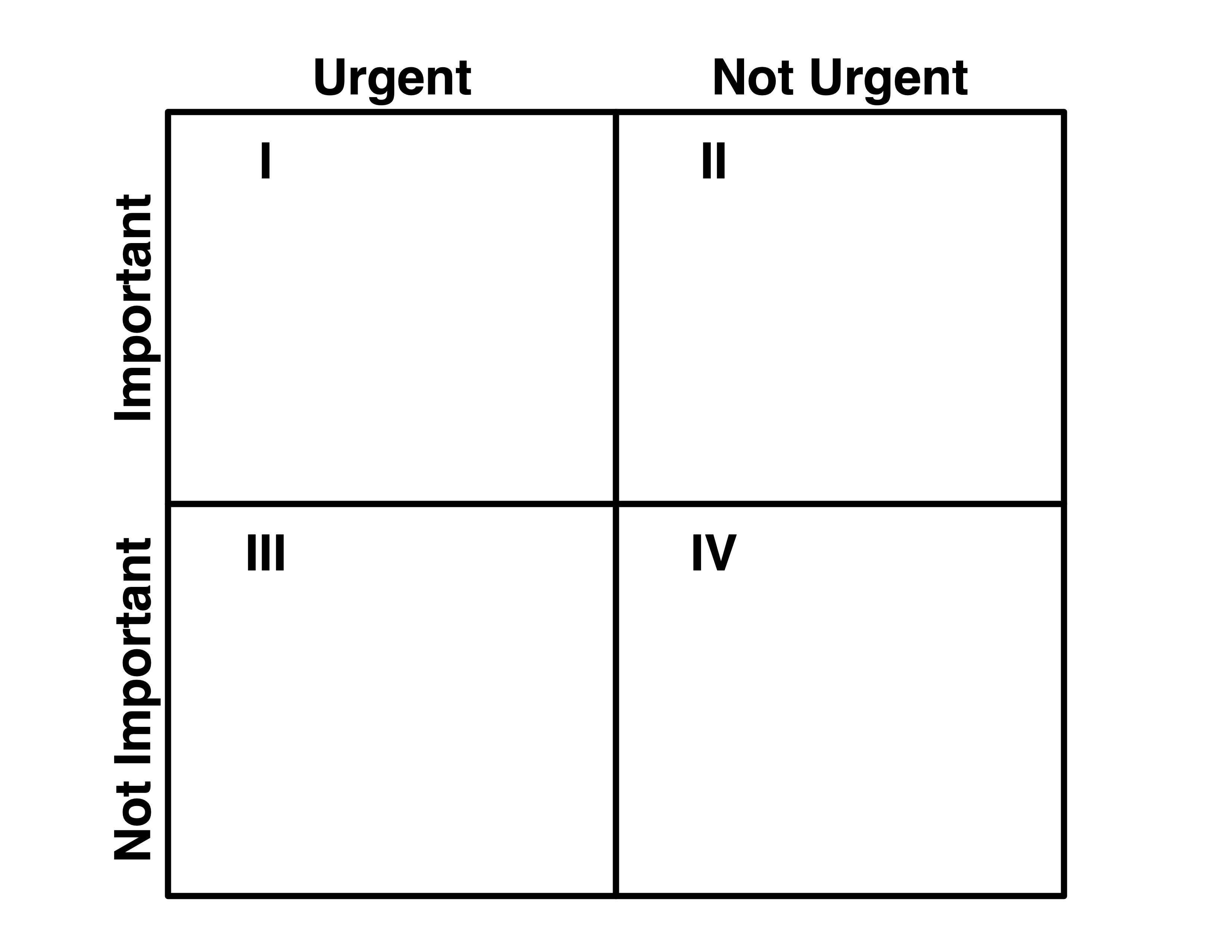
Stephen Covey has a great diagram that helps us identify four important quadrants in our life:

As you place items from your life on this grid, our Prayer Coach—the Holy Spirit—can help us identify the time-wasters. The key is to find time to wait in prayer. The best place to make time for Quadrant II prayer comes from Quadrant IV. As you eliminate those time-wasters, you will be able to spend health-enhancing time in prayer, worship, planning, and self-care in Quadrant II. This will also better equip you to handle the Quadrant I crises as they appear.

Ultimately, like Mr. Carson, we need to be both proactive with our schedule and responsive to the requests of our Lord. A good daily posture for all of us is “If the Lord wills” (James 4:13-17). But we have to not be so distracted with unimportant things that we can hear what God is speaking to our hearts.

Please join me next week as we continue to uncover things that could derail our regular prayer times, and then strategize a plan for dealing with them.  

Our Prayer Coach

I love football! 

The plays that the quarterback calls in the huddle are very creative. It may sound something like this: “soultrain alert 13 trap on 1.” Then after the team breaks the huddle with the play that they just know will be successful, the quarterback may look over the other team’s defense and callout something like, “check” or “sally” or “Omaha.” This is called an “audible” and it’s communicating to the team how they are now going to modify the play that they just called. The quarterback calls this audible because it appears to him that the defense may know what sort of play they were planning to run. 

The teams that can adjust better on-the-fly—or call audibles—usually win the game. 

None of this happens without lots of practice! Practice builds good habits. Practice helps teams learn from their mistakes and develop even better habits. All of this practicing also requires a good coach overseeing the process, and individual team members who are willing to submit to the coach’s direction and correction. 

Have you noticed that there are some Christians who “audible” well? Unexpected things pop up that seem to throw many people off their game plan, but these Christians seem to adapt so easily. Why is that? It’s definitely not because they are wired that way, or have a higher spiritual IQ, or they can think faster. It’s because they’ve practiced good habits, they’ve learned from past experiences which have developed better “audibling” habits, all under the guidance of a perfect Coach. 

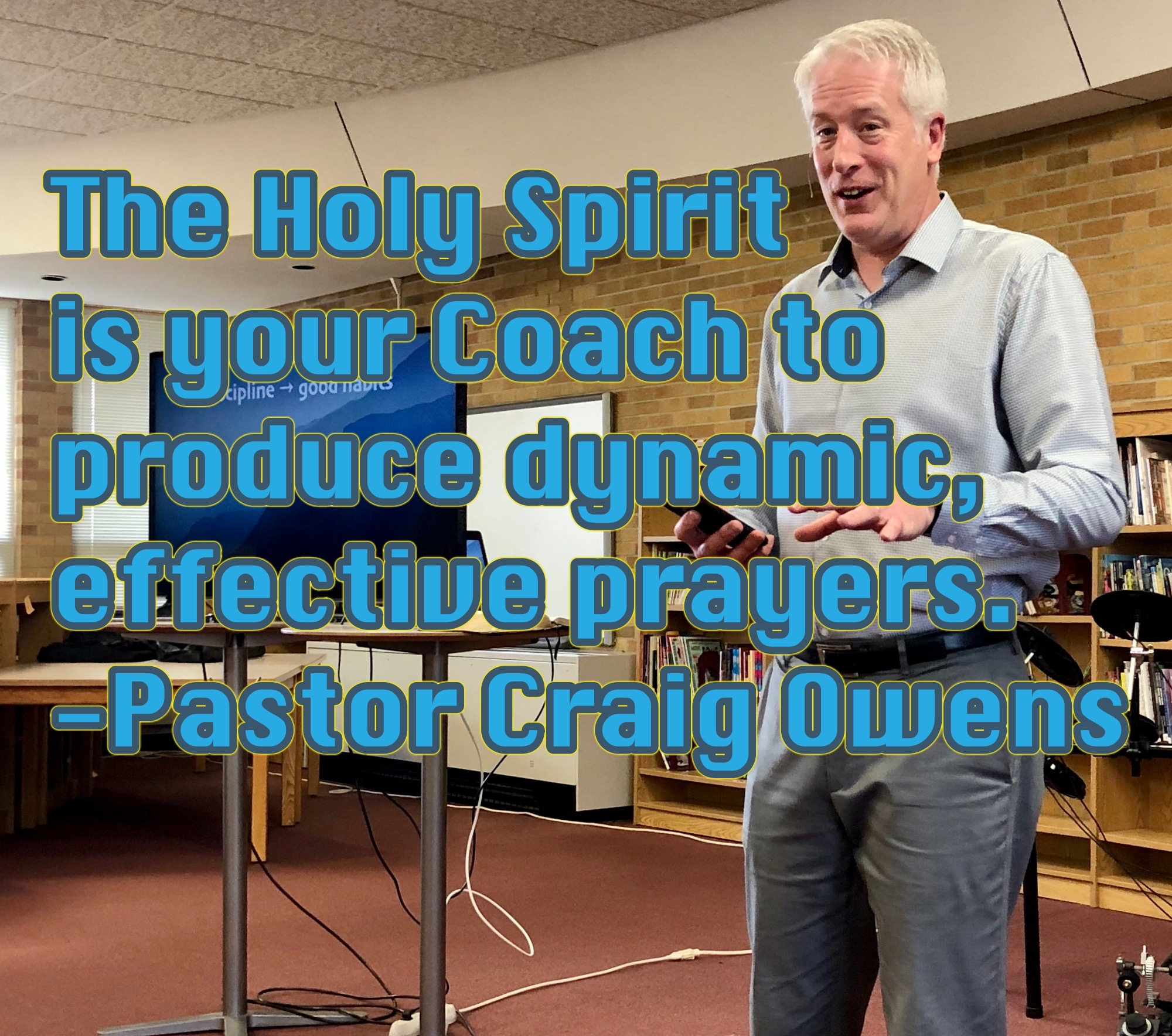
Jesus told us about the amazing prayers that we would be able to pray, and how the Holy Spirit can be our perfect Coach in this process (John 14:12-17, 26; 16:13-15). 

There are some incredible things that happen when we pray consistently, when we pray boldly, and when we pray in the character of Jesus. 

John Piper asks, “Why do God’s children so often fail to have consistent habits of happy, fruitful prayer?” He answers his own question like this: “Unless I’m badly mistaken, one of the reasons is not so much that we don’t want to, but that we don’t plan to.” 

Successful football teams don’t simply show up on game day and compete successfully. They plan to be successful. They practice and study the coach’s game plan so that they can be ready to audible when necessary. So too for Christians—we can’t just show up for spiritual battle and expect to be successful. We must also practice, and study the game plan laid out in the Bible, and listen to the Holy Spirit as He coaches us. That’s the only way we can successfully handle all that life and even the devil throws at us. 

Over the next couple of weeks, I’m going to be sharing some hindrances that I see that can derail our practice of prayer. In the meantime, I want to challenge you—as I’ve challenged myself personally—to think on three questions:

  1. Do I really want to pray effectively? 
  2. Am I willing to put in the energy necessary to pray this way?
  3. Am I willing to let the Holy Spirit coach and discipline me in my prayer practice? 

If you can, please join me at Calvary Assembly of God on Sunday as we continue our series called Prayer Plan. 

Prayer Plan

“Why do God’s children so often fail to have consistent habits of happy, fruitful prayer? Unless I’m badly mistaken, one of the reasons is not so much that we don’t want to, but that we don’t plan to.” —John Piper  

The word strategy carries in its definition the idea of the preparation that takes place before the actual engagement begins. A coach’s strategy is worked out on the practice field. A general’s strategy is worked out in the training of his soldiers. A CEO’s strategy is worked out in the board room. 

And a Christian’s strategy is worked out in the prayer closet. 

Sadly, many Christians fall short in the time of battle simply because they hadn’t trained ahead of time—they didn’t make a plan to pray. 

Join me this Sunday as we begin a new series called Prayer Plan where I hope everyone will end up being able to say an enthusiastic “yes” to the question: Are you ready to pray? 

If you cannot join us in person at 10:30am on Sunday mornings, please check out our Facebook Live broadcast. 

If you have missed any of the messages in this city, be sure to check them out here:

Year-End Review (2019 edition)

Ten years ago God called me to pastor at Calvary Assembly of God, and we have so thoroughly enjoyed our time in Cedar Springs! One of the really cool things I get to do is teach an amazing group of people every Sunday. Here’s a recap of the series and messages from 2019.

Boldly Praying—As a general rule, God would like us to pray much more boldly than we typically do. Jesus told us that we could pray mountain-moving prayers, but C.S. Lewis rightly observed, “If we consider the unblushing promises of reward and the staggering nature of the rewards promised in the Gospels, it would seem that our Lord finds our desires, not too strong, but too weak.” 

Christ’s Passionate Journey—In action movies, the crucial moment usually is filmed in slow motion. The Gospels do the same as Jesus approaches the Cross. For example, Mark doesn’t mention anything about the birth of Jesus and only gives us one verse to tell about satan’s temptation of Jesus in the wilderness. But he uses nearly 40% of his writing to describe the last week of Christ’s life. 

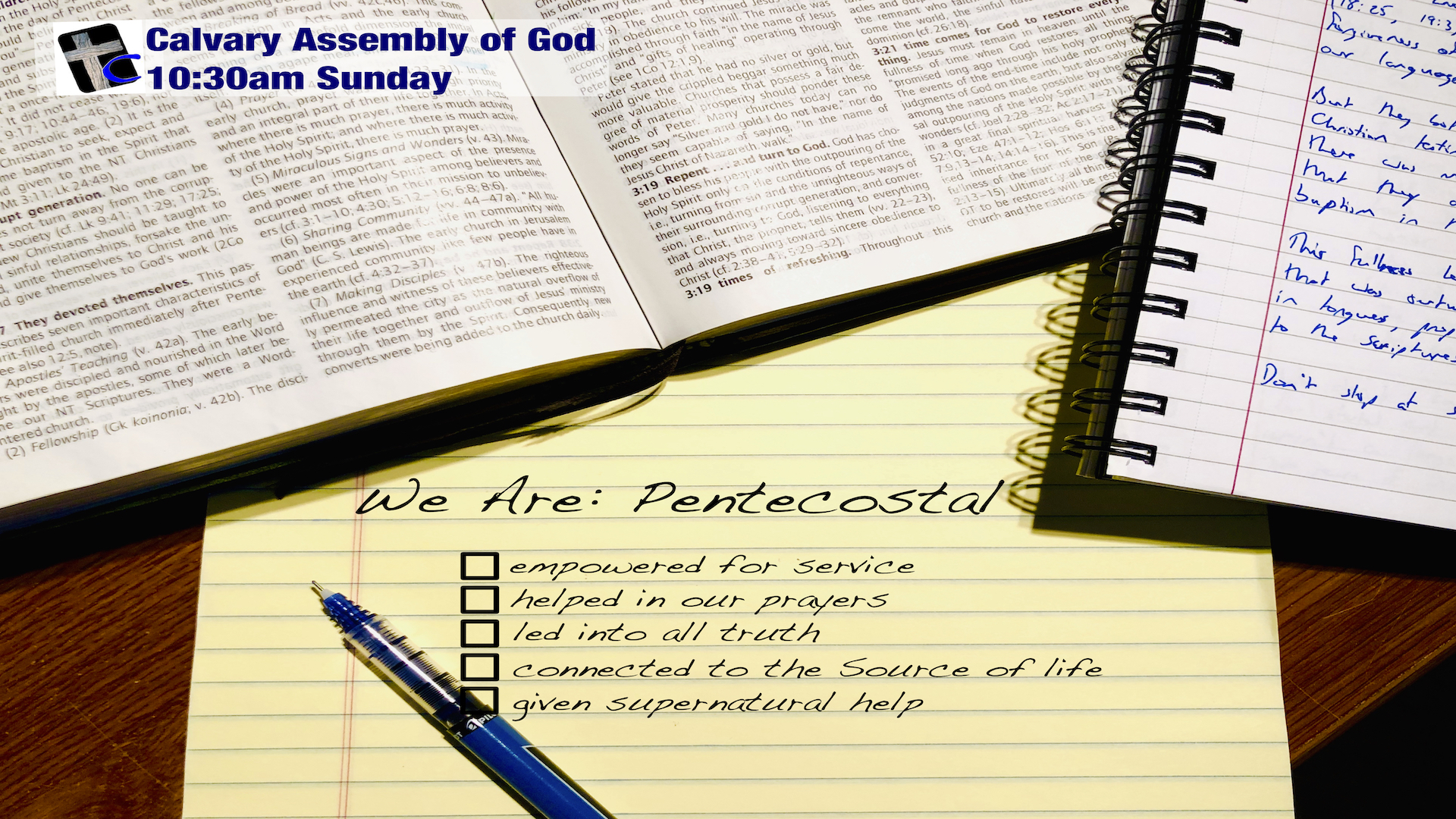
We Are: Pentecostal—Pentecost for over 1000 years was a celebration in Jerusalem that brought in Jews from all over the world. But on the Day of Pentecost that came just ten days after Jesus ascended back into heaven, the meaning of Pentecost was forever changed! 

Is That In The Bible?—Sometimes things that sound “biblical” aren’t actually in the Bible at all, and sometimes they are there but are misquoted. 

Selah—When you see this word in the Bible it can mean either a pause from the noise to reflect on something, a preparation for an exciting accent, or a reflective time of consideration. We are working our way through the Selahs in the Psalms.

Major Lessons From Minor Prophets—The five major prophets consist of 182 chapters, whereas the 12 minor prophets only have 67 chapters. The volume of these prophets writing may be minor, but their content carries major messages of meteoric power!  

Fading Gratitude—Looking back at the history of God’s people in the Bible, there is a distinct up-and-down cycle. I believe their slipping away from God can be directly linked to their forgetfulness. If there is a peril in our forgetfulness, there is also a power in our thankfulness!

The Carols Of Christmas—How many “old familiar carols” have you heard Christmas after Christmas until the words have almost lost their meaning? If we’re not careful, any song repeated too often can lose the richness of its original intent. 

We will be returning to a couple of these series in 2020, and we’ll be launching some brand new ones as well. In either case, if you don’t have a home church in the northern Kent County area, I would love to have you join us!