Listen to the podcast of this post by clicking on the player below, and you can also subscribe on Apple, Spotify, or Audible.
I had a great time on the Thriving In Ministry podcast with Kyle Willis while his podcast partner Dace Clifton was on sabbatical.
From all of the podcasts and interviews they had done, Kyle shared with me how so many pastors find it difficult to take a Sabbath break. Kyle noted that a pastor’s day of rest seems to bump into everyone else’s day of work.
That passage in Mark 6 that I mentioned is instructive for leaders in a couple of ways. First, Jesus was looking out for His teammates. He saw that they were tired and He called them to a place of rest. Good shepherds are always tuned in to the needs of the flock around them. As David said in Psalm 23, the Good Shepherd knows when to lead us to quiet pastures and still waters.
Second, I see that Jesus was also tuned in to Himself. Even though He was trying to get to a quiet place, He took time to minister in teaching and food to a crowd that was described as “sheep without a shepherd.” When this time was finished, Jesus took time alone to pray (Mark 6:46).
I think sometimes leaders have sabotaged their own health and effectiveness by saying things like, “This is quitting time” or “This is my day off.” Instead, we should listen to the Holy Spirit giving us insight like, “Take a break now. It’s time to go to a quiet pasture. It’s time to recharge in prayer.”
Leaders, don’t stick rigidly to your schedule but stay tuned in to yourself. Listen for the unmistakable voice of the Holy Spirit giving you wisdom. I have a section of five chapters in my book Shepherd Leadership that deal with every aspect of a leader’s health. Please pick up a copy today.
I’ll be sharing more clips from this Thriving In Ministry interview soon, so please stay tuned. Shepherd Leadership: The Metrics That Really Matter is available in print or ebook, and in audiobook through either Audible or Apple.
Listen to the podcast of this post by clicking on the player below, and you can also subscribe on Apple, Spotify, or Audible.
Near the beginning of my interview on the Leading From Alignment podcast with Jim Wiegand and John Opalewski, I was asked to share a bit of my personal background.
I have been incredibly blessed to have grown up in a solid Christian home and in a fantastic Bible-believing church. And yet I still had to come to a point where I had to decide for myself whether I was going to put my faith in the claims of the Bible. Check this out…
Parents, God is faithful to His Word. If we as parents will teach the Scriptural truths to our children, the Holy Spirit will bring that back to their remembrance as our kids get older. We don’t have to fret about their spiritual standing, but we can stand on God’s promises.
This doesn’t remove responsibility from us. I love the story of a woman named Monica who prayed for years and years for the salvation of her son. Even when it appeared he was running as hard as he could away from God, Monica continued to pray. Eventually, her son did put his faith in Jesus and went on to have an immeasurable impact on world and church history. Monica’s son is Augustine of Hippo.
So Mom and Dad, make sure your kids hear God’s Word. Then make sure God hears your prayers for that Word to not return void. You don’t have to fret over your children when you remember that God loves them even more than you do!
There is a psychological term called “projection” where we see in others what is really in ourselves. This is something Christians MUST guard against doing. Instead of going to the other person first, let’s go to our knees in prayer first. This is a short clip from a full-length teaching video I provided exclusively for my Patreon supporters.
“Blessed are those who can give without remembering and can take without forgetting.” —Elizabeth Bibesco
Listen to the podcast of this post by clicking on the player below, and you can also subscribe on Apple, Spotify, or Audible.
There is a mistaken belief that urges or yearnings or cravings that humans have are sinful and must be quickly squelched. To that end, many will deny themselves absolutely anything that brings them pleasure.
But what God creates, He calls “good” and even “very good” (Genesis 1:4, 10, 12, 18, 21, 25, 31). In one part of the Creation account, we read that God created “trees that were pleasing to the eye and good for food” (2:9). Things used in the way God created them are both good and good for us. The Creator knows the best uses, and He shares these with us. He also knows the harmful misuses, and He warns us of these.
He still uses the same tactic today: he attempts to turn a craving for a legitimate good into an irresistible, entitled pursuit for more. This is what he did with Adam and Even in the Garden of Eden, trying to get them to doubt God’s wisdom in forbidding them from eating that one tree (Genesis 2:16-17, 3:1-6).
Adam and Eve needed food, and God gave them a craving for good food. But they didn’t need the fruit from the Tree of the Knowledge of Good and Evil—they just wanted that forbidden fruit.
When wants become “needs,” “needs” become idols.
Once again, satan tried the same strategy with Jesus. Jesus had a craving for food after 40 days of fasting, but His Father said, “Not yet.” Notice how satan again tried to get Jesus to question God’s wisdom with his “if” questions at each temptation. He even quotes a Scripture out of context to try to legitimize turning a want into a need (Luke 4:3, 7, 9).
When wants become “needs,” “needs” become idols. And when “needs” become idols, our unfulfilled cravings create anxiety. And when anxiety persists, sin is usually not too far behind.
So any anxiety in our hearts should alert us to the idols of wants-turned-to-“needs.” In other words, make sure what you are calling “needs” aren’t just wants in disguise.
How can you do this? By asking yourself these four questions:
Is this an earthly craving or an eternal craving? Cravings for earthly things will ultimately fail because this world is temporary (1 John 2:17).
If I don’t get this thing, will I die? If I answer “no,” it’s probably a want.
Will this craving bring me closer to God? Jesus said, “Your Father knows what you need before you ask Him” (Matthew 6:8). So let’s ask ourselves, “If this longing is fulfilled, will it make me more dependent on God?” If the answer is “no,” then it’s probably a want.
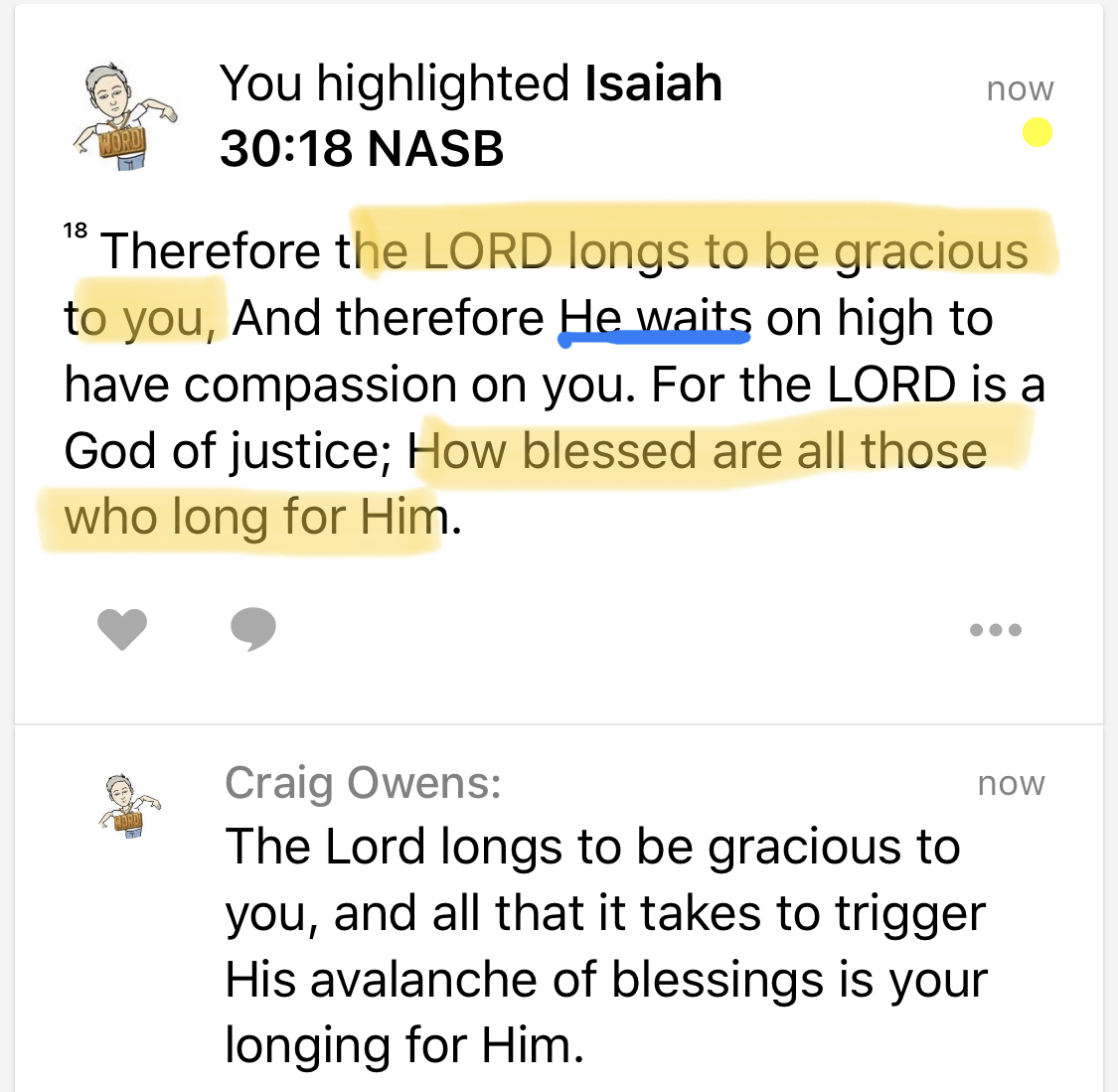
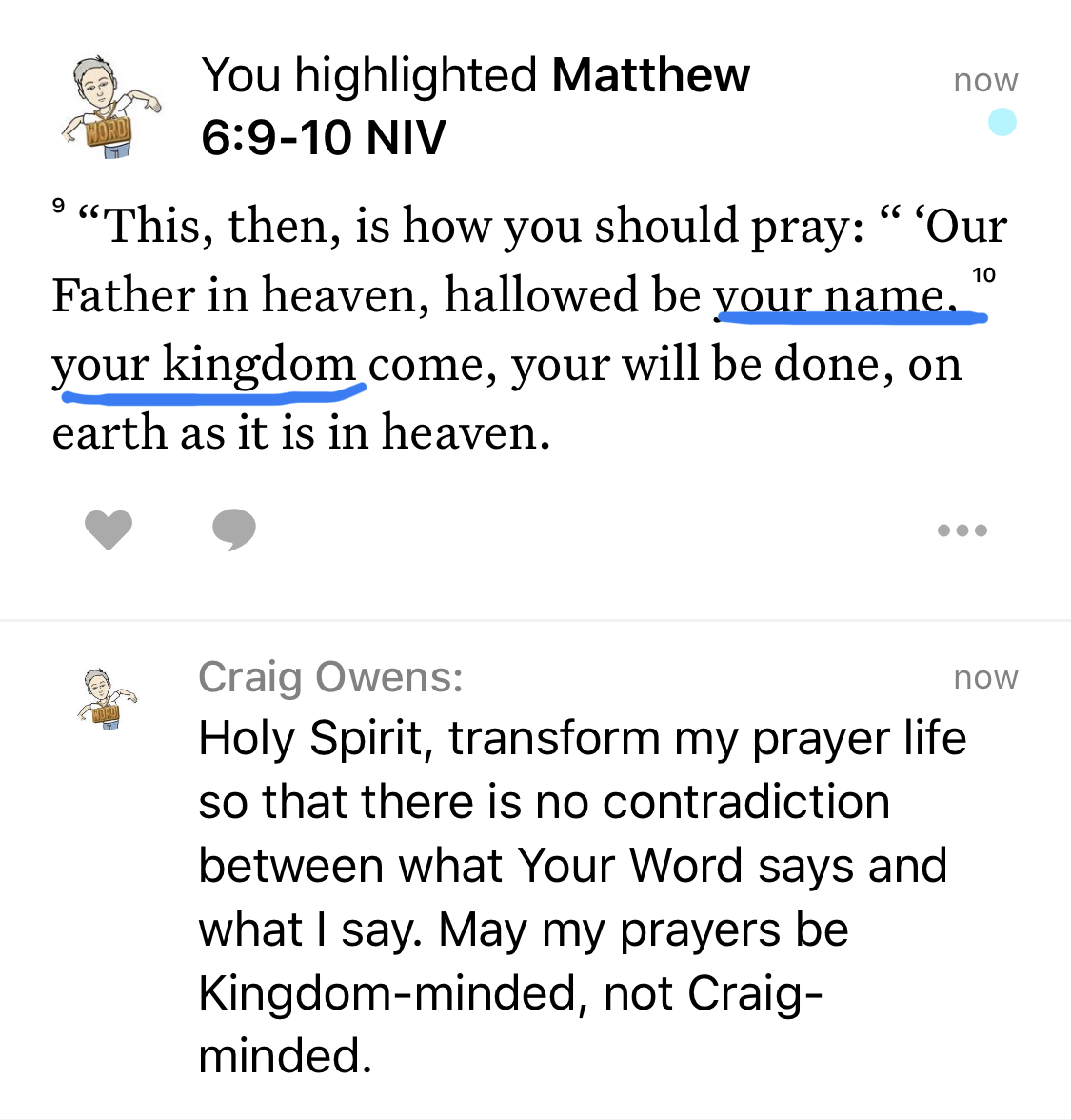
Will this craving glorify God’s name? Jesus taught us to begin our prayer with an attitude of longing for God’s name to be glorified (Matthew 6:9-10). We can definitely spot wants we’ve turned into “needs” when we are looking for personal gain. Check out this verse from the prophet Isaiah—
And therefore the Lord earnestly waits, expecting, looking, and longing to be gracious to you; and therefore He lifts Himself up, that He may have mercy on you and show loving-kindness to you. For the Lord is a God of justice. Blessed—happy, fortunate, to be envied—are all those who earnestly wait for Him, who expect and look and long for Him—for His victory, His favor, His love, His peace, His joy, and His matchless, unbroken companionship! (Isaiah 30:18 AMP)
God longs to be gracious to you, so He puts cravings in your heart that can only be satisfied by His presence. Lucifer and Adam and Eve all lost God’s “matchless, unbroken companionship” when they tried to appease the wants-turned-to-“needs” idol. It doesn’t have to be like that for us! Ask the Holy Spirit to help you spot those wrong cravings and turn them into cravings that only God can satisfy.
Jesus said we are hypocrites when we give, pray, or fast only outwardly. He called our prayers “pagan” when we try to pray unnaturally. Jesus desires for our giving, praying, and fasting to be natural parts of who we are.This is a short clip of a full-length teaching called “Keepin’ it real” that I shared exclusively with my Patreon supporters. If you would like to sponsor me too for just $5/month, check out the details here.
“Nothing is impossible, the word itself says ‘I’m possible’!” —Audrey Hepburn
“Astronomers are thrilled by the extraordinary images provided by the new James Webb Space Telescope (JWST)—but some of the data already contradict Big Bang expectations. … Creationists have long noted that the Big Bang suffers from the mature distant galaxy problem. Big Bang theorists assume that light from the most distant galaxies took more than 13 billion years to reach Earth. By Big Bang reckoning, we should be seeing these very distant galaxies, not as they are today, but as they were more than 13 billion years ago. Hence, these galaxies should look ‘unevolved’ and ‘immature.’ Yet this expectation is routinely contradicted, and preliminary data from Webb continues the trend.” Check out more from this ICR article.
“Our leadership will always be second to our followership of Jesus.” —Pastor Ben Stoffel
Have you ever been cursed out? Here’s how Jesus wants Christians to respond. It’s pretty easy to say something nice to someone who has done something nice for you. But Jesus tells us to say nice things to people regardlessof how they have treated us.
“The battles that count aren’t the ones for gold medals. The struggles within yourself—that’s where it’s at.” —Jesse Owens
“Your walk walks, and your talk talks, but your walk talks more than your talk talks.” —Anonymous
This is a weekly series with things I’m reading and pondering from Charles Spurgeon. You can read the original seed thought here, or type “Thursdays With Spurgeon” in the search box to read more entries.
Listen to the podcast of this post by clicking on the player below, and you can also subscribe on Apple, Spotify, or Audible.
Aids Of Self-Judgment
My soul is consumed with longing for Your laws at all times. (Psalm 119:20)
Spiritual desires are the shadows of coming blessings. What God intends to give us, He first sets us longing for. Therefore, prayer is wonderfully effective because it is the embodiment of a longing that is inspired by God because He intends to bestow the blessing prayed for! What are your longings, then, my hearer? Do you long to be holy? The Lord will make you holy! Do you long to conquer sin? You will overcome it by faith in Jesus! Are you pining after fellowship with Christ? He will come and make His abode with you! Does your soul thirst, yes, even pant after God as the hart for the water brooks? Then you will be filled with all His fulness….
I say not that it is so with all human wishes, for ‘the sluggard desires and has nothing’ [Proverbs 13:4] and many a man has such evil cravings within his heart that it were contrary to the purity of God for Him to grant them. But where there are intense, heartbreaking earnings of a holy order, depend upon it, they are tokens of good things to come!
Where the grace of God reigns in the soul, it makes a man become a stranger among his fellows…. Worldly men care nothing for the judgments of God. No, they care nothing for God Himself! But when a man becomes born anew, a citizen of heaven, there grows up within his spirit a spiritual appetite of which he had felt nothing before—and he longs after God and His Holy Word. See to it, brothers and sisters, whether your souls cry out for God, for the living God, for again I say, by your longings you may test yourselves—by your heart’s desires you may forecast the future—and by your hungering and thirsting you may judge whether you are men of this world or citizens of the world to come. With such aids to self-judgment, no man ought to remain in doubt as to his spiritual condition and eternal prospects.
From Holy Longings
I am currently teaching a series of lessons called Craving. We are learning in these sermons that God created our souls to long intensely, to have cravings. But we go astray when what we crave are things that will merely last during this world.
John told us, “This world is fading away, along with everything that people crave. But anyone who does what pleases God will live forever” (1 John 2:17 NLT). So by its very definition, worldly things will never satisfy our cravings because the world is temporary. Only an eternal God can give us eternal satisfaction.
As Spurgeon teaches us here, examining our longings is the best aid of self-judgment and will help us determine our future. Craving God’s presence will bring God’s blessing and His eternal fulfillment of our cravings. Craving anything else will lead to frustration and eternal disappointment.
God longs to bless us (Isaiah 30:18) as long as we are craving Him!
Listen to the podcast of this post by clicking on the player below, and you can also subscribe on Apple, Spotify, or Audible.
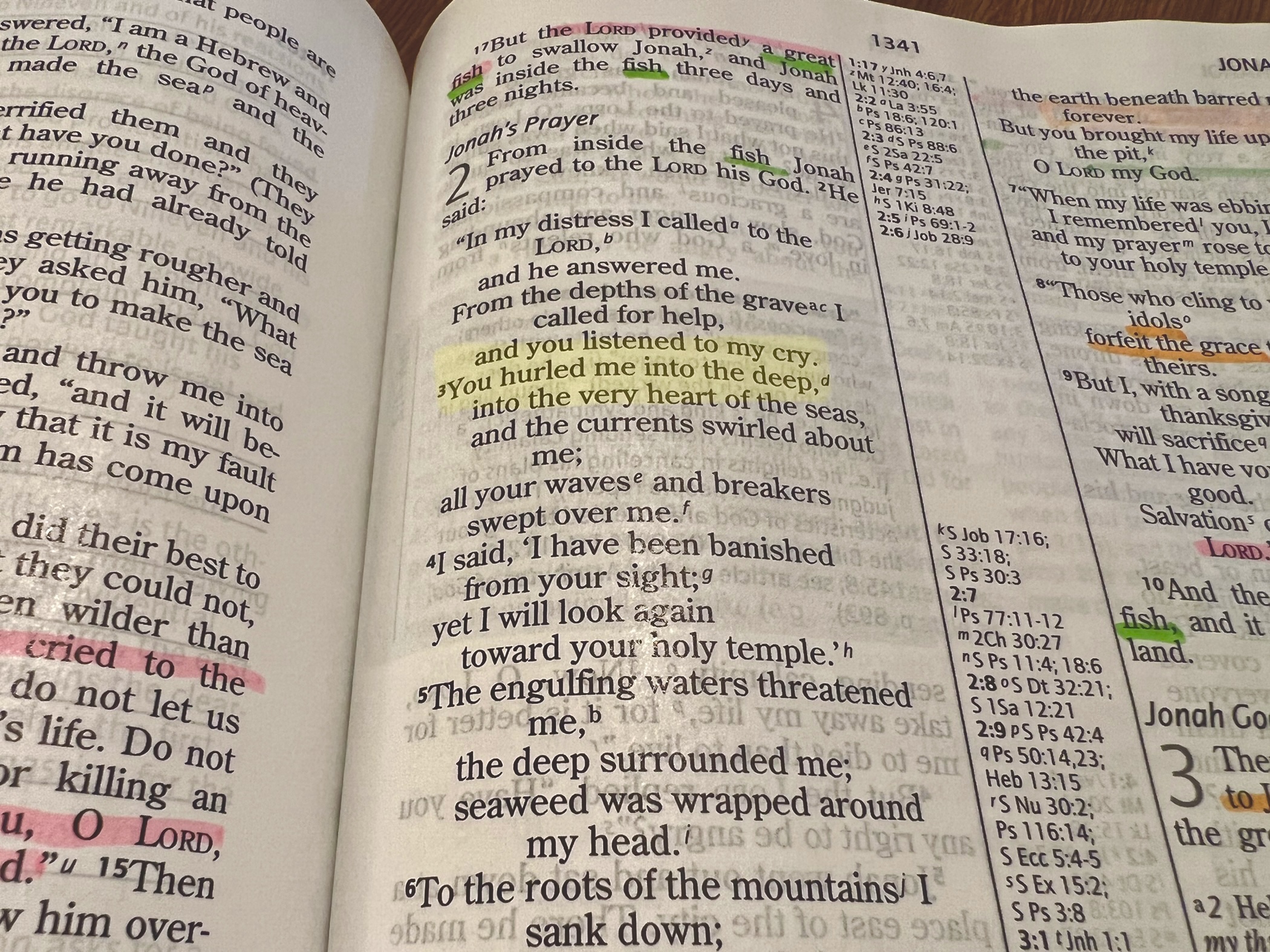
I think the story of Jonah is pretty well-known. God calls Jonah to take His message to Nineveh. Jonah agrees to do this, but then promptly boards a ship heading in the opposite direction. To get his attention, God sends a storm that rocks this boat so violently that the sailors can do nothing to make any headway. Ultimately, Jonah asks the sailors to throw him overboard. As soon as Jonah hits the water, the storm stopped and Jonah is swallowed alive by a great fish that God had provided.
The story continues with this narrative: “From inside the fish Jonah prayed to the Lord his God” (Jonah 2:1). In the next verse, Jonah repeats, “In my distress, I called to the Lord, and He answered me.”
It appears that Jonah’s first prayer may have been on the deck of the storm-tossed ship. Perhaps he prayed something like, “God, I know I have sinned against You. Please have mercy and get me out of this! I promise I’ll obey You this time.”
How did God answer that prayer? Jonah says God answered like this: “You hurled me into the deep.”
That probably is not the answer to prayer that Jonah was expecting!
I remember when my friend was in a similar place. He had sinned against both God and his employer, and found himself in a whole lot of hot water. As a result, he lost his job.
That probably is not the answer to prayer that my friend was expecting! And yet it was the best answer. He shared with me several months later that getting fired not only got his attention, it helped him put his focus back on God, and put him on a path where God could use him again.
My friend learned what Jonah also learned: Even in our sinful state, God hears our prayers and He answers our prayers. The answer may not immediately be what we would have selected! But our sovereign God knows the best answer, and we must always trust Him.
Jonah declared, “Salvation comes from the Lord,” and he also promised God, “What I have vowed I will make good” (Jonah 2:9). And he did. This time Jonah did go to Nineveh, he delivered the message God had given, and he called those people to repentance. They responded by humbly turning to God, and God showed them mercy.
My friend, the next time you find yourself in hot water, or in an inescapable storm at sea, or a dire situation at work, remember that you can always call to God. He will answer you. His answer may not be exactly what you expected, but it will be the best answer!
Listen to the podcast of this post by clicking on the player below, and you can also subscribe on Apple, Spotify, or Audible.
I was playing golf with a pastor and a missionary when the starter asked if a single player could join us to make a foursome. We happily agreed. About 4-5 holes into our game, our guest asked what we did. My pastor friend started out, “I’m a pastor, and this guy is a missionary, and—”
Our guest interrupted and blurted out, “You guys are Christians?! I’ve never had so much fun! I always heard Christians were boring.”
When did it come about that people thought of Christians as boring—or even worse, as sourpusses and killjoys? Sadly, too many Christians have helped cement this idea in people’s minds. I think this is largely because those Christians are misinformed and frustrated. This frustration, I believe, comes from the mistaken idea that Christians are supposed to squelch any urges or cravings that we have.
But check out this Q&A from the Westminster Catechism—
Q: What is the chief end of man?
A: To glorify God and to enjoy Him forever.
Glorifying God is supposed to result in enjoyment—enjoying both God’s presence and the life He has given us. We are created to crave the fuel of His Spirit that satisfies and energizes us.
Just as your car would at best under-perform if you attempted to run it with anything else but gasoline, so our lives will under-perform and feel like drudgery if we are trying to fuel our cravings with anything other than God.
The dictionary defines “craving” as a great or eager desire, or a yearning. But I believe the Bible defines God-honoring craving as the longing for an intimate relationship with God that is implanted by God Himself.
The people of Judah had gone astray from God and were trying to satisfy their urges with foreign gods and pagan idolatry. When King Asa called these backsliders back to God, here’s how he did it—
[Asa] commanded Judah to seek the Lord, the God of their fathers—to inquire of and for Him and crave Him as a vital necessity—and to obey the law and the commandment. (2 Chronicles 14:4 AMP)
Contrast this with the temporary cravings of earth—
But those who crave to be rich fall into temptation and a snare and into many foolish, useless, godless, and hurtful desires… (1 Timothy 6:9 AMP)
This world is fading away, along with everything that people crave. But anyone who does what pleases God will live forever (1 John 2:17 NLT).
Nowhere are godly cravings and earthly cravings better contrasted than in James 4:1-6.
In this passage, the Greek word for desires (v. 1) and pleasures (v. 3) is hedone. This is where we get our English word “hedonism.” There is nothing wrong with pleasure—for God Himself takes pleasure—but it’s what pleasures we are craving that can make them ungodly. James rightly points out that the wrong hedonism is a craving to fulfill “your desires,” “your pleasures,” and to desire “friendship with the world” (v. 1, 3, 4)
Jesus talked about worldly cravings—using the same word hedone—when He said, “The seed that fell among thorns stands for those who hear, but as they go on their way they are choked by life’s worries, riches and pleasures [hedone], and they do not mature” (Luke 8:14).
Notice the same thing in Isaiah 58:2 where God declares that people “seem eager” to delight in God, but it’s only a show for them to satisfy fleshly cravings. John Piper noted, “God means they are delighting in their business and not in the beauty of their God. He does not rebuke their hedonism. He rebukes the weakness of it. They have settled for secular interests and thus honor them above the Lord.”
Instead, notice the fulfilled cravings when we seek God: “If you keep your feet from breaking the Sabbath and from doing as you please on My holy day, if you call the Sabbath a delight and the Lord’s holy day honorable, and if you honor it by notgoing your own way and notdoing as you please or speaking idle words, then you will find your joy in the Lord, and I will cause you to ride in triumph on the heights of the land and to feast on the inheritance of your father Jacob. For the mouth of the Lord has spoken” (Isaiah 58:13-14).
I like that reminder that “the mouth of the Lord has spoken.” The origin of the word craving is the Old Norse word krefja, which means to lay claim on something because of a promise. God has promised, and so we can claim it.
James assures us that the spirit God implanted in us envies intensely (James 4:5). We were made to crave God’s presence, we were made to find ultimate satisfaction in His presence, we were made to find eternal delight in knowing Him more intimately!
The proud person says, “God, I know what I want. Give it to me.” The humble person says, “God, I know Your presence is the only thing that will satisfy me. Give it to me.”
The craving in our spirit can be redirected from earthly yearnings to God-honoring yearnings by yielding to the Holy Spirit. I would humbly suggest that our prayer should be something like this—
“Father, grant that my cravings are for Your name to be hallowed, Your kingdom to be made visible, and Your will to be done. Let the enjoyment I have in Your presence shine out of me in a way that invites others to be dissatisfied with their earthly cravings and find their ultimate satisfaction in a personal relationship with You through Jesus Christ. Holy Spirit, continue to refine and redirect all of my cravings away from earthly things to eternal pleasures. In Jesus’ name I pray, Amen.”
This is a weekly series with things I’m reading and pondering from Charles Spurgeon. You can read the original seed thought here, or type “Thursdays With Spurgeon” in the search box to read more entries.
Listen to the podcast of this post by clicking on the player below, and you can also subscribe on Apple, Spotify, or Audible.
Guided For God’s Sake
In You, Lord, I have taken refuge; let me never be put to shame; deliver me in Your righteousness.Turn Your ear to me, come quickly to my rescue; be my rock of refuge, a strong fortress to save me. Since You are my rock and my fortress, for the sake of Your name lead and guide me. Keep me free from the trap that is set for me, for You are my refuge. Into Your hands I commit my spirit; deliver me, Lord, my faithful God. (Psalm 31:1-5)
To lead and to guide are two different things very like each other, but patient thought will detect different shades of meaning, especially as the last may mean ‘provide for me.’ The double word indicates an urgent need—we require double direction, for we are fools and the way is rough.
Lead me as a soldier, guide me as a traveler! Lead me as a babe, guide me as an adult; lead me when You are with me, but guide me even if You are absent; lead me by Your hand, guide me by Your Word. The argument used is one fetched from the armory of free grace: not for my sake, but ‘for the sake of Your name’ guide me.
When we let God lead us and guide us, we are never “put to shame.” It’s my own attempts at guiding myself that end up in shame and failure. This is why Jesus taught us to pray for God’s name to be glorified as His will is done. Part of that leading and guiding provides our daily bread and an escape from falling in the face of temptation.
Interestingly, Jesus prayed the same thing for Himself in the Garden of Gethsemane: “Not My will, but Yours be done.” And then Jesus could confidently use the same words from this Psalm as He hung on the Cross: “Father, into Your hands I commit My spirit.” We can pray with the same assurance when we are allowing the Holy Spirit to both lead and guide us every single day.
Listen to the podcast of this post by clicking on the player below, and you can also subscribe on Apple, Spotify, or Audible.
I had a great time on the Ailbe Podcast with Rusty Rabon.
The reason I wrote Shepherd Leadership is because my heart was aching for my fellow pastors who were feeling frustrated maybe even to the point of contemplating resigning their churches. The principles I teach in this book are ones that will get all of us back to a biblical standard of what God says is successful in our ministries.
Toward that end, I love praying for pastors. Every week I send a Sunday morning prayer to my fellow pastors in my hometown to encourage them to find satisfaction in serving the sheep the Chief Shepherd has placed under their care.
As we wrapped up our time together, Rusty referred to a prayer I shared in my chapter entitled ‘Stick-to-it-iveness.’ This prayer is adapted from Psalm 23 and is intended to be a source of strength for pastors.
Take a listen…
I hope this prayer is helpful and energizing to you. I also hope that you will pick up a copy of Shepherd Leadership to infuse some more encouragement into your ministry efforts.
If you would like to check out the other clips I have already shared from this podcast, please check them out here. Shepherd Leadership: The Metrics That Really Matter is available in print or ebook, and in audiobook through either Audible or Apple.



 I had a great time on the Thriving In Ministry podcast with Kyle Willis while his podcast partner Dace Clifton was on sabbatical.