Micah the prophet said that the “high places” (or the places everyone looked to for their directions for how to live) had become Samaria and Jerusalem. These are the places where the kings sat—the political places, the places where men exerted their influence.
We can make politicians our gods—our high places—when we allow their words to carry more weight than God’s Word. As Chuck Colson used to say, “Salvation doesn’t arrive on Air Force One.”
Our problem is a singular problem: sin.
Our solution is just as singular: Jesus.
Stop elevating man’s opinion. Stop looking to humans to fix a spiritual problem. Don’t make high places on earth, but look to our Heavenly Father to bring His Kingdom on earth.
”Though all the peoples walk each in the name of his god, as for us, we will walk in the name of the Lord our God forever and ever.“ (Micah 4:5).
Matthew Walker, director of the Center for Human Sleep Science, says, “Sleep is the universal health care provider: whatever the physical or mental ailment, sleep has a prescription it can dispense.” It’s not just medical science, but the Bible also talks about the value of sleep, as Scott Hubbard explains in this post. I’ve also shared some posts about sleep here, here, and here.
Don’t you love the beautiful melody of songbirds? Being a percussionist, I’m attracted to the woodpeckers. Scientists have found that woodpeckers are the only non-songbird that share an identical genetic marker in their brains with songbirds. That means that the drumming of woodpeckers is actually a song!Check out some additional fascinating insights about our drumming friends in this post.
“What is the best thing in the world? To please its Creator. What is His will? To fulfill what He commanded, that is, to live rightly and dutifully to seek the Eternal; for duty and justice are the will of Him Who is dutiful and right. How do we seek this goal? By application. Then we must apply ourselves in duty and justice. What helps to maintain this practice? Understanding, which, while it winnows the remainder and finds nothing solid to rest in amongst those things which the world possesses, turns in wisdom to the one thing which is eternal.” —Columbanus
“Jesus taught us to pray that the Kingdom would come on earth in the same way that it exists in heaven. … Jesus made praying for the Kingdom the highest priority in our prayers after praising and honoring God. The Kingdom is more important than our daily needs. The Kingdom is more to be desired than that our sins should be forgiven or that we should be rescued through temptation [Matthew 6:9-13].” —T. M. Moore
Stephen O. Presley wrote, “If our modern world resembles the ancient one, perhaps we could glean some wisdom from the ways the early church navigated these murky waters. As Polycarp testifies, the Scriptures were essential to the early Christian apologetic. Passages such as Romans 13:1 and Matthew 22:21, alongside the examples of Old Testament figures such as Joseph and Daniel, guided the church’s vision for engaging the unbelieving world.” His post especially caught my eye after I shared a very similar message to my flock this past Sunday.
Sean McDowell sits down with an Old Testament professor to discuss 10 of the most bizarre OT passages (as selected by Sean’s X followers).
Listen to the podcast of this post by clicking on the player below, and you can also subscribe on Apple, Spotify, or Audible.
The events in the Bible are rooted in history. These are actual events in which real people lived in a moment in recorded history. The songs of ascent were sung both pre-exile and post-exile. The post-exile pilgrims were returning to Jerusalem after the edict of King Cyrus (2 Chronicles 36:22-23).
The first pilgrims to go up to Jerusalem after the exile were the rebuilders of both Jerusalem and the temple, and they faced heavy opposition (Ezra 4:1-5; Nehemiah 4:1-3, 7-8). In light of these events, I think the song of ascent in Psalm 125 is especially pertinent to this situation.
The middle verse of Psalm 125 contains a warning to godly people. God’s followers may be tempted to grab earthly political power to try to make things right—to “fight fire with fire.” The phrase “the scepter of the wicked” symbolizes the royal authority of a foreign conqueror. In other words, we might justify using the scepter of the wicked because we think “the ends justify the means.” But notice the warning if we do: “the righteous might use their hands to do evil.”
You can see this in a couple of other biblical translations. The Amplified Bible says, “lest the righteous (God’s people) stretch forth their hands to iniquity and apostasy,” and the New Living Translation says, “the godly might be tempted to do wrong.”
Instead, we are called to look to God for our security. Psalm 125:1-2 sounds like an echo of Psalm 121, in which we are reminded that our God is unshakable, unrivaled, and eternal. Political parties come and go, even evil dictators and tyrannical regimes come and go, but the Sovereign God remains forever. All of History is His story!
Chuck Colson used to frequently remind his audiences, “Salvation does not arrive on Air Force One!”
The motto on our US currency is still accurate: In God we trust! Psalm 125:4 says the same thing: God does good to those who trust Him.
Earlier I mentioned the opposition that Ezra and Nehemiah recorded. Let me also share with you how these God-fearing men instructed the Jewish people to respond. Ezra says that the prophets called them to remember “the name of the God of Israel, who was over them,” and three times Nehemiah records that their response was prayer to God (Ezra 5:1; Nehemiah 4:4, 9; 6:9).
In God we trust, not in political power. On the flip side, Psalm 125:5 warns us that God treats as evildoers those who look to the worldly scepter to try to get ahead.
So when opposition and even persecution come, we should pray to God and ask for Him to remove the scepter of the wicked. Let’s pray for God to put His favor in the hearts of even ungodly leaders. Ezra recognized this when he said—
Praise be to the Lord, the God of our ancestors, who has put it into the king’s heart to bring honor to the house of the Lord in Jerusalem in this way and who has extended His good favor to me before the king and his advisers and all the king’s powerful officials. Because the hand of the Lord my God was on me, I took courage and gathered leaders from Israel to go up with me.(Ezra 7:27-28)
The New Testament calls on Christians to pray for those in governmental leadership over us (1 Timothy 2:1-2). But perhpas you ask, “What exactly are we to pray for these leaders?” Solomon wrote, “The king’s heart is like channels of water in the hand of the Lord; He turns it wherever He wishes” (Proverbs 21:1). So perhaps a God-honoring prayer is to ask for our leaders’ hearts to be moved as King Cyrus’ heart was.
“God is King of kings and ultimately always wins, always gets His way. Even when it seems that earthly authorities continually rebel against the Lord and His Anointed, the reality is that even their most heinous acts are turned against them. It must be very frustrating to be the devil and to constantly see how God turns situations to gospel good and God’s unique glory. God is so wise that He turns the hearts of authorities without them knowing it. Smug on their decaying thrones, the power brokers of this world revel in their supposed autonomy and imagined resistance, never realizing how foolish they look to the angel hosts who are privy to God’s unmatched strategic dominance.”
Let’s never try to fight fire with fire, but let’s turn repeatedly to God in prayer whenever opposition arises against God-fearing people anywhere.
Listen to the podcast of this post by clicking on the player below, and you can also subscribe on Apple, Spotify, or Audible.
As we near the crucifixion of Jesus, we begin to see how politics plays a role in so many decisions. The Sanhedrin is trying to balance their popularity with the Jewish people and their standing with powerful leaders in the Roman government. Pontius Pilate is trying to balance how the Sanhedrin portrays him to the Jewish people and what those in Rome are telling Caesar Tiberius about him. King Herod Antipas also has issues with balancing the pressure from the Sanhedrin with the popularity of Jesus.
Luke gives us a very telling statement about the politics of the day when he writes, “That day Herod and Pilate became friends—before this they had been enemies” (Luke 23:12). How did they become friends over this issue of what to do with Jesus? Remember that the Sanhedrin is a common thorn-in-the-side for both of them, and the political axiom that still holds to this day says, “The enemy of my enemy is my friend.”
I point out all of the political maneuverings during this pivotal time because these political balancing acts are still being played out today and Christians will end up in the crosshairs.
Pilate was trying to appease the Sanhedrin but there was no Roman law that Jesus had broken that was deserving of the death penalty they were demanding. So twice Pilate tells these religious leaders, “I will punish Him and then release Him.” In fact, without waiting for their approval, Pilate subjects Jesus to the tortuous punishment known as flagellation (Luke 23:13-22; John 19:1-11).
I think Pilate believed that if they saw Jesus so humiliated and beaten down they would back off from their desire for His death. But Pilate miscalculated their commitment to seeing Jesus eliminated from the scene.
Pilate finally gives in and says, “You take Him and crucify Him. As for me, I find no basis for a charge against Him.” But the Jewish religious leaders insisted, “We have a law, and according to that law He must die, because He claimed to be the Son of God.”
If you have ever watched a movie about the gladiatorial games in the Roman Colosseum, you’ve probably viewed the scene where one combatant is disarmed and helpless. Before the victor strikes his deathblow he will look to Caesar in the stands. The Roman Caesar will either give a thumbs-up signal to pardon the victim or he will give a thumbs-down signal to send the defeated one to their death.
Pilate asks Jesus, “Don’t You realize I have power either to free You or to crucify You?”
There was another king who called himself “king of kings” but God called him “My servant.” He was King Nebuchadnezzar of Babylon. Daniel, an exile from Israel who was Nebuchadnezzar’s prime minister, reminded him where his authority originated, “The Most High is sovereign over all kingdoms on earth and gives them to anyone He wishes” (Daniel 4:17).
In the same way, Jesus addressed Pilate, “You would have no power over Me if it were not given to you from above.”
John Piper wrote: “This does not intimidate Jesus because Pilate’s authority over Jesus is subordinate to God’s authority over Pilate. Jesus gets His comfort at this moment not because Pilate’s will is powerless, but because Pilate’s will is guided. Not because Jesus isn’t in the hands of Pilate’s fear, but because Pilate is in the hands of Jesus’s Father.”
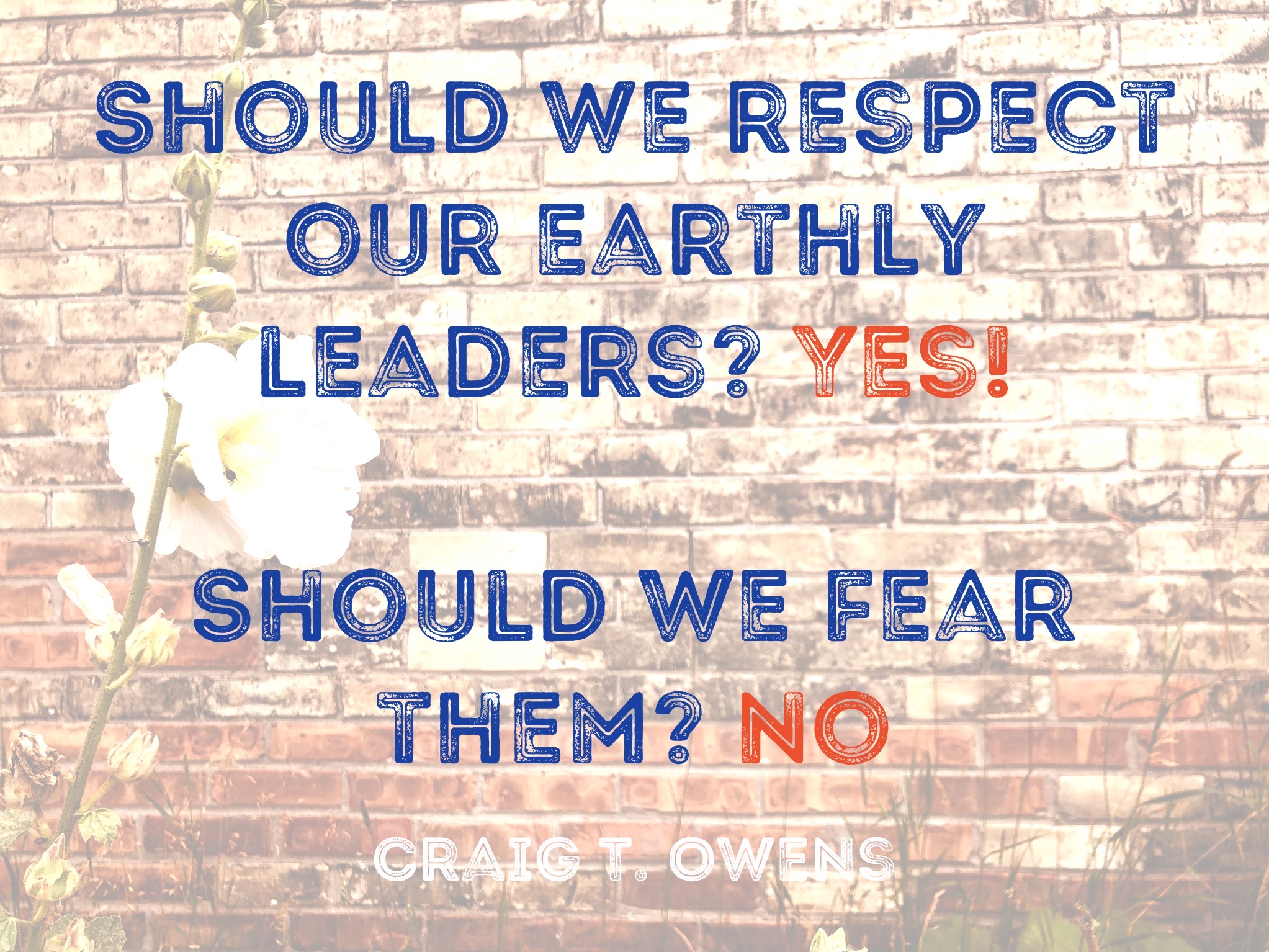
Jesus shows us an important principle: Should we respect our leaders (even the ungodly ones)? Yes! Should we fear them? No!
We don’t fear them because their power is limited to just this life and is under the control of the Most High God (Luke 12:4). Peter and John learned this lesson well, as we see in their interaction with the same Sanhedrin that turned Jesus over to Pilate (see Acts 4:1-10). What Jesus and these apostles demonstrate for us is respectful boldness.
In light of this, here are five things Christians should keep in mind. When persecution comes against us, we should respond like this:
Jesus taught us there is a time for eloquent silence, but when the Holy Spirit needs us to speak, He will give us the respectfully bold words to share. Jesus said,
On My account you will be brought before governors and kings as witnesses to them and to the Gentiles. But when they arrest you, do not worry about what to say or how to say it. At that time you will be given what to say, for it will not be you speaking, but the Spirit of your Father speaking through you. (Matthew 10:18-20)
Respectful? Yes. Fearful? No. Respectful, loving, prayerful boldness is how we will glorify the Most High God in the face of persecution.
Theodore Roosevelt never pulled his punches! And you could never misunderstand exactly what he was saying. Check out my review of his autobiography by clicking here, and then enjoy some of these straight-shooter quotes from TR.
“With soul of flame and temper of steel we must act as our coolest judgment bids us. We must exercise the largest charity towards the wrong-doer that is compatible with relentless war against the wrong-doing. We must be just to others, generous to others, and yet we must realize that it is a shameful and a wicked thing not to withstand oppression with high heart and ready hand. With gentleness and tenderness there must go dauntless bravery and grim acceptance of labor and hardship and peril.”
“The necessity of character as the chief factor in any man’s success—a teaching in which I now believe as sincerely as ever, for all the laws that the wit of man can devise will never make a man a worthy citizen unless he has within himself the right stuff, unless he has self-reliance, energy, courage, the power of insisting on his own rights and the sympathy that makes him regardful of the rights of others.”
“I never won anything without hard labor and the exercise of my best judgment and careful planning and working long in advance.”
“For I then held, and now hold, the belief that a man’s first duty is to pull his own weight and to take care of those dependent upon him; and I then believed, and now believe, that the greatest privilege and greatest duty for any man is to be happily married, and that no other form of success or service, for either man or woman, can be wisely accepted as a substitute or alternative.”
“I did not then believe, and I do not now believe, that any man should ever attempt to make politics his only career. It is a dreadful misfortune for a man to grow to feel that his whole livelihood and whole happiness depend upon his staying in office. Such a feeling prevents him from being of real service to the people while in office, and always puts him under the heaviest strain of pressure to barter his convictions for the sake of holding office.”
“No man can lead a public career really worth leading, no man can act with rugged independence in serious crises, nor strike at great abuses, nor afford to make powerful and unscrupulous foes, if he is himself vulnerable in his private character. … He must be clean of life, so that he can laugh when his public or his private record is searched; and yet being clean of life will not avail him if he is either foolish or timid. He must walk warily and fearlessly, and while he should never brawl if he can avoid it, he must be ready to hit hard if the need arises. Let him remember, by the way, that the unforgivable crime is soft hitting. Do not hit at all if it can be avoided; but never hit softly.”
“I am glad to see wrong-doers punished. The punishment is an absolute necessity from the standpoint of society; and I put the reformation of the criminal second to the welfare of society. But I do desire to see the man or woman who has paid the penalty and who wishes to reform given a helping hand—surely every one of us who knows his own heart must know that he too may stumble, and should be anxious to help his brother or sister who has stumbled. When the criminal has been punished, if he then shows a sincere desire to lead a decent and upright life, he should be given the chance, he should be helped and not hindered; and if he makes good, he should receive that respect from others which so often aids in creating self-respect—the most invaluable of all possessions.”
“My duty was to stand with every one while he was right, and to stand against him when he went wrong.”
“We must ever judge each individual on his own conduct and merits, and not on his membership in any class, whether that class be based on theological, social, or industrial considerations.”
More quotes coming soon! You can subscribe to this blog to be notified when more quotes are published, and you can also check out the quotes I publish daily on Tumblr.
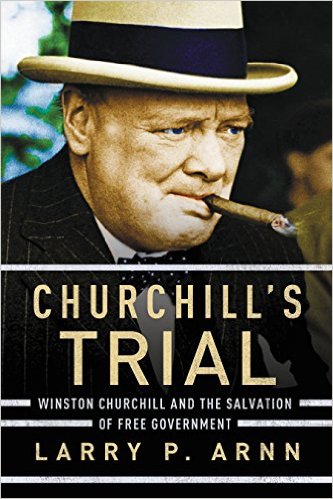
I have read so much written by and about Winston Churchill, that it’s hard to imagine learning something new about this remarkable man. And yet, I was amazed at how much more I learned in reading Churchill’s Trialby Larry Arnn.
It’s easy to take for granted the freedoms people have in countries like England and the United States because of the foresight of the framers of our Constitutions. But there are trials which put these freedoms in a precarious place, and if it were not for strong and insightful men—like Winston Churchill—those freedoms could have disappeared.
Churchill played key roles in his country, and in world politics, through two world wars, a global depression, the coming of age of new military super-powers, the dawn of the era of atomic warfare, and the rise of Communism. In all of these intense events, the temptation was there to make radical changes to meet the challenge of the moment. Churchill had the wisdom and foresight to leverage the strength of his country’s Constitution, without undermining it nor setting a precedent which would erode future freedoms.
In what Churchill did for England, he also helped strength the resolve of key leaders in the United States, who faced similar challenges in a shifting geopolitical climate. Churchill not only saved the world from the spread of fascism and communism, but he did so in a way that would guarantee freedom for millions of people in generations to follow. The question before us now is: Will we learn from Churchill’s example, or will we fail the trial we now face?
For history buffs, political junkies, and fans of Winston Churchill, Churchill’s Trial is an excellent read.
“Don’t dare to be different, dare to be yourself—if that doesn’t make you different then something is wrong.” —Laura Baker
“Real joy is to be found in the presence of God, with Jesus Christ, secure and loved forever and ever (Psalm 16:11). Knowing the presence of God is the unique privilege of all who have made the Kingdom turn. God never changes in His love for us, and Jesus Christ holds us fast forever, regardless of the outward circumstances of our lives. The result of experiencing this is joy.” —T.M. Moore
“We can do nothing unless by a supernatural grace of God. It is God who gives the will. It is God who gives the power.” —John Calvin
“How singularly does God, in political events, prepare men’s minds for the particular phase which His church assumes! … I cannot go into the question now, but every Christian student of history knows that the circumstances of the outward world have ever been arranged by God so as to prepare the way for the advance of His great cause.” —Charles Spurgeon
“There is no such thing as genuine knowledge of God that does not show itself in obedience to His Word and will.” —Sinclair B. Ferguson
Eric Metaxas reminds us why Darwinism cannot explain religion. Check out Saber-tooth Psychology.
“How may I tell when satan hinders me? I think you may tell thus: first by the object. satan’s object in hindering us is to prevent our glorifying God. If anything has happened to you which has prevented your growing holy, useful, humble, and sanctified, then you may trace that to satan. If the distinct object of the interference to the general current of your life has been that you may be turned from righteousness into sin, then from the object you may guess the author.” —Charles Spurgeon
“Every step on satan’s ground deprives us of the security of the promises of God. Often has ruin followed by not refraining from the first step (cp. Mark 14:54, 71). The only safety is in flight (Genesis 39:10, 12). Run then into ’thy hiding-place, and behind thy shield,’ and boldly bid thy tempter ‘depart from thee’ (Psalm 119:114, 115; cp. Matthew 4:10).” —Charles Bridges
“The corruption of the first sinner consists not in choosing some evil thing (there are no evil things for him to choose) but in preferring a lesser good (himself) before a greater (God).” —C.S. Lewis
“We may think we’re living in dark days, that things are going from bad to worse, and there’s no end in sight. But the truth is just the opposite. satan is back on his heels, bound and reeling; the rulers of this world are deceived and deceiving; the Church is complacent, at least in the West, but always a spiritual tinder box, ready for a new spark of the Spirit; and the Kingdom of God is advancing wherever men and women cling to Jesus’ compelling vision and seek the Kingdom of God as their highest priority in life.” —T.M. Moore
“Science and research are proving that porn harms the brain, damages relationships, and is also linked to prostitution and sex trafficking. Porn is a fantasy that is proven to make it harder for users to have real loving relationships.” Read more reasons why pornography is harmful.
Perhaps you can relate to one or more of these quotes about our government:
“Government is like a baby: …a big appetite at one end and no sense of responsibility at the other.” —Ronald Reagan
“If you ever injected truth into politics you have no politics.” —Will Rogers
“The word ‘politics’ is derived from the word ‘poly,’ meaning ‘many,’ and the word ‘ticks,’ meaning ‘blood sucking parasites.’” —Larry Hardiman
“Politics have no relation to morals.” —Nicolo Machiavelli
But if you are a Christian, the Bible calls you to not give in to the cynicism that many feel toward our government. As aliens and strangers on Earth, we are called to to interact with government officials in a peculiar way.
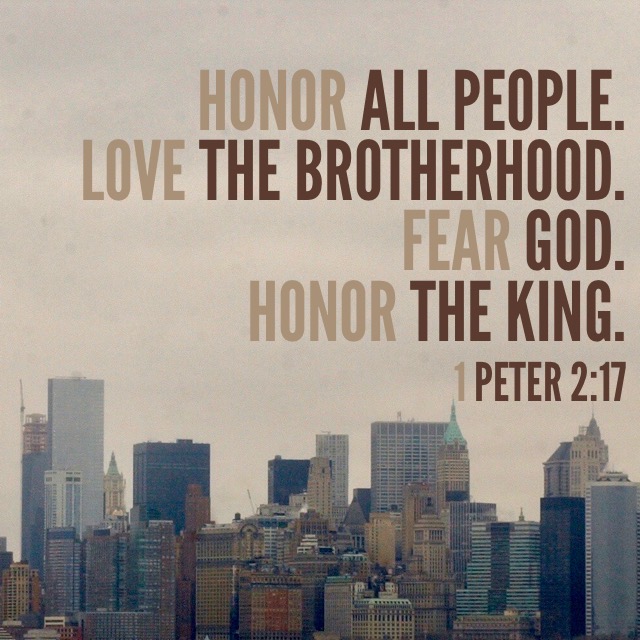
In a single word, the Bible calls us to submit. The Greek word that both Peter (1 Peter 2:13) and Paul use (Romans 13:1, 5) has a couple of definitions. On the one hand it carries a military meaning to arrange troops under the command of a leader. On the other hand, it’s also a voluntary attitude of cooperating, assuming responsibility, and carrying a burden for the common good.
No where does submission imply letting leaders abuse us, or remaining silent and uninvolved if their activities are immoral or unbiblical. Instead submission recognizes that government officials have been placed in their positions by God (Daniel 4:25, 32—the Most High is sovereign over all the kingdoms of men, and gives them to anyone He wishes), and that they are God’s servants (Romans 13:4, 6) who have to give an accounting to God for their actions.
Our alien response of properly submitting is our way of supporting them in their God-given responsibilities. How do we do this?
“Government is like a baby: …a big appetite at one end and no sense of responsibility at the other.” —Ronald Reagan
“If you ever injected truth into politics you have no politics.” —Will Rogers
“The word ‘politics’ is derived from the word ‘poly,’ meaning ‘many,’ and the word ‘ticks,’ meaning ‘blood sucking parasites.’” —Larry Hardiman
Then a sadly serious one—
“Politics have no relation to morals.” —Nicolo Machiavelli
And finally, the very thoughtful quotes—
“Church and state are supposed to work together. The Church…does not set up the voting booths, but it motivates and it equips people to go into them and make a difference. The Church does not write the laws, but bears witness to the truth of God to which those laws must correspond. Politics is not our salvation; Jesus Christ is. But fidelity to Him includes doing our part as faithful citizens, and to exercise our rights as citizens appropriately, we have to understand the relationship between the Church and the state, and how both of these entities are responsible for protecting and safeguarding….” —Father Frank Pavone
“I close with three words of pastoral advice—
“First, to Assemblies of God ministers: Politics reflects culture, and culture reflects religion. If you are concerned with the political drift of American culture, preach the gospel! As it sends out roots in the lives of believers, the seeds of the Gospel will change hearts and minds.
“Second, to Assemblies of God adherents: You are privileged citizens of a blessed nation. Use your citizenship well! Seek the common good. Advocate for the last, the lost, and the least. Speak the truth in love. And vote for candidates and issues that reflect a biblical perspective. The difference in so many conflicts in American politics and culture turns on who turns out to vote.
“Third, to all Christians: If you are troubled with the Supreme Court’s [Obergefell] decision, keep perspective! In this and every other matter, always remember the words of our Lord Jesus Christ: ‘In this world you will have trouble. But take heart! I have overcome the world’ (John 16:33).
“Let us all pray for a great spiritual awakening in our country!” —George O. Wood
Check out my full series of messages on how Christians are to live as citizens of heaven while here on planet Earth.



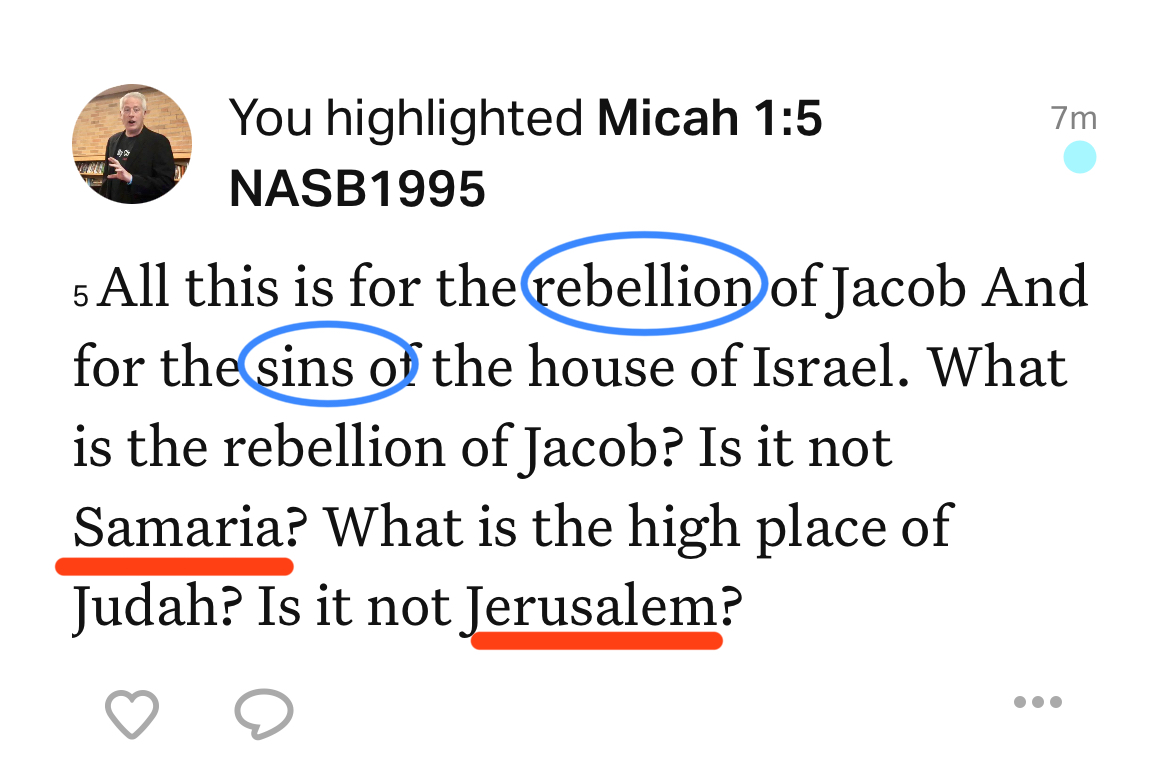 Micah the prophet said that the “high places” (or the places everyone looked to for their directions for how to live) had become Samaria and Jerusalem. These are the places where the kings sat—the political places, the places where men exerted their influence.






 Craig T. Owens