Comforting The Distressed

Listen to the podcast of this post by clicking on the player below, and you can also subscribe on AppleSpotify, or Audible. 

Comfort is an important word in the apostle Paul’s letter to the saints at Corinth. In just five verses in the opening of his second letter to the Corinthians, he uses the word “comfort” nine times! 

   Praise be to the God and Father of our Lord Jesus Christ, the Father of compassion and the God of all comfort, who comforts us in all our troubles, so that we can comfort those in any trouble with the comfort we ourselves receive from God. For just as we share abundantly in the sufferings of Christ, so also our comfort abounds through Christ. If we are distressed, it is for your comfort and salvation; if we are comforted, it is for your comfort, which produces in you patient endurance of the same sufferings we suffer. And our hope for you is firm, because we know that just as you share in our sufferings, so also you share in our comfort. (2 Corinthians 1:3-7) 

The Greek word conveys the sense of someone who comes near to help us. They come physically near, their heart draws near to us in empathy, and even their words are right on target to provide the help we need. 

If that description sounds familiar, it may be because it comes from the same Greek word that Jesus uses for the Holy Spirit—

   And I will ask the Father, and He will give you another Comforter (Counselor, Helper, Intercessor, Advocate, Strengthener, and Standby), that He may remain with you forever. (John 14:16 AMPC) 

As Paul says, God is “the God of all comfort,” which we would expect. But notice that Paul also says that the Comforter comforts us for a specific purpose: “so that we can comfort those in any trouble with the comfort we ourselves receive from God.” 

We cannot give to others what we do not have. 

How do we get comfort? The Holy Spirit—the Comforter—comforts us. 

When does He comfort us? When we are in distress. 

What happens with this comfort we receive? Three things:

  1. We have something to give to others who are in distress
  2. It builds patient endurance in us
  3. It makes our hope in God more firm

Perhaps you’re in a time of distress right now and you’re wondering why you are going through this difficulty. Can I challenge you to reframe this thought: You are going through this so that you may increase your capacity to be a comforter to others. Your comforted distress is allowing you to come alongside another struggling saint with greater empathy and patience and understanding and strength than you would have had before your time of distress. 

This is why Paul says, “Praise be to the God and Father of our Lord Jesus Christ.” He is trying to help us see the blessings that can come from this time of distress that could have come in no other way. Don’t allow self-pity to rob you of the comfort the Comforter wants to give to you so that you are able to be a comforter to others who are in distress. 

►► Would you please prayerfully consider supporting this ministry? My Patreon supporters get behind-the-scenes access to exclusive materials. ◀︎◀︎
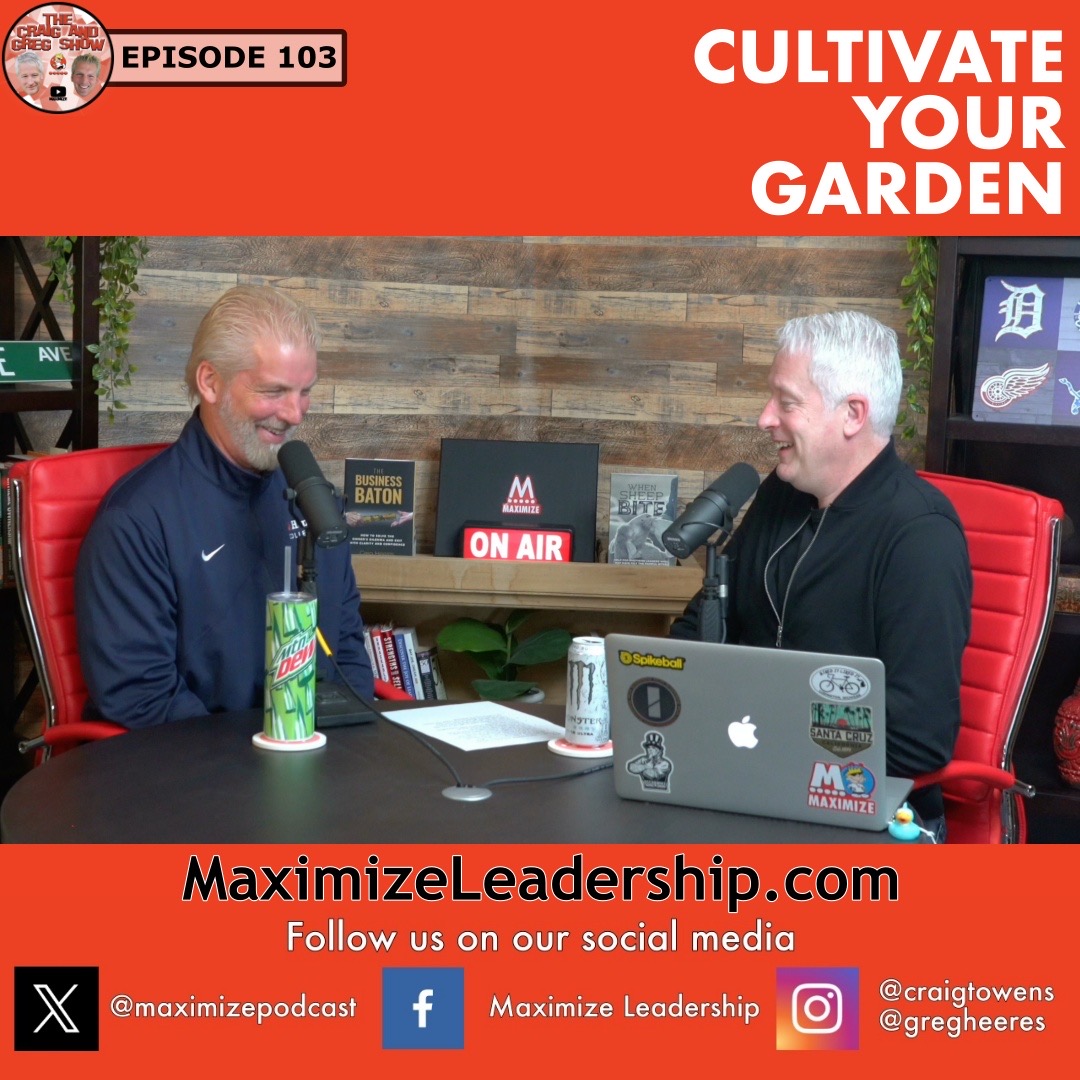
The Craig And Greg Show: Cultivate Your Garden

Listen to the podcast of this post by clicking on the player below, and you can also subscribe on AppleSpotify, or Audible.

Here in West Michigan, the city of Holland has a yearly festival that has just begun called Tulip Time where attendees will see millions of the most beautiful flowers growing everywhere. It is a stunning display, but perhaps even more impressive is the hard work and care that goes into the cultivation of these flowers. In today’s episode, Greg and I want to encourage you to bring the mindset of a gardener to your leadership. With hard work, patience, and just the right amount of careful pruning, your team will grow from small seeds in the ground to a dazzling beauty that rivals any horticultural display. 

  • [0:40] I’m not sure I’m qualified to talk about today’s topic… 
  • [1:32] A seed has almost everything it needs to grow, and so do our teammates.
  • [3:13] What do people need most from a gardener-leader?
  • [5:25] Leaders will need to exhibit confidence in a teammate’s competency.
  • [8:04] We need to be careful of not rushing the process.
  • [10:16] I share how the apostle Paul demonstrated belief in his people.
  • [12:04] How do we make sure our teammates know we have genuine belief in them?
  • [14:33] I reference a great passage from Greg’s forthcoming book about how leaders stand up for their team.
  • [19:13] A healthy habit for gardener-leaders.
  • [21:36] Gardening isn’t an assembly line—the growth plan for every person must be individualized.
  • [23:44] Greg shares an insightful quote about obstacles.
  • [25:11] Coaching can help you help your teammates grow.

Check out this episode and subscribe on YouTube so you can watch all of the upcoming episodes. You can also listen to our podcast on Spotify and Apple.

When Shepherds And Sheep Talk

Listen to the podcast of this post by clicking on the player below, and you can also subscribe on AppleSpotify, or Audible. 

In John 10:1-18, Jesus calls Himself the Good Shepherd, and He refers to those who follow Him as His sheep. 

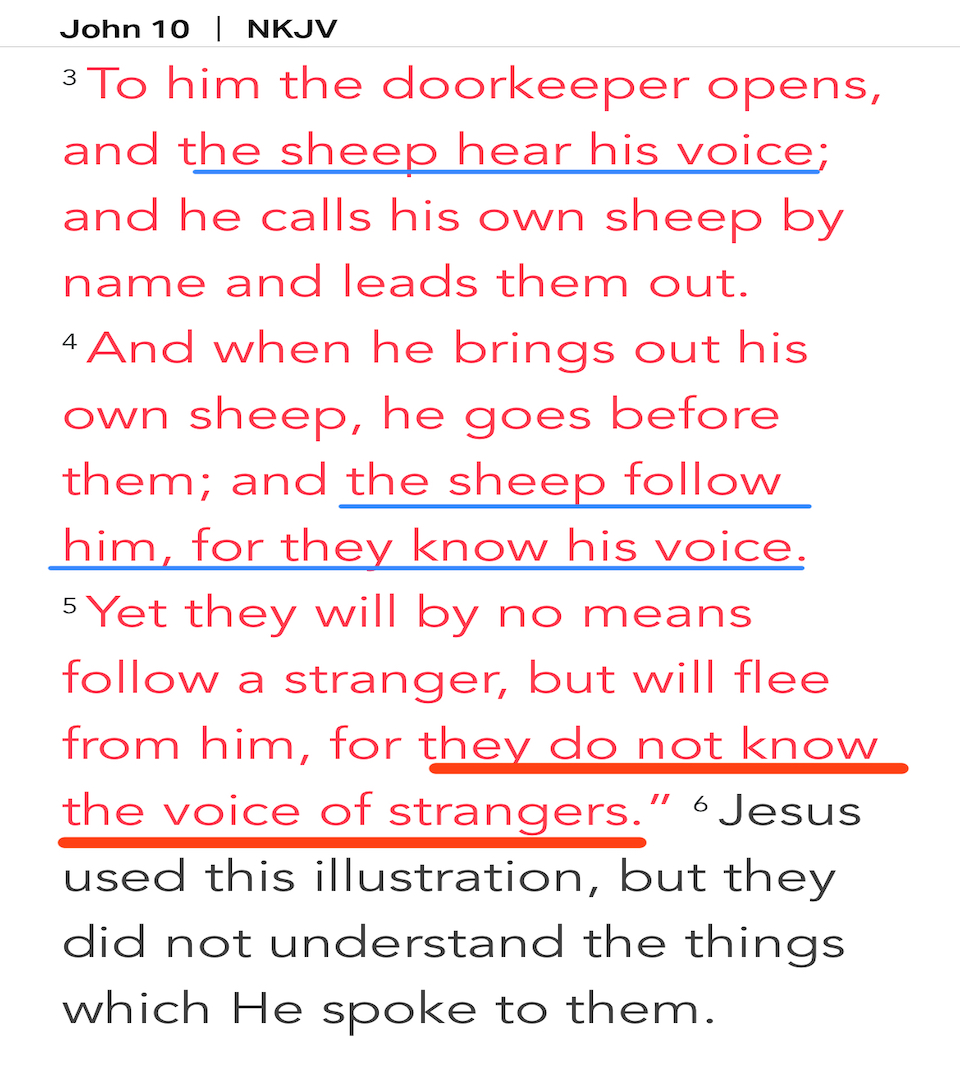
Anyone who has ever seen a shepherd interact with his sheep knows that the sheep are listening for their shepherd’s voice to give them direction, but they will ignore or run away from a stranger’s voice. 

(You may want to check out this video clip where I talk about how shepherds individualize their care for their sheep.)

This requires two-way communication. The shepherd must speak tenderly and convincingly, and the sheep must remain tuned in to their shepherd’s voice with an ear to follow. 

This requires proximity. The shepherd cannot speak from a distance without raising his voice, and sheep will never be attracted to someone who yells at them. 

This requires consistency. The shepherd needs to continually speak life-giving words, and the sheep need to consistently obey the shepherd’s words in order to reap the benefits. 

This requires discernment. The sheep have to be able to know the difference between their shepherd’s voice and a stranger’s voice. The shepherd needs to speak “words of eternal life” (see John 6:68-69). 

This requires patience. A shepherd’s directions really “get through” the first time, so the message needs to be patiently, lovingly, and creatively repeated. 

This requires abiding. The shepherd needs to show himself trustworthy, and the sheep need to show themselves faithful in their abiding with their shepherd. 

Jesus is the good and perfect Shepherd. There is no one else to whom I should be trusting, abiding with, listening to, and obeying. 

The Good Shepherd will call some of His sheep to serve as His under-shepherds for other sheep. Those under-shepherds bring the Good Shepherd glory by shepherding just as Jesus models for them. 

When shepherds and sheep remain in constant communication, there is a vitality and maturity that is readily apparent. And when the communication breaks down, the health of the sheep quickly deteriorates. 

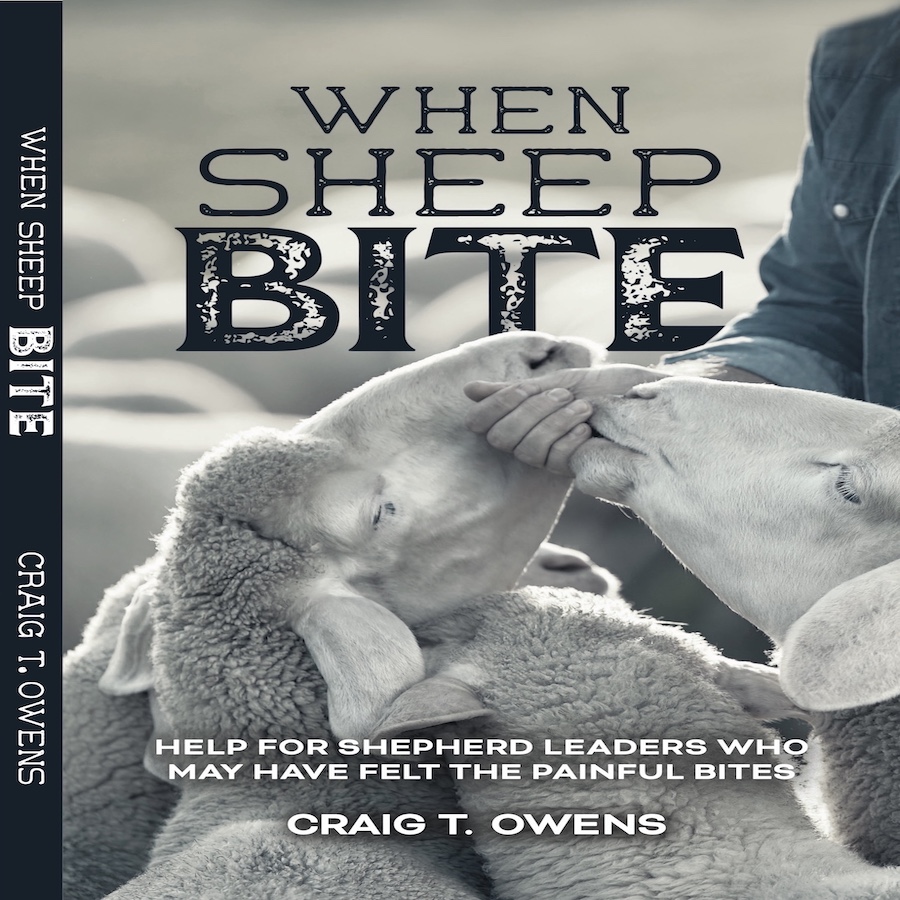
If you have been called to be an under-shepherd, please check out my books Shepherd Leadership and When Sheep Bite that will give you practical, biblical guidelines for you to thrive in this beautiful ministry. 

►► Would you please prayerfully consider supporting this ministry? My Patreon supporters get behind-the-scenes access to exclusive materials. ◀︎◀︎
The Craig And Greg Show: Patience And Impatience

Listen to the audio-only version of this podcast by clicking on the player below, or scroll down to watch the video.

In today’s episode we’re going to—IMPATIENCE! Yes, we’re talking about impatience. As a leader it can be hard to resist the temptation of impatience, but Greg and I believe that developing patience is a vital skill for leaders. In this episode we’ll explore some of the pitfalls of impatience, and share strategies for you to develop into a more thoughtful and patient leader.

  • [0:14] We’re looking at the leadership builder vs. killer of patience vs. impatience. 
  • [1:41] Patience is sometimes misperceived as not being in control—like we’re simply waiting around for something to happen.
  • [2:27] Can patience be developed?
  • [3:50] Patience allows a process to mature, and helps people grow.
  • [7:35] Warning: patience can cross a line into procrastination.
  • [8:30] Leaders need to avoid the temptation of impatiently answering too quickly.
  • [10:50] What leadership pressures make us give in to impatience?
  • [12:59] Leaders can help their teammates with their own impatience by asking some thoughtful questions.
  • [15:28] Ego + Bad advice = Dangerous impatience
  • [16:40] Patience helps leaders trust both the process and the people around them.
  • [18:33] Leaders need to be aware of what’s happening in themselves when their patience is stretched. Patient leaders grow their leadership influence.
  • [22:24] Greg quizzes me about the origins of patience.
  • [24:45] I make a confession about my impatience in my early years.
  • [25:55] Greg shares an insightful quote about the value of patience.

Check out this episode and subscribe on YouTube so you can watch all of the upcoming episodes. You can also listen to our podcast on Spotify and Apple.

It Takes All Of Us

Listen to the podcast of this post by clicking on the player below, and you can also subscribe on AppleSpotify, or Audible. 

In my book Shepherd Leadership I talk about some strong, godly men who gave into temptation at a moment of weakness—David who behaved so poorly toward Bathsheba and Uriah, Elijah who got depressed and suicidal, and Peter who denied knowing Jesus. 

One common factor for all of these guys is that their moment of giving in came when they were alone. They were isolated from others who may have been able to help them overcome the temptations that tripped them up. 

The principle is clear: Christians are stronger when they are with other Christians.  

Have you ever heard of the law of the weakest link? 

If I have a chain with links that can handle 400, 300, 250, 175, and 500 pounds, how much weight can the chain hold? You don’t really need a calculator for this one because the answer is the capacity of the weakest link: 175 pounds. This is why it’s to my advantage to not only strengthen myself, but to help others grow their strength as well. 

In Galatians 6:2-5, the apostle Paul talks about the strength we need for ourselves and our fellow Christian brothers and sisters. First, he says that each of us should test our own actions. I can only know my breaking point if I’m tested, and the Holy Spirit knows how to do this perfectly. After this testing, Paul says then I can take pride in myself without saying, “Well, at least I’m better than him!” 

Quite simply, Paul tells each of us that we must be able to carry our own loads. Why? Because only a strong Christian can help someone else with their load. We each have to get stronger individually so that we have strength for others! 

This is just like what we’ve been learning in our look at the Songs of Ascent: the goal is for all of the pilgrims to get to Zion together!

In this series, we are going to learn about six spiritual disciplines. Much like a physical workout, the Holy Spirit will start with us where we are. Not everyone will be at the same level nor will everyone progress at the same rate. But all of us will need these four things.

(1) Discipline. This is saying no to the easy thing or the thing that brings only fleeting happiness so that I can say yes to the things that bring eternal joy. 

(2) Stick-to-it-iveness. I have to be committed to this process for a lifetime. 

(3) Grace for yourself. There are going to be moments of struggles, plateaus, and even stumbles. Those are all a part of the journey, so we must extend grace to ourselves to learn, repent, and move forward. 

(4) Patience for others. As I just mentioned, we are all on our own journey and we all progress at different rates. Let’s be patient with each other. 

All of these spiritual disciplines are to strengthen us individually so that we have something to share with other saints (2 Corinthians 1:3-6). 

These spiritual disciplines shouldn’t become legalistic. Don’t make the way you do it the way everyone has to do it. After all, a 175-pound link will be different than a 250-pound link. 

What I am calling spiritual disciplines, C.S. Lewis called religious practices. In a letter to a friend, he wrote about the safety and beauty that result from these pursuits—

“I think about the practices what a wise old priest said to me about a ‘rule of life’ in general—‘It is not a stair but a bannister’…i.e. it is, not the thing you ascend by but it is a protective against falling off and a help-up. I think thus we ascend. The stair is God’s grace. One’s climb from step to step is obedience. Many different kinds of bannisters exist, all legitimate. It is possible to get up without any bannisters, if need be: but no one would willingly build a staircase without them because it would be less safe, more laborious, and a little lacking in beauty.” (C.S. Lewis)

The New Testament always has the words “saints” in the plural, so these disciplines will help us grow from strong individual saints to a healthy and effective collection of saints. 

Each of us needs all of us, and all of us need each of us! It does, indeed, take all of us.  

If you would like to follow along as we learn about these six spiritual disciplines, you can find all of the messages by clicking here. 

►► Would you please prayerfully consider supporting this ministry? My Patreon supporters get behind-the-scenes access to exclusive materials. ◀︎◀︎

Poetry Saturday—T.L.A.C.

Listen to the podcast of this post by clicking on the player below, and you can also subscribe on AppleSpotify, or Audible. 

Twisting trunks twirled together
Against all odds, one forever
Limitless love lacks lust
Daily patience is a must
Always affectionate after an accident
What’s the secret? I’ll give a hint
Conceptual curiosity, constant caring compassion
You strive for One, saving no rations
Giving it your all everyday
And to that “Bravo!” I say —Brandon Owens

My son both wrote this poem and painted this piece of artwork.

►► Would you please prayerfully consider supporting this ministry? My Patreon supporters get behind-the-scenes access to exclusive materials. ◀︎◀︎
Poetry Saturday—If None

Listen to the podcast of this post by clicking on the player below, and you can also subscribe on AppleSpotify, or Audible. 

If none were sick and none were sad,
   What service could we render?
I think if we were always glad
   We scarcely could be tender.
Did our beloved never need
   Our patient ministration,
Earth would grow cold and miss indeed
   Its sweetest consolation.
If sorrow never claimed our heart,
   And every wish were granted,
Patience would die and hope depart—
   Life would be disenchanted. —Anonymous

►► Would you please prayerfully consider supporting this ministry? My Patreon supporters get behind-the-scenes access to exclusive materials. ◀︎◀︎

Links & Quotes

John Piper wrote to pastors, “That is the main task of preaching, and the main purpose of small groups and all the ministries of the church: helping people see the greatness of what Christ has purchased for everyone who will value it above the world. Helping people see it and savor it, so that God’s superior worth shines in their satisfaction and in the sacrifices that come from such a heart.”

“The gospel of Christ, what is it? We look at the last two words, ‘of Christ.’ Indeed, if you understand Christ, you understand the gospel. Christ is the Author of it. He, in the council chamber of eternity, proposed to become the Surety for poor fallen man! He, in the fullness of time, worked out eternal redemption for as many as His Father had given Him. He is the Author of it as its Architect and Builder. We see in Christ Jesus the Alpha and the Omega of the gospel. He has provided in the treasury of grace all that is necessary to make the gospel the gospel of our salvation. And as He is the Author of it, so He is the matter of it. It is impossible to preach the gospel without preaching the Person, the work, the office, and the character of Christ. If Christ is preached, the gospel is promulgated, and if Christ is put in the background, then there is no gospel declared.” —Charles Spurgeon

Would you prayerfully consider supporting my Patreon page at only $5 per month?

Josh McDowell addresses the question, “Did Jesus say He is God?

Marshall Seagal wrote an insightful article about patience. He notes, “Patience exists only in a world of disruption, delays, and disappointment. It grows only on the battlefield. We cannot practice patience unless our circumstances call for it—and the circumstances that call for it are the kinds of circumstances we wouldn’t choose for ourselves.”

The Biblical Archeological Report has a history of Egyptian Pharaoh Hophra that is quite fascinating. It’s always so interesting to me to watch how these archeological finds square with the historical records contained in the Bible.

(Im)Patiently Waiting?

Listen to the podcast of this post by clicking on the player below, and you can also subscribe on Apple or Spotify.

I waited patiently for the Lord … You are my God, do not delay (Psalm 40:1, 17). 

These bookend verses—the first and last verses of the 40th Psalm—are humorous to me. I wonder: Is David saying something like, “I’ve waited long enough, c’mon, God, let’s get moving”? 

Not exactly.

The first part of this psalm is a backward look that recounts all that God has already done for David: He heard me, He lifted me out of a pit, He set me on a firm place, He put a new song in my mouth (vv. 1-3). While the end of this psalm is David’s anticipation of what is still to come: the enemies of God turned back, and the saints of God rejoicing in His deliverance (vv. 11-17). 

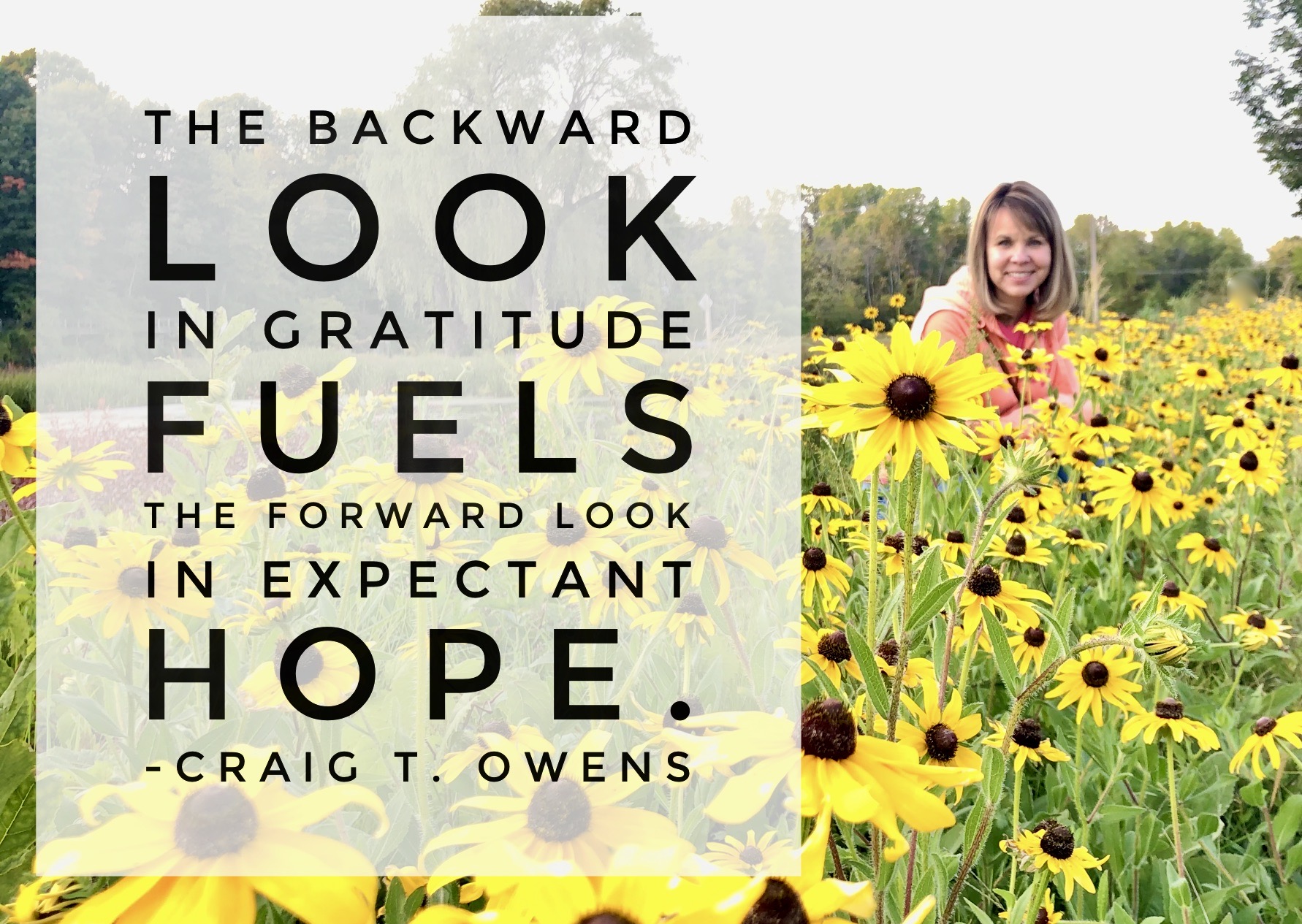
The backward look in gratitude fuels the forward look in expectant hope.

In the meantime, in the middle of this psalm—between the backward look and the forward look—David is living as a testimony of God’s goodness and faithfulness:

  • many will see how God has delivered me and put their trust in Him 
  • I speak of Your deeds 
  • I listen to You and proclaim what You speak to me 
  • I do not hide Your righteousness 
  • I speak of Your faithfulness (vv. 3-16) 

This is a good lesson for us: Our continual praise and proclamation of God’s goodness is what connects our gratitude to our hope!

So in looking at these bookends verses again, I think that what David is saying is something like, “Father, I have so many good things already to say about how You have provided for me, so do not delay in moving again so that I have even more to share with others! Let many see Your hand on my life so that they too may learn to fear and trust You. Amen.” 

►► Would you please prayerfully consider supporting this ministry? ◀︎◀︎

The Reason We Can Live Securely

Listen to the podcast of this post by clicking on the player below, and you can also subscribe on Apple or Spotify.

The wicked plot…but the Lord laughs… (Psalm 37:12).

The wicked may hatch all sorts of evil plots that appear to benefit themselves, but God always gets the final word and the last laugh!  

This 37th Psalm is filled with the contrasts of the temporary advantages of evil versus the eternal rewards of righteousness. Wicked people may flourish for a moment in time, but righteous people have both an inheritance that lasts forever and God’s help every single day too! In other words, the righteous get to securely live in a win-win relationship. 

With this in mind, David instructs the righteous how to live out their days: 

  1. not fretting over evil people
  2. trusting God to supply their needs 
  3. doing good for others
  4. delighting in God
  5. remaining steadfastly committed to God
  6. patiently
  7. refraining from anger 
  8. full of hope
  9. generously
  10. securely in God’s peace 

Righteous people can live securely every single day because they know that not only does God holds them securely today, but He will continue to hold them securely for all of eternity. Secure people are empowered to live a joy-filled, others-centered, God-glorifying life. 

If you know Jesus as your Savior, you can say “Amen!” to this secure way of living. 

►► Would you please prayerfully consider supporting this ministry? ◀︎◀︎