What Can Your Pain Tell You?

Listen to the podcast of this post by clicking on the player below, and you can also subscribe on AppleSpotify, or Audible. 

Have you ever been trying to finish a DIY project and you’re getting frustrated because there’s one part you cannot seem to complete? Then you phone a friend. They come over, look at the situation, pull the perfect tool out of their toolbox, and quickly fix the problem. You are amazed and they think, “It’s no big deal. I just happened to have the right tool for the job and the skill to know how to use it.”  

We are all gifted, but in different ways. 

God has uniquely prepared you for the situations you will face in your life. David declared, “All the days ordained for me were written in Your book before one of them came to be” (Psalm 139:16). That tells me that your loving Creator knew the challenges and opportunities you would have, and He has already placed the perfect tool in your toolbox that you will need to excel in that moment. 

We have already talked about how your passion helps you discover your areas of giftedness. Finding out what thrills you and what fills you is one key step on this journey. There’s another aspect of this discovery process that at first seems almost the opposite, but I think they are actually two sides of the same coin. 

If passion is what thrills me, then pain is what kills me. I think a good word for this is zeal. In the biblical context, zeal would be anger at the things that keep people from experiencing all that God has for them—things that keep them from knowing the fullness of God’s glory. 

As Moses grew older, it killed him that the Jewish people were now enslaved by the Egyptians and kept from worshiping God in their own place (Exodus 2:11-12). 

(Check out all of the Scriptures in this post by clicking here.)

We see Moses’ zeal misapplied at first (I mean, he did commit a murder!). This about the differences between a river powerfully flowing within its banks, and a flood when the river overflows its banks. When we use our God-implanted zeal in ways that He hasn’t sanctioned, we make a mess like that flood. But when we use our zeal to glorify God, it is as powerful as a mighty river within its banks. 

We see perfect zeal in Jesus. We see Him cleansing the temple so all worshipers could come close to God (John 2:13-17). We see his anger over the religious rules that kept people trapped in their disease( Mark 3:1-5; Luke 13:10-16). 

If passion asks, “What is God passionate about that thrills my heart too?” then pain asks, “What breaks God’s heart that also breaks my heart?” or “What’s broken that I would love to fix?” 

Zeal moves us to action! 

When we move forward in our zeal, others may say we are meddling or we are sticking our nose in places where it shouldn’t be. But we simply cannot help ourselves. 

In Moses’ initial zeal—without God’s commission—he committed murder and then fled to the wilderness. 

Stephen says, “Moses was well educated in all the wisdom of the Egyptians and was powerful in speech and action” (Acts 7:22). The word Stephen uses for “educated” means Moses was fully trained to interact success with is culture. And he also says Moses was “powerful” in speech and action. 

So why does Moses say of himself that he is not “eloquent” and “slow of tongue” (Exodus 4:10)? Literally, Moses is saying, “I might make the same mistake that I made previously.” 

Moses looked back on his initial stumble and was fearful he may misfire again. He was comfortable staying in his restricted comfort zone, but this attitude made God angry (Exodus 4:10-12). 

Saul in his zeal for the rules and traditions of Judaism, persecuted the Christians. After he became a Christian, we see the same zeal—calling out Barnabas and Peter, and asking the Galatians who has bewitched them to stay entangled with meaningless traditions. 

We usually discover our giftedness by looking backward. The devil would love for us to see our previous missteps as disqualifications for future service. But God says that He can use all of these things for His glory (Romans 8:28). We have to surrender our fears to Him if we want to soar out of our comfort zone and into our comfort zone. 

Let me give you three things to consider:

  1. What do you find yourself praying about more than anything else? 
  2. What do you move toward that others ignore or move away from?  
  3. What topic do you talk about all the time?  

Here’s your homework: Think about the three things to consider regarding pain, and then consider where your passion circle and your pain circle may overlap. 

If you’ve missed any of the messages in our series Living In Your Gift Zone, you can find them all here. 

►► Would you please prayerfully consider supporting this ministry? My Patreon supporters get behind-the-scenes access to exclusive materials. ◀︎◀︎
What’s Your Passion?

Listen to the podcast of this post by clicking on the player below, and you can also subscribe on AppleSpotify, or Audible. 

A quick recap: We are all gifted by God, but we typically restrict ourselves to a comfort zone which is much smaller than our God-given gift zone. In order to maximize our impact for the Kingdom of God, we are going to have to get uncomfortable with staying comfortable—we are going to have to trust God as we push out further into our gifts. 

Last week I gave you a homework assignment to think about the things you love to do. Why do we need to know this? Because it is one of the indicators of our areas of giftedness. 

In the whole carrot-versus-stick discussion, you will find that most people are motivated by reward way more than they are by the fear of punishment. Look at how these God-fearing men were motivated by the God’s rewards:

  • David—1 Samuel 17:26-27, 29-30 
  • Paul—1 Corinthians 9:24; 2 Timothy 4:8 
  • Jesus—Hebrews 12:2; Philippians 2:9-11 

(Check out all of the Scriptures in this post by clicking here.)

Who’s more likely to get the reward: the one who loves what they are doing or the one who hates what they are doing? We are more likely to stick with what we love doing, and you are going to love doing what you are gifted by God to do. 

Why we do what we do is much more important that what we do (Isaiah 1:11, 13, 15; Matthew 7:22-23). 

We have been gifted by God to do great things. When we do those great things, we are rewarded and it brings God glory. That realization should answer the question of why we do what we do (Ephesians 2:10). 

The way we see the world, what motivates us, and how we act are all determined by our gifts. We are working on the same Great Commission, but how we live that out will be different because of our different gifts. 

In the Old Testament, the saints wanted Zion to be strong and God-glorifying: 

  • David fought battles and wrote worship songs 
  • Solomon gave wise proverbs 
  • Josiah brought about reforms 
  • Ezra encouraged the Israelite governor and high priest 
  • Daniel encouraged the Babylonian rulers 
  • Nehemiah built the wall

In the New Testament era, the saints should all want the Body of Christ to be strong and God-glorifying. Toward that goal, we still need warriors, worshipers, wisemen, reformers, teachers, counselors, workers. 

Toward that goal, we all have a part to play (Ephesians 4:12). Check out the example of Paul in…

  • …Thessalonica: Paul was in the synagogue on three Sabbaths (Acts 17:1-2; 2 Thessalonians 3:8)  
  • …Corinth: Paul was synagogue on the Sabbath days, but after Silas and Timothy arrived, Paul was able to be preaching every day for 18 months (Acts 18:1-5, 11) 

What’s the difference? Silas and Timothy used their gifts so that Paul could use his. Without the “enzyme” of Silas and Timothy’s gifting, the whole Body of Christ would have been impoverished. 

One of the things that will help your spot your areas of giftedness is noticing what you are passionate about—What do you love to do? 

Let me give you three things to consider:

  1. When can I do this again? vs. When will this be over? 
  2. When I do this, I’m tired but fulfilled vs. When I do this, I’m tired. 
  3. I would do this without pay vs. I would rather find something else to do. 

Our prayer should echo what Paul prayed:

For this reason, since the day we heard about you, we have not stopped praying for you. We continually ask God to fill you with the knowledge of His will through all the wisdom and understanding that the Spirit gives, so that you may live a life worthy of the Lord and please Him in every way: bearing fruit in every good work, growing in the knowledge of God. (Colossians 1:9-12)

If you’ve missed any of the messages in our series Living in Your Gift Zone, you can find them all here. 

►► Would you please prayerfully consider supporting this ministry? My Patreon supporters get behind-the-scenes access to exclusive materials. ◀︎◀︎

5 Quotes From “Recruiting To Releasing”

Listen to the podcast of this post by clicking on the player below, and you can also subscribe on AppleSpotify, or Audible. 

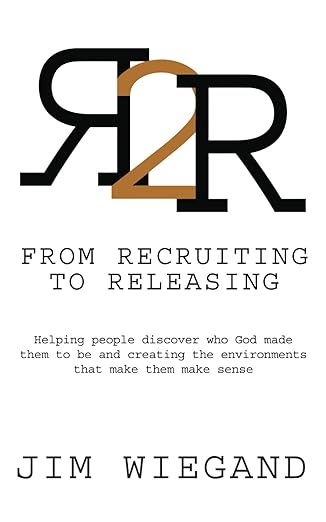
I loved Jim Wiegand’s book Recruiting to Releasing! If you missed it, I had an opportunity to interview Pastor Jim, and I shared that video here. 

There were so many passages that I highlighted and annotated as I read this book. My Patreon supports have access to all of the quotes, but I wanted to share a handful of them with you publicly. 

Jim’s book centers on the intersection of three circles. This is the “sweet spot” where people are doing what God created them to do. In order to find your sweet spot (or help others find theirs), Jim gives us three questions. Here are those questions with a couple of supporting quotes. 

Question #1—What is your passion?

“The easiest question is the first one I always ask and sounds something like this: What are you passionate about? What thrills you when you get to do it? What makes your heart come alive when you see it? What do you love to do when you’re done doing what you have to do? If all jobs paid the same and you couldn’t fail, what would you do starting tomorrow?” 

“Paul said he was ‘compelled’ to preach the gospel and that it was a ‘pleasure’ to do so. His passion for the God of the lost and the lost themselves caused him to travel the world. Everywhere he went, he saw revival or a riot, or at times, both in the same day. Then he’d be mistaken for a Greek god, stoned and left for dead or at times beaten, imprisoned, and slated for execution. And then the next day, he got up and did it all over again. That’s not fear of failure! That’s a God-given passion to tell people the good news of Jesus Christ!”

Question #2—What is your pain?

“What bothers you? What is it you see in the world that you would change? What breaks your heart? What do you find yourself praying about more than any other thing? What subjects do people no longer want to talk to you about because you’re always talking about those things?”

“The way I figure it, if it was bothering me the way it was, I was probably the one God wanted to do something about it. You see, I’ve learned that if I do something about what bothers me, and you do something about what bothers you, and the folks around here all do something about what bothers them, well, eventually there may come a day when there won’t be anything left to bother anyone.”

Question #3—What is your proficiency?

“What are you good at? What comes naturally to you? What did you pick up quickly and easily compared to others around you? What do you do with little effort that takes others much effort?” 

I highly recommend that all ministry leaders get a copy of Recruiting to Releasing. Be sure to check out my interview with Jim Wiegand too. 

►► Would you please prayerfully consider supporting this ministry? My Patreon supporters get behind-the-scenes access to exclusive materials. ◀︎◀︎
Links & Quotes

Don’t wait until you feel like doing the next good thing, just do the next good thing and the good feelings will follow. Not only that, but you will motivate others too!

“Excellence is to do a common thing in an uncommon way.” —Booker T. Washington

This is a cool mini-biography of Gottfried von Leibniz, a German polymath, committed Lutheran, and one of the most wide-ranging intellects in all of history.

“Forgiveness does not excuse the offending behavior. Forgiveness excuses the offender. The fact that God forgives us of sin, does not make sinning okay. The fact that we forgive someone of their sin towards us, does not make the sin okay.” —Kanayo Situ

“The happiness of a man in this life does not consist in the absence but in the mastery of his passions.” —Alfred Lord Tennyson

“In life you can take things one of two ways: you can take them for granted or you can take them with gratitude.” —G.K. Chesterton

T.M. Moore has an excellent post on how we can prepare for temptation before it even comes. Please check out this whole post which concludes with this thought, “Make up your mind, each day, that you’re going to resist temptation with prayer, preparation, and resting in the Word of God. Let the Spirit Who brings conviction and repentance be at work within you before you come upon the nets and snares of temptation, and you’ll be in a much better position to overcome the evil that threatens to engulf you, with the good choices and conduct that please the Lord and honor Him.”

More amazing evidence of the creativity of our Creator. Researchers have discovered how plant roots adapt based on the presence or lack of water.

Poetry Saturday—Love Asserting Herself

Listen to the podcast of this post by clicking on the player below, and you can also subscribe on AppleSpotify, or Audible.

And have I, Christ, no love for Thee,
No passion for Thy charms?
No wish my Saviour’s face to see,
And dwell within His arms?

Is there no spark of gratitude
In this cold heart of mine,
To Him whose generous bosom glow’d
With friendship all divine?

Can I pronounce His charming name,
His acts of kindness tell;
And while I dwell upon the theme,
No sweet emotion feel?

Such base ingratitude as this
What heart but must detest!
Sure Christ deserves the noblest place
In every human breast.

A very wretch, Lord! I should prove,
Had I no love for Thee:
Rather than not my Saviour love,
Oh may I cease to be! —Samuel Stennett

►► Would you please prayerfully consider supporting this ministry? ◀︎◀︎

Zeal For God

Listen to the podcast of this post by clicking on the player below, and you can also subscribe on Apple or Spotify.

For zeal for Your house consumes me, and the insults of those who insult You fall on me (Psalm 69:9). 

David said this about 1000 years before Jesus lived it out. 

David was uncomfortable with the spiritual status quo that had seemed to descend on him and the people around him. He desperately wanted to stoke the passion of his heart to burn hot for God again. So he prayed, he fasted, he abased himself, he cried out to God. Zeal for God consumed David! 

Jesus wanted all people everywhere to come into His Father’s presence. So when Jesus saw His Father’s house overrun by merchants, effectively keeping people away from the closeness that David and others longed for, He went into action. Zeal for God consumed Jesus! 

In both of them we see a passion for God that moved them to action, but action that also aroused the anger of those who preferred the passivity of “religious activity” to the realness of God’s presence. Both David and Jesus became the targets of insults, scorn, and mockery. 

Just as Jesus would announce 1000 years later, David expressed the same motivation that prompted his zealous action: God’s glory—

  • may those who hope in You not be disgraced because of me
  • may those who seek You not be put to shame because of me
  • may Your salvation protect me 

Zeal for a real closeness to God’s presence is rare.

Zeal for that intimacy upsets hypocrites. 

Zeal for God empowers others who aren’t satisfied with merely playing at religion. 

Zeal for God glorifies God. 

And most importantly: Zeal for God pleases God! 

When you see play actors and religionists blocking hungry seekers from coming closer to God, I pray that your zeal, too, burns white hot. Be prepared to be the target of scorn, but know that God’s smile on your zeal for Him far outweighs their insults. 

►► Would you please prayerfully consider supporting this ministry? ◀︎◀︎

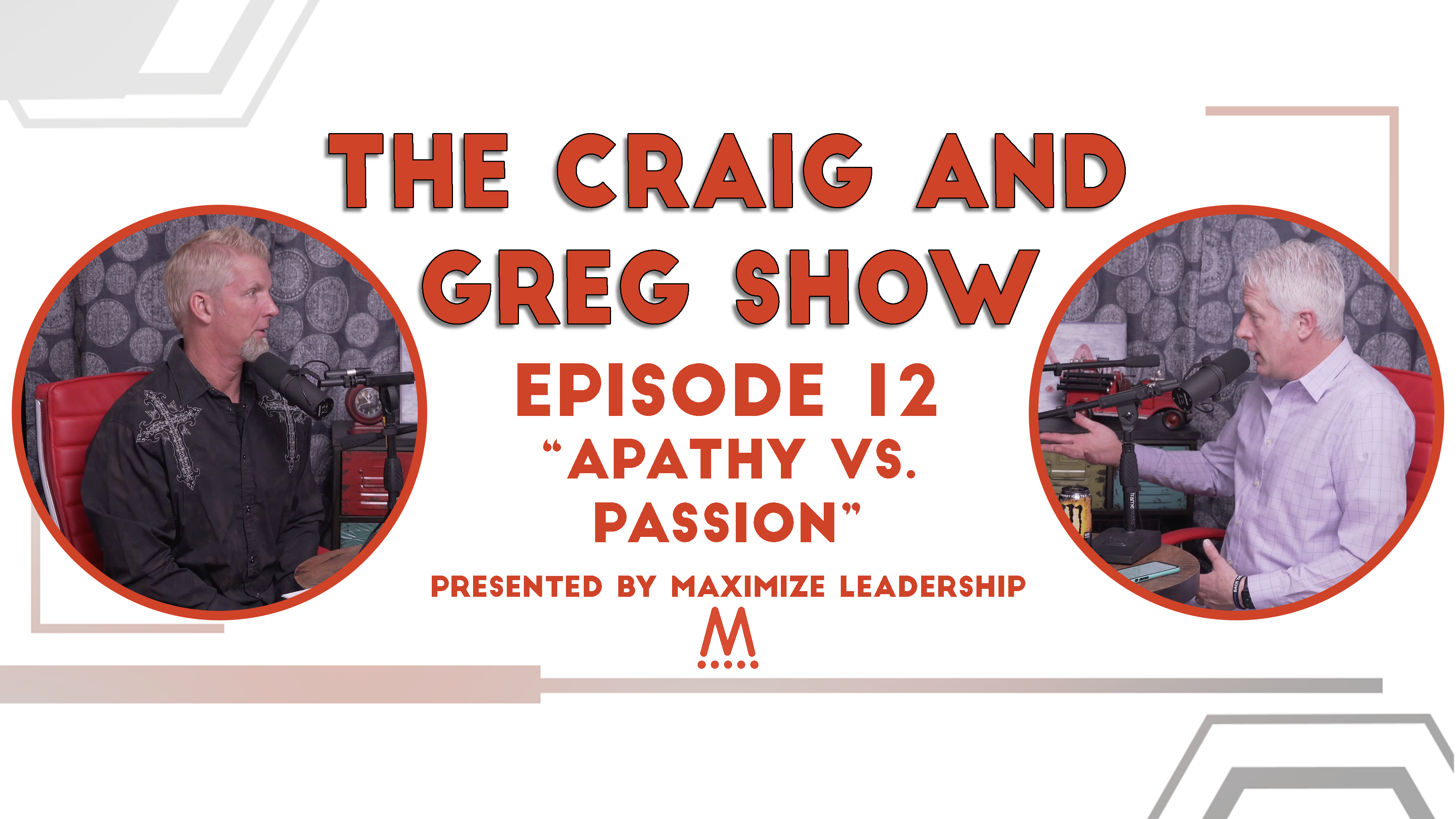
The Craig And Greg Show: Apathy Vs. Passion

On this episode of “The Craig And Greg Show” we talk about: 

  • the first in our series of leadership builders and killers, and I go negative right away!  
  • the danger with apathy is that you don’t know that you don’t care—Greg says apathy is a nebulizer
  • the value of an honest, loving friend
  • it takes a lot more energy to get to a boiling point than it does to keep your passion at the boiling point  
  • apathy is “have to” but passion is “get to”
  • Greg likes to exchange heartstorming for brainstorming
  • I talk about the warning signs for leaders, and how to build passion-fueling activities into our daily agendas 
  • good feelings follow good actions
  • leaders need to be the thermostats for their team

Check out this episode and subscribe on YouTube so you can watch all of the upcoming episodes. You can also listen to our podcast on Spotify and Apple.

Poetry Saturday—Jesus, Saviour, Grow In Me

O Jesus, Saviour, grow in me,
and all things else recede:
to You my heart would nearer be,
from sin be daily freed.

Each day embrace my weakness, Lord,
with Your supporting might;
and let my death be lost in life,
my darkness in Your light.

Let faith in You and in Your strength
my every motive move;
may You alone be my delight,
my passion and my love.

Fill me with gladness from above,
hold me by strength divine.
Lord, let the glow of Your great love
through my whole being shine.

Show me Your glory more and more,
Lord, holy, wise, and true!
Your living image I would be,
in joy and sorrow too.

Make this poor self grow less and less,
and be Yourself my aim;
and through Your grace, make me each day
more worthy of Your name. —Johann K. Lavater

Poetry Saturday—Give Me The Love

Give me the love that leads the way, 
The faith that nothing can dismay, 
The hope no disappointments tire, 
The passion that will burn like fire.
Let me not sink to be a clod: 
make me Thy fuel, flame of God. —Amy Carmichael

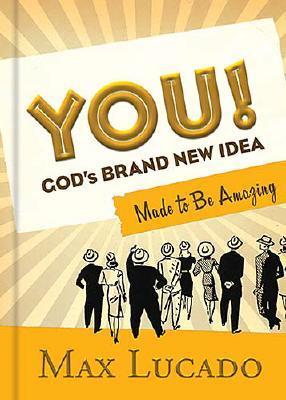
10 Quotes From “You!”

Max Lucado has given us a collection of short passages that will reaffirm to you how much God values YOU! This book could be a great pick-me-up for you, or a life-saving helper to your friend who is in crisis. Check out my full book review by clicking here. 

“Since you are God’s idea, you are a good idea. What God said about Jeremiah, He said about you: ‘Before I made you in your mother’s womb, I chose you. Before you were born, I set you apart for a special work’ (Jeremiah 1:5).” 

“God ‘personally formed and made each one’ (Isaiah 43:7 MSG). … And if you aren’t you, we don’t get you. The world misses out.” 

“You are a custom design; you are tailor-made. God prescribed your birth. Regardless of the circumstances that surrounded your arrival, you are not an accident. God planned you before you were born. The longings of your heart, then, are not incidental; they are critical messages. The desires of your heart are not to be ignored; they are to be consulted. As the wind turns the weather vane, so God uses your passions to turn your life. God is too gracious to ask you to do something you hate.” 

“God never called you to be anyone other than you. But He does call on you to be the best you you can be.” 

“God promises no applause for self-promoters. But great reward awaits God promoters: ‘Good work! You did your job well’ (Matthew 25:23 MSG).” 

“Don’t confuse God’s love with the love of people. The love of people often increases with performance and decreases with mistakes. Not so with God’s love. He loves you right where you are. He loves you just the way you are, but He refuses to leave you that way.” 

“Enough of this self-deprecating ‘I can’t do anything.’ And enough of its arrogant opposite: ‘I have to do everything.’ No, you don’t! You’re not God’s solution to society, but a solution in society.” 

“When asked to describe the width of His love, Jesus stretched one hand to the right and the other to the left and had them nailed in that position so you would know He died loving you. But isn’t there a limit? Surely there has to be an end to this love. You think so, wouldn’t you? But David the adulterer never found it. Paul the murderer never found it. Peter the liar never found it. When it came to life, they hit rock bottom. But when it came to God’s love, they never did.” 

“There are two extremes of poor I-sight. Self-loving and self-loathing. … Self-elevation and self-deprecation are equally inaccurate. Where is the truth? Smack-dab in the middle. Dead center between ‘I can do anything’ and ‘I can’t do anything’ lies ‘I can do all things through Christ who strengthens me’ (Philippians 4:13). … Not self-secure or insecure, but God-secure—a self-worth based in our identity as children of God. The proper view of self is in the middle.” 

“Each time we do our best to thank God for giving His, we worship.”