The Craig And Greg Show: Be Clutch For Your Team

Listen to the audio-only version of this podcast by clicking on the player below, or scroll down to watch the video.

The game-winning field goal, the bottom of the ninth home run, the last-second fadeaway jumper! In sports we are quick to recognize a clutch player. You might not perform in front of millions of fans, but you can be a clutch player for your organization as well! Join Greg and me as we discuss what it means to be clutch for your team, and lay out how your leadership can help empower others to do the same.

  • [0:23] Some people’s clutch-ability makes them stand out from the crowd.
  • [2:20] A clutch person won’t always succeed, but when it matters most they’re the one you trust to deliver. 
  • [3:20] How do people gain the confidence to be clutch? 
  • [5:05] Greg talks about his first college football play, and how the experience helped him learn how to succeed in the long run. 
  • [6:50] As leaders we can’t be afraid of mistakes, we need to view them as learning opportunities. 
  • [10:55] How much can we do as leaders to help our team be clutch, and how much do they need to figure out themselves? 
  • [13:10] Setting the right tone helps your team feel empowered to learn from their mistakes. 
  • [15:23] We can name a lot of greats by looking back at their career, but in the moment they didn’t always feel like greats. 
  • [16:29] As the leader, you have an extra responsibility to acknowledge your mistakes to your team. 
  • [18:11] Why do people quit, and how can we help them stay in the game? 
  • [22:37] Greg shares some wisdom about preparation. 
  • [23:50] Greg tells a story about a compliment he received while coaching high school football. 
  • [26:07] A coach can help you excel and become a clutch member of your team. Check out how our coaching services may benefit your game

Check out this episode and subscribe on YouTube so you can watch all of the upcoming episodes. You can also listen to our podcast on Spotify and Apple.


Links & Quotes

Let’s change our leadership mentoring perspective. It’s not whether you dropped the ball or not, it’s what you learned from the time you dropped the ball. This is how we help others move forward. Check out the full Craig and Greg Show episode where we talk more about “untraditional” performance reviews.

I have lots of new content every week, which you can check out on my YouTube channel.

If it hadn’t been for J.R.R. Tolkien’s influence, C.S. Lewis may have remained an atheist. And if it hadn’t been for C.S. Lewis’ encouragement, the world may never have been able to enjoy Tolkien’s Lord of the Rings series. This truly was a friendship that blessed the world! A book that explores this relationship further is A Hobbit, A Wardrobe, and A Great War.

“We don’t all have to be geniuses to innovate in the way we use culture. For example, what if we were to repudiate, once and for all, all gossip and all carping and complaining, and instead were to work hard day by day to redirect our tongues toward building others up (Ephesians 4:29)? We would have to innovate some new ways of engaging people in conversation, by getting to know people and taking a real interest in them, becoming better listeners, asking good questions, making sure all our words were seasoned with grace, and always speaking truth in love. Would that not be a radical and innovative improvement on much of what passes for conversation today? If every believer just worked a bit harder to innovate new forms of conversation, I’m persuaded the world would certainly notice the difference!” —T.M. Moore

I think anyone who has read the Bible has heard the amazing story that Jesus told about a wayward son, a loving father, and a struggling older brother (see Luke 15:11-32). Jon Bloom imagines a conversation that the brothers may have had with each other after the younger brother returned home.

J. Warner Wallace is a cold-case detective and a premier Christian apologist. Some Christians believe that we only need to use Scripture to form our trust in Scripture. In this video, Wallace explains from Scripture how even Jesus used evidence outside of Scripture to make His case that He was who Scripture said He was. 

It is interesting how many modern-day scientists will accept without fact that an asteroid impacted Earth “millions of years ago” to trigger massive changes that resulted in the extinction of dinosaurs, but will flatly disregard the Flood recorded in the Bible. As a result of their false assumptions, they reach conclusions (like believing they have refuted Bergmann’s Rule) that are quickly refuted. Check out this insightful post.

If you are doing all the calculating with your money, then Jesus says you’re not rich toward God. Check out this full sermon here.

“When God brings new opportunities the path forward is often unknown; it’s a risky journey to start. After all, if you can see the path to the finish line, you do not need to trust the Lord. Why would God give a golden opportunity to those unwilling to trust Him for the unknown?” —Roger Parrott, Opportunity Leadership 

(For security reasons, I cannot share a link to the following but I can verify its veracity). “Sam” is a Christian in an Arabic country who has been instrumental in starting and leading a church in his country for several years. He was arrested two months ago and held in prison for 55 days. He was interrogated the first 8 days, then left in solitary confinement for 47 days: the bright lights always on, Some Christians were able to meet with him after his release, listen to his story, share Scripture together, pray with and encourage him. Here is one of their main takeaways from their conversation with Sam. 

“So, Sam, how did you make it 55 days in prison?” 

Sam said, “The Holy Spirit was with me and was with my mouth. He gave me the words to say. But the devil also sat right next to me twisting Scripture.” Sam continued, “Tell those that will go to prison it is very important not only to know the Scripture but to be able to interpret it correctly as the accuser (I found out by experience) is so adept at twisting God’s Word to both tempt and discourage us.”

Links & Quotes

A great mental health strategy: focus on what is happening today. Trying to fix yesterday or worrying about tomorrow robs you of the peace God wants you to have. Check out the full series of mental health strategies I shared here. I have lots of new content every week, which you can check out on my YouTube channel.

“Compromise and commitment cannot coincide. … Conviction leads to commitment, but the lack of commitment leads to compromise.” —Dr. Tony Evans

I love reading about the archeological finds that confirm the historicity of the Bible! Here is a post from The Bible Archeology Report on the top ten discoveries related to Christmas.

“Hard times create strong men. Strong men create good times. Good times create weak men. Weak men create hard times.” —G. Michael Hopf

“Luck is when an opportunity comes along and you’re prepared for it.” —Denzel Washington

“Ministers are set to be lights to the souls of men in this respect, as they are to be the means of imparting divine truth to them, and bringing into their view the most glorious and excellent objects, and of leading them to and assisting them in the contemplation of those things that angels desire to look into…by which they may know God and Jesus Christ, whom to know is life eternal.” —Jonathan Edwards

“Scripture the unus sermo Dei—the one sermon of God.” —Augustine

T.M. Moore is presenting another outstanding series of posts, this one about the dignity of work. In one post, he wrote, “A just society requires all members to contribute love for their neighbors, whether they are poor or wealthy. Those who will not work when they can do so should be left to the consequences of their sluggardliness (2 Thessalonians 3:10). It is incumbent on local community leaders to discover ways, analogous to the work of gleaning, of helping to meet the needs of local poor. These might include keeping part-time work available, identifying ‘community work’ opportunities and helping to fund them, offering job counseling and training, and so forth. Churches certainly could pioneer the way in this, creating opportunities for work on their campuses, on behalf of needy members, and for the community at large.”

“The Holy Spirit responds to our walking according to the Word, not merely talking about the Word.” —Dr. Tony Evans

Ready, Waiting, And Watching

Listen to the podcast of this post by clicking on the player below, and you can also subscribe on AppleSpotify, or Audible. 

Although Jesus spoke these words to His followers 2000 years ago, they are especially important to all of His followers who are awaiting His imminent return—

Be dressed ready for service and keep your lamps burning, like servants waiting for their master to return from a wedding banquet, so that when he comes and knocks they can immediately open the door for him. It will be good for those servants whose master finds them watching when he comes. Truly I tell you, he will dress himself to serve, will have them recline at the table and will come and wait on them. It will be good for those servants whose master finds them ready, even if he comes in the middle of the night or toward daybreak. But understand this: If the owner of the house had known at what hour the thief was coming, he would not have let his house be broken into. You also must be ready, because the Son of Man will come at an hour when you do not expect Him. (Luke 12:35-40) 

There are three words that stand out to me: ready, waiting, and watching. 

Ready is an adjective describing the Christian servant. Its etymology is from the noun meaning “fitness.” So the ready servant has all that he needs at hand. He is prepared for every opportunity, ready to serve and to receive whomever his Master sends him. 

Waiting is a verb that is in the present tense. That means it is something we always have to be doing. The prefix of this Greek word—like the adjective for “ready”—also means that everything that we need to serve is close by and ready to be used, and the root word is to give hospitality. So the waiting servant is waiting with a purpose: always ready to serve at a moment’s notice. 

Watching is also a present tense verb. This word means that we are giving undivided attention to the task that has been given us. 

Jesus was addressing His disciples, but these words are still for you and for me. At every moment we need to be fit to serve, with all that we need close at hand for every opportunity God sends our way.

I want to be occupied in my heavenly service until the very moment Jesus returns to earth or calls me Home. There are no off days. There is no time to waste on frivolous matters, but I need to be solely focused on only doing what matters for eternity. 

Will you join me in serving like this? We lead others to Jesus by serving those Jesus puts in our life. And as we do that, we serve our Master as well.

►► Would you please prayerfully consider supporting this ministry? My Patreon supporters get behind-the-scenes access to exclusive materials. ◀︎◀︎

Appointment Vs. Opportunity

Listen to the podcast of this post by clicking on the player below, and you can also subscribe on AppleSpotify, or Audible. 

If we’re not careful, we can get so focused on our own appointments that we will miss out on the amazing opportunities God sends our way to show His love to others.

Check out this episode of The Podcast.

Resources mentioned in this video:

►► Would you please prayerfully consider supporting this ministry? My Patreon supporters get behind-the-scenes access to exclusive materials, like this recent video where I explain how God reveals previously-unknown truths to us. ◀︎◀︎

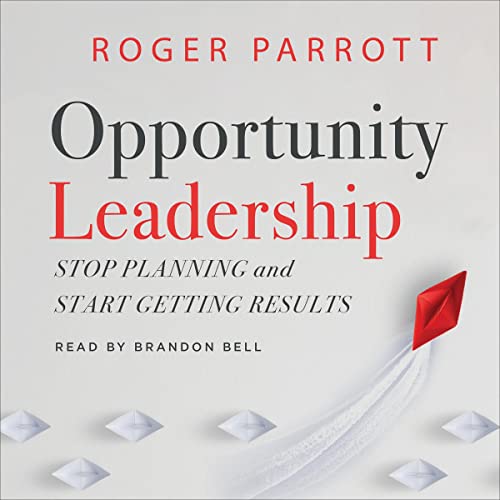
Opportunity Leadership (book review)

Listen to the podcast of this post by clicking on the player below, and you can also subscribe on AppleSpotify, or Audible. 

When I wrote my book, I was attempting to bring church leaders back to the biblical foundation for what it means to be a pastor. In a very similar fashion, Roger Parrott does this same thing for ministry leaders in his book Opportunity Leadership. 

Parrott is the president of a vibrant Christian university. As anyone who has been in the arena of higher education will tell you, making long-range plans is at the foundation of everything the administration and faculty do. But Parrott asks where did we get this model? Is this something we see in the Bible? 

Actually, we see verses that subordinate human plans to God’s plan. Verses like, “Many are the plans in a person’s heart, but it is the Lord’s purpose that prevails” (Proverbs 19:21) or, “They tried [planned] to enter Bithynia, but the Spirit of Jesus would not allow them to” (Acts 16:7). This is why Parrott makes the case that we are missing out on what God has in store for us because we only want Him to work on our carefully-made plans.

Parrott makes the case that their university has grown and seized opportunities because they were open and responsive to the doors God presented them, instead of missing out because they were blinded by their plans. 

Obviously, switching to this model will take tremendous buy-in from the point leader all the way through the entire organization. So the bulk of Opportunity Leadership helps prepare Christian leaders to change their paradigm, prepare for the inevitable pushback, and help their teammates move forward. 

I thoroughly enjoyed this book—finding myself saying, “Yes!” frequently as I was reading it—and I am confident all Christian leaders will benefit from reading this insightful work. 

►► Would you please prayerfully consider supporting this ministry? My Patreon supporters get behind-the-scenes access to exclusive materials. ◀︎◀︎

Links & Quotes

Unhealthy leaders don’t admit their need for help, and as a result they put a lid on their leadership potential. Check out more of this message hereAnd be sure to check out all of my videos on my YouTube channel.

A prominent Chinese scholar, Dr. Wang Yun Wu (1888-1979), abandoned atheism in 1924 after he witnessed the miraculous healing of his sister’s eyesight. Dr. Wang later became Vice Premier of the Republic of China (Taiwan). Check out this miraculous story in the Pentecostal Evangel.

The Culture Translator weekly email from Axis had some helpful information for Mental Health Awareness Month.

What it is: May is mental health awareness month, making mental health and suicide prevention bigger topics than ever. #mentalhealthmatters has around 42 billion views on TikTok, and #mentalhealthawareness has racked up 20 billion.

Why the conversation is changing: The CDC’s Youth Risk Behavior survey showed that suicidal ideation, especially for teenage girls, is continuing on a concerning trajectory. In 2021, 30% of girls said that they had seriously considered suicide in the past year, and 24% said they had an actual plan to end their life. According to data published by Mental Health America, 16.4% of youth reported experiencing a major depressive episode within the last 12 months. This news comes at a time when adults are feeling so lonely that the US surgeon general has declared loneliness a public health emergency. Stigma around mental health topics appears to be eroding, but that isn’t necessarily leading to better mental health outcomes for teens and for the population at large.

Conversation Starter: What do you think are the biggest contributors to mental health issues for your generation? (Check out our new video series on Mental Health for more help having this conversation!)

One of the things contributing to the unhealthy mental state of many people (not just teens) is the negative impact of pornography. Fight The New Drug reports how watching porn hurts self-esteem.

“A pessimist is one who makes difficulties of his opportunities and an optimist is one who makes opportunities of his difficulties.” —Harry Truman

Is pain good or bad? Dr. Matthew Loftus makes the case that avoiding suffering undermines the role of medicine and also stunts our ability to feel and express compassion. Check out this full article and the thoughts John Stonestreet shared about them.

“What a sweetness lies in the little word ‘our’; how much is God’s glory endeared to us when we consider our interest in Him as ‘our Lord’ [Psalm 8:1].” —Charles Spurgeon, in Spurgeon and the Psalms

Links & Quotes

One of the best pieces of advice if you’re looking to regulate your emotions is very simple: SLOW DOWN! Constantly having your game face on or being “on a mission” can cause your emotional regulation to suffer, and seriously hurt your leadership. Be sure to check out all of my videos on my YouTube channel.

You may have heard the oft-repeated line that human beings and chimpanzees share 98-99% of our DNA with each other. This simply isn’t true, and yet it will not die. John Stonestreet has an idea of what is behind this claim in his post Of Primates and Percentages.

“The unprepared mind cannot see the outstretched hand of opportunity.” —Alexander Fleming

John Piper asks, “Why is anxiety about the future a form of pride?” Check out this faith-building post that concludes with these words, “The way to battle the unbelief of pride is to admit freely that you have anxieties, and to cherish the promise of future grace in the words, ‘He cares for you.’ And then unload your fears onto His strong shoulders.”

“Hold fast to eternal salvation through the eternal covenant carried out by eternal love to eternal life.” —Charles Spurgeon

“Celebrate what you’ve accomplished, but raise the bar a little higher each time you succeed.” —Mia Hamm

Poetry Saturday—A Lost Opportunity

It came and went so quickly,
   My sluggish soul saw not
The Master stand and beckoning
   Toward one of humble lot.

And I rose not up to follow,
   So slow was I to see,
Till the help I might have given
   Forever fled from me.

And often I am grieving,
   And longing all in vain,
For a blessed opportunity
   That will not come again.

Dear Lord, give Thine anointing,
   And make mine eyes to see;
And make me swift in doing
   The work Thou givest to me. —L. Adda Nichols

12 Quotes From “The Art Of War”

Sun Tzu wrote in China in the fifth century BC to help military leaders hone their warcraft, but you might be surprised at the truths you can apply to your life today. Check out my full book review by clicking here. 

“Hence to fight and conquer in all your battles is not supreme excellence; supreme excellence consists in breaking the enemy’s resistance without fighting.” 

“Thus we may know that there are five essentials for victory: (1) He will win who knows when to fight and when not to fight. (2) He will win who knows how to handle both superior and inferior forces. (3) He will win whose army is animated by the same spirit throughout all its ranks. (4) He will win who, prepared himself, waits to take the enemy unprepared. (5) He will win who has military capacity and is not interfered with by the sovereign.” 

“Hence the saying: If you know the enemy and know yourself, you need not fear the result of a hundred battles. If you know yourself but not the enemy, for every victory gained you will also suffer a defeat. If you know neither the enemy nor yourself, you will succumb in every battle.” 

“The good fighters of old first put themselves beyond the possibility of defeat, and then waited for an opportunity of defeating the enemy. To secure ourselves against defeat lies in our own hands, but the opportunity of defeating the enemy is provided by the enemy himself.” 

“That general is skillful in attack whose opponent does not know what to defend; and he is skillful in defense whose opponent does not know what to attack.” 

“Disciplined and calm, to await the appearance of disorder and hubbub amongst the enemy—this is the art of retaining self-possession. To be near the goal while the enemy is still far from it, to wait at ease while the enemy is toiling and struggling, to be well-fed while the enemy is famished—this is the art of husbanding one’s strength.” 

“Do not linger in dangerously isolated positions. … If, on the other hand, in the midst of difficulties we are always ready to seize an advantage, we may extricate ourselves from misfortune.” 

“The art of war teaches us to rely not on the likelihood of the enemy’s not coming, but on our own readiness to receive him; not on the chance of his not attacking, but rather on the fact that we have made our position unassailable. There are five dangerous faults which may affect a general: (1) Recklessness, which leads to destruction; (2) cowardice, which leads to capture; (3) a hasty temper, which can be provoked by insults; (4) a delicacy of honor which is sensitive to shame; (5) over-solicitude for his men, which exposes him to worry and trouble.” 

He who exercises no forethought but makes light of his opponents is sure to be captured by them.” 

“Regard your soldiers as your children, and they will follow you into the deepest valleys; look upon them as your own beloved sons, and they will stand by you even unto death. … If, however, you are indulgent, but unable to make your authority felt; kind-hearted, but unable to enforce your commands; and incapable, moreover, of quelling disorder: then your soldiers must be likened to spoilt children; they are useless for any practical purpose.” 

“Carefully study the well-being of your men, and do not overtax them. Concentrate your energy and hoard your strength.” 

“Keep your army continually on the move.”