It’s A Big Deal

Listen to the podcast of this post by clicking on the player below, and you can also subscribe on AppleSpotify, or Audible. 

I get a little leery when people are advocating for a government that is friendly to Christianity. In biblical history and world history, Christians tend to backslide when things are going smoothly for them. 

Difficulties and even persecution cause us to evaluate if what we’re standing on is really a sure foundation (2 Corinthians 1:9; Philippians 4:10-13). 

As the Jews returned from their exile in Babylon, things were going fairly easily for them. And as they had done so many times before, they began to backslide. The Archeological Study Bible noted, “This generation was not guilty of the gross idolatry of its forefathers. Rather, these Israelites embraced a kind of dead orthodoxy, in which they tried to get by with the minimum that their faith required.”  

Onto this scene comes a prophet named Malachi. Malachi means “My messenger,” and we don’t know if this was actually the prophet’s name or not, but he took it on as his nature, delivering the heavy words of God. In fact, he held the words of God with such respect that when he says this is “an oracle,” he literally is saying, “This is a heavy burden to bear!” 

Malachi uses the phrase “LORD Almighty” (or LORD of Hosts in the KJV, and Lord of Heaven’s Armies in the NLT) twenty-four times. By contrast with the other minor prophets…

  • Hosea, Joel, Amos, Obadiah, and Jonah use this phrase zero times 
  • Micah and Habakkuk each use it once
  • Nahum and Zephaniah each use it twice
  • Haggai uses it 12 times (or 32 percent of the total verses in his book) 
  • Zechariah uses the phrase 46 times (which 22 percent of his total verses) 

But Malachi’s 24 times is 44 percent of his total verses! In other words, he wanted his audience to be crystal clear that it wasn’t him who was speaking, but the King of kings was speaking to us through Malachi! 

God is still speaking through Malachi to us today! Just like Israel in Malachi’s day, I think Christians today run the very real risk of backsliding. Just like Israel, when we forget the weightiness of the glory of the LORD ALMIGHTY we can begin to slip into an it’s-no-big-deal attitude. 

By contrast, when we’re honoring the LORD of Hosts, and reverencing Him, and desirous of His glory being seen, it’s a very big deal that we listen to His voice and closely follow His commands.  

So Malachi’s six warnings to the Israelites of his day should still be heeded by Christians today. We should examine ourselves very closely to see if we have the same it’s-no-big-deal attitude. We should ask ourselves, “Are we…

(1) …offering less-than-our-best sacrifices? Are we just giving God the leftovers?”  

(2) …listening to church leaders that don’t reverence God’s name?” 

(3) …honoring the sanctity of marriage?” 

(4) …self-seeking instead of neighbor-loving?” 

(5) …withholding the full tithe from our local church?” 

(6) …following God only for personal gain?” 

(Check out all of the verses for these questions by clicking here.) 

If this study of the minor prophets—especially these last three—has told us anything, it’s that God keeps His word. When He says He is coming back as the righteous Judge, that will happen. In fact, it could happen at any moment! 

We must be ready! We must guard our hearts against the it’s-no-big-deal attitude. We must reverence our awesome God. The things of God are a very big deal indeed (see Hebrews 10:37-39; Revelation 22:12-16). 

To guard ourselves against this backsliding attitude, we must live every day reverencing the awesome, weighty, majestic name of Jesus! 

If you’ve missed any of the messages in our series exploring the powerful lessons in the the twelve minor prophets, please click here to get the list of all of those messages. 

►► Would you please prayerfully consider supporting this ministry? ◀︎◀︎
The Heart Is The Heart Of The Matter

Listen to the podcast of this post by clicking on the player below, and you can also subscribe on AppleSpotify, or Audible. 

A heart that devises wicked schemes… (Proverbs 6:18). 

This is the item listed in the exact middle of the list “there are six things the Lord hates, seven that are detestable to Him.” Check out the whole passage: 

There are six things the Lord hates, seven that are detestable to Him: [1] haughty eyes, [2] a lying tongue, [3] hands that shed innocent blood, [4] a heart that devises wicked schemes, [5] feet that are quick to rush into evil, [6] a false witness who pours out lies and [7] a man who stirs up dissension among brothers. (vv. 16-18) 

Now let’s follow this progression from the middle item outward: 

  • …it begins in a devious heart—[4] 
  • …it moves to the actions of the hands and feet—[3] and [5] 
  • …it is excused or justified by lies—[2] and [6] 
  • …it hardens into unrepentant pride that divides a community—[1] and [7]

The heart is the heart of the matter!

 Verse 18 is also the middle verse of this whole 6th chapter of Proverbs—

  • it is a heart issue that leads to making rash vows (vv. 1-5) 
  • it is a heart issue that causes a poor work ethic (vv. 6-11) 
  • it is a heart issue that prompts double-talk, equivocation, and a lack of integrity (vv. 12-15) 
  • it is a heart issue that takes a person spiraling down into adultery (vv. 20-35)

Let me repeat this principle: The heart is the heart of the matter! This is why Solomon told us in an earlier chapter, “Guard your heart above all else, for it determines the course of your life” (Proverbs 4:23). 

But a wise person, who allows the Holy Spirit to correct sinful thoughts, can see a different outcome. With the Spirit’s help, it could look like this:

  • …it begins in a heart sensitive to the Holy Spirit’s prompting—[4] 
  • …it moves to the actions of the hands and feet—[3] and [5] 
  • …it is demonstrated in truthful, loving words—[2] and [6] 
  • …it promotes the humility that unites a community—[1] and [7]

Let’s make this our prayer: Holy Spirit, help me to guard my heart today. No compromising, no justifying, but just a quick obedience to Your prompts to repent and soften my heart. 

Let it start in your heart and just watch what happens. The heart IS the heart of the matter! 

►► Would you please prayerfully consider supporting this ministry? ◀︎◀︎
People Of The Word

Listen to the podcast of this post by clicking on the player below, and you can also subscribe on AppleSpotify, or Audible.

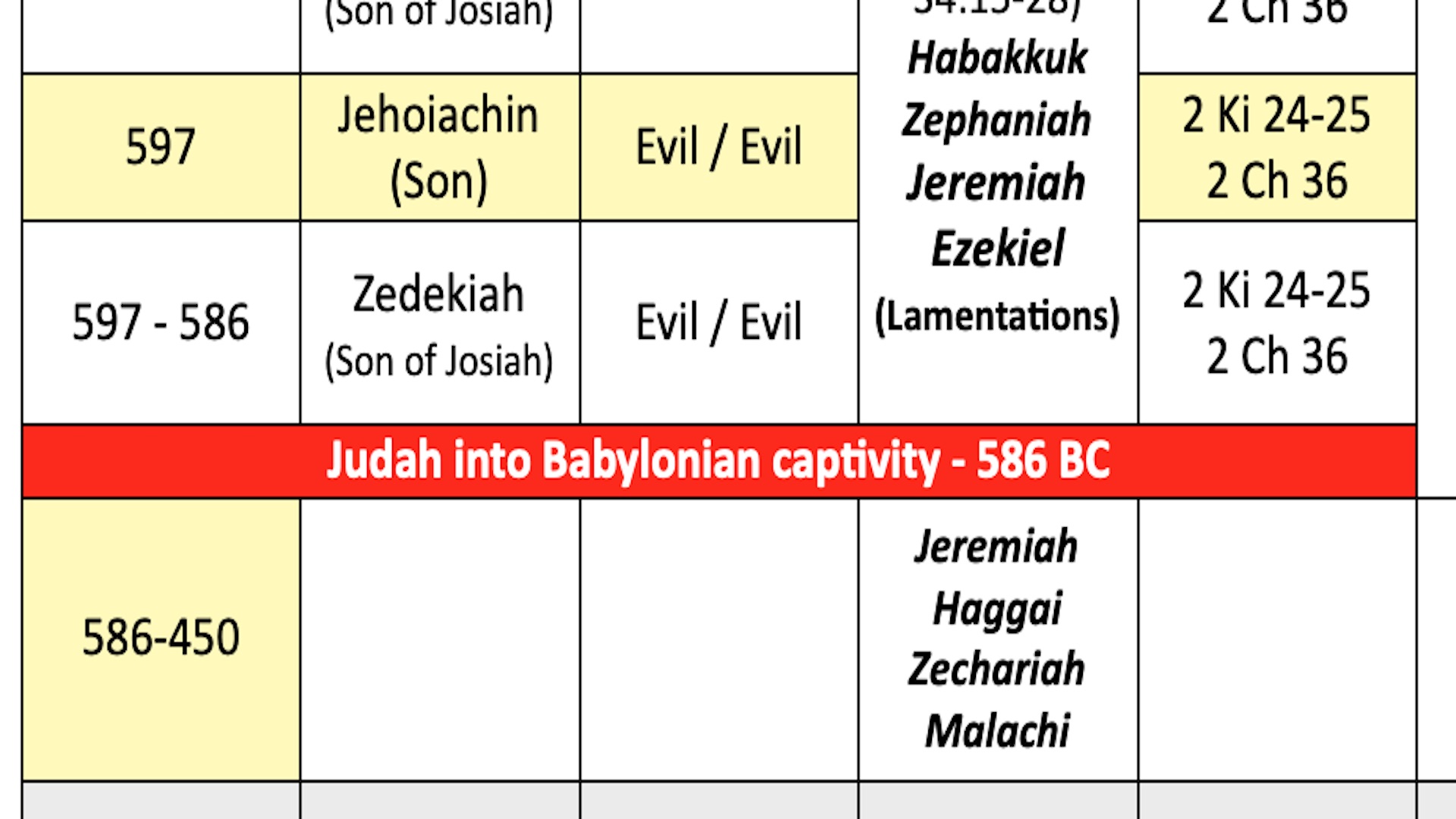
Haggai appears on the historical scene for just five months, but what a bright light he shines! He is the first of three post-exilic prophets to encourage the Israelites who have returned to Jerusalem.

Before we talk about Haggai’s ministry, we need a brief grammar lesson. Specifically, let’s look at two prefixes: un- and non-. Both of them ultimately mean “not,” but there is a distinction that we need to consider when it comes to the Bible: 

    • unbiblical would mean something contrary to the teaching of the Bible 
    • non-biblical is something that may or may not be correct, but it’s not specifically mentioned in the Bible 

Let me give you an example from my book Shepherd Leadership: The Metrics That Really Matter. Chris asked me whether I preferred the title senior pastor or lead pastor. This is a non-biblical issue; that is, it doesn’t really matter to me because neither of those titles are found in the Bible. Technically, the word pastor isn’t in the Bible either. The word that is usually translated “pastor” is really a herdsman or a shepherd. 

The problem is that if we put too much focus on non-biblical things, those things can end up becoming unbiblical pursuits. Like when Jesus took the Pharisees to task for their focus on traditions over Scripture (see Matthew 15:1-6). I wrote Shepherd Leadership mainly to get pastors and church leaders to spot non-biblical metrics which may have sneakily turned into unbiblical pursuits, so that they could return to pure biblical principles. In the Preface of my book, I wrote—

“My larger concern is that churches, parachurch organizations, and nonprofit ministries that are largely founded to fulfill a biblical mandate are straying from the simple, freeing truths found in the Bible. Or maybe I should say that they are adding things to their ministries that aren’t in the pages of Scripture. Whichever way you want to say it, the result is the same: We are using the wrong metrics to define ‘success’ for our ministries. I fear that in our focus on unbiblical practices, we are missing the joy of really doing ministry.”

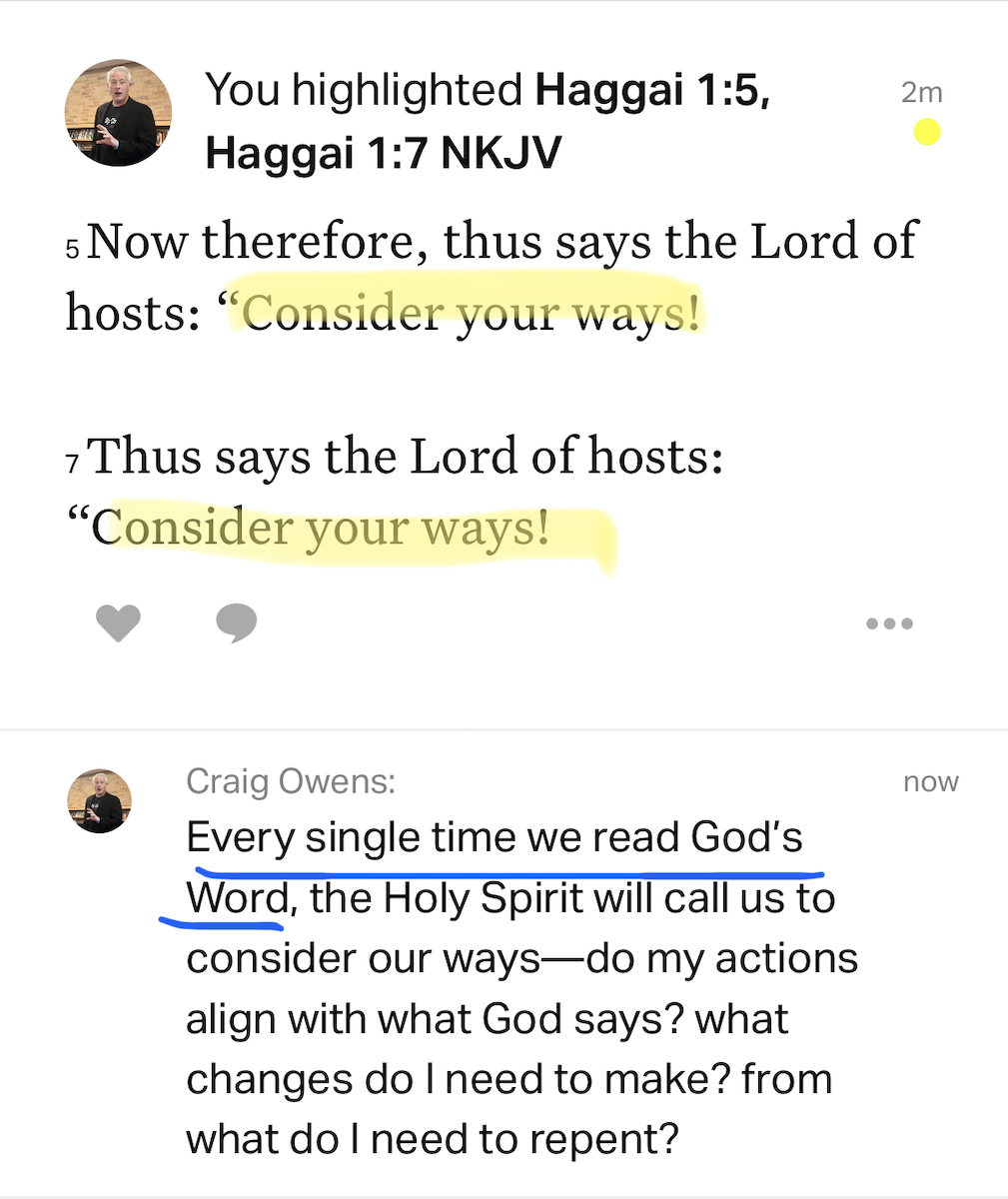
Haggai calls God’s people to return to God’s Word. This is the second-shortest book in the Old Testament (at just 38 verses long), yet Haggai says something like “this is what God says” 28 times in these 38 verses! 

Haggai also records five times that God says, “Give careful thought to your ways.” This phrase literally means to take a strong hold on each thought and examine it intensely. This idea is always connected to a phrase like, “This is what the Lord Almighty says” (1:5, 7; 2:14-15, 17-18). In other words, we are to thoughtfully examine our lifestyle with God’s Word being THE standard of measurement. 

Paul made a similar connection in the New Testament: We demolish arguments and every pretension that sets itself up against the knowledge of God, and we take captive every thought to make it obedient to Christ (2 Corinthians 10:5). 

Jesus did this too. When speaking to the religious leaders, He said, “You are wrong because you know neither the Scriptures nor God’s power” (Matthew 22:29). And even with His own disciples, He had to open their minds to see how the Scriptures pointed to Him and were fulfilled in Him (Luke 24:25-27, 44-45). 

Indeed, the phrase “it is written” is used 75 times in the New Testament! 

That’s why Haggai’s words still ring true to us today: “Give careful thought” to how you live in light of how God says you should be living. Christians need to…

  1. Hear the Word of God every day 
  2. Consider their lives in light of the Word of God
  3. Obey what the Word of God is saying to us 

(check out Acts 17:11; Psalm 139:23-24; 1 Samuel 15:22) 

We must become people of the Word of God or else we run the very real risk of letting our non-biblical decisions spiral downward into a sinful, unbiblical lifestyle that grieves the heart of God. 

If you’ve missed any of the messages in our series Major Lessons From Minor Prophets, you can access the full list by clicking here. 

►► Would you please prayerfully consider supporting this ministry? ◀︎◀︎
Thursdays With Spurgeon—Active Love

This is a weekly series with things I’m reading and pondering from Charles Spurgeon. You can read the original seed thought here, or type “Thursdays With Spurgeon” in the search box to read more entries.

Listen to the podcast of this post by clicking on the player below, and you can also subscribe on iTunes or Spotify.

Active Love

     True love next shows itself in obedience. … ‘Tis love that makes our willing feet in swift obedience move.’ We can do anything for those we love, and if we love Jesus, no burden will be heavy, no difficulty will be great. We should rather wish to do more than He asks of us and only desire that He was a little more exacting that we might have a better opportunity of showing forth our affection. …

     The apostle says, ‘Let us not love in word or in tongue, but in deed and in truth’ (1 John 3:18). Actions speak louder than words, and we will always be anxious to tell our love in deeds as well as by our lips. The true disciple asks continually, ‘Lord, what do You want me to do?’ (Acts 9:6). He esteems it his highest honor to serve the Lord. …  

     I believe in an active love that has hands to labor and feet to run as well as a heart to feel, eyes to glance, and ears to listen.

From The Church’s Love To Her Loving Lord

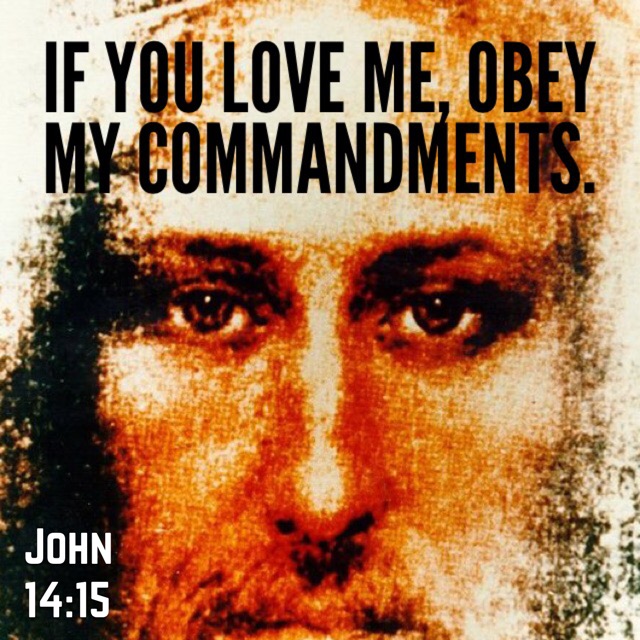
Those who love Jesus obey Him (John 14:15). 

Those who love Jesus serve others out of that love (Matthew 25:31-40). 

Those who love Jesus put action to their faith in Him (James 2:14-18). 

Those who love Jesus continually ask Him, “Lord, what do You want me to do?” 

Love for Jesus isn’t just something we feel, it’s who we are and it’s how we act and speak and serve every single day.

►► Would you please prayerfully consider supporting this ministry? ◀︎◀︎

My Theme Song

Listen to the podcast of this post by clicking on the player below, and you can also subscribe on AppleSpotify, or Audible. 

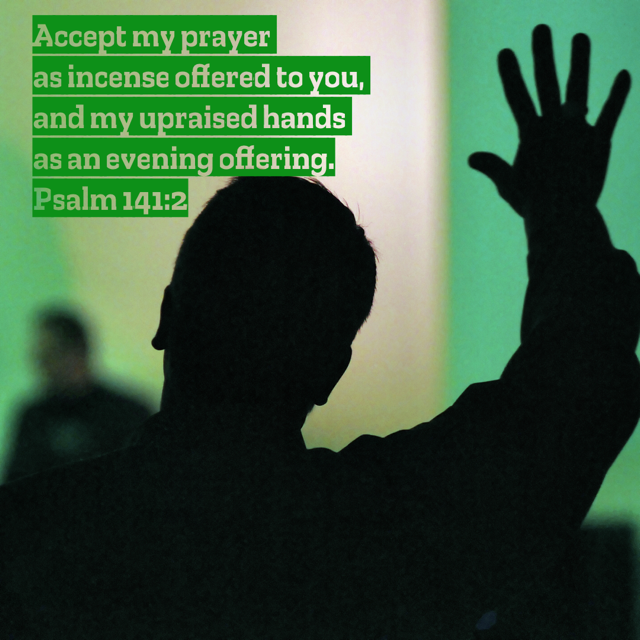
… my hands … my mouth … my lips … my heart … my head … my words … my eyes … (Psalm 141) 

David’s all-in attitude toward God reminds me of the words of Jesus: Love the Lord your God with all your heart and with all your soul and with all your mind and with all your strength (Mark 12:30). 

Clearly, David wants God to have full access—no part of his life is exempt from God’s lordship:

  • hands lifted in worship
  • mouth and lips free from ungodly words 
  • heart not drawn to unrighteousness 
  • head receptive to godly correction 
  • words always well-spoken and God-pleasing 
  • eyes fixed steadfastly on God 

This is also what the Holy Spirit wants to do for me in the process of sanctification: Bringing me into the place where no part of my life is exempt from His lordship. This reminds me of the words of an old hymn, “All to Jesus I surrender, all to Him I freely give.” 

May this ever be the theme song of my life! 

►► Would you please prayerfully consider supporting this ministry? ◀︎◀︎
Listening To Obey

Listen to the podcast of this post by clicking on the player below, and you can also subscribe on AppleSpotify, or Audible. 

Have you ever been confronted by someone claiming, “The Bible is full of contradictions”? 

How about this one: God says, “I tested you at the waters of Meribah” (Psalm 81:7) vs. at Meribah…[the Israelites] tested the LORD (Exodus 17:7)? 

Whenever we see a possible contradiction, remember this: Context is king. We have to look at these two accounts in their proper context. 

In the Exodus account, the Israelites have just been delivered out of slavery in Egypt and crossed the Red Sea on dry ground. The pursing Egyptian army tried to follow them, but the waters closed back over them and they drowned. Three days later we find the Israelites grumbling over a lack of drinkable water, which God miraculously supplies. A month after that they are complaining about their food supply, which God miraculously supplies. And right on the heels of that they are again complaining about not having water to drink, which God miraculously supplies (see Exodus 15-17). 

It is after this second miraculous supply of water that we read that phrase we are considering: the Israelites tested God. The Hebrew word for “tested” is nasa which equates to, “Oh yeah? Prove it!” or “I’ll believe it when I see it!” or as The Message paraphrase puts it, “Is God here with us, or not?” 

In Psalm 81, God Himself is speaking in vv. 6-16, so He is the One who claims, “I tested them at Meribah.” The Hebrew word for “tested” in this instance is bahan. This means to investigate closely, to spot and bring out the impurities in fine metals. God not only makes the claim, “I tested them,” but He is also the One who tells us to Selah—pause and calmly consider. 

Consider what? After the first instance of grumbling about water in Exodus 15, we read, “There the Lord made a decree and a law for them, and there He tested them. He said, ‘If you will listen carefully to the voice of the Lord your God and do what is right in His eyes, if you pay attention to His commands and keep all His decrees, I will not bring on you any of the diseases I brought on the Egyptians’” (Exodus 15:25-26). 

Notice the words decree, law, and commands. Asaph says something similar in Psalm 81:4, “This is a decree for Israel, an ordinance of the God of Jacob. He established it as a statute for Joseph when He went out against Egypt.” 

God is talking about laws before the Ten Commandments are given. What is the law He desires to be obeyed above all else? In a word: Listen. 

  • If you will listen carefully to the voice of the Lord your God and do what is right in His eyes (Exodus 15:25). 
  • I tested you at the waters of Meribah. Selah. Hear, O My people, and I will warn you—if you would but listen to Me, O Israel! (Psalm 81:7-8) 

God brings us to these moments of tests to see how we will respond. He doesn’t need to know, but we need to know how we will respond. When we find ourselves wringing our hands, or grumbling, or saying, “Is God here with us, or not?”, what does that tell us about our own heart? He wants us to be wholly His, so He has to bring out the impurities. That same word bahan is used when God speaks this word: “I will refine them like silver and test them like gold. They will call on My name and I will answer them; I will say, ‘They are My people,’ and they will say, ‘The Lord is our God’” (Zechariah 13:9). 

Asaph uses the Hebrew word for “listen” five times in Psalm 81. This word means listening with an attitude to obey. In order for us to hear God’s voice, we have to listen with an attitude toward obedience. This is not, “Oh yeah? I’ll believe it when I see it!” but “Oh yeah! I will obey it so I will see it!” 

As I pondered this, the Holy Spirit dropped these questions on my heart which I encourage you to ponder as well: 

  • God is always speaking to me. Am I making quiet time to listen to His voice?  
  • God sometimes has to discipline me. Am I open to His purifying? 
  • God has wise counsel for me. Am I obeying it?
  • God knows the best path for me. Am I walking in it?
  • God wants to subdue my enemies. Am I asking Him to do it?
  • God has abundant blessings for me. Am I listening to obey?

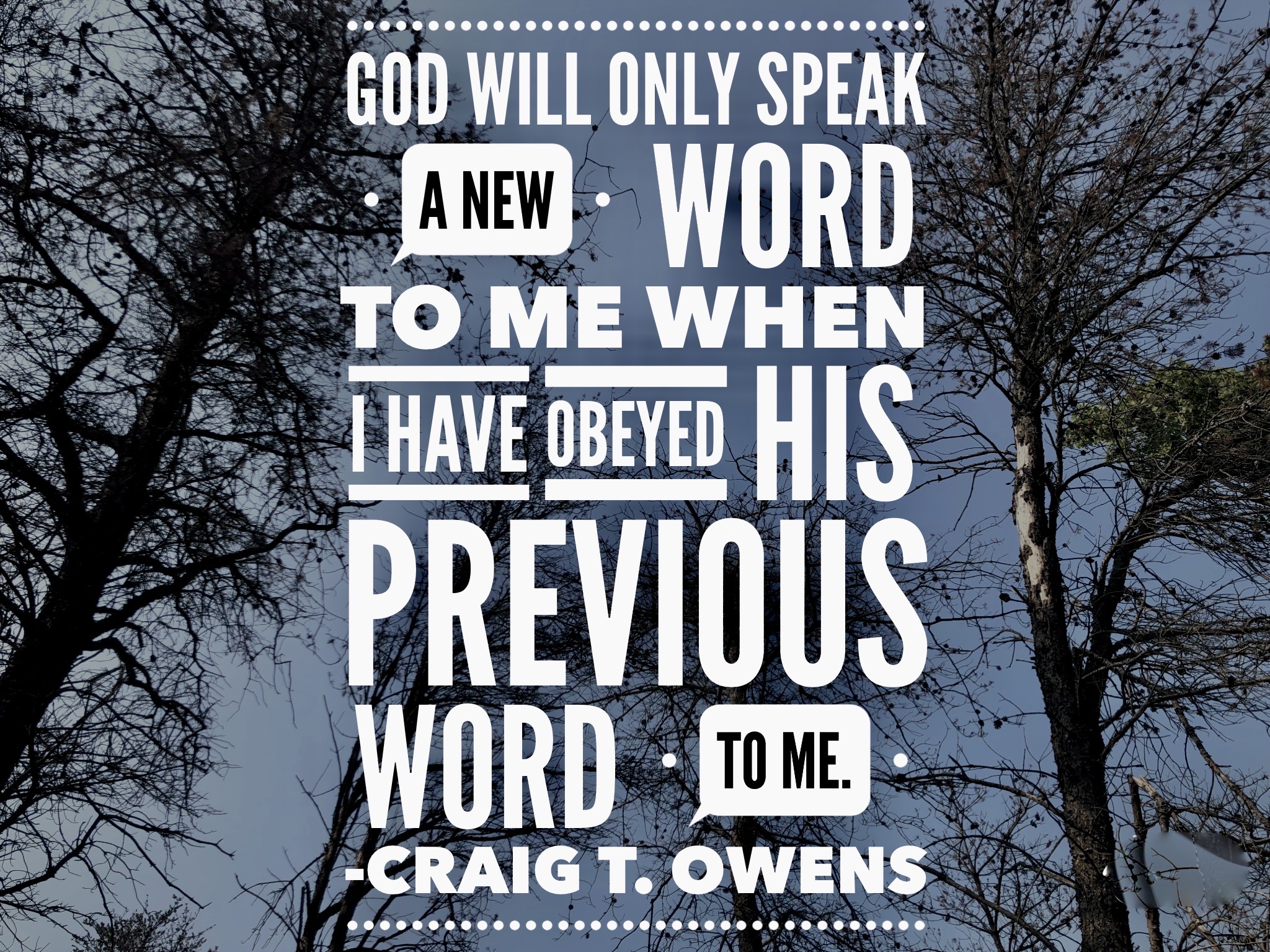
God will only speak a new word to me when I have obeyed His previous word to me.

When I am in distress, I need to train myself to Selah so that I can say, “God has brought me to this test, what do I need to learn? Am I listening to God’s voice with an attitude to obey?” 

May our heart’s posture always be, “Speak, Lord, for Your servant is listening and ready to obey whatever You speak to me.” 

If you’ve missed any of the messages in our Selah series, you can access the full list by clicking here. 

►► Would you please prayerfully consider supporting this ministry? ◀︎◀︎
The Circle Of Love And Hate

Listen to the podcast of this post by clicking on the player below, and you can also subscribe on AppleSpotify, or Audible. 

Oh, how I love Your law! … Therefore I hate every wrong path (Psalm 119:97, 104). 

These bookend verses of the section called Mem form the conclusion of a logical argument, and in between are each step of the progression. Notice the word “for” (in vv. 98, 99, 100, and 102) and the words “so that” in v. 101. 

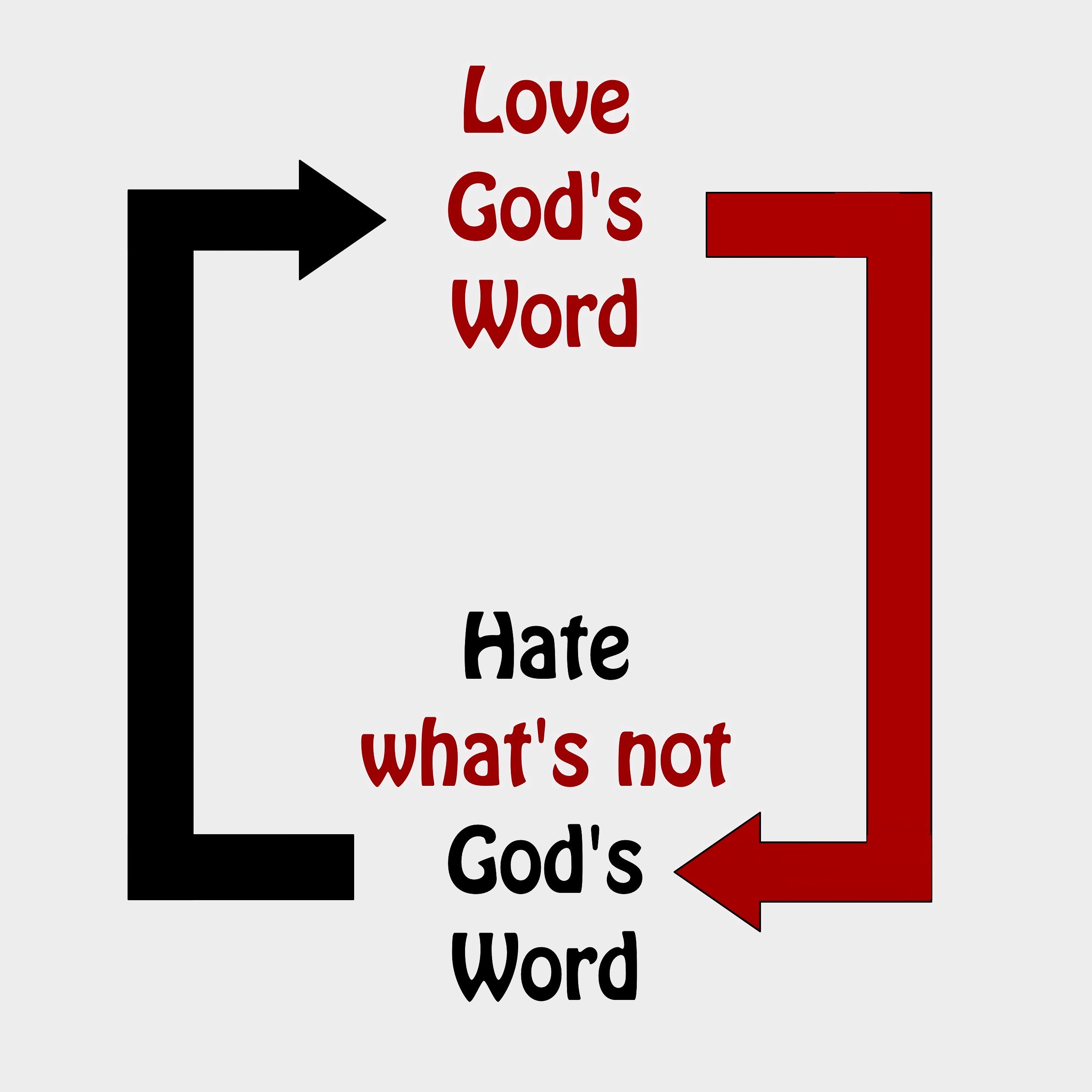
This progression forms a circle from love to hate, and back to love again. Check this out—

I love Your law so I meditate on it all day. 

Meditating on Your law makes me wiser than my enemies and my teachers. 

This wisdom helps me obey Your laws. 

Obedience keeps me on the right path. 

I stay on the right path because You Yourself teach me while I’m on that path. 

Because You are my Teacher, Your laws are sweet to me. 

Because Your laws are sweet, I hate anything contrary to Your laws. 

Hating everything that is not found in Your law helps me love Your law even more. 

[Back to the top] Since I love Your law, I keep on meditating on it all day. 

Far too often I believe Christians are known more for what they’re against than what they’re for. The author of Psalm 119 urges us over and over and over again to not only fall in love with God’s Word but to fall more deeply in love with the God revealed in His Word. When we are brimming full of love for God, we cannot help but show the world what we are for, and that is for everyone to have a personal relationship with this loving God for themselves. 

►► Would you please prayerfully consider supporting this ministry? ◀︎◀︎
Still Being Fashioned

Listen to the podcast of this post by clicking on the player below, and you can also subscribe on AppleSpotify, or Audible. 

Psalm 119 is a fascinating chapter of Scripture. Not only is it the longest chapter in the Bible (at 176 verses) but it is divided into twenty-two 8-verse sections, corresponding with the 22 letters of the Hebrew alphabet. Each of the verses in the different sections all begin with the same Hebrew letter of that section. 

In the section called yodh, the psalmist wrote, “Your hands formed me and made me; give me understanding to learn Your commands” (v. 73). There is just one Hebrew word for “Your hands” and it also happens to be the name of this section of Psalm 119: Yodh. The psalmist sees God’s hands all over his life, and he welcomes God’s continued involvement in every aspect of his life. 

This yodh section is presented to us in alternating verses: the odd-numbered verses are a declaration, and the even-numbered verses are a corresponding prayer. It looks something like this…

Declaration: You made me

Prayer: May I be a hope-filled testimony to others by my reverence of You

Declaration: You continually discipline and fashion me

Prayer: May I continually find my comfort in Your unfailing love

Declaration: Your compassion is my life and my delight

Prayer: May You deal with those who afflict me while I remain focused on You

Declaration: You bring people into my life on purpose

Prayer: May I be a blameless witness of Your love

In light of this section I declare in prayer: “God, You created me on purpose and for a purpose. What You create, You complete; and what You complete, You complete perfectly. May I remain sensitive to Your Holy Spirit and malleable to Your touch, so that You are glorified through my obedient life.” 

►► Would you please prayerfully consider supporting this ministry? ◀︎◀︎
Ruth + Boaz—The Mother’s Day Version

Listen to the podcast of this post by clicking on the player below, and you can also subscribe on Apple or Spotify.

John Maxwell said, “We overestimate what we can do in a day; we underestimate what we can do in a year.” In the case of parents, I think we do the same thing: we lose sight of the big picture when we get bogged down in the details and the pressures of each day. As a result, many times we are unaware of the long-lasting rewards that come from our daily obedience and God’s eternal faithfulness. This was never more true than in the fantastic love story of Ruth + Boaz. 

Last week we looked at the history of Pentecost and what took place 50 days after the Passover, we saw a picture in the Old Testament that was fulfilled in the New Testament. The Jews saw this too. In the Hagiographa (Holy Writings), they picked one of the books of the Old Testament to read at each of the annual Jewish feasts, and the Book of Ruth was selected for Pentecost. I think this was because Ruth herself is in essence a “harvest” of God’s blessing. She is the firstfruits of the non-Jewish people whom God has engrafted into His holy family. 

The story of Ruth’s coming into God’s family is birthed out of heartache. Elimelech and Naomi live in Bethlehem, which means “house of bread,” but it was a time of famine; Elimelech’s name means “God is King,” but Israel had no king and everyone lived for themselves; Naomi’s name means “pleasant,” but her days were bitter (see Judges 21:25; Ruth 1:1-5). 

After Elimelech and his two sons die, Naomi changes her name to Mara (which means bitterness), and yet she hears “that the LORD had come to the aid of His people by providing food for them” (1:6) and she decides to return to Bethlehem. She counsels her daughters-in-law to remain with their families in Moab, but Ruth decides to cling to Naomi. 

In the face of utter hopelessness, Ruth could have chosen what was familiar—her family, her homeland, her gods—but instead she chose to cling to Jehovah. 

Perhaps when she heard that Jehovah had come to the aid of His people she realized, “I’ve never heard of Chemosh coming to the aid of his people. We sacrifice to him but he doesn’t do anything for us. This Jehovah cares for His people. I will put my faith in Him.” 

Ruth’s first step of obedience triggers a whole series of events, starting with one that the writer of this story introduces by saying, “As it turned out, Ruth found herself working in a field belonging to Boaz.” 

But this is no accident—God oversees and directs all of the details. All of history is His story. God is in charge of the tiniest of details: even down to directing Ruth to the right barley field. Ruth’s trust in Jehovah, her obedience in following Him, set things in motion that God had planned, just as Paul explained in Romans 8:28. 

Moms, at the end of the story of your life, you will look back and see so many as-it-turned-out moments. But that means you are living in an as-it-turned-out moment right now. If you believe God is overseeing the details of your life, then every moment is divinely orchestrated by Jehovah, every moment is strategic, every moment is God-directed. You must remain daily obedient to God. 

Don’t underestimate the legacy of God’s provision that is being established every single day that you remain obedient in following Him. Look at the amazing way God used Ruth and Boaz in the family tree of Jesus Christ (Ruth 4:16-22; Matthew 1:1-6).

Moms, your obedience today is preparing your children—and their future generations—for them to experience God’s provision in a coming famine (see Amos 8:11; Psalm 91).

Of course, Ruth can’t give birth to Obed without there being a father, which is why the story is called Ruth + Boaz. On Father’s Day we’ll look at the integrity of Boaz that made this possible too, so please make plans to join me then.

►► Would you please prayerfully consider supporting this ministry? ◀︎◀︎

Halfway Leaders Become Evil Leaders

Listen to the podcast of this post by clicking on the player below, and you can also subscribe on Apple or Spotify.

Amaziah did what was right in the eyes of the Lord, but not wholeheartedly (2 Chronicles 25:2).

Notice the contradictions in Amaziah’s life and leadership: 

obeyed God’s law (v. 4)
🚫disobeyed God’s law (v. 14)

trusted that God would give success to the army of Judah (v. 5)
🚫supplemented his army with mercenaries from Israel (v. 6)

listened to the prophet God sent to him (vv. 7-10)
🚫ignored the prophet God sent to him (vv. 15-16)

trusted God (vv. 9-10)
🚫turned to idols (v. 14)

Sadly, the “not wholeheartedly” leader usually ends up just like other leaders that God calls “evil” (vv. 22-24, 27). 

Bottom line: there is no such thing as a halfway leader in God’s eyes. There is only following God or rebelling against God—all leaders must choose one or the other.

A mark of a godly leader is one who consistently chooses to follow God wholeheartedly.

This is part 55 in my series on godly leadership. You can check out all of my posts in this series by clicking here.

►► Would you please prayerfully consider supporting this ministry? ◀︎◀︎