Forgive Me (book review)

Forgive MeIf you see a book entitled Forgive Me, you might think that it is a book extolling the virtue of asking forgiveness. Although author David Kirkwood is asking forgiveness from his family, friends, and neighbors, this isn’t a book telling us how or why to forgive.

David Kirkwood’s apology is to those he interacts with on an everyday basis. His sin: not telling them the simple truth about how much God loves them!

Forgive Me is an excellent book for Christians to buy in bulk, and then hand out to people they care about. David will lead the reader through a logical progression of why we are here, the futility of trying to find purpose or a lasting legacy on our own, and how God’s love led to Jesus purchasing the forgiveness from our sins.

This isn’t a deep doctrinal book, nor is it a “preachy” book. It’s loving, and kind, and easy for anyone to read. Please share this book with any of your family or friends who haven’t yet experienced the joy of knowing Jesus as their Savior.

The Kirkwood family graciously provided me with a copy of this book so I could read it and review it for you.

12 More Quotes From “Purple Fish”

Purple FishMark O. Wilson had some great heart-stirring thoughts on evangelism in his book Purple Fish (you can read my full book review by clicking here). He also did a great job incorporating thoughts from others in his book. Here are some of the quotes he cited in Purple Fish.

“Christians and non-Christians have something in common: we are both uptight about evangelism.” ―Becky Pippert 

“Define yourself radically as one beloved by God. This is the true self. Every other identity is illusion.” ―Brennan Manning

“If you change how you see people, the people you see will change.” ―Rick Warren

“God wants us to have an encounter, so that we become an encounter, so that others can have an encounter.” ―Kevin Dedmon

“Prayer is the supreme way to be workers together with God.” ―Wesley Duewel

“Prayer evangelism is talking to God about our neighbors before we talk to our neighbors about God.” ―Ed Silvoso

“Nothing has done greater damage to our Christian testimony than our trying to be right and demanding right of others.” ―Watchmen Nee

“There is no point trying to size people up because souls defined measuring.” ―Ann Vovkamp

“Like it or not, you represent the entirety of Christianity to that person in that moment; that’s a lot of responsibility.” ―Christian Piatt

“If your weakness troubles you, cast yourselves on God. And trust in Him. The apostles were mostly unlearned fisherman, but God gave them learning enough for the work they had to do. Trust in Him, depend on His providence; fear nothing.” ―Francis de Sales

“You don’t fail when you invite people to repent and follow Christ and no one response. You fail when you don’t invite people to repent and follow Christ.” ―Craig Groeschel

“I define evangelism as ‘nudge’ and evangelists as ‘nudgers.’ Evangelism is awakening each other to the God who is already there. Evangelism is nudging people to pay attention to the mission of God in their lives into the necessity of responding to that initiative in ways that birth new realities.” ―Leonard Sweet

I also shared some quotes from Mark Wilson in a previous post, which you can read by clicking here.

Links & Quotes

link quote

“Lord, show me just so much (neither more nor less) about myself as I need for doing Thy will now.” —C.S. Lewis personal prayer

“The whole problem of our life was neatly expressed by John the Baptist when he said (John 3:30) ‘He must increase, but I must decrease.’ This you have realised. But you are expecting it to happen suddenly: and also expecting that you should be clearly aware when it does. But neither of these is usual. We are doing well enough if the slow process of being more in Christ and less in ourselves has made a decent beginning in a long life (it will be completed only in the next world).” —C.S. Lewis

For my pastor friends: “Our preaching and teaching must endeavor to promote three kinds of love: a proper self-love, love for God, and love for our neighbors.” —T.M. Moore

“Among those who are able to enjoy God with us, we love some whom we help, some by whom we are helped, some whose help we need and whose wants we supply, and some on whom we bestow no benefits and from whom we await none ourselves. Be that as it may, we should desire that all enjoy God with us and that all the assistance we give them or get from them should be directed toward this end.” —Augustine

[VIDEO] John Maxwell on the value of exploring new things—

From The Cutting Room Floor: The Love In The Law

Love In The LawWhenever I am working on a series of messages, I always end up with way more material than I could possibly share. But it’s still really good stuff! I remember a movie director once remarking that some of his best and favorite scenes ended up on the cutting room floor during the movie’s editing process. So here are some of the quotes and thoughts I really liked, recovered from “the cutting room floor” as I prepared our Love In The Law series.

“True obedience to God (not just to lists of laws) means more than outward performances which can be tallied in percentages (like 80 percent obeyed). Rather, true obedience is to be so transformed that we delight to do God’s will at multiple levels. We delight in His will as the excellent expression of His wisdom and justice and love. We delight in personal, close communion with Him as our guide, which we would lose, at least for a season, if we acted against His counsel. We delight in His gift of a clean conscience. We delight in the smile of His approval. We delight in God Himself whom we see and know more clearly when we walk in unbroken fellowship and obedience. We delight in the prospect of ongoing assurance and hope, which is jeopardized and weakened if we gradually slip away from Him in callous disobedience.” —John Piper

I delight to do Your will, O my God; yes, Your law is with in my heart. —Psalm 40:8

“To detect ourselves thus balancing a transgression here, against many observances there, ought at once to startle us into the conviction that the whole principle of our lives must be faulty. Our aim is, not to love God, or to obey Him, but to get to heaven, or at least escape hell, on the cheapest terms.” —Alfred Plummer

“Our will is morally and spiritually flawed. Nevertheless we are responsible to do the commandments of God. The moral corruption that cripples us does not relieve us of our responsibility to do what is right and good to do.” —John Piper

“I call the love to God the motion of the soul toward the enjoyment of God for His own sake, and the enjoyment of one’s self and of one’s neighbor for the sake of God.” —Augustine

“If thou neglect thy love to thy neighbor, in vain thou professest thy love to God; for by thy love to God, the love to thy neighbor is begotten, and by thy love to thy neighbor, thy love to God is nourished.” —Francis Quarles

“A pennyweight o’ love is worth a pound o’ law.” —Scottish Proverb

It pleased the Lord for the sake of His righteousness to make His law great and glorious. —Isaiah 42:21

12 Quotes From “Keeping The Ten Commandments”

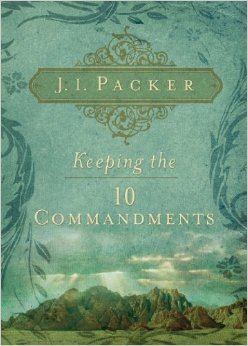
Keeping The Ten CommandmentsJ.I. Packer wrote a very readable, but scholarly, book examining how 21st-century people should live out the biblical Ten Commandments. You can read my full book review by clicking here, but I’m sharing some of my favorite quotes below.

“God’s love gave us the law just as His love gave us the gospel, and as there is no spiritual life for us save through the gospel, which points us to Jesus Christ the Savior, so there is no spiritual health for us save as we seek in Christ’s strength to keep the law and practice the love of God and neighbor for which it calls.”

“Where the law’s moral absolutes are not respected, people cease to respect either themselves or each other; humanity is deformed, and society slides into the killing decadence of mutual exploitation and self-indulgence.”

“The negative form of the Commandments has positive implications. ‘Where a sin is forbidden, the contrary duty is commanded’ (Westminster Larger Catechism, Question 99). The negative form was needed at Sinai (as in the West today) to curb current lawlessness that threatened both godliness and national life.” 

“Moral permissiveness, supposedly so liberating and fulfilling, is actually wounding and destructive: not only of society (which God’s law protects), but also of the lawless individual, who gets coarsened and reduced as a person every time.”

“Law-keeping is that life for which we were fitted by nature, unfitted by sin, and refitted by grace, the life God loves to see and reward; and for that life liberty is the proper name.”

“The Bible, however, takes promises very seriously; God demands full faithfulness of our vows. Why? Partly because trustworthiness is part of His image, which He wants to see in us; partly because without it society falls apart.”

“We honor God by respecting His image in each other, which means consistently preserving life and furthering each other’s welfare in all possible ways.”

“We have in us capacities for fury, fear, envy, greed, conceit, callousness, and hate that, given the right provocation, could make killers out of us all. … When the fathomless wells of rage and hatred in the normal human heart are tapped, the results are fearful.”

“When you lie to put someone down, it is malice; when you lie to impress, move, and use him, and to keep him from seeing you in a bad light, it is pride.”

“Reformed theologians said that God’s law has three uses or functions: first, to maintain order in society; second, to convince us of sin and drive us to Christ for life; third, to spur us on in obedience, by means of its standards and its sanctions, all of which express God’s own nature.”

“What is God’s ideal? A God-fearing community, marked by common worship (commandments 1, 2, 3) and an accepted rhythm of work and rest (commandment 4), plus an unqualified respect for marriage and the family (commandments 5, 7), for property and owner’s rights (commandments 8, 10), for human life and each man’s claim on our protection (commandment 6), and for truth and honesty in all relationships (commandment 9).”

“When God’s values are ignored, and the only community ideal is permissiveness, where will moral capital come from once the Christian legacy is spent? How can national policy ever rise above material self-interest, pragmatic and unprincipled? How can internal collapse be avoided as sectional interests, unrestrained by any sense of national responsibility, cut each other down? How can an overall reduction, indeed destruction, of happiness be avoided when the revealed way of happiness, the ‘God first, others next, self last’ of the Commandments, is rejected? The prospects are ominous. May God bring us back to Himself and to the social wisdom of His Commandments before it is too late.”

Blessing Or Burden?

Blessing or burdenGod’s commandments aren’t a bunch of Don’ts. If we look at them through the perspective of a loving Lawgiver, they are really Dos that will keep us in a place that God can bless.

Take the 9th Commandment: You shall not give false testimony against your neighbor (Exodus 20:16; Deuteronomy 5:20). This is the first of two commandments that emphasize the damage that can be done to our neighbor if we violate the law. Speaking falsely against someone does real harm to our neighbor, so in a sense God says, “Don’t do it!

But God also tells us what to Do so that He can bless us—

  • How good and pleasant it is when brothers live together in unity! … For there the Lord bestows His blessing, even life forevermore (Psalm 133:1, 3).
  • Psalm 15 says that he who will live in God’s presence is the one who speaks the truth from his heart and has no slander on his tongue, who does his neighbor no wrong and casts no slur on his fellowman (vv. 1-3).

The word for false in this commandment can mean: (1) an untruth; (2) insincere or deceptive words (e.g. flattery); (3) being purposely vague; or (4) speaking words that are true but harmful. So we Don’t want to do those, but what should we Do?

Jesus said that the way we speak is an indication of what has been going on in our heart and mind (Luke 6:45), so the way to fulfill the Do part of the commandment starts inside. A good guide is Paul’s list in Philippians 4:8—are my thoughts about my neighbor focused on what’s true? noble? right? pure? lovely? admirable? excellent? and praiseworthy?

In the New Testament, the word “blessing” is a compound word that literally means good words. So here’s the question I’m asking myself: Are my words to and about my neighbor a burden to them or a blessing?

If you have missed any of the messages in our series The Love In The Law, you can find them all by clicking here.

Thursdays With Oswald—The Standard For Generosity

Oswald ChambersThis is a weekly series with things I’m reading and pondering from Oswald Chambers. You can read the original seed thought here, or type “Thursdays With Oswald” in the search box to read more entries.

The Standard For Generosity

     Not how much we give, but what we do not give, is the test of our Christianity. When we speak of giving we nearly always think only of money. Money is the life-blood of most of us. We have a remarkable trick—when we give money we don’t give sympathy; and when we give sympathy we don’t give money. … 

     If my heart is right with God, every human being is my neighbor. … We measure our generosity by the standards of men; Jesus says, “Measure your love for men by God’s love for them, and if you are My disciple, you will love your neighbor as I have loved you.”

From Conformed To His Image

Wow!

With that definition in mind I’m asking myself … How generous am I really?

9 Requisites For Contented Living

Contented Living

“There are nine requisites for contented living:

  1. Health enough to make work a pleasure [Ecclesiastes 5:19*];
  2. Wealth enough to support your needs [Proverbs 30:8-9];
  3. Strength to battle with the difficulties and overcome them [1 Corinthians 15:57];
  4. Grace enough to confess your sins and forsake them [James 5:16];
  5. Patience enough to toil until some good is accomplished [Romans 5:3-5];
  6. Charity enough to see some good in your neighbor [Luke 10:25-37];
  7. Love enough to move you to be useful and helpful to others [Ephesians 4:2-3];
  8. Faith enough to make real the things of God [Psalm 91];
  9. Hope enough to remove all anxious fears concerning the future [Psalm 33:18].” —Goethe

* The quote is from Wolfgang Goethe, but I added the Scripture references.

15 Quotes From “I Like Giving”

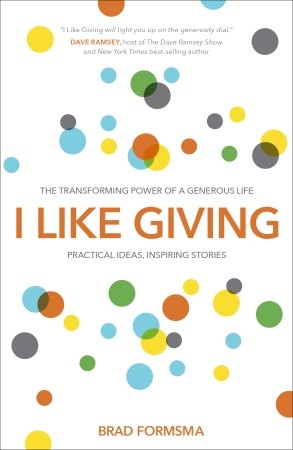
I Like GivingI Like Giving by Brad Formsma is a unique look at how to impact our communities. You can read my full book review by clicking here, but I strongly encourage anyone who wants to see their world changed to pick up a copy of this book. Below are some quotes I found thought-provoking in this book.

“Living generously is about giving your life to other people so that everything you do—whether it is your work, your charitable giving, or your contribution to your neighborhood—becomes both a gift to others and rewarding for yourself.” 

“Don’t make giving too big a project. Sometimes your best and most perfect gift might be as simple as a smile or a compliment. Maybe it’s paying for a stranger’s lunch.”

“Watch out for these nasty four-letter words: debt, fear, and busy. They steal the joy with the greatest of ease. Be aware of them as they compete with the nudge to do for others.” 

“The good news is that it’s never too late to give. If an opportunity comes your way and you don’t seize it, don’t get stuck in the downward spiral of regret. Smile, tell yourself all is well, and then ask for another one. If there are people around you, there will be more opportunities to give.”

“No matter how successful you are, it is giving your life away to others that makes you happy. … The right response, though, is not to shun success but to replace selfish ambition with other ambitions—doing things for others.” 

“Give daily, in small ways, and you will be happier. Give and you will be healthier. Give, and you will even live longer. … Giving protects overall health twice as much as aspirin protects against heart disease.” —Dr. Stephen Post

“Don’t let the occasional person who abuses the goodwill of others ruin your giving and deter you.”

“Compassion doesn’t mean giving every time, but when I give, I do it knowing that I’ve loved a fellow human being right where that person is, whether the money will be wasted or not.”

“One thing I’ve learned through the process is that I can’t force generosity. I can’t lead my family unless I’m going there myself. Simply keeping my eyes open for opportunities to give and ways to include the whole family sparks the idea in my kids. Kids are too young and innocent to believe they can’t be generous if they see adults living that way. … I never want to underestimate the example I am setting. My kids are watching how I live, and the choices I make have rippling effects down through the generations. I can choose to do nothing and let my children be swept up in the current of empty materialism that is rampant in our culture, or I can choose to live a different way by living generously.” 

“I don’t think we can ever overestimate just how profound the effects of giving can be. You can give without loving, but you can’t love without giving. The reality is that other people are watching how we live our lives, and what we do can have extraordinary effects in our communities. Generosity is for all of us. It is available to all of us, even when the cultural tide is moving in the opposite direction. Why not be brave and live differently?”

“Is weakness really that bad? Could it be that our specific weaknesses allow other people’s strengths to shine? Could it be that life sometimes throws us a curve that creates a need in our own lives? Once you experience the joy of giving, you realize that other people feel the same way when they give to you. Receiving might be harder than giving, but if you think about the joy the givers are receiving when they give to you, that will help you open up to receiving. You know that refusing the gift would deny them that joy.” 

“Focusing on what you don’t have or the bad hand you were dealt can actually make your life worse. What you think about affects who you become. It affects your relationships and the people you attract into your life. Keeping your focus on what you do have, what you have been given, and the good things in your life will make you happier and more grateful and will empower you to become a generous person yourself.”

“Often when we see someone in a bad situation, our natural response is to say, ‘Hey, if you need anything, let me know.’ Please don’t say that. Unknowingly you have put an added burden on the person. For some people the pressure is just too great, so they freeze and never respond. It’s a dangerous comment that produces a false sense of doing good. I encourage you to assess the situation and make something happen.”

“There are a lot of problems in the world. Sitting around talking about them or waiting for a large organization to do something about them doesn’t work. Finding opportunities to help others and change the world around us does work. We just have to take that scary step of actually doing something. We don’t need to overthink what we do. Sometimes we just know this is our opportunity to help. When we recognize an opportunity and dive in, amazing things happen! … So the question then becomes, are we willing? Will we decide to live generously and then be open to the opportunities that come our way?”

“You don’t have to make massive life changes, move to another city, or start your own nonprofit to become a gift to other people. You can start with who you are, right where you are, right now. In fact, you probably are already a gift to many people in many ways, but you might not always be aware of it.” 


I Like Giving (book review)

I Like GivingWhen you read a title like I Like Giving you might immediately think, “This is a book telling me to tithe, or give bigger offerings to my church, or support my local charity.” And you would be dead wrong. Brad Formsma’s book isn’t really about giving money away, it’s about giving yourself away.

Brad writes, “When we choose to give, we change, and the people around us change. When we move from awareness to action, miracles happen. When we allow giving to be our idea, a world of possibilities opens up before us, and we discover new levels of joy.”

Indeed, Brad weaves together his own personal stories, with stories from other givers, and even a healthy dose of medical and psychological research data to show us just how life-transforming and joy-producing it is when we are giving people. Not only are the gift receivers benefitted, but so are the gift givers.

Let me state it again: this book isn’t about giving your money to a charitable organization or a church; it’s about you seeing a need and finding a way to take care of that need. If everyone took on this mindset, just imagine how our communities would change!

One final thought from author Brad Formsma—“I don’t think we can ever overestimate just how profound the effects of giving can be. You can give without loving, but you can’t love without giving. The reality is that other people are watching how we live our lives, and what we do can have extraordinary effects in our communities. Generosity is for all of us. It is available to all of us, even when the cultural tide is moving in the opposite direction. Why not be brave and live differently?” (emphasis added)

Let I Like Giving be a springboard for you to live differently and to make a difference where you live!

I am a Waterbrook book reviewer.