


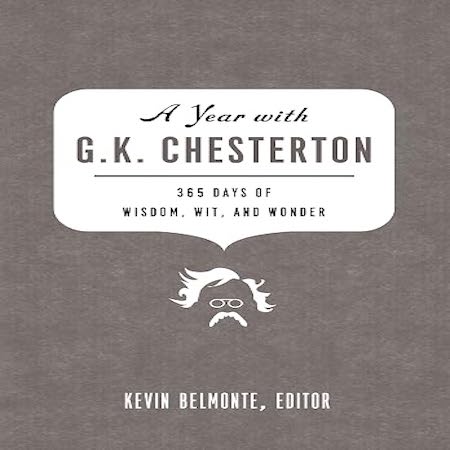
 I spent a year with G.K. Chesterton, reading through excerpts of his writings each day for the whole year. It was educational, eye-opening, and quite enjoyable. Please check out my book review of A Year With G.K. Chesterton.
There’s no way I could pick my top Chesterton quotes, so here are just a handful from the top of the list. My Patreon supporters have dozens of more quotes. You can get access to those as well by clicking here.
“A stiff apology is a second insult. The injured party does not want to be compensated because he has been wronged; he wants to be healed because he has been hurt.”
“An adventure is only an inconvenience rightly considered. An inconvenience is an adventure wrongly considered.”
“Fallacies do not cease to be fallacies because they become fashions.”
“People generally quarrel because they cannot argue.”
“Job was comfortless before the speech of Jehovah and is comforted after it. He has been told nothing, but he feels the terrible and tingling atmosphere of something which is too good to be told. The refusal of God to explain His design is itself a burning hint of His design. The riddles of God are more satisfying than the solutions of man.”
“Idolatry is committed, not merely by setting up false gods, but also by setting up false devils; by making men afraid of war or alcohol, or economic law, when they should be afraid of spiritual corruption and cowardice.”
“The man of the true religious tradition understands two things: liberty and obedience. The first means knowing what you really want. The second means knowing what you really trust.”
“There are many ways to fall down, but there’s only one way to stand up straight.”
“This is, indeed, the supreme absurdity of the modern world, that it imagines that it can introduce anarchy into the intellect without introducing anarchy into the commonwealth. It imagines that it can make its thoughts go crooked and its motor-cars will still go straight.”
“Jesus promised His disciples three things: they would be completely fearless, absurdly happy, and in constant trouble.”
“Pornography is not a thing to be argued about with one’s intellect, but to be stamped on with one’s heel.”
►► Would you please prayerfully consider supporting this ministry? My Patreon supporters get behind-the-scenes access to exclusive materials. ◀︎◀︎


 Craig T. Owens