Listen to the podcast of this post by clicking on the player below, and you can also subscribe on Apple, Spotify, or Audible.
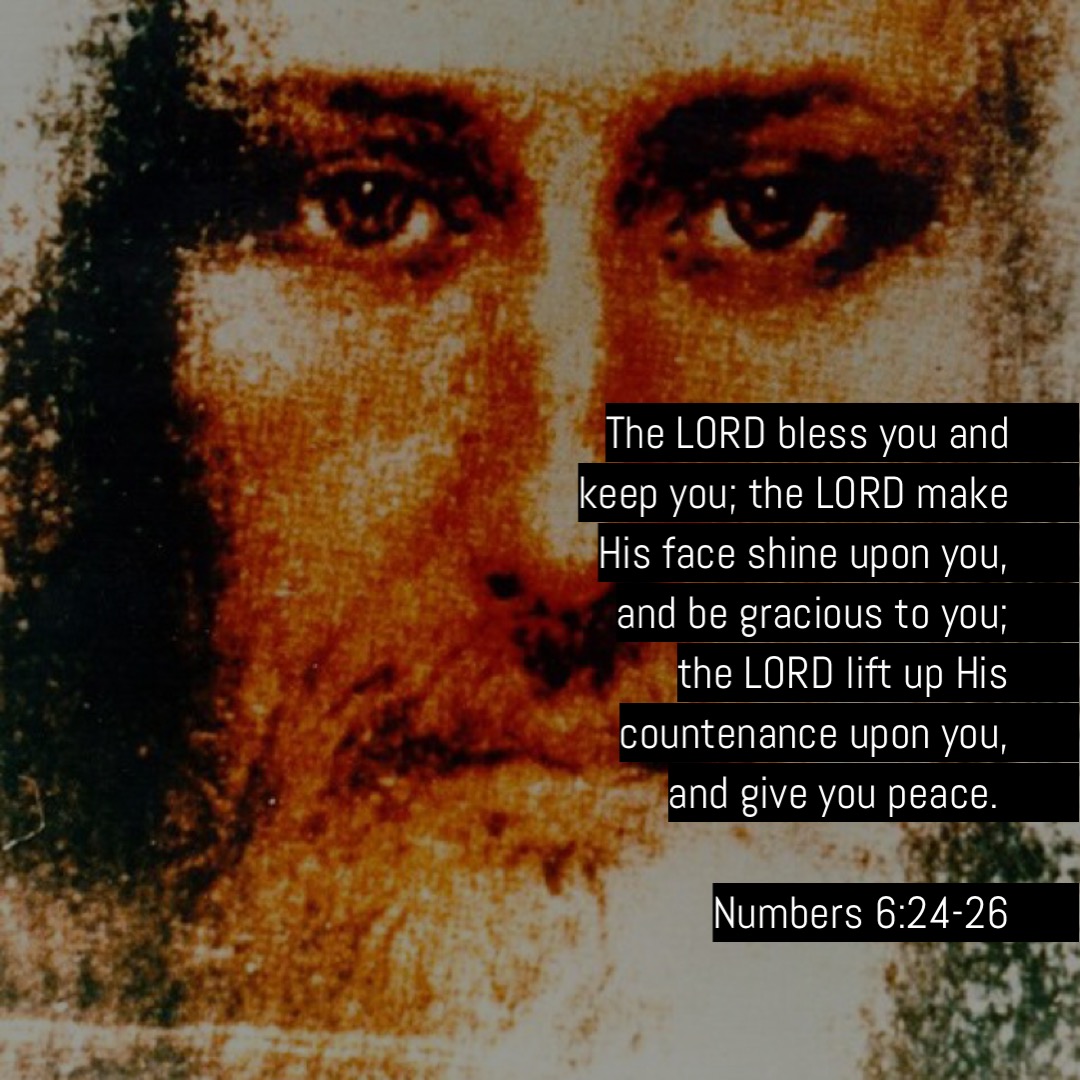
I have always been both intrigued and encouraged by the blessing Moses was instructed to give the the priests to pronounce over God’s people.
Tell Aaron and his sons, “This is how you are to bless the Israelites. Say to them: ‘The Lord bless you and keep you;the Lord make His face shine on you and be gracious to you;the Lord turn His face toward you and give you peace.’” (Numbers 6:23-26)
After giving this blessing, God then says, “And they shall put My name upon the Israelites, and I will bless them” (Numbers 6:27 AMPC).
What does it mean to put God’s name on me?
I think the Bible shows that it means—
I feel the heaviness of His holiness AND
I feel the security of His surrounding presence.
I feel the unapproachableness of His perfect righteousness AND
I feel the welcoming embrace of His atonement.
I feel how unworthy I am AND
I feel how worthy He is.
I know that He knows everything about me AND
I know He still loves me with an unquenchable love.
I know He is the holy Judge AND
I know He is the Forgiver of my sins.
I know that His Holy Spirit convicts me of my sins AND
I know the His Holy Spirit helps me get free of those sins.
What an inexpressible, overflowing-with-joy, irrepressible, unshakable assurance I have in my relationship with my Heavenly Father, through the work of Jesus Christ, and the assurance of the Holy Spirit. This is indeed a blessing that the no one else but my God can put on me!
P.S. You may also be interested in another take on the priestly blessing in my post The Blessing.
“If we try to display the excellence of God without joy in it, we will display a shell of hypocrisy and create scorn or legalism. But if we claim to enjoy His excellence and do not display it for others to see and admire, we deceive ourselves, because the mark of God-enthralled joy is to overflow and expand by extending itself into the hearts of others. … God calls us to pray and think and dream and plan and work not to be made much of, but to make much of Him in every part of our lives.” —John Piper
I have blogged quite a bit about the importance of getting enough quality sleep. A new study finds that the link between poor sleep and mental health problems could be related to deficits in brain regions that keep unwanted thoughts out of mind. Check out the full report.
“You may have to fight the battle more than once to win it.” —Margaret Thatcher
Listen to the podcast of this post by clicking on the player below, and you can also subscribe on Apple, Spotify, or Audible.
The lights of hope, peace, and joy burn brightly. They drive out the darkness in our own lives and in the lives of others with whom we come in contact. But you and I both know lots of people who are very positive people—always upbeat, seemingly peaceful and joyful. The real question is: What is the source of this light? Or more specifically, how do people know that you are hopeful, peaceful, and joyful because you know Jesus as your Savior and King?
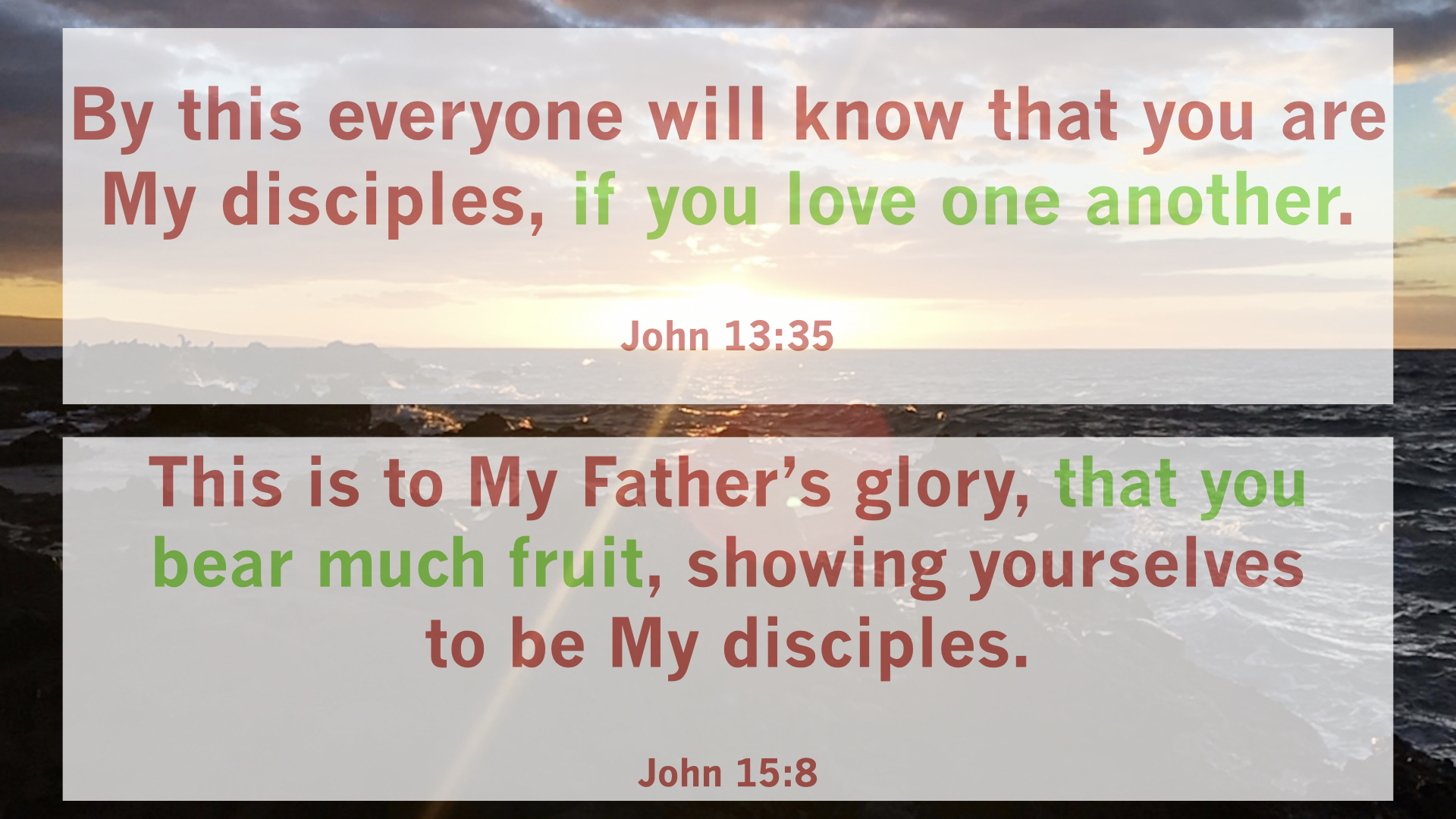
Jesus said there were two proofs that we are His followers:
That we love others (John 13:35)
That we are producing God-honoring fruit (John 15:8)
God IS love—it’s His very nature. Just like an apple doesn’t have the capacity for apple-ness but is by its nature an apple, so God doesn’t have the capacity for love, or love more than others, but He is by His nature Love.
Any qualities of hope, peace, and joy in our lives have to originate from God’s love. We cannot manufacture these fruits, but they are a natural result of our being connected with Love Himself.
Love is what brought Jesus to earth at His First Advent (John 3:16-17; Romans 5:5-8). And we can only love others and produce the fruit of hope, peace, and joy because Jesus went first and became our Source (1 John 4:19; John 15:1).
Love brought Jesus to earth at His First Advent, and Love is what empowers us to be loving and fruitful between His Advents.
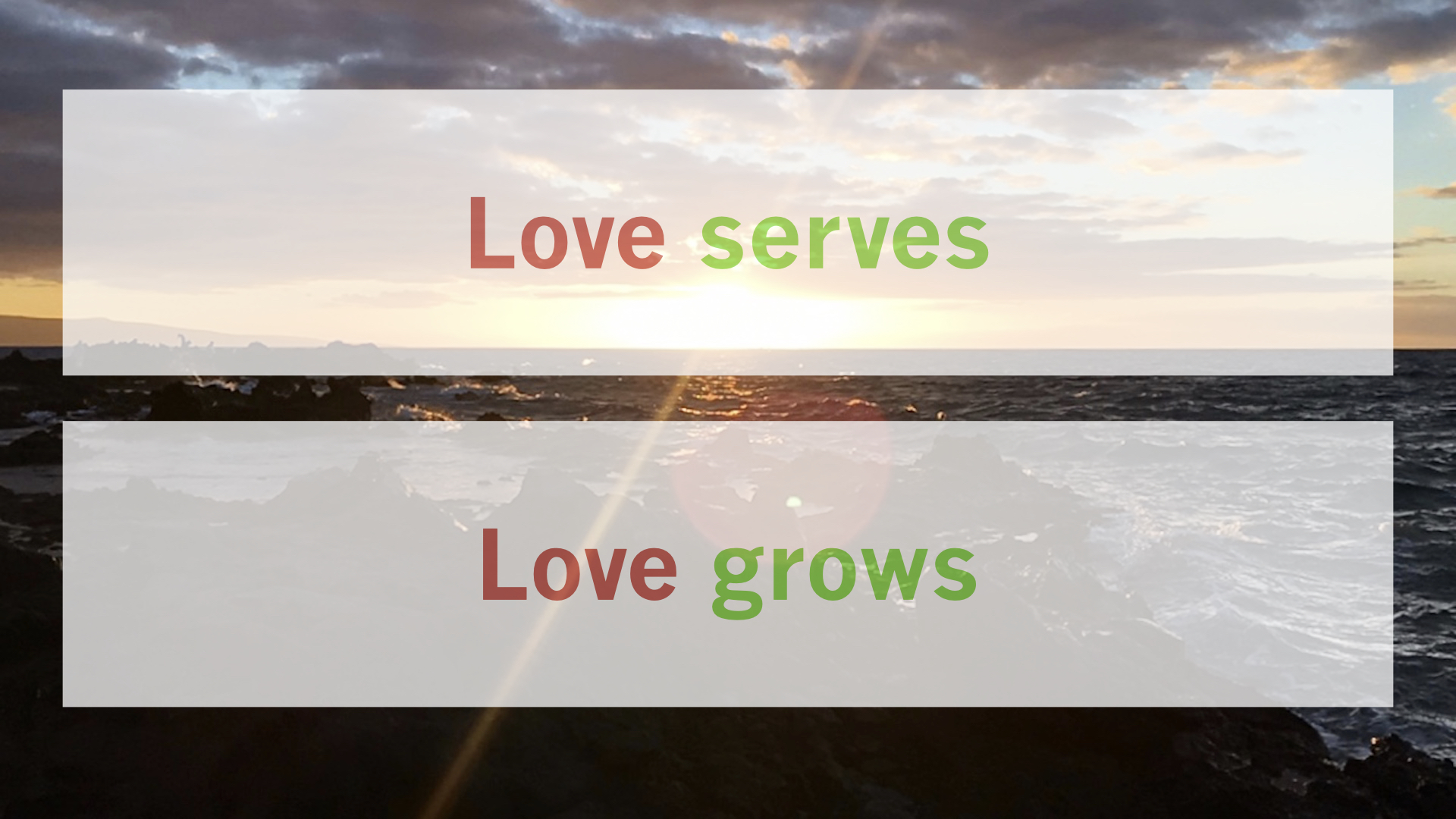
Love one another means that love serves (John 13:1-5, 15-17, 34-35)
Bear much fruit means that love grows (John 15:1-12)
We can only serve and be lovingly fruitful as we stay connected to Love (2 Peter 1:2-7; 1 John 2:28).
Love brought Jesus to earth at His First Advent, Love is what empowers us to be loving and fruitful between His Advents, and Love is what patiently waits for Christ’s Second Advent (2 Peter 3:3-4, 9).
We continue to grow in our love and produce fruit by being connected to the Vine of Love (1 Corinthians 13:11-12; 1 John 3:1-2 ; Hebrews 10:23-24).
This means we live every moment as though the Second Advent is imminent. Because it is!
We need to let our love be continually supplied by Love Himself so that our fruitfulness can shine as a bright testimony. Jesus said, He was the Light of the world, and then He called us to be the light to our part of the world where He has placed us (John 8:12; Matthew 5:14-16).
Always remember that we celebrate the First Advent and look forward to the Second Advent by staying connected to Jesus, growing in our love for Him and for others, and allowing the fruit of hope, peace, and joy to shine brightly for God’s glory.
Listen to the podcast of this post by clicking on the player below, and you can also subscribe on Apple, Spotify, or Audible.
We have the candles of hope and peace burning brightly. Romans 15:13 tells us that our hope in God’s fulfilled promises and our hope in His fulfilling of His future promises is what brings us not only peace but joy as well.
William Gurnall noted, “Joy is the highest testimony which can be given to our peace.” That means that hope bubbles up in peace and joy, but joy then sustains and fuels future hope, which allows us to experience peace all over again!
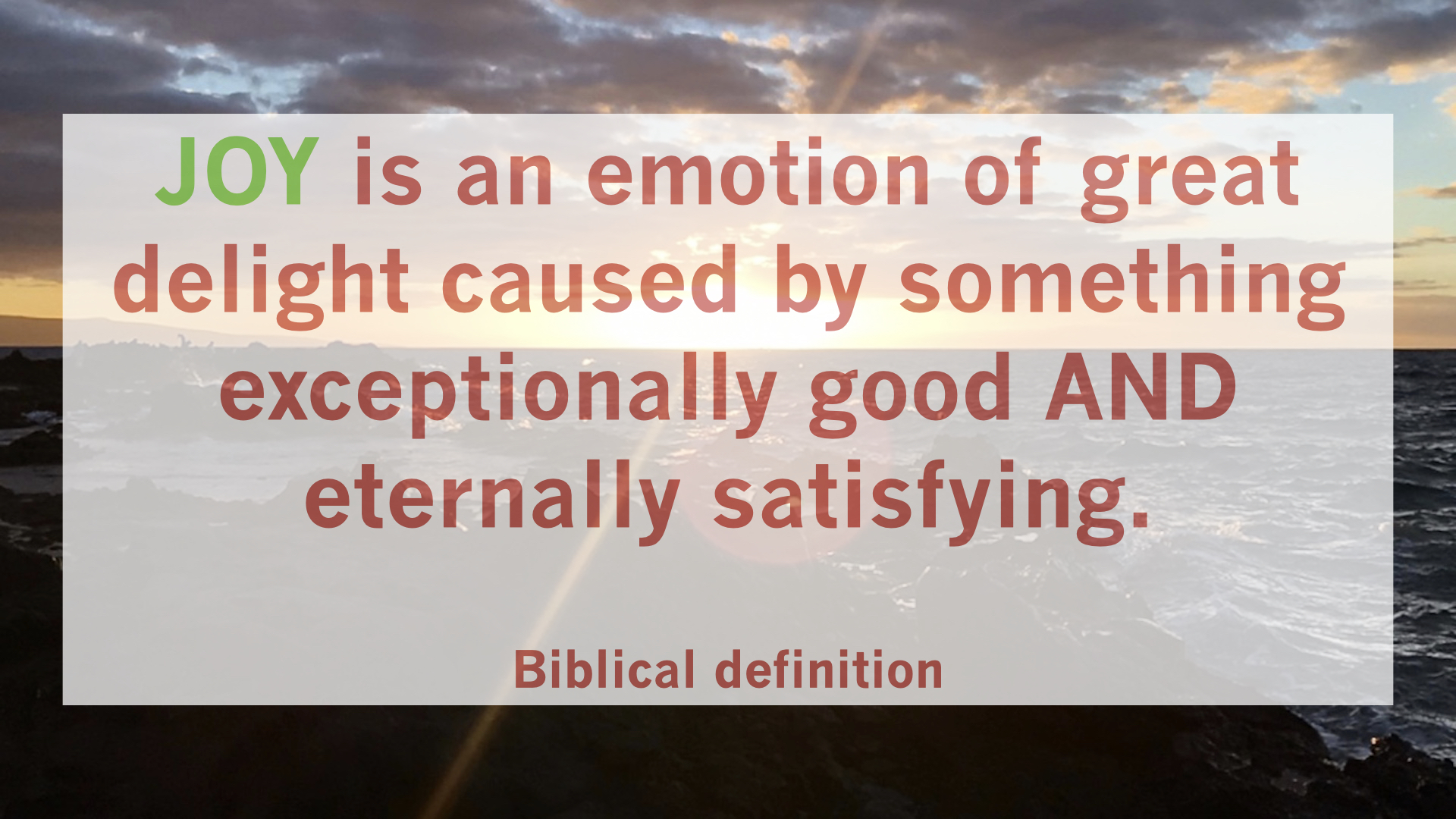
The English dictionary has the right definition for joy: the emotion of great delight caused by something exceptionally good or satisfying. Unfortunately, all of the examples the dictionary gives for joy are fleeting external things.
The Bible makes it quite clear that pleasure is not the same thing as joy, but still people try to find what they call joy in things that bring them pleasure. C.S. Lewis wrote, “Joy is never in our power and pleasure often is.”
Just ask the wisest and richest man who ever lived: King Solomon. He wrote the Book of Ecclesiastes which is all about his pursuit of pleasure, yet every attempts ends with him crying, “Vanity! Meaningless!” But notice something: every time he says this, the phrase “under the sun” is adjacent to it. In other words, nothing on earth can provide true joy.
Paul experienced the same thing in the New Testament (see Romans 7:18-20).
Just like we said about these candles that darkness is not the opposite of light, but it is the absence of light, so too, this wretched state of joylessness is the absence of things that are eternally satisfying.
That means we need something other-worldly—something higher than the sun—to truly bring light and satisfaction. The prophet Isaiah foretold the light that Jesus would bring from Heaven, and this light would be our eternal joy and salvation (Isaiah 9:1-3, 6-7; Matthew 1:21).
Notice how the angelic announcement of Christ’s birth ties together the thoughts of joy with Savior (Luke 2:8-11).
Isaiah foretold this First Advent which Jesus fulfilled (Isaiah 61:1-3; Luke 4:18-19), and which Paul come to discover as well (Romans 7:24-25).
Another biblical definition for the word joy is delighting in God’s grace in our trials because we understand that these trials enlarge our capacity for even greater joy. This is the joy we can know as we live between the two Advents of Jesus. We see this in the example of Jesus fixing His eyes on the eternal joy even as He walked toward Calvary, and how His Father then exalted Him for that (Hebrews 12:2; Philippians 2:9-11).
In a similar, Jesus prepares us for the joy following our time of grief (John 16:17-24). The writer of Hebrews agreed with this (Hebrews 12:11), as did the writer of the 126th Psalm (notice the word joy being used four times in just six verses here!).
The Second Advent of Jesus will be eternally satisfying joy beyond anything we can imagine! I love how Isaiah 35 foretells what we can read on the last pages of the Book of Revelation.
This thought from Charles Spurgeon is spot-on: “We who trust in Jesus are the happiest of people, not constitutionally, for some of us are much tried and are brought to the utter depths of poverty, but inwardly, truly, our heart’s joy is not to be excelled.”
May we all live in that hope-filled, peace-fueled joy every single day until Christ returns or calls us Home!
If you missed it, check out the lights of hope and peace in our previous messages in this series by clicking here.
Christians aren’t celebrating just one Advent, but two. The First Advent of Jesus gives us cause to celebrate, but the expectation of His Second Advent gives us reason to anticipate. Let’s make sure we are always celebrating both of Christ’s Advents. Check out the full sermon on hope.
I have lots of new content every week, which you can check out on my YouTube channel.
“When we elevate the end over the means, we miss out, because often God does some of His greatest work along the way. For Him, it’s all about the process, and less about the final destination.” —The King Is Coming reading plan on YouVersion
“If you want a religion to make you feel really comfortable, I certainly don’t recommend Christianity.” —C.S. Lewis, in God In The Dock
I had never even heard of the heart cockle until I read this article. This amazing mollusk has a symbiotic partnership with a type of plankton that lives inside the shells. This plant needs photosynthesis to live and produce the food which the heart cockle needs to survive. But how does sunlight get through the solid shell of the heart cockle? Not surprisingly, our All-wise Creator designed the heart cockle with little “windows” perfect for letting in just the right amount of sunlight the S. corculorumrequires. Amazing!
The Reader’s Digest uncovers some bizarre laws surrounding the Christmas season. For instance, “In 1643, England passed an ordinance ‘encouraging’ citizens to treat Christmas as a solemn holiday, rather than a celebratory feast. By the next year, Christmas had been banned altogether. Christmas remained illegal in England until 1660. … In 1659, the Puritan government of the Massachusetts Bay Colony went so far as to outlaw Christmas in order to discourage ‘disorderly’ behavior that might be ‘offensive to God.’ Anyone who failed to show up for work or participated in feasting would be fined five shillings. The Christmas ban lasted until 1681 and Massachusetts didn’t make Christmas an official holiday until 1856.”
“The future of our country and the quality of our lives is not determined primarily by who is in public office. Politicians are the fruit of the tree, they are not the tree. Our future will be determined by the strength of our families, and we all have control over that. Be great husbands, wives, parents, friends, and neighbors. Live for others, and live as if your kids, and God, are always watching. God is always watching, and our kids are watching more than we realize. Find things to be grateful for and resist the temptations to complain. Go out of your way to make someone else’s life better and yours will be too, even if you don’t like who is in the White House. If our joy is dependent upon a political outcome, we’ll never be happy.” —Joseph Backholm
The word Advent means the appearing—something that bursts onto the scene.
At this time of year we are actually thinking about TWO Advents. We look backward in gratitude to celebrate the first Advent of Jesus when He was born in a manger in Bethlehem. And then we look forward in joyful expectation to the second Advent of Jesus when He will return to earth again as King of kings.
As Christians live in this time between the two Advents, our celebration and expectation should bring four noticeable attributes from our lives:
Please join me at Calvary Assembly of God as we learn more about how the Holy Spirit empowers these four attributes in our daily lives, how this glorifies God, and how it then draws others to Jesus their Savior.
Listen to the podcast of this post by clicking on the player below, and you can also subscribe on Apple, Spotify, or Audible.
It is so much easier to complain than to compliment. We can slide into the negative conversations almost without thinking about it.
In one of the last things that Paul wrote to Timothy—as he’s in prison, quite possibly awaiting execution—he warns his friend against the darkness of the last days (2 Timothy 3:1-5). We need to engage our minds, our wills, and our emotions to not go with the flow of culture’s negativity.
Remember the wise words from George Santayana: “Those who do not learn from history are doomed to repeat it.” The apostle Paul said this before Mr. Santayana (1 Corinthians 10:1-6). We need to learn the lessons of the dangers of forgetfulness that leads us to ingratitude.
Even before Paul, the Old Testament is filled with repeated reminders to remember God’s blessings and gratefully look to Him to supply every need. Let’s unpack some lessons on the importance of gratitude from Israel’s history in Psalm 106.
In Psalm 106:7, the Israelites forget what God has done for them in Egypt. Now that they appear to be pinned between the Red Sea and the onrushing Egyptian army, their forgetfulness becomes grumbling against God (Exodus 14:10-12).
In Psalm 106:13-14, instead of being grateful for the miraculous supply of manna, the Israelites are grumbling about the meat they don’t have (Numbers 11:4-6).
Here’s the lesson for us to learn: God wants to teach us to be thankful for His daily provisions for us (Joshua 5:12; Matthew 6:11).
In Psalm 106:21, 28-29, the next generation of Israelites didn’t remember to be thankful because they had seldom heard their parents express gratitude (Judges 2:10-11).
Here’s the lesson for us to learn: Our daily thankfulness fortifies future generations (Psalm 37).
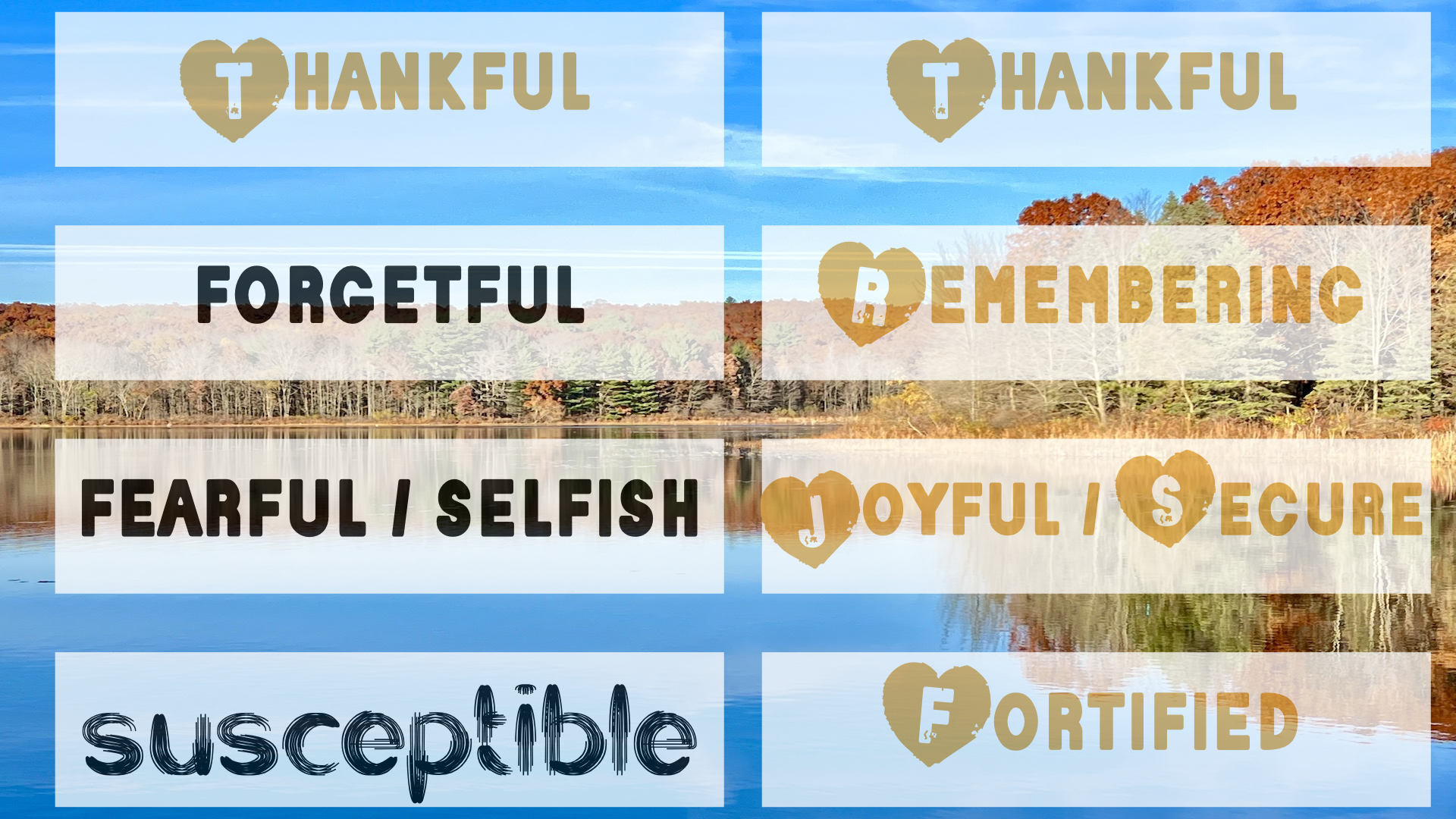
Here is the repeated pattern we see—
Thankfulness → Forgetfulness → Fearful / Selfish attitudes → Susceptible to the temptation to grumble against God
Thankfulness → Remembering → Joyful / Secure attitudes → Fortified against the temptation to grumble against God
Jim Cymbala said, “Ingratitude to God is the first step toward backsliding and departure from God. So, it is to our benefit to have a thankful heart toward God.”
Let’s put into practice this lesson from King David: “Praise the Lord, O my soul, and forget bot all His benefits” (Psalm 103:2).
Listen to the podcast of this post by clicking on the player below, and you can also subscribe on Apple, Spotify, or Audible.
The Christians could have used the “great persecution” that broke out against them (Acts 8:1) as a great excuse to hide or to remain quiet. After all, Saul and his hoard were specifically targeting those who were known to be Christians, so keeping quiet or out of sight might have saved their lives.
Instead, these fearless Christians used this great persecution as a messenger from God to keep them on-mission in fulfilling the Great Commission (Matthew 28:18-20; Acts 1:8), taking the Gospel to even the despised Samaritans (Acts 8:4)!
Would they have taken this message to these folks without this “nudge” of persecution? Maybe, but then again, maybe they would have stayed in Jerusalem and delayed too long in sharing with those who lived in the capital city. It’s a really good bet that without this persecution they wouldn’t have come up with the idea of going to Samaria on their own!
I think we can learn some good lessons from this incident. When unexpected difficulties crash into our lives, let’s re-frame our thinking. Instead of using this hardship as an excuse to do less, let’s ask:
Do I need to re-evaluate what I have (or haven’t) been doing? Do I need to repent of anything?
Am I on-mission as a Christian witness? Am I consistently using my God-given gifts in God-glorifying ways to point others to Jesus?
How can I live out and proclaim the Word of God even in this unexpected place?
Let’s be like those Christians who didn’t grumble, who didn’t hide, who didn’t make excuses. But they said, “This is just another opportunity for us to invite people to meet Jesus as their Lord and Savior,” and then they joyfully moved forward.
Christians should run their entire race with joy—we should soar across the finish line! Check out this full sermon on Psalm 132.
I have lots of new content every week, which you can check out on my YouTube channel.
“Joy is never in our power and pleasure often is.” —C.S. Lewis
John Piper points out that thinking and knowing are essential for Christian maturity, but there is also a danger in knowledge. How do we find the correct balance?
I talked about a Christian’s self-examination this week, and then I came across this from T.M. Moore: “Christians do not fear to examine themselves. Especially when it seems something may be lacking in our walk with and work for the Lord, we need to heed the words of the apostle Paul and do some serious soul-searching and altering of our life course (2 Corinthians 13:5). Examining ourselves involves carefully considering how we use our time (Ephesians 5:15-17) as well as what’s going on in our soul and our life. We must not fear to examine ourselves nor resent when others may encourage us to do so.”
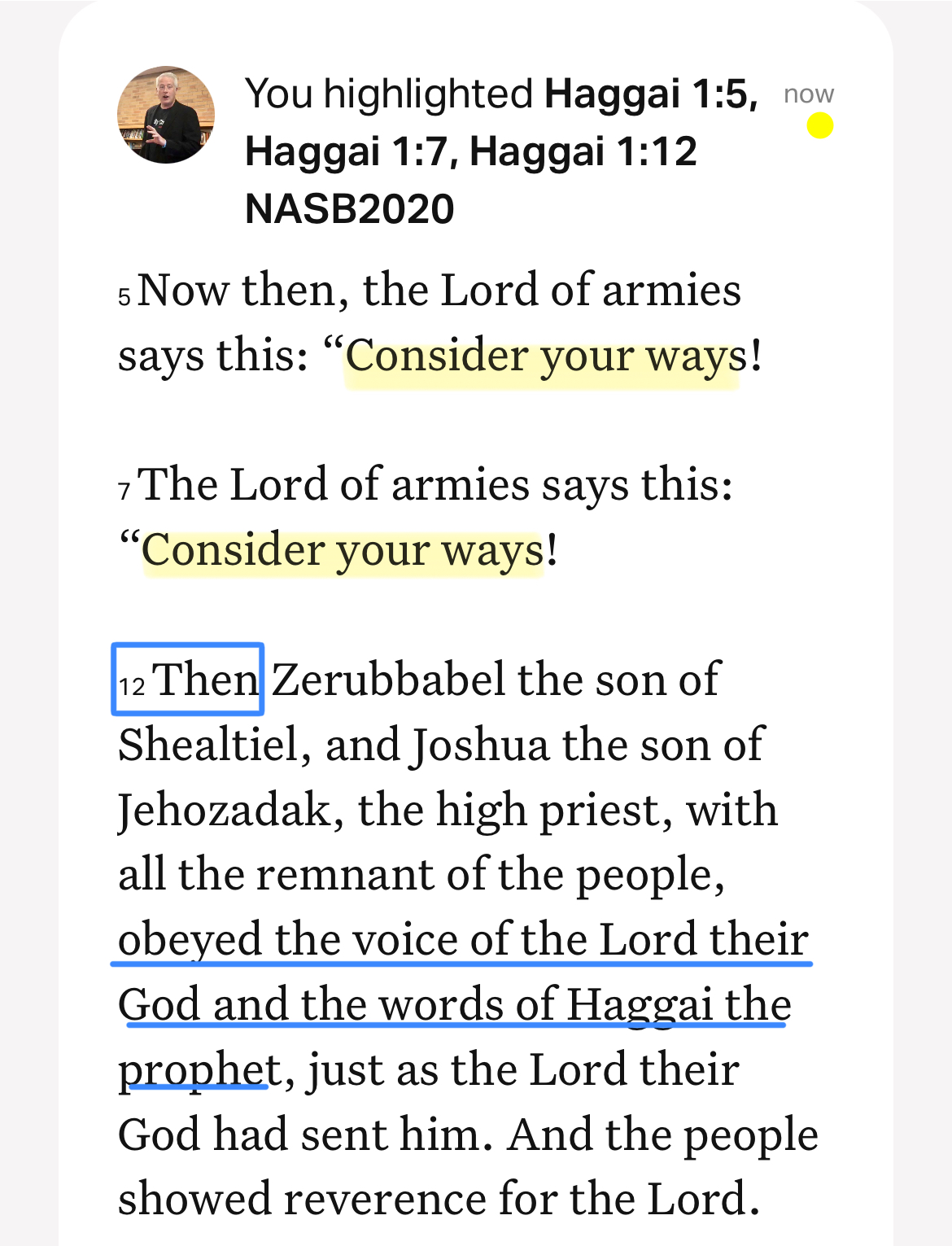
God’s messengers call people to consider the way they are currently living in comparison to the way God has called them to behave. Wise people will heed this call and repent from any ways that deviate from God’s way. I talked in more depth about Haggai and his message of considering our ways in my series on the minor prophets.
“Come to Jesus by quitting every other hope, by thinking of Him, believing God’s testimony about Him, and trusting everything to Him. If you thus come to Him, the rest which He will give you will be deep, safe, holy, and everlasting.” —Charles Spurgeon
One more from T.M. Moore: “We will only hunger and thirst for more of the Lord and His promises as we consider how far short of that might and greatness we fall. … I suspect that most Christians today are fairly satisfied with the state of their faith. They have a ‘good enough’ experience of Jesus and they’re not really thirsting for much more. But the work of shepherds is to help people realize that splashing around in the mud puddle of faith is not to be compared with sailing on the ocean of God’s grace and power.”



 I have always been both intrigued and encouraged by the blessing Moses was instructed to give the the priests to pronounce over God’s people.






 Craig T. Owens