Christian saints have the joyful privilege of being able to step up for fellow saints. It’s hard work at times, but if we remember who those saints really are, it’s never heavy work!
“A people that values its privileges above its principles soon loses both.” —Dwight D. Eisenhower
“[Jesus] draws us to Himself daily, to seek His beauty in Scripture, dwell before the beauty of His glorious face, bask in the beauty of His heavenly throne room, and become, increasingly, His beauty in and to the world. No matter how long we’ve known Him or how careful and earnest our study of Him has been, His fresh beauty remains fresher still.” —T.M. Moore
“Christianity is always out of fashion because it is always sane; and all fashions are mild insanities.” —G.K. Chesterton
Replace the “sandwich method” of feedback with this: (1) Tell the person why you are giving them feedback, (2) Give them the feedback, and (3) End with a belief statement.
Listen to the podcast of this post by clicking on the player below, and you can also subscribe on Apple, Spotify, or Audible.
In the first ten verses of Ephesians 2 Paul talks about the amazing transformation from who we WERE before we met Jesus to who we ARE now with Jesus as our Lord and Savior.
Before Jesus we…
were dead
used to live in sin
used to follow the world
were living to gratify fleshly cravings
were following only earthly desires
The result of this lifestyle is quite clear: We WERE deserving of God’s wrath (see vv. 1-3).
Verse 4 opens with an amazing word: “But” here is what our new life looks like. We are…
made alive with Christ
rescued from death
raised up with Christ
seated with Jesus in heavenly realms
benefitting from God’s kindness
The bottom line: We ARE saved by God’s grace from God’s wrath (vv. 4-8)!
It’s only now that we can realize that we ARE God’s handiwork, created to be in Jesus, to do good works, and to bring God glory. Our lives now ARE a display of the “incomparable riches of His grace” (v. 7)—we ARE a living testimony of His love for lost people.
Being transformed from what we WERE to who we ARE allows us to echo the words of the psalmist—Come and see what our God has done, what awesome miracles He performs for people! (Psalm 66:5 NLT).
Listen to the podcast of this post by clicking on the player below, and you can also subscribe on Apple, Spotify, or Audible.
Last week I challenged all of us to ask the Holy Spirit to check our attitude to ensure we indeed have the attitude of a secure servant. This is especially true when we remember that we are in the midst of a spiritual battle and that Jude writes this letter to us to encourage us to “contend for the faith.”
When Jesus told His parable about the sower, here’s what He said about the seed that fell on the hard path (Mark 4:15 AMPC). Jesus said the forces of evil want to try to bring down the Kingdom of God (Matthew 11:12).
Are we willing to engage in this intense battle? Will we strive with the forces of darkness for the sake of seeing lost people saved? God told Isaiah that it was so easy to give in—to throw our hands up (Isaiah 64:5-7). Paul extolled a Christian brother named Epaphras for his willingness to wrestle in prayer for the saints (Colossians 4:12).
Indeed wrestling for the saints is what Jude had in mind.
I like the phrase “contend for the faith” in the Message paraphrase: “Fight with everything you have in you.”
The Greek word Jude uses here is the only time it’s used in the New Testament. It means:
To enter a contest—1 Corinthians 9:24-26
Contend with adversaries—Colossians 4:12; Ephesians 6:12
Struggle through difficulties—Colossians 1:28-29
Endeavor with strenuous zeal to obtain victory—1 Timothy 6:12; 2 Timothy 4:7
The root word is agonizimai which sounds a lot like our English word “agonize.” This is an all-in mentality. Sitting on the sidelines, casually interacting, dabbling in it every once in a while won’t lead to victory.
The stakes are too high, our enemy is cunning and desperate, so nothing less than agonizing training that will not quit no-matter-what will do!
What exactly are we training to do?
Too many view salvation as just saved from Hell. That’s part of it, but not all of it. We’re also saved to display the glory of God. The first part is accepting Jesus as Savior; the second part is accepting Jesus as Lord. The salvation we share is not either-or, but it is both-and: Jesus is both our Savior and Lord.
We need to strive to obtain the fullness of Christ’s nature in us. People should be able to see and feel a difference in our lives without us even opening our mouths. Francis of Assisi said, “Preach always; if necessary, use words.” To that end, he offered this prayer—
“Lord, make me a channel of Thy peace, that
where there is hatred, I may bring love;
where there is wrong, I may bring the spirit of forgiveness;
where there is discord, I may bring harmony;
where there is error, I may bring truth;
where there is doubt, I may bring faith;
where there is despair, I may bring hope;
where there are shadows, I may bring light;
where there is sadness, I may bring joy.”
Will you be all-in?
Will you wrestle in prayer?
Will you let go of earthly things so you can cling to Jesus?
Will you display His light through your life?
Will you be ready to use words, if necessary?
Let’s make sure we are ready to contend for the faith the right way!
P.S. Speaking of prayer, my new book Amen Indeed is a prayer guide for pastors. Please consider giving a copy of this book to your pastor!
G.K. Chesterton penned these words over a century ago. If they were true then, imagine how much more so they are now: “These are the days when the Christian is expected to praise every creed except his own.”
“The only way to do great work is to love what you do. If you haven’t found it yet, keep looking. Don’t settle.” —Steve Jobs
Epaphras literally put his life on the line to tell others about Jesus (Colossians 1:7; Philemon 23) and then tenaciously wrestled in prayer for the saints he led to the Lord (Colossians 4:12). That is a life worth emulating!
Sarah Young uses passages of Scripture and writes in the first-person voice as though Jesus Himself was speaking to us. “When you bring Me prayer requests, lay out your concerns before Me. Speak to Me candidly; pour out your heart. Then thank Me for the answers that I have set into motion long before you can discern results. When your requests come to mind again, continue to thank Me for the answers that are on the way. If you keep on stating your concerns to Me, you will live in a state of tension. When you thank Me for how I am answering your prayers, your mind-set becomes much more positive. Thankful prayers keep your focus on My Presence and My promises.”
Listen to the podcast of this post by clicking on the player below, and you can also subscribe on Apple, Spotify, or Audible.
The second-to-last book of the New Testament is a short letter to the Church in which Jude felt urged by the Holy Spirit to challenge Christians to “contend for the faith that was once for all entrusted to the saints.” Does contend mean Christians are supposed to be combative about sharing their faith? We can learn a lot from the way Jude opens this letter.
First, let’s look at who wrote this book.
The names of the brothers of Jesus are listed twice (Mark 6:3; Matthew 13:55), and Jude is either the youngest or second youngest of these male siblings. He was a part of the family delegation that went to bring Jesus home because they thought He was out of His mind (Mark 3:21, 31). Later on, Jude would also mockingly taunt Jesus (John 7:5).
James is the oldest brother after Jesus. When Paul writes that Jesus appeared to James after the resurrection (1 Corinthians 15:7), it’s possible that it means Jesus appeared to all of his brothers, because Paul also mentions that the brothers of Jesus had become evangelists (9:5). It’s not surprising that Jude calls himself a brother of James, but it is quite shocking that he calls himself a servant of Jesus Christ.
In fact, he calls Jesus:
our only Sovereign and Lord (v. 4)
the One who gives us eternal life (v. 21)
the only One who is our entrance into Heaven (vv. 24- 25)
We need to adopt this servant’s mindset as we interact with others.
Second, let’s notice who Jude’s audience is.
Jude writes to people who are called, sanctified, preserved (NKJV).
called = invited to the banquet
sanctified = hagiazo = holy ones or saints
preserved / kept = carefully attended to
Finally, let’s consider how Jude expects saints to be living each day.
Jude says in verse 2 that we are to live…
mercifully = not wanting people to get the punishment they deserve
peacefully = having our soul so secure that we fear nothing from God
lovingly = agape love like Jesus (John 3:16, 13:1) and like us (13:35, 15:9)
And all of these things are to be in abundance—ever multiplying!
After all of this, we are now in a place to consider how to live contending for the faith (v. 3).
We are servants of Jesus, called to His banquet, set apart and preserved for His glory; we are intimately aware of His mercy, peace, and love, which we want others to know for themselves.
Before we learn how to contend, let’s ask the Holy Spirit to check our attitude to ensure we indeed have the attitude of a secure servant.
Praise be to the God and Father of our Lord Jesus Christ, who has blessed us in the heavenly realms with every spiritual blessing in Christ. (Ephesians 1:3)
These blessings are not found just anywhere. They are found only in Jesus and because of Jesus.
The completeness of perfect blessing is found in Who my Heavenly Father is for me because of the finished work of Jesus!
Listen to the podcast of this post by clicking on the player below, and you can also subscribe on Apple, Spotify, or Audible.
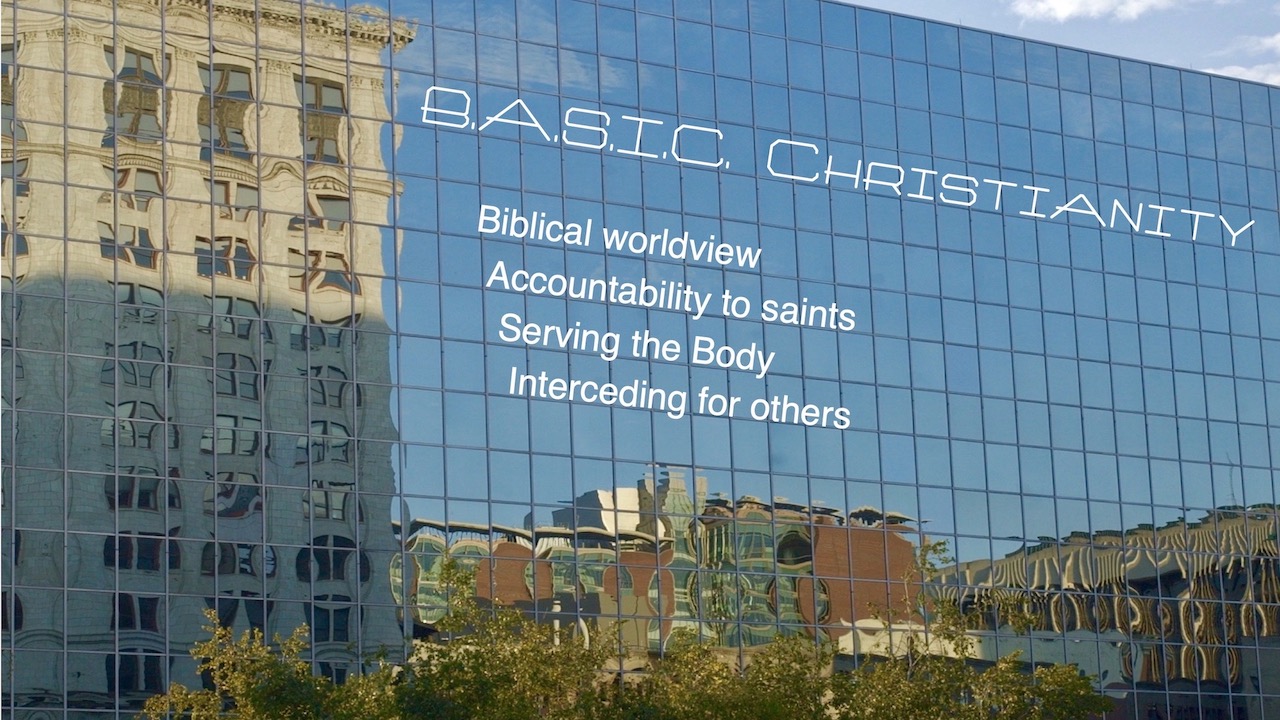
Sanctification (“saint-ification”) is an ongoing process that usually involves the help of other saints. We learn this by having a biblical worldview (that’s the “B”), being accountable with saints (“A”), and serving the Body of Christ (“S”). These are the things that bring out increased fruitfulness in our lives, make us more joy-full people, and enhance our testimony to others.
What a blessing it is to be involved in all of these saint-ification things alongside other brothers and sisters. Isn’t nice to know that you’re not all alone on your journey?
Two brothers walked up the hill to the park every afternoon to play baseball. One day a neighbor who lived near the bottom of the hill saw the younger brother pulling his older brother up the hill in a wagon. He observed this for a couple of days before he finally asked what was going on.
The younger brother said, “My big brother broke his leg so I pull him in the wagon so he can watch us play baseball and can be our coach.”
“He must be heavy,” the neighbor replied.
“He’s not heavy,” the little boy said, “he’s my brother!”
In the first brothers that the Bible shows us, we see the origin of the phrase “brother’s keeper.” Cain was jealous of the way God was blessing his younger brother, and so he murdered Able. God came to Cain and asked him, “Where is your brother Able?”
Cain responded with another question, “Am I my brother’s keeper?” (Genesis 4:9).
The word brother is someone connected to me by blood or some other common bond. Cain used the same word for brother but then asked if He was supposed to be his brother’s keeper—his guard, helping to keep him in bounds, celebrating his victories.
The clear teaching of Scripture is that the answer to Cain’s question is an emphatic “Yes!”
That definition of brother’s keeper sounds a lot like the definition of an intercessor. In the Hebrew, that word mean to go to God on someone else’s behalf (Genesis 25:21; 2 Samuel 24:25). The Greek of the New Testament sounds more intense (hyperentygchano): to meet a person of the purpose of conversation in behalf of someone else.
Remember that the Hebrew word for brother was pretty narrow? The Christians in the New Testament took the word for relative-by-blood (adelphos) and made it a synonym for fellow saint, regardless of where they are from (Acts 9:17; 2 Corinthians 13:11).
John used Cain’s misunderstanding of brother’s keeper to show us the spiritual responsibility we have to our adelphos (1 John 3:12, 15-16).
When we intercede for our adelphos—our fellow saints—we are participating in the same work as both the Spirit and Jesus (Romans 8:26-27, 34;Hebrews 7:25; 1 John 5:16).
A couple of weeks ago we looked at Philemon’s service to the Body of Christ. Look at how Paul’s intercession may have released Philemon to do this (Philemon 7, 16, 20).
As Paul said to Philemon, I say to you—
I appeal to you on the basis of love: Be your brother’s keeper!
Guard your adelphos, keep them in bounds, and celebrate both their righteousness and God’s blessing on their lives.
T.M. Moore is sharing a fascinating series of posts on economics through a biblical worldview. “All the ancient laws of Israel contain principles like this, principles which, if rightly understood and faithfully practiced, could tap into the grace of God and bring more honesty, respect, fairness, justice, generosity, forbearance, and love into the economic practice of a powerful nation such as the United States—more of grace and less of greed to our economic life.”
“Christ had even a literary style of His own, not to be found, I think, elsewhere; it consists of an almost furious use of the a fortiori. His ’how much more’ is piled one upon another like castle upon castle in the clouds. The diction used about Christ has been, and perhaps wisely, sweet and submissive. But the diction used by Christ is quite curiously gigantesque; it is full of camels leaping through needles and mountains hurled into the sea.” —G.K. Chesterton
David Mathis writes that the Bible is not just “a Book.” He says, “In my mind, one of the greatest imaginable tragedies is a professing Christian who is bored with the Bible. Could a truly loving husband cherish his wife but not care for her words? Could an adoring wife respect her husband but not what he says? What are words anyway? They are the breathed-out expressions of the person himself. Words are audible revelations of the otherwise unknown heart.”
Another archeological study supports the historicity of the Bible. This one identifies the battle preparations that King Joash made.
Listen to the podcast of this post by clicking on the player below, and you can also subscribe on Apple, Spotify, or Audible.
We had our final service of the summer joining with Hillcrest Community Church in Morley Park. Pastor Caleb Claybaugh shared a message that challenged me.
He started out with a simple question: Why do we do ministry? “Because the Bible says so” is a good start but it’s not enough. It’s not just doing but having the right attitude.
God is more interested in the attitude of our hearts than He is the actions of our hands.
First, we have to love others as Jesus loved: So now I am giving you a new commandment: Love each other. Just as I have loved you, you should love each other. Your love for one another will prove to the world that you are My disciples (John 13:34-35 NLT).
When people hurt, Jesus hurts. When Jesus saw her weeping and saw the other people wailing with her, a deep anger welled up within Him, and He was deeply troubled. … Then Jesus wept (John 11:33, 35 NLT). So, too, when we see people hurting, we should hurt with them, and our pain should move us to action—When [Jesus] saw the crowds, He had compassion on them because they were confused and helpless, like sheep without a shepherd (Matthew 9:36 NLT).
Christ’s compassion prompted Him to preach the Good News and to heal the sick (v. 35). And then Jesus prayed that more of us would be involved in this type of compassion-driven ministry (vv. 37-38).
Although this was a word Peter spoke to pastors, it’s a good challenge for all of us about checking out attitude: Care for the flock that God has entrusted to you. Watch over it willingly, not grudgingly—not for what you will get out of it, but because you are eager to serve God (1 Peter 5:2 NLT).
May our prayer be for God to give us both the heart of compassion that Jesus has, and also the hands of compassion that meet the needs of hurting people.
Listen to the podcast of this post by clicking on the player below, and you can also subscribe on Apple, Spotify, or Audible.
Can we take just a couple of minutes to talk about fear? This isn’t on the list of anyone’s favorite topics, but it is something we all have to confront.
But when I am afraid, I will put my trust in You. I praise God for what He has promised. I trust in God, so why should I be afraid? What can mere mortals do to me? … I praise God for what He has promised; yes, I praise the Lord for what He has promised. I trust in God, so why should I be afraid? What can mere mortals do to me? (Psalm 56:3-4, 10-11 NLT)















 Craig T. Owens