How Should Christians Handle Objections?

It’s no secret that when a Christian says, “This is what I believe,” or “This is what the Bible says,” or even something as simple as, “I believe in God,” that there will be people who disagree. Sometimes their disagreement may even become an outright attack.

How are Christians to respond?

Here are five ways I’ve found to be effective and Christ-honoring—

1. Don’t argue. Arguments tend to create an “I don’t want to lose” feeling in the other person, which makes them unable to truly hear what you’re saying. Solomon wrote, “Do not answer a fool according to his folly, or you will be like him yourself” (Proverbs 26:4).

2. Ask questions. Jesus was a master at this. Look through the Gospels and you will see Jesus asking questions to clarify others’ positions. Questions stimulate further conversation, while statements tend to shut down the conversation. Questions develop a relationship, while definitive statements make you seem superior to the other person.

3. Don’t argue. Yes, this is good enough to repeat! Paul’s advice to Timothy was, “Do not waste time arguing over godless ideas and old wives’ tales” (1 Timothy 4:7).

4. Pray for mercy. Remember that if you are really speaking truths from the Bible, the person arguing against those truths is arguing with God, not with you.

5. Pray for light. Paul said that the “god of this age” has blinded people (see 2 Corinthians 4:2-4), so we should pray that the Holy Spirit would grant them light to see the truth.

“Oh, the unmitigated curse of controversy! Oh, the detestable passions that corrections and contradictions kindle up to fury in the proud heart of man! Eschew controversy, my brethren, as you would eschew the entrance to hell itself. Let them have it their way; let them talk; let them write; let them correct to you; let them traduce you; let them judge and condemn you; let them slay you. Rather let the truth of God suffer itself, than that love suffer. You have not enough of the divine nature in you to be a controversialist.” —Dr. Alexander Whyte

Let’s be passionate for people, not passionate to win an argument!

I go into more detail in this video…

Thursdays With Oswald—When You Can’t Do Anything To Help

This is a weekly series with things I’m reading and pondering from Oswald Chambers. You can read the original seed thought here, or type “Thursdays With Oswald” in the search box to read more entries.
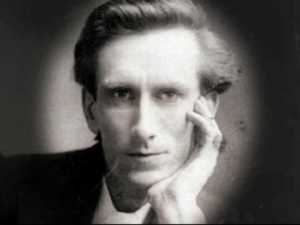
When You Can’t Do Anything To Help

     One of the first things a worker for God has to learn by experience is that strangely obvious lesson, that none of us can understand the cases we meet to work with. Then how can we work for the cure of them? Remember the first principles we laid down: By knowing Jesus Christ for ourselves experimentally, and then by relying on the Holy Spirit. …  

     In Goethe’s writings, in 1824 he writes: “I will say nothing against the course of my existence, but at the bottom of it has been nothing but pain and burden, and I can affirm that, during the whole of my seventy-five years, I have not had four weeks of genuine well-being. It has been the perpetual rolling of a rock that must be raised up again.”

     Robert Louis Stevenson said that three hours out of every five he was insane with misery. John Stuart Mill said that life was not worth living after you were a boy.

     This is not fiction, these are human facts. What does Christian Science do—ignores them! New Thought—ignores them! Mind Cure—ignores them! Jesus Christ opens our eyes to these facts, but here comes the difficulty: how am I to get Jesus Christ in contact with these sick souls?

In the first place, will you realize that you do not know how to do it? … If you get your little compartment of texts, and search them out and say, ‘I know how to deal with this soul,’ you will never be able to deal with it; but if you realize your absolute helplessness and say, ‘My God, I cannot touch this life, I do not know where to begin, but I believe Thou canst do it,’ then you can do something. …  

     God grant us the grace so to rely on the Holy Ghost, to so know our ignorance, so to get out of the way with our knowledge, that we will let the Holy Ghost bring the Majestic Christ face to face with the diseased, sick folk we meet. … God grant we may so rely on the Holy Spirit that we allow Him to introduce through the agony of our intercession…the Living, Mighty Christ! … Blessed be the name of God, there is no case too hard for Jesus Christ! …  

     God grant that we may be so centered in Him that He can use us in that wonderful way.

From Workmen Of God

How to help those in need:

  1. Admit that we can’t help them
  2. Ask the Holy Spirit to enable us to help them
  3. Share only what the Spirit tells us to share
  4. Intercede in prayer for our friend

“God grant that we may be so centered in Him that He can use us in that wonderful way.” Amen!

Thursdays With Oswald—How God Prepares His Workers

Oswald ChambersThis is a weekly series with things I’m reading and pondering from Oswald Chambers. You can read the original seed thought here, or type “Thursdays With Oswald” in the search box to read more entries.

How God Prepares His Workers

     If the worker for God is going to go all lengths for God for the cure of souls, he has to allow God to examine to deep down the possibilities of his own nature. That is why it is hard to deal with the “two-faced.” That is why, Christian worker, God will take you through disciplines and experiences that are not meant for your particular life; they are meant to make you ready for God to send as He sent Nathan [2 Samuel 12:1]. … 

     Worker for God, before you go among the infirm, the sick, the subtle, the hypocritical, let God deal with you. A child cannot wield the sword of the Spirit; it must be wielded by one fed on strong meat, one who has been deeply dealt with and examined by God’s Spirit, in whom the last springs and possibilities of iniquity and wrong in his own nature have been disclosed to him that he may understand the marvel of God’s grace. …  

     God grant that we may understand that working for the cure of souls is not a babe’s work; it is a man’s work, requiring man’s power, grasped and transformed by God Almighty, so that God can get straight through the worker to the man He is waiting for. 

From Workmen Of God

Being used by God is no light, trivial matter. God wants to use you to reach those “He is waiting for.” But in order for you to “wield the sword of the Spirit,” you first have to allow God to strengthen and prepare you.

Are you willing to let God prepare you for His service? It will require us to pray, as Jesus did, “Father, not My will, but Yours be done.”

8 More Quotes From “Whisper”

In Whisper, Mark Batterson gives us seven love languages which God uses to speak to us (check out my review of Whisper here). Mark always does a masterful job of weaving together Scripture, quotes from other authors, historical and his own personal accounts. Here are some of the quotes he shared from others.

“The voice of the Spirit is as gentle as a zephyr. So gentle that unless you are living in a perfect communion with God, you never hear it.” —Oswald Chambers

“The sole cause of man’s unhappiness is that he does not know how to stay quietly in his room.” —Blaise Pascal

“The best translation of the Hebrew in Genesis 1 was not ‘and God said’ but ‘and God sang.’” —Leonard Bernstein

“How much happier you would be, how much more of you there would be, if the hammer of a higher God could smash your small cosmos!” —G.K. Chesterton

“Vocatus atque non vacates, Deus aderit. Bidden or not bidden, God is here.” —Desiderius Erasmus

“A Bible that’s falling apart usually belongs to someone who isn’t.” —Charles Spurgeon

“The Christian shoemaker does his duty not by putting little crosses on the shoes, but by making good shoes, because God is interested in good craftsmanship.” —Martin Luther

“No crooked table legs or ill-fitting drawers ever, I dare swear, came out of the Carpenter’s shop at Nazareth.” —Dorothy Sayers

For more quotes from Whisper, click here.

A.W. Tozer On How To Try The Spirits

“I make available here a little secret by which I have tested my own spiritual experiences and religious impulses for many years. Briefly stated the test is this: This new doctrine, this new religious habit, this new view of truth, this new spiritual experience—how has it affected my attitude toward and my relationship to God, Christ, the Holy Scriptures, self, other Christians, the world and sin.

“Christless Christianity sounds contradictory but it exists as a real phenomenon in our day. Much that is being done in Christ’s name is false to Christ in that it is conceived by the flesh, incorporates fleshly methods, and seeks fleshly ends. Christ is mentioned from time to time in the same way and for the same reason that a self-seeking politician mentions Lincoln and the flag, to provide a sacred front for carnal activities and to deceive the simplehearted listeners. This giveaway is that Christ is not central: He is not all and in all. …

“Whatever originates outside the Scriptures should for that very reason be suspect until it can be shown to be in accord with them. … However high the emotional content, no experience can be proved to be genuine unless we can find chapter and verse authority for it in the Scriptures. …

“The Bible does not teach that there will be new light and advanced spiritual experiences in the latter days; it teaches the exact opposite.

“A growing acquaintance with the Holy Spirit will always mean an increasing love for the Bible. The Scriptures are in print what Christ is in Person.” —A.W. Tozer, in Man—The Dwelling Place Of God

Thursdays With Oswald—The Hardy Annuals

Oswald ChambersThis is a weekly series with things I’m reading and pondering from Oswald Chambers. You can read the original seed thought here, or type “Thursdays With Oswald” in the search box to read more entries.

The Hardy Annuals

     By “hardy annuals” I mean the healthy-minded sinners. … How are we to get these irreligious people who are quite happy and healthy-minded to the place where they want Jesus? … 

     I want us to look at three types of pagans—Gallio, Herod and Pilate. …. 

     “And Gallio cared for none of those things” [Acts 18:12-15]. He said in effect, “I have nothing whatever to do with your religious quarrels, I am not here to decide questions of your law for you.” The opponents of Christianity are not weak, they are opponents who are able to ignore us; so the first thing to do is to examine and see what kind of Gospel we are preaching. … Have I a pet doctrine I am lifting up? If I have, then these healthy-minded folk will simply heap ridicule on me; but immediately I preach Christ, something happens—the Spirit of God begins to work where I cannot. …

     Herod is a rare type of pagan, he is obscene; he was bad, unmentionably bad, and you will find that when he saw Jesus Christ face to face he was not the slightest bit troubled. Why? He had heard the voice of God before through John the Baptist, and he had ordered that voice to be silent [Mark 6:17-18]. Herod is the presentation of the awful possibility of a fixed character, absolutely fixed in immorality. Jesus Christ did not awaken one tremor of conscience in him….  Did you ever notice what is recorded? “Now when Herod saw Jesus, he was exceeding glad” [Luke 23:8-9]—why? For the same reason that people go to a picture show, they want to see things. We read that Herod questioned Jesus in many words; “but He answered him nothing.” … 

     Pilate represents the type of pagan who always seeks his own interests; that type is known to us all today. People belong to certain churches because it is better for their business; or they shift their membership to other churches because it is more convenient for business. A once-born man, who acts from this point of view is an opportunist. “If it is Jesus Christ’s Gospel that is in the ascendancy, then I will use it to serve my own ends.” You have to bring that man face to face with Christ, not with your experience, but with Jesus Christ Himself. … 

     Rely on the Holy Ghost as the most practical Being you ever knew, and live among the facts of God’s Word and among human facts, and people will recognize Jesus Christ through you. … The next time you come across a ‘hardy annual,’ see that you lay hold of God for that one until Jesus Christ is presented by the power of the Holy Ghost, and then you will see the altered face, the altered attitude, and the altered life. 

From Workmen Of God

Well said!

7 Quotes From “Whisper”

Mark Batterson’s newest book—Whisper—is all about learning to hear what God is speaking to you. Check out my review of Whisper by clicking here.

“Is God’s voice the loudest voice in your life? That’s the question. If the answer is no, that’s the problem.”

“If you aren’t willing to listen to everything God has to say, eventually you won’t hear anything He has to say.”

“When someone speaks in a whisper, you have to get very close to hear. … And that’s what God wants.”

“God is great not just because nothing is too big; God is great because nothing is too small. God doesn’t just know you by name; He has a unique name for you. And He speaks a language that is unique to you.”

“We worry way too much about what people think, which is evidence that we don’t worry enough about what God thinks. It’s the fear of people that keeps us from hearing and heeding the voice of God. We let the expectations of others override the desires God has put in our hearts.”

“Every thought that fires across our eighty-six billion neurons is a tribute to the God who knit us together in our mothers’ wombs. But when we have a thought that is better than our best thoughts on our best day, it might be from God. That doesn’t make it equal with Scripture, but it’s a step above a ‘good idea.’ Is it easy differentiating between good ideas and God ideas? No, it’s not. And again, even what we perceive to be God ideas must be screened by Scripture. But when God gives us ideas that we don’t believe originated with us, we must be careful to give credit where credit is due. And it’s our job to take those thoughts captive and make them obedient to Christ.”

“If your life is off-key, maybe it’s because you’ve been deafened by the negative self-talk that doesn’t let God get a word in edgewise. Maybe you’ve listened to the voice of shame so long that you can’t believe anything else about yourself. Or maybe it’s the enemy’s voice of condemnation that speaks lies about who you really are.”

More quotes from Whisper coming soon!

Whisper (book review)

Does God still speak to people today? If He does, how can you learn how to hear His voice? Mark Batterson has some answers to those questions in his newest book Whisper—How to hear the voice of God.

As he usually does, Mark weaves Whisper together with sources from biblical accounts, personal life lessons, modern-day findings in various scientific fields, and insights from other noted authors across the spectrum of literature. One sentence in the opening pages sums up the value of this book: “Learning how to hear the voice of God is the solution to a thousand problems!”

Whisper is divided into two broad sections. In the first section, you will learn the power that is available to anyone who will learn how to listen to God’s voice. In the second section, Mark shares the seven languages God uses as He communicates with us. Some of these “love languages” will resonate more with you than others, depending on how God has hardwired you, but all seven languages together give all of us a comprehensive picture of how to become more tuned-in to what God is saying to us.

If you are longing to hear God speak to you more clearly, Whisper is for you!

I am a Multnomah book reviewer.

Thursdays With Oswald—Thawing Those ‘Frozen’ Toward God

Oswald ChambersThis is a weekly series with things I’m reading and pondering from Oswald Chambers. You can read the original seed thought here, or type “Thursdays With Oswald” in the search box to read more entries.

Thawing Those ‘Frozen’ Toward God

     The “lost” from the Bible standpoint are not doomed. The lost, Jesus Christ is seeking for… To Jesus Christ, all men are lost, and the worker who is going to work for the cure of souls must have the same outlook. …  

     In Luke 19 we find a specimen of a lost man. “The Son of Man is come to seek and to save that which was lost.” Notice the setting of this statement. Zacchaeus was a chief publican and as such he would be possessed of many ill-gotten gains; he was a man of wealth and position, a dishonorable man, but perfectly content with his dishonor. … This man Zacchaeus was frozen towards God, his conscience did not bother him, he was “lost,” quite contented, quite happy, and quite curious. When Jesus Christ came his way, the man’s nature unfroze, something began to work at once. … 

     Look what happened to Zacchaeus—“Zacchaeus stood up and said to the Lord, ‘Look, Lord! Here and now I give half of my possession to the poor; and if I have cheated anybody out of anything, I will pay back four times the amount.’” Who had been talking to him about his doings? Not a soul. Jesus had never said a word about his evil doings. What awakened him? What suddenly made him know where he was? The presence of Jesus! 

     Wherever a worker for God goes, the same thing will happen if the Spirit of God is getting His way through that man or woman. … The Holy Spirit’s presence through you has brought the atmosphere that Jesus Christ’s presence always brought, and has thawed the ice around their mind in their conscience and they are beginning to be convicted. … 

     Oh, do let us get back to this tremendous confidence in the Lord Jesus Christ’s power! Back to reliance on the Holy Spirit, and to remembering that Jesus came to seek the lost. 

From Workmen Of God

Is this an amazing thought?!

If Christians will just approach their “frozen” friends and loved ones with the knowledge that Jesus Christ loves them and wants to save them—and with the expectation that Jesus can save them—then the Holy Spirit can work through our presence to begin the thaw around their heart.

“Oh, do let us get back to this tremendous confidence in the Lord Jesus Christ’s power! Back to reliance on the Holy Spirit, and to remembering that Jesus came to seek the lost.” Amen!

9 More Quotes From “So Send I You”

So Send I You is a collection of lectures Oswald Chambers delivered to students who felt a call to missions work. But Chambers made clear that every Christian is a missionary—“A missionary and a Christian ought to be one and the same.” Here are a few more quotes from this challenging book.

“It is God who saves men; we have to do the discipling after they are saved.”

“Our Lord calls to no special work; He calls to Himself. Pray to the Lord of the harvest, and He will engineer your circumstances and send you out.”

“Our Lord’s word ‘go’ simply means ‘live,’ and Acts 1:8 describes the ‘going.’ Jesus did not say to the disciples—‘Go into Jerusalem, go into Judea, go into Samaria, go into the uttermost part of the earth’; but—‘You shall be My witnesses’ in all these places: He undertakes to establish the goings. So many people are obsessed with this idea—‘What are you going to do?’ I hope none of us are going to do anything: I hope we are going to be what He wants us to be.”

“We adapt the New Testament to suit our own ideas; consequently we look on Jesus Christ as One Who assists us in our enterprises. The New Testament idea is that Jesus Christ is the absolute Lord over His disciples.”

“One way in which satan comes as an angel of light to Christians today is by telling them there is no need to use their minds. We must use our minds; we must keep the full power of our intellect ablaze for God on any subject that awakens us in our study of His Word.”

“Unless the missionary knows God and trusts in Him entirely, he will step down to a lower level and compromise, and tell the people they need not do certain things in exactly the way that Jesus indicates. But if he stands true to God, he will preach the truth, at whatever cost to the converts. No nervous system can stand that strain, no sensitiveness of mind can stand that test, nothing but the Holy Ghost can stand it, because He has the mind of God.”

“Loyalty to the commission [see Matthew 28:19-20] means, first of all, that the missionary sets himself to find out all that his Lord taught. There is not a greater test for loyal concentration than that. Jesus did not say—‘Teach salvation,’ or ‘teach sanctification,’ or ‘teach divine healing,’ but—‘Teach whatsoever I have commanded you.’ … A missionary is not sent by Jesus Christ to do medical work, educational work, industrial work; all that is part of the ordinary duty of life, and a missionary ought to be so equipped that he does these things naturally. But Jesus Christ never sends His disciples to do these things; He sends His disciples to teach, to ‘make disciples of all the nations.’”

“God does not do anything with us, only through us; consequently the one thing God estimates in His servants is the work of the Holy Spirit.”

“The real center of the disciple’s devotion is watching with Jesus [see Matthew 26:38]. When once we have learned to watch with Him, the thought of self is not kept down because it is not there to keep down; self-effacement is complete. Self has been effaced by the deliberate giving up to another self in sovereign preference, and the manifestation of the life in the actual world of things is—‘I am not my own, but His.’”

My full book review of So Send I You is here, and you can check out the first set of quotes I shared from So Send I You by clicking here. And be sure to check out my weekly series “Thursdays With Oswald” where I share longer passages from his book I am currently reading.