Love Is… (part 2)

Love is… worksheet 2We are taking a practical look at the incredible definition of love in 1 Corinthians 13. We’re doing this in the context of learning how to love the “unloveable”—or maybe I should say, loving those who are the most resistant to real love. If we can show them love, how much more will the love of Jesus be seen!

All of these verbs are present tense verbs. That means they aren’t exhausted in the past, and they aren’t waiting for future conditions to improve—they are in operation NOW.

Far too many people know Christians more by what we’re against than by what we’re for. So where the biblical text say “love does not” or “love isn’t,” I’ve changed it into the positive “love is.”

You can read about the first five attributes love love by clicking here.

The next five attributes are:

Love is graceful

  • The root word means something that should be covered up, or something we’re ashamed of. Because our words and actions are graceful, they are things we wouldn’t have to defend, or explain, or apologize for later. They are words and actions that wouldn’t embarrass us.
  • Agape will do nothing that misbecomes it.” —Matthew Henry

Love knows our relationship > my rights

  • True love “does not demand its own way” (New Living Translation) nor does it “insist on its own rights” (Amplified Bible). Instead it always seeks ways that the relationship can be repaired or enhanced, even if that means giving up something I consider to be “my right.”
  • NOTE: I’m not saying that you become a doormat. This is not a license for someone to abuse you, but it is a call for us to balance our responses. Romans 12:18 says as far as it depends on you, live at peace with everyone.
  • Here are some great balancing verses. Balance Proverbs 26:4-5 (here is a video where I expand on this idea), and then balance Philippians 2:3-4.

Love is even-tempered

  • The Amplified Bible says it well: love is not touchy or fretful or resentful.
  • This Greek word means not getting stirred up or exasperated. So we need to lighten up!
  • There are some places where we’ve become too sensitive, too touchy, too short-fused. The fire of hurt has replaced the fire of love. So Matthew Henry advises us: “Where the fire of love is kept in, the flames of wrath will not easily kindle, nor long keep burning.”

Love is forgiving

  • The New International Version says love keeps no record of wrongs.
  • This Greek phrase speaks of an accountant tallying up the hurts (where there is an overdrawn account), seeing there is a debt to be paid back, and then appointing himself as the bill collector. True love cancels those IOUs.
  • We don’t forgive others because they deserve forgiveness, but we forgive others because we received forgiveness from God that we did not deserve!
  • For if you forgive people their trespasses [their reckless and willful sins, leaving them, letting them go, and giving up resentment], your heavenly Father will also forgive you. (Matthew 6:14 AMP)

Love is God-honoring

  • Agape loves what God loves and hates what God hates.
  • Agape loves when people find God’s truth, and hates anything that blocks that pursuit.
  • Agape loves the sinner and hates the sin.
  • “The sins of others are the grief of an agape spirit [not] its sport or delight; they will touch it to the quick….” —Matthew Henry

Here’s where the real test comes in: How will you apply these attributes of love to someone in your life? More specifically: to someone you think is “unloveable”?

I know you have someone in your life that you think is unloveable. With that person’s face clearly in mind, how will you fill in the blanks:

  1. I can be graceful in…
  2. I can give up my right to…
  3. I need to lighten up in this area…
  4. I must forgive them for…
  5. I need to pray for a breakthrough in…

If you would like a downloadable PDF of this worksheet, click here –> Love is… worksheet 2

If you missed any of the messages in our Loving the Unlovable series, you can check them all our here.

How To Handle Persecution

Have you ever been persecuted for your faith in Jesus Christ? The dictionary defines it this way—

(1) To pursue with harassing or oppressive treatment, especially because of religion, race, or beliefs; harass persistently; (2) To annoy or trouble persistently.

I think we in the west don’t truly understand persecution, but certainly there have been times when people are harassing us or troubling us because of our faith in God.

If you are being persecuted, that is cause for rejoicing! 

Check out these passages from the apostle Peter and from Jesus, and then take a look at the flowchart below—

But even if you suffer for doing what is right, God will reward you for it. So don’t worry or be afraid of their threats. Instead, you must worship Christ as Lord of your life. And if someone asks about your Christian hope, always be ready to explain it. But do this in a gentle and respectful way. Keep your conscience clear. Then if people speak against you, they will be ashamed when they see what a good life you live because you belong to Christ. Remember, it is better to suffer for doing good, if that is what God wants, than to suffer for doing wrong! (1 Peter 3:14-17)

God blesses you when people mock you and persecute you and lie about you and say all sorts of evil things against you because you are My followers. Be happy about it! Be very glad! For a great reward awaits you in Heaven. And remember, the ancient prophets were persecuted in the same way. (Jesus in Matthew 5:11-12)

Persecution flowchart

(Click the picture for a larger view.)

Whether you are being persecuted or not, rejoice! and remember to pray for your fellow brothers and sister in Christ who are also being persecuted (Hebrews 13:3).

Hot Pursuit

Listen to the podcast of this post by clicking on the player below, and you can also subscribe on AppleSpotify, or Audible.

While I was reading From Azusa To Africa To The Nations, I came across a fascinating statement from William Seymour, the pastor who led his congregation into that early 20th-century revival that shook the world. Pastor Seymour was so hungry for God’s presence in his life that he set aside five hours each day to seek God’s deeper touch. He prayed liked this for over 3 years. At this point He read about the outpouring of the Holy Spirit in the Book of Acts, and something stirred in him to pray for this same outpouring on himself and on his congregation. He then increased his prayer time to seven hours a day, and continued to pray in this fashion for another two years before the answer came and the revival broke out.

I did the math. That means he prayed 11,500 hours!

How many of us get tired after praying just one hour?

Would it be easier for you to tenaciously pursue God in prayer if you knew He was also tenaciously pursuing you? Mark Batterson points out in The Circle Maker that the verb in Psalm 23:6 is poorly translated in English as shall follow me. He reminds us that it’s really a hunting term, used for a hunter in hot pursuit of his quarry. God’s love and mercy are in hot pursuit of you!

The Lord longs to be gracious to you; He rises to show you compassion. For the Lord is a God of justice. Blessed are all those who wait for Him! (Isaiah 30:18)

Want to see a great story about this in the life of Jesus? Matthew tells us about a get-away that Jesus and His disciples took. While they were relaxing, a woman barged in, imploring Jesus to heal her daughter. She would not be denied. She tenaciously implored Jesus to minister to her daughter. At last Jesus cried out, “Woman, you have great faith! Your request is granted.”

(Check out this video where I talk more in-depth about this persistent mother.)

It may sound like this woman was pursuing Jesus. But Jesus put Himself in a place for her to find Him. He pursued her first.

  • As a Canaanite (a non-Jew), it was unsafe for her to travel to southern Israel.
  • As a woman, it was unacceptable for her to go talk to a man.
  • As a mother with a sick child at home, it was unwise for her to leave home.

So Jesus traveled to a region He has never been to before, and would never go back to again. He pursued this mother-in-need so that she could find Him in prayer!

God is in hot pursuit of you, too. He hears every prayer, so keep on tenaciously praying. Don’t settle, don’t give up, don’t stop! Pray as long as it takes for God to say to you, “You have great faith! Your request is granted.”

To check out the others messages in this series on prayer called Praying Circles, please click here.

►► Would you please prayerfully consider supporting this ministry? My Patreon supporters get behind-the-scenes access to exclusive materials. ◀︎◀︎

Thursdays With Oswald—Don’t Let Others Stumble Because Of Me

This is a weekly series with things I’m reading and pondering from Oswald Chambers. You can read the original seed thought here, or type “Thursdays With Oswald” in the search box to read more entries.

Don’t Let Others Stumble Because Of Me

     There is a difference between “offense” and “stumbling.” And they were offended in Him. But Jesus said unto them, “A prophet is not without honor, save in his own country…” (Matthew 13:57). But Jesus knowing in Himself that His disciples murmured at this, said unto them, “Does this cause you to stumble?” (John 6:61; see also Matthew 5:29; 11:6; 13:41; 16:23; 17:27; 18:6-7). Offense means going contrary to someone’s private opinion, and it is sometimes our moral duty to give offense.

     …Stumbling is different from offense. For example, someone who does not know God as well as you do, loves you and continually does what you do because he loves you, and as you watch him you begin to discern that he is degenerating spiritually, and to your amazement you find he is doing what you are doing. No offense is being given, but he is stumbling, distinctly stumbling.

From Biblical Psychology

In 1 Corinthians 8 and 9 Paul talks about not causing someone else to stumble because of what we do. It’s a fine line sometimes between offense and stumbling, but it’s a distinct line that the Holy Spirit can help us discern.

Jesus often offended people because their mindset was so rigid, and He didn’t act in a way that fit their rigid religious stereotypes. But Jesus was very cautious about making sure He never caused someone to stumble. As Matthew points out, Jesus fulfilled the prophesy of Isaiah: He will not quarrel or cry out…. A bruised reed He will not break, and a smoldering wick He will not snuff out… (Matthew 12:19-20; Isaiah 42:1-4).

My prayer: Lord Jesus, please don’t let others stumble because of me! Let me have the discernment of the Holy Spirit to know when to offend, but to never cross the line to cause others to stumble. May I have Your same gentle spirit to not quarrel, and to treat the “bruised reeds” with utmost care.

Ask & Act

Listen to the podcast of this post by clicking on the player below, and you can also subscribe on AppleSpotify, or Audible.

Do you want to mature as a Christian? I do! So here’s the first step…

…you may be mature and complete not lacking anything. If any of you lacks wisdom, he should ask God… (James 1:4-5).

The dictionary defines mature as “complete in natural growth or development; fully developed in body or mind as a person.” The Bible has a higher definition of maturity. The phrase mature and complete (the King James Version actually says perfect) is just one word in the Greek: teleios. It’s the same word Jesus uses when He sets this standard for maturity:

Be perfect [teleios], therefore, as your Heavenly Father is perfect [teleios]. (Matthew 5:48)

Yikes! Talk about a high standard! I certainly can’t reach that level of perfect maturity on my own! That’s why James says we should pray for wisdom. The kind of wisdom God gives is heavenly knowledge that is perfectly practical on earth. It fits with the prayer Jesus taught us to pray, “Your will be done on earth, even as it is in Heaven.”

But there is more to maturity than just asking for wisdom. I have ASK for wisdom and then I have to ACT on that wisdombut when he asks, he must believe and not doubt (James 1:6).

Growing in maturity is never a passive process; I must be actively engaged. God will not waste knowledge or experience. He won’t give it to me unless I’m going to be obedient enough to mature by its application.

Ask and act. God wants you to be teleios (perfectly mature) because it brings glory to Him. So ask for wisdom, but then be ready to act on it. This is the only path to godly maturity.

►► Would you please prayerfully consider supporting this ministry? My Patreon supporters get behind-the-scenes access to exclusive materials. ◀︎◀︎

What Does It Mean To Fear God?

Fear GodWhat does it mean to fear God? Does it mean we cower before Him? That He is utterly unapproachable? Or maybe it means we’re always looking over our shoulder wondering if God is coming after us in anger?

Let me ask the question another way:

  • Are you afraid that you won’t buy the right Christmas gift for someone?
  • Are you afraid that you’ll forget someone?
  • Are you afraid that your response won’t be right when you open a gift?
  • Are you afraid you’ll offend a family member by something you say or do?
  • Do other people’s opinion of you factor into your decisions?

If you answered “Yes” to the above questions, you have a fear problem. That is: you fear letting other people down.

I think this was the issue for Joseph in the Bible (Matthew 1:18-25). When he found out that Mary was pregnant before their marriage, Joseph carefully deliberated his response. Based on the meaning of the words had in mind and considered, and examining the way the angel told Joseph to “Fear not,” it appears that Joseph, too, lived in this same fear of letting others down.

But here’s the issue: Joseph placed greater value on people’s opinions than he did on God’s opinion. And what makes it even worse is that Joseph simply assumed what people would say about him, as he never actually asked anyone.

The angel challenged Joseph to re-evaluate his value system. To give greater weight to God’s opinion than to man’s opinion. In short, to change his fear of man to fear of God.

That’s really what it means to fear God: To give greater weight to His Word and His opinion than to anyone or anything else.

The wise king Solomon explored everything he could to find the meaning of life. He tried money, education, art, travel, women, food, power, and the like. At the end of his exploration, he came to this conclusion—

Now all has been heard; here is the conclusion of the matter: Fear God and keep His commandments, for this is the whole duty of man. (Ecclesiastes 12:13).

We should be living for the approval of an Audience of One. 

We should be longing to hear, “Well done, good and faithful servant” from our Creator. 

We should be listening only for the applause from nail-scarred Hands. 

“The remarkable thing about fearing God is that when you fear God you fear nothing else, whereas if you do not fear God you fear everything else.” —Oswald Chambers

If you have missed any of the messages in our Fear Not! series, you can find them all by clicking here.

The End?

Listen to the podcast of this post by clicking on the player below, and you can also subscribe on AppleSpotify, or Audible.

When Jesus was arrested, almost all of His disciples ran away. Peter, however, stayed somewhat close to Jesus, but not for the reason I originally thought.

Meanwhile, Peter followed Him at a distance and came to the high priest’s courtyard. He went in and sat with the guards and waited to see how it would all end. (Matthew 26:58 NLT)

Peter waited to see how it would all end.

Peter thought, “This is the end, roll the credits, turn out the lights, we can all go home now.”

When we think we can figure out how it will all end, our faith is too small. It’s not our story—it’s HIS story. And God’s story never ends for those who love Him. Their story is a perpetual, never-ending love story that gets better and better as eternity rolls on!!

Don’t put a period where God hasn’t put one. Don’t look for how it’s going to end. If you are a follower of God, you have His eternal life. That means the story never ends. It goes on and on and on and on….

Trust in the Lord always, for the Lord God is the eternal Rock. (Isaiah 26:4)

►► Would you please prayerfully consider supporting this ministry? My Patreon supporters get behind-the-scenes access to exclusive materials. Like this exceptional Bible study tool to help with Creation apologetics. ◀︎◀︎

I’m Not In Control

I am reminded again that my stressful feelings come because things are not going according to my plans. This can only mean one thing: Somehow I have let myself believe that I am in control of all my circumstances!

But I am not in control.

God alone is in control. He tells me not to be anxious, not to worry about tomorrow, but to come to Him to find rest.

Why, oh why, don’t I do this?!?

Enough! It’s time to once and for all give my concerns to the only One who can handle them.

“‘Come unto Me,’ says Jesus, ‘and I will give you rest.’ Do Jesus Christ’s words apply to me? Does He really know my circumstances? Fretting is sinful if you are a child of God. Get back to God and tell Him with shame that you have been bolstering up that stupid soul of yours with the idea that your circumstances are too much for Him. Ask Him to forgive you and say, ‘Lord, I take Thee into my calculation as the biggest factor now!’” —Oswald Chambers

Are You Content?

The dictionary defines contentment as—

Satisfied with what one is or has; not wanting more or anything else.

Does that describe you? Sadly, it’s describing fewer and fewer of us today. But saddest of all: Very few Christians describe themselves as being content!

The Bible says, “But godliness with contentment is great gain. … If we have food and clothing, we will be content with that.” (1 Timothy 6:6, 8)

Godliness + Contentment = Great Gain

Both godliness and contentment are choices we must make.

I choose to be godly, and I choose to be content.

The default—the natural course for us—is selfishness. The pull toward my gain and my pleasure is strong. So I must exert great energy to pursue godliness; I must make the conscious decision to be content.

Give us this day our daily bread should be the prayer request in the morning (Matthew 6:11).

Thank You, God, for providing food and clothing for today should be the prayer of thanks in the evening.

Today if you have more than food and clothing, how much more blessed you are!

Choose godliness. Choose contentment. And watch and see how God provides great gain for you!

Sola Christo

Sola Christo means that it is by Christ’s work alone are we saved. We must get this firmly in our minds, and be aware of anything which reduces Christ, augments Christ, or replaces Christ. 

I don’t believe in studying cults (the counterfeit). Instead, I study the Real, the Authentic, the One and Only. I want to know Jesus so well, that I can easily spot a counterfeit.

God is Spirit (John 4:24)

Jesus is God made flesh (John 1:14)

God is invisible; Jesus is the visible representation of the Godhead (1 Timothy 1:17; Colossians 1:15; Isaiah 9:6)

There’s no way to the Father but through Jesus (1 Timothy 2:5-6)

Jesus wasn’t created; He is Creator (John 1:1-3)

Jesus isn’t a greater angel; He is God (Philippians 2:6)

Jesus isn’t a superior human being; He became a human to save us (Philippians 2:7-8)

Jesus did have a physical body (Luke 24:39)

Jesus did feel pain, experience emotion, wrestle with temptation; get tired and hungry (Matthew 4:2; Matthew 26:38; Hebrews 4:15)

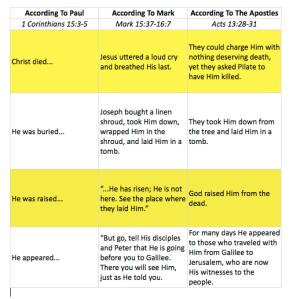
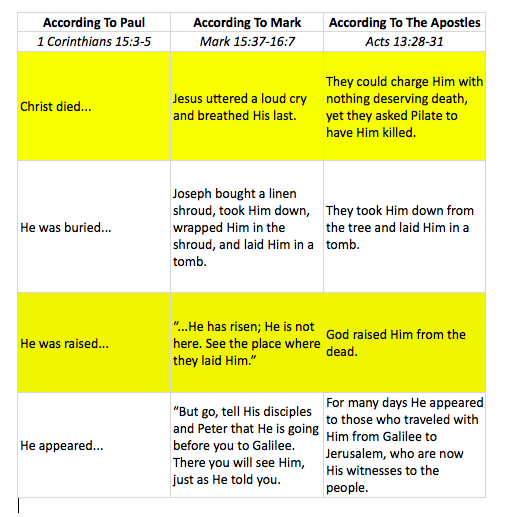
Jesus actually physically died on the Cross and was actually physically resurrected (1 Peter 3:18; 1 Corinthians 15:3-8, 12-28)

Jesus is fully Man and fully God without diluting either of them (Matthew 3:16-17)

Jesus is…

Creator

Sustainer

Savior 

Redeemer

King

Judge

Lord

That’s my King!

If you have missed any of the messages in this series, you can find them all here.