O Come, All Ye Faithful

Who is GodPastor Tom Kaastra continued our series The Carols Of Christmas by looking at the well-known Christmas hymn O Come, All Ye Faithful. The line he especially highlighted comes from the third stanza—Word of the Father, now in flesh appearing.

It is so vital that we keep both of those aspects of Jesus Christ in mind: He is both the Word of the Father and the Word become flesh. As Tom pointed out, this fact helps us answer the two most vital questions that humans have:

  • Who is God?
  • Who am I?

I can learn more about who I am when I know more clearly Who God is. And when I know this, I can more fully—as the song says—come and adore Christ the Lord.

Jesus is fully God:

Jesus revealed to us the Father’s love; after all, God is love (1 John 4:16). Jesus came to show us the love of God.

Jesus is fully Man:

  • He got tired and hungry (John 4:6)
  • He limited Himself to do only what the Father told Him to do (John 5:19-20)
  • He limited Himself to say only what the Father told Him to say (John 12:49)
  • He felt anguish and pain (Luke 22:44)

As C.S. Lewis said, “The Son of God became a man to enable men to become sons of God.” And as sons of God, we have access to the Heavenly Father—

Those who are led by God’s Spirit are God’s children. For the Spirit that God has given you does not make you slaves and cause you to be afraid; instead, the Spirit makes you God’s children, and by the Spirit’s power we cry out to God, “Abba! My Father! (Romans 8:14-15)

Word of the Father now in flesh appearing is cause for adoration because Jesus has made it possible for us to become sons and daughters of God!

O come let us adore Him!!

If you’ve missed any of the messages in this series, you may check them out by clicking here.

From The Cutting Room Floor: The Love In The Law

Love In The LawWhenever I am working on a series of messages, I always end up with way more material than I could possibly share. But it’s still really good stuff! I remember a movie director once remarking that some of his best and favorite scenes ended up on the cutting room floor during the movie’s editing process. So here are some of the quotes and thoughts I really liked, recovered from “the cutting room floor” as I prepared our Love In The Law series.

“True obedience to God (not just to lists of laws) means more than outward performances which can be tallied in percentages (like 80 percent obeyed). Rather, true obedience is to be so transformed that we delight to do God’s will at multiple levels. We delight in His will as the excellent expression of His wisdom and justice and love. We delight in personal, close communion with Him as our guide, which we would lose, at least for a season, if we acted against His counsel. We delight in His gift of a clean conscience. We delight in the smile of His approval. We delight in God Himself whom we see and know more clearly when we walk in unbroken fellowship and obedience. We delight in the prospect of ongoing assurance and hope, which is jeopardized and weakened if we gradually slip away from Him in callous disobedience.” —John Piper

I delight to do Your will, O my God; yes, Your law is with in my heart. —Psalm 40:8

“To detect ourselves thus balancing a transgression here, against many observances there, ought at once to startle us into the conviction that the whole principle of our lives must be faulty. Our aim is, not to love God, or to obey Him, but to get to heaven, or at least escape hell, on the cheapest terms.” —Alfred Plummer

“Our will is morally and spiritually flawed. Nevertheless we are responsible to do the commandments of God. The moral corruption that cripples us does not relieve us of our responsibility to do what is right and good to do.” —John Piper

“I call the love to God the motion of the soul toward the enjoyment of God for His own sake, and the enjoyment of one’s self and of one’s neighbor for the sake of God.” —Augustine

“If thou neglect thy love to thy neighbor, in vain thou professest thy love to God; for by thy love to God, the love to thy neighbor is begotten, and by thy love to thy neighbor, thy love to God is nourished.” —Francis Quarles

“A pennyweight o’ love is worth a pound o’ law.” —Scottish Proverb

It pleased the Lord for the sake of His righteousness to make His law great and glorious. —Isaiah 42:21

All God’s Alls

All God's Alls“His greatness no one can fathom” (Psalm 145:3).

God’s kingdom is everlasting and endures through all generations (v. 13). Look at all of God’s “alls”—

  • He is good to all (v. 9)
  • He has compassion on all (v. 9)
  • He is faithful to all His promises (v. 13)
  • He is loving toward all (v. 13)
  • He upholds all who fall (v. 14)
  • He lifts up all who are bowed down (v. 14)
  • All eyes look to Him (v. 15)
  • He satisfies all desires (v. 16)
  • He is All-righteous (v. 17)
  • He is All-loving (v. 17)
  • He is near to all who call on Him (v. 18)
  • He watches over all who love Him (v. 20)

My only appropriate response to all God’s “alls”—I will praise Your name for ever and ever. Every day I will praise You and extol Your name for ever and ever. … My mouth will speak in praise of the Lord. Let every creature praise His holy name for ever and ever (vv. 1, 2, 21).

ALL praise to God FOREVER!

12 Quotes From “Keeping The Ten Commandments”

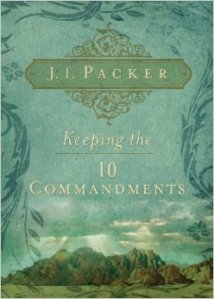
Keeping The Ten CommandmentsJ.I. Packer wrote a very readable, but scholarly, book examining how 21st-century people should live out the biblical Ten Commandments. You can read my full book review by clicking here, but I’m sharing some of my favorite quotes below.

“God’s love gave us the law just as His love gave us the gospel, and as there is no spiritual life for us save through the gospel, which points us to Jesus Christ the Savior, so there is no spiritual health for us save as we seek in Christ’s strength to keep the law and practice the love of God and neighbor for which it calls.”

“Where the law’s moral absolutes are not respected, people cease to respect either themselves or each other; humanity is deformed, and society slides into the killing decadence of mutual exploitation and self-indulgence.”

“The negative form of the Commandments has positive implications. ‘Where a sin is forbidden, the contrary duty is commanded’ (Westminster Larger Catechism, Question 99). The negative form was needed at Sinai (as in the West today) to curb current lawlessness that threatened both godliness and national life.” 

“Moral permissiveness, supposedly so liberating and fulfilling, is actually wounding and destructive: not only of society (which God’s law protects), but also of the lawless individual, who gets coarsened and reduced as a person every time.”

“Law-keeping is that life for which we were fitted by nature, unfitted by sin, and refitted by grace, the life God loves to see and reward; and for that life liberty is the proper name.”

“The Bible, however, takes promises very seriously; God demands full faithfulness of our vows. Why? Partly because trustworthiness is part of His image, which He wants to see in us; partly because without it society falls apart.”

“We honor God by respecting His image in each other, which means consistently preserving life and furthering each other’s welfare in all possible ways.”

“We have in us capacities for fury, fear, envy, greed, conceit, callousness, and hate that, given the right provocation, could make killers out of us all. … When the fathomless wells of rage and hatred in the normal human heart are tapped, the results are fearful.”

“When you lie to put someone down, it is malice; when you lie to impress, move, and use him, and to keep him from seeing you in a bad light, it is pride.”

“Reformed theologians said that God’s law has three uses or functions: first, to maintain order in society; second, to convince us of sin and drive us to Christ for life; third, to spur us on in obedience, by means of its standards and its sanctions, all of which express God’s own nature.”

“What is God’s ideal? A God-fearing community, marked by common worship (commandments 1, 2, 3) and an accepted rhythm of work and rest (commandment 4), plus an unqualified respect for marriage and the family (commandments 5, 7), for property and owner’s rights (commandments 8, 10), for human life and each man’s claim on our protection (commandment 6), and for truth and honesty in all relationships (commandment 9).”

“When God’s values are ignored, and the only community ideal is permissiveness, where will moral capital come from once the Christian legacy is spent? How can national policy ever rise above material self-interest, pragmatic and unprincipled? How can internal collapse be avoided as sectional interests, unrestrained by any sense of national responsibility, cut each other down? How can an overall reduction, indeed destruction, of happiness be avoided when the revealed way of happiness, the ‘God first, others next, self last’ of the Commandments, is rejected? The prospects are ominous. May God bring us back to Himself and to the social wisdom of His Commandments before it is too late.”

Blessing Or Burden?

Blessing or burdenGod’s commandments aren’t a bunch of Don’ts. If we look at them through the perspective of a loving Lawgiver, they are really Dos that will keep us in a place that God can bless.

Take the 9th Commandment: You shall not give false testimony against your neighbor (Exodus 20:16; Deuteronomy 5:20). This is the first of two commandments that emphasize the damage that can be done to our neighbor if we violate the law. Speaking falsely against someone does real harm to our neighbor, so in a sense God says, “Don’t do it!

But God also tells us what to Do so that He can bless us—

  • How good and pleasant it is when brothers live together in unity! … For there the Lord bestows His blessing, even life forevermore (Psalm 133:1, 3).
  • Psalm 15 says that he who will live in God’s presence is the one who speaks the truth from his heart and has no slander on his tongue, who does his neighbor no wrong and casts no slur on his fellowman (vv. 1-3).

The word for false in this commandment can mean: (1) an untruth; (2) insincere or deceptive words (e.g. flattery); (3) being purposely vague; or (4) speaking words that are true but harmful. So we Don’t want to do those, but what should we Do?

Jesus said that the way we speak is an indication of what has been going on in our heart and mind (Luke 6:45), so the way to fulfill the Do part of the commandment starts inside. A good guide is Paul’s list in Philippians 4:8—are my thoughts about my neighbor focused on what’s true? noble? right? pure? lovely? admirable? excellent? and praiseworthy?

In the New Testament, the word “blessing” is a compound word that literally means good words. So here’s the question I’m asking myself: Are my words to and about my neighbor a burden to them or a blessing?

If you have missed any of the messages in our series The Love In The Law, you can find them all by clicking here.

Poetry Saturday—My Strength Is Gone

Charles WesleyMy strength is gone, my nature dies;
I sink beneath Thy weighty hand;
Faint to revive, and fall to rise:
I fall, and yet by faith I stand.
I stand, and will not let Thee go,
Till I Thy Name, Thy Nature know.
Lame as I am, I take the prey;
Hell, earth, and sin, with ease o’ercome;
I leap for joy, pursue my way,
And as a bounding hart fly home,
Through all eternity to prove,
Thy Nature and Thy Name is love. — Charles Wesley, on what he conceived to be Jacob’s prayer as he wrestled with God (see Genesis 32:22-30)

13 More Quotes From “The Love Of God”

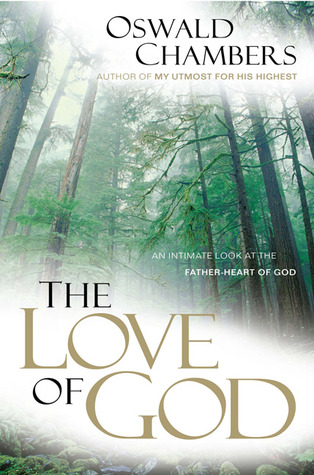
The Love Of GodI practically wear out my highlighter when I am reading Oswald Chambers, as there is so much rich content! I have already shared some quotes from his book The Love Of God (which you can read by clicking here). Here are a few more quotes…

“Do get out of your ears the noisy cries of the Christian world we are in—‘Do this and do that.’ Never! ‘Be this and that, then I will do through you,’ says Jesus.”

“In the natural world everything depends upon our taking the initiative, but if we are followers of God, we cannot take the initiative, we cannot choose our own work or say what we will do; we have not to find out at all, we have just to follow. … Everything Our Lord asks us to do is naturally frankly impossible to us. It is impossible for us to be the children of God naturally, to love our enemies, to forgive, to be holy, to be pure, and it is certainly impossible to us to follow God naturally; consequently the fundamental fact to recognize is that we must be born again.”

“Suppose Our Lord had measured His life by whether or not He was a blessing to others! Why, He was a ‘stone of stumbling’ to thousands, actually to His own neighbors, to His own nation, because through Him they blasphemed the Holy Ghost, and in His own country ‘He did not many mighty works there because of their unbelief’ (Matthew 13:58). If Our Lord had measured His life by its actual results, He would have been full of misery.” 

“We get switched off when instead of following God we follow Christian work and workers.”

“God engineers our circumstances as He did those of His Son; all we have to do is to follow where He places us.” 

“The way God’s life manifests itself in joy is in a peace which has no desire for praise. When a man delivers a message which he knows is the message of God, the witness to the fulfillment of the created purpose is given instantly, the peace of God settles down, and the man cares for neither praise nor blame from anyone.”

“If we make sin a theological question and not a question of actual deliverance, we become adherents to doctrine, and if we put doctrine first, we shall be hoodwinked before we know where we are.” 

“The freedom of Jesus is never license, it is always liberty, and liberty means ability to fulfill the law of God. … If I am following God’s love as exhibited in the Lord Jesus Christ and He has made me free from within, I am so taken up with following Him that I will never take advantage of another child of God.”

“God does not give us the mind of Christ, He gives us the Spirit of Christ, and we have to see that the Spirit of Christ in us works through our brains in contact with actual life and that we form His mind. Jesus Christ did not become humbled—‘He humbled Himself’ [Philippians 2:5].” 

“We are only what we are in the dark; all the rest is reputation. What God looks at is what we are in the dark—the imaginations of our minds; the thoughts of our heart; the habits of our bodies; these are the things that mark us in God’s sight.”

“The strain on a violin string when stretched to the uttermost gives it its strength; and the stronger the strain, the finer is the sound of our life for God, and He never strains more than we are able to bear. We say, ‘sorrow, disaster, calamity’; God says, ‘chastening,’ and it sounds sweet to Him though it is a discord in our ears.” 

“Some of us are so amazingly lazy, so comfortably placed in life, that we get no inner winging. … If we put the body and the concerns of the body before the eternal weight of glory, we will never have any inner winging at all, we will always be asking God to patch up this old tabernacle and keep it in repair. But when the heart sees what God wants, and knows that the body must be willing to spend and be spent for that cause and that causes alone then the inner man gets wings.”

“If you think of suffering affliction you will begin to write your own epitaph, begin to dream of the kind of tombstone you would like. That is the wrong standpoint. Have your standpoint in the heavenlies, and you will not think of the afflictions but only of the marvelous way, God is working out the inner weight of glory all the time, and you will hail with delight the afflictions which our Lord tells us to expect (John 16:33), the afflictions of which James writes (James 1:2), and of which Peter writes (1 Peter 4:12).” 

You can read my review of The Love Of God by clicking here.

10 Ways Children Can Honor Their Parents

Honor your parentsThe Bible is fairly clear on a child’s relationship with his or her parents:

The Bible also gives some directives for parents:

So children are to honor their parents, and their parents are to behave honorably. This can be a virtuous cycle, if both parent and child are doing this correctly. But what if a parent is not behaving honorably? Does the child still have to honor that parent?

In a word: Yes. The Bible doesn’t give children an option on this command. Nowhere do we read, “Only obey your Christian parents,” or “Honor your father only if he’s godly,” or “Respect your mother only if she is virtuous.” Children are simply called upon to honor and obey.

I like what Dr. Laura Schlessinger wrote—

“Honor does not mean unquestioned obedience, we truly honor our parents when we hold them accountable to God’s law. If my parents abandon me, I will honor them by seeking, though not forcing, reconciliation. If my parents abuse me, I will honor them by praying for them, so that they might see their error – and by escaping, if possible, so that they cannot continue to sin upon me. If my parents are unfaithful, I will honor them by calling for righteousness and by being willing to forgive them when they repent. If they are breaking the law, I will honor them by calling the police. Making them accountable to the highest moral order is honoring them in that I esteem them capable of responsible action.

So here are 10 biblical ways children can honor their parents—

  1. Guard your thoughts about them.
  2. Obey their lawful commands.
  3. Submit to their correction.
  4. Hold them accountable to the moral law.
  5. Show appreciation for what they have given you.
  6. Keep them connected to the family (socially, emotionally, financially, physically).
  7. Don’t expect too much of them.
  8. Don’t resent them for what they aren’t, or for what they didn’t do.
  9. Forgive them and seek reconciliation.
  10. Emulate their virtues and reverse their shortcomings.

Not only does this please God, but it opens us up to the blessing He wants to give to children who honor their parents (Deuteronomy 5:16 and Ephesians 6:2-3).

If you have missed any of the messages in our series The Love In The Law, you can find them all by clicking here.

Make A Holy Rest

Sabbath = do somethingWe are an on-the-go-all-the-time society. It seems to be a status symbol to be always “on.” If not a status symbol, maybe there’s a fear of what we might miss, “If I don’t keep up on the latest TV shows [sports team, books, music, Dancing With The Stars], I’ll feel out of place when my friends are talking about it.”

Even when we do slow down, often what we call a “rest” really isn’t. (Have you ever needed a vacation to recover from your vacation?)

This all-go, never-stop lifestyle is not only unsustainable and unhealthy, it’s also displeasing to God. In His love for us, God says we need to take a Sabbath rest (see Exodus 20:8 and Deuteronomy 5:12). The problem is: we think “Sabbath” means doing nothing, and we feel guilty for doing nothing when there is still so much to do.

Here’s the good news: Sabbath ≠ doing nothing.

Take a look at the origin of the Sabbath—And on the seventh day God ended His work which He had made; and He rested on the seventh day from all His work which He had made. (Genesis 2:2 KJV)

That’s an unusual phrase—His work which He had made—which is repeated twice, so let’s dig into two specific words: work and made.

The verb tense for work is imperfect, which means God still had work to do. But the verb tense for made is perfect. So instead of trying to find more time in His week, God made His “To Do” list fit the timeframe. Then far from doing nothing on the Sabbath day, God reviewed His work, appreciated the beauty of Creation, and celebrated all that had been made.

This is what He calls us to do as well. Genesis 2:3, Exodus 20:8 and Deuteronomy 5:12 all tell us the Sabbath is to be holy = special, withdrawn from the usual … unique. God doesn’t want us to do nothing on the Sabbath, but to do what we don’t normally have the time to do the rest of the week.

Our modern cliché says, “You never appreciate what you have until it’s gone.” But the Sabbath says, “Stop, appreciate God’s blessings, and celebrate them while you can still enjoy them.”

God doesn’t ask you to take a rest. Instead He asks you to make your “To Do” list fit into six days, so that there can be a unique day of appreciation and celebration.

So … how are you doing on making a Sabbath?

If you have missed any of the messages in our series The Love In The Law, you can find them all by clicking here.

Smashing Idols

Puny idolsWhen looking at God’s commandments, we must look at them through a lens of love. If God—the Lawgiver—is love, then all of His laws must be saturated in His love.

So what happens when we look at the Second Commandment through this lens? The wording is simple: “You shall not make for yourself an idol…” (Exodus 20:4-6). If the First Commandment says, “I love you so much that I want to be the One and Only God you have a relationship with” then the Second Commandment says, “Because of this loving relationship, don’t try to make Me smaller to fit your worldview, but let Me by fully Me!

This idolatry starts in our minds, long before we ever create anything with our hands. Idolatry is a mental state that says, “I can define the Creator. I can figure out all of His dimensions. I can predict what He’s going to do. God operates just as I expect Him to.”

But God says, “My thoughts are nothing like your thoughts. And My ways are far beyond anything you could imagine” (Isaiah 55:8).

The Apostle Paul warned us of exchanging God’s uncontainable glory and majesty for something that we can neatly contain in our box: …they exchanged the glory of the immortal God for images … they exchanged the truth of God for a lie, and worshiped and served created things rather than the Creator… (Romans 1:21-25).

William Barclay offers this commentary about the flimsiness of idols: “In Greek the word idol has in it the sense of unreality. Plato used it for the illusions of this world as opposed to the unchangeable realities of eternity.” Our puny thoughts about God can create the idols that keep us from the reality of God. 

So how do we avoid this idolatry? Quite simply: we smash every mental idol!

…We refute arguments and theories and reasonings and every proud and lofty thing that sets itself up against the true knowledge of God; and we lead every thought and purpose away captive into the obedience of Christ… (2 Corinthians 10:5).

So… what idols do you need to smash?

If you have missed any of the messages in our series The Love In The Law, you can find them all by clicking here.