Thursdays With Oswald—The Fight That Builds Strong Character

Oswald ChambersThis is a weekly series with things I’m reading and pondering from Oswald Chambers. You can read the original seed thought here, or type “Thursdays With Oswald” in the search box to read more entries.

The Fight That Builds Strong Character 

     Morality is not something with which we are gifted, we make morality; it is another word for character. … Morality is not only correct conduct on the outside, but correct thinking within where only God can see. … 

     God gives us a new disposition, the disposition of His Son; then we have to work out what He has worked in, and the way we react in the circumstances God engineers for us produces character. … 

     Remember, morality is produced by fight, not by dreaming, not by shutting our eyes to facts, but by being made right with God; then we can make our morality exactly after the stamp of Jesus Christ. 

From The Fighting Chance

This book focuses on the passage in Romans 8:28-39, in which the Apostle Paul explains that despite any difficulty or uncertainty we face, nothing can separate us from God’s love.

When someone surrenders to God and invites Jesus into their life as Savior and Lord, God gives that person a brand new disposition. This new outlook on life, and this new strength within, allows the Christian to fashion a new morality and strength of character that he was unable to fashion before he was a Christian.

Don’t be afraid of the fight, because in Christ you are a conqueror. Don’t run from the fight, because it builds Christlike character. Don’t despair in the fight, because nothing will ever separate you from the love of God which put His Holy Spirit in you.

Your spiritual fight builds Christlike character in you like nothing else can!

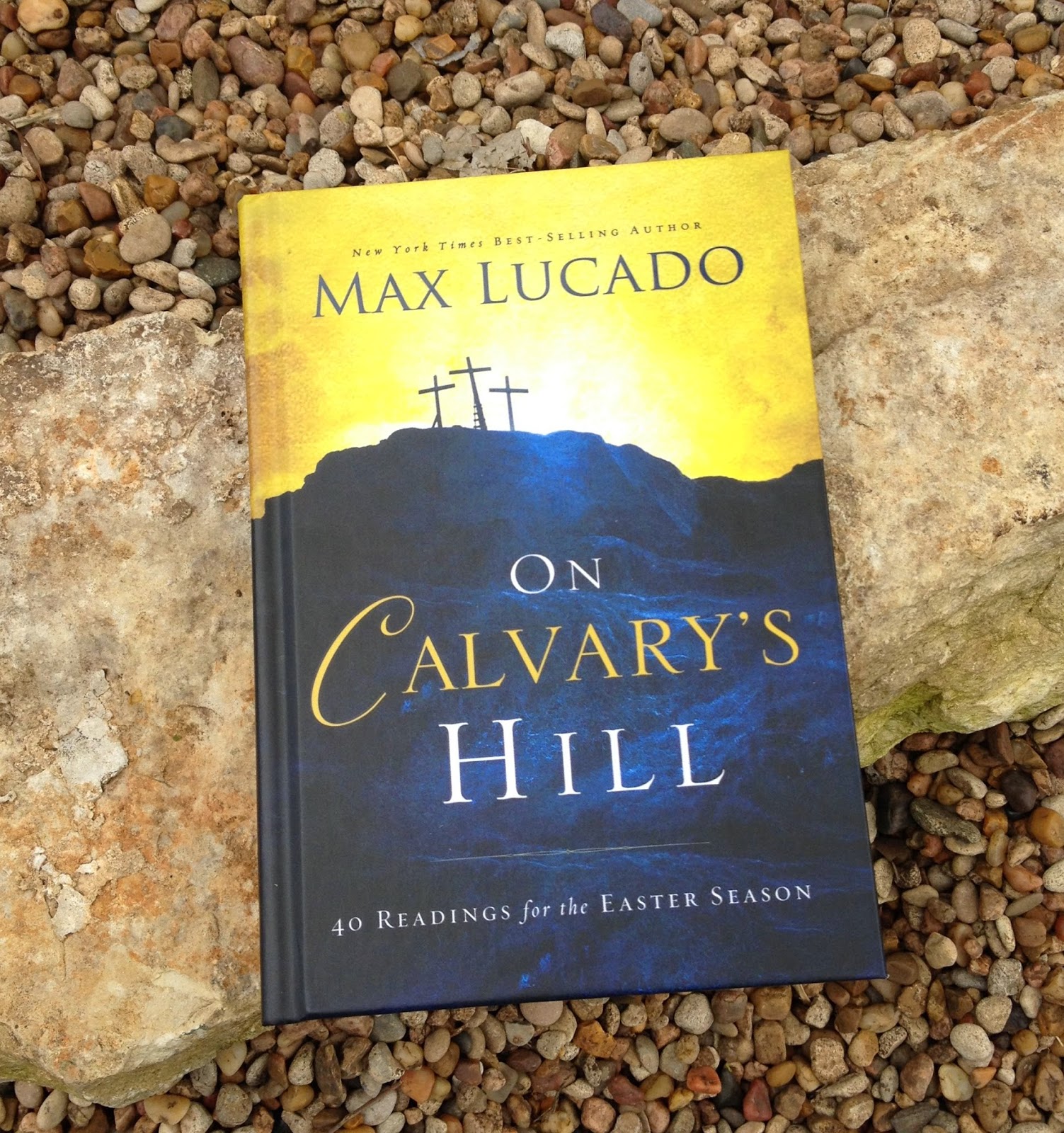
7 Quotes From “On Calvary’s Hill”

Max Lucado has given us a treasure-trove of insights into the Passion Week! Here are a few quotes from On Calvary’s Hill, and also please check out my full review of this book by clicking here.

“Jesus knows what these men are about to do. By morning they will bury their heads in shame and look down at their feet in disgust. And when they do, He wants them to remember how His knees knelt before them and he washed their feet. . . . He forgave their sin before they even committed it. He offered mercy before they even sought it.”

“The next time the fog finds you, remember Jesus in the Garden. The next time you think that no one understands or cares, reread the fourteenth chapter of Mark and pay a visit to Gethsemane. And the next time you wonder if God really perceives the pain that prevails on this dusty planet, listen to Him pleading among the twisted trees. The next time you are called to suffer, pay attention. It may be the closest you’ll ever get to God. Watch closely. It could very well be that the hand that extends itself to lead you out of the fog is a pierced one.”

“How did Jesus endure the terror of the crucifixion? He went first to the Father with His tears. He modeled the words of Psalm 56:3: ‘When I am afraid, I put my trust in You’ (NLT). Do the same with yours. Don’t avoid life’s Gardens of Gethsemane. Enter them. Just don’t enter them alone. And while there, be honest. Pounding the ground is permitted. Tears are allowed. And if you sweat blood, you won’t be the first. Do what Jesus did; open your heart.”

“O Conquering One, I gladly open wide the gates of my life and ask You to enter. You see where the enemy has invaded and done his damage. Come, Lord Jesus, come, and speak Your words of truth and power into my life and cleanse my temple. In Your name, Jesus, amen.”

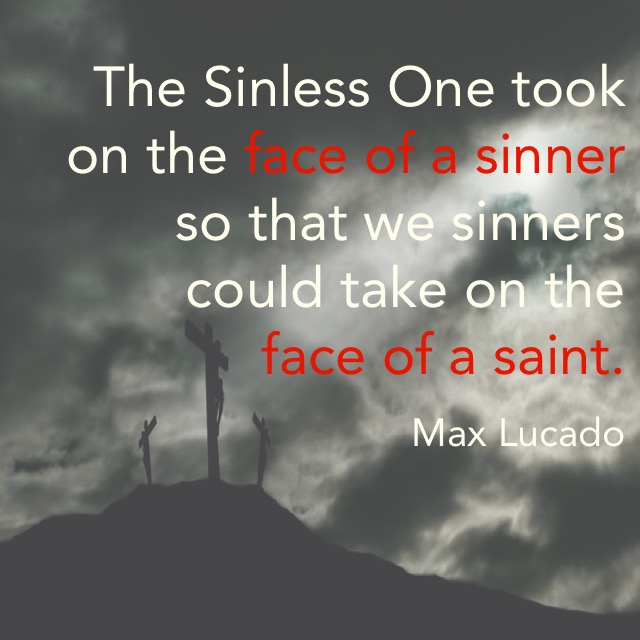
“The sinless One took on the face of a sinner so that we sinners could take on the face of a saint.”

“What you and I face daily, He never knew. Anxiety? He never worried! Guilt? He was never guilty! Fear? He never left the presence of God! Jesus never knew the fruits of sin . . . until He became sin for us. He did it for you. Just for you.”

“Jesus’ love does not depend on what we do for Him. Not at all. In the eyes of the King, you have value simply because you are.”

What My Temper Tells Me

“Think for a moment of a clock and of what its hands mean. The hands tell me what is within the clock, and if I see that the hands stand still, or that the hands point wrong, or that the clock is slow or fast, I say that something inside the clock is not working properly. And temper is just like the revelation that the clock gives of what is within. Temper is a proof whether the love of Christ is filling the heart, or not.” —Andrew Murray, in Absolute Surrender

Poetry Saturday—O Love That Will Not Let Me Go

O Love that wilt not let me go,
I rest my weary soul in Thee,
I give Thee back the life I owe,
That in Thine ocean depths its flow
May richer, fuller be.

O Light that followest all my way,
I yield my flickering torch to Thee,
My heart restores its borrowed ray,
That in Thy sunshine’s blaze its day
May brighter, fairer be.

O Joy that seekest me through pain,
I cannot close my heart to Thee,
I trace the rainbow through the rain,
And feel the promise is not vain,
That morn shalt tearless be.

O Cross that liftest up my head,
I dare not ask to fly from Thee,
I lay in dust life’s glory dead,
And from the ground there blossoms red,
Life that shall endless be. —George Matheson

Bryan Duncan has beautifully set this poem to music—

Thursdays With Oswald—Love God First, People Second

Oswald ChambersThis is a weekly series with things I’m reading and pondering from Oswald Chambers. You can read the original seed thought here, or type “Thursdays With Oswald” in the search box to read more entries.

Love God First, People Second

     We erect terrific standards, and then criticize men for not reaching them. The standard of Christianity is not that of a man, but of God; and unless God can put His Spirit into a man, that standard can never be reached. … 

     If I am not related to God first my love becomes cruel, because I demand infinite satisfaction from the one I love; I demand from a human being what he or she can never give. There is only one Being Who can satisfy the last aching abyss of the human heart, and that is the Lord Jesus Christ. … 

     There is so much good in the worst of us and so much bad in the best of us, that it ill behooves any of us to talk about the rest of us. … Remember that “there is none good but One, that is, God.”

From Shade Of His Hand

When Jesus was asked what the greatest commandments were, the first one He listed was love God with all you’ve got. Then, said Jesus, the second commandment is love others.

The order is crucial! If I try to love others first, my finite love will dry up. But if I make loving God the priority, then I become a channel of Infinite Love.

Only God’s love can satisfy my heart. Only God’s love can equip me to truly love others.

Poetry Saturday—All Must Be Well

Through the love of God our Savior,
All will be well;
Free and changeless is his favor,
All, all is well.
Precious is the blood that heal’d us,
Perfect is the grace that seal’d us,
Strong the hand stretch’d out to shield us,
All must be well.

Though we pass through tribulation,
All will be well;
Ours is such a full salvation,
All, all is well.
Happy, still in God confiding,
Fruitful, if in Christ abiding,
Holy, through the Spirit’s guiding,
All must be well. 

We expect a bright tomorrow,
All will be well.
Faith can sing, through days of sorrow,
All, all is well.
On our Father’s love relying,
Jesus ev’ry need supplying,
Or in living, or in dying,
All must be well. —Mary Bowley Peters

Poetry Saturday—Begone Unbelief

John NewtonBegone unbelief, my Savior is near,
And for my relief will surely appear:
By prayer let me wrestle, and He wilt perform,
With Christ in the vessel, I smile at the storm.

Though dark be my way, since He is my guide,
’Tis mine to obey, ’tis His to provide;
Though cisterns be broken, and creatures all fail,
The Word He has spoken shall surely prevail.

His love in time past forbids me to think
He’ll leave me at last in trouble to sink;
Each sweet Ebenezer I have in review,
Confirms His good pleasure to help me quite through.

Determined to save, He watched o’er my path,
When satan’s blind slave, I sported with death;
And can He have taught me to trust in His name,
And thus far have brought me, to put me to shame?

Why should I complain of want or distress,
Temptation or pain? He told me no less:
The heirs of salvation, I know from His Word,
Through much tribulation must follow their Lord.

How bitter that cup, no heart can conceive,
Which He drank quite up, that sinners might live!
His way was much rougher, and darker than mine;
Did Jesus thus suffer, and shall I repine?

Since all that I meet shall work for my good,
The bitter is sweet, the medicine is food;
Though painful at present, wilt cease before long,
And then, O! how pleasant, the conqueror’s song! —John Newton

Love Re-members

love-re-membersChristians often talk about God in terms of the “Trinity.” That is, the One True God revealed in three Persons: Father, Son, and Holy Spirit.

This is sometimes a difficult concept to grasp, especially since the word Trinity doesn’t specifically appear in the Bible. But make no mistake, just because the word isn’t there doesn’t mean it’s not true. Consider…

  • God’s Three-in-One nature is first exhibited when man is created (Genesis 1:26).
  • When the prophesy is given about Jesus being born in human flesh, He is given all the titles of the three Persons of the Godhead (Isaiah 9:6).
  • At Christ’s baptism we see Jesus in human form, we see the Holy Spirit descending as a dove, and we hear the Father’s voice announcing His approval of His Son (Matthew 3:16-17).
  • Jesus Himself said He would ask the Father to send the Holy Spirit to the Christians (John 14:16).
  • And just as Jesus ascended into Heaven, He told His followers to baptize people into all three Persons of the Godhead (Matthew 28:19).

But I think the best expression of the Trinity is revealed in three simple words. John talks about how all three Persons of the Trinity are involved in the life of a Christian. And then he sums it all up in three words—

“GOD IS LOVE”

Each Person of the Godhead is encouraging and illuminating and pointing to the other Persons in the Trinity. Love is perpetually being received and given. We humans are created in God’s image … we are created to receive and to give God’s love. That’s why John tells us that we know and rely on the love God has for us (that’s the receiving part), and that whoever lives in love lives in God, and God in him (that’s the giving part).

When Adam and Eve sinned, they were dis-membered from God. As a result, every human in their natural state longs for connection with God and others, but feels separated, isolated, unloved, and even unlovable.

Love re-members! 

Jesus came to be broken and crushed and to feel the pain of separation from God. It was out of this brokenness that He could do the work of re-membering us to the fullness of the Trinity.

When Jesus shared His last supper with His disciples, He took bread (which is made from broken wheat kernels) and wine (which is made from crushed grapes). He told us as often as we eat the bread and drink the wine we are to remember how He was broken and crushed for us.

Remembering Christ’s work on the Cross re-members us to the fullness of the Trinity. 

Sin and satan want to keep us feeling separated, unloved, and unloveable. But when we were the least worthy of His love, God—Who IS love—was broken and crushed to re-member us to Him.

If you feel lonely, separated, isolated, unloved or unloveable, I urge you to remember what Jesus did for you. He loved you enough to be broken and crushed for your re-membering to all of God’s love.

Check out this video where I explain this amazing thought in more detail…

Thank God For The Hammers And Axes

romans-8-28“If you should get up some morning and hear men on your house tearing off the tiles and taking down the roof with hammers and axes, you might think a gang of vicious enemies had come to destroy your home. But as soon as you understand that these workmen have been sent by your father to mend your house, you gladly endure the noise and trouble. Indeed, you thank your father for his care and expense. The very hope of the advantage that will come from the repairs makes you willing to dwell awhile in the inconvenient rubble of the old house.

“The promise [in Romans 8:28] assures the believer that the Heavenly Father intends no harm, only good, as He rebuilds the ruined frame of your soul into a glorious temple. And afflictions have a hand in the work. This insight frees you to pray, ‘Lord, cut and shape me however You will, that at last I may be framed according to the pattern which Your love has drawn for me!’” —William Gurnall (emphasis added)

5 More Quotes + 2 Graphics From “The Beauty Of Intolerance”

This is the fourth set of quotes I’ve shared from Josh McDowell and Sean McDowell’s book The Beauty Of Intolerance. You can check out the other quotes here, here, and here; and if you missed my review of this book, please click here to read that.

“Respecting the boundaries of sexual morality and prohibitions for extramarital and premarital sex does bring protection and provision. Here are just a few ways it does this:

boi-protection-and-provision

“Although sin has separated us from God, His original intent for us and the reality that we were created in His image have not changed. What we do or don’t do may distort that image, but our worth to God as human beings never changes.”

 “So how has Christ loved you? He values all people for their inherent worth and offers grace freely to all people without exception. Cultural tolerance, on the other hand, claims to accept everyone’s differing beliefs, values, and lifestyles, yet it qualifies that acceptance. …  What distinguishes God’s unconditional acceptance from that of our culture is authentic love. His love is intended to make the security, happiness, and welfare of another as important as His own. It is other-focused, not performance-focused. … Real valuing of another’s personhood expressed in the context of authentic love separates doing from being and sees the acts of sin distinct from the sinner (which, by the way, is all of us).”

“The beauty of intolerance is its opposition to wrong and evil in the world—in alignment with God’s righteous and perfect standard of justice, equality, human rights, and caring for others. Intolerance of evil is not mean-spirited and condemnatory; it is actually the only way to be loving and caring. Far from being judgmental, it advances God’s righteous kingdom.”

“Most people in America subscribe to a view of morality called ‘cultural ethics.’ In other words, they believe that whatever is acceptable in that culture is moral; if the majority of people say a thing is right, then it is right. … But there’s a problem with that. If that is true, then how can we say the ‘aborting’ of six million Jews in the Holocaust was wrong? In fact, the Nazis offered that very argument as a defense at the Nuremberg Trials. They argued, ‘How can you come from another culture and condemn what we did when we acted according to what our culture said was acceptable?’ In condemning them, the tribunal said that there is something beyond culture, above culture, that determines right and wrong.”

“We are all entitled to our own beliefs, but this doesn’t mean each of us has our own truths. Our beliefs describe the way we think the world is. Truth describes the objective state of the world regardless of how we take it to be. Beliefs can be relative, but truth cannot. … Moral truth was never meant to be spoken or understood outside of a loving relationship. Being like Christ and speaking the truth in love are synonymous.”

boi-definitions