Book Reviews From 2013

BookshelfHere are the books I read and reviewed in 2013. Click a title to read the review…

10 People Every Christian Should Know

A Harmony Of The Gospels

Alive To Wonder

All In

Alone

Altar Ego

Andrew Murray Daily Reader

Dear Abba

Decision Points

Did The Resurrection Happen … Really?

Draw The Circle

Fight

Firsthand

Francis

God’s Favorite Place On Earth

God’s Workmanship

Habitudes

He Shall Glorify Me

I Never Thought I’d See The Day

If Thou Wilt Be Perfect

If Ye Shall Ask

It Is Finished

Jesus Is _____.

Jesus: A Theography

Knocking At God’s Door

Love To The Uttermost

One Year Book Of Personal Prayer

Outliers

Plastic Donuts

Pouring Holy Water On Strange Fire

Promotion

Raising Your Child To Love God

Seven Men

Smith Wigglesworth On Healing

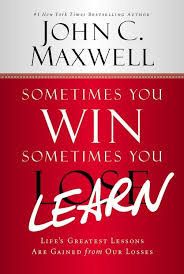
Sometimes You Win, Sometimes You Learn

Stopping Words That Hurt

The 13th Resolution

The Baptism With The Holy Spirit

The Bare Facts

The Five Levels Of Leadership

The Highest Good

The Hobbit

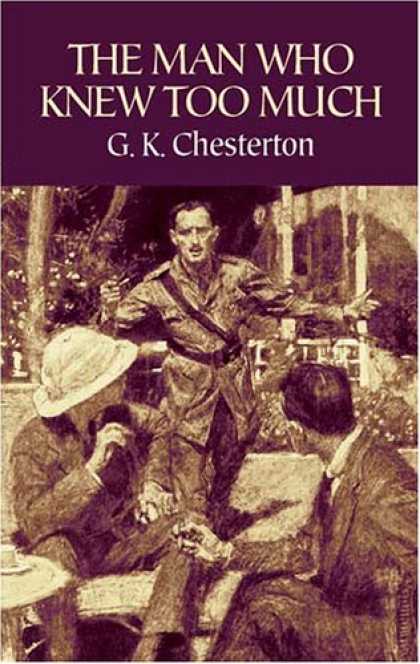
The Man Who Knew Too Much

The Purpose Of Christmas

The Ragamuffin Gospel

The Reagan Diaries

The Secrets Of Intercessory Prayer

Things We Couldn’t Say

Understanding Sexting

Unfinished

Unstoppable

Visioneering

Who Do You Think You Are?

You Don’t Need A Title To Be A Leader

For my book reviews of 2011 click here, and for 2012’s list click here.

21 Quotes From “Sometimes You Win, Sometimes You Learn”

Sometimes You WinAs I mentioned in my book review (which you can read by clicking here), John Maxwell always expands my horizons with his writings. I appreciate his ability to use his own life experiences as well as historical and contemporary examples and writings. So some of my favorite quotes from Sometimes You Win, Sometimes You Learn are from Dr. Maxwell, and some are from others that he quotes. Enjoy!

“I sometimes react to making a mistake as if I have betrayed myself. My fear of making a mistake seems to be based on the hidden assumption that I am potentially perfect and that if I can just be very careful, I will not fall from heaven. But a mistake is a declaration of the way I am, a jolt to the way I intend, a reminder that I am not dealing with facts. When I have listened to my mistakes, I have grown.” —Hugh Prather

“Those who profit from adversity possess a spirit of humility and are therefore inclined to make the necessary changes needed to learn from their mistakes, failures, and losses. … When we are focused too much on ourselves, we lose perspective. Humility allows us to regain perspective and see the big picture. … Humility allows us to let go of perfection and keep trying.” —John Maxwell

“Most people spend their entire lives in a fantasy Island called ‘Someday I’ll.’” —Denis Waitley 

“An idealist believes the short-run doesn’t count. A cynic believes the long run doesn’t matter. A realist believes that what is done or left undone in the short-run determines the long run.” —Sydney J. Harris

“Those things that hurt, instruct.” —Benjamin Franklin

“You can’t grow and learn if your focus is on finding someone else to blame instead of looking at your own shortcomings.” —John Maxwell

“The highest reward for our toil is not what we get for it but what we become by it. … Mistakes are not failures. They are proof that we are making an effort. When we understand that, we can more easily move out of our comfort zone, try something new, and improve. … Improvement demands a commitment to grow long after the mood in which it was made has passed.” —John Maxwell 

“Success in most things comes not from some gigantic stroke of fate, but from simple, incremental progress.” —Andrew Wood

“The main trouble with despair is that it is self-fulfilling. People who fear the worst tend to invite it. Heads that are down can’t scan the horizon for new openings. Bursts of energy do not spring from a spirit of defeat. Ultimately, helplessness leads to hopelessness.” —Norman Cousins

“Positive thinking must be followed by positive doing.” —John Maxwell

“When you are influential and highly respected, people tend to tell you what you want to hear, not what you need to hear. They are seeking your approval, or they flatter you. Unfortunately, this creates a gap between what you hear and reality. If you find yourself in that situation, you will need to work extra hard to get the people close to you to speak honestly into your life. And you will have to become highly intentional in observing and listening.” —John Maxwell 

“Wisdom is the reward you get for a lifetime of listening when you would have preferred to talk.” —Doug Larson

“Circumstances are the rulers of the weak; but they are the instruments of the wise.” —Samuel Lover 

“Mistakes are painful when they happen, but years later a collection of mistakes is what is called experience.” —Denis Waitley

“Ninety percent of those who fail are not actually defeated; they simply quit. … As you face bad experiences, it’s important for you to remember that you can rarely see the benefits while you’re in the midst of them. You usually gain perspective on the other side of it.” —John Maxwell 

“Most people would rather change their circumstances to improve their lives when instead they need to change themselves to improve their circumstances. They put in just enough effort to distance themselves from their problems without ever trying to go after the root, which can often be found in themselves. Because they don’t try to change the source of their problems, their problems keep coming back at them.” —John Maxwell

“To grow, you must be willing to let your present and future be totally unlike your past. Your history is not your destiny.” —Alan Cohen

“If I had my life to live over again, I’d make the same mistakes, only sooner.” —Tallulah Bankhead

“Maturity is doing what you are supposed to be doing, when you’re supposed to be doing it, no matter how you feel.” —Dom Capers 

“Have you not succeeded? Continue! Have you succeeded? Continue!” —Fridtjof Nansen, Nobel Peace Prize winner

“How we think when we lose determines how long it will be until we win.” —G.K. Chesterton

The Man Who Knew Too Much (book review)

The Man Who Knew Too MuchRegular readers of this blog have probably noticed that I don’t read very much fiction. Partly this is because I have so much to read that I need to keep strict requirements on my reading list, and partly because many fictional works are so much mental cotton candy. By that I mean it’s sweet for the moment, but it’s quickly gone. But there are exceptions, and The Man Who Knew Too Much by G.K. Chesterton is a notable exception.

Chesterton is usually known for his non-fiction theological writings. But the wit, insight, wisdom and humor he uses in his non-fiction work is also on full display in this book, which chronicles the observation skills of Mr. Horne Fisher.

Fisher is the man who knows too much. Because he knows too much, he solves mysteries and riddles “backwards” from the way a typical detective would. Although Fisher is not a detective, but just a man who is well-known and well-connected, he seems to stumble upon the most bizarre settings. Fisher knows too much, so he spots what’s missing, and then works “backwards” to unravel the conundrum. It’s quite fascinating to watch him at work, and Chesterton’s insights into the human spirit make his characters very engaging.

These are not your typical detective stories, but the uniqueness of Horne Fisher’s crime-solving technique makes The Man Who Knew Too Much an enjoyable and enlightening book.

I typically share some of my favorite quotes from the books I review, but in this case I have included some of the wittier lines and descriptions that Chesterton employs. Check it out in the comment below.

Thursdays With Oswald—Bad Theology

This is a weekly series with things I’m reading and pondering from Oswald Chambers. You can read the original seed thought here, or type “Thursdays With Oswald” in the search box to read more entries.

Bad Theology

Job’s friends came slowly to the conclusion that their view of God was right, therefore Job must be wrong. They had the ban of finality [the limitation or “curse” of having one’s mind made up] about their views, which is always the result of theology being put before God.

From Baffled To Fight Better

Putting theology before God makes a god out of my mind—and a very weak god at that. Or as G.K. Chesterton put it, “A weak mind is like a microscope, which magnifies trifling things but cannot receive great ones.”

Or maybe God said it best of all“As the heavens are higher than the earth, so are My ways higher than your ways and My thoughts higher than your thoughts.”

Job got it right. He continued to believe that God was doing something bigger than he could think or imagine. He didn’t close off his mind, or put his theology before God, or make a god out of his own ideas.

I pray that when the pressure is on, I can continue to trust God and not give in to the ban of finality.

The Point Of The Gospel

While I was preparing for our Spiritual Self-Defense class, Rick Warren tweeted this timely reminder: “If you spend more time defending the truth than actually sharing it, you will have missed the point of the Gospel.”

What is the point of the Gospel? Isn’t it simply that mankind is lost without God, and that only a relationship with Jesus can bring true life? If that’s the point, we can never argue someone into this divine relationship.

Here are some other thoughts I’m trying to keep in mind for this exciting class:

  • Jesus never shouted down those who disagreed with Him. Isaiah’s prophesy about Jesus said, “He will not shout or cry out, or raise His voice in the streets.” And that’s exactly how Jesus conducted Himself.
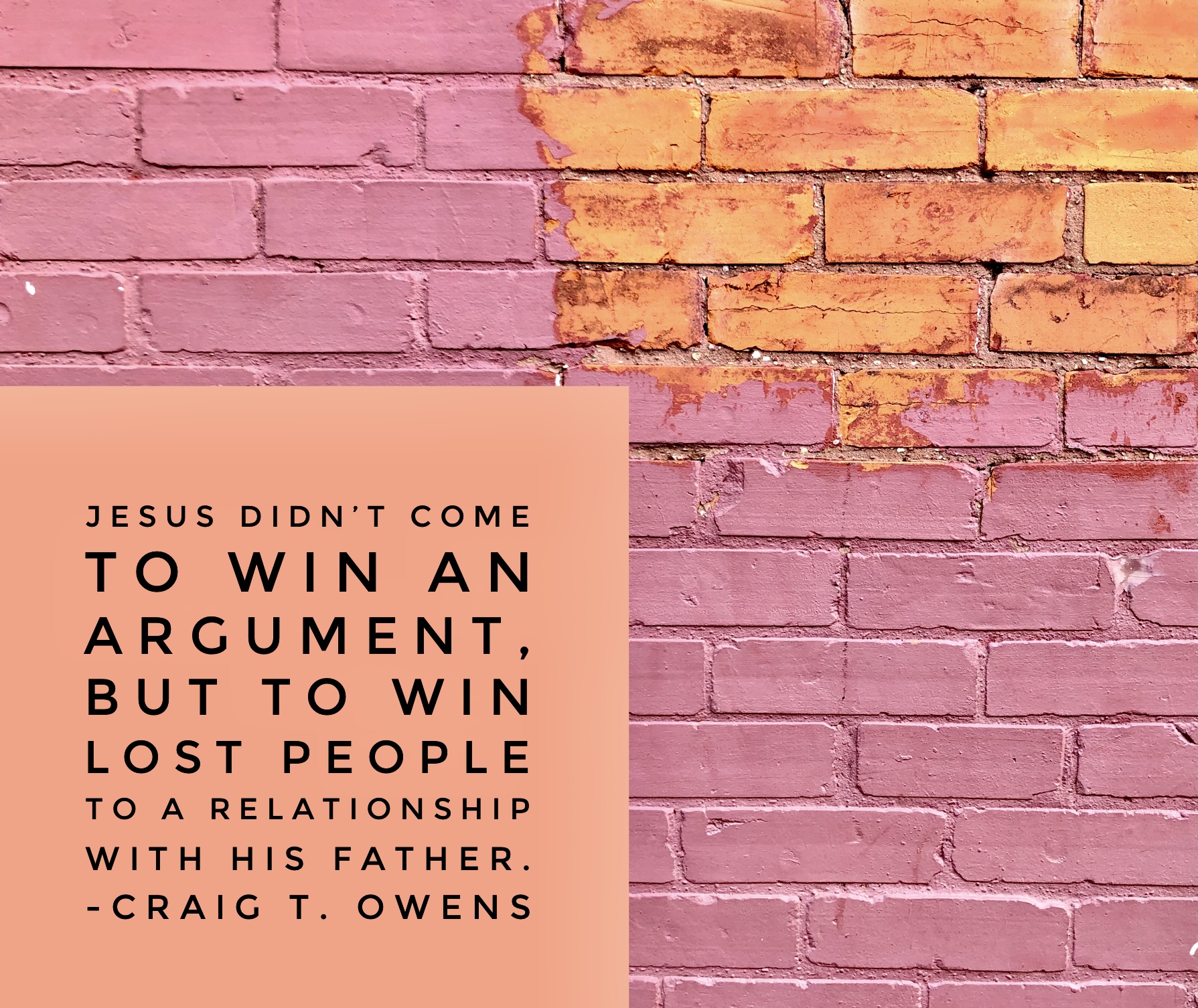
  • Jesus said, “God didn’t go to all the trouble of sending His Son merely to point an accusing finger, telling the world how bad it was. He came to help, to put the world right again.” Jesus didn’t come to win an argument, but to win lost people to a relationship with His Father.
  • There are very few exclamation points in Christ’s dialogue in the Gospels, but there are a lot of question marks. He was interested in engaging people in conversation.
  • G. K. Chesterton said, “The principle objection to a quarrel is that it interrupts an argument.” We need to discuss, not argue.

I’m really looking forward to leading this class, but I’m also excited about what I’m learning in the process.