Confession Is Good For You

One of the best definition of Selah is the bracketed comment used next to that word in the Amplified Bible: pause, and calmly think of that. 

Psalm 32 is only eleven verses long, yet Selah—a call to pause and ponder—is used three times. In other words, David is very interested in getting us to weigh something important. This whole psalm is a call to ponder the heavy, unbearable burden of unconfessed sins vs. the freedom and fresh start that comes immediately with confession.

And in case you think that confession is just something that someone does one time when they become a Christian, keep in mind that David is writing this song to be sung by the choir in church. That means confession is good for everyone!

The weighty CURSES of unconfessed sin

  • I feel worn out, wasting away like old, flimsy clothes (v. 3a)
  • I am groaning (v. 3b)—I am worn out from my groaning. All night long I flood my bed with weeping and drench my couch with tears (Psalm 6:6)
  • I feel God’s hand of displeasure heavy upon me (v. 4a AMP) 
  • My strength evaporates like water in the summer heat (v. 4b NLT) 
  • I’m led around like a dumb mule (v. 9)
  • I experience many woes (v. 10a) 

Then comes confession—I acknowledged my sin to You, and my iniquity I did not hide. I said, “I will confess my transgressions to the Lord continually unfolding the past till all is told”—then You instantly forgave me the guilt and iniquity of my sin (v. 5 AMP).  

If we claim to be without sin, we deceive ourselves and the truth is not in us. If we confess our sins, He is faithful and just and will forgive us our sins and purify us from all unrighteousness (1 John 1:8-9).

The weighty BLESSINGS after confessed sin

  • My transgressions are forgiven, which means they are lifted up and carried away (v. 1a)
  • My sins are covered; they are literally overwhelmed by God’s forgiveness (v. 1b)
  • My sin is no longer counted against me (v. 2a) because my record of forgiven sins has been cleared (v. 2b NLT; see also Psalm 103:2-3, 12) 
  • I get a fresh start, my slate’s wiped clean … Suddenly the pressure was gone—my guilt dissolved, my sin disappeared (vv. 1, 5 MSG) 
  • I’m protected in God’s hiding place and surrounded by God’s songs (vv. 7, 10b)
  • God instructs me and protects me to keep me from sinning again (v. 8)

What relief for those who have confessed their sins and God has cleared their record (v. 2 TLB) 

The mark of a maturing Christian is the one who is constantly closing the gap between sin and confession. 

Don’t let unconfessed sin weigh you down. As soon as you feel the Holy Spirit pointing something out in your heart, confess it and experience God’s immediate release! 

I am going to share one more message in this series on the Selahs in the Psalms this Sunday (but, God willing, we will return to this next summer). Please join me either in person or on Facebook Live. 

❤️ The Love Test

The description of love that Paul gives in 1 Corinthians 13 is well known, and I think most people would agree that this is an outstanding definition of true love. But the ultimate test is this: can this definition of love be said of me?

God wants you to be able to say “yes!” and so the Holy Spirit works on us to make this definition more and more consistently true of us. Here’s how we can test ourselves and find out where we need to allow the Spirit to work on us—put your name in this passage everywhere you find the word “love.”

Can this be truly said of me:

“Craig is patient. Craig is kind. Craig isn’t jealous. Craig doesn’t sing his own praises. Craig isn’t arrogant. Craig isn’t rude. Craig doesn’t think about himself. Craig isn’t irritable. Craig doesn’t keep track of wrongs. Craig isn’t happy when injustice is done, but he is happy with the truth. Craig never stops being patient with others, he never stops believing the best for others, he never stops hoping for the best for others, he never gives up on others. Craig’s love never fails.”

If you put your name in that passage, how well do you do on the love test? If you will let Him, the Holy Spirit will help you get all As on these tests.

Saturday In The Proverbs—Sowing & Reaping (Proverbs 17)

[Each chapter in the Book of Proverbs contains thoughts that fit into a theme; they are not just random thoughts gathered together. In this “Saturday In The Proverbs” series, I will share a theme that I see in each chapter. But the cool thing about God’s Word is that you may see an entirely different theme. That’s great! If you do, I would love for you to share it in the comments below.]

A wise servant will rule over a son who causes shame… (Proverbs 17:2).

There are inevitable outcomes for our attitudes and (in)actions. Or said another way: We always reap what we sow.

Not dealing with confrontation correctly → → Strife (v. 1)

Wise work ethic → → Leadership rewards (v. 2)

Allowing God to refine you → → A pure heart (v. 3)

Listening to lies and slander → → Punished by God (v. 4)

Mocking the less fortunate → → Punished by God (v. 5)

Living well → → Leaving a legacy for my children (v. 6)

Truthful, uplifting speech → → Being treated like a prince (v. 7)

Lies and loose lips → → Being treated like a fool (v. 7)

Giving gifts to others → → Favor with others (v. 8)

Forgiving and forgetting an offense → → Cementing a friendship (v. 9)

Telling others about an offense → → Losing a friendship (v. 9)

Rebuking a wise man → → Gaining wisdom (v. 10)

Rebuking a fool → → Getting rebuked myself (v. 10)

Rebellion → → Repaid with cruelty (v. 11)

Trade folly with a fool → → Get mauled (v. 12)

Repay good with evil → → Get stuck with evil (v. 13)

Keep picking a fight → → Open a world of hurt (v. 14)

Justify the wicked or condemn the just → → Displace God (vv. 15, 26)

Give wisdom to a fool → → Get burned (v. 16)

Love your friends → → Have help in difficult times (v. 17)

Make a bad deal → → Get stuck with it for a long time (v. 18)

Love sin and promoting yourself → → Watch it all crash down (v. 19)

Look for deceit → → Fall into evil (v. 20)

Don’t discipline your children → → No joy (vv. 21, 25)

Be happy → → Make others happy (v. 22)

Be sad → → Cause rotten feelings in others (v. 22)

Accept a bribe → → Pervert justice (v. 23) and displease God (v. 15)

Keep focused on the here-and-now → → Get wisdom for there-and-then (v. 24)

Use words sparingly → → Bring calm (v. 27)

Stay silent when you have nothing good to say → → Be thought of as wise (v. 28)

If you don’t like what you’re reaping in your life, check what you’re sowing. 

What If I Sin?

I have been trumpeting this truth: God is for you! He’s not looking for opportunities to blast you, but to bless you. God wants you to know that you have found His favor. 

But what happens if we sin? Do we lose God’s favor? In a word—NO! 

Here’s what happens instead: God becomes our Prodigal Father. 

Let me show you from both the Old Testament and the New Testament what I mean, but first, let’s define prodigal: it means recklessly extravagant or lavishly abundant. This is always how God treats His children. 

In Isaiah 59, the prophet reminds us that nothing about God’s strength or ability to respond to our pleas has been diminished. Instead: your sins have separated you from your God—we can leave God, but He never leaves us! 

Isaiah catalogs all our sins that have become a quicksand trap for us. God looks to see who can help us, and finding no one, here’s what He does: so His own arm worked salvation for Him, and His own righteousness sustained Him. 

God did what was underserved. God did what no one else could do: HE HIMSELF BECAME OUR SALVATION! 

If ever there was a definition of recklessly extravagant, lavishly abundant love… this is it!! 

In Luke 15, Jesus tells a story that people often call the story of the prodigal son, but it’s really the father who is prodigal. The son squanders all his father’s blessings on wild living and finds himself bankrupt, starving, and completely disgraced. But the moment the son came to his senses and began to move toward his father by confessing his sin, his prodigal father ran to him! 

Jesus tells us this father was overflowing with compassion. There wasn’t anything his son could have done to diminish the father’s love, nor was there anything the son could have done to make his father love him more. The father was all-loving all the time. He was recklessly extravagant and lavishly abundant in his love. 

The father RAN to his son and covered his son’s disheveled, stinking rags with his royal robe. 

This is exactly what Isaiah said God would do for us…

  • instead of ashes, we get a crown 
  • instead of rags of mourning, we get an anointing of gladness
  • instead of a spirit of despair, we get a garment of praise
  • instead of shame, we get a double portion of God’s riches
  • instead of disgrace, we get God’s inheritance

How does all this happen? Our Prodigal Father abundantly, lavishly “clothes me with garments of salvation and arrays me in a robe of righteousness”!!

Don’t ever buy into satan’s lies that God loves you less, or that you’ve used up your changes, or that your sins are too many or too big. If we confess our sins, He is faithful and just and will forgive us our sins and purify us from ALL unrighteousness (1 John 1:9). 

Join me this coming Sunday either in person or on Facebook Live as we learn more about God’s favor toward us. 

The Power Of God’s Name

“God’s name marks Him out; by it will we address Him; it embodies His character. … This name that is written all over the Bible, but specially exhibited in Christ Jesus, Who came to declare to us the Father’s name, is a name—

  1. Of greatness. Jehovah, God, Creator, El-Shaddai; all expressive of majesty and power and glory. The Lord God omnipotent.
  2. Of grace. It is the declaration of free love. Merciful and gracious. He to whom it belongs must be the fountain-head of love. God is love. In Him is infinity of compassion and longsuffering.
  3. Of forgiveness. He pardons iniquity, transgression, and sin; all sin, great and small; there is forgiveness with Him, that He may be feared; forgiveness to the uttermost.
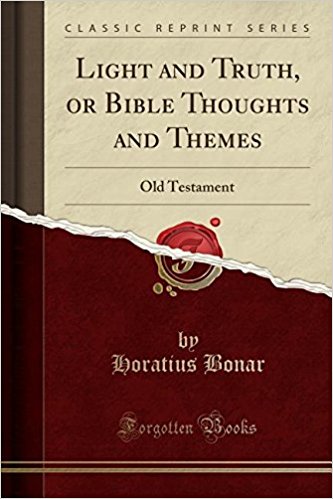
  4. Of righteousness and holiness. It is holy love that is to be found in Him; righteous grace to the unrighteous; righteous pardon to the guilty.” —Horatius Bonar, in Light & Truth—The Old Testament

Thursdays With Oswald—Isaiah 1

Oswald ChambersThis is a weekly series with things I’m reading and pondering from Oswald Chambers. You can read the original seed thought here, or type “Thursdays With Oswald” in the search box to read more entries.

Isaiah 1

[These are notes from Oswald Chambers’ lecture on Isaiah 1.]

     There is no such thing as fate; a human being always has the power to do the incalculable thing. There are fatal issues, not fate. When God’s decrees come to pass it is because men will not turn. God’s will is supreme, but God never fights against us; it is self-will that fights against God. …  

     If God were love according to our natural view of love He ought never to cause us pain, He ought to allow us to be peaceful; but the first thing God does is to cause us pain and to rouse us wide awake. He comes into our lives all along with ideals and truths which annoy and sting us and break up our rest, until He brings us to the one point, that it is only moral and spiritual relationships which last. That is why God looks cruel judged from the human sentimental standpoint; He loves us so much that He will not prevent us being hurt. …  

     Many a life is paralyzed because this is not realized—“I know God has forgiven me, I know I am right with God, but every now and again I remember the things I did that damaged other lives.” If I put the wrong right with my fellow men, have I become right with God? No, get right with God and He will put you on the way to be right with your fellow men. 

From Notes On Isaiah

Isaiah 1 opens with God taking His people to task for merely going through the motions of worship, with their hearts being far away from Him. Chambers reminds us that this self-will that fights against God will often bring its own pain. Why? Because God loves us too much to let us go unmolested down the path to eternal destruction. Instead, God longs for us to turn our hearts unreservedly to His love and purpose for our lives.

The Wonder Of God’s Forgiveness

King David was intimately confident that God would hear his prayers. No matter what—even if David had sinned.

The prophet Nathan confronted David after David had committed adultery with another man’s wife, gotten her pregnant, and then had her husband killed to try to cover up their affair. David assumed he had gotten away with it, but God sent Nathan to tell David that He knew all about it.

David immediately went to prayer.

His prayer is instructive for us when we sin too. David’s appeal to God for forgiveness is based solely on God’s ability and willingness to forgive, not on any merits David brings.

In this prayer, David presents a tally sheet. On his side of the ledger, he lists my transgressions, my iniquity, my sin, my bloodguilt. He sums it up with, “Against You, You only, have I sinned and done what is evil in Your sight.

David also tallies up God’s side of the ledger: You are right, You are just, You are righteous.

We might be tricked into thinking that a Perfect Being like this wants nothing to do with a sinful creature like you and me. But this is completely wrong! David appeals to God’s unfailing love, and Your great compassion. He lists God’s desire to cleanse, wash, blot out sins, restore, and release from blood-guiltiness.

David said, “I have sinned against the Lord.” And immediately Nathan responded, “The Lord has taken away your sin.”

Sin is all on me! Restoration is all on God!

With this in mind, we learn that the mark of a maturing Christian is not one who never sins, but one who…

  1. …feels a broken heart because of their sin (see Psalm 51:10)
  2. …confesses my sin
  3. …confidently asks for His forgiveness
  4. …helps others who have sinned (v. 13)
  5. …continues to abide in Jesus (vv. 10-12)

God is quick to forgive. Are we equally as quick to ask for His forgiveness?

You can study more of the lessons from the prayers of David:

“When Your Prayer Life Is Active And Full…

…when you are communing daily with God, you will begin to see others as God sees them. The next time you find yourself angry, frustrated, or disappointed with someone, I challenge you to pray, ‘Lord, help me to see this person as You see him.’ The next time you are compelled to harbor bitterness or respond in anger, pause and soak in the gravity of God’s unconditional love for you.” —Jack Graham

We Usually Believe The Opposite

The Lord is gracious and compassionate, slow to anger and rich in love. (Psalm 145:8)

Let those words sink in because most of us live like the exact opposite is true. Check out this 2-minute explanation …

Thursdays With Oswald—An Aroma From God’s Garden

Oswald ChambersThis is a weekly series with things I’m reading and pondering from Oswald Chambers. You can read the original seed thought here, or type “Thursdays With Oswald” in the search box to read more entries.

An Aroma From God’s Garden

     [Oswald Chambers is speaking about how the prodigal son returned home.] 

     Did the father send any message to the far country after the younger boy? There is no record of any message being sent. What did the younger boy have to do? He had to do exactly what is recorded in Hosea long before that picture was painted by Our Lord—he had to return. Drawn by God? It does not say so. Read the fourteenth chapter of Hosea: “I will heal their backsliding” [Hosea 14:4]; but the backslider has to get up first, leave the pigs and what pigs eat, and go back to where he came from. Help granted him? None whatever. Messages from the home country? Not one. Tender touches of God’s grace on his life? No. Can you picture that prodigal son returning, a degraded, sunken, sin-stained man, going back in all the cruel, bald daylight? Oh, it is a hard way to go back out of the backslider’s hell; a hard, hard way! Every step of it is cruel, every moment is torture. But what happened? Before that younger son had gotten very far, the father saw him “and ran to his son, threw his arms around him and kissed him”!

     Worker for God among backslidden souls, remember God’s way, put the sting, if you can, into the backslider’s soul that he may get up and come back to God, and what has he to do? Take with him words and say, “Forgive all my sins and receive me graciously” [Hosea 14:2]. Did the prodigal son take with him words? He did, he rehearsed them over and over again where he was amongst the pigs—“I will say to my father this and that,” he had it all by heart. Does Hosea say the same? He does: “My sins have been my downfall” [Hosea 14:1]. … 

     I just said now that no message was sent to the far country; God sends none, but, worker for God, will you be a message from the Father? Will you so bathe your life in the atmosphere of prayer that when you come in contact with a backslidden soul, it will awaken a remembrance of the Father, awaken a remembrance of what that soul once was? Will you let your life be like a bunch of flowers from the Father’s home garden, just awakening for one moment a remembrance of what life once was, and then pass on, and pray and watch, and you will be mightily rewarded by God when you see that poor backslidden soul get up and go back to God, taking with him words and saying, “My sins have been my downfall.” 

From Workmen Of God

What about you, my friend? Do you love the prodigals enough to be the Father’s message from home to them?