Thursdays With Oswald—Knowing Evil By Living Good

Oswald ChambersThis is a weekly series with things I’m reading and pondering from Oswald Chambers. You can read the original seed thought here, or type “Thursdays With Oswald” in the search box to read more entries.

Knowing Evil By Living Good

     There are some things of which we must be ignorant, because knowledge of them comes in no other way than by disobedience to God. In the life originally designed for Adam it was not intended that he should be ignorant of evil, but that he should know evil through understanding good. Instead, he ate of the fruit of the tree of knowledge of good and evil and thereby knew evil positively and good negatively. … 

     The only way to find out things in the moral universe is by obedience. … 

     The philosophy of life is based on the topsy-turvy reasoning of going into things in order to find out about them, which is like saying you have to go into the mud before you can know what clean water is. “I must know the world”—if you do, you will only know good by contrast with evil. … Jesus Christ knew good and evil by the life which was in Him, and God intended that man’s knowledge of evil should come in the same way as to our Lord. … 

     The marvel of the Redemption is that Jesus Christ can put into any man His own hereditary disposition of holiness. … 

     Jesus Christ carried out all that Adam failed to do, and He did it in the simple way of obedience to His Father. … Are we humble and obedient, learning as Jesus learned, or are we hurrying into experiences we have no right to? … We grow spiritually by obeying God through the words of Jesus being made spirit and life to us. … 

     “I would have you wise unto that which is good, and simple unto that which is evil” [Romans 16:19]. … When we are born again we have to obey the Spirit of God, and as we draw on the life of Jesus and learn to assimilate and carry out what He speaks to us, we shall grow in ignorance of certain things and be alive and alert only to what is God’s will for us.

From The Soul Of A Christian

I love the fact that Jesus Christ can put into any man His own hereditary disposition of holiness. It doesn’t matter what you’ve done, what you’ve thought or said, or what you’ve seen, Jesus Christ can put His innocence into you.

Ask yourself Chambers’ question: “Are we humble and obedient, learning as Jesus learned, or are we hurrying into experiences we have no right to?”

After asking that question, do you need to make some changes?
Thursdays With Oswald—A Dangerous (But Vital) Prayer

Oswald ChambersThis is a weekly series with things I’m reading and pondering from Oswald Chambers. You can read the original seed thought here, or type “Thursdays With Oswald” in the search box to read more entries.

A Dangerous (But Vital) Prayer

     No one but a fool or a sincere soul would ever pray this prayer—‘Search me, O God’ [Psalm 139:23-24] … Any soul who prays that prayer will be answered. … 

     If you want to know what the scrutiny of God is like, listen to Jesus Christ: “For from within, out of the heart of man, evil thoughts proceed…” [Matthew 15:19], and then follows a rugged catalog of things few of us know anything about in conscious life, consequently we are apt to be indignant and resent Jesus Christ’s diagnosis—“I have never felt like a murderer, or an adulterer, therefore those things cannot be in me.” To talk in that way is proof that we are grossly ignorant of ourselves. If we prefer to trust our ignorant innocence we pass a verdict on the only Master of the human heart there is, we tell Him He does not know what He is talking about. The one right thing to do is to listen to Jesus Christ and then hand our hearts over to God to be searched and guarded, and filled with the Holy Spirit. … 

     Jesus Christ has undertaken through His Redemption to put into us a heart so pure that God Almighty can see nothing to censure in it, and the Holy Spirit searches us not only to make us know the possibilities of iniquity in our heart, but to make us “unblameable in holiness” in His sight.

From The Soul Of A Christian

Are you willing to really pray this prayer, listen to what the Holy Spirit says, and then allow Christ’s work of redemption to make you unblameable in holiness?

Or, Chambers asks, “Are we willing to let God scrutinize us, or are we doing the worst of all things, trying to justify ourselves?”

It’s your choice.

10 More Quotes From “The Beauty Of Intolerance”

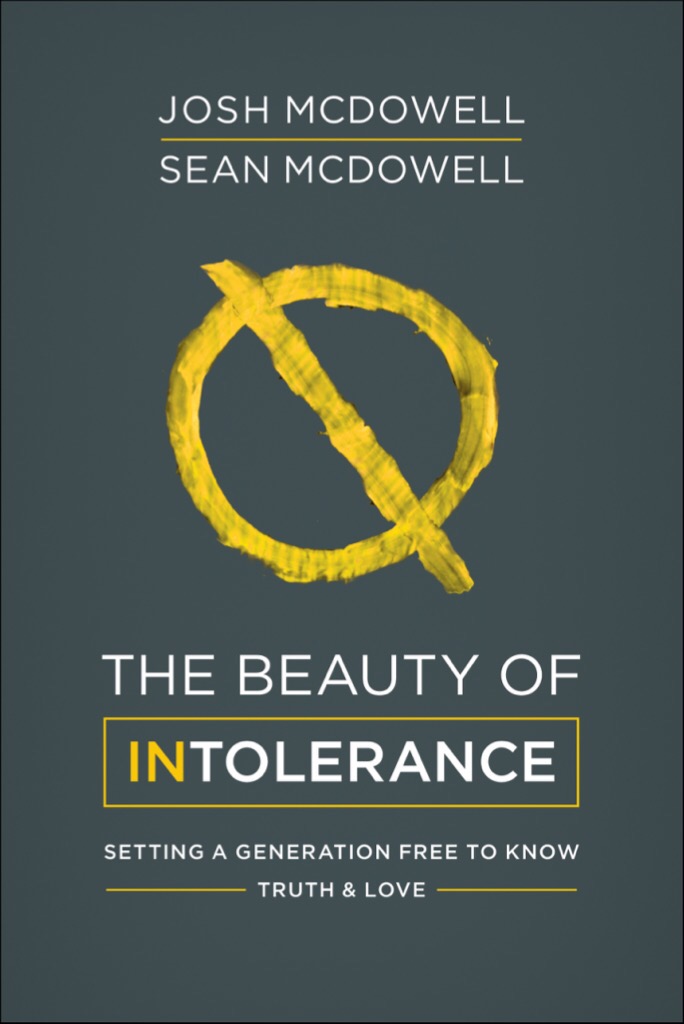
Beauty Of IntoleranceI found Josh and Sean McDowell’s book The Beauty Of Intolerance to be such a timely book! Parents, teachers, pastors, and anyone who works with youth should definitely read this book to help navigate through the tolerance-saturated world we live in. You can check out my review of this book by clicking here.

“God gave Moses pages and pages of highly specific rules to govern the relationships and morality of His people. Each of those rules, which we call precepts, applies to a specific situation. But each is important because it is grounded in a principle, which is a fundamental, primary law from which other laws—the precepts—are derived. Each principle, in turn, is grounded in a Person—in the very character of God Himself. … God is not behind the principles and precepts simply to validate the rules; He is there as a Person for the purpose of relationship.”

“When moral truth becomes a matter of opinion, personal preference, or the individual’s views and feelings, then practically anything goes. … In a culture of tolerance where the individual decides morality, morality has no bounds.”

“An entire generation tends to go to the Bible not to discover the truth and bend their lives to it accordingly but to use it as sort of a self-help book to help them form their own version of what’s true and false, good and evil, right and wrong.”

“When you discuss the Bible, do not refer to it simply as a spiritual book that teaches us how to live, but as a road map leading one toward the discovery of true reality. … The one true God’s communication to humanity and the whole of Christianity as a religion is based on three primary realities supported by evidences: (1) The historic reliability of Scripture; (2) The deity of Christ; and (3) Christ’s bodily resurrection.”

“While we all may have a sense of what is evil and what is good, under the philosophy of cultural tolerance, evil and good can only be relative ideals. Without an objective truth—a set of universal moral values—good and evil are defined by the individual, community, or society. Therefore we have no moral basis by which to judge another person, community, or nation for what they do or don’t do.”

“Unless justice is rooted in a moral authority beyond those with the most power or even with the most votes, there cannot be true justice for all. … Justice, charity, and human rights are grounded in the fact that we are created in God’s image with value, dignity, and worth. … God’s mercy and justice as our model has fostered societal justice and provided more positive contributions to society in general than any other force in history.”

“The intolerance of the early Christians was a beautiful thing. They believed that everyone—including the poor, the homeless, the handicapped, the sick—was made in the image of God with dignity and worth. They were utterly intolerant of injustice, and they did whatever they could to correct the injustices they saw in society.”

“Real love—biblical, Godlike love—exposes cultural tolerance as the counterfeit of love because cultural tolerance fails to point people to a universal standard of morality designed to save them from serious harm. Cultural tolerance does not address what is in the best interest of a person—it possesses no moral standard that aligns to what is universally right and good. Real love, on the other hand, looks out for the best interest of others.”

“Every truth, every rule, and every guideline coming from God’s Word is issued from the loving heart and character of God for our own good.”

“Love is making the security, happiness, and welfare of another person as important as your own. Biblical love is not merely focused on another but on the good of another, even if the other does not recognize or accept the reality of the good.”

To read the first set of quotes I shared from The Beauty Of Intolerance, please click here. And be sure to follow me on Twitter and Tumblr to read more quotes from this book, and from lots of other profound thinkers, that I share daily.

Of Antichrist And His Ruin (book review)

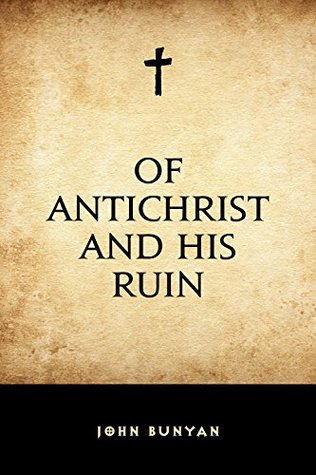
Of Antichrist And His RuinAs I was finishing up reading through the Bible this time, I especially noticed in the last couple of books quite a few mentions of the Antichrist. Wanting to dig a little deeper on this subject, I turned to a man who so throughly knew Scripture: John Bunyan and his book Of Antichrist And His Ruin.

The Antichrist is not something we can just brush off and say, “Well, that’s end-times stuff and doesn’t really concern Christians. After all, won’t we already be in Heaven when the Antichrist appears on earth?” But John, in his first epistle warns us—

This is the spirit of the Antichrist, which you have heard is coming and even now is already in the world. (1 John 4:3, emphasis added)

Wow, even in the first century, John already saw the spirit of the Antichrist at work. How much more so should Christians today prepare themselves for this onslaught of evil!

I didn’t want any “pop theology” or well-intentioned ideas about the Antichrist, I wanted to know what the Bible said about it. Speaking of John Bunyan, Charles Spurgeon said, “Prick him anywhere—his blood is Bibline, the very essence of the Bible flows from him. He cannot speak without quoting a text, for his very soul is full of the Word of God.”

Indeed, Bunyan’s work in Of Antichrist is a compilation of all the biblical texts, put together in a way that makes sense. Of course, the English is sometimes a bit challenging to follow, since Bunyan wrote over 400 years ago. But if you are interested in the biblical facts about the Antichrist described in the Bible, this must be your go-to source!

Horatius Bonar On Spiritual Warfare

Horatius Bonar“The devil’s object in the present day is to persuade us that he does not exist, that we have to fight no such battle, that we need no sword nor shield, that we can do without anything beyond our own human power and skill.” [Ephesians 6:12]

“We must fight. There is no choice here. Whether we will or not, we must fight; for we are thrown upon a battlefield, and if we fight not, we perish. Woe be to the man who thinks there is no need of fighting now; that there is no danger and no enemy. Fight the good fight of faith.”

“satan persuades us that we can combat evil by the appliances of modern intellect and science and civilization. Let us beware. To try to suit religion to the spirit of the age, is to play into satan’s hands. Only divine weapons will avail in a battle with the powers of darkness.”

“Is the Christianity of our day of the lofty kind of which apostolic men have left us so bright an example? Is it not feeble, indolent, self-indulgent, second-rate? Is there in it anything of the presentation of ‘living sacrifices’ to God, which is our acceptable and reasonable service? Are we not seeking our own, not the things which are Jesus Christ’s? Are we not feasting when the world is starving? Are we not at ease in Zion? Are we not sitting still and in luxurious comfort, when many noble and self-sacrificing ones amongst us are rushing into the toil or the war, and, for want of being supported by their fellow Christians, are sinking under the burden and heat of the day?” [Philippians 4:19]

“It is inner warfare. The 7th of the Romans is the description of this, the battle between faith and unbelief, between the spirit and the flesh. This war is private, solitary, with no eye upon the warrior; fought in the closet, on the knees, with the Bible as his weapon. …

“It is outer warfare. The enemies are legion; the world, with all its enmities, snares, pomps, pleasures; satan, with his principalities and powers; both of these in combination hating, persecuting, attacking. This is ‘the great fight of afflictions’ (Hebrews 10:32). Thus it is so far public, before men; ‘we are made a spectacle to the world, and to angels, and to men.’ …

“It is daily warfare. It is not one great battle, but a multitude of battles, constant warring: there is no intermission and no discharge in this war. The enemy wearies not, ceases not; nor must we. We wake to warfare each morning, and go out to warfare each day. Everywhere we find the enemy posted, sometimes openly, sometimes in ambush. The conflict is life-long, and it is daily. …

“It is warfare not fought with human arms. The weapons of our warfare are not carnal. We do not war after the flesh. It is in divine strength; with the sword of the Spirit; clothed in the whole armor of God. …

“It is warfare in which we are sharers with Christ. He first fought the good fight, as the Captain of our salvation, the Lord strong and mighty; the Lord mighty in battle. The inner warfare indeed was not His, but all the rest was. He fought, when here, the same battles as we; and it is into His warfare that we are called to enter.”

All quotes from Horatius Bonar’s book Light And Truth.

Links & Quotes

link quote

“A man may be perfected through suffering or be made worse through suffering, it depends on his disposition.” —Oswald Chambers

“The only option for French atheists (among whose ranks I used to count myself), is to maintain that there isn’t really any such thing as evil. When one denies the existence of God as a transcendent Creator of the universe who ordains how humans ought to live their lives, one is left only with conflicting opinions about what individuals like and dislike. If there is no God then there is no objective truth about the good and the bad…. [I]n reality, to be a consistent atheist one must affirm that the Islamic terrorists in Paris didn’t do anything ‘wrong’, as such. They only acted out of line with our personal preferences, (and in line with theirs). If there’s no ultimate arbiter of right and wrong, that’s all we are left with.” —Guillaume Bignon, a former atheist, after the ISIS attacks in Paris. Read more here.

Josh McDowell answers the question: “If my friends and I have a disagreement, what’s the right way to handle it?

Planned Parenthood asked people on Twitter to give them one word that describes what they do. I’m not sure they liked many of the (true) responses they received. What one word would you use? I would say: evil.

Links & Quotes

link quote

“Suppose you talk about depending on God and how wonderful it is, and then others see that in your own immediate concerns you do not depend on Him a bit, but on your own wits, it makes them say, ‘Well, after all, it’s a big pretense, there is no Almighty Christ to depend on anywhere, it is all mere sentiment.’ The impression left is that Jesus Christ is not real to you.” —Oswald Chambers

“The law is meant to lead the sinner to faith in Christ by showing the impossibility of any other way.” —Charles Spurgeon

“The truth is that evil is not a real thing at all, like God. It is simply good spoiled. That is why I say there can be good without evil, but no evil without good. You know what the biologists mean by a parasite—an animal that lives on another animal. Evil is a parasite. It is there only because good is there for it to spoil and confuse.” —C.S. Lewis

“The great missionary hope is that when the gospel is preached in the power of the Holy Spirit, God Himself does what man cannot do—He creates the faith that saves.” —John Piper

“Men do less than they ought unless they do all that they can.” —Thomas Carlyle

“Pastors—and not just pastors—avoid confronting issues such as cohabitation, divorce, consumerism, materialism, and greed rather than risk negative outcomes if we confront. But we do each other no favors by assiduously avoiding conflicts over faith and morality. When we do, individuals suffer, the Church suffers, and the culture has a heyday pointing out our hypocrisy.” Read more from Jim Tonkowich’s devotional here.

Dan Reiland speaks mostly to church leaders in his post Desperate Leaders. He writes, “Desperate leaders need people more than they lead people. When you are under pressure, lack confidence, and not sure how to make things work, it’s easy to want more from your people than for your people.”

[VIDEO] Tim Dilena tells us how God helps us when we are people of integrity.

Links & Quotes

link quote

“Why did Saul obey the people instead of God? Because he feared the people instead of God. He feared the human consequences of obedience more than he feared the divine consequences of sin. He feared the displeasure of the people more than the displeasure of God. And that is a great insult to God. … To turn from Him out of fear of what man can do is to discount all that God promises to be for those who fear Him  It is a great insult. And in such an insult God can take no pleasure. On the other hand when we hear the promises and trust Him with courage, fearing the reproach brought upon God by our unbelief, then He is greatly honored. And in that He has pleasure.” —John Piper

“In the absence of any other proof, the thumb alone would convince me of God’s existence.” —Sir Isaac Newton

“No man knows how bad he is till he has tried very hard to be good. … We never find out the strength of the evil impulse inside us until we try to fight it: and Christ, because He was the only man who never yielded to temptation, is also the only man who knows to the full what temptation means—the only complete realist.” —C.S. Lewis

“What, sirs, is your wisdom? Your wisdom dwells in denying what your eyes can see—a God; in denying what your consciences tell you—that you are guilty; in denying what should be your best hope, what your spirit really craves after—redemption in Christ Jesus. Your folly lies in following a perverted nature, instead of obeying the dictates of One Who points you to the right path. You are wise and you drink poison; we are fools and we take the antidote. You are wise and you hunt the shadow; we are fools and we grasp the substance. You are wise, and you labor and put your money into a bag which is full of holes, and spend it for that which is not bread, and which never gives you satisfaction; and we are fools enough to be satisfied, to be happy, to be perfectly content with heaven and God.” —Charles Spurgeon

Seth Godin says, “Those critical choices you made then, they were based on what you knew about the world as it was.” Now check out his post New Times Call For New Decisions.

J. Warner Wallace, a cold-case detective, wrote, “I’ve worked more cases involving witnesses than I can even count. A career in law enforcement will put you in direct contact with eyewitnesses on a daily basis, starting with your very first night on the job. After interviewing literally thousands of witnesses over the course of twenty five years, I think I’ve learned something about reliable eyewitness testimony.” Check out more in his post Why We Should Expect Witnesses To Disagree.

Such a sweet video from a boy with Down Syndrome to his Dad on Fathers Day. I love the ending tag line: “Love doesn’t count chromosomes”—

Links & Quotes

link quote

“You may claim to love Jesus but your life proves you are still walking in darkness—confused, befuddled and foggy! When you are truly in love with Jesus, conversing with Him, He turns up the light. There is no darkness at all in His presence. The worst possible darkness to mankind is not in the hearts of God-hating Communist leaders or Christ-hating atheists. It is, rather, the horrible darkness that blinds so-called Christians who refuse to walk in the light.” —David Wilkerson

“It is not your business to succeed (no one can be sure of that) but to do right: when you have done so, the rest lies with God.” ―C.S. Lewis

“O how quickly we are given to defending God, or sometimes the truth, from words that are only for the wind. If we had discernment, we could tell the difference between the words with roots and the words blowing in the wind. There are words with roots in deep error and deep evil. But not all grey words get their color from a black heart. Some are colored mainly by the pain, the despair. What you hear is not the deepest thing within. There is something real within where they come from. But it is temporary—like a passing infection—real, painful, but not the true person. Let us learn to discern whether the words spoken against us or against God or against the truth are merely for the wind—spoken not from the soul, but from the sore. If they are for the wind, let us wait in silence and not reprove. Restoring the soul, not reproving the sore, is the aim of our love.” —John Piper

“What must you do so that you may know that your sins are taken away by the blood of Christ, and that, when He comes, He will shield you from the wrath of God and bring me into eternal life? The answer is this: trust Christ in a way that makes you eager for Him to come.” —John Piper

John Stonestreet has a great take on worldviews in Radical Islam, Secularism & Christianity.

“O beloved, what a defense is God to His church! Ah, the devil cannot cross this broad river of God. Between me and you, O fiend of hell, is my God. Do remember this, Christian; between you and your arch-enemy is your God; satan has to stand on the other side, and how he wishes he could dry up that stream, but God is omnipotent.” —Charles Spurgeon


How Bad Guys Can Help You

Bad guysThe Old Testament prophet Jeremiah never held back when God told him to speak up. As you might imagine, this didn’t make Jeremiah too popular among the people who weren’t doing things God’s way. In fact, many of them started a plot on how they could eliminate Jeremiah.

God gave Jeremiah the heads-up on the bad guys who were trying to take him out (Jeremiah 11:18), to which Jeremiah said, “Go get ‘em, God!” (11:20). God promised Jeremiah that He would indeed take care of them (11:21-22). So Jeremiah pulled up a chair to watch how God was going to punish them. I’m not sure exactly what Jeremiah thought would happen, but one thing I do know: he certainly thought it would happen right away.

“God? Hello! Are You going to take care of these bad guys? Didn’t You say You’d get ‘em? I’m waiting. Anytime now You can zap ‘em with lightning … or make them fat and ugly … or at least give them bad breath and make them lose their jobs. Anything? Hello? Hey, what is going on here?! Not only are you not punishing them, it looks like things are actually going better for them! What in the world are You doing?!?” (12:1-2)

Ever been there where it looks like the bad guys are not only getting away with their badness, but even being blessed in the process?

God told Jeremiah that He was using these bad guys to actually help Jeremiah. God had big plans for Jeremiah’s life, but He needed Jeremiah to be stronger and have greater endurance. God said it this way—

If you have raced with men on foot and they have worn you out, how can you compete with horses? If you stumble in a safe country, how will you manage in the thickets? (12:5)

God reassured Jeremiah that the evildoers would indeed be punished but—and this is the important thing—God would do it in His own time (12:13).

In the meantime, God was going to use these bad guys to bless Jeremiah with increased strength and endurance, if Jeremiah would allow God to mold him and teach him.

Do you have some bad guys in your life? Hang in there! God doesn’t waste a thing. He is using even these evil people to bless you and accomplish His plans (Romans 8:28).