The King Of Glory

Listen to the podcast of this post by clicking on the player below, and you can also subscribe on AppleSpotify, or Audible. 

I did a series of Advent messages a few years ago called “The Carols of Christmas” with the premise that many of our old familiar carols had become too familiar and we had lost the true meaning in those beautiful songs. 

I think the same is true with the sentiment of wanting to experience the glory of God. Sometimes you will hear people say, “We just want to see God’s glory!” but I’m not sure they really mean this or really want it. 

Throughout the Bible, “glory” comes from the Hebrew word which means weightiness. When God appears—or even one of His angels glowing with His glorious presence—people collapse under the weight of His glory. Look at the examples of Moses, Isaiah, Daniel, and even John the beloved disciple of Jesus (Exodus 3:6; Isaiah 6:3-5; Daniel 8:15-17; Revelation 1:12-17). 

In the light of Christ’s glory everything is exposed. We have no excuses for our sin. We are seen exactly as we are, and the fear of God’s judgment causes us to collapse under that weight. 

But the First Advent story is filled with the phrase “Fear not.” Let me show you two examples. First, notice the strong emotions when the angels appear to the shepherds— 

An angel of the Lord appeared to them, and the glory of the Lord shone around them, and they were terrified. But the angel said to them, “Do not be afraid. I bring you good news that will cause great joy for all the people.” (Luke 2:9-10)

What was this good news that would turn their fear into joy? Listen to the angelic message to Joseph—

Joseph son of David, do not be afraid to take Mary home as your wife, because what is conceived in her is from the Holy Spirit. She will give birth to a Son, and you are to give Him the name Jesus, because He will save His people from their sins. (Matthew 1:20-21) 

Notice the phrase, “HE will save His people from their sins.” Part of what contributes to our fear of God’s glorious presence is knowing that we are helpless to remove our sins. The fact that Jesus would do this for us was foretold in prophecies like Isaiah 25:7-9 and 59:15-16.

How will Jesus do this? In 1 Corinthians 15:53, Paul says that in order to enter into God’s presence our perishable, mortal lives have to be exchanged for something imperishable and immortal. We are unable to do this, but in the Incarnation, the immortal God put on mortal flesh!  

Paul goes on in 1 Corinthians 15 to say, “When the perishable has been clothed with the imperishable, and the mortal with immortality, then the saying that is written will come true: “Death has been swallowed up in victory.” Where, O death, is your victory? Where, O death, is your sting?” (1 Corinthians 15:54-55)! 

If our sins were still clinging to us, spending eternity in the presence of the King of Glory would be torturous! Our fear of His weighty glory is only changed into joy when we accept that He has saved us from the penalty of our sins. Now our fear of His glory isn’t a crippling fear, but as we worship Him for His salvation our fear becomes reverential worship. 

Or we could say it this way—When we fear the King of Glory we fear nothing else! 

Charitie Lees Bancroft captures that idea in these stanzas of her poem:

When satan tempts me to despair
And tells me of the guilt within,
Upward I look and see Him there
Who made an end of all my sin.
Because the sinless Savior died,
My sinful soul is counted free;
For God the Just is satisfied
To look on Him and pardon me. 

Behold Him there! The risen Lamb,
My perfect, spotless righteousness;
The great unchangeable “I AM,”
The King of glory and of grace!
One with Himself I cannot die,
My soul is purchased by His blood;
My life is hid with Christ on high,
With Christ, my Savior and my God.

With our sins forgiven by our faith in Jesus, we can now enjoy an eternity in the weighty, awesome presence of the King of Glory! 

If you’ve missed any of the other messages in our series Long Live the King of Kings, you can find them all by clicking here. 

►► Would you please prayerfully consider supporting this ministry? My Patreon supporters get behind-the-scenes access to exclusive materials. Like this video where I talk about the logic in Psalm 119. ◀︎◀︎

Infinitesimal

Listen to the podcast of this post by clicking on the player below, and you can also subscribe on AppleSpotify, or Audible. 

I do my best to take care of my physical body. I exercise every day, l try to watch what I am eating, and I attempt to get the correct amount of sleep. I attend to all of these things because I want to keep my body as healthy as I can.

But in all of these efforts, I would never presume that I could determine how long I’m going to live. I thought of this the other day when I read an interesting statement from Jesus.

In my Bible, this section of Luke’s Gospel has been given the heading “Do Not Worry.” Jesus tells us that we shouldn’t fret about our lives, our food, or our clothing because our Heavenly Father will take care of those things. Then Jesus says, “Since you cannot do this very little thing, why do you worry about the rest?” (v. 26).

What is this “very little thing” Jesus says I cannot do? In the previous verse, He says, “Who of you by worrying can add a single hour to his life?” 

I don’t know about you, but that seems like a very big thing to me! How could I add any time to my life!? I have no idea when my time is up. If I think that controlling the number of days I have left to live is a big thing, then the daily concerns of providing food, clothing, and shelter, seem small by comparison. 

But Jesus says determining the length of my days is a very little thing. If that’s how He sees it, how infinitesimal it must be for Him to provide the basics of life for His trusting children!

This is why Jesus says to us over and over again, “Do not worry.”

If anything will rob my life of years and my years of life, it is worry. Every time worry creeps into my heart, I need to be quick to turn that fretful concern over to my Heavenly Father. He loves me so much that Jesus promised, “Your Father has been pleased to give you the [eternal] kingdom.”

If God is giving me eternity, that means there is never a cause for me to worry about infinitesimal things!

►► Would you please prayerfully consider supporting this ministry? My Patreon supporters get behind-the-scenes access to exclusive materials. Like this video where I talk about the logic in Psalm 119. ◀︎◀︎

Ready, Waiting, And Watching

Listen to the podcast of this post by clicking on the player below, and you can also subscribe on AppleSpotify, or Audible. 

Although Jesus spoke these words to His followers 2000 years ago, they are especially important to all of His followers who are awaiting His imminent return—

Be dressed ready for service and keep your lamps burning, like servants waiting for their master to return from a wedding banquet, so that when he comes and knocks they can immediately open the door for him. It will be good for those servants whose master finds them watching when he comes. Truly I tell you, he will dress himself to serve, will have them recline at the table and will come and wait on them. It will be good for those servants whose master finds them ready, even if he comes in the middle of the night or toward daybreak. But understand this: If the owner of the house had known at what hour the thief was coming, he would not have let his house be broken into. You also must be ready, because the Son of Man will come at an hour when you do not expect Him. (Luke 12:35-40) 

There are three words that stand out to me: ready, waiting, and watching. 

Ready is an adjective describing the Christian servant. Its etymology is from the noun meaning “fitness.” So the ready servant has all that he needs at hand. He is prepared for every opportunity, ready to serve and to receive whomever his Master sends him. 

Waiting is a verb that is in the present tense. That means it is something we always have to be doing. The prefix of this Greek word—like the adjective for “ready”—also means that everything that we need to serve is close by and ready to be used, and the root word is to give hospitality. So the waiting servant is waiting with a purpose: always ready to serve at a moment’s notice. 

Watching is also a present tense verb. This word means that we are giving undivided attention to the task that has been given us. 

Jesus was addressing His disciples, but these words are still for you and for me. At every moment we need to be fit to serve, with all that we need close at hand for every opportunity God sends our way.

I want to be occupied in my heavenly service until the very moment Jesus returns to earth or calls me Home. There are no off days. There is no time to waste on frivolous matters, but I need to be solely focused on only doing what matters for eternity. 

Will you join me in serving like this? We lead others to Jesus by serving those Jesus puts in our life. And as we do that, we serve our Master as well.

►► Would you please prayerfully consider supporting this ministry? My Patreon supporters get behind-the-scenes access to exclusive materials. ◀︎◀︎

Poetry Saturday—Praise II

Listen to the podcast of this post by clicking on the player below, and you can also subscribe on AppleSpotify, or Audible.

King of Glorie, King of Peace,
      I will love Thee:
And that love may never cease,
      I will move Thee.

Thou hast granted my request,
      Thou hast heard me:
Thou didst note my working breast,
      Thou hast spar’d me.

Wherefore with my utmost art
      I will sing Thee,
And the cream of all my heart
      I will bring Thee.

Though my sinnes against me cried,
      Thou didst cleare me;
And alone, when they replied,
      Thou didst heare me.

Sev’n whole dayes, not one in seven,
      I will praise Thee.
In my heart, though not in heaven,
      I can raise Thee.

Thou grew’st soft and moist with tears,
      Thou relentedst:
And when Justice call’d for fears,
      Thou disentedst.

Small it is, in this poore sort
      To enroll Thee:
Ev’n eternitie is too short
      To extoll thee. —George Herbert (**spelling is 1663 English**)

►► Would you please prayerfully consider supporting this ministry? My Patreon supporters get behind-the-scenes access to exclusive materials. ◀︎◀︎

Links & Quotes

T.M. Moore wrote, “It’s not likely John the Baptist would be welcomed in many pulpits today. Even though Edwards used him as a model of ‘The True Excellency of a Gospel Minister,’ few and far between are the shepherds today who would even think of adopting his example.

“Edwards wrote, ‘He also shone bright in his conversation, and his eminent mortification and renunciation of the enjoyments of the world; his great diligence and laboriousness in his work, his impartiality in it, declaring the mind and will of God to all sorts without distinction; his great humility, rejoicing in the increase of the honour of Christ, though his honour was diminished, as the brightness of the star diminishes as the light of the sun increases; and in his faithfulness and courage, though it cost him his own life.’

“These days many pastors secure their ‘honor’ in subtle but significant ways. They go by ‘Reverend’ or ‘Doctor.’ Have reserved parking places and their name on the church sign. Adopt fashionable garb and speech. Try hard to be friends with all the right people. Such shepherds want to advance their honor; John worked to have his honor diminished, that the honor of Christ might increase.”

I share T.M.’s passion for shepherd in the Church, which is why he graciously wrote an endorsement for my book Shepherd Leadership: The Metrics That Really Matter.

Vaughn Shoemaker (1902-1991) was an American editorial cartoonist. He won the 1938 and 1947 Pulitzer Prizes for Editorial Cartooning for his work with the Chicago Daily News. He was the creator of the character, John Q. Public, and a faithful Assemblies of God layman. I am a fourth-generational Pentecostal in the Assembly of God fellowship, so I love studying more about the men and women who have made this such a robust missions-minded fellowship! Read more of this amazing man here.

Dan Reiland has an important list for leaders: 11 Leadership Mistakes To Avoid At All Costs.

This is a radical call for us to look hard at our present lives to see if they are shaped by the hope of the resurrection. Do we make decisions on the basis of gain in this world or gain in the next? Do we take risks for love’s sake that can only be explained as wise if there is a resurrection?” —John Piper

“Jesus will do the things we ask for if they make God’s greatness known. So how do we ask this way? We must ask from right relationships (Mark 11:24-25, 1 Peter 3:7), with right motives (James 4:3, Proverbs 16:2), through right living (James 5:16, Proverbs 15:29), in good faith (James 1:6-7), according to His will (1 John 5:14-15). In short, if you think Jesus would put His name on it, and it will make His Father famous, then ask and believe! But remember, we’re here for Him—He’s not here for us.” —Craig Groeschel, in Twisted 

For parents and anyone else who works with students, this is a segment from the Axis ministry’s Culture Translator newsletter:

In his book Man’s Search for Meaning, Viktor Frankl writes that “success, like happiness, cannot be pursued; it must ensue, and it only does so as the unintended side-effect of one’s personal dedication to a cause greater than oneself… Happiness must happen, and the same holds for success: you have to let it happen by not caring about it.”

An idea like that would likely seem counterintuitive to many of the students in Professor Santos’ classes—students who have been raised from young ages to pay careful and constant attention to their academic viability. Students like these grow up with a hope and an expectation that achieving perfection (whether academic, relational, spiritual, or other) will finally yield the happiness, satisfaction, and recognition they’ve been looking for. But after achieving perfection, the next source of anxiety is maintainingperfection. As Christopher Fry once put it, “What, after all is a halo? It’s only one more thing to keep clean.”

Jesus concludes Matthew 5 by saying to his hearers, “Be perfect, therefore, as your heavenly Father is perfect.” It’s a verse most Christians may not want to touch, and one that anxious overachievers might point to as justification for their continual striving. But as C.S. Lewis points out in Mere Christianity, Jesus’ words presuppose our dependence on Him. He writes, “The command Be ye perfect is not idealistic gas. Nor is it a command to do the impossible. He is going to make us into creatures that can obey that command… The process will be long and in parts very painful, but that is what we are in for. Nothing less. He meant what He said.”

In other words, our betterment is in partnership with our Creator, and happiness is merely a by-product of our total surrender. Whoever has ears, let them hear.

Poetry Saturday—My Heart Is Resting

Listen to the podcast of this post by clicking on the player below, and you can also subscribe on AppleSpotify, or Audible.

My heart is resting, O my God—
I will give thanks and sing;
My heart is at the secret source
Of every precious thing.
Now the frail vessel Thou hast made
No hand but Thine shall fill
For the waters of the Earth have failed,
And I am thirsty still.

I thirst for springs of heavenly life,
And here all day they rise—
I seek the treasure of Thy love,
And close at hand it lies.
And a new song is in my mouth
To long-loved music set
Glory to Thee for all the grace
I have not tasted yet.

Glory to Thee for strength withheld,
For want and weakness known—
And the fear that sends me to Thy breast
For what is most my own.
I have a heritage of joy
That yet I must not see;
But the hand that bled to make it mine
Is keeping it for me.

There is a certainty of love
That sets my heart at rest—
A calm assurance for today
That to be poor is best—
A prayer reposing on His truth
Who hath made all things mine,
That draws my captive will to Him,
And makes it one with Thine.

I will give thanks for suffering now,
For want and toil and loss—
For the death that sin makes hard and slow,
Upon my Savior’s Cross—
Thanks for the little spring of love
That gives me strength to say,
If they will leave me part in Him,
Let all things pass away.

Sometimes I long for promised bliss,
But it will not come too late—
And the songs of patient spirits rise
From the place wherein I wait;
While in the faith that makes no haste
My soul has time to see
A kneeling host of Thy redeemed,
In fellowship with me.

There is a multitude around
Responsive to my prayer;
I hear the voice of my desire
Resounding everywhere.
But the earnest of eternal joy,
In every prayer I trace;
I see the glory of the Lord:
On every chastened face.

How oft, in still communion known,
Those spirits have been sent
To share the travail of my soul,
Or show me what it meant!
And I long to do some work of love
No spoiling hand could touch,
For the poor and suffering of Thy flock
Who comfort me so much.

But the yearning thought is mingled now
With the thankful song I sing;
For Thy people know the secret source
Of every precious thing.
The heart that ministers for Thee
In Thy own work will rest;
And the subject spirit of a child
Can serve Thy children best.

Mine be the reverent, listening love,
That waits all day on Thee,
With the service of a watchful heart
Which no one else can see—
The faith that, in a hidden way
No other eye may know,
Finds all its daily work prepared,
And loves to have it so.

My heart is resting, O my God,
My heart is in Thy care
I hear the voice of joy and health
Resounding everywhere.
“Thou art my portion,” saith my soul,
Ten thousand voices say,
And the music of their glad Amen,
Will never die away. —Anna Laetitia Waring


Poetry Saturday—Sun Of My Soul

Listen to the podcast of this post by clicking on the player below, and you can also subscribe on AppleSpotify, or Audible.

Sun of my soul, Thou Savior dear,
It is not night if Thou be near;
Oh, may no earthborn cloud arise
To hide Thee from Thy servant’s eyes.

When the soft dews of kindly sleep
My wearied eyelids gently steep,
Be my last thought of how sweet to rest
Forever on my Savior’s breast.

Abide with me from morn till eve,
For without Thee I cannot live;
Abide with me when night is nigh,
For without Thee I dare not die.

Come near, and bless us when we wake,
Ere through the world our way we take;
Till in the ocean of Thy love
We lose ourselves in Thee above. —John Keble

►► Would you please prayerfully consider supporting this ministry? ◀︎◀︎

Poetry Saturday—The Neglected Pattern

Listen to the podcast of this post by clicking on the player below, and you can also subscribe on AppleSpotify, or Audible.

A weaver sat one day at his loom,
Among the colors bright,
With the pattern for his copying
Hung fair and plain in sight.

But the weaver’s thoughts were wandering
Away on a distant track,
As he threw the shuttle in his hand
Wearily forward and back.

And he turned his dim eyes to the ground,
And his tears fell on the woof,
For his thoughts, alas! were not with his home,
Nor the wife beneath its roof.

When her voice recalled him suddenly
To himself, as she sadly said:
“Ah! woe is me! for your work is spoiled,
And what will we do for bread?”

And then the weaver looked and saw
His work must be undone;
For the threads were wrong, and the colors dimmed
Where the bitter tears had run.

“Alack, alack!” said the weaver,
“And this had all been right
If I had not looked at my work, but kept
The pattern in my sight!”

Ah! sad it was for the weaver,
And sad for his luckless wife;
And sad it will be for us if we say,
At the end of our task in life,

The colors that we had to weave
Were bright in our early years;
But we wove the tissue wrong, and stained
The woof with bitter tears.

We wove a web of doubt and fear—
Not faith, and hope and love,
Because we looked at our work, and not
At our Pattern up above. —Phoebe Cary

►► Would you please prayerfully consider supporting this ministry? ◀︎◀︎

The Story Isn’t Over Yet

Listen to the podcast of this post by clicking on the player below, and you can also subscribe on AppleSpotify, or Audible. 

One of the things I enjoy about my Apple Watch is the connection I have with others who also use an Apple Watch. For instance, I get notified when my wife has finished a workout, and one of the pre-set replies I could choose is, “I’ve got questions!” That’s a funny way of me saying, “How did you complete that workout?!” 

In Psalm 75 and Psalm 76, Asaph tells us how God will deal with the wicked. But then Psalm 77 begins with Asaph using words like, “My soul refused to be comforted, my spirit is overwhelmed,” and then he launches into the tough questions like: “How long is this going to last? Has God forgotten me? Have I fallen out of favor with God? Has His mercy dried up? Can God keep what He has promised? Is God angry with me?” When I read all this, I feel like saying, “Asaph, I’ve got questions!” 

Yet, these complaints of Asaph ring true to real life. Like when a friend called me last week and started our conversation by asking, “Why can’t things just go easy for me?”

Here’s the simple answer: The Story isn’t over yet. We are in a battle, and the enemy of our soul is still trying to take us out, or at least shut us up. 

In Psalm 77, Asaph tells his story to Jeduthun (a Levite worship leader whose name means praising) in four chapters, with a Selah for each of the breaks between the chapters. 

Chapter 1—Distress (vv. 1-3)

The word distress means confronted by an adversary. Ever been there? Every follower of God has been, so Asaph invites us to Selah: pause to contemplate things like (a) Is this distress causing me to reevaluate the foundation on which I stand? (b) What is it God is shaking in my life? When God shakes things up, it is to cause us to remember and muse about the ONLY sure foundation that can withstand any storm (see Matthew 7:24-27). 

Chapter 2—Questioning (vv. 4-9) 

Notice the words Asaph uses: thought, remembered, mused, inquired. He is asking those tough questions, but he is asking them in a way that he can carefully consider the answers. That means he is really taking a Selah pause with each question. I think he has come to this conclusion: “Aren’t all these really just rhetorical questions? And isn’t the answer to all of them a resounding ‘NO!’?” If you aren’t sure the answer to all of these questions is no, please read Romans 8:31-39.

Chapter 3—Recalling (vv. 10-15) 

Notice the continuation of the words: thought, remember, meditate, consider. He also asks another question in v. 13 which he then answers in the next two verses. His call to Selah here is another pause to reflect: “Has God lost His power? Has He changed His mind?” And once again the answer is a loud and clear, “NO!” (see Isaiah 59:1; Hebrews 13:8) 

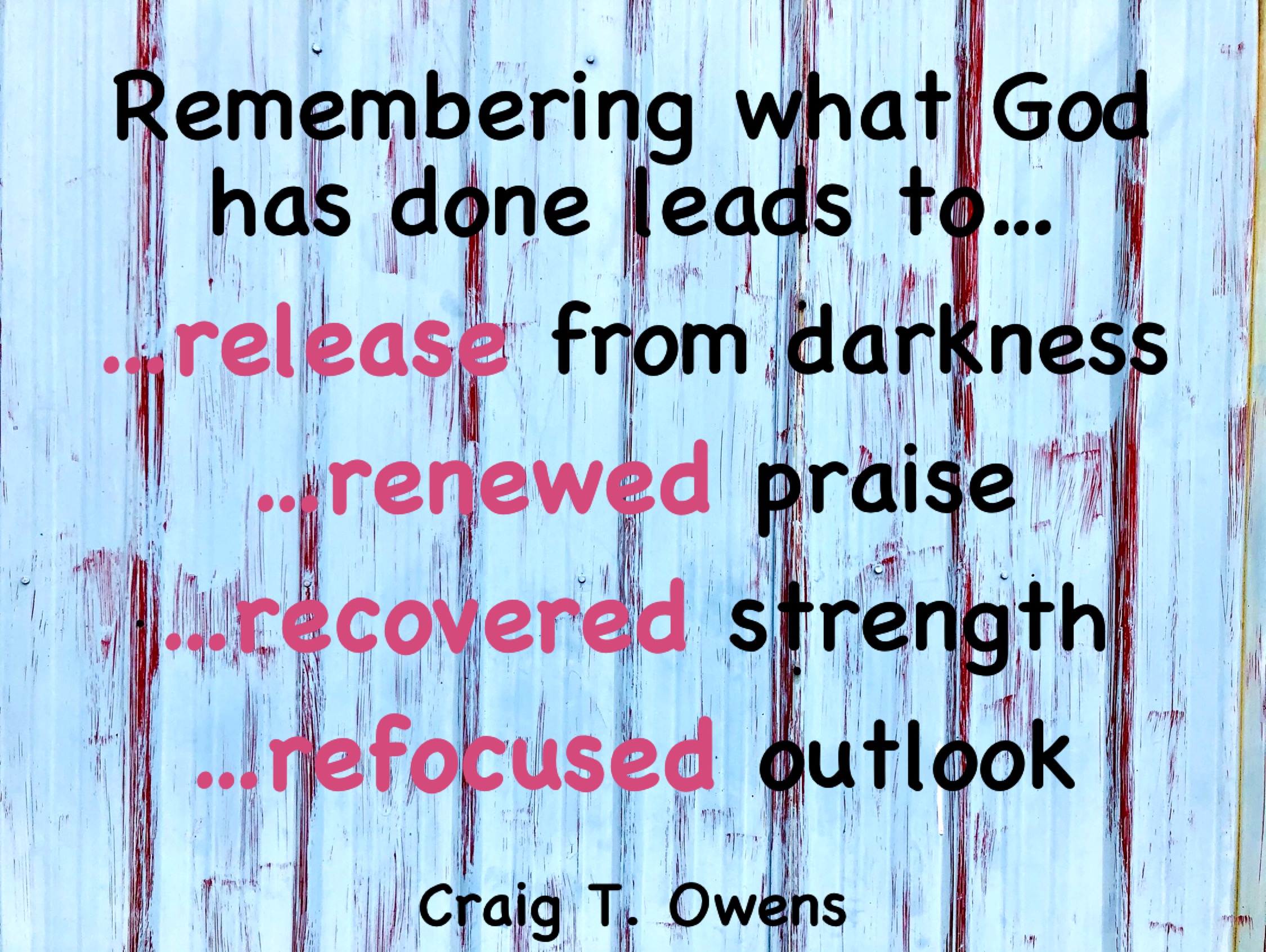
One of the important takeaways from this stanza of Psalm 77 is this: Looking back in gratitude at what God has done allows me to look forward in hope to what He is still going to do. My remembering what God has done in the past leads to: 

  1. Release from the darkness 
  2. Renewed praise 
  3. Recovered strength 
  4. Refocused outlook 

Chapter 4—Hope (vv. 16-20) 

Asaph says, “Look what God did! And since He is the same today as He was yesterday, guess what He’s still able to do!” We know this because the Bible says, “For no matter how many promises God has made, they are ‘Yes’ in Christ. And so through Him the ‘Amen’ is spoken by us to the glory of God” (2 Corinthians 1:20). 

Remember I said earlier that God isn’t done telling His story yet? God isn’t done yet, He knows His Story, and His Story is still being told. But He’s also already told us how His story will end (see Revelation 21:4-6). And the end of His story is really just the beginning of the Real Story! 

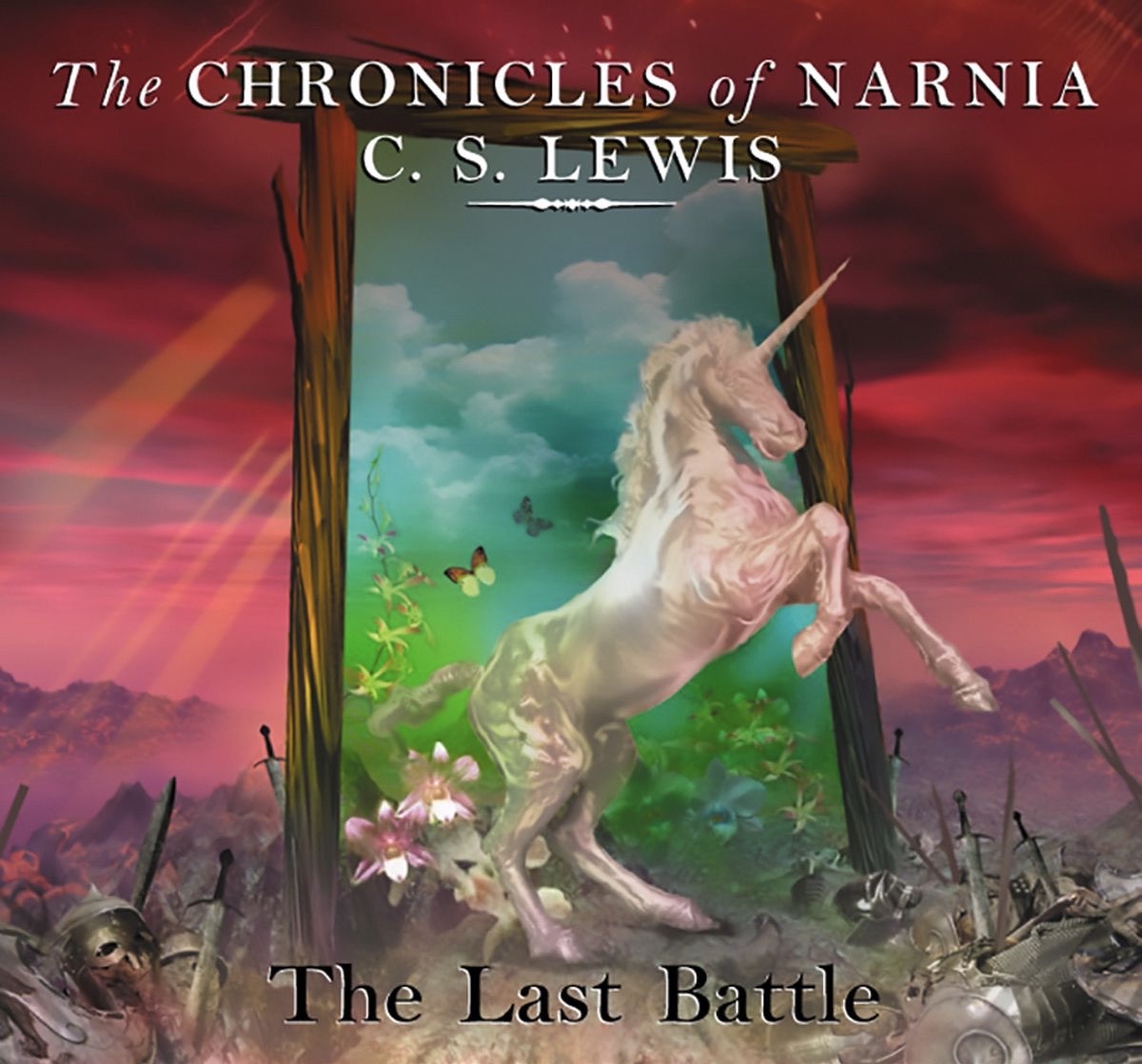
C.S. Lewis said it this way in the closing words of The Last Battle:

“And for us this is the end of all the stories, and we can most truly say that they all lived happily ever after. But for them it was only the beginning of the real story. All their life in this world and all their adventures in Narnia had only been the cover and the title page; now at last they were beginning Chapter 1 of the Great Story, which no one on earth has read; which goes on forever; in which every chapter is better than the one before.” 

When you find yourself saying, “I’ve got questions: How long is this going to last,” Selah to remember that the Story isn’t over yet. The Storyteller knows how it ends, and He promises us: But what of that? For I consider that the sufferings of this present time—this present life—are not worth being compared with the glory that is about to be revealed to us and in us and for us and conferred on us! (Romans 8:18 AMP)

If you have missed any of the messages in our Selah series, you can find the complete list by clicking here.

►► Would you please prayerfully consider supporting this ministry? ◀︎◀︎

Eternal

Listen to the podcast of this post by clicking on the player below, and you can also subscribe on AppleSpotify, or Audible. 

Psalm 119 is divided into twenty-two 8-verse segments, with each verse of the segments beginning with its own Hebrew letter. Lamedh is found in verses 89-96, and lamedh is the tallest of all the Hebrew letters, so that means it stands out. 

Lamedh shows us big proportions. Words like eternal, boundless, established, enduring, and forever are prominent in these eight verses. The psalmist is inviting us to climb up into God’s Word and get a bigger view, a higher vantage point of who God is. 

Consider the opening verse of this section: Your Word, O LORD, is eternal; it stands firm in the heavens. Eternal—think of the implications! If what God says—His Word—is eternal, then…

  • it continues through all generations (v. 90) 
  • it endures even when everything else fades away (vv. 90-91) 
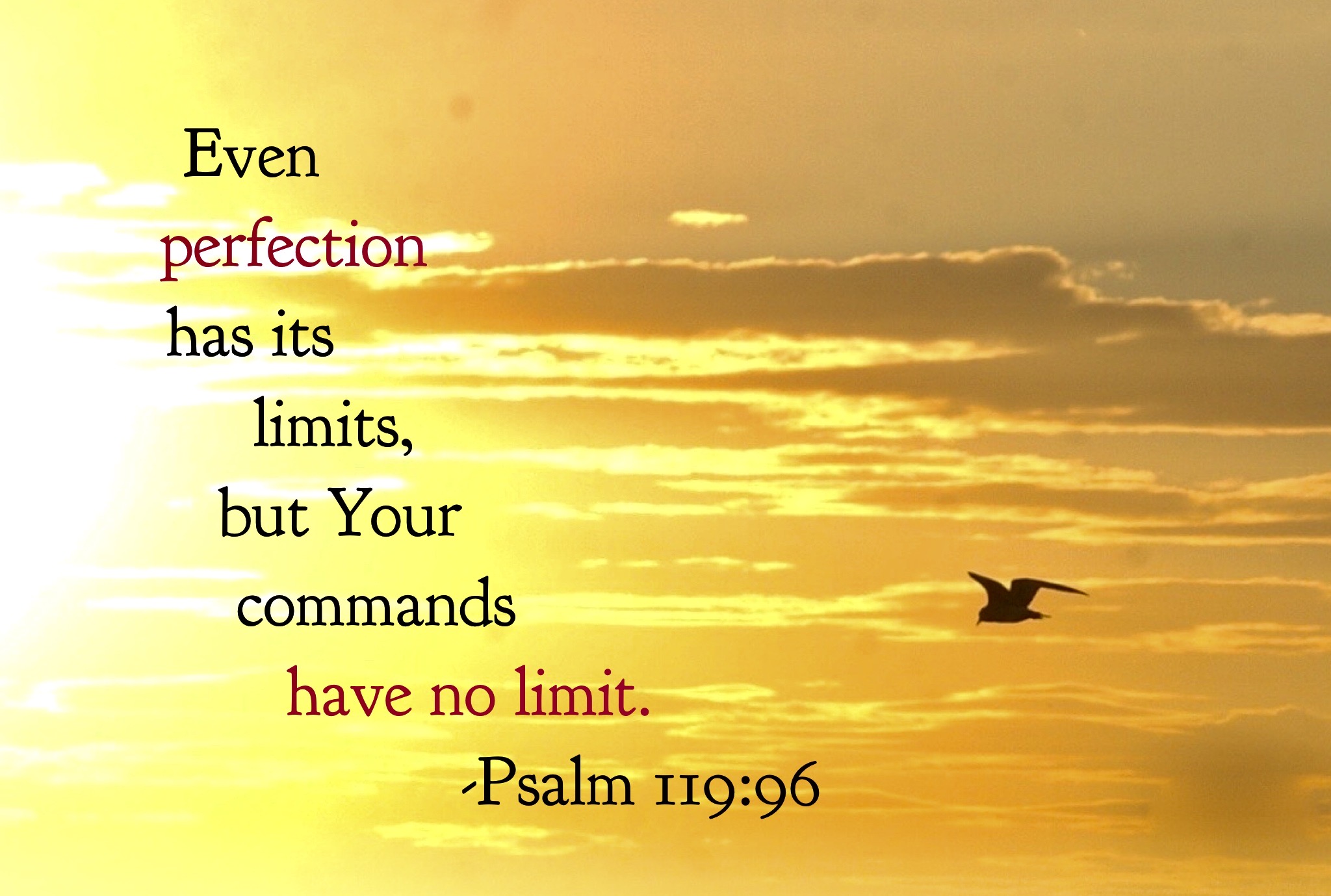
  • it has no limits or frontiers (v. 96) 

At every single moment in my life, my eternal, enduring, limitless God knows the outcome or consequence of each option I could choose. His Word can so transform my mind that I can always choose the most Christ-glorifying option. The Spirit of Truth—my eternal Counselor—can guide me with God’s Word. 

I never have to be at a loss. I am never stumped. I always have access to eternal Truth. 

The psalmist got this: If Your law had not been my delight, I would have perished in my affliction (v. 92). 

Through God’s firmly-established Word I have—

  • Eternal Counsel 
  • Enduring Help 
  • Limitless Strength

And you have all of this, too, through God’s Word! 

Psalm 119 is a great place to start to make Bible reading a daily habit. Scientists tell us that you only need 21 days to make a new habit, and in Psalm 119 you have 22 days of daily reading that will transform your heart and mind. 

►► Would you please prayerfully consider supporting this ministry? ◀︎◀︎