Review Your History

Listen to the podcast of this post by clicking on the player below, and you can also subscribe on AppleSpotify, or Audible.  

We saw in part one of this two-part series that we quickly go into crisis mode when we forget that God is in control, so we need to remain full of thanks all the time (Ephesians 5:20 AMPC). We called gratitude our inoculation against the pull from contentment to crisis, but inoculation doesn’t mean that we never experience some pangs of anxiety when a moment of darkness hits. Maturing Christians are learning how to spot the beginning of anxiety and move back into the contentment zone earlier and earlier (Romans 5:3-5; James 1:2, 12). 

(Check out all of the Scriptures in this post by clicking here.)

James says we “will receive the crown of life” from Jesus. There’s no doubt about that! In a trial, it’s important to be reassured that the trial can never cause us to lose out with our Heavenly Father (Romans 8:38-39). 

Psalm 107 starts out with this same assurance—“those He redeemed” (v. 2) is in the perfect tense. It’s complete and irrevocable! We walk out our redemption in circumstance after circumstance in a way that bring glory to God and draws others to Him as well. “Let the redeemed of the Lord say” is in the imperfect tense, which means giving thanks is an ongoing practice (v. 1). 

Redeemed once, but giving thanks always! 

Romans 8 gives a little snapshot of some of the situations that could have sent us spiraling into crisis mode, but remember the conclusion: None of those things can separate from God’s love. 

Last week we saw how the psalmist linked prayer and gratitude in a repeated theme. This practice is backward looking (vv. 7-8, 14-15, 20-22, 29-32). When we look back to see how God has moved and then we contemplate Who He is (Hebrews 13:8; Isaiah 59:1). 

Look at the closing verse (v. 43): 

  • heed = guard, watch over attentively; this is an imperfect verb—which means we keep on doing it 
  • consider = discern: to take apart the evidence and harvest the lessons 
  • great love = God’s limitless lovingkindness 

I love this verse in the New Living Translation: Those who are wise will take all this to heart; they will see in our history the faithful love of the Lord.

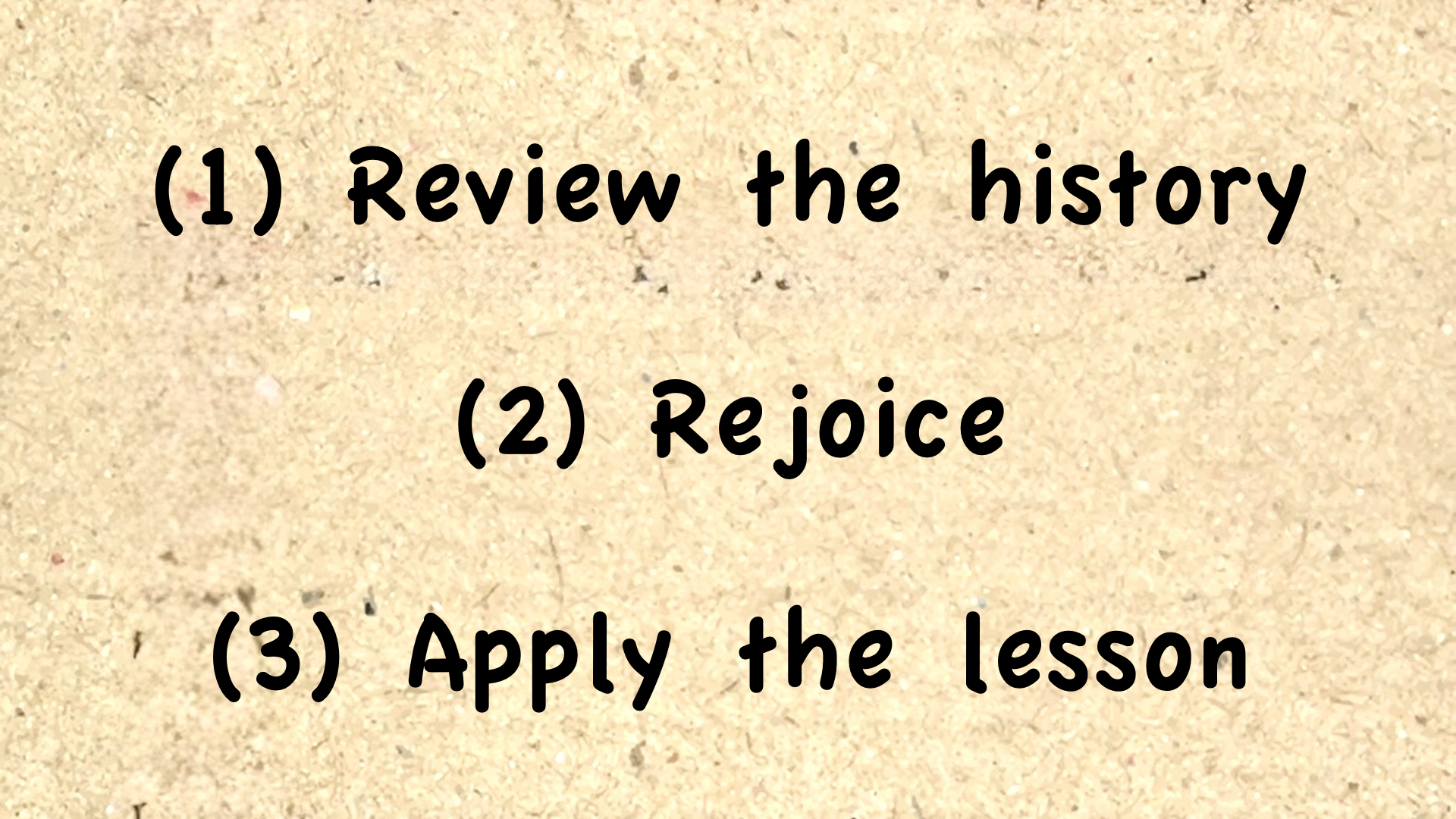
That means we… 

  1. Review the history of God’s faithfulness 
  2. Rejoice over it 
  3. Apply it to your current circumstance 

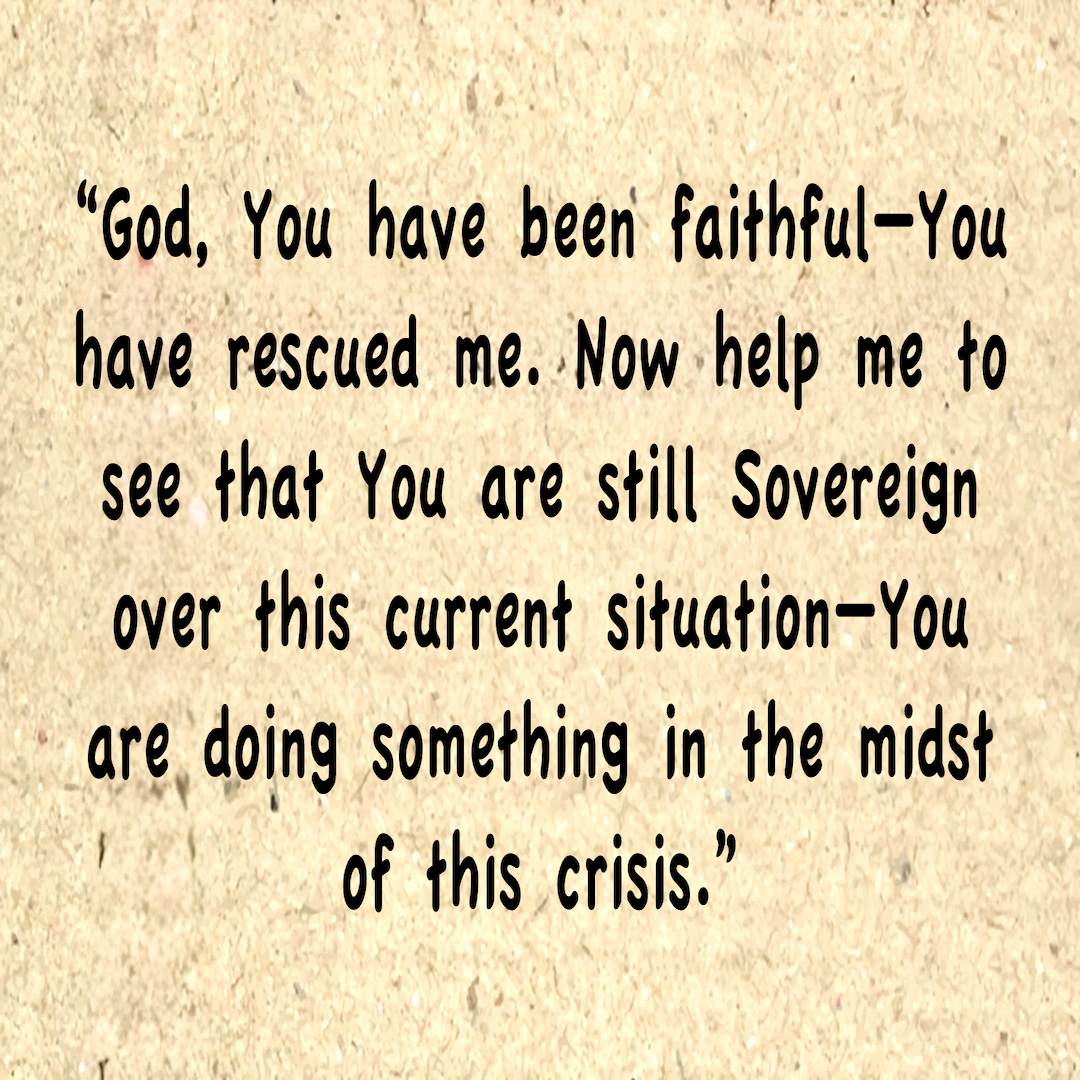
We can pray, “God, You have been faithful—You have rescued me. Now help me to see that You are still Sovereign over this current situation—You are doing something in the midst of this crisis.” 

In Romans 8:28, Paul tells us that God is working together all of our circumstances for His glory and our our good. Oswald Chambers noted, “In the Christian life we have no aim of our own, and God’s aim looks like missing the mark because we are too shortsighted to see what He is aiming at.” Reviewing our history and then giving thanks helps assure our anxious heart that God is going to hit the mark (Philippians 1:6). 

Praise the Lord! I will thank the Lord with all my heart as I meet with His godly people. How amazing are the deeds of the Lord! All who delight in Him should ponder them. Everything He does reveals His glory and majesty. His righteousness never fails. He causes us to remember His wonderful works. How gracious and merciful is our Lord! (Psalm 111:1-4 NLT) 

►► Would you please prayerfully consider supporting this ministry? My Patreon supporters get behind-the-scenes access to exclusive materials. ◀︎◀︎
Remember Who’s In Control

Listen to the podcast of this post by clicking on the player below, and you can also subscribe on AppleSpotify, or Audible. 

I love the Fibber McGee and Molly radio broadcasts! One of the running gags on this show was Fibber’s closet: People who mistakenly opened the closet door got buried under a pile of stuff that Fibber had stashed away. 

In one episode, Molly is determined to grow through all of the items that were strewn across the floor before they got shoved back into the closet. One by one Molly asked Fibber about all of the odd knick-knacks and he had a good explanation for every single one justifying why he couldn’t possibly part with it. One of my favorites was this—“What’s this bamboo pole,” Molly asked, and Fibber said, “Why, that pole is very important. If I was ever offered to be Joe Louis’ sparing partner, that’s the ten-foot pole I wouldn’t touch it with!” 

I’m afraid that many of us have closets like this in our minds. We’ve accumulated a lot of just-in-case stuff for each and every scenario that may come upon us at some point in our lives. 

All of our contingency plans implies that something is going to go wrong and that only the prepared and well-stocked will make it through. 

(Check out all of the Scriptures in this post by clicking here.) 

Psalm 107 is the first psalm in Book 5 of the Psalter—the book that focuses mostly on praise. This author is recounting the history of Israel through the times of crisis: 

  • lost and homeless (v. 4) 
  • hungry and thirsty (vv. 5, 9) 
  • trouble and distress (vv. 6, 13, 19, 28) 
  • darkness and deepest gloom (vv. 10, 14) 
  • prisoners in chains (v. 10) 
  • knocking on death’s door (v. 18) 
  • terrorized (v. 26) 
  • at their wits’ end (v. 27) 

We quickly go into crisis mode when we forget that God is in control! 

In God’s Kingdom there is no emergency, no crisis, no Plan B. God is sovereignly in control—Isaiah 46:10. 

  • God is in control of the macro—Genesis 1:1; Job 38:4-11 
  • God is in control of the micro—Psalm 139:16; Jeremiah 29:11 
  • God will use what we call a crisis to display His glory—Exodus 14:4 NLT 

When you feel yourself spiraling into crisis mode—when you feel you’re at your wits’ end—you can get back into contentment mode. 

“When a man is at his wits’ end it is not a cowardly thing to pray, it is the only way he can get in touch with Reality.” —Oswald Chambers 

That’s what Job finally did—Job 42:1-2. 

And that’s also what the psalmist did—Psalm 107:6-8, 13-15, 19-21, 28-31.  

Prayer is a great rescue in trouble, and ongoing thankfulness is a great inoculation against going into crisis mentality. Notice that those four repeated phrases have both cried out to the Lord AND Let them give thanks to the Lord for His unfailing love. 

Let’s strive to remain aware of His unfailing love by cultivating consistent gratitude. I like v. 2 from the NLT: “Has the Lord redeemed you? Then speak out! Tell others He has redeemed you from your enemies”. When you are preoccupied with telling others and yourself how good God is, there isn’t room in your heart for the worry that leads toward crisis mode. 

Remember: We can quickly go from contentment mode to crisis mode when we forget that God is in control, so remain full of thanks. “At all times and for everything giving thanks in the name of our Lord Jesus Christ to God the Father” (Ephesians 5:20 AMPC). 

►► Would you please prayerfully consider supporting this ministry? My Patreon supporters get behind-the-scenes access to exclusive materials. ◀︎◀︎
Contend For People

Listen to the podcast of this post by clicking on the player below, and you can also subscribe on AppleSpotify, or Audible. 

Jude calls Christians to contend for the faith without contention and without compromise. As we wrap up this series, there is one final question that we should ask: What are we contending for? 

I believe the bottom line for Jude is that we are contending with saints for people. In other words, we have to be united in our efforts as we seek to expand the Kingdom of God. 

The first hurdle we need to overcome is eliminating the dividers. Paul told the Ephesian elders about these people (Acts 20:29-30). And Jude describes them in verses 12, 16-19 as…

  • blemishes 
  • self-serving and boasting about themselves 
  • unfruitful 
  • grumblers and faultfinders 
  • ungodly desires 
  • following natural instincts = governed by their appetites 
  • who divide you 

(Check out all of the Scriptures in this post by clicking here.)

Jude then makes a stark distinction—saints are to be different! Saints are to be united in their love for Jesus and their love for each other. In fact, this is what Jesus said would distinguish His followers (John 13:35) and Paul elaborates on this in Philippians 2:1-4. 

In verses 20-25, Jude calls saints to live in contrast to “these men” who divide. He challenges saints to—

  • keep being built up in our faith (see also Ephesians 2:20; Colossians 2:7) 
  • praying in the Holy Spirit 
  • keeping ourselves in God’s love 
  • waiting in assurance for Christ’s imminent return 

And as we are building, praying, keeping, and waiting, we must also be rescuing people from their path toward Hell. Our battle is never against flesh and blood. Our battle is against those powers that divide and those powers that bind and blind (Ephesians 6:12; 2 Timothy 2:26). 

We must not get sidetracked or distracted, we must not contend in a contentious way, but we must remain united with Jesus and united with fellow saints as we seek to expand the Kingdom of God. 

If you’ve missed any of the previous messages from this series on the Book of Jude, you can find them all here. 

►► Would you please prayerfully consider supporting this ministry? My Patreon supporters get behind-the-scenes access to exclusive materials. ◀︎◀︎

7 Images Of The Church

Husbands, love your wives, just as Christ loved the church and gave Himself up for her to make her holy, cleansing her by the washing with water through the Word. (Ephesians 5:25-26)

Dr. Henry Halley points to seven images the Bible portrays of how Jesus interacts with His saints.

“1. The Shepherd and the sheep emphasizes both the warm leadership and protection of Christ and the helplessness and dependency of believers (John 10:1-18). 

2. The vine and the branches points out the necessity for Christians to depend on Christ’s sustaining strength for growth (John 15:1-8).

3. Christ as high priest and the church as a kingdom of priests stress the joyful worship, fellowship, and service which the church can render to God through Christ (Hebrews 5:1-10; 7:1; 8:6; 1 Peter 2:5-9). 

4. The cornerstone and building stones (Matthew 21:42) accents the foundational value of Christ to everything the church is and does, as well as Christ’s value to the unity of believers. Love is to be the mortar which solidly holds the living stones together (1 Corinthians 3:9; 13:1-13; Ephesians 2:19-22; 1 Peter 2:5). 

5. The head and many-membered body, the church, is a vibrant organism, not merely an organization; it draws its vitality and direction from Christ, the Head, and each believer has a unique and necessary place in its growth (1 Corinthians 12:12-13, 27; Ephesians 4:4). 

6. The last Adam and new creation presents Christ as the initiator of a new creation of believers as Adam was of the old creation (1 Corinthians 15:22, 45; 2 Corinthians 5:17). 

7. The bridegroom and bride beautifully emphasizes the intimate fellowship and co-ownership existing between Christ and the church (Ephesians 5:25-33; Revelation 19:7-8; 21:9).

You can read all of the Bible verses listed in this post by clicking here. 

“Were” To “Are”

Listen to the podcast of this post by clicking on the player below, and you can also subscribe on AppleSpotify, or Audible. 

In the first ten verses of Ephesians 2 Paul talks about the amazing transformation from who we WERE before we met Jesus to who we ARE now with Jesus as our Lord and Savior. 

Before Jesus we…

  • were dead
  • used to live in sin
  • used to follow the world
  • were living to gratify fleshly cravings 
  • were following only earthly desires 

The result of this lifestyle is quite clear: We WERE deserving of God’s wrath (see vv. 1-3). 

Verse 4 opens with an amazing word: “But” here is what our new life looks like. We are…

  • made alive with Christ 
  • rescued from death
  • raised up with Christ
  • seated with Jesus in heavenly realms 
  • benefitting from God’s kindness

The bottom line: We ARE saved by God’s grace from God’s wrath (vv. 4-8)! 

It’s only now that we can realize that we ARE God’s handiwork, created to be in Jesus, to do good works, and to bring God glory. Our lives now ARE a display of the “incomparable riches of His grace” (v. 7)—we ARE a living testimony of His love for lost people. 

Being transformed from what we WERE to who we ARE allows us to echo the words of the psalmist—Come and see what our God has done, what awesome miracles He performs for people! (Psalm 66:5 NLT). 

►► Would you please prayerfully consider supporting this ministry? My Patreon supporters get behind-the-scenes access to exclusive materials. ◀︎◀︎
Training For The Fight

Listen to the podcast of this post by clicking on the player below, and you can also subscribe on AppleSpotify, or Audible. 

Last week I challenged all of us to ask the Holy Spirit to check our attitude to ensure we indeed have the attitude of a secure servant. This is especially true when we remember that we are in the midst of a spiritual battle and that Jude writes this letter to us to encourage us to “contend for the faith.” 

When Jesus told His parable about the sower, here’s what He said about the seed that fell on the hard path (Mark 4:15 AMPC). Jesus said the forces of evil want to try to bring down the Kingdom of God (Matthew 11:12).

(All the Scriptures I use in this post may be viewed here.)  

Are we willing to engage in this intense battle? Will we strive with the forces of darkness for the sake of seeing lost people saved? God told Isaiah that it was so easy to give in—to throw our hands up (Isaiah 64:5-7). Paul extolled a Christian brother named Epaphras for his willingness to wrestle in prayer for the saints (Colossians 4:12). 

Indeed wrestling for the saints is what Jude had in mind. 

I like the phrase “contend for the faith” in the Message paraphrase: “Fight with everything you have in you.” 

The Greek word Jude uses here is the only time it’s used in the New Testament. It means:

  1. To enter a contest—1 Corinthians 9:24-26 
  2. Contend with adversaries—Colossians 4:12; Ephesians 6:12 
  3. Struggle through difficulties—Colossians 1:28-29 
  4. Endeavor with strenuous zeal to obtain victory—1 Timothy 6:12; 2 Timothy 4:7 

The root word is agonizimai which sounds a lot like our English word “agonize.” This is an all-in mentality. Sitting on the sidelines, casually interacting, dabbling in it every once in a while won’t lead to victory. 

The stakes are too high, our enemy is cunning and desperate, so nothing less than agonizing training that will not quit no-matter-what will do! 

What exactly are we training to do? 

Too many view salvation as just saved from Hell. That’s part of it, but not all of it. We’re also saved to display the glory of God. The first part is accepting Jesus as Savior; the second part is accepting Jesus as Lord. The salvation we share is not either-or, but it is both-and: Jesus is both our Savior and Lord. 

We need to strive to obtain the fullness of Christ’s nature in us. People should be able to see and feel a difference in our lives without us even opening our mouths. Francis of Assisi said, “Preach always; if necessary, use words.” To that end, he offered this prayer—

“Lord, make me a channel of Thy peace, that
where there is hatred, I may bring love;
where there is wrong, I may bring the spirit of forgiveness;
where there is discord, I may bring harmony;
where there is error, I may bring truth;
where there is doubt, I may bring faith;
where there is despair, I may bring hope;
where there are shadows, I may bring light;
where there is sadness, I may bring joy.”

Will you be all-in?
Will you wrestle in prayer?
Will you let go of earthly things so you can cling to Jesus?
Will you display His light through your life?
Will you be ready to use words, if necessary?

Let’s make sure we are ready to contend for the faith the right way! 

P.S. Speaking of prayer, my new book Amen Indeed is a prayer guide for pastors. Please consider giving a copy of this book to your pastor! 

If you’ve missed any of the other messages in our series Earnestly Contend, you can find them all here. 

►► Would you please prayerfully consider supporting this ministry? My Patreon supporters get behind-the-scenes access to exclusive materials. ◀︎◀︎
God’s Infinite And Eternal Love

G.K. Chesterton wrote, “The whole difference between construction and creation is exactly this: that a thing constructed can only be loved after it is constructed; but a thing created is loved before it exists, as the mother can love the unborn child.”

God loved you before you were born. He had a plan in mind for your life before you were conceived. 

For we are God’s handiwork, created in Christ Jesus to do good works, which God prepared in advance for us to do. (Ephesians 2:10) 

Even as God formed you in your mother’s womb, He implanted in you all that you would need to live for His glory. 

Your eyes saw my unformed body; all the days ordained for me were written in Your book before one of them came to be. (Psalm 139:16) 

God couldn’t love you any more than He already does because His love for you is infinite and eternal❣️

Community Involvement

Listen to the podcast of this post by clicking on the player below, and you can also subscribe on AppleSpotify, or Audible. 

The letters we’ve looked at so far—B, A, S, and I—are bringing about greater fruitfulness and joy-fullness in our lives, which is then enhancing our personal testimony. So the B, A, S, and I all lead up to the C—community involvement. 

One of the first things we need to consider about our community is our role—both what the Bible says is and isn’t our area of concern. Jesus helps us with a parable about wheat and weed and its explanation a few verses later (Matthew 13:24-30, 36-43). 

(Check out all of the Scriptures in this post by clicking here.) 

From Jesus we learn that the world was created good—that’s what God said at each day of Creation. Since the fall of man, satan has sown his evil seeds alongside Christ’s good seeds. 

  • Our responsibility isn’t about pointing out what’s wrong in the world 
  • It isn’t about rooting out the evil in the world 
  • It isn’t about judging the evil or even the evildoers in the world 
  • Our responsibility is to proclaim how good our God is 
  • Our responsibility is to bear as much God-honoring fruit as we can 
  • Our responsibility is to embody biblical principles and proclaim the benefits of God’s Kingdom to others 

The apostle Paul helps us see our role in our community with his payer in Ephesians 1:17-20. Paul desires that we know…  

  1. The hope to which God has called us. A rock-solid, irrevocable, eternal hope! 
  2. The riches of His inheritance in His saints. The treasure is in us. We get to be God’s blessing to those around us. 
  3. God’s incomparably great power for us. We’re never lacking anything because His power is for us—God Himself is for us! 

When our eyes are opened to this, we can see better how to live in our communities. God has placed us and equipped us to proclaim His glorious Gospel in our Personal Mission Field. The PMF includes places like our: 

  • Family—John 1:35-42 
  • Friend group—John 1:43-46 
  • Neighborhood—Colossians 1:3-8 
  • Workplace—Ephesians 6:5-9 

How do we do this? 

  • We talk about the daily interactions you have with Jesus—make it clear that He is a real Person with Whom you have a relationship.  
  • We live out our biblical worldview. 
  • We stay in fellowship with out saints so that we are sharpened and prepared to give an answer for the reason for the hope we have. 
  • We continually monitor our conversation and attitude to make sure they are Christ-like. 

Let us saints be known for what we’re for more than for what we’re against! 

Instead of railing on the evil, proclaim the favor of God, proclaim the soul-satisfying joy of a relationship with Jesus, and proclaim the advantages of the Holy Spirit’s continual counsel. 

If you’ve missed any of the previous messages in our series B.A.S.I.C. Christianity, you can find them all here. 

►► Would you please prayerfully consider supporting this ministry? My Patreon supporters get behind-the-scenes access to exclusive materials. ◀︎◀︎
“Every Spiritual Blessing”

Praise be to the God and Father of our Lord Jesus Christ, who has blessed us in the heavenly realms with every spiritual blessing in Christ. (Ephesians 1:3)

These blessings are not found just anywhere. They are found only in Jesus and because of Jesus.

The completeness of perfect blessing is found in Who my Heavenly Father is for me because of the finished work of Jesus!

Serving The Body

Listen to the podcast of this post by clicking on the player below, and you can also subscribe on AppleSpotify, or Audible. 

Last week we were reminded that sanctification (or as I call it “saint-ification”) is an ongoing process that usually involves the help of other saints. There is something else we need to do with other saints: serve them. 

We are all a part of the same Body so it is beneficial for the whole Body if we care for every part of the Body (1 Corinthians 12:25 AMPC; Ephesians 5:30). 

(Check out all of the Scriptures in this post by clicking here.) 

In order to serve others, we are going to have to check our attitude. We have been called to have the attitude that Jesus had about the Church (Ephesians 5:29; Philippians 2:3-7; John 13:3-5, 14-17). 

We must all know: 

  • I have a gift—notice the phrase each of you in 1 Peter 4:10 
  • I must use my gift to serve the Body of Christ (Luke 17:10)

In the early Church, we see so much togetherness that they rewrote the definition of the Greek word koinonia (see Acts 2:42). Here’s what koinonia looks like in the Church:

(1) Testifying in church (Psalm 40:9-10 NLT) 

(2) Being present with saints outside of church. From Acts 20-28, the pronouns “we” and “us” are used over 80 times! Paul was blessed simply by Luke being with him, just as saints are blessed when you are truly with them. 

(3) Love notes when a saint is absent. The apostle John was brilliant at this. Look at his three epistles: 

  • dear children 9x in 1 John  
  • chosen / dear lady 2x in 2 John  
  • dear friend 4x in 3 John  

(4) Hospital-ity whenever it’s needed. Be a place of healing and refreshment for the saints God has placed in your life, just as Philemon did (Philemon 2-7, 22). 

What a testimony it is when we live this way (Romans 12:10, 13)! 

Remember the saint-ification process brings fruitfulness, joy-fullness, and an enhanced testimony. I love this quote from Richard Stearns, “The beautiful simplicity of our faith is that it distills down to the exact same bottom line for both the brilliant theologian and the five-year-old child: love God and love each other—period. Everything else derives from that.” 

If you’ve missed the “B” or “A” in our series B.A.S.I.C. Christianity, you can check those out here. 

►► Would you please prayerfully consider supporting this ministry? My Patreon supporters get behind-the-scenes access to exclusive materials. ◀︎◀︎