Links & Quotes

link quote

These are links to articles and quotes I found interesting this weekend.

Victory! FCC Pulls The Plug On Its Unconstitutional Plans

John Maxwell talks about delegation: Overloaded & Underempowered

“Before I became a Christian I do not think I fully realized that one’s life, after conversion, would inevitably consist in doing most of the same things one had been doing before, one hopes, in a new spirit, but still the same things.” —C.S. Lewis

“The only people with whom you should try to get even are those who have helped you.” —John E. Southard

“I’m a fool for Christ. Whose fool are you?” —John Wimber

“Holiness is not freedom from temptation, but power to overcome temptation.” —G. Morgan Campbell

Are environmentalists going too far? The War On Humans

[VIDEO] The more I hear Sen. Ted Cruz, the more I like him. “I don′t work for the party bosses.”

Eric Metaxas on a baby′s innate sense of morality: Babies & The Not-So-Blank Slate

“Forget others’ faults by remembering your own.” —John Bunyan

Links & Quotes

link quote

These are links to articles and quotes I found interesting today.

“The Hebrews have done more to civilize men than any other nation. … [God] ordered the Jews to preserve and propagate to all mankind the doctrine of a supreme, intelligent, wise, almighty sovereign of the universe… the great essential principle of morality, and consequently all civilization.” —John Adams, in a letter to Judge F. A. Van der Kemp, February 16, 1809

I will not execute the fierceness of mine anger, I will not return to destroy Ephraim: for I am God, and not man. (Hosea 11:9) 

The Lord thus makes known His sparing mercies. It may be that the reader is now under heavy displeasure, and everything threatens his speedy doom. Let the text hold him up from despair. The Lord now invites you to consider your ways and confess your sins. If He had been man, He would long ago have cut you off. If He were now to act after the manner of men, it would be a word and a blow and then there would be an end of you: but it is not so, for “as high as the heavens are above the earth, so high are His ways above your ways.” 

You rightly judge that He is angry, but He keepeth not His anger forever: if you turn from sin to Jesus, God will turn from wrath. Because God is God, and not man, there is still forgiveness for you, even though you may be steeped up to your throat in iniquity. You have a God to deal with and not a hard man, or even a merely just man. No human being could have patience with you. You would have wearied out an angel, as you have wearied your sorrowing Father; but God is longsuffering. Come and try Him at once. Confess, believe, and turn from your evil way, and you shall be saved. —Charles Spurgeon, Faith′s Checkbook (February 16) 

Stomach-churning: Former Planned Parenthood Nurse Speaks Out

“It was not an easy task which the Church faced when she came down from that upper room…. Left to herself the Church must have perished as a thousand abortive sects had done before her, and have left nothing for a future generation to remember. That the Church did not so perish was due entirely to the miraculous element within her. That element was supplied by the Holy Spirit who came at Pentecost to empower her for her task. For the Church was not an organization merely, not a movement, but a walking incarnation of spiritual energy. And she accomplished within a few brief years such prodigies of moral conquest as to leave us wholly without an explanation—apart from God.” —A.W. Tozer

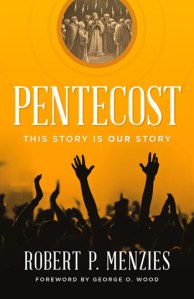
14 Quotes From “Pentecost”

Pentecost

I thoroughly enjoyed reading Pentecost by Robert P. Menzies, and learned quite a bit. You can read my full book review by clicking here. Here are a few quotes that stood out to me.

“It’s because Pentecostals fuse the biblical and contemporary horizons that we link baptism in the Holy Spirit with speaking in tongues, since that’s what Acts 2 does. It’s why we associate Spirit-baptism with empowerment for mission rather than with spiritual regeneration. And it’s why we expect God to perform ‘signs and wonders’ and to manifest spiritual gifts in worship services. All these things happened in the first Pentecostal community, and their story is our story.” 

“At its heart, the Pentecostal movement is not Spirit-centered but Christ-centered. The work of the Spirit, as Pentecostals understand it, centers on exalting and bearing witness to the Lordship of Christ.”

“Pentecostals are ‘people of the Book.’ Although Pentecostals certainly encourage spiritual experience, they do so with a constant eye to Scripture.”

“So, the stories of Acts are our stories, and we read them with expectation and eagerness: stories of the Holy Spirit’s power, enabling ordinary disciples to do extraordinary things for God. … The hermeneutic of the typical Pentecostal believer is straightforward and simple: the stories in Acts are my stories—stories that were written to serve as models for shaping my life and experience.”

“In Luke’s view, every member of the church is called (Luke 24:45–49; Acts 1:4–8/Isaiah 49:6) and empowered (Acts 2:17–21; cf. 4:31) to be a prophet. Far from being unique and unrepeatable, Luke emphasizes that the prophetic enabling experienced by the disciples at Pentecost is available to all of God’s people. … Through his two-volume work, Luke declares that the church, by virtue of its reception of the Pentecostal gift, is nothing less than a community of prophets. It matters not whether we are young or old, male or female, rich or poor, black or white; the Spirit of Pentecost comes to enable every member of the church, each one of us, to fulfill our prophetic call to be a light to the nations.” 

“Not long ago a Chinese house church leader commented, ‘When Western Christians read the book of Acts, they see in it inspiring stories; when Chinese believers read the book of Acts, we see in it our lives.’”

“Luke’s theology of the Spirit is different from that of Paul. Unlike Paul, who frequently speaks of the soteriological dimension of the Spirit’s work, Luke consistently portrays the Spirit as a charismatic or, more precisely, a prophetic gift, the source of power for service.” 

“Luke crafts his narrative so that the parallels between Jesus’ experience of the Spirit (Luke 3–4) and that of the disciples on the day of Pentecost (Acts 1–2) cannot be missed. Both accounts: 1. Are placed at the outset of Luke’s Gospel on the one hand, and the book of Acts on the other; 2. Associate the reception of the Spirit with prayer; 3. Record visible and audible manifestations; 4. Offer explanations of the event in the form of a sermon that alludes to the fulfillment of Old Testament prophecy.”

“Luke’s understanding of baptism in the Holy Spirit, I have argued, is different from that of Paul. It is missiological rather than soteriological in nature. … The tendency in Protestant churches has been to read Luke in the light of Paul. Paul addresses pastoral concerns in the church; Luke writes a missionary manifesto.” 

“Bold witness for Jesus is recognized as our primary calling and the central purpose of our experience of the Spirit’s power. Missions is woven into the fabric of our DNA.”

“I do not wish to minimize in any way the significance of the great doctrinal truths of Paul’s writings. I merely point out that since Paul was, for the most part, addressing specific needs in various churches, his writings tend to feature the inner life of the Christian community. His writings, with some significant exceptions, do not focus on the mission of the church to the world. … It is probably fair to say that while Paul features the ‘interior’ work of the Spirit (e.g., the fruit of the Spirit, Gal. 5:22–23); Luke features His ‘expressive’ work (Acts 1:8). Thus, by appropriating in a unique way the significant contributions of Luke-Acts, Pentecostals have developed a piety with a uniquely outward or missiological thrust.”

“The clarity of the Pentecostal message flows from the simple, straightforward manner in which we read the Bible. As I have noted, Pentecostals love the stories of the Bible. We identify with the stories that fill the pages of the Gospels and Acts, and the lessons gleaned from these stories are easily grasped and applied in our lives. For Pentecostals, the New Testament presents models that are to be emulated and guidelines that are to be followed. It should be noted that our approach to doing theology is not dependent on mastering a particular set of writings, say, the works of Luther; or coming to terms with a highly complex theological system. Pentecostals also do not worry much about cultural distance or theological diversity within the canon. We do not lose sleep over how we should understand the miracle stories of the Bible or how we might resolve apparent contradictions in the Bible. Our commitment to the Bible as the Word of God enables us to face these questions with a sense of confidence.”

“We must remember that whatever we do, God is measuring the work we do for Him in a qualitative, not quantitative way. … Only the work which is done by the power of the Holy Spirit can be acceptable in the Kingdom of God.” —David Yonggi Cho

“Some will still remain skeptical. They will ask: Is not this approach to church life, with its emphasis on ecstatic experience, emotional response, and spiritual power, filled with inherent dangers? Might it not encourage us to feature emotionally manipulative methods and to focus on superficial matters? Yes, undoubtedly, there are dangers. However, there is more danger in an approach that fails to make room for the full range of human experience, including the emotions, in our encounter with God.”

Come Holy Spirit

Come Holy Spirit [web]The Bible is so full of the amazing promises that come when we allow the Holy Spirit to move in our lives. Things like…

  • Anointing for service
  • Empowerment for telling other about Jesus
  • Answering those who criticize the gospel
  • Praying more intimately
  • Wisdom
  • Growing in Christlike character
  • Insight into difficult situations
  • Discernment
  • Creativity where there was stagnation
  • And on and on and on

With all of the blessings that come with the Holy Spirit’s move in our lives, why wouldn’t we pray more frequently, “Come Holy Spirit”?

Beginning this Sunday I will be talking about some of the roles the Holy Spirit plays in the lives of Christians. I hope you can join me each week at Calvary Assembly of God.

Love Cycle

Listen to the podcast of this post by clicking on the player below, and you can also subscribe on AppleSpotify, or Audible.

…Whoever loves God must also love his brother. … This is how we know that we love the children of God: by loving God and carrying out His commands. (1 John 4:21, 5:2)

Love cycleThis is a really cool cycle! I know I love God because I obey His command to love others, which I can only do because I love God and obey His commands.

Here’s the cycle breaker: If I don’t love others, it’s a clear indications that I don’t love God, and the cycle of love-obedience-love is shattered.

Loving God is the natural fuel to obey Him. He is love. He demonstrated this by loving unloveable, sinful me. If He loved me, how could I do anything less than love Him? If I truly love Him, I will naturally want to obey Him. His commands aren’t difficult because He empowers me to do them. His command is to be like Him—He is love so I must love.

I know I am loving God because I am loving others. I can only love others because the love of God is in me. This love inspires me to obey Him and love others. This obedience draws me closer to God, which fuels me for even greater love.

Love fuels my obedience. Obedience fuels my love. And this virtuous cycle can go on and on and on and on and on!

►► Would you please prayerfully consider supporting this ministry? My Patreon supporters get behind-the-scenes access to exclusive materials. ◀︎◀︎

Immersed

What happens when we truly let the Holy Spirit have His way in our lives?

Could we experience today the things that are recorded in the Book of Acts?

Is it possible that God wants to do so much more through our lives than we are allowing Him to do now?

That last question, I believe is the most important one. One of the apostle Paul’s prayers went like this:

And I pray that you, being rooted and established in love, may have power, together with all the saints, to grasp how wide and long and high and deep is the love of Christ, and to know this love that surpasses knowledge — that you may be filled to the measure of all the fullness of God. Now to Him who is able to do immeasurably more than all we ask or imagine, according to His power that is at work within us, to Him be glory in the church and in Christ Jesus throughout all generations, for ever and ever! Amen. (Ephesians 3:17-21)

This is an expansive prayer … a mind-blowing prayer … a prayer that is asking God to go beyond our ability to contain all that He has for us.

The only way we can get to this place (and I want all of us to get to this place) is if we let go. In other words, if we will let the Holy Spirit totally immerse us in His presence, if we will not try to box Him up, or shut Him out of any area of our lives.

We’ll be learning more about Immersed this Sunday at Calvary Assembly of God. If you’ve missed any of the messages in this series, you can check them out here:

Empowering The Team

In reading Leadership Is Dead, one passage particularly stood out to me:

“The wise leader understands that sharing the burden benefits the entire team over the long term. Empowering others makes tasks manageable while also allowing team members to sharpen their skills and build upon their strengths. When a leader refuses to share the load, he brings disservice to the organization because those on his team are not allowed to develop their own leadership skills, and the next generation of leaders are not developed properly for future organizational success.”

Think back to the first two kings in Israel’s history: Saul and David. Both stood out from everyone around them as a strong leader. But only one of them left behind a lasting leadership legacy.

Both Saul and David had men who were immediately attracted to them. Saul was surrounded by valiant men, while David was surrounded by society’s rejects. But clearly David was an empowering leader, and Saul was not. Want proof?

The Bible gives a lengthy list of David’s mighty men, along with quite a résumé of their heroic accomplishments. The list of Saul’s mighty men is: .

I think David was secure in the fact that God called him to lead, while Saul was constantly second-guessing.

  • This made David generous, and Saul jealous.
  • David liberated his men, and Saul contained his men.
  • David encouraged, and Saul controlled.

In the end: David left a legacy, and Saul did not.

What kind of leader do you want to be?

UPDATE: Being secure to serve is one of the main points I tackle in my book Shepherd Leadership: The Metrics That Really Matter. Check out this short clip—

No Crutches

In preparing for the continuation of our Ignite series, I’ve been reviewing some of my notes about the Holy Spirit. This quote from R. Hollis Gause has really been working on me:

“[Jesus] was not a crutch for [the disciples’] immaturity. … Jesus did not encourage a mindless dependency on His physical presence; instead, He expected them to be interpretive of His instructions about their mission.”

Jesus said He wasn’t leaving us orphans, but He would send us the Holy Spirit to be a constant Counselor. When I submit to the Holy Spirit’s counsel, it’s not a mindless giving in, but a mind-full acknowledgment of His role. The Holy Spirit didn’t come to be my crutch, but to be my Liberator.

The Holy Spirit prepares me to be a conduit for God’s blessings.

I cannot touch in love…

I cannot speak with power…

I cannot truly represent Christ…

if I’m operating in my own strength.

The Holy Spirit comes alongside me to

Develop agape love in my heart…

stimulate my mind with the right words…

help me behave more like Jesus…

and live mind-full of His empowerment.

To do things on my own is to live with a crutch—to live a limited life.

To live in the flow of the Holy Spirit is to live a life that is fully engaged.

That’s how I want to live every day.

Light Us Up

This Sunday, May 23, is a pivotal day for the Church. It’s Pentecost Sunday: the day the promised empowerment from God came upon the first believers and turned them into power-packed dynamos!

Wow, what a day!

But that empowerment is still for all Christians today. Unfortunately far too many people shut the Holy Spirit out of their lives. So I’m chomping at the bit to launch our new series this Sunday: Ignite: The Empowerment Of The Holy Spirit.

There is so much to say, so I’m trying to reign myself in a bit. Hope you can join us at Calvary Assembly of God over the next few Sundays as we talk about how to get lit up by the Spirit of God.

Primal (book review)

It’s been quite a while since I have been this excited about a book. Mark Batterson has given us a winner with the release of this third book entitled Primal. I highly recommend that you add this to your 2010 reading list, as this would be a great way to start your new year.

One of the knocks I hear non-churched people level at Christians is, “You have too many rules to follow. It seems like being a Christian is too restrictive.” Unfortunately, far too many people who call themselves Christian live like this. Their definition of Christianity boils down to We can’t do that or We don’t do that or These are the rules.

In Primal, Batterson takes us back to the life Jesus intended for His followers to live. Jesus is asked what it takes to be a follower of God, and He answers with this primal phrase, “Love the Lord your God with all your heart, with all your soul, with all your mind, and with all your strength.” This is primal Christianity.

Mark then leads us through a reawakening of what it really means to love God fully in these four areas:

  1. Passionate, God-directed, and others-focused love
  2. Wide-eyed, awe-struck, transcendent wonder
  3. A searching, engaged, holy curiosity
  4. Energetic, all-encompassing, servant-hearted work

It’s so simple. It’s so primal. And it’s so liberating to be reminded of the raw essence of living a Spirit-empowered life which is so God-glorifying and Christ-magnifying.

This book gets all five stars from me.

I am a Multnomah book review blogger.