Check Your Inputs

Listen to the podcast of this post by clicking on the player below, and you can also subscribe on AppleSpotify, or Audible.

Jesus was the healthiest Person to ever walk planet Earth. When Luke, a physician, tells us about the growth of Jesus, he says first that “Jesus grew in wisdom.” (Luke 2:52). That is our indication that a healthy mind is at the foundation for every other aspect of health. 

But mental health doesn’t stay in your mind—it affects every other part of your life. Likewise, all of the other parts of your life can enhance or drain your mental health. We are created as interconnected beings. For instance, it’s hard to think correctly when you’re physically tired, spiritually drained, or involved in an unhealthy relationship. It’s also true that it’s hard to make good decisions about your physical health, stay focused on God, or handle your relationships successfully if you aren’t thinking correctly. 

We see the apostles writing about our wholly healthiness

Dear friend, I pray that you may enjoy good health and that all may go well with you, even as your soul is getting along well. (3 John 2) 

Now may the God of peace make you holy in every way, and may your whole spirit and soul and body be kept blameless until our Lord Jesus Christ comes again. (1 Thessalonians 5:23 NLT) 

When my laptop is disconnected from the monitors I use at our church building, the message on the screen tells me to “check your inputs.” That’s not just for inanimate technology, but for us too: To maintain good overall health, we need to check our physical, spiritual, mental, and emotional inputs. 

Let’s start with the physical inputs. When we are active during the day our bodies release a stress hormone called cortisol. Stress is not a bad thing—it’s a normal thing. A body that isn’t stressed will atrophy and become susceptible to disease. Balanced, healthy stress is called eustress, and unbalanced, unhealthy stress is called distress. 

Cortisol is naturally flushed from the body in two ways: exercise and sleep. Exercise is important to keep our bodies moving effectively, and sleep helps us recover and helps our brains catalogue our memories (see 1 Timothy 4:8; Psalm 3:5). To fuel our exercise and our sleep requires the energy which we get from a healthy diet. 

So if you’re not thinking healthy thoughts, check your physical inputs: Am I getting the proper amount of sleep? Am I exercising regularly? Am I eating properly? Do I see a doctor for a checkup? 

How about spiritual inputs? Somewhat surprisingly, our spirits are kept healthy very much along the same lines as our physical bodies—proper food, appropriate exercise, and a time of rest. Our spiritual food is God’s Word, our exercise is working out what we’ve studied in the Bible, and our rest is called sabbathing (Jeremiah 15:16; Matthew 7:24-27; James 2:17). Jesus demonstrated all of these in His life and we, too, should follow His example. 

If you’re not thinking healthy thoughts, check your spiritual inputs: Am I reading the Bible regularly? Am I putting what I learn into practice? Am I sabbathing properly?  

Then there our emotional inputs, or the relationships that build us and relationships that drain us. You are always going to encounter people in need, and ministering to those needs is draining (Luke 8:45-46). We also need to be alert to those antagonistic people who purposely drain us (2 Timothy 4:14-15). We can make decisions to place people in our lives who build us up and be cautious of those who drain us (Proverbs 27:3, 5-6, 9, 17). 

Once again, if you’re not thinking healthy thoughts, check your emotional inputs: Do I have healthy people investing in my life? Am I sharpening the iron of others? 

Finally, let’s not forget the mental inputs. Computer programmers are well aware of the acronym GIGO: garbage in, garbage out. If you don’t like the results that are coming out, check what is going in. The apostle Paul gives us an outstanding checklist in Philippians 4:8. 

If your mental health isn’t as healthy as you would like it to be, perhaps you need to talk to your doctor about your physical health, or a mature spiritual friend about your spiritual health, or a Christian counselor about your emotional health. As you consult with these wise people, continue to pray for God’s help. As your Creator, He knows you better than anyone else could and He can give you the wisdom you need as you check your inputs. 

This is part 5 in our series on a Christian’s mental health. If you’ve missed any of the other messages I’ve shared, you can find them all by clicking here. 

►► Would you please prayerfully consider supporting this ministry? My Patreon supporters get behind-the-scenes access to exclusive materials. ◀︎◀︎
Come To God As A Counselor

Listen to the podcast of this post by clicking on the player below, and you can also subscribe on AppleSpotify, or Audible. 

I’ll bet you have “go-to” people in your life. The ones you immediately call when you need computer help, relationship insights, household or car repairs, Bible questions, or even cooking instructions. 

We love having these go-to people in our lives, but I’m also going to guess that none of us has someone who possesses all of these go-to skills. After all, all of us are only human, with limitations and deficiencies. 

We’ve learned that in prayer we can come to God as a Father—calling Him our Abba Father. We can also come to God as a Brother—knowing that Jesus has walked every path we will ever walk, and He intercedes to the Father on our behalf. 

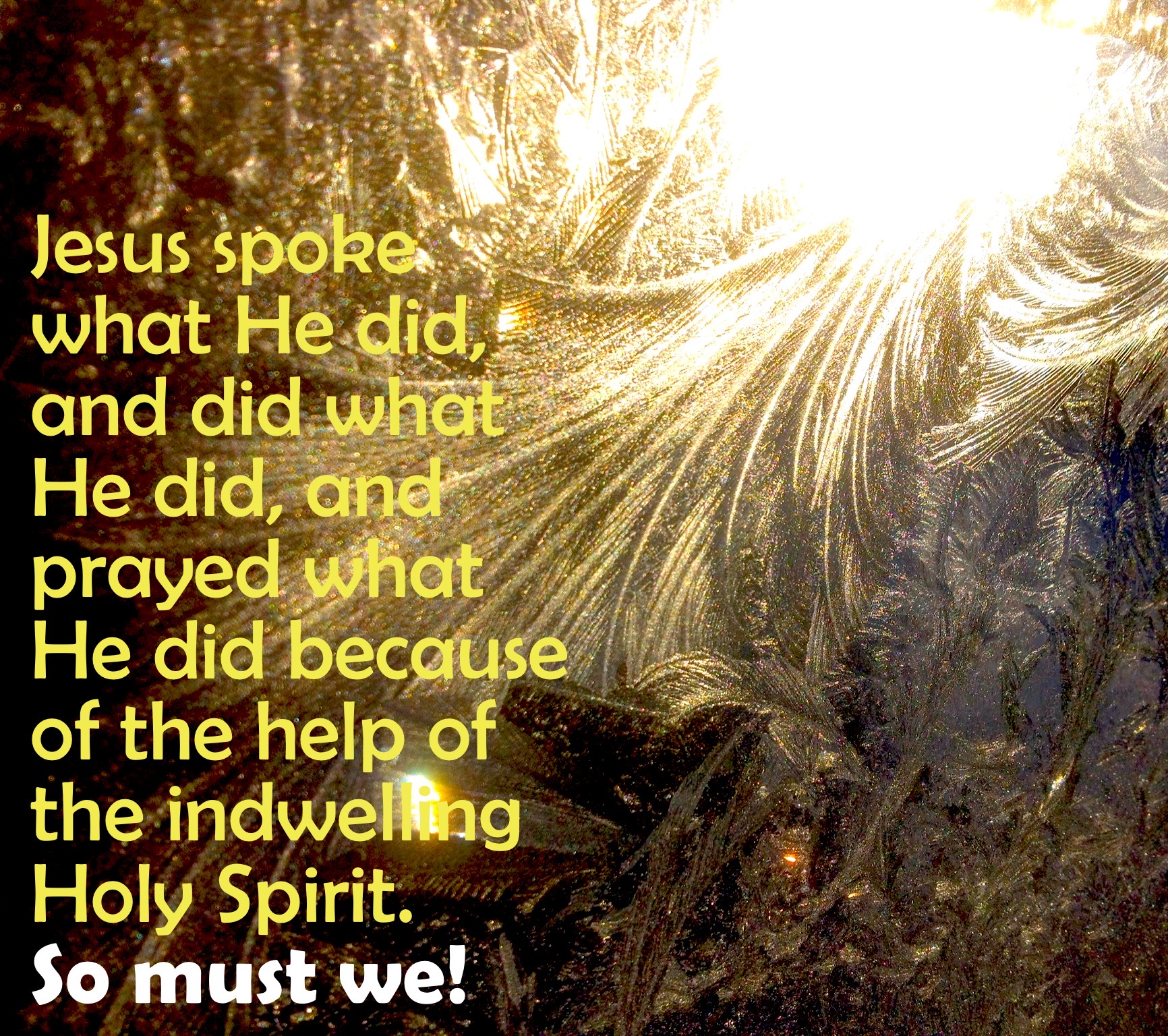
In fact, we saw last week that Jesus was never at a loss of what to say, what path to take, or what prayer to pray. He spoke what He did, and did what He did, and prayed what He did because of the help of the indwelling Holy Spirit. 

This is the same Holy Spirit that is in us as Christians. It’s because of this that we can come to God as a Counselor. The Holy Spirit is THE Go-To Resource for everything! 

Jesus said that both He and our Father love to give us the Holy Spirit as our Counselor, and then the Holy Spirit loves to reveal our Father and our Brother to us (Luke 11:13; John 14:26, 16:15; Galatians 4:6; Matthew 16:17). 

Andrew Murray wrote, “Prayer is simply the breathing of the Spirit in us; power in prayer comes from the power of the Spirit in us as we wait on Him. Failure in prayer is the result of a spirit that is not yielded to the Spirit of God.” 

What does it mean to yield to the Holy Spirit? It means that we don’t look for other go-to people for certain situations, but we trust the Spirit to be the Go-To Resource for everything. This is what Jesus did. 

As Jesus relied on the Counselor, so must we. As the Counselor helped Jesus, so He will help us. 

Let’s break this down. 

First, Jesus was never at a loss of what words to say, and the Holy Spirit will give us the right words to say as well (John 12:49; Matthew 10:19-20; Luke 1:67; Acts 2:14). 

Second, Jesus was never at a loss of what path to take, and neither do we have to experience any confusion about what to do and when to do it (Matthew 4:1; Luke 2:27; Acts 16:6-10).

Finally, Jesus was never at a loss of what prayer to pray, and so too will the Holy Spirit help us go deeper into our prayer time (Luke 10:21; Romans 8:26-27; Ephesians 3:14-21). 

In addition, there is not one issue we will ever face that God hasn’t already addressed for us in Scripture (Ephesians 3:4-5). We see Jesus being totally reliant on Scripture (Luke 4:4, 8, 12). In an identical way, the Holy Spirit will help illuminate and apply the Scripture to our lives (John 14:26; 1 Corinthians 2:13). 

Let me repeat this vital truth: The Holy Spirit is THE Go-To Resource for everything!

  • We are vulnerable to temptation without the help of our Go-To Counselor. 
  • We are limited in our understanding of Scripture without the help of our Go-To Counselor.
  • We have a shallow prayer life without the help of our Go-To Counselor. 
  • We will be frequently confused about words to use or paths to take without the help of our Go-To Counselor. 

Let us learn to rely on our Counselor, as we keep our eyes on our Brother, and as we go together to our Father in childlike prayer. This is what leads to true intimate conversation! 

If you’ve missed any of the other messages in our prayer series Intimate Conversation, please click here. 

►► Would you please prayerfully consider supporting this ministry? My Patreon supporters get behind-the-scenes access to exclusive materials. ◀︎◀︎

Thursdays With Spurgeon—God Our Healer

This is a weekly series with things I’m reading and pondering from Charles Spurgeon. You can read the original seed thought here, or type “Thursdays With Spurgeon” in the search box to read more entries.

Listen to the podcast of this post by clicking on the player below, and you can also subscribe on AppleSpotify, or Audible. 

God Our Healer

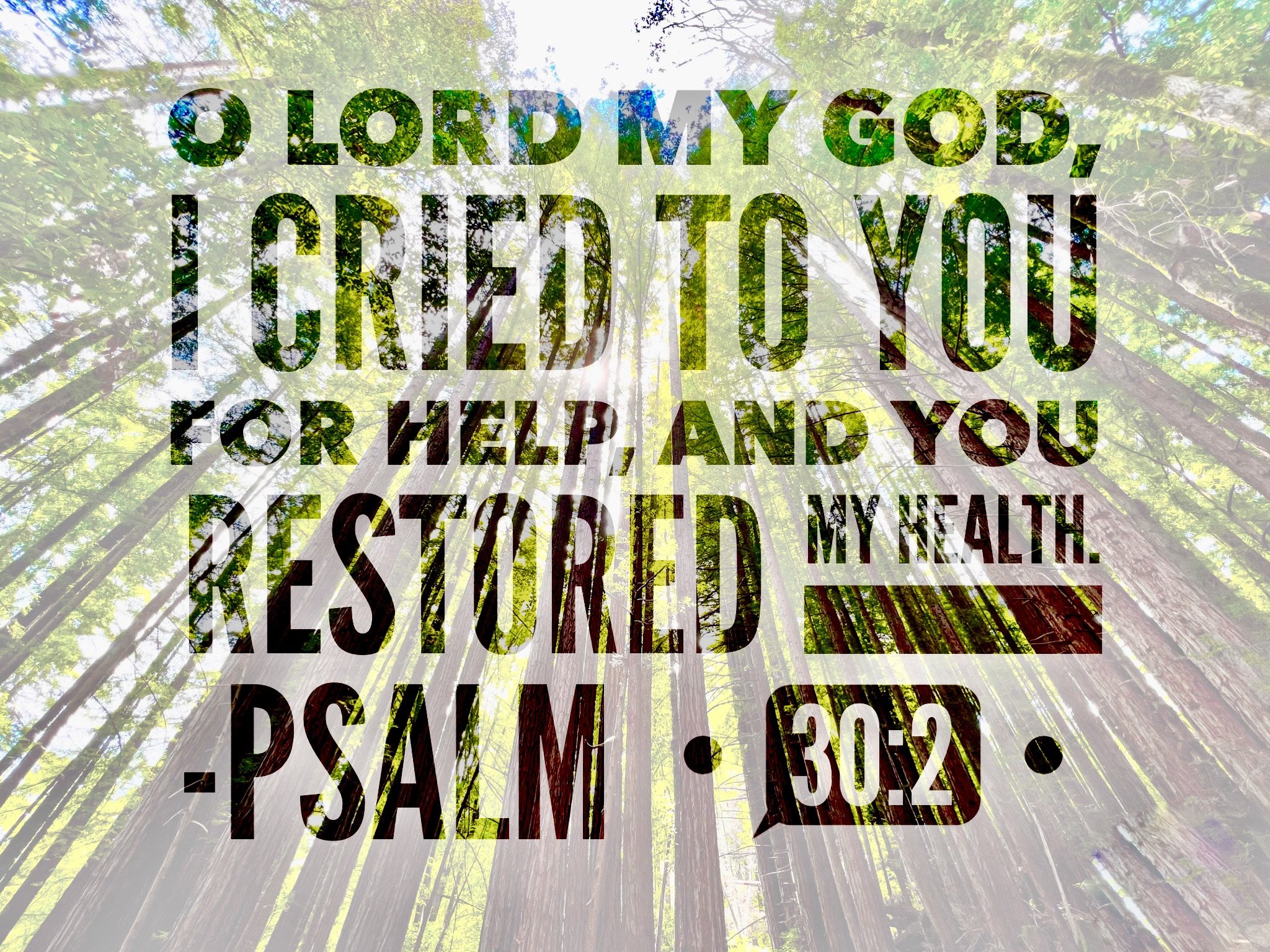
O Lord my God, I cried out to You, and You healed me. O Lord, You brought my soul up from the grave; You have kept me alive, that I should not go down to the pit. (Psalm 30:2-3) 

     God is the best Physician, even for our bodily infirmities. We do very wickedly and foolishly when we forget God. It was a sin in Asa that he trusted physicians and not God (2 Chronicles 16:12). If we must have a physician, let it be so, but still let us go to our God first of all. And above all remember that there can be no power to heal in medicine of itself; the healing energy must flow from the divine hand. …

     If our watch is out of order, we take it to the watchmaker; if our bodies or souls are in an evil plight, let us resort to Him who created them, who has unfailing skill to put them in right condition. As for our spiritual diseases, nothing can heal these evils but the touch of the Lord Christ: if we do but touch the hem of His garment, we shall be made whole….

From Spurgeon And The Psalms

God has created us as a soul with a body. I believe that physical ailments can be attended to by a medical doctor, emotional distress should be addressed by a counselor, and spiritual issues should have the wisdom of a pastor. 

But let’s always remember that since God created our body, soul, and spirit, He is the Ultimate Source of wisdom for any areas that are out of alignment. So as Spurgeon says, seek out a doctor, counselor, or pastor, but go to God first. 

God may bring divine healing that requires no other intervention, or He may heal through medicine or counseling, but ultimately He is THE Healer.

►► Would you please prayerfully consider supporting this ministry? My Patreon supporters get behind-the-scenes access to exclusive materials. ◀︎◀︎
Eternal

Listen to the podcast of this post by clicking on the player below, and you can also subscribe on AppleSpotify, or Audible. 

Psalm 119 is divided into twenty-two 8-verse segments, with each verse of the segments beginning with its own Hebrew letter. Lamedh is found in verses 89-96, and lamedh is the tallest of all the Hebrew letters, so that means it stands out. 

Lamedh shows us big proportions. Words like eternal, boundless, established, enduring, and forever are prominent in these eight verses. The psalmist is inviting us to climb up into God’s Word and get a bigger view, a higher vantage point of who God is. 

Consider the opening verse of this section: Your Word, O LORD, is eternal; it stands firm in the heavens. Eternal—think of the implications! If what God says—His Word—is eternal, then…

  • it continues through all generations (v. 90) 
  • it endures even when everything else fades away (vv. 90-91) 
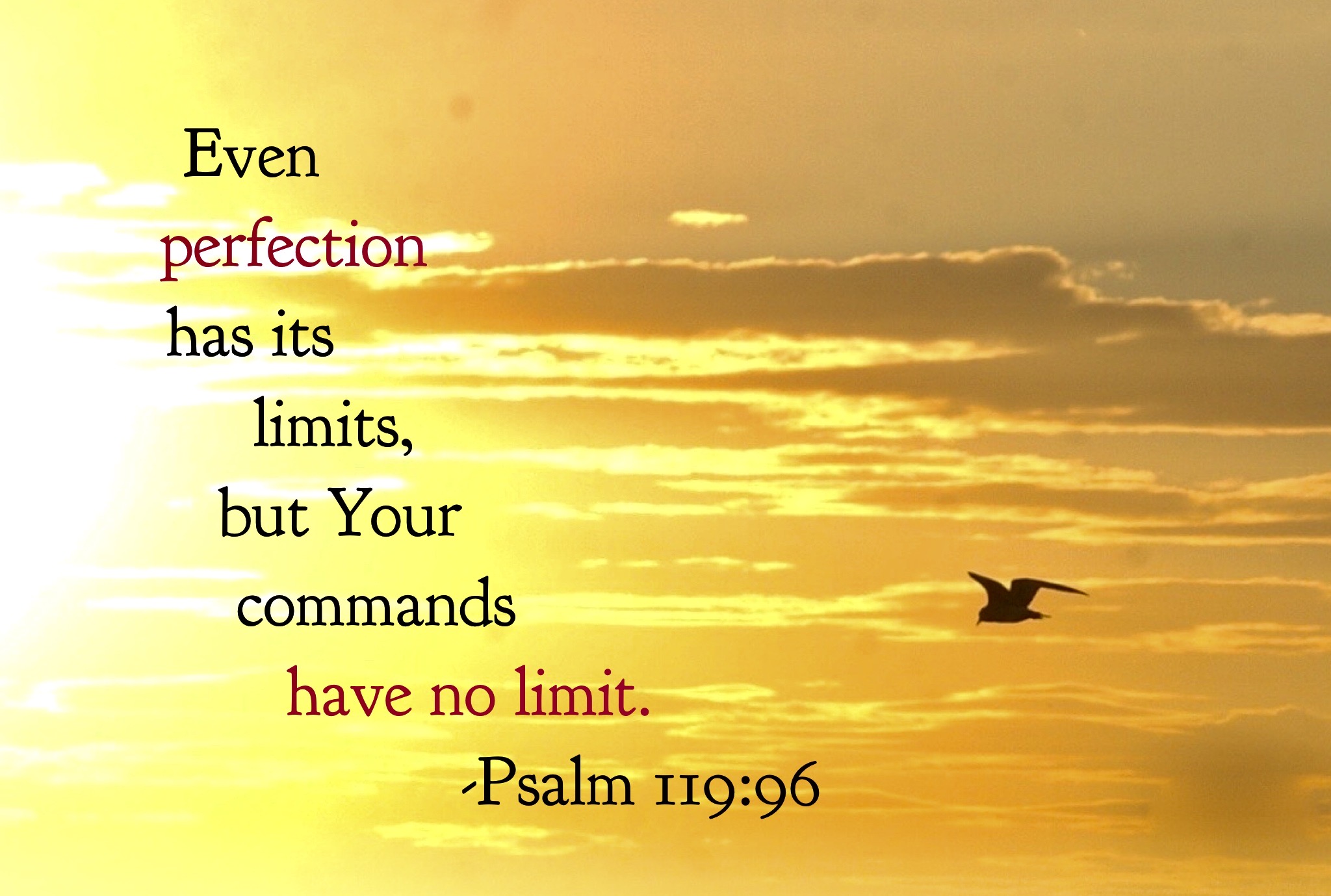
  • it has no limits or frontiers (v. 96) 

At every single moment in my life, my eternal, enduring, limitless God knows the outcome or consequence of each option I could choose. His Word can so transform my mind that I can always choose the most Christ-glorifying option. The Spirit of Truth—my eternal Counselor—can guide me with God’s Word. 

I never have to be at a loss. I am never stumped. I always have access to eternal Truth. 

The psalmist got this: If Your law had not been my delight, I would have perished in my affliction (v. 92). 

Through God’s firmly-established Word I have—

  • Eternal Counsel 
  • Enduring Help 
  • Limitless Strength

And you have all of this, too, through God’s Word! 

Psalm 119 is a great place to start to make Bible reading a daily habit. Scientists tell us that you only need 21 days to make a new habit, and in Psalm 119 you have 22 days of daily reading that will transform your heart and mind. 

►► Would you please prayerfully consider supporting this ministry? ◀︎◀︎

Jesus In Me (book review)

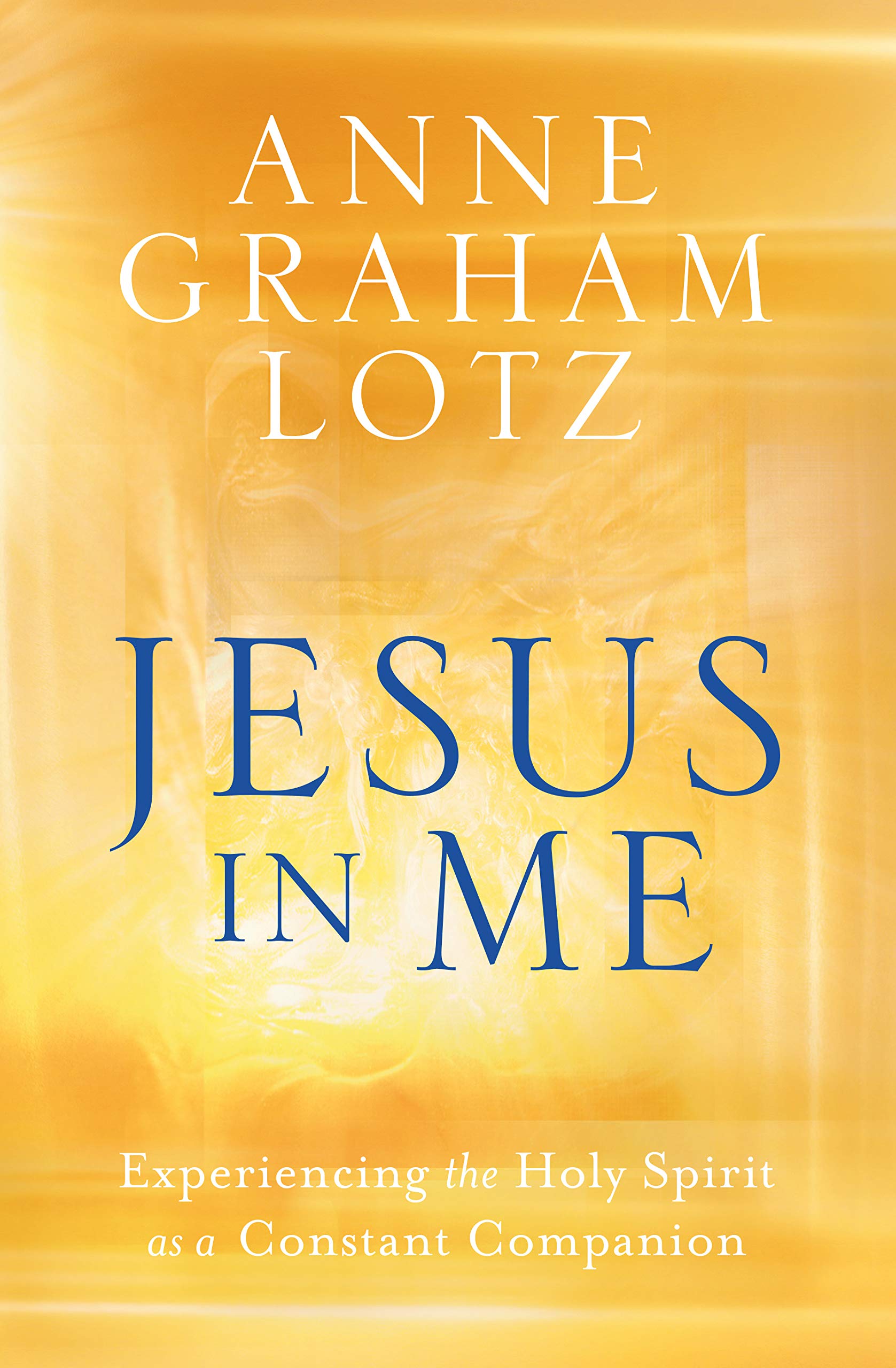
When Jesus was about to ascend back into heaven, His disciples were understandably anxious. But Jesus spoke these reassuring words to them, “I will not leave you alone. I will ask the Father to send the Comforter to you.” And true to His word, the Holy Spirit was made available to all Christians. This is what Anne Graham Lotz explores in Jesus In Me.

In the opening pages, Anne explains that an important verse to help us understand the Holy Spirit is found in John 16:7. Anne and I both like the Amplified Bible’s rendering of this verse—However, I am telling you nothing but the truth when I say it is profitable (good, expedient, advantageous) for you that I go away. Because if I do not go away, the Comforter (Counselor, Helper, Advocate, Intercessor, Strengthener, Standby) will not come to you [into close fellowship with you]; but if I go away, I will send Him to you [to be in close fellowship with you].

Using the multiple names of the Holy Spirit captured in this verse—Helper, Advocate, Intercessor, Strengthener, Standby—Anne begins to dive deeper into what the Spirit of God does in these various roles.

This is not a heavy theological dissertation, nor does this book wade deeply into complex doctrines. Jesus In Me feels like Anne is your friend, and she is just sharing with you what the Bible has said to her about the Holy Spirit and how she has experienced Him for herself. The Scripture references are there for you to read on your own, and Anne shares her personal stories, but both of these simply invite you and me to experience more of the Holy Spirit for ourselves. I really like this book! 

I am a Multnomah book reviewer. 

P.S. There are some special pre-order offers available from Anne Graham Lotz’s website which you may want to check out.

Cherish (book review)

Gary Thomas notes something rather peculiar: Many wedding vows contain the promise “to love and cherish” our spouse, and many pastors spend quite a bit of time promoting love, but often the concept of cherishing our spouse gets overlooked. Gary is out to correct that in his aptly-titled book Cherish.

Learning the value of cherishing our spouse pays enormous benefits. In fact, near the beginning of the book Gary says, “Cultivating a cherishing attitude toward your spouse will elevate your marriage relationally, emotionally, spiritually, and even physically.” That sounds to me like something we would all want in our marriages!

So Gary begins unpacking and defining the idea of marriage in practical terms that any married person (or soon to be married person) can grasp. He uses examples from the first marriage in history between Adam and Eve, shows some of the principles Solomon outlines in his Song of Songs, shines a light on the many passages in the New Testament that address marriage, and even shows the ultimate picture of Jesus cherishing His bride. Throughout all of these, Gary gives us modern-day examples from couples he has known and counseled, and even lessons learned from his own marriage.

Each chapter concludes with some bullet points summarizing the main themes, and some questions to help couples grow in their cherishing of one another.

If you are married, about to be married, or a pastor or counselor who works with married couples, Cherish is a book you need to read and be ready to share with others. Such an outstanding read!

I am a Zondervan book reviewer.

9 More Quotes From “Keep Your Love On!”

Keep Your Love OnKeep Your Love On! is an outstanding resource for anyone who wants to repair or strengthen a relationship. As I said in my book review, I think pastors and marriage counselors should definitely get a copy of this book. Here are a few more quotes.

“If you want to preserve relationships, then you must learn to respond instead of react to fear and pain. Responding does not come naturally. You can react without thinking, but you cannot respond without training your mind to think, your will to choose, and your body to obey. … Powerful people are not slaves to their instincts. Powerful people can respond with love in the face of pain and fear. This ‘response-ability’ is essential to building healthy relationships.”

“If you were raised with a powerless, fear-driven mindset based on the belief that you can control people and they can control you, then you will naturally perceive God as a controlling Punisher. You will take the laws of the Old Testament—all the verses and stories about wrath, judgment, and the fear of the Lord—and conclude, ‘See, God wants to control us, and we need to be controlled.’ … The problem is that the Bible doesn’t show us a God Who is pursuing the goal of distance between Himself and a bunch of scary sinners. Instead, the Bible reveals a God Who is relentlessly closing that distance and paying the ultimate price to repair the disconnection we created in our relationship.”

“Fear and love are enemies. They come from two opposing kingdoms. Fear comes from the devil, who would like nothing more than to keep you permanently disconnected and isolated. Love comes from God, Who is always working to heal and restore your connection with Him and other people and bring you into healthy, life-giving relationships. … When Paul told Timothy that the spirit of love is also the spirit of power and a sound mind, he implied that its opposite, the spirit of fear, is the spirit of powerlessness and a weak, divided mind. When you grow up partnering with the spirit of fear, as most of us do, you learn to simply hand over your brain and your power, letting fear take control. But as soon as you decide to partner with the spirit of love, you have to think and make powerful choices.”

“Do you want to win the battle between fear and love in your relationships? You can start by making these two fundamental commitments: (1) It’s my job to control myself. I do not get to control other people. (2) My number-one goal and priority in relationships is building and protecting connection.”

“Each display of love, no matter how seemingly small, is a powerful act of spiritual warfare that removes anxiety from the environment, replaces it with freedom and safety, and invites each person to bring his or her best self forward in the relationship.”

“True honor is the practice of two powerful people putting one another before themselves, empowering one another, working together to meet one another’s needs, and adjusting as necessary in order to move together toward the shared goal of the relationship.”

“In order for us to practice self-control, we must have a goal. We must have something we are saying ‘Yes’ to, which necessarily comes with things that we must say ‘No’ to. … When we find ourselves with more freedom than self-control, then that freedom erodes the quality of our life and friendships. Self-control is what allows us to manage increasing levels of freedom in our life and relationships.”

“When you put a person in the position of God, you set him or her up for failure. … Mysterious as it is, making ourselves accountable to God and putting ourselves under His authority is the only way we can become powerful and learn to govern ourselves. … When two people are consistently pursuing a connection with the Perfect One, that connection will set the pace for their connection with each other. They will be learning to love from Love Himself, which can only bring the best into their relationship.”

“The faster you can get to the question, ‘What do you need?’ the faster you can start doing something about it. Unfortunately, because many people are not used to being listened to, they don’t know what they need, or how to communicate it. They think they have to present a solid case for someone to help them, agree with them, or change for them.”

You can read the the first batch of quotes I shared here.

My book review is posted here.

9 Quotes From “Keep Your Love On!”

Keep Your Love OnPastors and counselors should definitely add Keep Your Love On! to their bookshelf. This book by Danny Silk is a goldmine of helps for repairing, restoring and strengthening relationships. You can read my full book review by clicking here. Below are a few quotes from this book.

“Most people haven’t learned to build their relationships on the premise, ‘I choose you.’ Their premise for relationships is, ‘You choose me.’ … However, if all our relationships are based solely on our natural impulse to return liking for liking, then we are going to have problems. Liking is a conditional state—it changes. Making ‘You choose me’ the foundation of a relationship dooms it to change, and probably collapse, the minute one person’s liking happens to turn south.” 

“A healthy, lasting relationship can only be built between two people who choose one another and take full responsibility for that choice. This choice must be based on who they are, what they want, and what they are committed to doing as individuals. … In order to be able to make and keep commitments like this—commitments to enduring, intimate relationships—you need to be a certain kind of person. You need to be a powerful person. Powerful people take responsibility for their lives and choices. Powerful people choose who they want to be with, what they are going to pursue in life, and how they are going to go after it.”

“Often the first thing that reveals a powerless mindset is powerless language. Frequent use of the phrase is ‘I can’t’ and ‘I have to’ is a hallmark of a powerless person. … Powerless people also throw in ‘I’ll try’ to absolve them if they do not come through on a commitment or promise.”

“Powerless people approach relationships as consumers. They are always looking for other people who have resources of love, happiness, joy, and comfort to offer in a relationship to share with them, because they don’t have any.”

“Powerless people often blame the messes they make on other people. The reason their life, marriage, child, finances, job, or whatever is the way it is has nothing to do with their choices. Someone else—their parents, their spouse, their teachers, society—created the life they’re living. They don’t have the power to create their own lives.” 

“The classic relational dynamic created by powerless people is called triangulation. When you believe that other people are scary, unsafe, and more powerful than you, and when you believe that you need to get them to meet your needs, then you have three possible roles you get to play in relationships: the victim, the bad guy, or the rescuer. If you’re the victim, you’re looking for a rescuer to make you feel safe and happy. If you’re the bad guy, you are using control and intimidation to protect yourself or get someone to meet your needs. If you’re a rescuer, you’re taking responsibility for someone else’s life in an attempt to feel powerful. Powerless people will switch in and out of these roles in relational interactions.”

“In order to stay in relationship, powerless people make an agreement to exercise mutual control over each other. The unspoken pact between them is, ‘It’s my job to make you happy, and your job to make me happy. And the best way to get you to work on my life is to act miserable. The more miserable I am, the more you will have to try to make me feel better.’ Powerless people use various tactics, such as getting upset, withdrawing, nagging, ridiculing, pouting, crying, or getting angry, to pressure, manipulate, and punish one another into keeping this pact. … A relational bond built on mutual control simply cannot produce anything remotely like safety, love, or trust. It can only produce more fear, pain, distrust, punishment, and misery.” 

“Powerful does not mean dominating. In fact, a controlling, dominating person is the very opposite of a powerful person. Powerful people do not try to control other people. They know it doesn’t work, and that it’s not their job. Their job is to control themselves. As a result, they are able to consciously and deliberately create the environment in which they want to live. They don’t try to get people to respect them; they create a respectful environment by showing respect. They deliberately set the standard for how they expect to be treated by the way they treat others. As they consistently act in responsible, respectful, and loving ways, it becomes clear that the only people who can get close to them are those who know how to show respect, be responsible, and love well. Life does not happen to powerful people. Powerful people are happening—they are happening all the time.”

“What is the goal in your close relationships? Are you trying to create a safe connection or a safe distance? Are you building a skill set to move away from or control the distance between you and your husband, wife, friend, child, etc.? Or are you building a skill set to move toward them and keep your love on no matter what?”

Stay tuned: more quotes from Keep Your Love On! coming soon…

Keep Your Love On! (book review)

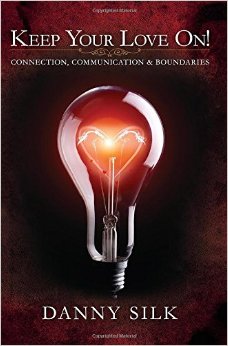
Keep Your Love OnJust when I thought I’d heard almost every relationship-building concept, Danny Silk comes along with a totally innovative approach in Keep Your Love On!

Danny points out that most people try to develop a safe distance between other people, to keep themselves from getting hurt. As a result they have become powerless in their relationships—powerless to make any changes that would move them closer to one another.

But God designed us for connection: Connection with Him and with each other. These types of connections can only come from powerful people. Danny says that powerful people are not those who impose their will on others, but people who first of all take personal responsibility for who they are. Then powerful people can establish healthy boundaries that will help others move from powerlessness to power. Healthy, long-lasting, fulfilling relationships come when both people are powerful people.

All throughout the book, Danny Silk give sound, biblical direction, combined with his personal experiences counseling other people. He is even vulnerable enough to tell us how he learned these valuable lessons by moving away from powerlessness in his own marriage.

This is an outstanding book for anyone who want to strengthen or repair relationships in their lives, or for anyone who wants to be a catalyst for change in the lives of people close to them. Pastors and counselors should definitely add this book to their library.

“Quality love relationships do not happen by accident. Real love is built the old-fashioned way—through hard work. And if you learn to manage the very best of who you are, the all-elusive intimacy experience we crave will be well within your grasp.” —Danny Silk

I am a Red Arrow Media book reviewer.

The Counselor Brings Reproof

Search meNo one likes being rebuked, but it is necessary. In fact, it is vital for healthy growth. As a Dad, I didn’t look forward to the times I had to rebuke my children. But what’s the alternative? What happens if I just let misbehavior slide? We must rebuke those we love if we want them to mature.

The Counselor—the Holy Spirit—not only teaches us, but He reproves us as well because of His love for us. And we all need it!

  • The human heart is the most deceitful of all things, and desperately wicked. Who really knows how bad it is? (Jeremiah 17:9)
  • For I know that in me (that is, in my flesh,) dwelleth no good thing… (Romans 7:18)

This knowledge of my wickedness becomes even more painful when I think that Jesus calls us to perfection (Matthew 5:48). I can’t “do” perfect on my own. But thankfully Jesus didn’t tell us to “do” perfect things, but to BE perfect.

The Holy Spirit reproves us—that is, He shows us where we are deviating from the mark—so that we can BE perfectly at one with Jesus, with our lives demonstrating Christ’s perfect nature.

Warning: the enemy wants to pervert The Counselor’s reproof. He wants to whisper to you that God is mad at you, that you’ve blown it too many times, that you’ll never be good enough.

Just like Jesus countered all of satan’s temptations with the Spirit-breathed Scripture, you need to do the same thing. You tell him, “My Father loves me so much that He sent His One and Only Son to die on a Cross for me! He wants me to display the glory of Jesus in my life because that’s what brings Him pleasure. He only reproves me because He loves me. If He didn’t care about me, He would leave me alone!”

Because He loves you and wants the very best for you, here’s what you can boldly pray:

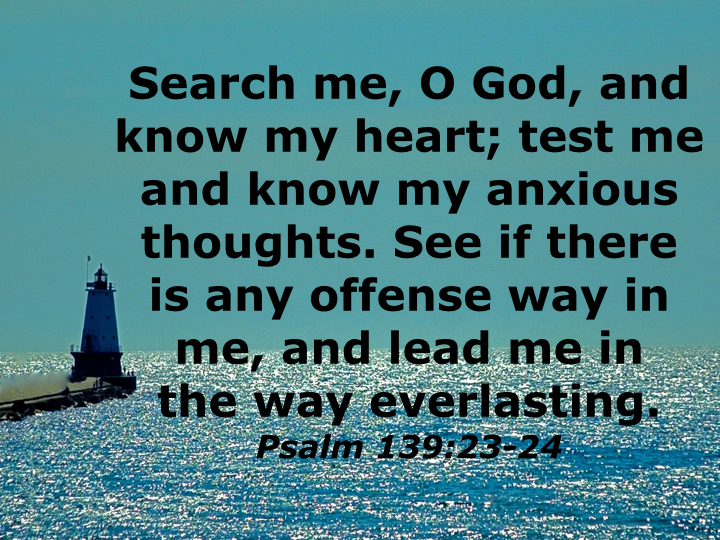
Search me, God, and know my heart; test me and know my anxious thoughts. See if there is any offensive way in me, and lead me in the way everlasting.

I will be continuing my series on the Holy Spirit as our Counselor this Sunday. If you are in the Cedar Springs area, please come join us!