Empathizing Is Never One-Upping

Listen to the podcast of this post by clicking on the player below, and you can also subscribe on AppleSpotify, or Audible. 

When we are going through something difficult or painful, we want to get counsel from someone who has some understanding of what we’re facing. In a word, we want someone empathetic. 

Webster’s Dictionary defines empathy as the action of understanding, being aware of, and being sensitive to the feelings, thoughts, and experience of another. If you were telling me about your painful situation, to let you know that I “get you”—that I empathize with you—I might say something like, “I’ve been there, done that, and have the scars to prove it.” 

But as I tell you my story, I need to really guard against one-upmanship. Webster’s defines that as the art or practice of outdoing or keeping one jump ahead of a friend or competitor. Saying something like, “Oh, feel your pain, but let me tell you how I had it so much worse” is one-upping and unhelpful! 

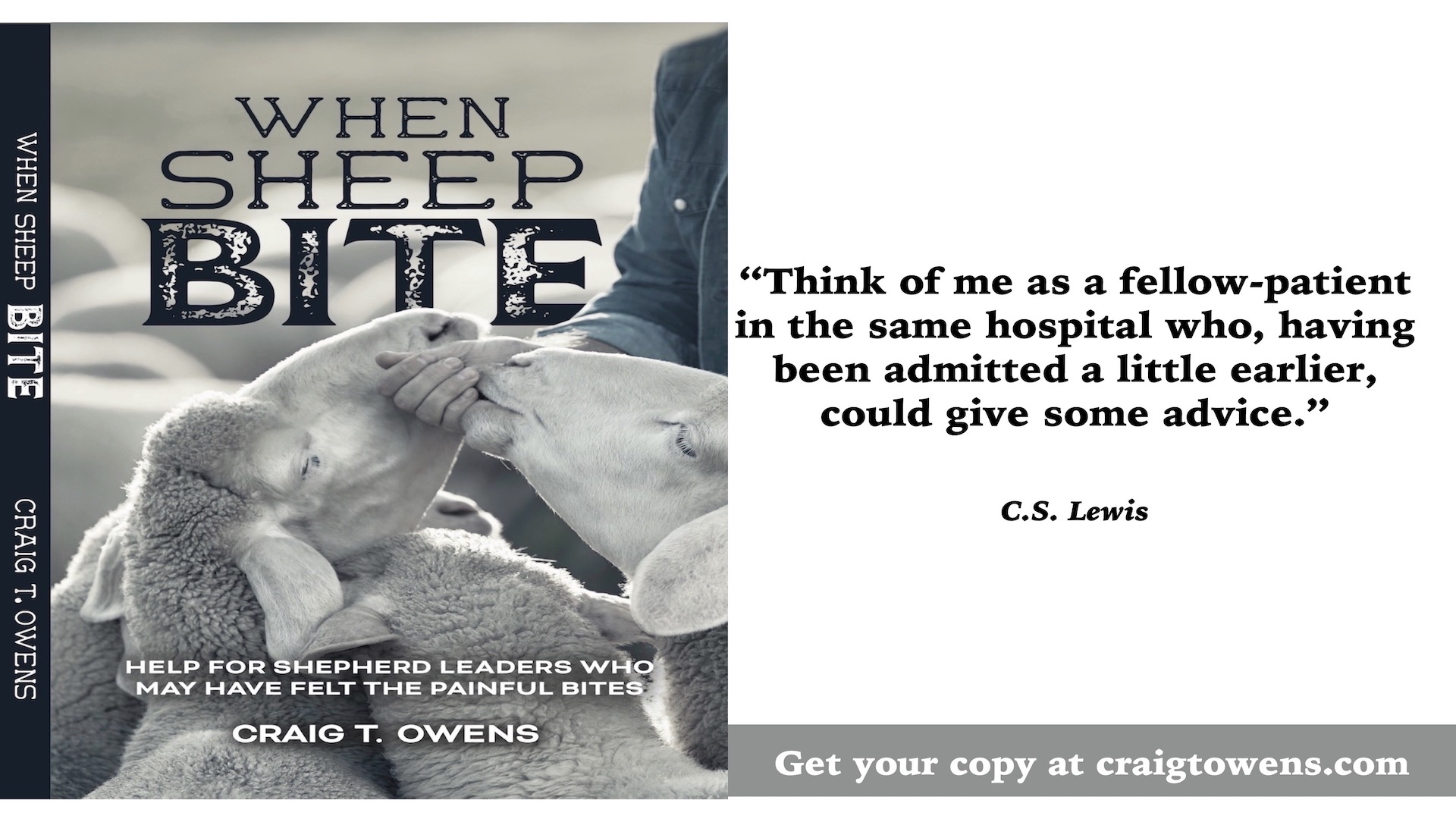
In my book When Sheep Bite, I wrote this in the Introduction—

     When you share a tale of real pain with a trusted friend, you don’t want them to try to one-up your story. Instead, you would want them to comfort you in your pain, to give you some helpful insight, or to even just cry along with you. On the other hand, you probably aren’t going to share your story of pain with someone who has no understanding of your situation. We want someone who “gets us,” someone who can relate, someone who can truly empathize with what we are feeling. … 

     I want to give you what I wanted when this happened to me: empathy, insight, a helpful perspective, and a manual of help that God has provided in the Bible. I don’t want to try to one-up your story of pain, because I’m confident that no one could truly know how deeply you’ve been hurt. But I do want to give you some assurance that I know what I’m talking about. 

As I was discussing some of the ideas in my book with a group of pastors, I reminded them of the value of an iron-sharpening-iron friend (as Solomon describes in Proverbs 27:17) who is empathetic without crossing the line into one-upmanship. 

I truly believe that When Sheep Bite will be a healing resource for shepherd leaders who have been there, done that, and have the sheep bite marks to prove it. If you are a pastor—or if you love your pastor—please pick up a copy today! 

►► Would you please prayerfully consider supporting this ministry? My Patreon supporters get behind-the-scenes access to exclusive materials. ◀︎◀︎

The Bias Of Human Agendas

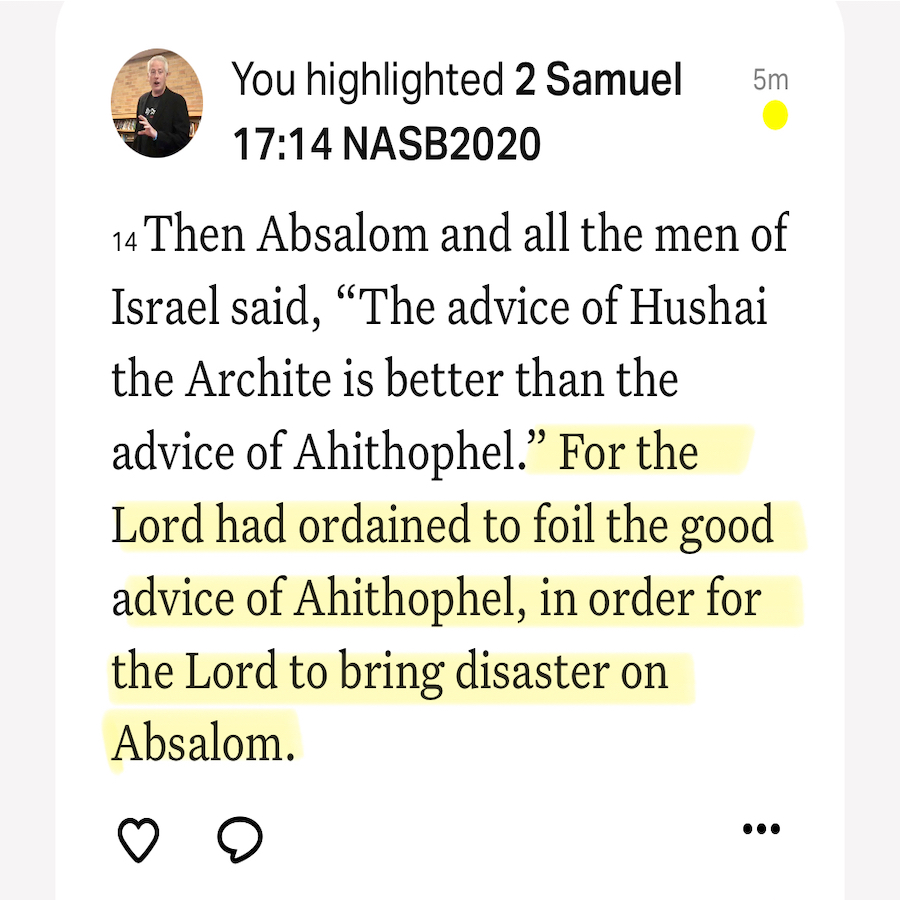
Absalom said to Ahithophel, “Give us your advice. What should we do?” … Ahithophel said to Absalom, “I would choose twelve thousand men and set out tonight in pursuit of David. I would attack him while he is weary and weak. I would strike him with terror, and then all the people with him will flee. I would strike down only the king and bring all the people back to you….” This plan seemed good to Absalom and to all the elders of Israel. 

But Absalom said, “Summon also Hushai the Arkite, so we can hear what he has to say as well.” When Hushai came to him, Absalom said, “Ahithophel has given this advice. Should we do what he says? If not, give us your opinion.”

Hushai replied to Absalom, “The advice Ahithophel has given is not good this time….” 

Absalom and all the men of Israel said, “The advice of Hushai the Arkite is better than that of Ahithophel.” For the Lord had determined to frustrate the good advice of Ahithophel in order to bring disaster on Absalom. (2 Samuel 16:20; 17:1-7, 14). 

Absalom (unlike his father) didn’t consult God, but consulted men. 

Ahithophel had a personal agenda. All he wanted to do is get revenge on David for what he had done to Uriah and Bathsheba. Notice Ahtihophel’s wording: “I will kill only the king” (v. 2). 

What was Ahithophel’s beef with David? Uriah—the man whose wife David stole, the man whom David had killed to cover up his affair—was Ahithophel’s son (2 Samuel 23:34, 11:3)! 

Hushai, the the other man who gave Absalom counsel, also had an agenda. Hushai is repeatedly given one description: Friend of David (2 Samuel 15:37, 16:16-17; 1 Chronicles 27:33). So Hushai’s sole focus is saving his friend’s life. 

Humans always give their advice with their own bias or agenda. 

It’s okay to talk to men and get their counsel, but always allow God to confirm or reject their advice.

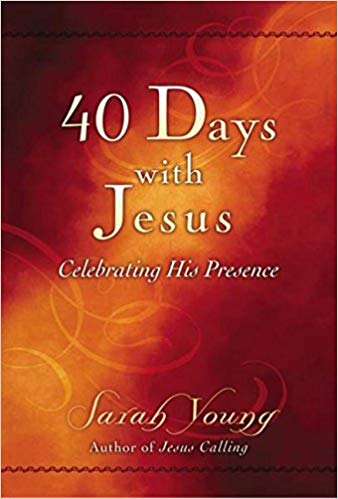
40 Days With Jesus (book review)

Martin Luther said, “The Bible is alive, it speaks to me.” Truly, the Bible is God’s Word speaking to us every time we peer into its pages, so I love how Sarah Young strings passages of Scripture together to allow us to hear Jesus speaking to us in a first-person voice. 

40 Days With Jesus was designed as a series of readings during the Lenten season, as we walk with Jesus to the Cross and His resurrection from the dead. But any time is a good time when we can walk with Jesus and hear His unmistakable voice reassuring our hearts. 

Are you walking through a dark time in your life? Know that Jesus is walking with you. 

Do you want to live a life of purpose and lasting value? Listen to Jesus counsel you. 

Are you standing at a crossroads trying to make the right decision? Let Jesus point the way. 

Each time I read a Sarah Young book, it reignites my heart to read the Bible as though Jesus is personally speaking to me. Because He is! 

40 Days With Jesus is a great starting point for you to learn to hear Jesus speaking to you every time you open your Bible. The Holy Spirit will then use those words read in your quiet time to continue to bring you direction and reassurance all throughout your day (John 14:26). 

I highly recommend this book (or any other book by Sarah Young)!

How NOT To Make A Decision

Adonijah thought he was the obvious heir to the throne so he stated what he believed, “I will be king” (1 Kings 1:5). 

On what evidence did Adonijah base his claim? 

  1. All of his friends said he would make a great king
  2. His father (the king) had always given him everything he wanted
  3. He was handsome and popular
  4. A couple members of the king’s court supported him
  5. No one had ever told him “no” 

While all of this sounded good, Adonijah overlooked some vital points. Like…

  1. …more men backed his brother Solomon to be king than backed him
  2. …his father had the decisive and definitive say in who would be king, and he chose Solomon
  3. …God had chosen Solomon to be king

It’s tempting for us to read the popular sentiment of the moment, or to listen to the cheering voices around us, or even to think that our plans are wise and well thought-out. But this is NOT the right way to make a decision.

Instead, we need to humbly consider three things that are external:

  1. The unbiased, wise counsel of others
  2. The buy-in of key stakeholders
  3. God’s clear “yes”

If these three things are in alignment, you cannot go wrong!

Poetry Saturday―Sermons We See

Edgar A. GuestI’d rather see a sermon than hear one any day;
I’d rather one should walk with me than merely show the way.
The eye’s a better pupil and more willing than the ear;
Fine counsel is confusing, but example’s always clear.
And the best of all preachers are the men who live their creeds.
For to see the good in action is what everybody needs.

I can soon learn how to do it if you’ll let me see it done;
I can watch your hands in actions, but your tongue too fast may run.
And the lectures you deliver may be very wise and true,
But I’d rather get my lesson by observing what you do.
For I may misunderstand you and the high advice you give,
But there’s no misunderstanding how you act and how you live.

When I see a deed of kindness, I am eager to be kind.
When a weaker brother stumbles and a strong man stays behind
Just to see if he can help him, then the wish grows strong in me
To become as big and thoughtful as I know that friend to be.
And all travelers can witness that the best of guides today
Is not the one who tells them, but the one who shows the way.

One good man teaches many, men believe what they behold;
One deed of kindness noticed is worth forty that are told.
Who stands with men of honor learns to hold his honor dear,
For right living speaks a language which to every one is clear.
Though an able speaker charms me with his eloquence, I say,
I’d rather see a sermon then to hear one, any day. —Edgar A. Guest

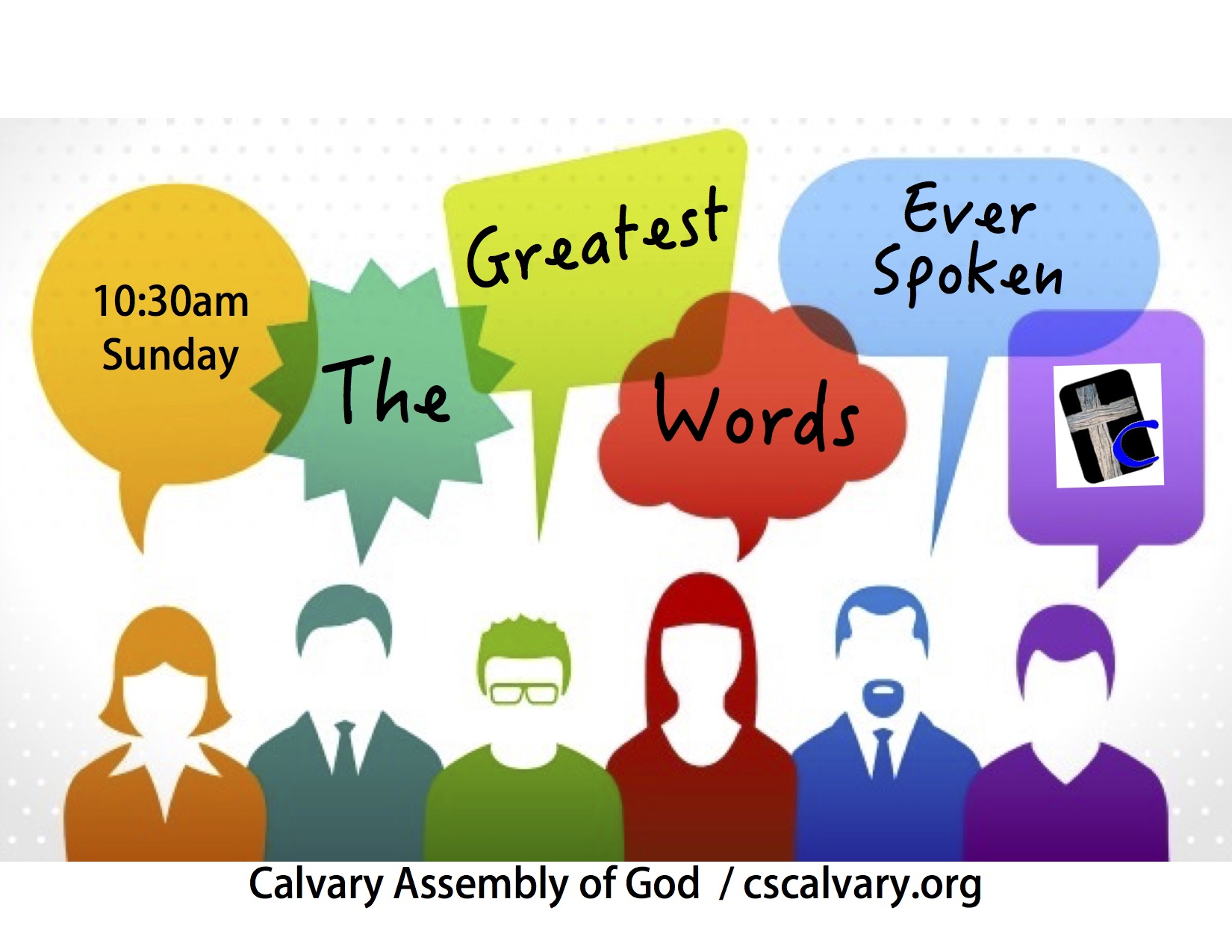
The Greatest Words Ever Spoken

The Greatest Words Ever SpokenEver been stumped or confused about something, and then received perfect advice from a friend? Maybe that advice helped you get through that particular time in your life.

But what if, later on, the wise friend from whom you got advice wasn’t following his own advice? What if your friend got off track? And now they were the one needed advice? Would you still go to them for counsel? Or would you look somewhere else?

On the other hand, if we could get advice from someone, and their advice helped us not only in a particular situation, but in every situation we faced. If this friend’s counsel was good all the time, and they always practiced what they preached … if they were able to show us things we would have never seen on our own … and guide us where we may never have gone by ourselves … that would be amazing! And what if this friend’s counsel was not only beneficial for you, but helpful for everyone who chose to follow it?

Those wise words could quite possibly be the greatest words ever spoken!

I invite you to join me this Sunday as we begin a new series called The Greatest Words Ever Spoken. And if you are facing a challenging situation, we might even be able to find the right counsel for you. Others have submitted questions on which they would like to hear the wisest words of counsel, so feel free to comment below with the questions you have.

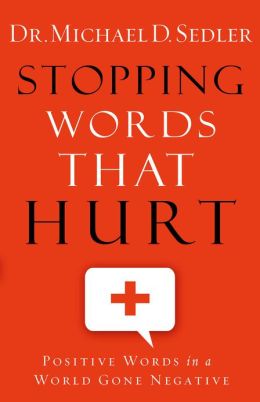
15 Quotes From “Stopping Words That Hurt”

Stopping Words That HurtThere was so much for me to process in Stopping Words That Hurt by Dr. Michael Sedler (you can read my full book review by clicking here). If you’ve ever been hurt by someone else’s words about you, there is help for you in this book. If you’ve ever hurt someone else with the words you’ve spoken, there is help for you in this book.

Bottom line: this book can help cut-off hurtful words and evil reports before they gain momentum. Please read this book!

Here are just a few quotes that stood out to me—

“We are so brainwashed into believing that it is permissible to violate one another verbally that it takes a concentrated effort to begin to have a new thought pattern.”

“It is imperative that you understand this truth: Just listening to an evil report can do tremendous damage to your perspective, viewpoint and overall spirit. … Joining in a negatively-driven conversation, no matter how small the participation, may destroy the testimony of a life. Listening to grumbling and ungodly attitudes eventually contaminates the spirit. The more we allow discontent to be taken in by our spirits, the greater the tendency to compromise our own speech patterns. We are being called to a high standard of living where the rewards for our faithfulness are eternal.”

“It is usual for most of us to listen without questioning. We oftentimes want to support a friend, supervisor or person of influence. In fact, a messenger may single us out because she knows we will not disagree with or question her. Are we being used because of our own gullibility and blindness to negative speech patterns?”

“We must have our antennas up and be prepared when we hear negative comments and subtle innuendos about others.”

“If we are unable to recognize the potential destruction caused by negative words, we will eventually cause injury to those around us. And, sadly, we often deceive ourselves into believing there was justification for our actions.”

“It is rude to knowingly be a part of gossip. It is not good manners to listen to verbal assaults and blatant character assassinations of people who are not present to defend themselves. It is foolishness and ignorance. We must open our eyes and discern when we are listening to evil reports in order to be accepted by the crowd.”

“A bold positive response can put out the fire.”

“Learn to avoid the trap of falling into emotional identification by getting information for yourself. Compare your feelings and thoughts with the Bible’s guidelines. Look for corroboration or contradictions as you assess the situation. And, finally, give a little more weight to the perspective of those who have been faithful, trustworthy and proven people of integrity than the words of a stranger or ‘expert’ who has no track record of honesty.”

“Fear can draw us toward God or pull us away. It can create a desire in us to cling to the truth or alter our perception of the truth. While satan wants to use fear to rob us of our faith in God, we need to continue to speak words of truth and confidence regarding our place with Christ.”

“Impurity occurs when we hear evil reports with our natural ears and minds without seeking spiritual wisdom and understanding. If we accept the words of others as truth, we will become filled with a mixture of philosophies, attitudes and beliefs.”

“A person who has responsibility over others also has great influence. If he or she shares a negative report with the general population, those with unguarded spirits will become contaminated.”

“I speak a strong word of caution to husbands and wives, significant others and close family members. We often take on the offense when a loved one is wronged or slighted. And though they may work through the issue, we still hold on to the anger and bitterness.”

“It is difficult to ‘have ears that hear’ at this point in the process. First of all, we do not see ourselves as defiled or polluted. We think we are right and can handle everything ourselves. We are suspicious about counsel. We question the motives of those giving it. We actually fight the process of cleansing using words such as manipulating, self-centered and controlling to describe the interventions of others. We accuse even our closest friends and supporters of being insensitive and uncaring. Whereas once we received challenges and guidance from others, now we meet each comment or suggestion with disdain and animosity. It is during this phase that people have a tendency to reject the process of cleansing, choosing instead to walk away from purity and to blame and curse others for their lack of support and love.”

“In order to heal with words, we must be willing to be persistent with them. Jesus frequently verbalized His love for His disciples. Once is not enough! Encouragement, praise and positive words continue to feed the soul in the same way water moistures the soil. Soil will eventually dry out and need another dose of fresh water.”

“Great people of God find a way to speak hope into others. They give a sense of purpose, of calling, of future, of destiny to those around them.”

Who Are You Talking To?

I love team leadership. I really enjoy getting a group of creative thinkers around me to do some serious brainstorming. I find it so beneficial to seek out the counsel of some wise people who have been around for a while.

But, let’s see, who have I left off this list?

Oh, yeah, I remember now—I didn’t consult God!

Be honest: have you ever done that? Have you ever consulted with a lot of wise—even God-fearing—people, but forgotten to consult with God Himself? If you have (and I certainly have), we’re in good company.

When King David got ready to move the ark of the covenant to Jerusalem, the Bible says,

David conferred with each of his officers….

How’d that work out for him? Not so good.

  • Uzzah died
  • David got mad at God
  • David got scared of God
  • The ark’s arrival in Jerusalem was delayed another three months

Then David had his “Oh yeah!” moment. When he got ready to try again, David said,

We did not inquire of God about how to do it in the prescribed manner….

So here’s my simple reminder to myself (and to you too): It’s fine to consult with others, but consult with God first.

Serve More To Lead Better

Listen to the podcast of this post by clicking on the player below, and you can also subscribe on AppleSpotify, or Audible. 

As King Solomon’s son Rehoboam was ascending the throne, he received some wise counsel:

If you will be a servant to these people and serve them and give them a favorable answer, they will always be your servants.

I also like the way The Message paraphrases this same verse:

If you will be a servant to this people, be considerate of their needs and respond with compassion, work things out with them, they’ll end up doing anything for you.

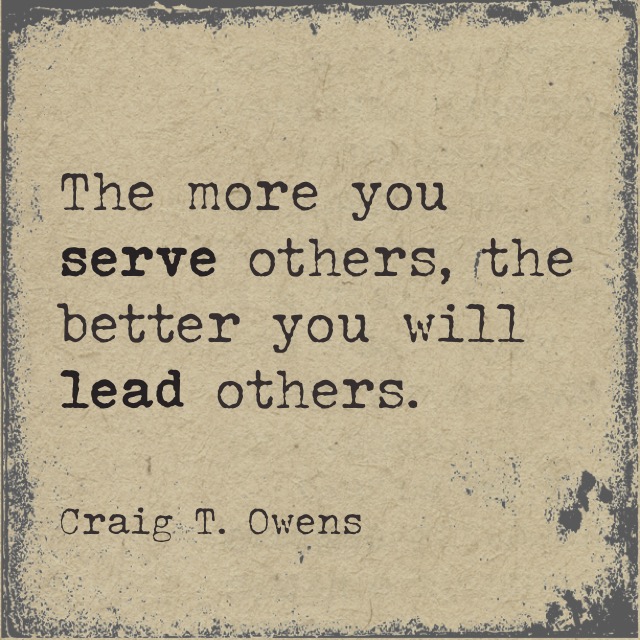
In other words: the more you serve, the better you will lead. Unfortunately, Rehoboam chose to reject this counsel, and his leadership disintegrated.

If you will be a servant [position] and serve [attitude] they will serve you.

This Hebrew word for serve is used quite a bit in the Old Testament. Interestingly, the first five times it is used are all in the agricultural sense: farming the land, tending to the plants, working, waiting, and ultimately harvesting. Leadership is never developed quickly. Servant leaders must be in it for the long haul.

Jesus also emphasized servant-leadership

But among you it will be different. Whoever wants to be a leader among you must be your servant, and whoever wants to be first among you must be the slave of everyone else.

Bottom line: The more you serve others, the better you will lead others. 

I take a deep dive into this kind of leadership in my book Shepherd Leadership.

►► Would you please prayerfully consider supporting this ministry? My Patreon supporters get behind-the-scenes access to exclusive materials. ◀︎◀︎

Your Part In The Battle

The story about David defeating the giant Goliath in battle is familiar to just about everyone. (If it’s not a familiar story to you, you can read it here.) I was struck by how David saw his part in this fight. Look what he said:

All those gathered here will know that it is not by sword or spear that the Lord saves; for the battle is the Lord’s.

After the fight was over, and Goliath lay dead at David’s feet, the biblical writer said the same thing:

So David triumphed over the Philistine with a sling and a stone; without a sword in his hand he struck down the Philistine and killed him.

If you are a God-follower, then your battles are really God’s battles. David recognized that it was God’s battle, but David also knew that he played a part in this too.

1.  He had to train. David had to know how to use a sling with deadly accuracy.

2.  He had to reject “good” advice. Saul advised David, “Here, wear my armor.” That sounded like good advice, but it didn’t fit for David. He had to be true to what the Spirit of God spoke to his heart, even as he rejected what seemed like good advice.

3.  He had to have faith. David truly believed that God was going to do something big—something no one else could even imagine.

4.  He had to show up. Sometimes God fights battles for His people, and sometimes He fights with His people. David didn’t know what God was going to do in this instance until he showed up on the battlefield.

God wants you to win big battles. And if you’re following God, He will bring the victory. But you still have a very important part to play. Train hard, reject advice that is contrary to what God has told you, have faith, and then show up for the battle. These are the keys to victory.