In Proverbs 9, Wisdom and Folly are both personified as women. And both of them call out the same thing to their would-be followers: “Let all who are simple come in here!” (vv. 4, 16). They both claim to have ‘the goods’ for those searching for truth, but here are five things that separate them.
Wisdom has built her own house (v. 1); but Folly merely occupies someone else’s house (v. 14).
Wisdom has like-minded “maids” who support her (v. 3); but Folly has no supporters.
Wisdom serves what she has prepared herself (vv. 2, 5); but Folly steals from others because she has nothing original to offer (v. 17).
Wisdom corrects, and that correction leads to deeper knowledge (vv. 8-10); but Folly lets people do whatever they wish, which only leads to deeper suffering (v. 13).
Wisdom offers life (vv. 6, 11), insight (v. 9), the fear of God (v. 10), and rewards (v. 12); but Folly only offers suffering (v. 12) and death (v. 18).
How ironic that some people respond to Folly’s call, “Let all who are simple come in here,” and yet they act like they know it all already, not wanting to learn anything new.
Bottom line:If you are willing to learn, Wisdom has much to teach you. But if you know it all already, best to just hang out with Folly.
Although written 300+ years ago, John Bunyan has some timeless wisdom for Christians in his book Christian Behavior. You can check out my book review by clicking here, and the first set of quotes I shared from this book are here. Below are some other quotes I really liked.
In a section to parents about children—
“See if fair words will win them from evil. This is God’s way with His children (Jeremiah 25:4-5).”
“Take heed that the misdeeds for which thou correctest thy children be not learned them by thee.”
“How a Christian wife should live with her unbelieving husband:
Let thy words be few.
And none of them savoring of a lording over him; but speak thou still as to thy head and lord, by way of entreaty and beseeching.
And in such a spirit of sympathy, that the manner of thy speech and behavior in speaking may be to him an argument that thou speakest in love, as being sensible of his misery, and inflamed in thy soul with desire after his conversion.
And follow thy words and behavior with prayers to God for his soul.
Still keeping thyself in a holy, chaste, and modest behavior before him.”
In a section written to employers—“In a word, learn of the Lord Jesus to carry yourselves well to your servants, that your servants also may learn something of the kindness of Christ by your deportment to them. Servants are goers as well as comers; take heed that thou give them no occasion to scandal the Gospel when they are going for what they observe thee unrighteously to do when they were with thee.”
“Pride, in general, is that which causeth a man to think of man and his things above what is written (1 Corinthians 4:6).”
“Pride is when you slight this or that person, though gracious—that is, look over them and shun them for their poverty in this world—and choose rather to have converse with others that possibly are less gracious because of their greatness in this world.”
“It argueth pride of heart when men will not deny themselves in things that may be for the good and profit of their neighbors.”
“It argueth pride of heart when a man that hath this or that in his heart to do in reference to God, but yet will slight a sober asking counsel and direction of God in this matter.”
“It argueth pride of heart when persons are tickled with thoughts of their own praise, that secretly lust after it.”
“It is an easier matter to begin to do good than it is to continue therein; and the reason is, there is not so much of a Christian’s cross in the beginning of a work as there is in a continual, hearty, conscientious practice thereof. Therefore Christians have need, as to be pressed to do good, so to continue the work.”
“That which astonishes, astonishes once; but whatever is admirable become more and more admired.” —Joseph Joubert
“Adoption is an act of God’s free grace, whereby we are received into the number, and have a right to all the privileges of the sons of God.” —Westminster Confession
“Adversity is the first path to trust.” —Lord Byron
“Adversity makes men, and prosperity makes monsters.” —Victor Hugo
“God’s corrections are our instructions; His lashes our lessons, and His scourges our schoolmasters.” —John H. Aughey
“Am I getting nobler, better, more helpful, more humble, as I get older? Am I exhibiting the life that men take knowledge of as having been with Jesus, or am I getting more self-assertive, more deliberately determined to have my own way? It is a great thing to tell yourself the truth.” —Oswald Chambers
“Press into God’s promises. When fears surface, respond with this thought: But God said … And when doubts arise, but God said… And when guilt overwhelms you, but God said… Search the Scriptures like a miner digging for gold and trust the promises you find.” —Max Lucado
Probably at one time or another everyone has gone through some sort of eye exam where you read an eyechart to get information about your vision. This simple exam gives your doctor a standard by which to measure the visual acuity of your eyes. After all, without an objective standard for your vision, who’s to say whether your eyesight really is good or bad?
After taking the exam, the doctor can determine whether you have…
emmetropia—normal vision where light from your eye’s lens is properly focused on the retina at the back of your eye; or
myopia—also called short-sightedness, where the light is focused in front of the retina; or
hyperopia—or far-sightedness, where the light is focused behind the retina.
Both myopia and hyperopia can be corrected by lenses. Glasses, contact lenses, or even corrective surgery can correct your focal point, restoring emmetropia again. But notice this:
Lenses don’t change what you see, but how you see it.
By refocusing the light into the right place, you are now looking at the same object, but the focal point is corrected. You are able to see things that were there all along, but that your out-of-focus vision caused you to miss. For a Christian, the Bible works the same way—
Scripture doesn’t change the events or circumstances in your life, but it does change how you see them.
The eye is the lamp of the body. If your eyes are good, your whole body will be full of light. But if your eyes are bad, your whole body will be full of darkness. (Matthew 6:22-23)
What’s true for an eye exam is also true for a spiritual exam: If you don’t read the eyechart, it’s hard to tell if your vision is out-of-focus.
Far too many people don’t read the Bible for themselves, so they never have given the Holy Spirit a chance to show them where their attitude or lifestyle is out of focus with God’s design. However, if you are reading the Bible, here are three warning signs that you may have blurry spiritual vision that needs to be corrected:
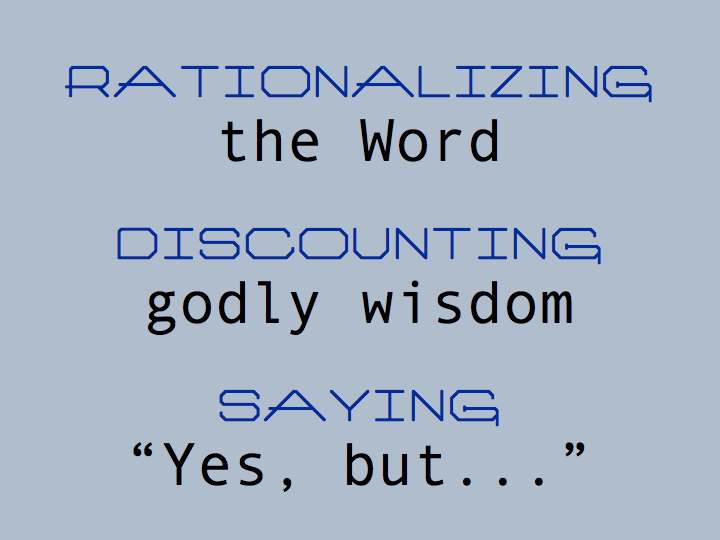
You try to rationalize what the Holy Spirit is saying to you through the Bible, instead of simply obeying what He says.
You discount the wisdom of other God-fearing people who are saying the same thing God’s Spirit is saying.
You frequently find yourself saying, “I know that’s what the Bible says, but….”
You don’t have to live with blurry spiritual vision. Read the Bible for yourself, and let the Holy Spirit point out how your vision can be corrected.
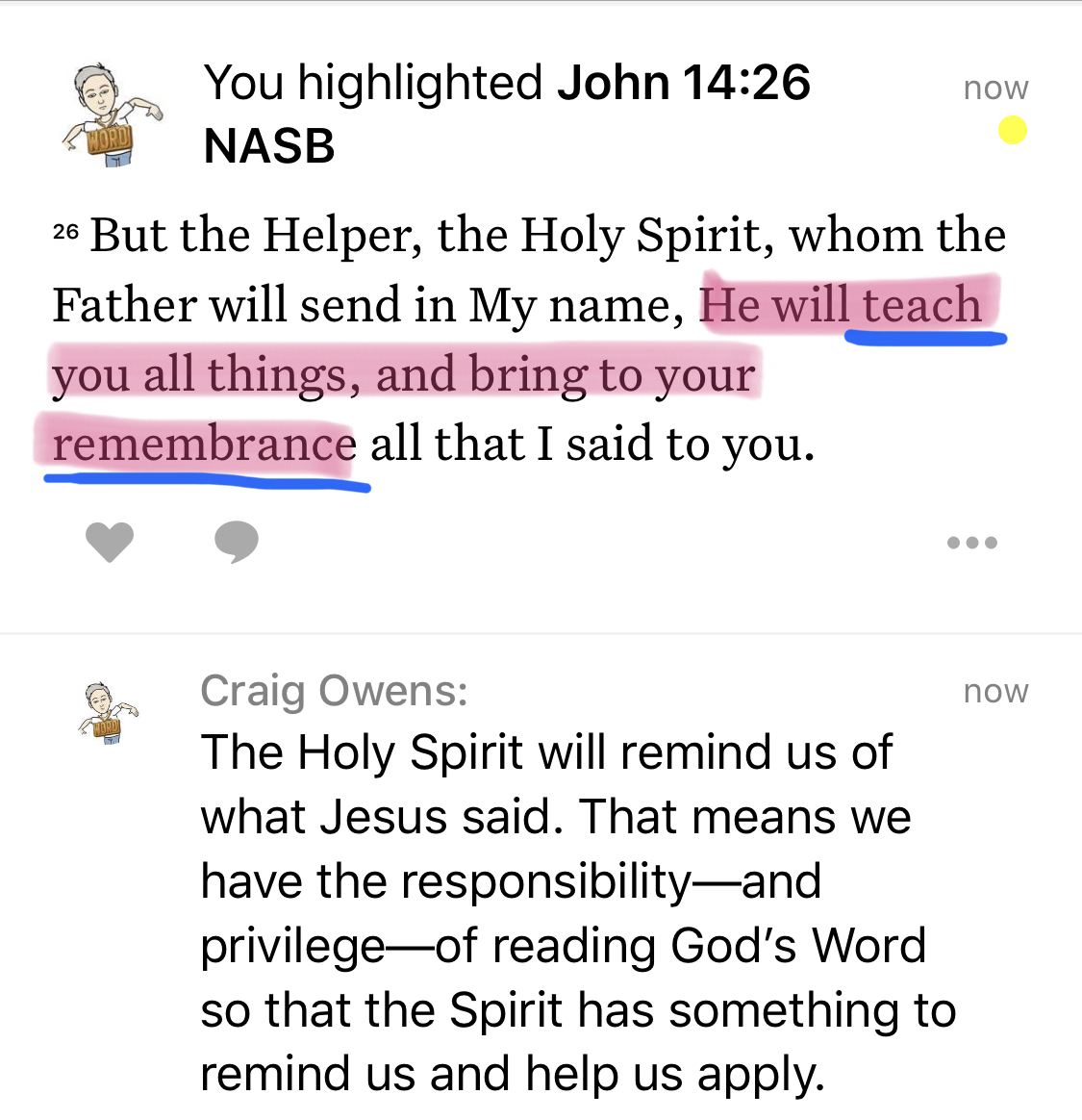
If you are a Christian, you have a personal trainer for your spiritual workouts. He is the Holy Spirit.
We should never think of the Holy Spirit as showing up just in the New Testament. He is living and active all throughout Scripture. Yesterday we saw Him in the gimel section of our P119 Spiritual Workout (that’s verses 17-24 of Psalm 119).
A personal trainer who has our best interests in mind will always set a healthy pace for us: neither letting us loaf nor working us too hard that it does permanent damage. But that pace is almost always painful because it is stretching us into a new dimension of fitness. This is just as true—if not truer—in the spiritual realm.
Take a look at the Hebrew letter gimel. Do you see a silhouette of runner? The Jews did, and they gave this definition to gimel: a richer man running after a poorer man in order to bless him. Isn’t that a great picture of what God does for us?! The Holy Spirit wants to help us “keep pace” with what God is blessing. That’s why He makes the laws and statutes and decrees of Scripture come alive so that we can keep pace with all that God has for us.
Now remember that blessing has two components. One part is the rich rewards we receive, and the other part is the loving correction. Both rewards and loving correction are blessings because they both keep us on pace with God’s plan for our lives.
The Holy Spirit sets a pace for us to follow as He reveals God’s Word to us. It’s a bit painful to stretch and grow, but God will reward us as we obediently follow the Spirit’s leading. If we choose not to keep pace, we may be alright for a while. But eventually, we’ll start to fall short, or even get on a wrong path. Here the blessing of God is to lovingly rebuke and correct us, in the attempt to get us back on pace with Him.
And when we get back on pace with God’s plan for us, His richest rewards can continue to flow into our lives!
If you’re not allowing the Holy Spirit to be your Personal Spiritual Trainer, I suggest you invite Him to take that role in your life today. No one is more concerned about your spiritual growth and spiritual vitality than He is, and He alone can help you get to the place of optimal spiritual health.
As a parent (and a pastor), delivering correction is one of my least favorite things to do. But it must be done.
The apostle Paul seemed to feel the same way. We get some insight into his heart in his letter to the Corinthians, where he reminds them of why he had to write such a stern letter of correction.
For I wrote to you out of great distress and anguish of heart and with many tears, not to grieve you but to let you know the depth of my love for you. (2 Corinthians 2:4)
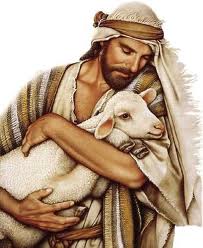
The loving shepherd’s heart longs for the advancement, the betterment, of all the sheep under his care. He is hurt when his sheep are wounded. His approach to discipline is always gentle; not weak, but strength lovingly applied.
The loving shepherd looks at his own life first, before correcting the sheep, to address anything he may have done or failed to do which caused the sheep to stray.
The loving shepherd knows that discipline may be painful for a moment, but it is to bring greater life. Just as a parent will allow a child to suffer the momentary pain of an immunization injection, to spare that child the unbearable pain of a disease later on.
And the loving shepherd always approaches a time of correction with “confidence in all of you, that you would all share my joy” (v. 3). The shepherd doesn’t view them as “dumb sheep” that cannot improve; rather, he is confident and assured that they will receive loving correction and make the change that leads to joy for all.
As a pastor, you are going to have to deliver the hard word from time to time. You will have to address touchy subjects, both corporately and privately. It is very instructive to see how the apostle Paul approached the hard word.
In Romans 9, Paul is getting ready to address one of the most sensitive subjects of his day. The Jews felt they were “in” with God just because they were Jews, and the Gentiles were “out” with God just because they weren’t Jews. Paul is going to have to deliver the word that both Jews and Gentiles can be accepted by God because of what Jesus did on the Cross.
So notice how he begins:
I speak the truth in Christ—I am not lying, my conscience confirms it in the Holy Spirit—I have great sorrow and unceasing anguish in my heart.
1. I speak the truth in Christ. It wasn’t his opinion, but the word from God. I must settle this matter before delivering the hard word. Far too often we can put our preferences on par with God’s Word. I cannot do this!
2. My conscience confirms it in the Holy Spirit. Before I speak a hard word that people may not like to hear, I need to make sure my conscience is right before the Holy Spirit. He alone confirms His Word. The reaction of the audience, however, may or may not confirm what God says.
3. I have great sorrow and unceasing anguish in my heart. It should be a major red flag if I looked forward to delivering a painful/challenging/correcting word. I need to put myself in their place, not try to put someone else in their place!
My job as a pastor is not to condemn, nor even to convict; the Holy Spirit will do that. My job is to (a) hear God’s truth, (b) get my conscience right with the Spirit, and (c) empathize with people as I lovingly speak the truth to them.
Listen to the podcast of this post by clicking on the player below, and you can also subscribe on Apple, Spotify, or Audible.
Bringing correction is one of the toughest jobs for those in leadership, but it’s a responsibility that cannot be delegated or ignored. In order for correction to be effective, it must not be too light or too heavy. Unfortunately, many of us have experienced far too many ineffective forms of leadership correction.
I read a great example of how to properly correct in the life of Samuel. In 1 Samuel 12, the people had gotten off track, and Samuel lovingly and effectively brought them back into line. Here’s what his example teaches us on how to correct followers:
1. Shared history (v. 2). Samuel reminded them of what had happened in their history, and even what they had experienced together. “Newbie” leaders need to be cautious about bringing correction that violates an organization’s established culture.
2. Integrity (v. 3). Samuel’s words and lifestyle lined up. That doesn’t mean he never made a mistake, but it does mean that he was willing to acknowledge and repair his mistakes. Nothing is worse than a leader who says, “Do as I say, not as I do!”
3. Common ground (vv. 6-11). A leader needs to get everyone on the same page. Find something somewhere on which everyone can agree, and then move forward from there.
4. Just say it (vv. 12-13). Don’t beat around the bush; don’t try to bring correction through a parable; don’t soften the blow. Just say it: “This is where I believe you made a mistake.” Far too many leaders talk too much and leave their followers saying, “Huh?” If you are going to bring correction, make sure your followers know exactly what it is you are correcting.
5. Give the remedy (vv. 14-15, 20-21). Samuel pointed out the error, and he just as clearly told them how to get back on track. The remedy should be as clear and simple as possible.
6. Remove the fear (vv. 20, 22). Don’t let the corrected follower be afraid of you! Fear will never re-establish trust. Samuel couldn’t have been more clear on this. He literally said to the Israelites, “Do not be afraid.”
7. Demonstrate servant leadership (v. 23). At the close of the meeting, Samuel said he would do two things: “I will continue to pray for you, and I will continue to teach you.” In telling them this, Samuel was really saying, “Let’s walk through this together.”
If you lead your family, your church, your company, or your team, you are going to have to bring correction at some point. When you need to do this, take some time to review this list and bring correction the way Samuel did: lovingly and effectively.
P.S. You can also check out this post where the apostle Paul gives us another example of how to handle correction properly.
A couple of weeks ago I wrote about some unique insights I gathered from taking a trip with my wife’s TomTom GPS unit. Well, I was taking another trip with TomTom the other day, and I got really annoyed!
I was running late. I grabbed my laptop and my cell phone, fired up the TomTom and hit the road. I got about a mile down the road and realized I forgot something for my meeting. So I turned my car around and quickly headed back home. All of a sudden a voice was reminding me…
“At the first possible place, make a legal u-turn.”
“Turn right at the next road and turnaround.”
“To return to your entered route, make a legal u-turn.”
This voice was still just as sweet and even-keeled as before, but it was really getting on my nerves. I knew I was heading in the wrong direction, but I wanted to get this taken care of quickly, but the voice kept reminding me. I tried to tune the voice out—tried to ignore it—but it didn’t work.
I turned the voice off.
When I wrote about TomTom earlier, I equated it to the moral GPS of the Holy Spirit. And that analogy still stands:
The Holy Spirit does convict us. He warns if we’re on the wrong path, and He lovingly and persistently keeps reminding us to do a u-turn. Those who listen and respond are fully restored. Those who don’t listen—those who switch off their moral GPS—can have their conscience permanently seared.
Are you listening to the Holy Spirit? Do you hear Him encouraging you? Do you hear Him challenging you? Do you hear Him reminding you to turn around? Stay tuned in—He only has the best in mind for you.



 In Proverbs 9, Wisdom and Folly are both personified as women. And both of them call out the same thing to their would-be followers: “Let all who are simple come in here!” (vv. 4, 16). They both claim to have ‘the goods’ for those searching for truth, but here are five things that separate them.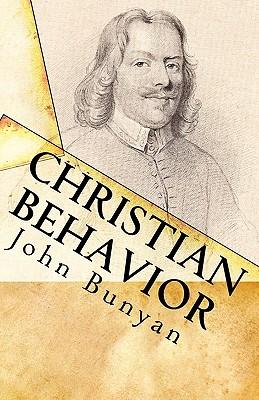






 Craig T. Owens