Jesus Doesn’t Need Salesmanship Techniques

“Evangelical Christians commonly offered Christ to mankind as a nostrum to cure their ills, a way out of their troubles, a quick and easy means to the achievement of personal ends. They use the right words, but their emphasis is awry. The message is so presented as to leave the hearer with the impression that he is being asked to give up much to gain more. And that is not good, however well intentioned it may be.

“What we do is precisely what a good salesman does when he presents the excellence of his product as compared with that of his closest competitor. The customer chooses the better of the two, as who would not? But the weakness of the whole salesmanship technique is apparent: the idea of selfish gain is presented in the whole transaction. …

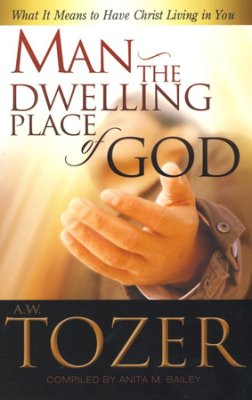
“In those early Galilean days Christ’s followers heard His call, forsook the old life, attached themselves to Him, began to obey His teachings and joined themselves to His band of disciples. This total commitment was their confirmation of faith. Nothing less will do. And it is not different today. He calls us to leave the old life and to begin the new. There must never be any vacuum, never any place of neutrality where the world cannot identify us.” —A.W. Tozer, Man—The Dwelling Place Of God

11 More Quotes From “Cherish”

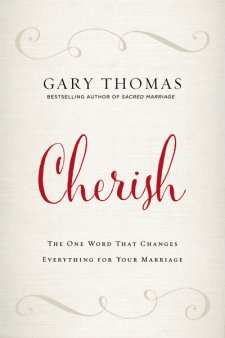
Gary Thomas calls on husbands to not just love their wives, but to cherish them. It’s an admirable goal for all married men! Please check out my review of Cherish by clicking here. Below are a few more quotes I especially liked.

“Never forget: You married a spouse with natural weaknesses. You married a spouse with a history of hurt. We can be agents of healing redemption and acceptance in our marriage, or we can do further harm, perhaps unintentionally.”

“Of course, there’s no promise that if you persevere, you’ll get just what you’re hoping for. But the one certainty is that if you give up, you definitely won’t get it.”

“Every conversation—every one!—takes you closer to or farther away from a cherishing marriage. The Bible declares this truth: ‘The tongue has the power of life and death’ (Proverbs 18:21).”

“If we want our spouses to feel cherished, we may have to work at a few things we’re not so good at by nature.”

“Pam Farrel writes in several of her books that a wife often feels most loved when her husband is simply more curious about her. … It’s not enough to simply listen. We have to take the next step, engage, and go even further to say, ‘I want more. Tell me more.’ We have to maintain our curiosity. … Husbands, cherishing often isn’t about what your wife is saying; it’s about who is saying it.”

“Silence is often unintentionally malicious, so try to verbalize every positive thing you can think of.”

“A joyful person walking in grace and hope can cherish much more than one who is tangled up in the guilt that Christ died to remove. Our guilt serves no one. In Christ, our self-condemnation offends God; it doesn’t please Him. To walk in condemnation is to call God a liar and Christ’s work insufficient. One of the worst sins you can commit as a Christian is to define yourself by your sin. In the same way, one of the worst sins you can commit against your spouse is to always define them by their sin. Biblical marriage is about defining each other as Christ defines us—saved.”

“Your spouse has a unique history, so cherish your spouse by treating them according to their reality: They are living a life that has never been lived before. They have a personality that has never existed before. They have a unique blend of strengths and weaknesses, temptations and gifts, as well as a once-in-the-universe calling. Your role is to help them complete their one-of-a-kind story.”

“Never, ever, get to the point that you expect your spouse to never stumble. Otherwise, you won’t cherish them; you’ll resent them.”

“Stop comparing your spiritual maturity with your spouse’s; instead, start comparing your spiritual maturity with Ephesians 4:1–3. If you do that, you will change the climate of your marriage.”

“When someone pledges to be your spouse, that commitment alone should earn him or her the benefit of the doubt. Even when things may not look the best, seek understanding before you even think about censure. Cherishing our spouses doesn’t mean living in Fantasyland, but it does mean giving our spouses the benefit of the doubt instead of jumping immediately to accusation.”

To read the first set of quotes I shared from Cherish, click here.

10 Quotes From “Cherish”

As I said in my book review of Gary Thomas’s Cherish, this is a must-read for married couples, those about to be married, and those who counsel married couples. Please check out my review, and then enjoy a few quotes from this book.

“Learning to truly cherish each other turns marriage from an obligation into a delight. It lifts marriage above a commitment to a precious priority.”

“In one sense, love is the nurturing aspect of marriage, while cherish is the ‘tasting’ aspect of marriage. Love meets the need; cherish tickles the tongue.”

“If you want to be fully satisfied in your marriage, if you want your wife to feel cherished, then mentally treat your wife like Eve. Let her be, in your mind, in that way, the only woman in the world. Say with King Solomon, ‘My dove, my perfect one, is the only one’ (Song of Songs 6:9 ESV).” 

“You’ve already made your choice. In your ideal world, you have no intention of ever starting over with someone else, so why not put your energy into and your focus on guarding that choice, building on the strengths of that choice, and making yourself ever more grateful that you made that choice?”

“At some point, if you want marital happiness, if you want to learn how to cherish a real man instead of longing for an imaginary composite, some ‘Frankenstein’ husband who somehow has it all, then you have to own your choice and even learn to cherish your choice. ‘My vineyard, my very own, is for myself’ (Song of Songs 8:12 NRSV).”

“The call to cherish isn’t to appreciate being pleasured by your spouse but to take pleasure in the pleasure of your spouse.”

“If we want to cherish our spouses, we must learn to take an active interest in what interests them.”

“Cherishing is expressed, or it’s not. Intimacy is built, or it is assaulted, even in the most mundane marital conversations.”

“The act of consistently noticing and honoring our spouses cultivates and maintains a certain kind of relationship, and it shapes our hearts. Noticing and honoring sustain the force and power of cherishing. When we stop noticing and stop honoring our spouses in the little things, the relationship starves.”

“Active cherishing—noticing and then expressing the excellence you see—is a way to shape our attitudes and to generate feelings of closeness and well-being. When we do what the Bible tells us to do, we will be doubly blessed—our spouses will be happier, increasing the joy in our marriages, and we’ll become happier psychologically as well. Cherishing our spouses literally makes us feel better. So cherishing means waging war on contempt and going on the offense with gratitude.”

I will be sharing more quotes from Cherish soon. If you’d like to be notified when these quotes are posted, simply enter your email address in the field in the right column and click “Sign me up!” You may also want to follow me on Twitter and Tumblr for other quality quotes I post every day.

6 Quotes About Understanding Sexual Sin

Focus On The FamilyEarlier this week I shared some quotes from a Focus On The Family (FOTF) reading plan I completed on YouVersion regarding the problems with pornography. Here are some additional quotes from a related FOTF reading plan called Understanding Sexual Sin.

“Sexual sin distorts the image of the Trinity mirrored in our marital relationships.”

“If our sex lives are meant to function as reflections of the image of God, it stands to reason that they should be shaped by the qualities of the Trinity. Three primary principles apply here.

1) We may never use another person as an object, sexual or otherwise. The members of the Trinity never relate to each other as objects or things to be used. Instead, they relate to one another in love, each seeking to serve and enhance the goodness and glory of the others.

2) We must keep sexual relations within the bounds of a loving and committed marriage. … This sexual embrace within the bond of marriage mirrors the nature of the relationship between the members of the Trinity as nothing else in creation can. Ideally, the marital bond is designed to be loving, permanent, exclusive, and self-giving.

3) We must respect and honor the God-designed differences between male and female. Male and female are not simply cultural constructs. They are God-created characteristics of humanity. Together, they personify the Trinitarian nature of God in a fundamental way…. The differences between male and female provide the fullest picture of the image of God in creation.”

“Biblically speaking, sexual immorality (Greek porneia) is any sexual activity that takes place outside of marriage. This includes adultery, premarital sex, and extramarital sex. Scripture teaches that both are off-limits for Christians (see 1 Corinthians 6:9; Acts 15:29; Hebrews 13:4).”

“It’s a mistake to confuse normal sexual attraction with lust. Sexual attraction is natural. … True lust involves a choice and an act of the will. To a certain extent it’s a conscious decision to pursue the desirable object instead of simply allowing it to pass by. It’s a willingness to give in to the natural impulse.”

“Pornography represents a departure from God’s design for sex in that it depersonalizes real people, strips them of their dignity, and turns them into sexual objects.”

“It is never wise to give more weight to feelings than to rational conclusions and clear biblical teachings. Feelings don’t make you who you are. Beliefs, values, and conscious commitments do.”

6 Quotes On Speaking Truth From “The Seven Laws Of Love”

The Seven Laws Of LoveIn The Seven Laws Of Love, Dave Willis gives us some highly practical, biblically-based counsel for investing in all of our relationships. Normally when I share quotes from books, I share all of them at once, but I felt like it would be good to share these quotes a bit more slowly, to give you time to read them and apply them.

The seven laws Dave identifies are:

  1. Love requires commitment (read the quotes here)
  2. Love selflessly sacrifices (read the quotes here)
  3. Love speaks truth
  4. Love conquers fear
  5. Love offers grace
  6. Love brings healing
  7. Love lives forever

From law #3, here are some quotes on truth speaking—

“The truth isn’t always comfortable, but it’s always necessary.”

“Honesty always paves the way to intimacy.”

“Selective honesty is the same as dishonesty.”

“The truth might be expensive at times, but it’s always worth it.”

“We all tend to craft a self-focused view of the world where we emerge as either a hero or a victim in every scene. We’re never the villains in the story. The truth is, though, that we’ve all been the bad guy more often then we’d like to admit. A life of love requires that we look in the mirror and give an honest and humble self-assessment.”

“What kind of legacy do you want for your own life? What stories do you want people telling about you a generation after your death? The decisions you are making right now are shaping future generations. Your legacy will be measured by your relationships, and your relationships will only be as strong as the trust your loved ones have in you.”

Check out my review of The Seven Laws Of Love by clicking here.

Watch for more quotes from the other laws of love explained in this book throughout the next few days.

4 Quotes On Selfless Sacrifice From “The Seven Laws Of Love”

The Seven Laws Of LoveIn The Seven Laws Of Love, Dave Willis gives us some highly practical, biblically-based counsel for investing in all of our relationships. Normally when I share quotes from books, I share all of them at once, but for this book I felt like it would be good to share these quotes a bit more slowly, to give you time to read them and apply them.

The seven laws Dave identifies are:

  1. Love requires commitment (read the quotes here)
  2. Love selflessly sacrifices
  3. Love speaks truth
  4. Love conquers fear
  5. Love offers grace
  6. Love brings healing
  7. Love lives forever

From law #2, here are some quotes on selfless sacrifice—

“That’s the beautiful irony of love. The only way we can truly keep it is to give it away.”

“First Lieutenant Alonzo Cushing was a twenty-two-year-old officer in the Union Army during the Civil War when he made the ultimate sacrifice. The young West Point graduate was in charge of six cannons and more than one hundred men during the Battle of Gettysburg. His small force found itself trapped in the middle of the battlefield during the Confederate Army’s infamous assault known as Pickett’s Charge. The full force of the rebels was closing in on Cushing and his men. The young officer had already been shot twice and was critically wounded. He had every right to retreat to safety, but he recognized the magnitude of the moment. Instead, he ordered the cannons moved to the front lines, and he limped forward to lead a counterattack. His courage and tenacity inspired the men around him, and they fought back valiantly before Cushing was shot again. The final shot proved to be fatal. The sacrifice of one young man turned the tide of a battle, which turned the tide of war, which ultimately held a nation together.”

“We don’t make our sacrifices for recognition; we make our sacrifices for love. When love moves you to sacrifice, you can rest assured that lives will be changed and eternity will be impacted.”

“Many people believe they have put their faith in Jesus, but they also believe they have to earn what He did for them on the Cross. Here’s the good news: when Jesus was hanging on that Cross, dying to save you, He did not use His dying words to say, ‘Earn this.’ Do you know what He said instead? He said, ‘It is finished!’ Did you catch that? It is finished. That means done, complete, sealed, finished! That’s God’s gift of grace. Jesus has done all the work already. You couldn’t possibly earn it even if you tried with everything you had, and God never expected you to.”

Check out my review of The Seven Laws Of Love by clicking here.

Watch for more quotes from the other laws of love explained in this book throughout the next few days.

6 Quotes On Commitment From “The Seven Laws Of Love”

The Seven Laws Of LoveIn The Seven Laws Of Love, Dave Willis gives us some highly practical, biblically-based counsel for investing in all of our relationships. Normally when I share quotes from books, I share all of them at once, but I felt like it would be good to share these quotes a bit more slowly, to give you time to read them and apply them.

The seven laws Dave identifies are:

  1. Love requires commitment
  2. Love selflessly sacrifices
  3. Love speaks truth
  4. Love conquers fear
  5. Love offers grace
  6. Love brings healing
  7. Love lives forever

Dave writes in the introduction to his book, “God wants love to flow through our lives like a mighty river. The laws of love are the invisible banks God has placed around love for our prosperity and protection. When our relationships live with in those boundaries, everyone involved is enriched. When we dismiss or disregard the boundaries, our relationships can quickly become unhealthy and unsustainable.”

From law #1, here are some quotes on commitment—

“God created love to be a transformative force in every aspect of our lives. … Before that can happen, though, there must be commitment. Without a real commitment, there can be no real love.”

“The strength of your commitment will always determine the strength of your relationship.”

“God brought His own Son through the lineage of a poor young woman named Ruth who understood the power of commitment in the meaning of love. God wants to create a generational impact through your life as well. The level at which you’ll make an eternal impact is defined by your level of commitment to the people God has placed in your life.” 

“Our commitment to others is evident in the consistency with which we serve them. Grand, one-time gestures can be nice, it’s what we do with consistency that will ultimately shape our relationships.”

“We’ve traded true intimacy for porn. We’ve traded committed marriages for commitment-free cohabitation. We’ve traded having children for having pets. We’ve traded meaningful conversations for text messages. We’ve traded ‘till death do us part’ for divorce. We’ve traded the pursuit of holiness for the pursuit of happiness. We’ve traded love for lust. We’ve attempted to exploit all the benefits and pleasures of love without investing the commitment and self-sacrifice that love requires.” 

“Your life and your relationships will be defined by the commitments you make and how well you keep them.”

Check out my review of The Seven Laws Of Love by clicking here.

Watch for more quotes from the other laws of love explained in this book throughout the next few days.

4 Reasons To Study Your Bible

Commitment to readYou probably hear Christians say quite frequently, “You should read your Bible.” But one thing you may not hear as often is why you should read your Bible. There are probably many more reasons, but here are four reasons why I believe reading your Bible should be a daily part of your life.

(1) To help spot errors.

When the devil tempted Jesus, it is noteworthy that Jesus didn’t try to use logic, or persuasion, or even willpower. Every temptation was blocked by Jesus saying, “It is written” as He quoted Scripture.

In the second temptation, the devil tried the same tactic. He, too, quoted a couple of verses from the Psalms, but he took them out of their context. So notice Christ’s reply, “It is also written” (Matthew 4:7). The best way to spot error is to know the full counsel of God’s Word. This tactic the devil tried with Jesus wasn’t something new, but it was something he used on the very first humans: “Did God really say…” (Genesis 3:1), and he will try it again on you!

(2) To clarify your emotions.

Most of us allow our emotions to control our actions. Or sometimes we wrestle with, “My heart says one thing, but my head says something else!” In this tug-of-war, we allow our emotions to determine our beliefs, and then our beliefs determine our actions. This is not only dangerous, but it is contrary to what the Bible teaches.

The healthy way to respond is by fully knowing what we believe, and then acting according to our beliefs. Our proper emotional response will then follow those actions.

Look at the example of Jesus in John 2:13-16. He was ticked off at how people were misusing His Father’s house, and He did some serious house cleaning! Just reading those four verses, you may get the idea that Christ’s emotions carried Him away. But check out verse 17, in which we see He was acting in accordance to His beliefs, which were fully grounded in Scripture.

(3) To know prophesy.

All of the Scriptures point to Jesus, so all of the Scriptures are illuminated by Christ (Luke 24:27, 45). If you want to know what is happening in our world, turn to the pages of Scripture and see how Jesus is revealed. This will help you put even current events into perspective.

(4) To give sound answers.

When people need help, I want to be able to give them real answers. Not my opinion, but truth that they can apply. The Apostle Peter told us to always be prepared to give people an answer that is based on our knowledge of Jesus (1 Peter 3:15).

“Beware of saying, ‘I haven’t time to read the Bible, or to pray’; say rather, ‘I haven’t disciplined myself to do these things.’” —Oswald Chambers

Can I challenge you to do something I challenged my whole church to do … Make a commitment to read the Bible every day for the next seven days. See what happens as God meets with you, and reveals Himself and His wisdom to you, every day.

We’ll be learning some Bible study strategies next Sunday, and I invite you to join us.

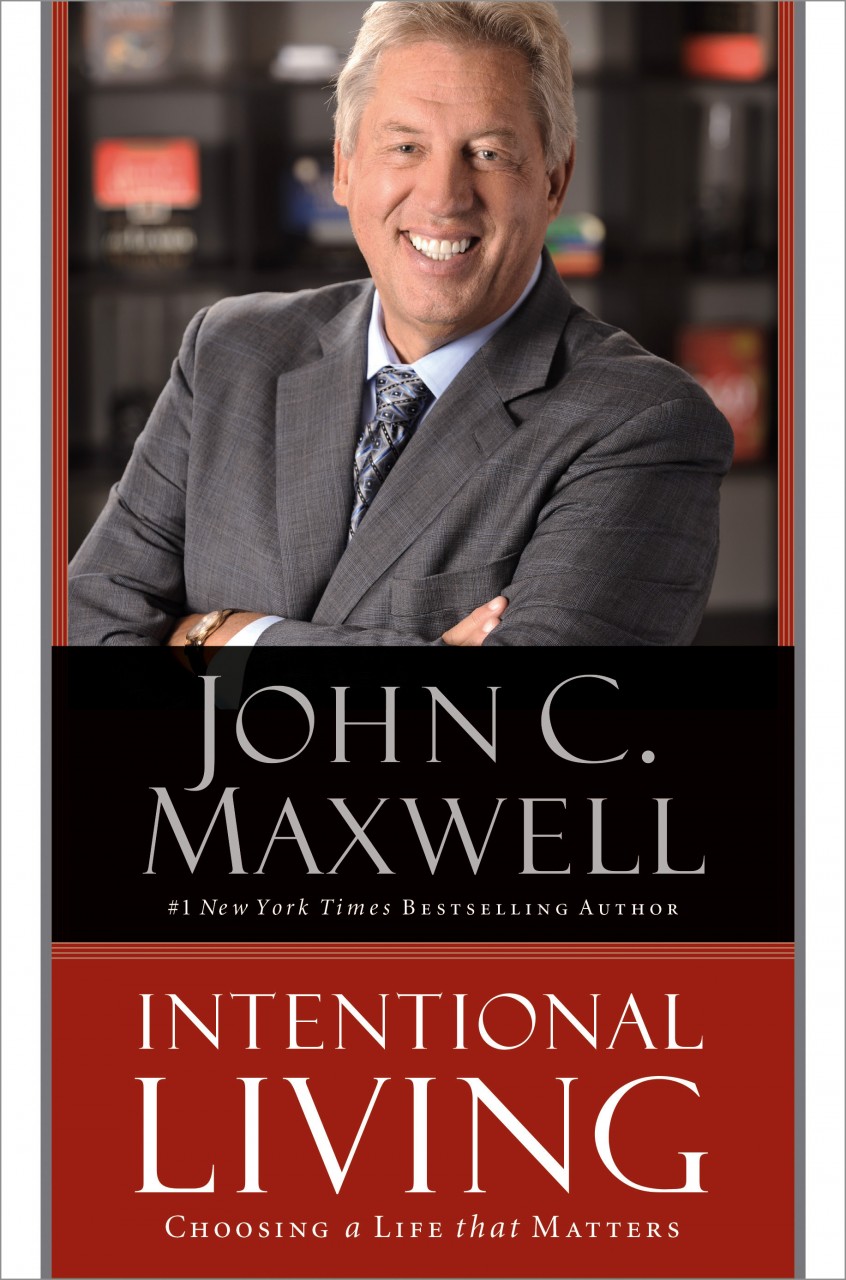
11 Quotes From “Intentional Living”

Intentional LivingIntentional Living by John Maxwell has a very different feel to it, compared to other Maxwell books, but I still liked it a lot! You can check out my book review by clicking here. One of the things vary familiar about this Maxwell book is the excellent content. Here is the first batch of quotes from Intentional Living.

“Most people want to hear or tell a good story. But they don’t realize that they can and should be the good story. That requires intentional living. It is the bridge that crosses the gap to a life that matters.”

“No one stumbles upon significance. We have to be intentional about making our lives matter. That calls for action—and not excuses. Most people don’t know this, but it’s easier to go from failure to success than from excuses to success.”

“If you want to live a life that matters, don’t start when you get good; start now so you become good.”

Trying alone does not communicate true commitment. It’s half-hearted. It is not a pledge to do what’s necessary to achieve a goal. It’s another way of saying, ‘I’ll make an effort.’ That’s not many steps away from, ‘I’ll go through the motions.’ Trying rarely achieves anything significant. If an attitude of trying is not enough, then what is? An attitude of doing!”

“Every time we choose action over ease we develop an increasing level of self-worth, self-respect, and self-confidence.”

“Intentional living always has an idea. Unintentional living always has an excuse. Intentional living fixes the situation. Unintentional living fixes the blame. Intentional living makes it happen. Unintentional living wonders what happened. Intentional living says, ‘Here’s something I can do.’ Unintentional living says, ‘Why doesn’t someone else to do something?’”

“If you want to make a difference and live a life that matters, you need to embrace some words and reject others. We all have a running dialogue in our heads. What we say to ourselves either encourages us or discourages us. The words we need to embrace our positive words, words such as we, can, will, and yes. What do we need to eliminate? Me, can’t, won’t, and no.” 

“Trying to make a huge change overnight often creates fear, uncertainty, and resistance, because the change appears unachievable. The idea of making small changes is less threatening and helps us overcome our hesitation and procrastination.”

“Do you believe in yourself? Your belief will drive your behavior. The thought I don’t think I can often arises out of I don’t think I am.”

“Purpose is the rudder on your boat. It gives you direction and keeps you going in the right direction when the wind is blowing and the waves are crashing against you. It provides calm and confidence in the midst of the storm.”

“Every person was created to do his or her part to better mankind. That includes you! 
Every person has talents that will help him or her better mankind. That includes you! 
Every person is given an opportunity to better mankind. That includes you! 
Every person has a purpose for which he or she was created. That includes you! 
Every person must look within to discover his or her purpose. That includes you!”


9 Quotes From “Keep Your Love On!”

Keep Your Love OnPastors and counselors should definitely add Keep Your Love On! to their bookshelf. This book by Danny Silk is a goldmine of helps for repairing, restoring and strengthening relationships. You can read my full book review by clicking here. Below are a few quotes from this book.

“Most people haven’t learned to build their relationships on the premise, ‘I choose you.’ Their premise for relationships is, ‘You choose me.’ … However, if all our relationships are based solely on our natural impulse to return liking for liking, then we are going to have problems. Liking is a conditional state—it changes. Making ‘You choose me’ the foundation of a relationship dooms it to change, and probably collapse, the minute one person’s liking happens to turn south.” 

“A healthy, lasting relationship can only be built between two people who choose one another and take full responsibility for that choice. This choice must be based on who they are, what they want, and what they are committed to doing as individuals. … In order to be able to make and keep commitments like this—commitments to enduring, intimate relationships—you need to be a certain kind of person. You need to be a powerful person. Powerful people take responsibility for their lives and choices. Powerful people choose who they want to be with, what they are going to pursue in life, and how they are going to go after it.”

“Often the first thing that reveals a powerless mindset is powerless language. Frequent use of the phrase is ‘I can’t’ and ‘I have to’ is a hallmark of a powerless person. … Powerless people also throw in ‘I’ll try’ to absolve them if they do not come through on a commitment or promise.”

“Powerless people approach relationships as consumers. They are always looking for other people who have resources of love, happiness, joy, and comfort to offer in a relationship to share with them, because they don’t have any.”

“Powerless people often blame the messes they make on other people. The reason their life, marriage, child, finances, job, or whatever is the way it is has nothing to do with their choices. Someone else—their parents, their spouse, their teachers, society—created the life they’re living. They don’t have the power to create their own lives.” 

“The classic relational dynamic created by powerless people is called triangulation. When you believe that other people are scary, unsafe, and more powerful than you, and when you believe that you need to get them to meet your needs, then you have three possible roles you get to play in relationships: the victim, the bad guy, or the rescuer. If you’re the victim, you’re looking for a rescuer to make you feel safe and happy. If you’re the bad guy, you are using control and intimidation to protect yourself or get someone to meet your needs. If you’re a rescuer, you’re taking responsibility for someone else’s life in an attempt to feel powerful. Powerless people will switch in and out of these roles in relational interactions.”

“In order to stay in relationship, powerless people make an agreement to exercise mutual control over each other. The unspoken pact between them is, ‘It’s my job to make you happy, and your job to make me happy. And the best way to get you to work on my life is to act miserable. The more miserable I am, the more you will have to try to make me feel better.’ Powerless people use various tactics, such as getting upset, withdrawing, nagging, ridiculing, pouting, crying, or getting angry, to pressure, manipulate, and punish one another into keeping this pact. … A relational bond built on mutual control simply cannot produce anything remotely like safety, love, or trust. It can only produce more fear, pain, distrust, punishment, and misery.” 

“Powerful does not mean dominating. In fact, a controlling, dominating person is the very opposite of a powerful person. Powerful people do not try to control other people. They know it doesn’t work, and that it’s not their job. Their job is to control themselves. As a result, they are able to consciously and deliberately create the environment in which they want to live. They don’t try to get people to respect them; they create a respectful environment by showing respect. They deliberately set the standard for how they expect to be treated by the way they treat others. As they consistently act in responsible, respectful, and loving ways, it becomes clear that the only people who can get close to them are those who know how to show respect, be responsible, and love well. Life does not happen to powerful people. Powerful people are happening—they are happening all the time.”

“What is the goal in your close relationships? Are you trying to create a safe connection or a safe distance? Are you building a skill set to move away from or control the distance between you and your husband, wife, friend, child, etc.? Or are you building a skill set to move toward them and keep your love on no matter what?”

Stay tuned: more quotes from Keep Your Love On! coming soon…