Shine In The Darkness

Listen to the podcast of this post by clicking on the player below, and you can also subscribe on AppleSpotify, or Audible. 

I’ve noticed that when people want to sound super-spiritual that they like to use King James Version phrases. Sometimes I hear people speaking in normal, everyday English until they begin praying and then I hear, “Thy servant … Thou O Most High … we beseech Thee … Thou knowest Thine children….” 

Statement #6 in our series “Is that in the Bible” also sounds more powerful when people quote it in King James English—Shun the very appearance of evil or sometimes Wherefore come out from among them, and be ye separate, saith the Lord. Are those in the Bible? Yes, they are! 

We don’t use the word “shun” very often today, but in what was probably the first written book of the Bible we read that not only did Job shun evil, but God commended him for shunning evil too. And wise King Solomon advocated for his readers to shun evil (Job 1:1, 8; 2:3; Proverbs 3:7, 14:16). 

Yes, those phrases that I quoted earlier come right from the King James Version of the Bible in 1 Thessalonians 5:22 and 2 Corinthians 6:17, but does this mean that we are to stay away from anything that is “unChristian”? Does it mean that we are to shun sinners? 

There is a story that is told in the synoptic Gospels, but I especially like it in Matthew’s Gospel for one specific reason (which I’ll share with you in a moment). Jesus has just called Matthew to be His disciple, and several of Matthew’s coworkers appear to be having a going-away dinner for him which Jesus attended. 

Then comes the “911” call from the Pharisees (this statement is in Matthew 9:11): “Gasp! Jesus is eating with sinners! He’s not shunning them! Call in the sin police!” The New Living Translation is even more harsh, with the Pharisees asking, “Why does your Teacher eat with such scum?” (v. 13 NLT). 

In Luke’s Gospel we read another story where Jesus eating with “such scum” turned another tax collector’s life around. In Luke 19:1-10, we read of Zaccheus experiencing a complete life change because of His encounter with Jesus. 

Listen to Christ’s words in both Matthew and Luke: “It is not the healthy who need a doctor, but the sick. … I have not come to call the righteous, but sinners. … The Son of Man came to seek and to save what was lost” (Matthew 9:12-13; Luke 19:10). 

This doesn’t sound like Jesus shunned sinners.
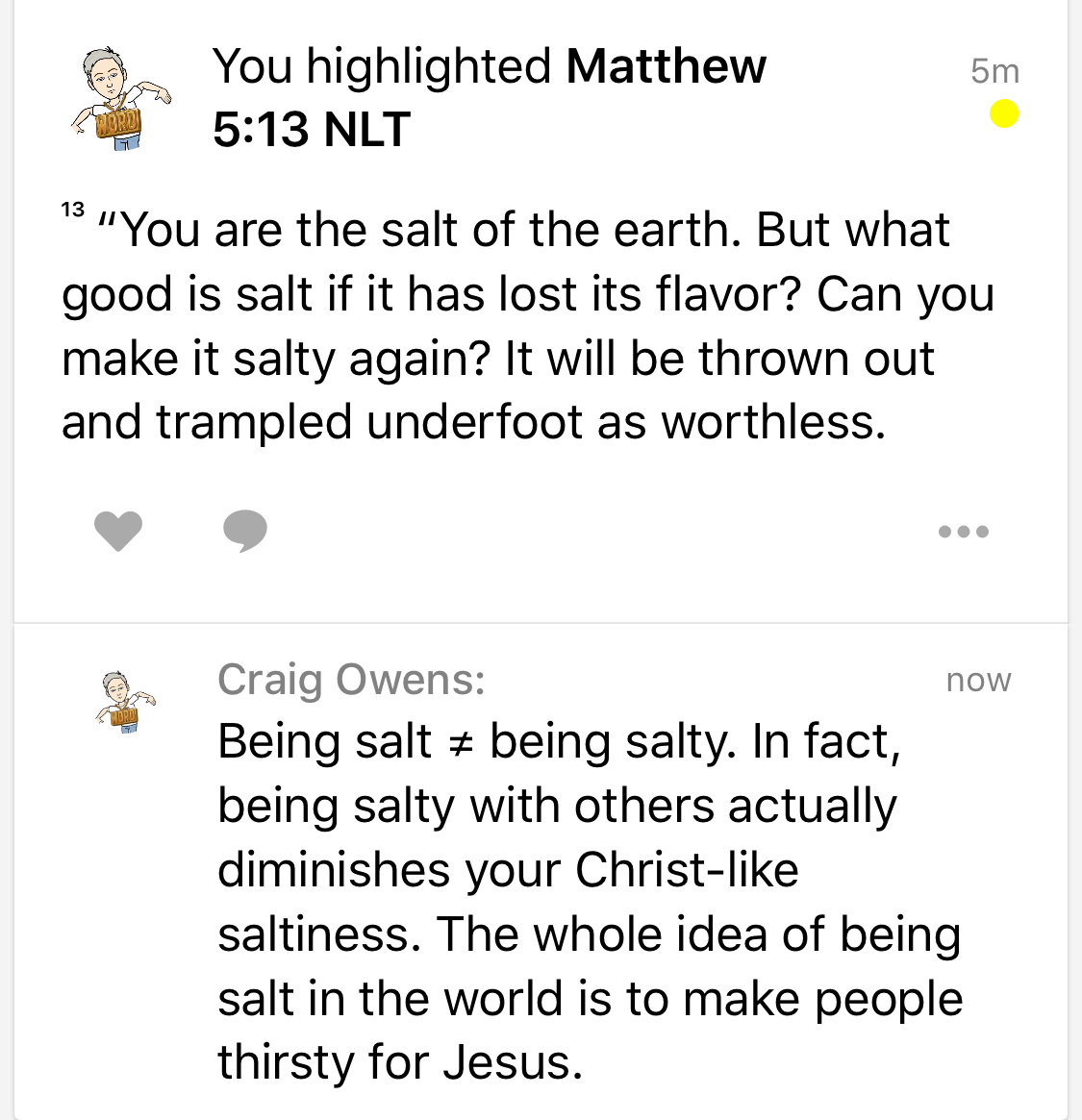
Likewise, Jesus called us to be His salt and light in the world (Matthew 5:13-14). No matter how beneficial the salt of my life is, it doesn’t help anyone if it stays in the saltshaker, shunning the food. No matter how bright the lantern of my life is, it doesn’t help anyone in a closed closet, shunning the darkness. 

Notice what Jesus didn’t do. He didn’t go to Matthew’s house or Zaccheus’ house for a good time, or for a good meal, or for a time of entertainment. He was on mission. So too for Christians: We go into dark places not for our pleasure or entertainment, but because we’re on a rescue mission! 

In both the Old Testament Hebrew and the New Testament Greek, the words for “shun” point at our own hearts. The words mean: You walk away from things that will pull you down, or you hold yourself back from the places and things that will lead you to sin. 

So look at the phrase “Shun the very appearance of evil” in its context: “Do not quench the Spirit. Do not treat prophecies with contempt but test them all; hold on to what is good, reject [or shun] every kind of evil” (1 Thessalonians 5:19-22). 

Paul is calling us to shun the things that drown out the voice of the Holy Spirit. Listen to two of those verses in another translation: “But test and prove all things until you can recognize what is good; to that hold fast. Abstain from evil” (vv. 21-22 AMP). 

In 2 Corinthians 6 the phrase “Be ye separate” is in the context about being “unequally yoked” with unbelievers. This is what happened to King Solomon when he married women who were idolaters, and they pulled his heart away from God. 

Shun” means to keep away from those things that would pull you down. How do I know if a certain environment or activity or person is pulling me down? I need to check my thoughts, attitudes, and actions. If I find they are becoming un-Christlike, then that is an indication of a place or person that I need to limit my exposure. 

As long as my thoughts, attitudes, and actions remain Christlike, I should keep on seasoning and shining in dark places so that I can draw others to Jesus. “Do everything without complaining and arguing, so that no one can criticize you. Live clean, innocent lives as children of God, shining like bright lights in a world full of crooked and perverse people” (Philippians 2:14-15 NLT). 

Don’t shun people that Jesus dearly loves, but don’t put yourself in a position where your devotion to God is compromised either. Listen to the voice of the Holy Spirit giving you the wisdom you need to be both on-mission for Jesus and shining a bright, innocent light! 

If you’ve missed any of the other lessons in this series, you can find the full list by clicking here. 

►► Would you please prayerfully consider supporting this ministry? My Patreon supporters get behind-the-scenes access to exclusive materials. ◀︎◀︎

Thursdays With Spurgeon—Heaven In My Face

This is a weekly series with things I’m reading and pondering from Charles Spurgeon. You can read the original seed thought here, or type “Thursdays With Spurgeon” in the search box to read more entries.

Listen to the podcast of this post by clicking on the player below, and you can also subscribe on AppleSpotify, or Audible. 

Heaven In My Face 

     Sepulchral tones may fit a man to be an undertaker, but Lazarus is not called out of his grave by hollow moans. … I know brethren who from head to foot, in garb, tone, manner, necktie and boots are so utterly parsonic that no particle of manhood is visible. … Some men appear to have a white cravat twisted round their souls, their manhood is throttled with that starched rag. … An individual who has no geniality about him had better be an undertaker, and bury the dead, for he will never succeed in influencing the living. … I commend cheerfulness to all who would win souls; not levity and frothiness, but a genial, happy spirit. There are more flies caught with honey than with vinegar, and there will be more souls led to heaven by a man who wears heaven in his face than by one who bears Tartarus in his looks.

 From Lectures To My Students

When I was in Sunday School we used to sing a little ditty that perhaps you’ve sung as well: 

If you’re happy and you know clap your hands
If you’re happy and you know clap your hands 
If you’re happy and you know it
Then your life will surely show it
If you’re happy and you know clap your hands

This should be true for every Christian, but how much more so for the pastor who in many ways is the “face” of his congregation. I want people to see the joy of the Lord in my face. I want them to hear His joy in my voice. I want them to feel the joy of Jesus every time they interact with me. 

I want, as Spurgeon said, for them to see heaven in my face. 

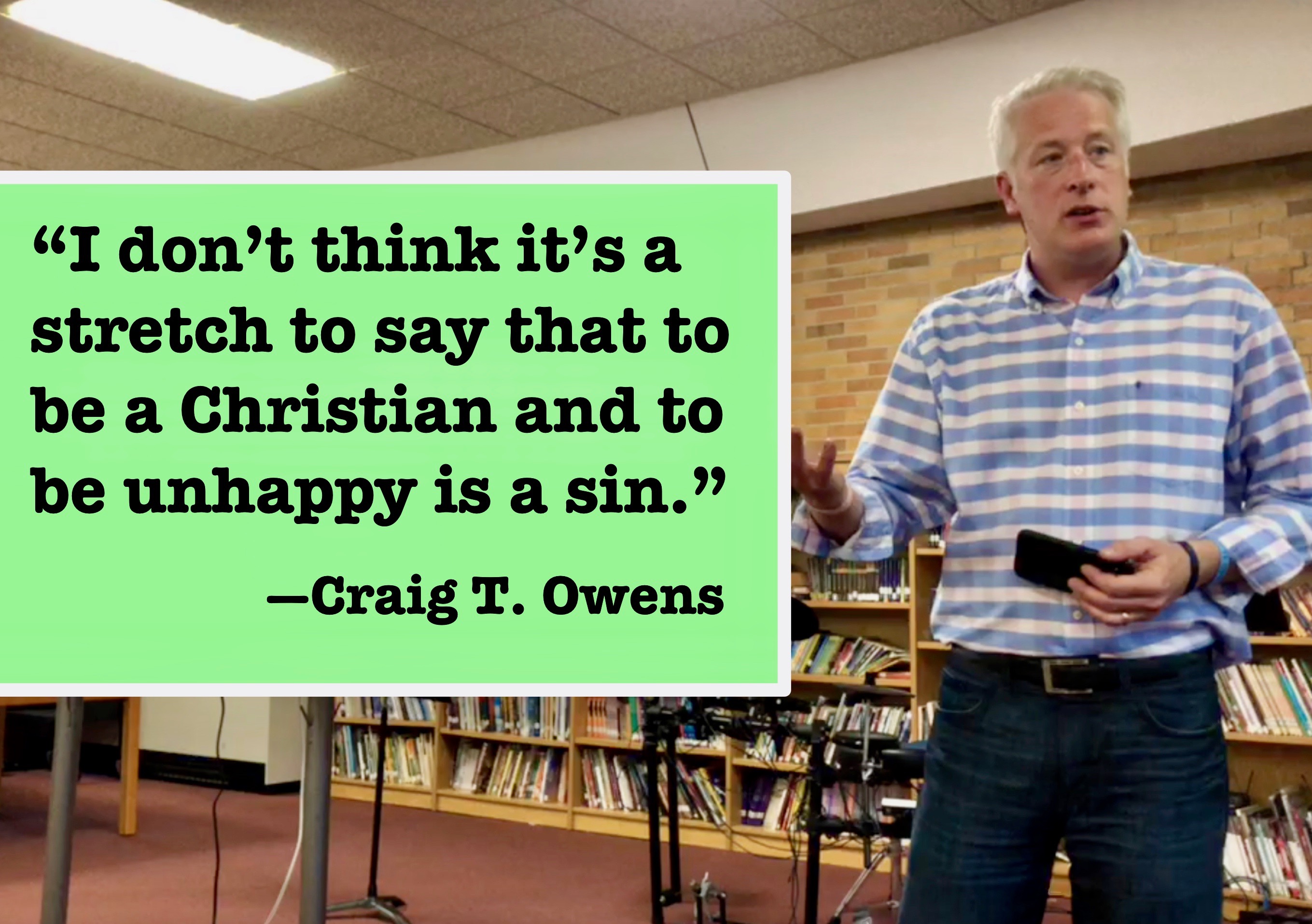
In fact, I would go so far to say I don’t think it’s a stretch to say that to be a Christian and to be unhappy is a sin. An unhappy Christian gives God no praise, robs Him of glory, and paints God in a bad light. A happy Christian knows the Lord is his strength, his comfort, his supply. The happy Christian lifts God high and invites others to know this All-Good, All-Happy God too! 

So let me ask you, my friend, can others see heaven in your face?

►► Would you please prayerfully consider supporting this ministry? My Patreon supporters get behind-the-scenes access to exclusive materials. ◀︎◀︎
Who Can Claim God’s Promises?

Listen to the podcast of this post by clicking on the player below, and you can also subscribe on AppleSpotify, or Audible. 

It’s a bit scary to me to realize how many people have a scarcity mindset. As a result, far too many people are trying to figure out how to get their piece of the pie, but they don’t really want others to have their piece too. This should never be the mindset of a Christian! Our God has an unlimited supply, so we should be the most generous and abundance-minded people. 

Sadly, sometimes I still encounter Christians who think that only some people can claim some of God’s promises. 

This is part 5 in our series “Is that in the Bible?” 

Statement #5—Old Testament promises are for the Jews, New Testament promises are for the Christians. Is that in the Bible? No! 

First of all, this assumes a dichotomy between the Old Testament and the New Testament. Second, it reveals a lack of understanding of what Jesus has done for everyone who places their faith in Him. 

Jesus Himself said, “Do not think that I have come to do away with or undo the Law or the Prophets; I have come not to do away with or undo but to complete and fulfill them” (Matthew 5:17 AMP). 

Plato told a story about people chained in a cave in such a way that they could only see the shadows on the wall. He said that if the chains were unlocked, some would turn toward the opening of the cave, see the solid figures that had been creating the shadows, and move out of the cave. Plato also said that some would see the reality and choose to stay trapped in the cave—they would prefer shadows over reality. 

Both John and the writer of Hebrews describe how Jesus came as the incarnate Reality of God. Jesus reveals that He is the Substance behind all of the shadows of worship in the First Testament (Hebrews 1:1-2; John 1:1-14). 

Look at the worship practices of the tabernacle, specifically the practices on the Day of Atonement. Two goats or lambs were brought into the outer court on that day—one had all of the sins of the people transferred to it and was sent into the wilderness as the scapegoat, and the other was sacrificed so its blood could make atonement for the sins of the people. The high priest would take this blood past the curtain separating the Holy Place from the Holy of Holies, and would sprinkle it on the atonement cover (also called the mercyseat) of the ark of the covenant of the Lord. 

John said that Jesus came to make His dwelling among humans. The word John uses for “dwelling” is the same word for “tabernacle.” Jesus Himself became not only our High Priest, but every single item the earthly high priest used on the Day of Atonement. Jesus is the…

  • scapegoat—Leviticus 16:20-22; John 1:29 
  • sacrificial lamb—Leviticus 16:15; 1 Peter 1:18-19
  • curtain in front of the Holy of Holies—Hebrews 10:22 
  • mercyseat—Exodus 24:8; Leviticus 4:6, 5:9; Hebrews 4:16

(Check out all of the above references by clicking here.)

By His life, death, and resurrection the shadows became Substance through Jesus. Hebrews 10:1-14 describes this, but especially note verse 12: “But when this High Priest [Jesus] offered for all time one sacrifice for sins, He sat down at the right hand of God.” 

Look again at the picture of the tabernacle and note that there are no chairs. That was because the earthly priest’s work was never done. But our fully human, fully divine High Priest completed everything that needed to be done, so He could sit down. 

This High Priest not only sits down in God’s presence, but He takes us with Him into the Holy of Holies: “God raised us up with Christ and seated us with Him in the heavenly realms in Christ Jesus” (Ephesians 2:6)! 

So now ALL God’s promises are for ALL who are in Jesus! “For no matter how many promises God has made, they are ‘Yes’ in Christ. And so through Him the ‘Amen’ is spoken by us to the glory of God” (2 Corinthians 1:20). 

I like how the Personalize Promise Bible turns that verse into this prayer: “My heavenly Father is faithful to His every Word. No matter how many promises He has made, in Jesus, He makes good on every one. I have God’s Word; therefore, I have God’s will. Every time that I pray in line with His Word, the answer is guaranteed.” 

My friend, if you have placed your faith in the completed work of Jesus, then EVERY promise in the Bible is a promise you can claim for your life. Hallelujah! What an amazing thing God has done for us through His Son Jesus Christ! 

If you’ve missed any of the topics we have covered in this series, you can find the full list by clicking here. 

►► Would you please prayerfully consider supporting this ministry? My Patreon supporters get behind-the-scenes access to exclusive materials. ◀︎◀︎

Thursdays With Spurgeon—Where We Live

This is a weekly series with things I’m reading and pondering from Charles Spurgeon. You can read the original seed thought here, or type “Thursdays With Spurgeon” in the search box to read more entries.

Listen to the podcast of this post by clicking on the player below, and you can also subscribe on AppleSpotify, or Audible. 

Where We Live

If you remain in Me and My words remain in you, ask whatever you wish, and it will be done for you. (John 15:7) 

     Believers do not enjoy the gifts of divine grace all at once. Coming to Christ, we are saved by a true union with Him. But it is by abiding in that union that we further receive the purity, the joy, the power, and the blessedness that are stored up in Him for His people. See how our Lord states this when He speaks to the believing Jews in the eighth chapter of this gospel, at the thirty-first and thirty-second verses: ‘Then Jesus said to those Jews who believed Him, “If you abide in My word, you are My disciples indeed. And you shall know the truth, and the truth shall make you free.”’ We do not know all the truth of God at once; we learn it by abiding in Jesus. 

     Perseverance in divine grace is an educational process by which we learn the truth of God fully. The emancipating power of the truth is also gradually perceived and enjoyed. The truth will make you free. One bond after another snaps, and we are free indeed. …  

     Every believer should be an abider, but many have hardly earned the name as yet. … You have to live with Christ to know Him, and the longer you live with Him, the more you will admire and adore Him, and the more you will receive from Him, even grace for grace. … Jesus, in the esteem of abiding believers, grows sweeter and dearer, fairer and lovelier each day. Not that He improves in Himself, for He is perfect. But as we increase in our knowledge of Him, we appreciate more thoroughly His matchless excellences. 

From The Secret Of Power In Prayer

All of us probably know what “house rules” are. In my home growing up, we took off our shoes when we came in the door; family members came in through the garage door, unless we were bringing a friend home, and then we came in through the front door. A casual observer may not catch these things, but the longer you were in our home, the more clearly you would see these things. 

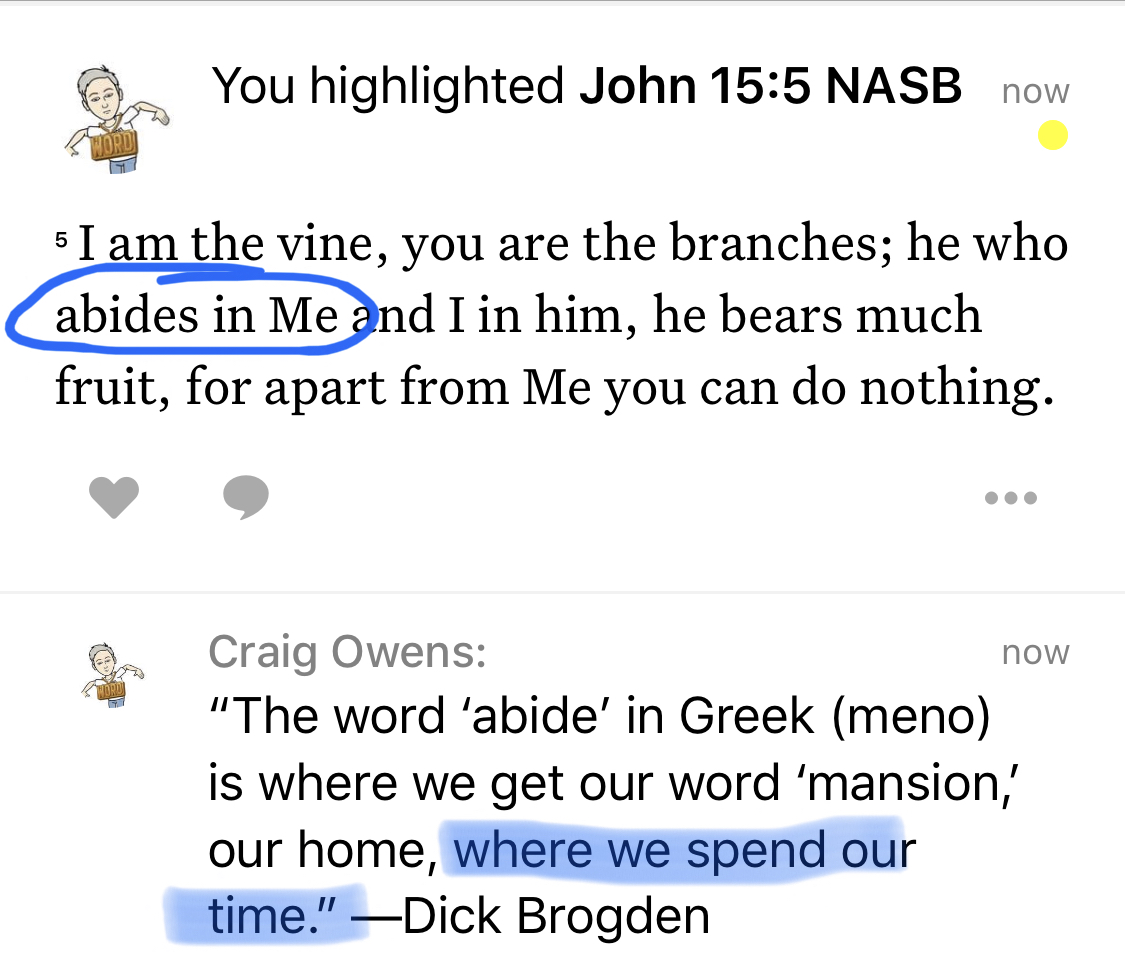
In the same way, we get more familiar with the “house rules” of our heavenly home the more time we spend there. My cousin Dick Brogden pointed out, “The word ‘abide’ in Greek (meno) is where we get our word mansion, our home, where we spend our time.” 

It’s also as we abide with Jesus that we get to know His heart. And then as we get to know Him better we can pray prayers more aligned to His will, prayers that He delights to answer. This makes our relationship with Him sweeter and sweeter. Just as the old chorus says—

He gets sweeter and sweeter as the days go by
Oh what a love between my Lord and I
I keep falling in love with Him
Over and over and over and over again

►► Would you please prayerfully consider supporting this ministry? My Patreon supporters get behind-the-scenes access to exclusive materials. ◀︎◀︎

Thursdays With Spurgeon—Hypocrites Who Hurt The Church

This is a weekly series with things I’m reading and pondering from Charles Spurgeon. You can read the original seed thought here, or type “Thursdays With Spurgeon” in the search box to read more entries.

Listen to the podcast of this post by clicking on the player below, and you can also subscribe on AppleSpotify, or Audible. 

Hypocrites Who Hurt The Church

Only let your conversation be as it becometh the gospel of Christ (Philippians 1:27 KJV). 

     Dear friends, I might just continue, for the subject is a very wide one. But I stop because, unhappily for me, though perhaps happily for your patience, my time has gone. Having just indicated what the Christian life ought to be, I must, in a few words, plead with you that by the power of God’s Holy Spirit you will seek to make your lives such. I could mention many reasons, but I will only give you one or two. 

     The first is, if you do not live like this, you will make your fellow members who are innocent of your sin, suffer. … It is very hard when [skeptics] can say to you, ‘Look at So-and-So, he is a church member! Look at what he did. You are all a parcel of hypocrites!’ … 

     And then, remember, dear friends, unless your conversation is such, you will pull down all the witness that you have ever borne for Christ. … Oh, the great thing the church needs is more holiness! The worst enemies of the church are not the infidels. … No, the worst enemies of the church are the hypocrites, the formalists, the mere professors, and the inconsistent walkers. …  

     May the Eternal Spirit, Who still winnows His church, blow away the chaff and heave only the good golden wheat upon the floor! And if you know yourselves to be living in any sin, may God help you to mourn over it, to loathe it, to go to Christ about it….

From The Gospel’s Power In A Christian’s Life

I have defined a hypocrite as a Christian who carries the name of Jesus Christ but not the nature of Jesus Christ. 

I remember once when a man who was virtually a stranger to me—but apparently knew that I was a pastor—walked up to me and said, “What do you think about your boy So-and-So?” The So-and-So he mentioned was a prominent pastor in another state who had just been caught doing some very sinful and embarrassing things. This stranger quickly painted me with the same brush! 

The phrase “one another” is so prominent in the New Testament, which means that we truly are all in this together. That’s why Charles Spurgeon warns us that a hypocritical lifestyle is not only damaging to the hypocrite’s life, but to the entire Christian community as well. 

So I also call for every Christian to “examine themselves” (1 Corinthians 11:28) for both known and hidden sins. We ought to regularly ask the Holy Spirit to point them out so that we can repent of them, make restitution, and strengthen the testimony of all Christians everywhere! 

Let me close with a final word from Dwight Moody, “The world finds plenty of difficulties on the way; let us see that we Christians do not add more stumbling-blocks by our un-Christlike walk.” 

To that I add a heartfelt “Amen!”

►► Would you please prayerfully consider supporting this ministry? My Patreon supporters get behind-the-scenes access to exclusive materials. ◀︎◀︎

Thursdays With Spurgeon—The Christian Lifestyle

This is a weekly series with things I’m reading and pondering from Charles Spurgeon. You can read the original seed thought here, or type “Thursdays With Spurgeon” in the search box to read more entries.

Listen to the podcast of this post by clicking on the player below, and you can also subscribe on AppleSpotify, or Audible. 

The Christian Lifestyle

Only let your conversation be as it becometh the gospel of Christ (Philippians 1:27 KJV). 

     The text says we are to ‘let our conversation be such as becomes the gospel.’ What sort of conversation, then, will we have? In the first place, the gospel is very simple. It is unadorned. No meretricious ornaments to clog the pile. It is simple and ‘not with persuasive words of human wisdom’ (1 Corinthians 2:4). … The Christian man ought always to be simple in all respects. I think wherever you find him, you ought not to need a key to him. He should not be like certain books that you cannot make out without having somebody tell you the hard words. He should be a transparent man like Nathaniel, who was ‘an Israelite indeed, in whom is no deceit’ (John 1:47). … 

     The Christian’s lips should speak truth when falsehood drops from the lips of all other men. A Christian man should never need to take an oath, because his word is as good as an oath. His yes should be yes, and his no, no. … 

     The gospel of Jesus Christ is a very fearless gospel. … As the gospel is very fearless in what it has to say, so let the Christian always be. It strikes me that a living that becomes the gospel of Christ is always a bold and fearless kind of living! … 

     But again, the gospel of Christ is very gentle. Hear it speak: ‘Come to Me, all you who labor and are heavy laden, and I will give you rest’ (Matthew 11:28). Here is its spirit in its Founder: ‘A bruised reed He will not break, and smoking flax He will not quench’ (Matthew 12:20). Moreover, bad temper, snapping off of people’s heads, making men offenders for a word—all this is quite contrary to the gospel. … If you have a lion’s heart, have a lady’s hand. Let there be such a gentleness about your carriage that the little children may not be afraid to come to you and the publican and harlot may not be driven away by your hostility, but invited to goodness by the gentleness of your words and acts. …  

     The world ought to point to us and say, ‘See, how these Christians love one another? Not in word only, but in deed and truth!’ … 

     The gospel of Christ is mercy, generosity, and liberality. It receives the beggar and hears his cry! It picks up even the vile and undeserving and scatters lavish blessings upon him, and it fills the bosom of the naked and of the hungry with good things. Let your conversation be such as becomes the gospel of Christ!

From The Gospel’s Power In A Christian’s Life

We’ve had a tagline at our church for years: Come and see why so many people around here say, “I ♥ my church!” I believe Christians can—and should—live in such a way that everyone in their communities would sit up and take notice of the positive changes. 

Let’s all examine our lifestyle. Is it simple, truthful, bold, gentle, loving, merciful, generous, and hospitable? If not, what changes do we need to make? But if it is all these things, God’s blessing is sure to follow this lifestyle that so clearly portrays the gospel of Jesus Christ! 

I’ve shared some other posts about a church’s reputation here, here, and here. 

►► Would you please prayerfully consider supporting this ministry? My Patreon supporters get behind-the-scenes access to exclusive materials. ◀︎◀︎
Thursdays With Spurgeon—The Best Of Neighbors

This is a weekly series with things I’m reading and pondering from Charles Spurgeon. You can read the original seed thought here, or type “Thursdays With Spurgeon” in the search box to read more entries.

Listen to the podcast of this post by clicking on the player below, and you can also subscribe on AppleSpotify, or Audible. 

The Best Of Neighbors

Only let your conversation be as it becometh the gospel of Christ (Philippians 1:27 KJV). 

     The word ‘conversation’ does not merely mean our talk with one another, but the whole course of our life and behavior in the world. The Greek word signifies the actions and the privileges of citizenship, and we are to let our whole citizenship, our actions as citizens of the New Jerusalem, be such as becomes the gospel of Christ. …  

     We are delighted to preach good high doctrine and to insist that salvation is of grace alone! But we are equally delighted to preach good high practice and to insist that a grace that does not make a man better than his neighbors is a grace that will never take him to heaven nor render him acceptable before God!

From The Gospel’s Power In A Christian’s Life

Some other translations of the text from Rev. Spurgeon’s sermon bring out the meaning: 

  • Whatever happens, conduct yourselves in a manner worthy of the gospel of Christ (NIV) 
  • Above all, you must live as citizens of heaven, conducting yourselves in a manner worthy of the Good News about Christ (NLT) 
  • Live in such a way that you are a credit to the Message of Christ (Message) 

I believe that Christians are not citizens of Planet Earth. Our citizenship is in a place called Heaven, and yet we are traveling on Earth during our present lifetime. While we are here, we need to conduct ourselves in such a way that we make our Homeland desirable for other Earthlings too. 

Let’s live in a such a way that Earthlings will say, “I ❤️ those Christians!” 

I shared a whole series of messages on living as “aliens and strangers” (as the apostle Peter calls Christians), which you may check out by clicking here.

►► Would you please prayerfully consider supporting this ministry? ◀︎◀︎

Links & Quotes

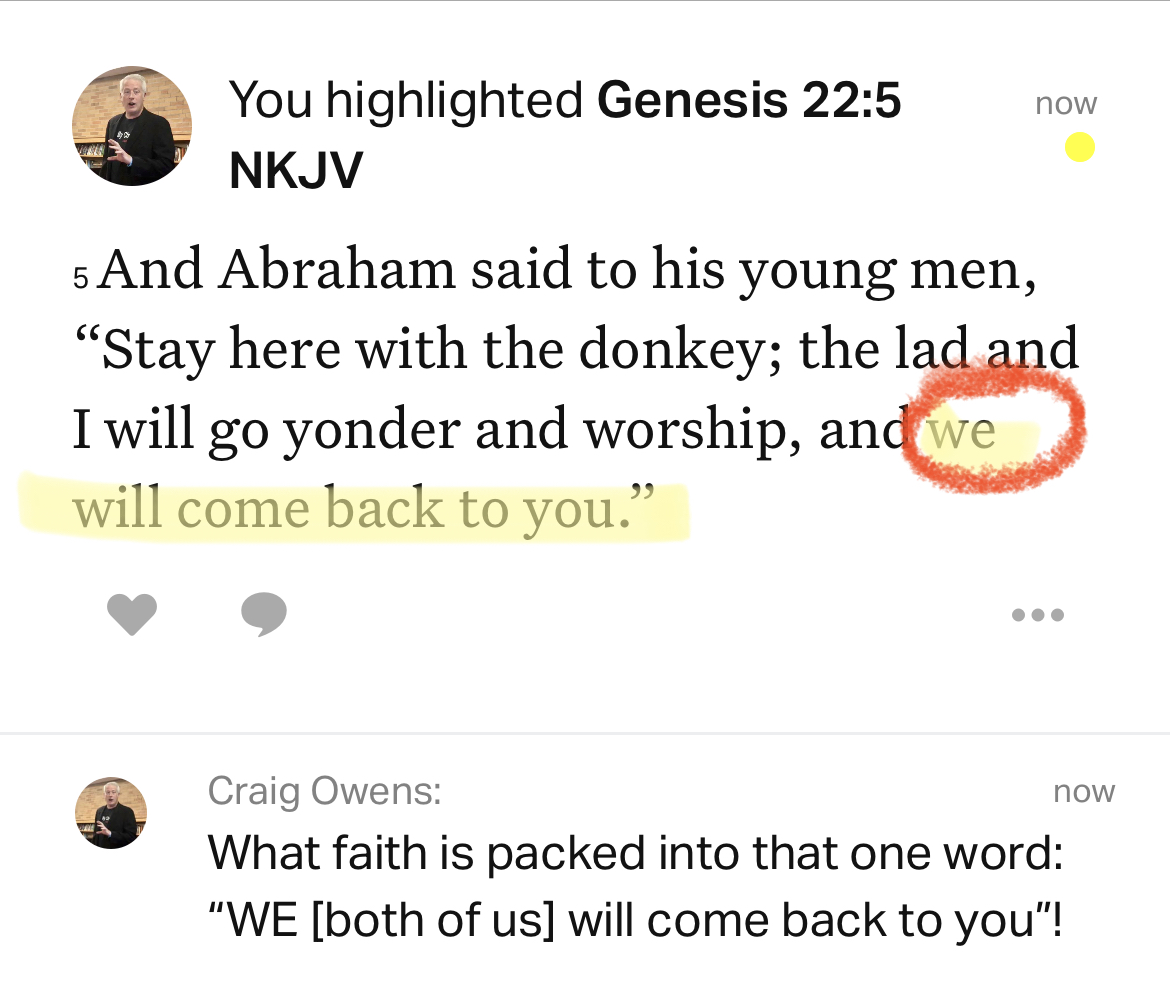
Abraham is commanded by God to sacrifice his son Isaac. Look at Abraham’s faith in just one word: “WE will come back to you.”

Follow me on YouVersion so we can share more thoughts on God’s Word with each other.

Wil Robinson shares a fable from Leo Tolstoy with the three most important questions everyone should ask themselves. The three questions are: How can I learn to do the right thing at the right time? Who are the people I most need, and to whom should I, therefore, pay more attention than to the rest? And, what affairs are the most important and need my first attention?

T.M. Moore reminds us how the promises of God can build courage in us. Check out all of the posts in his series called Brave Heart.

“Faithfulness is displayed in both word and deed—seen best by combining the Great Commission’s instruction to ‘make disciples’ with the second greatest commandment to ‘love thy neighbor.’ The beauty of the Gospel is found in both proclamation and demonstration. Neither comes first; neither comes second. Like the perfect marriage, it’s the duty of the Christians to take on each, giving 100 percent effort to both.” —Gabe Lyons, The Next Christians 

Fight The New Drug shared the results of a study of over 11,000 releationships, the five things the happiest couples have in common, and how pornography can undermine those relationships.

“Oh, that the eyes of sinners may be speedily opened—that they may see the difference of things, the beauty which is in holiness, and the astonishing madness that is in sin!” —Thomas Watson

Science is an important component in seeking truth. The Institute for Creation Research has an excellent perspective on the role of science for a Christian: “While the pursuit of science is certainly noble, it should be situated in its proper context and tackle matters within its empirically defined framework.”

John Piper observes, “The number-one reason why people in such seemingly hopeless situations purchase scratch-offs is because things already look so hopeless for improvement that the so-called ‘stupidity’ of wasting this dollar won’t really make anything worse.” This post elaborates on how the lottery preys on the poor.

Poetry Saturday—Not Divided

Listen to the podcast of this post by clicking on the player below, and you can also subscribe on AppleSpotify, or Audible.

E’en for the dead, I will not bind
My soul to grief,
Death cannot long divide,
For it is not as though the rose
that
Climbed my garden wall,
Had blossomed on the other side?
Death doth hide,
But not divide!
Thou art but on Christ’s other side,
Thou art with Christ
Christ with me;
In Him united still are we. —Alice Frodsham

►► Would you please prayerfully consider supporting this ministry? ◀︎◀︎

Thursdays With Spurgeon—Beautiful Homegoing

This is a weekly series with things I’m reading and pondering from Charles Spurgeon. You can read the original seed thought here, or type “Thursdays With Spurgeon” in the search box to read more entries.

Listen to the podcast of this post by clicking on the player below, and you can also subscribe on AppleSpotify, or Audible. 

Beautiful Homegoing

You shall come to the grave at full age, as a sheaf of grain ripens in its season. (Job 5:26) 

     The Christian’s death is always timely. ‘You shall come to the grave at full age. 

     ‘Ah,’ says one, ‘that is not true. Good people do not live longer than others. The most pious man may die in the prime of his youth.’ But look at my text. It does not say you will come to your grave in old age, but in a ‘full age.’ … All fruits do not get ripe and mellow at the same season. So it is with Christians. They are at a ‘full age’ when God chooses to take them home. … 

     There are two mercies to a Christian. The first is that he will never die too soon. And the second is that he will never die too late. … 

     ‘But,’ say some, ‘how useful might they have been had they lived.’ Ah, but how damaging they might have been! And were it not better to die than to do something afterward that would disgrace them and bring disgrace to the Christian character? Were it not better for them to sleep while their work was going on than to break it down afterward? … 

     Again, the Christian never dies too late. … God is too good a Husbandman to leave His wheat in the field too long and let it shale out. …  

     Now the last thing is that a Christian will die with honor. … I think there are two funerals for every Christian: one is the funeral of the body, and the other of the soul. Funeral, did I say, of the soul? No, I meant not so. I meant not so. It is a marriage of the soul. For as soon as it leaves the body, the angel reapers stand ready to carry it away. They may not bring a fiery chariot as they had for Elijah. But they have their broad spreading wings. I rejoice to believe that angels will come as convoys to the soul across the ethereal plains. … I think the most honorable and glorious thing we will ever behold, next to Christ’s entrance into heaven and His glory there, is the entrance of one of God’s people into heaven.

From The Death Of The Christian

As I mentioned last week, this sermon was so providential in its timing for me because my precious mother went Home to be with Jesus just days before I opened to this sermon from Charles Spurgeon. 

We are comforted by the promises Rev. Spurgeon shares because they are based on the truth in God’s Word. “Good people pass away; the godly often die before their time. But no one seems to care or wonder why. No one seems to understand that God is protecting them from the evil to come. For those who follow godly paths will rest in peace when they die” (Isaiah 57:1-2). 

At my Mom’s graveside committal service I shared this—

One of my favorite authors C.S. Lewis made a comment, “You don’t have a soul. You are a soul. You have a body.” 

This part that we called Claudia Owens was just the body that carried around who she really was. What a beautiful soul that we got to experience for 78 years. What shined through was so sweet and graceful and wonderful. What a glimpse we got! But a joy to know that it was only a glimpse. That the part of my Mom that was so beautiful that we got to see, was only a fraction of her full beauty! The part that was really her, that is at Home with her Savior Jesus now is shining in all its brilliance. … 

We will all miss her and we will grieve our loss. But as the apostle Paul reminded us, we don’t grieve as those who have no hope. We know that to be absent from the body is to be present with the Lord. We know that this body is sown perishable ravaged by the disease of cancer, but that my Mom is now in a place with no more tears or disease. We know that the same Savior that prepared a place for Claudia has prepared a place for us.

And we concluded with this prayer that can be offered up for every Christian who has died at their “full age”: 

Heavenly Father, 

We commit this body to the ground with the full assurance that her soul is in your everlasting presence. Holy Spirit, help us in our grief to be reminded of the hope of eternal life that we all share. Thank You, Jesus, for purchasing this hope on which we stand.

As I mentioned last week, if you don’t have this blessed assurance of the marriage of your soul when you take your last breath here on earth, please don’t hesitate to contact me.

►► Would you please prayerfully consider supporting this ministry? ◀︎◀︎