A Sketch Of The Life And Labors Of George Whitefield (book review)

A Sketch of the Life and Labors of George WhitefieldI recently read a fascinating book about the intertwining lives of Benjamin Franklin and George Whitefield. In some follow up reading, I was somewhat shocked to discover how many people in the church vilified Whitefield! In less than a century following Whitefield’s death, many pastors in the Church of England were badmouthing him.

J.C. Ryle, and eminent scholar, theologian and pastor, decided to take another look at Whitefield’s life and ministry, to try to offer an unbiased view. Whitefield died in 1770, and just 77 years later Ryle presented a paper, later turned into the book A Sketch Of The Life And Labors Of George Whitefield, which explored the evangelist’s life and lasting impact.

Ryle was no Whitefield apologist, but when he calmly and rationally presented the facts of what God had accomplished through Whitefield’s tireless ministry, Ryle concluded: “After calm examination, I have come to the conclusion that Whitefield was one of the most powerful and extraordinary preachers the world has ever seen. My belief is, that hitherto he has never been too highly estimated, and that, on the contrary, he does not receive the credit he deserves.” And, “The plain truth is, the Church of England of that day was not ready for a man like Whitefield. The church was too much asleep to understand him.”

This is not a very lengthy book, but it is a very enjoyable read. History buffs—especially those who enjoy church history—will find much to like in this brief study.

10 Quotes On Emotional Health From “Brain Savvy-Leaders”

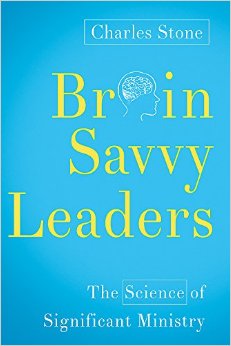
Brain-Savvy LeadersOur emotions start in our brain. Charles Stone wrote a very helpful book called Brain-Savvy Leaders, in which he covers a lot of ground inside our heads. One aspect is our emotional health. I encourage you to read my review of this book by clicking here. Below are some quotes Charles shared on our emotional health.

“Gratefulness is actually good for brain and body health.” 

“When the emotionality of leaders takes over, they compromise their ability to lead well in these ways:

  • impulse can overwhelm intention
  • imagination gets pushed aside by instinct
  • defensiveness stifles healthy positions
  • automatic behavior shuts down reflective thought
  • emotionality gets in the way of intentionality.”

“Fear, conscious and unconscious, is prompted by the amygdala. The brain naturally focuses on problems and the negative. It overestimates threats and underestimates opportunities. In fact, two-thirds of the brain cells in our amygdala are primed for negativity and fear. Negative networks in our brain outweigh positive ones by five to one. And negative emotions are more easily consolidated (made more permanent) into our long-term memory than positive emotions.”

“Fear can even be subconscious, especially if we’re surrounded by bad news, critical people, or if our self-talk is constantly negative.”

“Neuroscientists have found that stuffing, denying, or a ignoring our emotions reinforces them, affects short-term memory, increases blood pressure, and robs our brain’s prefrontal cortex of the mental energy it needs.”

“Although it may seem counterintuitive, tagging your emotions, through labeling and naming them by putting feelings into words, actually recruits our impulse break and dampens activity in our panic alarm.”

“Anger is the wind that blows out the lamp of the mind.” —Chinese Proverb

“Since our brains process and remember bad events more thoroughly than good ones…it’s vital that we develop the discipline of being aware of our thoughts. … Thinking about our thinking is called ‘metacognition.’”

“Emotions play a significant role in decision-making and influence how well your team will embrace change. Just presenting facts without engaging positive and hopeful emotions will seldom move your team forward. The brain can only handle so much change at once. Trying to create too much change too quickly can engage the brain’s fear center and cause an away response, thus hindering change.”

“In one research study in Israel, Dr. Tal Shafir looked at the impact of movement on the brain of twenty-two young male and female participants. They looked at video clips of actors performing various emotions that corresponded to sad, fearful, happy, or neutral. Happy movements included raising their arms in the air, skipping, and jumping. Sad movements included closing their chests and slumping forward. The participants then either mimicked the movements or imagined themselves doing them. The emotions they reported mirrored the corresponding movements. So, if you need a mood boost, keep a good posture or throw your arms up and out into the air.”

Previously I shared some other quotes from this book on how we learn, and on how to keep our brain healthy. Please check these out too.

12 Quotes From “In Light Of Genetics”

Dr. John SanfordDr. John Sanford’s ebook In Light Of Genetics is fascinating reading. It’s a bit technical in certain places, but I think Dr. Sanford does a good job making the genetic concepts accessible to almost anyone. Check out my book review by clicking here. Below are some quotes from this work.

“Forensic evidence is never conclusive, and so scientific claims about the distant past must always contain an element of belief. The direction of genetic change is down, not up. Humanity is devolving due to mutation.”

“We feel biological similarities between different kinds of life are better explained by a Common Designer than by common descent.”

“We are unique and alone now in the world. There is no other animal species that truly resembles our own. A physical and mental chasm separates us from all other living creatures. There is no other bipedal mammal. No other mammal controls and uses fire, writes books, travels in space, paints portraits, or prays. This not a question of degrees. It is all or nothing; there is no semi-bipedal animal, none that makes only small fires, writes only short sentences, builds only rudimentary spaceships, draws just a little bit, or prays just occasionally.” —Juan Arsuaga, writing in The Neanderthal’s Necklace

“Man is a singular creature. He has a set of gifts which make him unique among the animals: so that, unlike them, he is not a figure in the landscape—he is a shaper of the landscape.” —Jacob Bronowski

“From a genetic point of view, the genes that enable our unique capabilities, gifts, and talents (i.e., science, art, love, relation to God) could not arise by any series of random mutations filtered by natural selection—not in any amount of time. There is no credible mechanism that could lead to spontaneous origin of mind, consciousness, intelligence, soul, or spirit. Indeed, while these human traits are found within a biological context (i.e., within an animal-like body/brain), they clearly transcend mere biology. We are exquisitely programmed to be more than animals, and our bodies are well-designed vessels that house our immaterial being: mind, soul, and spirit.”

“Leading human geneticists agree that in mankind deleterious (bad) mutations are accumulating faster than they are being selected away, and so the human genome is degenerating. … The data are highly consistent. The coefficient of determination (matching the curve to the data) is very high: 0.96. Due to the consistency of the decay rate, we can also rule out the idea that there were hundreds (or thousands) of missing generations that were not recorded. We conclude that the genealogical record must either be complete or very nearly complete. This validation of the genealogical record very powerfully points to the historicity and reliability of the book of Genesis.”

“Mounting evidence shows that natural selection is not a creative force, but is a stabilizing force that helps preserve the various kinds of life (i.e., it culls out the most dysfunctional individuals). It is very clear that natural selection cannot create our genome, let alone our mind and soul. At best, natural selection can only slow down the rate of genetic degeneration. … Because of the great abundance of deleterious mutations and the extreme rarity of beneficial mutations, it is not possible for mankind to achieve a net gain of genetic information.”

“Our latest numerical simulations show that in the type of pre-human population that supposedly gave rise to modern man, billions of years would be required just to create and establish a new genetic text string as small as six or seven letters, such as ‘GTCGCT’ or ‘GAGTTCA.’ Yet such a string would be just a drop in the ocean of new information needed to transform an ape into a man.”

“In the biblical model, humanity begins with Adam and Eve, who descendants rapidly multiply, and then, went through a one-generation bottleneck at the time of the Flood, then the population once again rapidly increased, followed by rapid divergence at the Tower of Babel event, creating today’s people groups.”

“If Adam’s genome was intelligently designed, it would obviously have had a great number of designed genetic variants. Otherwise all people would essentially be clones of Adam and Eve, which would be bad design, for many obvious reasons. … Even though many mutations have accumulated in the genome during human history, it is reasonable to conclude that most observable human genetic variation was created by God. The biblical perspective has unique explanatory power in terms of giving a credible explanation for the amazing range of human traits and abilities. There is no single ‘superior genotype.’ We all have unique sets of gifts and talents, which very reasonably reflect good design, and for which we can give thanks to God.”

“We have statistically analyzed over 800 human mitochondrial sequences and have been able to reconstruct and publish a very close approximation of Eve’s mitochondrial sequence. We found that the average human being is only about 22 mutations removed from the Eve sequence, although some individuals are as much as 100 mutations removed from Eve. Can we account for this amount of mutation in a biblical timeframe? Easily. The most recent estimate of the mutation rate in human mitochondria is about 0.5 per generation. Thus, even for the most mutated sequences, it would only require 200 generations (less than 6,000 years) to accumulate 100 mutations.”

“Now, by God’s grace, we do not have to choose between faith in God’s Word vs. faith in science, we can embrace both. There is now very strong genetic evidence that strongly supports Scripture and refutes evolution.”

23 Other Quotes From “15 Invaluable Laws Of Growth”

15 Invaluable Laws of GrowthJohn Maxwell is extremely well-read! It is obviously that he uses many sources to sharpen and refine the teaching principles he shares in his books. I recently finished reading 15 Invaluable Laws Of Growth, and as usual, Dr. Maxwell shared several quotes from others which I found very highlighter-worthy. Here are a few of them…

“What great accomplishments we’d have in the world if everybody had done what they intended to do.” —Frank Clark

“A mistake is simply another way of doing things.” —Warren Bennis

“You cannot change your destination overnight, but you can change your direction overnight.” —Jim Rohn

“Can there be a more insidious word? Later, as in ‘I’ll do it later.’ Or, ‘Later, I’ll have time to write that book that’s been on my mind for the past five years.’ Or, ‘I know I need to straighten out my finances… I’ll do it later.’ ‘Later’ is one of those dream-killers, one of the countless obstacles we put up to derail our chances of success. The diet that starts ‘tomorrow,’ the job hunt that happens ‘eventually,’ the pursuit of the life dream that begins ‘someday’ combine with other self-imposed roadblocks and lock us on autopilot.’ —Jennifer Reed

“No one can produce great things who is not thoroughly sincere in dealing with himself.” —James Russell Lowell

“Probably the most honest self-made man ever was the one we heard say: ‘I got to the top the hard way—fighting my own laziness and ignorance every step of the way.’ —James Thom

“It’s impossible to consistently behave in a manner inconsistent with how we see ourselves. We can do very few things in a positive way if we feel negative about ourselves.” —Zig Ziglar

“Follow effective action with quiet reflection. From the quiet reflection will come even more effective action.” —Peter Drucker

“The wise man questions himself, the fool others.” —Henri Arnold

“The successful person has the habit of doing the things that failures don’t like to do. The successful person doesn’t like doing them either, but his dislike is subordinated to the strength of his purpose.” —E. M. Gray

“Where many people go wrong in trying to reach their goals is in constantly looking for the big hit, the homerun, the magic answer that suddenly transforms their dreams into reality. The problem is that the big hit never comes without a great deal of little hits first. Success in most things comes not from some gigantic stroke of fate, but from simple, incremental progress.” —Andrew Wood

“A bad habit never goes away by itself. It’s always an undo-it-your self project.” —Abigail Van Buren

“The great composer does not set to work because he is inspired, but becomes inspired because he is working. Beethoven, Wagner, Mozart, and Bach all settled down, day after day, to the job at hand. They didn’t waste time waiting for inspiration.” —Ernest Newman

“Do not wait for a change of environment before you act. Cause a change of environment through action. You can act upon your present environment so as to cause yourself to be transferred to a better environment.” —Wallace D. Wattles

“Whatever course you decide upon, there is always someone to tell you that you are wrong. There are always difficulties arising which tempt you to believe that your critics are right. To map out a plan of action and follow it to the end requires some of the same courage which a soldier needs. Peace has its victories, but it takes brave men to win them.” —Ralph Waldo Emerson

“Someone’s opinion of you does not have to become your reality.” —Les Brown

“If you don’t design your own life plan, chances are you’ll fall into someone else’s plan. And guess what they may have planned for you? Not much.” —Jim Rohn

“An idealist believes the short run doesn’t count. A cynic believes the long run doesn’t matter. A realist believes that what is done or left undone in the short run determines the long run.” —Sydney J. Harris

“Every problem introduces a person to himself.” —John McDonnell

“Experience isn’t really the best teacher but it sure does serve as the best excuse for not trying to do the same silly thing again.” —Frank Hughes

“You will never stub your toe standing still. The faster you go, the more chance there is of stubbing your toe, but the more chance you have of getting somewhere.” —Charles F. Kettering

“Not everything that is faced can be changed. But nothing can be changed until it is faced.” —James Baldwin

“No pain, no palm; no thorns, no throne; no gall, no glory; no cross, no crown.” —William Penn

You can read my book review of 15 Invaluable Laws Of Growth and its companion book JumpStart Your Growth by clicking here.

To read quotes from John Maxwell in 15 Invaluable Laws, click here.

P.S. And watch for more quotes coming soon!

In Light Of Genetics (ebook review)

Dr. John SanfordWhen I went to college, I went as a biomedical chemistry major. I began my collegiate education at a Christian liberal arts university, and then transferred to a very secular state university. Ever since that time, I have always been deeply interested in the scientific fields, especially biology. So I was excited to read Dr. John Sanford’s paper In Light Of Genetics: Adam, Eve and the Creation/Fall.

In my Christian education experience, the scale was slightly weighted in favor of a biblical view of Creation. In my state university experience, the scale was overwhelming tipped toward an evolutionary paradigm. At both universities, I had rather intense conversations with my professors and classmates about hard science viewed through a biblical paradigm. Dr. Sanford’s paper was an encouraging study to read because of its balance between science and the Bible.

You can read Dr. Sanford’s full paper by clicking here, but here are a few highlights for me:

  • Genetic evidence is pointing more and more toward the biblical description of Creation.
  • The “junk DNA” claim that Darwinists need to support their theories of evolution are being proven invalid.
  • There is clearly a “Mitochondrial Eve” whose DNA sequence is evident in living human beings today.
  • There is also a “Y Chromosome Adam” whose DNA sequence is equally as evident.
  • Molecular clocks point to a young genome for biological life.
  • The Y chromosomal differences between man and chimp are far greater than evolutionist theories predicted.
  • The genetic differences/similarities seen today fit perfectly with the account of the biblical Flood.

For all my geeky science friends, I will post some quotes from this paper soon.

Whether you are a geek or not, this is fascinating reading! I encourage my friends who hold Darwinist views to read this, and then let’s talk. I also encourage my Creationist friends to read this too, and use these studies to strengthen your apologetics.

Read more about Dr. Sanford and his work here.

17 Quotes From John Maxwell In “15 Invaluable Laws Of Growth”

15 Invaluable Laws of GrowthJohn Maxwell books almost exhaust my highlighter because of all the great content I am trying to take in! You can read my book review of 15 Invaluable Laws Of Growth by clicking here. Below is the first batch of quotes from this book.

“No one improves by accident. Personal growth doesn’t just happen on its own. And once you’re done with your formal education, you must take complete ownership of the growth process, because nobody else will do it for you.”

“I had to get started if I wanted to find the best way. It’s similar to driving on an unfamiliar road at night. Ideally, you would like to be able to see your whole route before you begin. But you see it progressively. As you move forward, a little more of the road is revealed to you. If you want to see more of the way, then get moving.”

“You discover the reasons to stay with growth only if you stick with it long enough to start reaping the benefits.”

“Preparation (growth) + attitude + opportunity + action (doing something about it) = luck”

“The greatest danger you face in this moment is the idea that you will make intentional growth a priority later.” 

“Guard your self-talk. Whether you know it or not, you have a running conversation with yourself all the time. What is the nature of yours? Do you encourage yourself? Or do you criticize yourself? If you are positive, then you helped to create a positive self-image. If you’re negative, you undermine your self-worth. … If we want to change our lives, we have to change the way we think of ourselves. If we want to change the way we think of ourselves, we need to change the way we talk to ourselves.”

“Stop comparing yourself to others. … What happens when you compare yourself to others? Usually it’s one of two things: either you perceive the other person to be far ahead of you and you feel discouraged, or you perceive yourself to be better than the other person, and you become proud. Neither of those is good for you, and neither will help you to grow. Comparing yourself to others is really just a needless distraction. The only one you should compare yourself to is you. Your mission is to become better today than you were yesterday.”

“Motivation gets you going, but discipline keeps you growing.”

“If you don’t try to create the future you want, you must endure the future you get.”

“I’ve never known anyone who said, ‘I love problems,’ but I’ve known many you have admitted that their greatest gains came in the middle of their pain.”

“Life’s difficulties do not allow us to stay the same. They move us. The question is, in which direction will we be moved: forward or backward? When we have bad experiences, do we become bitter or better? Will those experiences limit us or lead us to grow?”

“If you have ever settled for the status quo and then wondered why your life isn’t going the way you’d hoped, then you need to realize that you will only reach your potential if you have the courage to push yourself outside your comfort zone and break out of a mind-set of mediocrity. You must be willing to leave behind what feels familiar, safe, and secure. You must give up excuses and push forward. You must be willing to face the tension that comes from stretching toward your potential.”

“Where do you find the internal impetus for stretching? Measure what you’re doing against what you’re capable of. Measure yourself against yourself. … The greatest stretching seasons of life come when we do what we have never done, push ourselves harder, and reach in a way that is uncomfortable to us. That takes courage, but the good news is that it causes us to grow in ways we thought were impossible.”

“Even the bad choices can ultimately help us to change for good, because they clarify our thinking and show us ourselves.”

“When it comes to growth and success, immediate gratification is almost always the enemy of growth. We can choose to please ourselves and plateau, or we can delay our gratification and grow. It’s our choice.”

“Stop thinking ‘more work’ and start thinking ‘what works?’ Asked most people how they can increase the capacity and they’ll tell you by working more. There’s a problem with that solution. More work will not necessarily increase your capacity. More of the same usually results in more of the same, when what we actually want is better than what we have.”

“I believe it honors God when we enjoy life and live it well. That means taking risks—sometimes failing, sometimes succeeding, but always learning.” 

15 Invaluable Laws Of Growth & JumpStart Your Growth (two book reviews)

15 Invaluable Laws of GrowthWhen you read a John Maxwell book, you are going to get a full serving of practical counsel to help you soar. I just finished reading 15 Invaluable Laws Of Growth, and my highlighter almost ran dry marking all of the helpful passages!

Dr. Maxwell states right up front that no one grows by accident, but we need to have a plan to help us grow. Consider this book your growth manual from someone who has the life experience to back-up his words of wisdom. Every chapter builds on the ones before to help you remove any hindrances to your growth.

Not only are Maxwell books instructional, they are motivational as well. I have heard him say numerous times, “Hi, my name is John, and I’m your friend.” Indeed this book feels like a wise friend is sitting across the table from you, giving you pearls of wisdom and practical steps to apply that wisdom, as well as cheering you on to success.

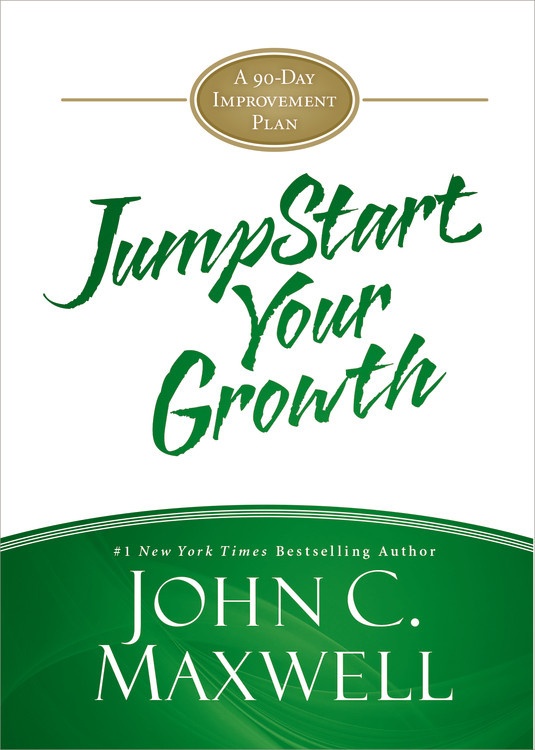
JumpStart Your GrowthA great companion to 15 Laws is JumpStart Your Growth. This book is designed for you to read one selection each day for three months. You will be reminded of a principle John taught you in 15 Laws, but then you will find a blank journal page with a suggested exercise for that day. I would highly recommend reading JumpStart right after you complete 15 Laws, so that you are putting into practice the phenomenal truths you were just taught.

I am a Center Street book reviewer.

P.S. Look for some great quotes from these two books coming soon to this blog!

7 Quotes On Brain Health From “Brain-Savvy Leaders”

Brain-Savvy LeadersCharles Stone gave us a very practical book in Brain-Savvy Leaders (you can read my full review by clicking here). Obviously out brain works best when we’re healthy, so check out some quotes from this book on brain health.

“Gratefulness is actually good for brain and body health.”

“At the end of our chromosomes lie protective caps called telomeres that are linked to longevity. Apparently, the longer your telomeres, all else being equal, the longer you live. Long-term stress shortens them, and mindfulness apparently helps lengthen them. For a Christian, mindfulness practices, such as meditation on Scripture and reflective prayer, which we often do in our devotional time, may possibly help us live longer.”

“The hypothalamus acts as a controller to the master hormone gland, the pituitary gland. … Chronic stress can damage our body and even kill neurons in the hippocampus. However, since the hippocampus is one of the few structures that can grow neurons, called neurogenesis, when stress decreases and cortisol levels out, the brain can regrow neurons here.”

“When we feel bored we don’t get as much oxygen and blood flow. When the brain lacks engagement over long periods of time (we are bored), dendrites can atrophy. When that happens, we can lose brain real estate.”

“Neuroscientists have found that stuffing, denying, or a ignoring our emotions reinforces them, affects short-term memory, increases blood pressure, and robs our brain’s prefrontal cortex of the mental energy it needs.”

“Chronic anxiety and stress cause what scientists call allostatic load…. When our body secretes too much cortisol over long periods of time, these problems can affect us: impaired immunity, weight gain, greater emotional reactivity, heart problems, decreased memory, and diminished brain functioning.”

“Exercise increases a key protein necessary for a healthy brain.”

I shared some quotes about how we learn from Brain-Savvy Leaders earlier, and you can read them here.

17 More Quotes From “Our Brilliant Heritage”

Our Brilliant HeritageThis is the second batch of quotes from Our Brilliant Heritage. You can read the first set of quotes here, and my review of this book is posted here.

“God does not supply us with character, He gives us the life of His Son and we can either ignore Him and refused to obey Him, or we can so obey Him, so bring every thought and imagination into captivity, that the life of Jesus is manifested in our mortal flesh. It is not a question of being saved from hell, but of being saved in order to manifest the Son of God in our mortal flesh. Our responsibility is to keep ourselves fit to manifest Him.” 

“We cannot do anything for our salvation, but we must do something to manifest it; we must work it out. Am I working out my salvation with my tongue, with my brain, and with my nerves?”

“We are not called to success but to faithfulness.”

“The marvelous thing about spiritual wealth is that when we take our part in that, everyone else is blessed; whereas if we refused to be partakers, we hinder others from entering into the riches of God.”

“It is a crime to allow external physical misery to make us sulky with God. There are desolating experiences, such as the Psalmist describes in Psalms 42-43, and he says, ‘Then will I go…unto God my exceeding joy’—not ‘with joy,’ but unto God Who is my joy. No calamity can touch that wealth. No sin is worse than self-pity because it puts self-interest on the throne; it ‘makes the bastard of self seem in the right’; it obliterates God and opens the mouth to spit out murmurings against God; and the life becomes impoverished and mean, there is nothing lovely or generous about it.” 

“The witness of the Holy Spirit is that we realize with growing amazement Who Jesus is to us personally, our Lord and Master. The baptism of the Holy Ghost makes us witnesses to Jesus, not wonder-workers. The witness is not to what Jesus does, but to what He is.”

“When we say—‘But it is common sense to do this and that,’ we make our common sense Almighty God, and God has to retire right out, then after a while He comes back and asks us if we are satisfied.”

“There is no condition of life in which we cannot abide in Jesus. We have to learn to abide in Him wherever we are placed.”

“Pride is the deification of myself.” 

“‘Oh, I’m no saint.’ To talk like that is acceptable to human pride, but it is unconscious blasphemy against God. It literally means I defy God to make me a saint. The reason I am not a saint is either that I do not want to be a saint or I do not believe God can make me one.”

“The greatest hindrance of our spiritual life lies in looking for big things to do; Jesus Christ ‘took a towel….’”

“We say we do not expect God to carry us to heaven on ‘flowery beds of ease,’ but we act as if we did!”

“We can all shine in the sun, but Jesus wants us to shine where there is no sun, where it is dark with the press of practical things.”

“Our Lord never taught us to deny sin: sin must be destroyed, not denied. Nothing sinful can ever be good.”

“Never say you will pray about a thing; pray about it. … It is not part of the life of a natural man to pray. We hear it said that a man will suffer in his life if he does not pray; I question it. What will suffer is the life of the Son of God in him, which is nourished not by food but by prayer.”

“The five minutes we give to the words of Jesus the first thing in the morning are worth more than all the rest of the day.”

“Are we in the habit of listening to the Words of Jesus? Do we realize that Jesus knows more about our business than we do ourselves? Do we take His Word for our clothes, our money, our domestic work; or do we think we can manage these things for ourselves?” 

14 Quotes From “Our Brilliant Heritage”

Our Brilliant HeritageAs I said in my book review of Oswald Chambers’ book Our Brilliant Heritage, it’s hard to come up with enough good words to say about this man’s insights! You can read my review of this book by clicking here, and check out my first batch of quotes below.

“The writer to the Hebrews does not tell us to imitate Jesus when we are tempted; he says—‘Come to Jesus, and He will succor [help] you in the nick of time.’ That is, all His perfect overcoming of temptation is ours in Him. … Jesus Christ does not give us power to work up a patience like His own. His patience is manifested if we will let His life dwell in us.”

“Paul does not say, nor does the Spirit of God say anywhere, that after we are born again of the Spirit of God, Jesus Christ is put before us as an Example and we make ourselves holy by drawing from Him. Never! Sanctification is Christ formed in us; not the Christ-life, but Christ Himself. In Jesus Christ is the perfection of everything, and the mystery of sanctification is that we may have in Jesus Christ, not the start of holiness, but the holiness of Jesus Christ.”

“The very spirit that ruled Jesus in His life now rules us. How has it come about? Read Romans 8:10. ‘And if Christ be in you, the body is dead because of sin; but the Spirit is life because of righteousness.’ John the Baptist said of Jesus—‘He shall baptize you with the Holy Ghost and with fire.’ The Spirit of God who wrought out that marvelous Life in the Incarnation will baptize us into the very same life, not into a life like it, but into His life until the very holiness of Jesus is gifted to us. It is not something we work out in Him, it is in Him, and He manifests it through us while we abide in Him.” 

“Some of us have never allowed God to make us understand how hopeless we are without Jesus Christ.”

“‘Wherefore if any man is in Christ, there is a new creation’! (2 Corinthians 5:17). … Those of us who are in the experience of God’s mighty salvation do not give ourselves half enough prayerful time, and wondering time, and studying time to allow the Spirit of God to bring this marvelous truth home to us.” 

“We are too free from wonder nowadays, too easy with the Word of God; we do not use it with the breathless amazement Paul does. Think what sanctification means—Christ in me; made like Christ; as He is, so are we.

“Men are apt to cry to God to stop—‘If only God would leave me alone!’ God never will. His passionate, inexorable love never allows Him to leave men alone, and with His children He will shake everything that can be shaken till there is nothing that can be shaken anymore; then will abide the consuming fire of God until the life is changed into the same image from glory to glory, and men see that strong family likeness to Jesus that can never be mistaken.”

“The marvelous thing about the inheritance of the saints in light is that when we take our part of the inheritance, everyone else is blessed in the taking; but if we refused to be partakers of the inheritance of the saints in light, we rob others of its glory and its wonder.”

“We cannot do what God does and God will not do what we can do. We cannot save ourselves or sanctify ourselves; God only can do that; but God does not give us good habits, He does not give us character, He does not make us walk aright; we must do all that.” 

“If, when no one is watching us, we are building ourselves up in the Word of God, then, when a crisis comes, we shall stand; but if we are not building on the Word of God, when a crisis comes we shall go down, no matter what our wills are like.”

“With Jesus it is never ‘Do, do,’ but ‘Be, be and I will do through you.’”

“One strong moral man will form a nucleus around which others will gather; and spiritually, if we put on the armor of God and stand true to Him, a whole army of week-kneed Christians will be strengthened.”

“The surest evidence that the nature of God has come into me is that I know I am a sinner.”

“The deepest repentance is not in the sinner, but in the saint. Repentance means not only sorrow for sin, it involves the possession of a new disposition that will never do the thing again.”