


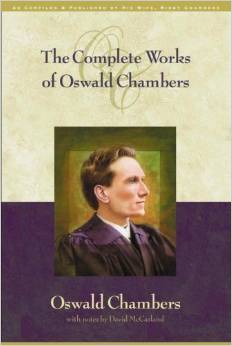
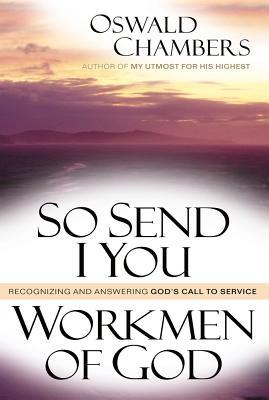
 I’m always astounded by the depth of insight that God gave to Oswald Chambers on spiritual matters; especially on concepts that seem confusing to a great many people. His God-given insights are on full display in his Notes On Isaiah.
I’ll share one disappointment right up front: There is not nearly as much information in this book as I would have hoped for. Chambers’ books, with only a couple of minor exceptions, were not initially written as books. Instead, the books are a collection of sermons or lectures that his wife recorded shorthand as he spoke, and then they were transcribed and compiled later. Apparently during this series of lectures on Isaiah, Biddy Chambers had taken on more responsibility at the Bible Training Institute (even teaching a class of her own), and she gave birth to their only child. These things kept her from taking the extensive notes we readers have become accustomed to.
Although limited, the content is still as insightful and mind-expanding as ever! David Lambert, a friend of the Chambers who helped get this book into print, marveled at how masterfully Oswald could make the words of Isaiah accessible to his students. Lambert noted, “The only mind for the author of the Bible is the Mind of God, and the only Interpreter is the Spirit of God.” Clearly, Oswald Chambers was deeply dependent on both the Mind and Spirit of God in all of his work!
In introducing this class to his students, Chambers reminded them what was at stake. He said, “God will never have us follow Him blindly,” unlike satan. He pointed out, “The supernatural power of satan never reasons, it appeals to man’s superstition, not to his conscience.” If ever a book of Scripture appealed to our conscience to open our eyes and hearts to the ways of God, it is the book of Isaiah. And Oswald Chambers is a marvelous companion for our journey through this book!




 Craig T. Owens
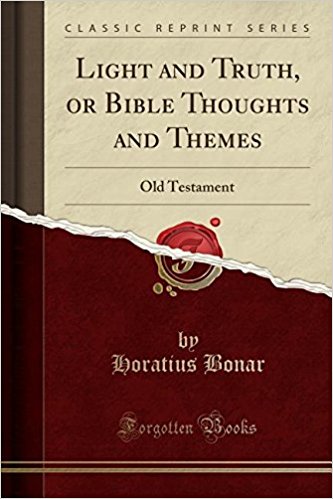
Light And Truth—The Old Testament (book review)
April 17, 2018 — Craig T. OwensBut I do have one complaint about this book: it’s too short! Bonar has four volumes of commentary on the New Testament (the Gospels, Acts and the Larger Epistles, the Lesser Epistles, and Revelation), but sadly only one volume for all of the Old Testament.
Bonar’s style is not an exhaustive verse-by-verse—or even chapter-by-chapter—commentary on Scripture, but more of a theme-by-theme. Having read the four New Testament volumes first, I knew what to expect when I picked up this book on the Old Testament. Although at times he may remain silent on large swaths of Scripture, when he does spot something that moves his pen to action, it is brilliant insight.
It bears repeating something I noted in a previous review of Bonar’s commentaries: “The Bible is inspired by the Holy Spirit, so He is the best source of illumination when reading Scripture. But Horatius Bonar is clearly a man immersed in the overall message of the Bible, and guided by the Holy Spirit in his writings.” Bonar is an excellent tour guide to help you see items of significance as you journey through the Old Testament.
If you would like to check out my earlier reviews of Bonar’s Light & Truth series:
Share this: