Links & Quotes

I thought this was brilliant insight from the weekly Cultural Translator newsletter from Axis—

In the Q&A portion of one of his lectures, Jordan Peterson was asked about his thoughts on abortion. At one point he said, “The discussion regarding the legality of abortion is nested inside a larger discussion about the morality of abortion, and that’s nested inside a larger discussion about the proper place of sexuality in human behavior. And to me, that’s the level at which the problem needs to be addressed.” Although he doesn’t offer specific prescriptions about how to do that, it’s a helpful way to position the conversation.

In many people’s minds, sex is appropriate whenever the parties involved consent to it. In this view, sexual activity outside of marriage becomes a foregone conclusion. Abortion is then regarded as a necessary adaptation for this new undeniable sexual ethic. In that same Q&A, Peterson says, “Let’s say you are in a position where you are inclined to seek an abortion. The question is: how did you get there?” The literal answer for 99% of pregnant women is via voluntary sexual intercourse—but when our culture frames “sexual expression” as an inevitability, it can seem hard to envision other safe paths forward apart from abortion.

For some, it’s too late to think proactively. Along those lines, one of the primary pro-choice arguments has been that having children too soon will plunge parents into permanent poverty. But when the church is at its best, it has rallied together to provide for those who could not provide for themselves. Acts 2:44-45 says about the early church, “All the believers were together and had everything in common. They sold property and possessions to give to anyone who had need.” Other ancient sources record that the early church was known for saving and protecting unwanted children, who were sometimes left outside to die.

Although some may frame “celebrating the Supreme Court’s decision” and “thinking about how to be more holistically pro-life” as somehow in tension, the early church models both a care for babies and for their mothers. May God give us grace to do the same.

The 1440 Daily Digest had an interesting article for the July 4th weekend entitled “Happy Birthday, America.” 

Congratulations, America—Monday marks the 246th commemoration of the day the Declaration of Independence was adopted by the Second Continental Congress. The Congress actually voted to separate from Great Britain two days earlier, and possibly didn’t sign the document until August. Some argue the US didn’t really become a country until we began operating under the Constitution in 1789.

Still, since then, the country has grown from 13 colonies with about 2.5 million people to 50 states and 14 territories with a population of more than 330 million. The economy has swelled to roughly $24T. Advances in public health—public sanitation, the germ theory of disease, and more—have cut the child mortality rate from more than 45% to under 1%, and our citizens live 35 years longer on average.

We’ve built almost 4 million miles of paved roads and more than 5,000 public airports. More than 2.7 million miles of power lines electrify the country, with about 85% of households having access to broadband internet and 92% having at least one computer. In 1800, 95% of the population lived in rural areas, and now about 83% live in urban areas. The US has also been responsible for more than 800 human visits to space—the most of any other country with a space agency.

While there will always be challenges to face and improvements to make, we’ve come a long way since the beginning. So grab a hot dog and your drink of choice—here’s to the next 246 years.

“The measure of a country’s greatness is its ability to retain compassion in times of crisis.” —Thurgood Marshall

This is a good way of looking at the blessings we have in America: 24 charts that show we’re (mostly) living better than our parents

“Never give up, for that is just the place and time that the tide will turn.” —Harriet Beecher Stowe

“I have reason to praise Him for my trials, for, most probably, I should have been ruined without them.” —John Newton

Intersecting Lives

Listen to the podcast of this post by clicking on the player below, and you can also subscribe on Apple, Spotify, or Audible. 

I had a great time teaching some emerging ministry interns. I shared with them part of my autobiography. There was a time when I heard God’s voice as clearly as I had ever heard it telling me to pursue a career in the medical field. Before I completed that degree, I just as clearly heard God’s voice telling me that medicine wasn’t going to be the career for me.

For a number of years, I struggled with this because I thought I had missed God’s voice the first time. “Perhaps,” I thought to myself, “I didn’t hear God clearly.” 

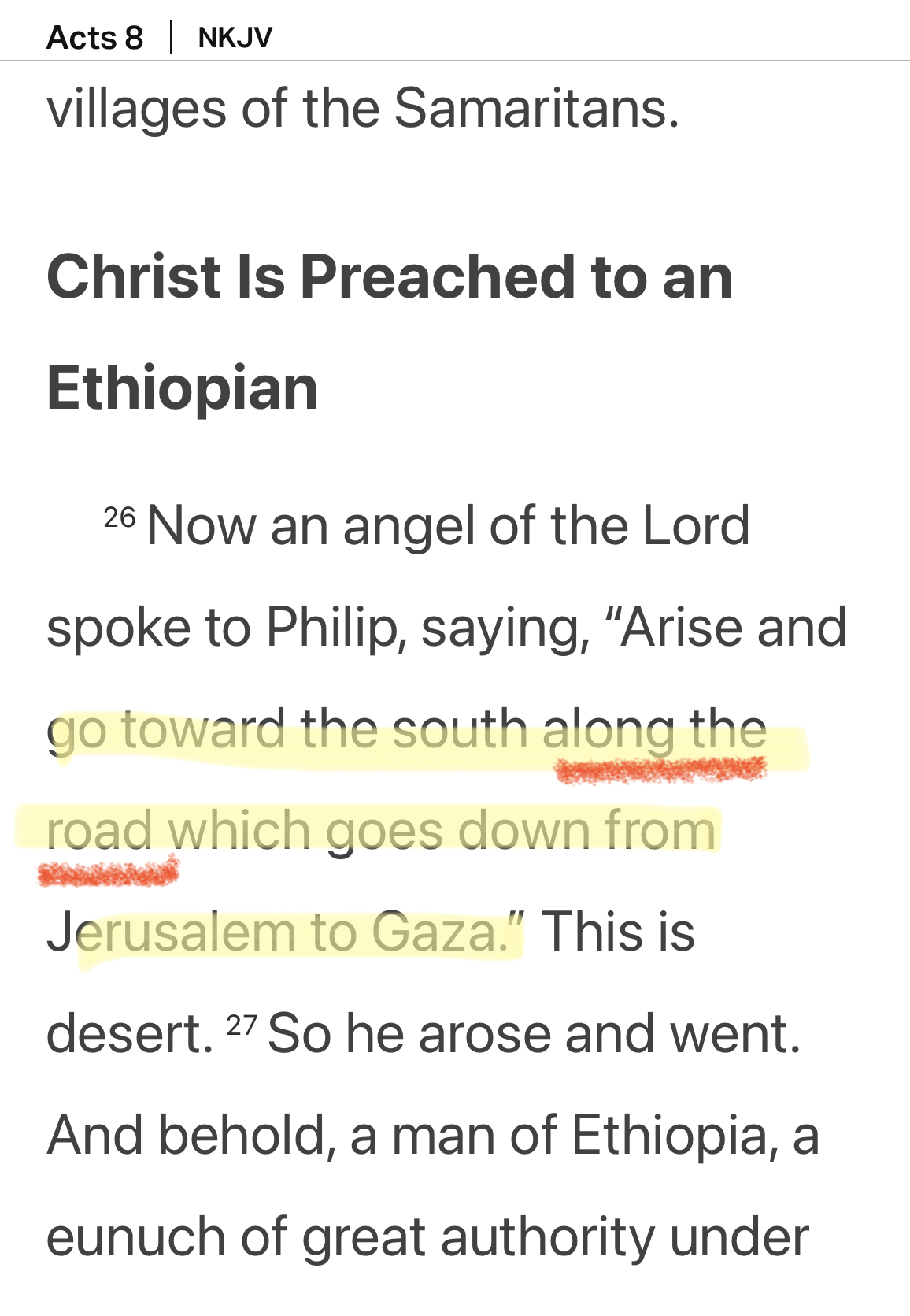
But then the Holy Spirit opened my eyes to a story in the Book of Acts that I had completely missed before. The principles in this story helped me realize that God had put me on a particular path in order for my life to intersect with other people and places. 

Here’s how I explained my story and the principles I learned from the life of Philip:

My friend, your journey may be different from mine, but we still share something so vital in common: God is using everything in your life to accomplish His plan. As you follow Jesus, you will intersect with the lives of others, and your life is making a difference in them.

►► Would you please prayerfully consider supporting this ministry? My Patreon supporters get behind-the-scenes access to exclusive materials. ◀︎◀︎

Expecting Miracles

Listen to the podcast of this post by clicking on the player below, and you can also subscribe on Apple, Spotify, or Audible. 

Last week we saw the in-ness of the Holy Spirit guiding us, teaching us, and empowering us to overcome evil. For what purpose? Why does the Holy Spirit lead us this way? Because the Spirit desires to draw everyone into this in-ness. His work in and through our lives is always unmistakable and irrefutable. 

A good word to describe the unmistakable and irrefutable work of the Spirit is: Miracles. 

Miraculous signs characterized the earthly ministry of Jesus, and they also should to the hallmark of Spirit-baptized Christians today who are sharing the Gospel with others (Acts 10:38; 2:43; Mark 16:20). 

Some may ask, “Why don’t we see as many miracles today?” And some skeptics even point to a decrease in miracles as proof of their cessationist paradigm. But consider this: Has God’s power been diminished? Have all needs been met? Are there no more sickness or unsolvable problems of human suffering? Is everyone free of the power of the devil? 

No, of course not! 

So that would mean if there is any diminishment in miracles, the diminishment would seem to be in us! Particularly I think it is that we no longer expect miracles to happen.

Not only should we expect miracles, but we should also expect to be the vessel through which the Holy Spirit demonstrates the miracle. 

Here are 8 miracles that we should be expecting:

  1. Minds opened that were blinded to the Gospel message—2 Corinthians 4:4-6 
  2. Thoughts transformed—Romans 12:2-3; Philippians 2:5 
  3. Invincible words spoken by us to others—Acts 6:10 
  4. Love tangibly expressed through our spiritual gifts—John 13:34-35; 1 Corinthians 12:1, 31—13:3 
  5. Gifts of the Spirit used constructively in the church to both evangelize the sinner and edify the saint—1 Corinthians 14
  6. Compassionate actions constantly initiated to address areas of human suffering—Philemon 4-7, 17
  7. Powerful prayers prayed and answered—Acts 3:6, 4:31, 13:2-3 
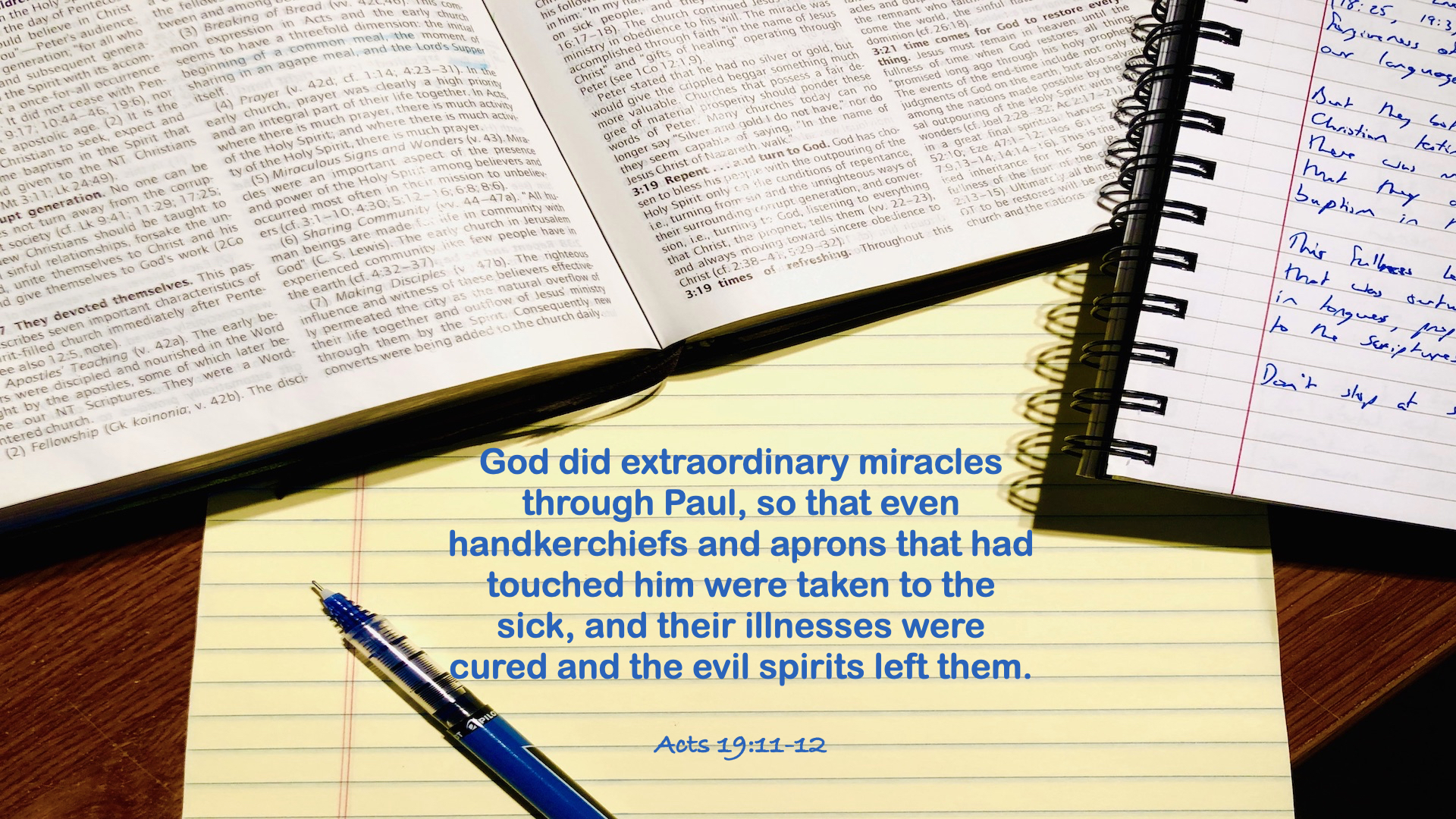
  8. Miracles consistently seen as authenticating the Gospel message—Acts 10:38, 19:11-12 

(Check out all of the above scripture verses by clicking here.) 

Don’t limit the Supernatural power of the Holy Spirit in you to only natural expressions. Constantly expect miracles! 

If you’ve missed any of the messages in our series We Are: Pentecostal, you can find them all by clicking here.

►► Would you please prayerfully consider supporting this ministry? My Patreon supporters get behind-the-scenes access to exclusive materials. ◀︎◀︎

In-ness

Listen to the podcast of this post by clicking on the player below, and you can also subscribe on Apple, Spotify, or Audible. 

We said that when it comes to the Holy Spirit’s involvement in a Christian’s life: In > On. For instance, in our learning we don’t have to go to a tutor or attend classes only at set times, but we have The Tutor IN us. Or when need wisdom for decisions we don’t have to seek out the right advisors and try to coordinate their schedule with ours, but we have The Counselor IN us. 

As we saw with Samson, many times in the Old Testament we read of the Holy Spirit coming ON someone. But throughout that First Testament we also see people longing for the Spirit to be IN them. David, especially, recognized the value of the “in-ness” of the Holy Spirit in both his prayer of repentance (Psalm 51, especially vv. 10-11) and again in his beautiful prayer in Psalm 25. 

Let me point out the in-ness that permeates this 25th Psalm and then show you its fulfillment when the Holy Spirit comes to baptize believers in the New Testament. 

(1) “IN You I trust” (v. 2). Not in human abilities or personal pedigree or earthly riches, but IN the in-ness of the Holy Spirit. Jesus said, “He who believes IN Me—who cleaves to and trusts IN and relies on Me—as the Scripture has said, ‘From his INNERmost being shall flow continuously springs and rivers of living water.’ But He was speaking here of the Spirit, Whom those who believed (trusted, had faith) IN Him were afterward to receive…” (John 7:38-39 AMP). 

(2) “my hope is IN You” (vv. 3, 5, 21). A natural fruit of trusting IN the Holy Spirit’s empowerment is the hope that only that relationship brings. Paul talks abut this twice in his letter to the Romans. First, even in the midst of trials, Paul says we have this hope: “And hope does not put us to shame, because God’s love has been poured out INto our hearts through the Holy Spirit, who has been given to us” (Romans 5:5). And then Paul prays for his friends to experience this same in-ness of hope: “May the God of hope fill you with all joy and peace as you trust IN Him, so that you may overflow with hope by the power of the Holy Spirit” (Romans 15:13). 

(3) “guide me IN Your truth … guide me IN what is right” (v. 5, 9). Jesus identified the Holy Spirit as the Spirit of Truth Who guides us INto truth (John 14:17, 16:13). This is how Jesus lived (Matthew 4:1) and it’s how we can live too: “But I say, walk and live habitually IN the Holy Spirit—responsive to and controlled and guided by the Spirit—then you will certainly not gratify the cravings and desires of the flesh…” (Galatians 5:16 AMP). 

(4) “He instructs sinners IN His ways” (v. 8, 12). The Hebrew word David uses for “teach” in vv. 4, 5, 9 is “lamad.” It means being taught in a way that equips us to teach others. Jesus “gave instructions through the Spirit” to His disciples, and then He commanded them to teach others the same way (Acts 1:2; Matthew 28:20). The Spirit of Truth that inspired the Word of God can illuminate it to our hearts as He instructs us (see 2 Timothy 3:16-17). 

(5) “the Lord confides IN those who fear Him” (v. 14). The KJV says, “The secret of the Lord is with those who fear Him.” Isaiah said, “Whether you turn to the right or to the left, your ears will hear a voice behind you, saying, ‘This is the way; walk in it’” (Isaiah 30:21). And Jesus said that every word He spoke was directed by the Holy Spirit IN Him (John 12:49). 

(6) “I take refuge IN You” (v. 20). We can take refuge IN the One whom we trust and hope, the One who leads us INto truth and instructs us, the One who confides IN us. This in-ness helps us thwart the enemy’s attacks against us. As John wrote, “But you belong to God, my dear children. You have already won a victory over those people, because the Spirit who lives IN you is greater than the spirit who lives in the world” (1 John 4:4 NLT). 

Don’t stop at salvation, but allow the Holy Spirit to baptize you and fill you. Don’t be satisfied with merely experiencing God’s presence ON you, but let His Spirit come IN you. 

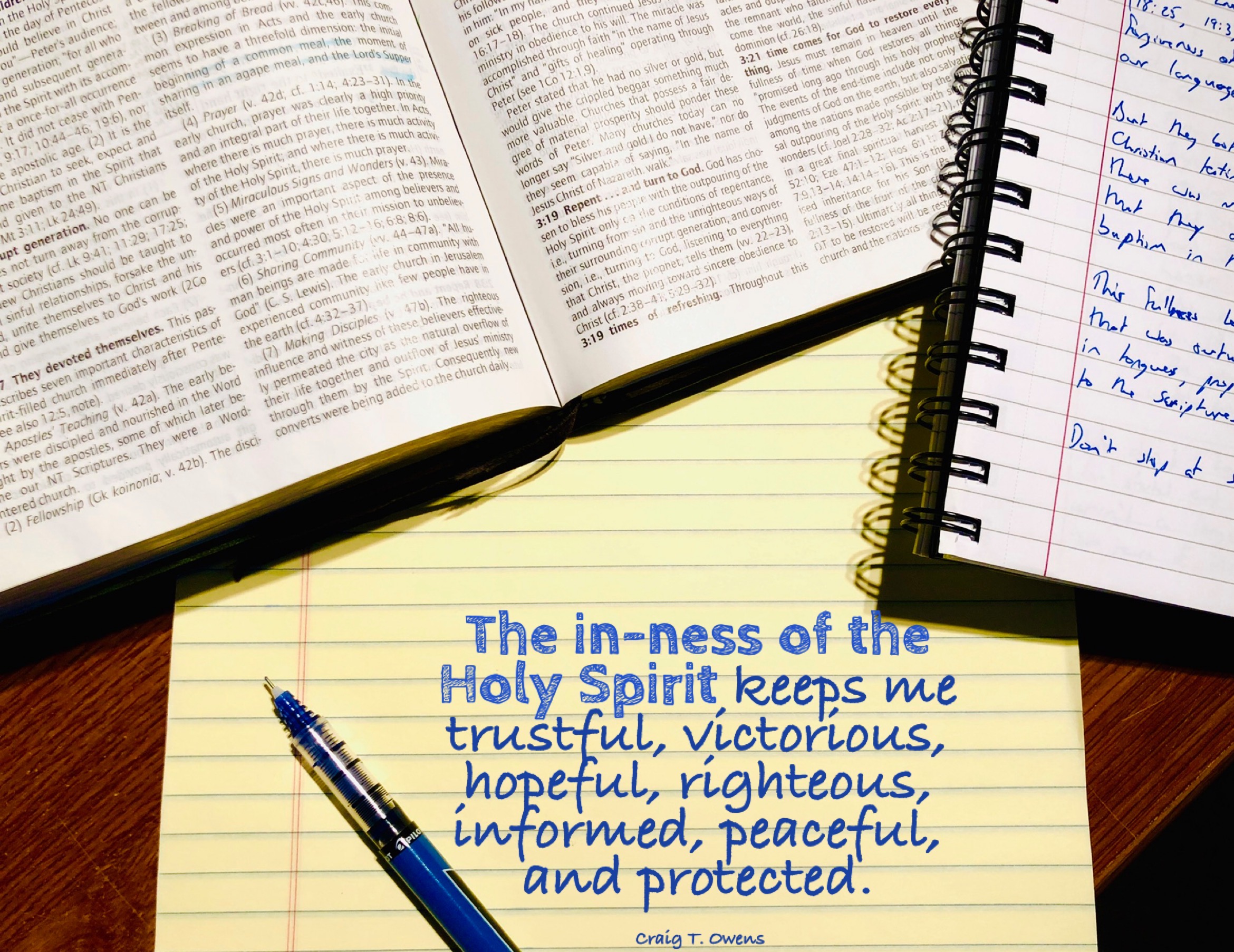
This in-ness keeps us trustful of God, victorious over the devil, hopeful of our future, righteous in a wicked world, informed of God’s ways, peaceful in trials, and fully protected from the enemy of our souls. 

If you’ve missed any of the messages in our series called We Are: Pentecostal, you can check out all of the messages by clicking here. 

►► Would you please prayerfully consider supporting this ministry? My Patreon supporters get behind-the-scenes access to exclusive materials. ◀︎◀︎

Anointed To Minister

Listen to the podcast of this post by clicking on the player below, and you can also subscribe on Apple, Spotify, or Audible. 

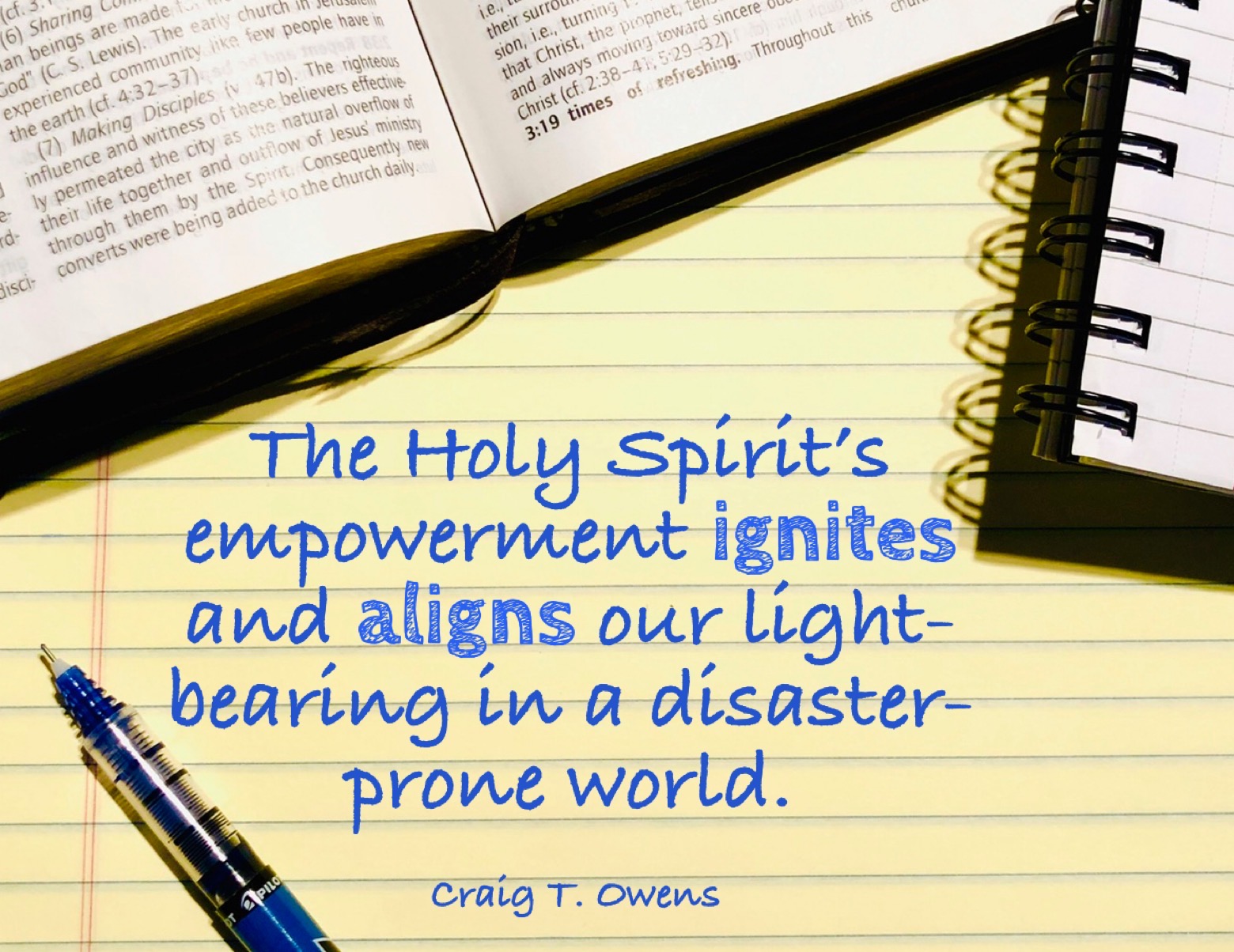
Last week I shared this key thought: The Holy Spirit’s empowerment ignites and then alines our light-bearing to a disaster-prone world. 

Despite what some people try to say, this empowerment from the Holy Spirit isn’t just for a select few. Jesus not only prayed for all of His followers to know this, but Peter also brought this out in his Pentecost Day sermon (John 17:20-23; Acts 2:21, 38-39). 

So why are some people not baptized in the Holy Spirit? I think there are numerable reasons, but allow me to share four broad headings: 

  1. They have impenetrable hearts to the Holy Spirit’s wooing (Acts 7:51)
  2. They are ignorant of the fact that this baptism is available to them (Acts 19:1-2) 
  3. They have impure motives regarding the baptism in the Holy Spirit (Acts 8:9-19) 
  4. They are too impatient (Luke 11:9-13)  

(Check out all of the above passages by clicking here.)

The bottom line: God wants to baptize you in His Spirit, Jesus wants you to be anointed with the same power He used, and the Spirit wants to bring out greater Jesus-exalting fruitfulness from your life. 

Two years ago in this series, I said that when it comes to the Holy Spirit’s involvement in a Christian’s life: In > On. 

In the Old Testament, Samson had the Spirit of God ON him, but he never allowed the Holy Spirit to come IN him and make important changes. Three times we read that “the Spirit of the Lord came upon him” (Judges 14:6, 19; 15:14), but after every one of these times we see Samson reverting to his childish, selfish, pouting ways again. 

By contrast, consider the life of Jesus. After He was baptized by John we read that Jesus was “full of the Holy Spirit” and “led by the Spirit.” That word for “full” means complete or lacking nothing. Jesus yielded to the Holy Spirit and allowed Him to lead and direct, as well as supply everything that was needed for ministry. Just a few verses later we read that “Jesus returned to Galilee, in the power of the Spirit.” And in His first recorded sermon, Jesus read from the prophet Isaiah about the Holy Spirit anointing Him for ministry (Luke 4:1, 14, 18). 

That word for “anointed” is chiro, from which we get the word Christ. That is the same root word in us as CHRISTians. 

We see this in Peter, Stephen, Barnabas, and Paul (Acts 4:8; 6:3, 5; 7:55; 11:24; 13:9). And then Paul writes that this anointing is for all Christians—“Now it is God who makes both us and you stand firm in Christ. He anointed us [that’s the word chiro again], set His seal of ownership on us, and put His Spirit in our hearts as a deposit, guaranteeing what is to come” (2 Corinthians 1:21-22). 

The anointing that characterized the life of Jesus in Acts 10:38—“How God anointed Jesus of Nazareth with the Holy Spirit and power, and how He went around doing good and healing all who were under the power of the devil, because God was with Him”—is the same anointing for ministry for all CHRISTians today! 

So…

Don’t dabble—dive in! 

Don’t settle for on—allow the Holy Spirit fully in! 

When we are yielded and baptized in the Holy Spirit, we have the anointing to shine brightly for Jesus in our generation. 

If you’ve missed any of the messages in our series We Are: Pentecostal, you can check them all out by clicking here. 

►► Would you please prayerfully consider supporting this ministry? My Patreon supporters get behind-the-scenes access to exclusive materials. ◀︎◀︎

Thursdays With Spurgeon—The Mouth Of The Lord Has Spoken

This is a weekly series with things I’m reading and pondering from Charles Spurgeon. You can read the original seed thought here, or type “Thursdays With Spurgeon” in the search box to read more entries.

Listen to the podcast of this post by clicking on the player below, and you can also subscribe on Apple, Spotify, or Audible. 

The Mouth Of The Lord Has Spoken

…For the mouth of the Lord has spoken (Isaiah 1:20).

     However this sacred Book may be treated nowadays, it was not treated contemptuously, nor negligently, nor questioningly by the Lord Jesus Christ, our Master and Lord. It is noteworthy how He reverenced the written Word. The Spirit of God rested upon Him personally, without measure, and He could speak out of His own mind the revelation of God, and yet He continually quoted the Law, and the Prophets, and the Psalms…. I am sure, brethren, we cannot be wrong in imitating the example of our divine Lord in our reverence for that Scripture, which cannot be broken. … 

     The New Testament writers sit reverently down before the Old Testament and receive God’s words as such without any question whatever. You and I belong to a school that will continue to do the same, let others adopt what behavior they please. As for us and for our house, this priceless Book will remain the standard of our faith and the ground of our hope so long as we live.

From The Infallibility Of Scripture

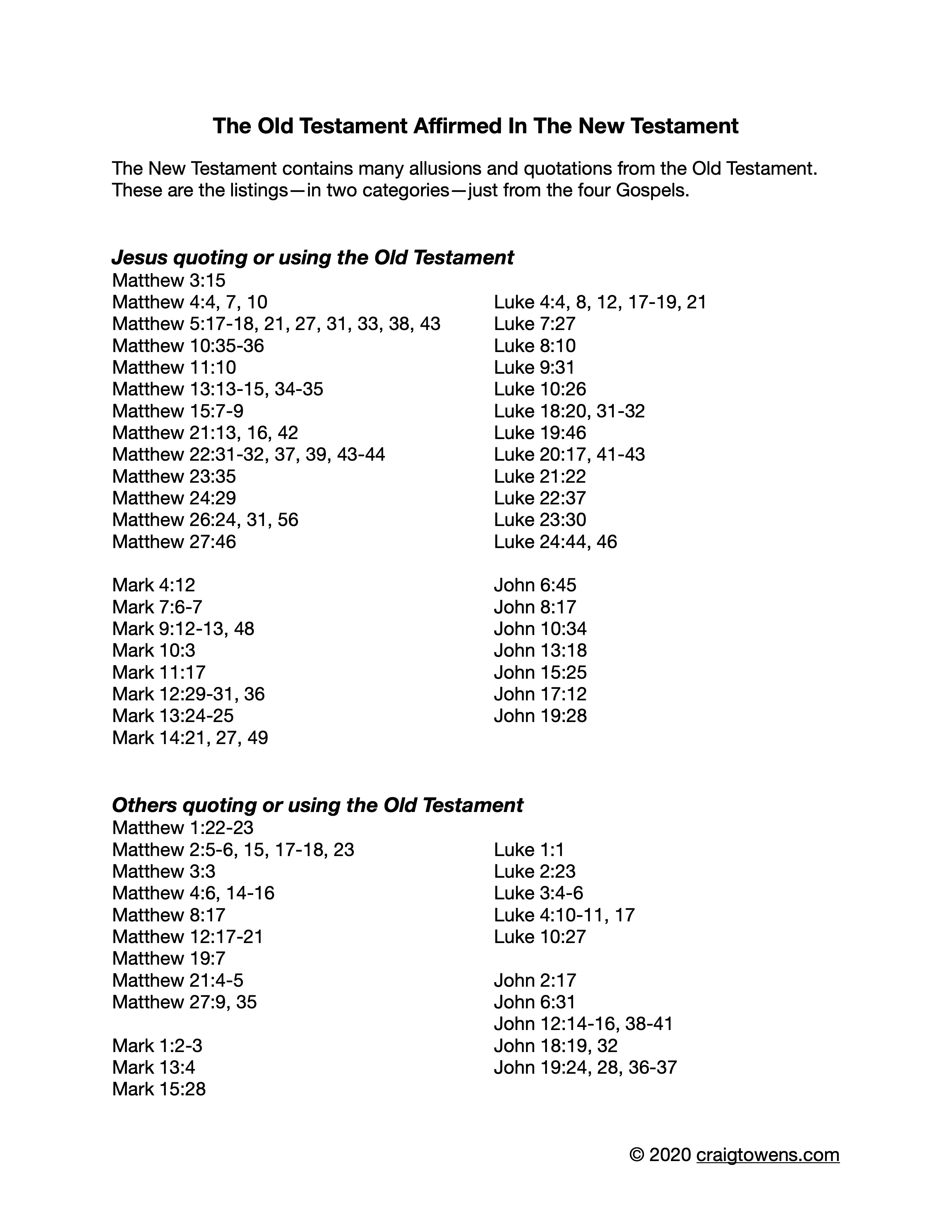
As I have discussed before, the 39 books of the Old Testament were called “Scripture” by Jesus and those living in that same era. The New Testament writers saw Jesus as the fulfillment of those Old Testament Scripture, and what they wrote for us then became Scripture also (Luke 4:18-21; 24:27, 44-45; John 2:22, 17:12; Acts 1:16, 8:35; Galatians 3:8, 16, 22; James 2:8, 23, 4:5-6; 1 Peter 2:6; 2 Peter 3:16). 

When we read the Bible, we are reading words from the mouth of God Himself! 

This Book is the measure of truth, the guide for our lives, and the blessed assurance we need as we anticipate the second advent of Jesus. We need to be much in this Sacred Book!

►► Would you please prayerfully consider supporting this ministry? My Patreon supporters get behind-the-scenes access to exclusive materials. ◀︎◀︎

Epiphany

Listen to the podcast of this post by clicking on the player below, and you can also subscribe on Apple, Spotify, or Audible. 

After the outpouring of the Holy Spirit on that Day of Pentecost immediately following Christ’s ascension, Christians were speaking in languages that they had not learned. As they did so, they were “declaring the wonders of God” in all the languages of the world. Some people mocked, saying they were merely babbling drunks, but everyone in Jerusalem was “amazed and perplexed” at this remarkable event, which prompted Peter to preach a powerful sermon (Acts 2:8-21). 

Peter began his sermon by quoting words “spoken by the prophet Joel” (Joel 2:28-32). It’s unlikely that Peter had a copy of Joel with him, so this quotation was delivered from memory and Peter’s sermon was given spontaneously as the Holy Spirit empowered him. In looking at the passages in both Joel and Acts, I see three notable differences.

  1. Joel begins by saying, “And afterward I will pour out My Spirit,” but Peter begins with the words, “In the last days…I will pour out My Spirit.” I’ll address this point further in just a moment. 
  2. Peter inserts “and they will prophesy” at the end of verse 18, a phrase that Joel didn’t say at the end of Joel 2:29. I think this is the Holy Spirit emphasizing that what the crowd heard was indeed prophecy, not mindless babbling. 
  3. Joel concludes with “before the coming of the great and dreadful day of the Lord,” but Peter says, “before the coming of the great and glorious day of the Lord.” The word Joel uses for “dreadful,” meaning an awesome day worthy of reverence, was a day of sorrow for those about to be judged guilty, and a day of supreme rejoicing for those about to be judged innocent in God’s sight. The word Peter uses for “glorious” is the only time this Greek word is used in the New Testament. The word is epiphanes: where we get our English word “epiphany”—a light has dawned and the truth is finally realized! 

Let’s go back to the difference between “afterward” in Joel and “in the last days” in Acts. In a sense, the “afterward” for Peter was what everyone was experiencing right then—after the death, burial, and resurrection of Jesus, and after the outpouring of the Holy Spirit that Jesus had promised (John 16:7; Acts 1:4-5). 

Let’s also consider the “afterward” in Joel’s day. What came before was a disaster of locusts consuming the land, which prompted Joel to call for the solemn response of prayer and fasting. This heartfelt response from godly people trigged God’s outpouring of His Spirit—the afterward—that led to a blessing “before the coming of the great and dreadful day of the Lord” (Joel 2:1-3, 10-13). 

Both Joel and Peter conclude that it is God’s desire that “everyone…be saved”! The outpouring of the Holy Spirit was to help people have an epiphany of both their sin and the salvation that Jesus purchased on His Cross.

The word “disaster” comes from the Latin word disastros. The root word astros pertains to the heavenly lights (star, sun, moon), and the prefix “dis-” is a pejorative (something that has a belittling effect). So disaster really means no guiding lights, or hopeless darkness. 

Jesus was prophesied to step into this hopeless darkness and bring light and hope—“The people walking in darkness have seen a great light; on those living in the land of deep darkness a light has dawned” (Isaiah 9:2). Zechariah prophesied that Jesus was the fulfillment of this: “Because of the tender mercy of our God, by which the rising sun will come to us from heaven to shine on those living in darkness and in the shadow of death, to guide our feet into the path of peace” (Luke 1:78-79).  

Jesus is THE Epiphany, THE Ultimate Light, but He also tells us, “You are the light of the world (John 8:12; Matthew 5:14).  

In a world of hopeless darkness, Christians are to be Christ’s Light-bearers. 

We cannot do this on our own. 

The Holy Spirit’s empowerment ignites and then aligns our light-bearing to a disaster-prone world. 

When Joel saw disaster coming, he called for a fast. This fast led to the outpouring of God’s empowerment on godly people, so they could take the Light to those lost in deep darkness. I think the same response is needed from Christians today. 

When it appears this world is plunging deeper into darkness—when we hear of disasters (remember that disastros means people are without Light)—we need to pray and fast so that the Holy Spirit can be reignited in us, so that we can then be realigned to best shine the light of Jesus brightly. 

Our lives can and should be the epiphany of Christ’s love for the world to see! Let’s all pray: “Holy Spirit, make us Your epiphany to a dark world!” 

If you’d like to check out the other messages in our series We Are: Pentecostal, please click here. 

►► Would you please prayerfully consider supporting this ministry? My Patreon supporters get behind-the-scenes access to exclusive materials. ◀︎◀︎

The Gift Preached To The World

Listen to the podcast of this post by clicking on the player below, and you can also subscribe on Apple, Spotify, or Audible. 

Ever since Resurrection Day, we can continually celebrate the greatest Gift ever—the death and resurrection of Jesus! 

After making His bodily resurrection abundantly clear, Jesus ascended back to heaven. And now we await His second advent. But here’s an important question: If Jesus ascended back into heaven, where is our Gift now? Quite simply: If you have invited Jesus into your heart, YOU are the gift! 

Remember on Good Friday I talked about what Jesus perfectly completed when He said, “It is finished!” It was an inside job. He came to change us at our core—we have been brought into at-onement with God and we stand in His presence just-as-if-I’d-never-sinned. 

But there is one more step, an ongoing process called sanctification or as I like to say it, “saint-ification.” 

Even as we are in this process, Jesus commissioned all of His disciples to Go…preach (Mark 16:15; Matthew 28:18-20). That means “as you are going” or “wherever you go” tell everyone the good news of the greatest Gift ever. 

Jesus also told us that the Holy Spirit would empower us to be effective at this preaching (Acts 1:4-5, 8). Notice that in Acts 1:8 Jesus said, “You will BE My witnesses,” not you will do witnessing. The Holy Spirit empowers us to BE God’s gift to the world, and to use Christ’s authority properly. 

The apostle Paul echos this. He tells us how everyone can receive the Gift of Jesus. Paul then notes that people hear about this Gift because those who have received the Gift are preaching to them (Romans 10:8-15). 

We are all preachers or proclaimers of the Greatest Gift. Don’t confuse preaching with being a pastor. Preaching is a lifestyle for all Christians, whereas pastoring is an office that only some Christians are called to. Francis of Assisi said, “Preach always; if necessary, use words.” 

Here are three things that I think preach unmistakably. 

(1) Loving, practical service to those in need (John 13:34-35; Matthew 25:34-40)

Jesus said it pretty simply: If someone is hungry, give them something to eat. This practical love is an unmistakable sermon. 

(2) Loving, practical service to those you dislike—or who dislike you (Luke 6:27-36) 

Anyone can do loving things for people they like, but when you bless people who are mean to you, another unmistakable sermon is being preached. 

(3) Jesus-exalting fruitfulness (Galatians 5:19-25) 

Paul contrasts the fruit of those who haven’t invited Jesus into their hearts with those who have. Our fruits of kindness in an unkind world, or self-control in a hedonistic world also preach an unmistakable sermon. 

(check out all of the above Bible verses by clicking here)

If the Gift of Jesus is in you, then your life IS the sermon. Preach it well! 

You are God’s gift to the world IF you are revealing God’s Gift to the world in everything you say and do. 

If you’ve missed any of the messages in our series Christmas Unwrapped At Easter, you can find all of them listed here. 

►► Would you please prayerfully consider supporting this ministry? My Patreon supporters get behind-the-scenes access to exclusive materials. ◀︎◀︎

The Gift Paid For

Listen to the podcast of this post by clicking on the player below, and you can also subscribe on Apple, Spotify, or Audible. 

On Resurrection Sunday we celebrate the greatest Gift ever—Jesus our Savior conquered sin and death!  

I don’t know about you, but many times when I’m given a gift, I feel like I need to give a gift back to the giver. I want this gift to seem appropriate for the gift I was given so that the other person knows that I really appreciated their thoughtfulness. But there is a danger if we try to do this with God’s Gift to us.  

One of the psalmists wondered how to repay God. After praising God for the salvation He worked, the psalmist asks, “How can I repay the Lord for all His goodness to me?” (Psalm 116:1-6, 12). 

As I said, not only is there a danger in trying to give God a gift that somehow reciprocates what He’s given to us, but how do you give a gift to the One who needs nothing (see Acts 17:25; Psalm 50:9-12)? 

Let me try to explain it this way. What if a rich friend gave me a house, all its furnishings, and all its food? He said, “I want to provide this place for you to live and not concern yourself with your housing or food needs. The house has no mortgage, I will pay for the utilities, and I will keep your kitchen stocked with food.” 

I would, of course, exclaim, “Wow! Thank you!” But what if I then began to make monthly mortgage payments, or started leaving money in the cupboard to pay for the groceries? Wouldn’t I really be saying to my friend, “I’m not sure you can afford this.” Or maybe even, “Let me give you something so you won’t think me ungrateful and then end up taking back your gift.” 

In my attempt to give back to my generous friend, I’m really questioning his resources that will allow this gift to continue or his motivation for blessing me. 

The psalmist in Psalm 116 gives us two ways we can express our gratitude to God for His Gift of Jesus (Psalm 116:13-14).  

  1. I will lift up my cup of salvation. This isn’t lifting up a cup to say, “Cheers,” but lifting it up for a continual refilling because He is the only Source that can refill it. 
  2. I will fulfill my vows to the Lord. One picture of our relationship with Jesus is a marriage, where Jesus is the Bridegroom and we are the bride. At almost any wedding you may attend, the bride and groom make vows to each other that essentially say, “I only have eyes for you. My heart is only longing for you. I’m devoted to you forever, no matter what!” 

In my Good Friday message, I said that Jesus IS the perfect Gift. When He said, “It is finished,” He left nothing undone. 

For me to then say, “Thank you for that Gift. Now I must do _____,” is to really say, “I don’t think the Gift was perfect. There are still some things needed to complete it.” 

Or it might be fear speaking that says, “If I don’t give something back, You may withdraw Your Gift from me!” 

I think these stem from two misconceptions: 

Misconception #1: “God does loving things.” Truth #1: Yes He does, but more than that God IS love.

God is love. He could never love you more than He already does, so stop trying to earn His love. And He could never love you less than He already does, so stop worrying. 

Misconception #2: “God supplies my needs.” Truth #2: Yes He does, but more than that God IS provision. 

God is provision. He never runs low. He is never dependent on someone else. He is never short-changed. He knows exactly what you need, and He can perfectly provide for you each and every moment. 

Don’t try to repay God for sending His Son Jesus, but celebrate God’s Perfect Gift by continuing to let Him fill your cup of salvation, honoring your vows to Him, and living securely and joyfully in His love and provision. 

If you’ve missed any of the other messages in our series Christmas Unwrapped At Easter, you can find a list of all of those messages here. 

►► Would you please prayerfully consider supporting this ministry? My Patreon supporters get behind-the-scenes access to exclusive materials. ◀︎◀︎

Thursdays With Spurgeon—No Other Name

This is a weekly series with things I’m reading and pondering from Charles Spurgeon. You can read the original seed thought here, or type “Thursdays With Spurgeon” in the search box to read more entries.

Listen to the podcast of this post by clicking on the player below, and you can also subscribe on Apple, Spotify, or Audible. 

No Other Name

     But our citizenship is in heaven. And we eagerly await a Savior from there, the Lord Jesus Christ, Who, by the power that enables Him to bring everything under His control, will transform our lowly bodies so that they will be like His glorious body. Therefore, my brothers and sisters, you whom I love and long for, my joy and crown, stand firm in the Lord in this way, dear friends! (Philippians 3:20—4:1). 

     What is it to be in the Lord? Well, brothers and sisters, we are in the Lord vitally and evidently when we fly to the Lord Jesus by repentance and faith and make Him to be our refuge and hiding place. Is it so with you? Have you fled out of self? Are you trusting in the Lord alone? Have you come to Calvary and beheld your Savior? … There is no shelter for a guilty soul but in His wounded side! Have you come there? Are you in Him? Then stay there. You will never have a better refuge! In fact, there is no other. No other name is given under heaven among men whereby we must be saved [Acts 4:12]. I cannot tell you to stand fast in the Lord unless you are there. Hence my first inquiry is, are you in Christ? Is He your only confidence? In His life, His death, and His resurrection, do you find the grounds of your hope? Is He Himself all your salvation and all your desire? If so, stand fast in Him.

From The Watchword For Today: “Stand Fast”

I am reminded of two of the stanzas from a Charles Wesley hymn:

Jesus! the name that charms our fears,
That bids our sorrows cease—
’Tis music in the sinner’s ears,
’Tis life, and health, and peace.

He breaks the pow’r of canceled sin,
He sets the pris’ner free;
His blood can make the foulest clean,
His blood availed for me.

If you do not know this Savior for yourself, don’t wait another minute to invite Him into your heart! If you do know Jesus as your Savior, stand fast in Him no matter what life may throw at you!

►► Would you please prayerfully consider supporting this ministry? My Patreon supporters get behind-the-scenes access to exclusive materials. ◀︎◀︎