Confession Is Good For You

One of the best definition of Selah is the bracketed comment used next to that word in the Amplified Bible: pause, and calmly think of that. 

Psalm 32 is only eleven verses long, yet Selah—a call to pause and ponder—is used three times. In other words, David is very interested in getting us to weigh something important. This whole psalm is a call to ponder the heavy, unbearable burden of unconfessed sins vs. the freedom and fresh start that comes immediately with confession.

And in case you think that confession is just something that someone does one time when they become a Christian, keep in mind that David is writing this song to be sung by the choir in church. That means confession is good for everyone!

The weighty CURSES of unconfessed sin

  • I feel worn out, wasting away like old, flimsy clothes (v. 3a)
  • I am groaning (v. 3b)—I am worn out from my groaning. All night long I flood my bed with weeping and drench my couch with tears (Psalm 6:6)
  • I feel God’s hand of displeasure heavy upon me (v. 4a AMP) 
  • My strength evaporates like water in the summer heat (v. 4b NLT) 
  • I’m led around like a dumb mule (v. 9)
  • I experience many woes (v. 10a) 

Then comes confession—I acknowledged my sin to You, and my iniquity I did not hide. I said, “I will confess my transgressions to the Lord continually unfolding the past till all is told”—then You instantly forgave me the guilt and iniquity of my sin (v. 5 AMP).  

If we claim to be without sin, we deceive ourselves and the truth is not in us. If we confess our sins, He is faithful and just and will forgive us our sins and purify us from all unrighteousness (1 John 1:8-9).

The weighty BLESSINGS after confessed sin

  • My transgressions are forgiven, which means they are lifted up and carried away (v. 1a)
  • My sins are covered; they are literally overwhelmed by God’s forgiveness (v. 1b)
  • My sin is no longer counted against me (v. 2a) because my record of forgiven sins has been cleared (v. 2b NLT; see also Psalm 103:2-3, 12) 
  • I get a fresh start, my slate’s wiped clean … Suddenly the pressure was gone—my guilt dissolved, my sin disappeared (vv. 1, 5 MSG) 
  • I’m protected in God’s hiding place and surrounded by God’s songs (vv. 7, 10b)
  • God instructs me and protects me to keep me from sinning again (v. 8)

What relief for those who have confessed their sins and God has cleared their record (v. 2 TLB) 

The mark of a maturing Christian is the one who is constantly closing the gap between sin and confession. 

Don’t let unconfessed sin weigh you down. As soon as you feel the Holy Spirit pointing something out in your heart, confess it and experience God’s immediate release! 

I am going to share one more message in this series on the Selahs in the Psalms this Sunday (but, God willing, we will return to this next summer). Please join me either in person or on Facebook Live. 

Saturday In The Proverbs—Setting Myself Up For Failure (Proverbs 20)

[Each chapter in the Book of Proverbs contains thoughts that fit into a theme; they are not just random thoughts gathered together. In this “Saturday In The Proverbs” series, I will share a theme that I see in each chapter. But the cool thing about God’s Word is that you may see an entirely different theme. That’s great! If you do, I would love for you to share it in the comments below.]

Wine is a mock, strong drink is a brawler, and whoever is led astray by it is not wise (Proverbs 20:1).

This collection of proverbs warns against things that impair a person’s judgment, or things that set us up for failure. Things like…

  • intemperance (v. 1)
  • making leaders angry (vv. 2, 8, 26)
  • starting petty quarrels (v. 3)
  • laziness (vv. 4, 13)
  • shallow thinking (vv. 5, 12, 25)
  • unfaithfulness or a lack of integrity (vv. 6, 7, 11, 27)
  • unconfessed sin (vv. 9, 24)
  • duplicity or favoritism (vv. 10, 14, 17, 23)
  • not valuing wisdom (vv. 15, 18. 25)
  • risky business deals (vv. 16, 25)
  • gossiping (v. 19)
  • dishonoring your parents (vv. 20, 21)
  • holding a grudge (v. 22)
  • unkindness or dishonesty (v. 28)
  • not valuing life (v. 29)
  • not allowing anyone to correct you (v. 30)

Now that you know these items that set you up for failure, ask the Holy Spirit to help you root any of these out of your life before failure happens to you! 

Thursdays With Oswald—Jeremiah 16

Oswald ChambersThis is a weekly series with things I’m reading and pondering from Oswald Chambers. You can read the original seed thought here, or type “Thursdays With Oswald” in the search box to read more entries.

Jeremiah 16

[These are notes from Oswald Chambers’ lecture on Jeremiah 16.]     

     “All things are lawful… but all things are not expedient,” says Paul, i.e., all things are lawful to me as a natural man, but not expedient to me as a spiritual man because I am under a superior command. … 

     How many of us have begun to realize our privilege of not doing things? The liberty to waive our rights is the great privilege of Christian sanctity. One of the meanest things is to say, “I don’t do certain things because it will damage me.” Paul’s argument is—“I don’t do certain things because it will damage someone else” (see 1 Corinthians 8:9-13). … 

     In the days before you knew God you did any number of things which God overlooked, but try and do them now, and if you persist you will realize what is written in Psalm 106:15—“And He gave them their request; but sent leanness into their soul.” 

From Notes On Jeremiah

A Christian should be able to say a guilt-free, excuse-free “No” to anything that would be inexpedient for themselves OR for others around them. 

Going Into The Heavy Presence Of God

“The King of glory” is a phrase that’s only used five times in the Bible, and all five times are packed into just four verses of Psalm 24. In this psalm, David lets us know who can enter into this awesome, heavy presence of the King of Glory. 

Why do I say “heavy”? The definition of the Hebrew word for glory always refers to a heaviness. There is something majestically, awesomely heavy about going before the All-Righteous, All-Powerful, All-Holy, All-Knowing, Absolutely Perfect God. Can any mere mortal enter into this presence? 

In an earlier psalm, David said, “For the Lord is righteous, He loves justice; the upright will see His face” (Psalm 11:7). But in this psalm, David asks, “Who can ascend Your holy hill? Who can come into Your presence?” (Psalm 24:3). 

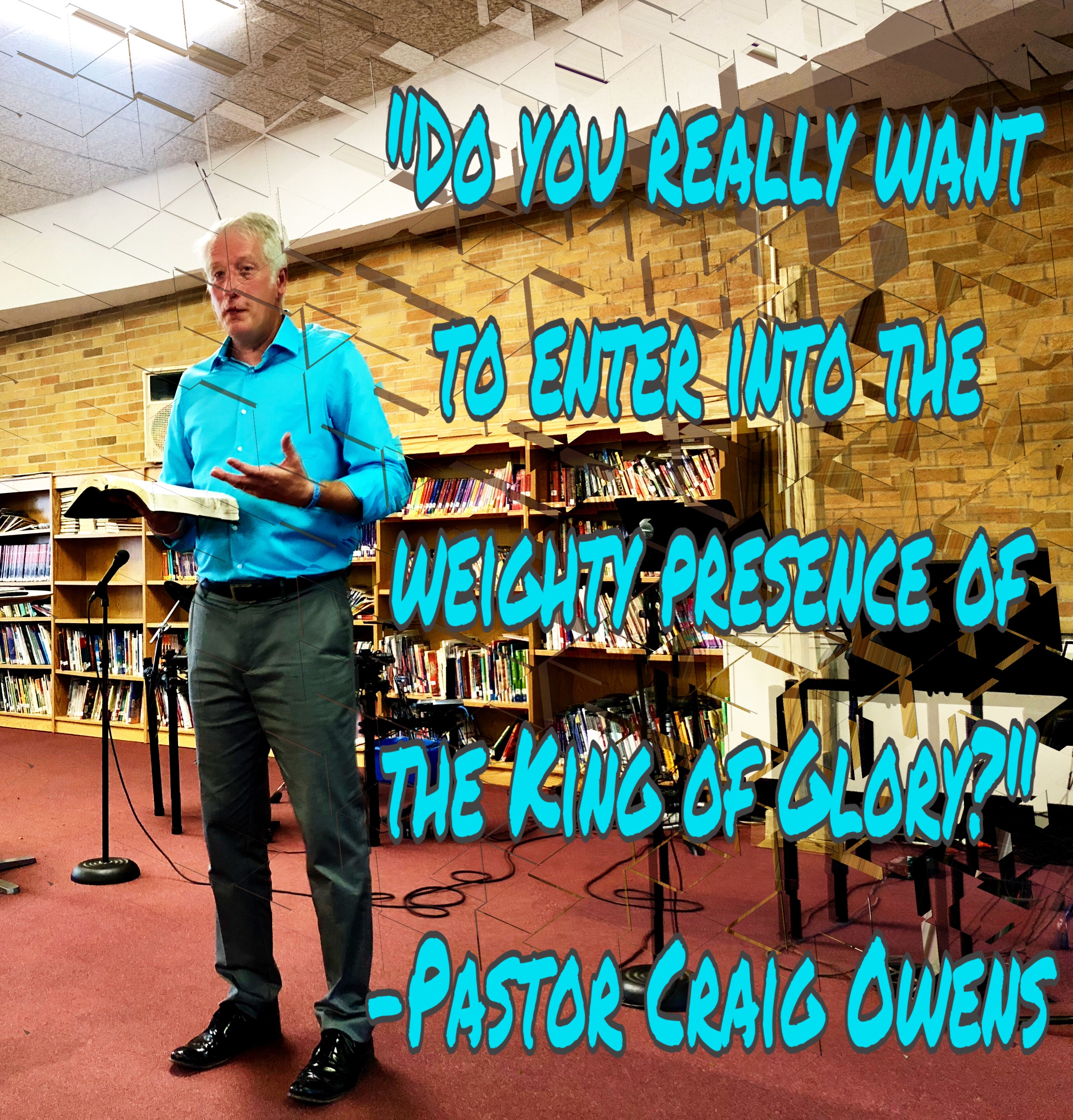
He answers the question with these words: the upright, the one with clean hands and a pure heart (he expands this list even more in Psalm 15), then he calls on us to Selah—pause and weigh this as if on a scale. David is asking, “Do you really want to enter into the weighty presence of the King of Glory?” 

If you do, something needs to happen first. David calls his generation (and our generation) the generation of Jacob. You can read the story of Jacob’s life beginning in Genesis 27. Jacob was a pragmatic man. If he could get away with something, he did. He only looked out for his own interests. He deceived, he connived, he bribed, he calculated his odds—he did what he had to so that he could advance himself. He didn’t realize God’s weight. He saw God only through a scarcity-mindset that gave God limits. He thought there was only a limited supply, and if somebody else was getting a blessing, then that meant there was less for him to get.

Then Jacob encountered God and discovered that he couldn’t do a thing against this weighty King of Glory. When he finally submitted to God, his name was changed to Israel. Jacob—the self-sufficient man—would never be allowed to enter the doors into God’s heavy glory. But Israel—the submitted man—may ascend the hill of the Lord and stand in His holy presence. Jacob means deceitful; Israel means the man without any deceit. 

For the rest of his life, Israel walked with a limp. It was a constant reminder that he simply wasn’t the man he was before he wrestled with God.

  • Jacob could only obtain what he could finagle; Israel is the recipient of all God’s blessings. 
  • Jacob could only keep his gains for this life; Israel got God’s blessings for eternity. 
  • Jacob might be vindicated by men; Israel is definitely and completely vindicated by God. 
  • Jacob couldn’t enter the presence of the King of Glory; Israel was welcomed as a prince into God’s presence.

Here’s the challenge I would give you… Use either Psalm 15 or Psalm 24:3-4 and let the Holy Spirit wrestle with you. Is there anything that’s holding you back from going through those doors into the weighty presence of the King of glory? If there is, confess it, repent from it, and even limp away from it (if you have to) so that you don’t miss out on God’s eternal blessings. 

Join me this coming Sunday as we continue our look at the Selahs in the Book of Psalms. 

Saturday In The Proverbs—The Blessings Of Integrity (Proverbs 19)

[Each chapter in the Book of Proverbs contains thoughts that fit into a theme; they are not just random thoughts gathered together. In this “Saturday In The Proverbs” series, I will share a theme that I see in each chapter. But the cool thing about God’s Word is that you may see an entirely different theme. That’s great! If you do, I would love for you to share it in the comments below.]

…integrity… (Proverbs 19:1).

Integrity is wholeness—it brings its own blessings because a person of integrity…

  • …is wise (vv. 1, 8, 20, 27)
  • …doesn’t fall into the haste-makes-waste trap (v. 2)
  • …is at peace with God (v. 3)
  • …knows true friendship (vv. 4, 6, 7, 19)
  • …is never punished for lying (vv. 5, 9, 28, 29)
  • …gets promoted to leadership (v. 10)
  • …preserves relationships (vv. 11, 12, 13, 14, 25, 26)
  • …is satisfied with his work (vv. 15, 23, 24)
  • …guards his soul (v. 16)
  • …serves others without an agenda (v. 17)
  • …disciplines only in love (vv. 18, 25)
  • …walks in God’s ways (vv. 21, 23)
  • …is kind to others (v. 22)

“With integrity you can experience freedom. Not only are you less likely to be enslaved by the stress that comes from bad choices, debt, deceptiveness, and other negative character issues, but you are free to influence others and add value to them in an incredible way.” —John Maxwell

How true: Integrity = Freedom to live a satisfying life!

Thursdays With Oswald—Jeremiah 14

Oswald ChambersThis is a weekly series with things I’m reading and pondering from Oswald Chambers. You can read the original seed thought here, or type “Thursdays With Oswald” in the search box to read more entries.

Jeremiah 14

[These are notes from Oswald Chambers’ lecture on Jeremiah 14.] 

     While one desire remains unsatisfied, God is not Lord over all. That means we must quit some desires or else quit God. Most of us bring our desires to God and He has to wither them. When we delight in God He gives us our desires because they are in accordance with His will (see Psalm 37:4). 

From Notes On Jeremiah 

Wow, there’s a lot to contemplate in that short statement. 

Oswald Chambers references this verse: Take delight in the Lord, and He will give you the desires of your heart (Psalm 37:4). 

And then there’s this—You will show me the path of life; in Your presence is fullness of joy, at Your right hand there are pleasures forevermore (Psalm 16:11). 

Some things I’m contemplating:

  • Do I have unsatisfied desires? 
  • Have I taken that desire into God’s presence? 
  • If so, why does it still feel “unsatisfied”?

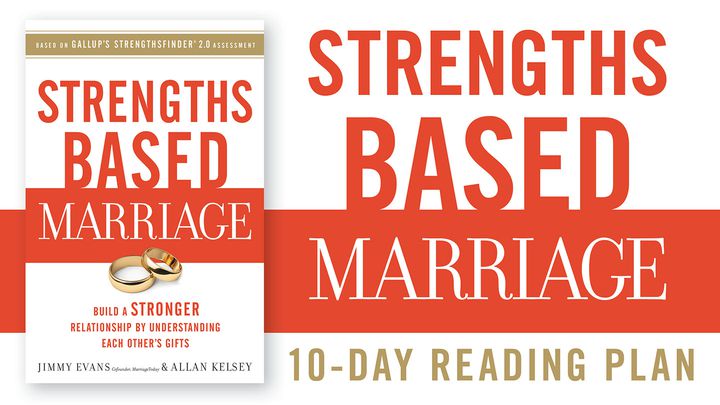
Strengths-Based Marriage (reading plan review)

Normally on Tuesdays, I post book reviews here, but I’ve been reading a couple of YouVersion reading plans with my wife this summer that I felt I must share with you. Both of them are by Jimmy Evans—One: A Marriage Devotional and Strengths-Based Marriage. 

If you are unfamiliar with YouVersion Bible, there is both a web-based site and a mobile app that you really should check out. I spend a lot of quality time in the Scripture using the app on my iPhone each day. One of the cool features YouVersion has recently introduced is the ability to read devotional plans with friends. This offers:

  • accountability with your reading partners 
  • a set schedule of reading assignments
  • access to all the biblical texts that correspond with the day’s devotional reading
  • a place to share your thoughts just with your reading partners, and inaccessible to anyone else on YouVersion

Strengths-Based Marriage focuses on exactly what the title leads you to expect—the strengths in you and your spouse. Instead of trying to “fix” something in your spouse, Jimmy Evans turns your attention toward the God-implanted strengths in your spouse, and then gives you some practical counsel for calling out those strengths. 

For example, in one of the devotions he wrote, “Each of us is remarkably unique, and to minimize that irreplaceable uniqueness is to rob the world of a contribution that cannot come any other way.” And in another devotional he says, “You cannot separate your treasures from your passions. In other words, you will always be most passionate about the people, pursuits, and places where you are investing the best of your life. Your passions will always follow the investments of your time, energy, and strengths.”

One: A Marriage Devotional is a much more daily nuts-and-bolts approach to our marriages. In this devotional he shares relationships principles, and then gives us a “Talk It Out” and a “Walk It Out” assignment to put into practice. 

In one of these devotionals he writes, “God created marriage to operate as the most important human relationship in our lives, and it only succeeds on that level. … Priority must be proven daily in real terms and not just in words. Good intentions mean very little in marriage. The only thing that matters is what you do and continue to do consistently. For your marriage to work, you must establish it as the first priority and be willing to protect it against good or bad things that try to distract you.”

Whether your marriage is in need of urgent attention, it could use some minor improvements, or it’s already pretty great, both of these devotionals will give you practical tips, time with your spouse in God’s Word, great conversation-starting questions, and some highly practical tips you can use right now. 

Renewed Passion For Prayer

If I were to ask you if we should we pray for our friends in need, I think I’d probably get a universal “yes.” Even non-Christians might say we should “send good thoughts” or “best wishes” to our friends.

But if I were to ask, “How long should we pray for them?” we might get a lot of different answers. 

What about if we’re praying for a friend to get a job (and he gets it), or a friend to be healed (and she is), or a marriage to be restored (and it is)—do we stop praying then? 

Psalm 20 and 21 appear to be companion psalms: with Psalm 20 being David’s prayer of petition, and Psalm 21 being his prayer of praise. But there is also something quite interesting in each of these psalms about the placement of the word Selah. 

Remembering that Selah means some sort of pause, I find it very interesting where David tells us to pause in both of these psalms. In Psalm 20 we see the prayer request “may” either 6 or 7 times in the first five verse, but the Selah pause is right in the middle of them. Why would David start making his requests to God, tell us to pause in the middle, and then continue making his requests? 

I believe this Selah means to “pause and consider” that… 

  1. God invites us to participate with Him in fulfilling His plans. 
  2. God loves us so much that He wants to hear from us. 
  3. God is powerful enough to grant what we ask of Him. 

It’s as if in the middle of all of his petitions, David says, “Hold on a second. Do you realize what we are in the midst of doing? We are actually communing with the All-Knowing, All-Loving, All-Power Creator and Sustainer of the Universe!!”

In Psalm 21 David is offering up a prayer of praise for God’s answers to his prayers (note the similar language in Psalm 20:4 and 21:2), and once again he tells us to Selah pause right in the middle of those prayers of gratitude. 

I asked earlier, “When do we stop praying for a friend or for ourselves?” Is it when we get the job, or experience the healing, or have the breakthrough or restoration? What if the job, the healing, the restoration was just the beginning of what God wanted to do? The Selah in Psalm 21 is an accentuation: an explosion into so much more!! 

David prayed for victory in battle, but God gave him an everlasting victory; David prayed for long life, but God gave him eternal life (21:4); David prayed for blessings on his battle, but God gave him His eternal blessings (21:6).

Jesus said our Heavenly Father has gifts for us beyond our asking (Matthew 7:11), and the Apostle Paul said the same thing in Ephesians—

Now glory be to God, who by His mighty power at work within us is able to do far more than we would ever dare to ask or even dream of—infinitely beyond our highest prayers, desires, thoughts, or hopes. (Ephesians 3:20 TLB)

These two Selahs tell me: 

Don’t quit praying when times are tough. 
Don’t quit praying when you’ve prayed a long time. 
Don’t quit praying when it seems like God has answered. 
Keep on praying. Always. About everything!


Please join me this coming Sunday as we continue to look at the Selahs in the Psalms. You can join me in person or via Facebook Live. 

Saturday In The Proverbs—Self-Made People Get Robbed (Proverbs 18)

[Each chapter in the Book of Proverbs contains thoughts that fit into a theme; they are not just random thoughts gathered together. In this “Saturday In The Proverbs” series, I will share a theme that I see in each chapter. But the cool thing about God’s Word is that you may see an entirely different theme. That’s great! If you do, I would love for you to share it in the comments below.]

A man who isolates himself seeks his own desires; he rages against all wise judgment (Proverbs 18:1).

The self-absorbed, self-centered, self-made man only robs himself of…

  • …the wisdom others could give him (vv. 1, 15)
  • …understanding more deeply (vv. 2, 4)
  • …peaceful relationships (vv. 6, 7, 18, 19, 24)
  • …getting the full story (vv. 8, 13, 17)
  • …God’s help (v. 10)
  • …honor (v. 12)
  • …life (v. 21) 

Don’t get ripped off by thinking you already know it all! 

Thursdays With Oswald—Jeremiah 13

Oswald ChambersThis is a weekly series with things I’m reading and pondering from Oswald Chambers. You can read the original seed thought here, or type “Thursdays With Oswald” in the search box to read more entries.

Jeremiah 13

[These are notes from Oswald Chambers’ lecture on Jeremiah 13.] 

     When a man is afraid of God the only right thing for him to do is to run straight to God and not wait to dress himself. The further we get away from God the more we want to dress ourselves up in prayer, etc., but if we fly, just as we are, God will take us and remove the unclean thing. … 

     Spiritually when an individual builds his confidence on anything less than God inevitably there will be a perishing of the ground of confidence. … Beware of building your faith on your experience of God’s grace instead of on God Who makes the experience possible. … 

     Never succumb to believing in an inevitable fate, but fly to God, then you will never know the darkness or the judgments on sin (cf. John 3:19). Judgment comes because of conscious rejection or a conscious neglect. If we see and do not obey, there will be the wandering in the shadows, by God’s decree. There is always a way back to God, and that is to fly as you are, not as you want to be. …  

     Never trust innocence of outlook in yourself or in other people when the statements of God’s Word are directly opposite (see Mark 7:21 and Jeremiah 17:19). … It is difficult when convicted to turn to Jesus Christ; we turn to vowing; but unless we turn to Jesus in obedience and let His life enter in, it is hopeless, for we build again on the same old foundation.

From Notes On Jeremiah

When the Holy Spirit convicts us, our natural human tendency is to (a) justify, (b) make excuses, (c) vow that we will never do that again, (d) ask a friend to help hold us accountable to better behavior, or (e) try to cover up with a lot of religious activity. 

What God wants instead is for us to run to Him. Just as we are. No pretenses. No excuses. No delay. He alone has the healing and restoration we desperately need.